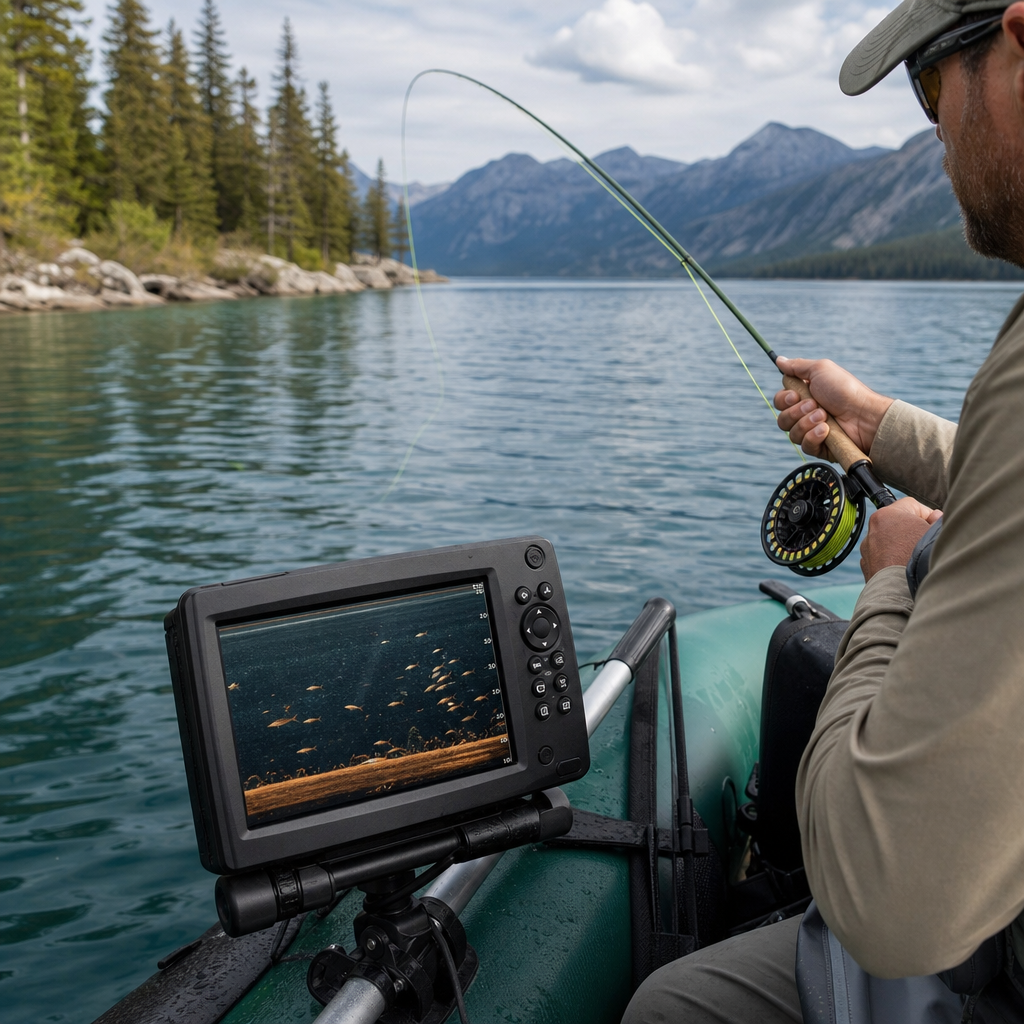
Top fly fishing sonar and fish finders help anglers read depth, identify structure, and locate suspended fish without turning a quiet day on the water into a full electronics project. In practical terms, a fish finder uses sonar, short for sound navigation and ranging, to send sound waves through water and interpret the return signal. For fly anglers, that matters most in lakes, reservoirs, float tubes, kayaks, prams, and drift boats where fish spend long periods offshore, over drop-offs, near weed lines, or along submerged channels that cannot be read from surface clues alone. I have used compact sonar units while targeting stillwater trout, bass, and panfish, and the difference is simple: less blind casting, faster pattern changes, and more time fishing productive water. This equipment reviews hub explains what fly fishing sonar and fish finders are, which features matter, where each product type fits, and how to choose a unit that complements rather than dominates a fly fishing setup.
The category is broader than many anglers expect. Some units are castable sonars that pair with a phone, some are portable traditional displays mounted on kayaks or small boats, and some are GPS-enabled chartplotters with side imaging and lake maps. Not every option suits fly fishing. A unit that excels on a bass boat may be excessive on a float tube, while a simple castable transducer may be ideal for locating depth changes before anchoring. The goal of this hub is to organize equipment reviews around real use cases: stillwater trout from a pontoon, warmwater species from a kayak, scouting new reservoirs from shore, and minimalist travel fishing where packability matters. If you want the short answer, the best fish finder for fly fishing is the one that gives reliable depth, bottom contour, and fish location information in a form you can deploy quickly, read easily, and trust in your specific craft and water type.
What Fly Anglers Should Look for in a Fish Finder
The most important buying criteria are sonar type, screen readability, battery demands, mounting practicality, and mapping features. Start with sonar. Basic 2D sonar shows depth, bottom hardness, and suspended marks in a simple cone beneath the transducer. That is enough for many fly anglers because it answers the most common questions: How deep is it, where is the weed edge, and are fish holding five feet down or twenty? CHIRP sonar improves target separation by sweeping across a range of frequencies, making it easier to distinguish bait, vegetation, and individual fish arches. Down imaging and side imaging add more detail, but they are less essential for anglers who mostly drift, anchor, or slow-troll chironomids, leeches, and streamers on stillwater.
Screen size and brightness matter more than spec-sheet marketing suggests. On a kayak or pontoon, a bright five- to seven-inch display is usually the sweet spot because it is visible in glare without becoming awkward to mount. Touchscreen interfaces look modern but physical buttons are often easier with wet hands and cold weather gloves. Power is another practical issue. A traditional finder with a lithium battery pack can run a full day, but weight, charging, and wiring complexity increase quickly. Castable units win on portability, though phone battery drain and connection stability become part of the equation. When I test these systems, I pay close attention to startup speed, app reliability, transducer pairing, and how fast the unit updates depth while drifting over broken structure.
| Use case | Best fish finder type | Main advantage | Main limitation |
|---|---|---|---|
| Float tube or ultralight pontoon | Castable sonar or compact portable 2D unit | Low weight and simple setup | Smaller display or phone dependence |
| Kayak fly fishing | Portable CHIRP/GPS display | Good balance of mapping and readability | Requires mounting and battery management |
| Drift boat and pram | Five- to seven-inch sonar/GPS combo | Reliable depth tracking while moving | More expensive than basic units |
| Bank fishing and travel | Castable phone-connected sonar | Most portable option | Limited by casting range and app workflow |
Best Product Types and Where They Fit
Castable sonar is the entry point for many fly anglers because it solves the biggest stillwater problem: uncertainty about underwater contours. Products such as the Deeper PRO, PRO+, and Chirp series can be clipped to a rod, cast out, and retrieved slowly to map depth changes. They are especially useful from shore, kick boats, and rental craft where permanent mounting is not practical. In my experience, these units are most valuable before fishing begins. A few exploratory casts can reveal a submerged point, a ten- to fourteen-foot shelf, or a trough running parallel to a weed bed. That information directly affects leader length, sinking line choice, and whether to fish static indicators or active retrieves.
Portable traditional fish finders are the strongest all-around choice for serious fly anglers fishing from kayaks, prams, and pontoon boats. Models in the Garmin Striker, Humminbird Helix, and Lowrance Hook Reveal families offer CHIRP sonar, clear displays, and straightforward controls. Garmin’s Striker 4 remains popular because it is compact, dependable, and affordable, with a simple interface that many anglers can learn in one outing. Humminbird Helix units offer stronger imaging options and broad accessory support. Lowrance Hook Reveal units add FishReveal, which overlays fish targets on downscan imagery to make interpretation easier for newer users. For fly fishing, these units shine when you are moving slowly and need continuous awareness of depth, drop-offs, and suspended schools without relying on a phone screen.
GPS mapping becomes far more important once you fish large reservoirs or return repeatedly to the same stillwater. A depth reading helps in the moment, but waypoint marking changes how efficiently you build a pattern. If you find trout cruising the edge of a submerged creek channel in eighteen feet of water, saving that line lets you repeat drifts instead of searching again from scratch. Some units include basic contour mapping; others support systems such as Garmin Quickdraw Contours, Humminbird LakeMaster compatibility, or C-MAP. Mapping is not just for navigation. It improves fly fishing decisions by showing points, humps, saddles, and flats where food and fish concentrate during changing light, temperature, and wind conditions.
Top Brands, Standout Models, and Review Priorities
Garmin, Humminbird, Lowrance, and Deeper dominate this category for good reason. Garmin consistently delivers intuitive menus, stable GPS performance, and excellent value in compact units. The Striker 4 and Striker Vivid series are common recommendations because they do the fundamentals well: accurate depth, good CHIRP target separation, and easy installation. Humminbird stands out when imaging detail matters. Helix models with down imaging or side imaging can expose weed edges, timber, and transition zones with impressive clarity, particularly on larger boats or advanced kayak setups. Lowrance competes strongly on display quality and feature integration, and the Hook Reveal line is often a sensible midpoint between budget and capability. Deeper owns the castable sonar niche through broad app support, useful mapping functions, and hardware designed specifically for portable use.
When reviewing equipment in this hub, the priority is not simply which model has the longest feature list. It is whether a unit improves fly fishing decisions on the water. That means evaluating cone angle, scrolling speed, transducer mounting options, and battery life in realistic conditions. It also means judging whether the screen remains readable when the angler is stripping line, fighting wind, or wearing polarized glasses. A seven-inch screen with too many views can be less effective than a simple five-inch display showing clear sonar and depth. Likewise, a premium chartplotter is not automatically the best fish finder for fly fishing if the angler fishes small stillwaters three weekends a month and values fast setup more than advanced imaging.
Price tiers matter. Under two hundred dollars, the best values are usually basic Garmin Striker units or castable sonars on sale. Between two hundred and five hundred dollars, buyers see the strongest mix of GPS, CHIRP, and improved display quality. Beyond that, returns become more situational. Side imaging, networking, and advanced cartography are useful, but many fly anglers will catch more fish by spending part of that budget on a quality anchor system, better personal flotation, or an extra fly line matched to the depths their sonar reveals. Good reviews should therefore frame cost in relation to actual fishing gains, not just technology.
How to Match a Fish Finder to Your Water, Craft, and Tactics
The best unit depends first on where you fish. On small trout lakes, depth consistency and weed-edge identification are usually more valuable than side imaging. A compact sonar helps confirm whether fish are suspended over open water, cruising marl flats, or pinned near shoals during wind shifts. On large reservoirs, GPS and waypoint management become essential because productive structures are harder to relocate by eye. River fly anglers use sonar less often, but in broad tailwaters and impoundments it can still help identify ledges, depressions, and temperature-related holding zones. Knowing your dominant fishery prevents overspending on features designed for a very different style of angling.
Your craft is the next filter. Float tubes and minimalist pontoons reward low weight, clean rigging, and easy battery management. A castable sonar or tiny display is often sufficient. Kayaks can handle more capable electronics, especially with rail mounts, transducer arms, and compact lithium batteries from brands like Dakota Lithium or Amped Outdoors. Prams and drift boats allow the most flexibility, but fly line management becomes critical. Any mount, cable, or transducer arm placed where running line can snag is a bad setup regardless of sonar quality. I have seen excellent units become liabilities because installation ignored stripping baskets, anchor ropes, and net placement.
Tactics should drive the final decision. If you fish indicators over chironomids, exact depth and the ability to hover on subtle contours are central. If you strip streamers over shoals and drop-offs, quick bottom tracking and waypoint marking may matter more. If you search for suspended warmwater fish, target separation and sensitivity control become important because you need to differentiate fish from bait and plankton clutter. The strongest equipment reviews explain these tactical fits clearly so readers can move from generic product comparisons to buying decisions that match how they actually fish.
Common Mistakes, Setup Tips, and What This Hub Covers Next
The most common mistake is buying too much fish finder and not enough mounting discipline. Complicated electronics can distract from presentation, line control, and fish behavior. Start with core questions: Can I see depth clearly, locate structure, and return to productive water? Another mistake is trusting factory defaults without adjustment. Sensitivity, chart speed, noise rejection, and color palettes all affect readability. In shallow stillwater, modest changes can dramatically improve your ability to separate fish from weeds or detect a soft bottom transition where insects thrive. Transducer placement matters just as much. Turbulence, bad angles, and shallow mounting produce weak returns that users wrongly blame on the unit.
This sub-pillar hub for equipment reviews is designed to connect those decisions to deeper model-specific guides. From here, readers should expect detailed reviews of castable sonar units, compact kayak fish finders, battery kits, mounting systems, and GPS-enabled combos for larger stillwaters. The key takeaway is straightforward: top fly fishing sonar and fish finders are not about turning fly fishing into power boating. They are about learning underwater structure faster, repeating productive drifts with confidence, and choosing presentations based on evidence instead of guesswork. If you are building a better stillwater setup, use this hub to narrow the category first, then move into the linked reviews for the exact models that fit your budget, craft, and fishing style.
Frequently Asked Questions
What is the difference between sonar and a fish finder for fly fishing?
In everyday use, anglers often use the terms interchangeably, but there is a useful distinction. Sonar is the underlying technology: it sends sound waves through the water and reads the echoes that bounce back from the bottom, weeds, baitfish, timber, and larger fish. A fish finder is the actual device that uses sonar and displays that information in a form you can understand on the water. In other words, sonar is the sensing method, while the fish finder is the tool that turns those returns into depth readings, bottom contours, and target marks.
For fly fishing, that distinction matters because the best unit is not always the one with the most features. Fly anglers typically need quick, readable information that helps with presentation and positioning, not a dashboard full of tournament-level settings. A compact fish finder with clear depth readings, good target separation, and reliable performance at slow speeds can be more useful than a highly complex system built for fast-moving bass boats. If you fish lakes, reservoirs, or offshore structure from a kayak, pram, float tube, or drift boat, a good fish finder helps you understand where fish are holding and how deep your fly needs to be.
That is especially important when fish suspend over deep water or relate to subtle structure that cannot be seen from the surface. Instead of blind casting for hours, you can identify drop-offs, humps, channels, weed edges, and schools of bait, then adjust your retrieve, sinking line, leader setup, and drift accordingly. For fly anglers, the real value of a fish finder is not simply “finding fish,” but reading the water more accurately and fishing more efficiently.
Do fly anglers really need a fish finder, or is it more of a nice-to-have?
A fish finder is not mandatory for fly fishing, but in many situations it is far more than a luxury. On small streams, shallow flats, and highly visible water, electronics may add little. But once you move into stillwaters, large lakes, reservoirs, and deeper moving water, a fish finder can dramatically shorten the learning curve. It tells you how deep you are, how fast depth changes, where the hard and soft bottom transitions are, and whether fish are suspended beneath you or holding close to structure.
That information is a major advantage because fly fishing is often depth-sensitive. A difference of just a few feet can determine whether your chironomid, leech, baitfish pattern, or balanced fly is in the strike zone or nowhere near it. Without electronics, anglers often guess at depth based on line count, sink rate, and intuition. With a fish finder, you can confirm whether fish are at 8 feet over 20 feet of water, suspended at 15 feet over a basin, or cruising a ledge that drops from 12 to 25 feet. That lets you choose the right line density, retrieve speed, and drift path with much more confidence.
For anglers in float tubes, kick boats, kayaks, and prams, fish finders are especially useful because those craft move slowly and cover water methodically. You are already fishing at a pace that suits sonar well. Rather than turning your outing into a high-tech exercise, a simple, well-mounted unit can quietly provide the exact information you need to stay on productive water. So while not every fly angler needs one, many anglers who fish deeper or less visible water will quickly find that a fish finder becomes one of the most practical tools they own.
What features matter most in a fish finder for fly fishing?
The most important features for fly anglers are clarity, simplicity, portability, and dependable shallow-to-moderate depth performance. A clear screen is critical because you need to interpret information quickly, often in bright sunlight, wind, or chop. Strong target separation helps you distinguish fish from bait and structure, while a clean depth display allows you to make immediate rigging decisions. GPS can also be extremely valuable, especially on larger lakes and reservoirs, because it allows you to mark productive shoals, drop-offs, weed lines, spring areas, and repeatable drift lanes.
Portability matters more in fly fishing than many anglers realize. A unit that is easy to mount on a kayak, float tube, pontoon, pram, or drift boat is more likely to be used consistently. Battery efficiency also matters, particularly for long stillwater sessions. Many fly anglers benefit from smaller units with intuitive controls rather than oversized screens loaded with advanced marine networking features they will never use. The best fish finder for fly fishing is often one that powers up quickly, reads accurately, and does not distract from the actual fishing.
Advanced sonar options such as CHIRP, Down Imaging, and side-scanning can be helpful, but their value depends on how and where you fish. CHIRP is often the most broadly useful because it improves detail and target separation. Down Imaging can help clarify structure and bottom composition. Side imaging may be less essential for a fly angler fishing slowly from compact craft, but it can still be helpful on larger reservoirs when searching for weed edges, points, and bait concentrations. Overall, prioritize readable data, reliable depth tracking, and ease of use over flashy feature lists.
Can a fish finder actually help you catch more fish on lakes and reservoirs?
Yes, especially on lakes and reservoirs where fish spend long periods offshore, suspend over deeper water, or relate to structure that is invisible from the surface. A fish finder helps you stop fishing empty water. It shows whether you are over a flat, a sharp break, standing timber, a weed edge, or open basin water. It also reveals whether fish are hugging bottom, cruising mid-column, or suspended under schools of bait. That is crucial because different positions call for very different fly choices, line systems, and presentations.
For example, if you see trout or other game fish suspended at 12 feet over 30 feet of water, there is little reason to keep dredging the bottom with a full sinking line. You may be better off with an intermediate line, a countdown presentation, or a balanced leech under an indicator set to the correct depth. If the screen shows fish pinned to the edge of a drop-off or close to submerged vegetation, you can adjust your drift and cast angle to keep your fly in that zone longer. Even when fish are not visibly marked, a fish finder can still help by identifying productive contours and transitions where fish are likely to travel and feed.
The key is to use the device as a decision-making tool rather than expecting it to do the fishing for you. A fish finder does not replace watercraft, presentation, or pattern selection. What it does is remove much of the guesswork around depth, structure, and location. That usually leads to more efficient time on the water, better fly placement, and more consistent results, especially in large, feature-rich stillwaters where fish can be anywhere from shoreline shelves to open-water suspended zones.
What is the best way to use a fish finder without overcomplicating fly fishing?
The best approach is to keep your setup simple and focus on a few high-value pieces of information: depth, bottom changes, vegetation, and fish position in the water column. You do not need to spend the day adjusting every menu option or staring at the screen. Start by using the unit to identify where the basin drops, where flats taper into channels, where weed beds end, and where bait or fish are suspended. Once you locate a promising zone, shift your attention back to boat control, casting, and presentation.
A practical routine works well. Use the fish finder while moving between spots or beginning a drift to map the structure beneath you. Mark productive locations with GPS if your unit has it. Then fish those areas intentionally. If you are not getting takes, glance at the screen to confirm whether you are still at the right depth and whether fish have shifted shallower or deeper. This keeps electronics in a supporting role instead of letting them dominate the experience.
It also helps to match your expectations to the way sonar works. Fish arches and icons are not guarantees, and not every return is worth chasing. The real value is trend recognition. If you repeatedly notice fish suspended over certain depths, holding on the windward side of a point, or cruising just outside weed edges, you can build a repeatable pattern. That is where a fish finder becomes a quiet, efficient companion for fly fishing rather than a distraction. Used well, it enhances your understanding of the water while preserving the calm, thoughtful style that draws so many anglers to fly fishing in the first place.