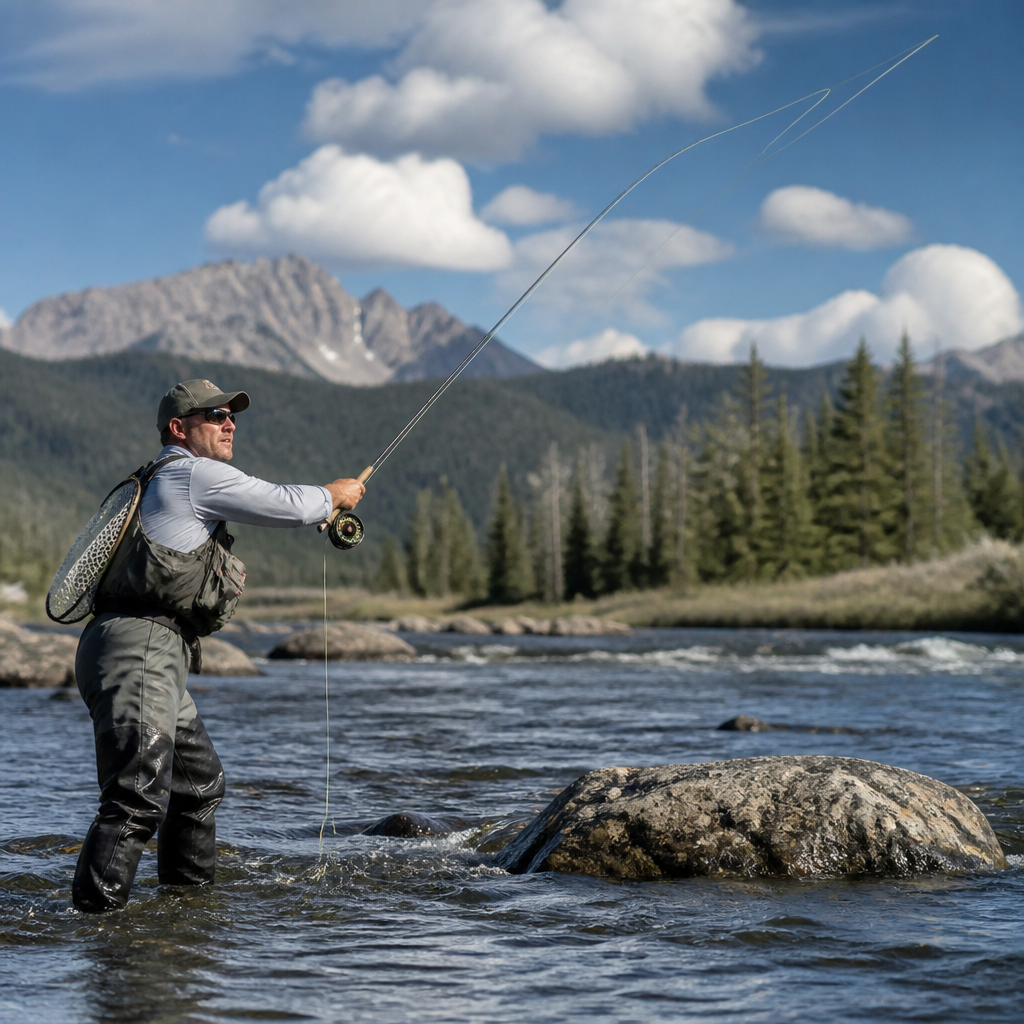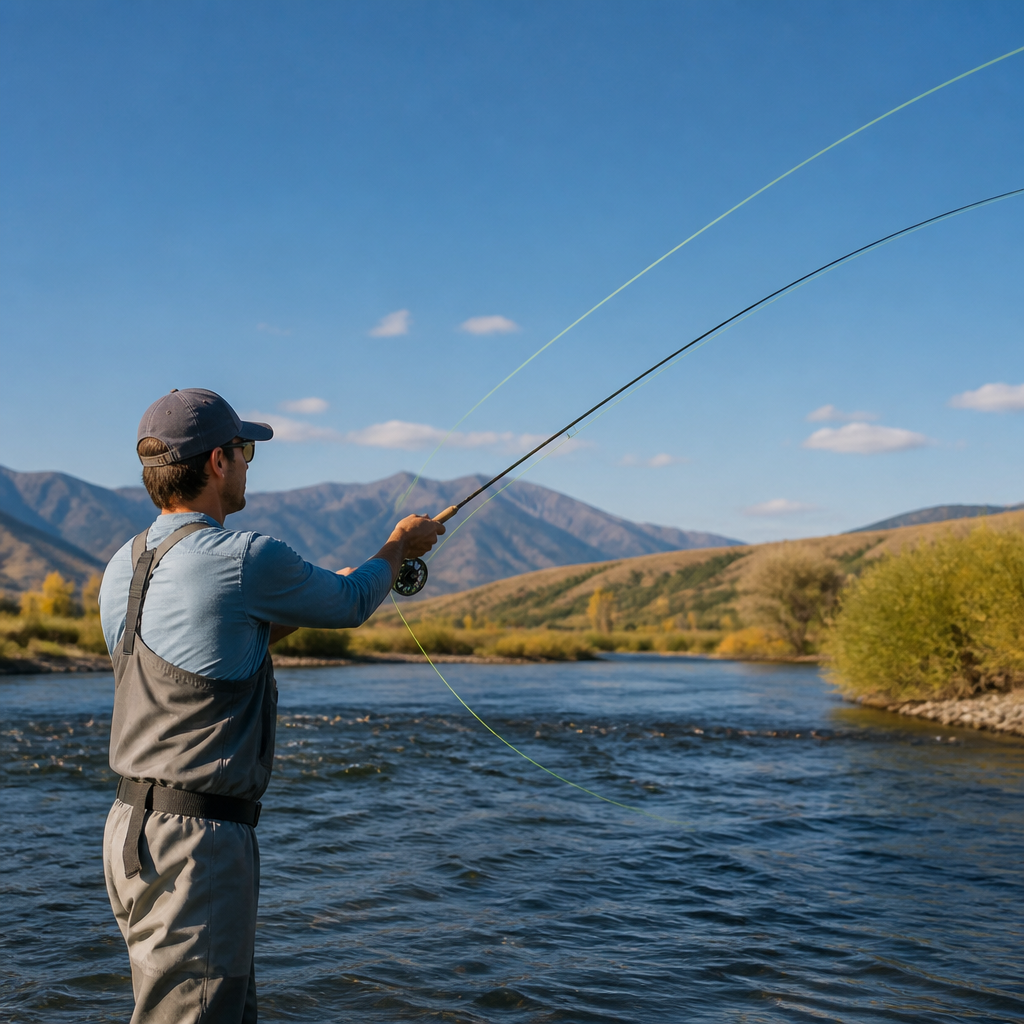
Indicator-free nymphing is the practice of fishing subsurface flies without a bobber-style strike indicator, relying instead on direct contact, controlled slack, and visual or tactile strike detection to drift nymphs naturally through the feeding lane. For trout anglers, it sits at the center of modern nymphing techniques because it blends stealth, precision, and sensitivity in a way floating indicators rarely match. I have used it on clear tailwaters, freestone pocket water, and spring creeks, and the consistent pattern is simple: when fish are pressured, currents are complex, or depth changes every few feet, a tight, indicator-free system often outperforms conventional setups.
The term covers several related methods, including tight-line nymphing, contact nymphing, high-stick presentations, Czech and French influences, and short-range tactical drifts. The core idea is not merely removing the indicator. It is building a system in which leader design, rod angle, fly weight, sighter visibility, line control, and positioning work together so the flies lead the drift while the angler maintains just enough connection to detect a take. That distinction matters. Simply clipping off a strike indicator and fishing the same long-belly cast usually produces poor depth control and missed strikes.
This topic matters because nymphs represent the majority of a trout’s annual diet in many rivers. Mayfly nymphs, caddis larvae, midge larvae, scuds, sowbugs, and stonefly nymphs are available far more consistently than adults on the surface. Trout conserve energy by feeding where currents deliver food efficiently, often near the bottom and along seams. Indicator-free nymphing is designed to put flies into that exact zone quickly and keep them there with minimal drag. It also matters because many anglers want a more active, observational style of subsurface fishing, one that rewards reading current structure and adjusting drift mechanics in real time.
As a hub for nymphing techniques, this article explains the principles that connect all indicator-free methods: how the tackle is built, how the drift is managed, how depth is controlled, how strikes are detected, and how approach changes by river type. If you understand those principles, you can move confidently into specialized presentations, from short-line high sticking in pocket water to longer French-style contact drifts on broad glides. The goal is not dogma. The goal is a reliable framework for fishing subsurface flies with more stealth and better feedback than indicator methods usually allow.
Why Indicator-Free Nymphing Works
Indicator-free nymphing works because it reduces slack, improves strike transmission, and allows far finer control over the drift path. A floating indicator creates a hinge point on the surface. In uniform currents that can be useful, but in mixed flows it often drags at a different speed than the flies below. The result is micro-drag, unnatural lift, and a drift that leaves the strike zone too early. By keeping most or all fly line off the water and maintaining a direct leader connection, the angler lets the flies sink faster and travel at current speed near the bottom where trout feed.
Stealth is another major advantage. On shallow, clear water, a bright indicator landing over a fish can end the drift before it starts. A thin leader, a tuck cast, and a controlled entry create far less disturbance. This is especially important on spring creeks and technical tailwaters where fish see repeated presentations. In my experience, the biggest gains come not only from sensitivity but from the ability to stand closer, cast shorter, and fish likely holding water with less visual clutter on the surface.
There are limits. Indicator-free systems are less efficient at extreme distance, in very deep slow pools, or when fishing multiple conflicting currents far beyond rod control. Wind also complicates contact. But within practical range, usually one to two rod lengths beyond the leader handoff point, these methods produce exceptional depth control and immediate strike recognition.
Tackle, Leader Design, and Fly Selection
The standard tool is a longer, lighter rod, commonly 10 to 11 feet in 2- to 4-weight line classes. The added length improves reach, line lifting, and angle management. A soft tip protects fine tippets, while a responsive butt section helps steer fish in current. Reels matter less than balance, though a smooth drag is useful when fine tippets meet strong fish in fast water.
Leader design is the engine of the system. Many anglers use a thin butt section attached to either fly line or a dedicated mono rig, followed by a highly visible sighter section and then a tippet ring that separates the colored material from the terminal tippet. The sighter, often built from bi-color chartreuse, pink, or orange material, is not an indicator in the buoyant sense; it is a visual reference that transmits hesitation, straightening, and speed changes. Tippet diameter affects sink rate significantly. A thinner tippet cuts water more efficiently but must still match fly size, fish size, and abrasion risk.
Weighted flies do most of the depth work. Tungsten beads, jig hooks, lead or nonlead underbodies, and anchor-fly combinations are common. The point fly is usually heavier, while a dropper above it adds either a smaller attractor or a more natural match. On rivers with caddis and mayfly populations, a perdigon-style anchor paired with a pheasant tail, hare’s ear variation, or soft hackle covers a wide range of feeding moods. In limestone streams rich with scuds and sowbugs, slim pink, gray, and tan patterns often excel. Fly size and density should answer one question: can this rig reach the feeding lane in the first third of the drift?
Core Presentations and Drift Control
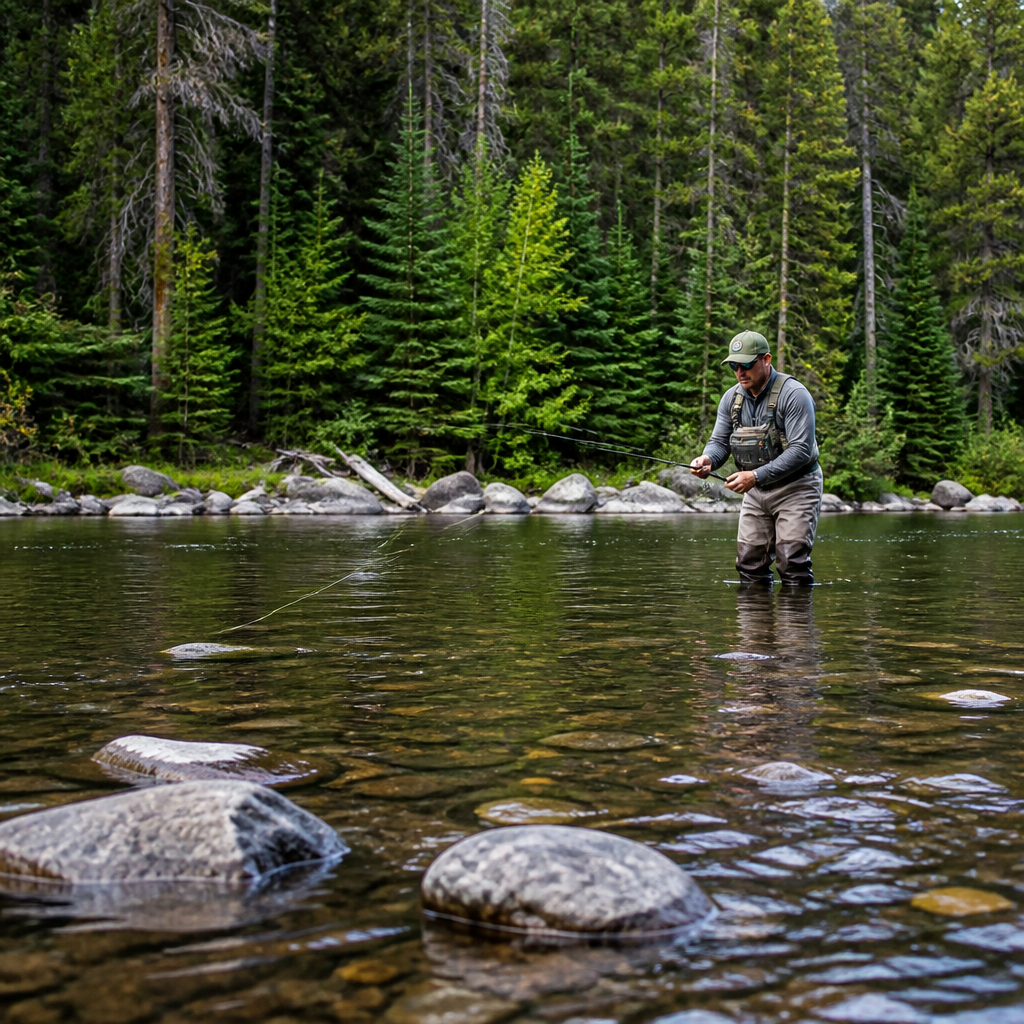
Every indicator-free presentation begins with position. Instead of casting from far away, the angler moves into a lane that allows an upstream or slightly upstream-across angle, then keeps the rod high so only the leader and tippet influence the flies. The cast is compact, often a tuck cast that drives the flies downward and places the leader upstream of them. That creates immediate separation between the weighted flies and the upper leader, helping the rig sink before conflicting currents grab it.
Once the flies enter the water, drift control becomes a matter of leading, not pulling. The rod tip tracks slightly ahead of the flies at the speed of the current seam being targeted. Too much lead drags the flies unnaturally. Too little creates slack and delayed strike detection. Good anglers constantly adjust rod height, arm extension, and body angle to maintain a narrow catenary, enough connection to feel or see a take, but not enough to lift the flies. At the end of the drift, allowing the flies to rise can trigger fish, especially when imitating ascending caddis pupae.
Short-line high sticking shines in pocket water, where plunge pools, boulders, and broken currents allow close approaches. Longer contact drifts, often associated with French-style methods, are better on open runs and glides where fish hold farther away and depth changes subtly. Across both styles, the rule is the same: control angle first, then depth, then speed. If angle is wrong, every other correction becomes harder.
Strike Detection, Depth Management, and Common Errors
Most takes are not violent. They show as a check in the sighter, a slight straightening, a pause, a twitch against current speed, or a faint stop transmitted through the rod hand. When I teach this, I tell anglers to set on anything unnatural. The hook set is compact and mostly upstream, driven by forearm and wrist rather than a sweeping trout set. Because contact is tight, even modest motion moves the flies efficiently.
Depth management is the decisive skill. Fish feed near the bottom, but constant snagging means the flies are too deep or drifting too slowly for the substrate. Rare bottom contact usually means they are too light or the leader angle is lifting them. Adjust one variable at a time: add tungsten, lengthen tippet, shorten the cast, change the entry angle, or switch to a thinner diameter. Effective anglers measure success not by strike count alone but by regular, controlled contact with the lower part of the water column.
| Problem | Likely Cause | Practical Fix |
|---|---|---|
| Few takes, no snags | Flies too high in the column | Add weight, cast shorter, improve tuck |
| Constant bottom hangups | Too much weight or too little lead | Lighten point fly, raise rod, increase drift speed slightly |
| Sighter jumps erratically | Conflicting currents pulling leader | Change angle, reposition feet, keep more line off water |
| Late hook sets | Excess slack or slow reaction | Track closer to flies and set on every hesitation |
| Fish spook before drift | Poor approach or splashy entry | Wade less, lower profile, use softer tuck cast |
The most common errors are standing too far away, using flies that are too light, overleading the drift, and confusing visual contact with tight tension. Another frequent mistake is treating every run the same. Fast pocket water may need a short, nearly vertical presentation, while a smooth tailout may require longer tippet, finer diameter, and a much shallower angle of control.
Adapting to River Types and Seasonal Conditions
On freestone rivers, current speed and broken surface texture make indicator-free nymphing exceptionally effective. Trout hold behind rocks, at seam edges, and in the softer cushions below ledges. Here, short drifts and repeated repositioning are better than long casts. In tailwaters, where flows are stable and fish inspect food closely, thinner tippets, smaller flies, and longer leaders become more important. Spring creeks demand the highest level of stealth because fish often hold in slow water with excellent visibility. On those streams, I favor sparse flies, subtle colors, and approaches from downstream with minimal false casting.
Season changes the menu and the holding depth. In winter, trout often stack in slower, softer slots and feed on midges, small mayflies, and scuds with limited movement, so slower drifts and finer tippet pay off. During spring runoff, higher flows push fish toward banks, inside seams, and soft pockets where heavier anchor flies help punch through turbulent water. Summer brings both subsurface feeding and opportunistic rises; indicator-free nymphing is ideal in the morning before hatches intensify. In fall, pre-spawn browns become aggressive, and larger stonefly nymphs, jig streamers, or egg-adjacent attractors can be effective where legal.
Water clarity should influence every choice. Clear water favors longer leaders, drabber flies, and careful wading. Slightly stained water allows bigger flies, brighter hotspot collars, and more aggressive coverage. Regardless of season, the best anglers read hydraulics first: depth, speed transitions, oxygen, and food conveyance. Fish the lane that delivers calories efficiently, not simply the prettiest run.
Building a Complete Nymphing Strategy
As a hub for nymphing techniques, indicator-free nymphing should be viewed as one essential branch of a larger system. It connects directly to euro-style leader construction, weighted fly design, two-fly rigging, tactical wading, seam reading, and strike detection drills. It also informs when not to use contact methods. If fish are feeding far away in deep, uniform water, an indicator or dry-dropper may give better depth reference. If trout are suspended off bottom, a conventional swing or intermediate presentation may be more efficient. Strong anglers switch methods based on geometry, not loyalty.
A practical progression helps. First, learn short-range contact in pocket water, where strike detection is obvious and drift length is manageable. Second, refine leader formulas and sighter use on medium-depth runs. Third, practice long-light drifts on technical glides, where reach, angle, and tippet control become critical. Keep notes on weight, depth, and current type. After enough days on the water, patterns emerge quickly: which flies sink on a given tippet, how specific currents deform the sighter, and how trout in your home rivers respond to lift at the end of the drift.
Indicator-free nymphing rewards precision more than power. It asks you to get close, think in three dimensions, and treat every drift as a controlled experiment. Master that mindset and nearly every other nymphing technique becomes easier to understand and apply.
Indicator-free nymphing is stealthy because it strips the presentation down to what matters most: direct contact, natural drift, and exact depth. Remove the floating indicator, and you remove a source of drag, splash, and delayed feedback. In its place, you gain faster sink rates, cleaner drifts through complex current, and sharper strike detection. Those are not small advantages. On pressured trout water, they often determine whether fish ignore the flies or eat confidently.
The key takeaways are straightforward. Build a leader that supports visual tracking and efficient sink. Use weighted flies that reach the feeding lane early. Position yourself for short, controlled drifts. Lead the flies without pulling them. Set on every unnatural hesitation. Then adapt those principles to river type, season, and water clarity. That framework is the foundation of effective nymphing techniques, and it links naturally to every specialized article within this subtopic.
If you want to catch more trout subsurface, start with one run and one adjustment at a time. Fish closer, drift deeper, watch the sighter carefully, and let the river teach you what your flies are doing below the surface.
Frequently Asked Questions
What is indicator-free nymphing, and how is it different from fishing with a strike indicator?
Indicator-free nymphing is a subsurface fly-fishing approach that removes the bobber-style strike indicator and replaces it with direct contact, controlled slack, and close visual or tactile strike detection. Instead of watching a foam or yarn indicator drift downstream, the angler manages the line, leader, and fly connection much more actively. The goal is to maintain a natural drift while staying connected enough to detect subtle takes through the line, the leader butt, the sighter if one is used, or the feel of the rod hand. In practical terms, it is a more intimate and responsive way to fish nymphs, especially when trout are feeding selectively or taking flies very softly.
The biggest difference is sensitivity. Traditional indicators can be effective, but they introduce extra surface drag and a delayed signal between the fish and the angler. Indicator-free methods reduce that lag. Because there is less material on the water and less slack between rod tip and flies, you often feel or see strikes sooner. That matters on clear tailwaters, technical spring creeks, and pressured freestone runs where trout may mouth a nymph and reject it almost instantly. It also changes presentation. Without an indicator dictating depth and drift mechanics, you can guide the flies through seams, pockets, slots, and feeding lanes with finer control.
Another key difference is stealth. A floating indicator can splash, skate, or cast a shadow in calm or shallow water. Indicator-free systems land more softly and keep less clutter on the surface, which can make a real difference when fish are wary. That said, this style is not just about being subtle; it is also about precision. It rewards anglers who pay attention to depth, angle, current speed, and rod position. Done well, indicator-free nymphing delivers a dead drift with immediate strike awareness, which is why it has become such a central part of modern trout tactics.
When should I choose indicator-free nymphing over an indicator setup?
Indicator-free nymphing shines whenever stealth, short-range control, and strike sensitivity matter more than long drifts under a floating marker. It is particularly effective in clear water where trout get a long look at your setup, in shallow or medium-depth runs where you can keep a relatively direct connection to the flies, and in complex currents where an indicator would drag unnaturally across conflicting surface seams. If you are fishing pocket water, riffles, defined current lanes, heads of runs, or narrow feeding slots, this approach often gives you better contact and better drifts than a conventional indicator rig.
It is also the better choice when trout are taking softly. In cold water, highly pressured fisheries, or situations where fish are feeding close to the bottom with very little movement, strikes often show up as the faintest hesitation, a small leader twitch, or a tiny pulse in the rod hand. Those signals can be muted by an indicator system, especially if there is excess slack or surface drag. Indicator-free methods help you read and respond to these delicate takes faster. On technical spring creeks and tailwaters, that can be the difference between missing fish and hooking them consistently.
That said, there are times when an indicator still makes sense. Deep, slow runs where you need a long drag-free drift at distance can favor a suspend-and-watch approach. Very broad rivers where fish are feeding well beyond practical tight-line range can also tilt the advantage back toward indicators. Strong wind, high water, or very uniform currents may reduce some of the benefits of direct contact. A skilled angler should think of indicator-free nymphing as one of the most powerful tools in the subsurface toolbox, not the only one. Use it when you can control the drift, stay connected, and present naturally without putting fish on alert.
What gear and rigging work best for indicator-free nymphing?
The best gear depends on how specialized you want to be, but the core principle is simple: use a setup that helps you maintain light contact and detect strikes without interfering with the drift. Many anglers use a longer rod, often in the 10- to 11-foot range, because extra length improves reach, line control, and the ability to keep line off the water. In lighter modern nymphing systems, a 2- to 4-weight rod is common because it protects fine tippet and makes high-stick presentations easier. That said, you do not need a dedicated competition rod to fish indicator-free. A standard 9-foot rod can still be very effective on smaller rivers and short drifts.
Rigging usually centers on a long leader built to turn over lightly weighted flies while allowing visual tracking and controlled tension. Many anglers include a highly visible sighter section in the leader, often made from bi-color or bright monofilament, to help detect subtle pauses and directional changes. Below that, a tippet ring can make it easy to attach different tippet diameters and rebuild the business end efficiently. Tippet length and size vary with water clarity, fly weight, and fish behavior, but the common objective is to get enough depth while preserving natural movement. Tungsten bead nymphs are often favored because they sink quickly without requiring added split shot, though shot can still be useful in some conditions.
Fly selection usually emphasizes patterns that sink fast and imitate the subsurface food available: perdigons, pheasant tails, hare’s ears, caddis larvae, small mayfly nymphs, and midge-style patterns are all common. Many anglers fish two flies, pairing a heavier anchor fly with a smaller or more natural trailer. Others keep it simple with one fly when currents are tight or snag risk is high. Reels and fly lines matter less than leader control in many short-range presentations, but a balanced outfit helps reduce fatigue and improve accuracy. The most important “gear” element, though, is not the rod or leader by itself; it is building a system that allows you to maintain contact without dragging the flies and to read takes through either the line, the leader, or your hand.
How do I detect strikes without an indicator?
Strike detection without an indicator is a blend of observation, feel, and disciplined timing. You are looking for anything that breaks the expected drift: a leader that checks slightly, a sighter that twitches, a tiny stall, a subtle straightening, a sideways tick, or a sensation that the flies have stopped for no clear reason. Sometimes you feel a crisp tap, but more often the signal is understated. Trout frequently eat nymphs and barely move. That is why experienced anglers set on anything unusual. If the drift looks or feels different from what the current should be doing, lift the rod and find out.
Good strike detection starts before the drift even begins. Your casting angle, entry point, and rod position determine how much useful connection you maintain. Too much slack and you lose the signal. Too much tension and you pull the flies unnaturally. The sweet spot is controlled slack: enough freedom for the flies to drift naturally, but not so much that a take is invisible. Keeping the rod tip high, leading the flies slightly downstream, and adjusting your reach through the drift all help preserve that connection. Watching the leader butt and any colored sighter material can be especially helpful in broken current where direct feel is inconsistent.
Depth also affects strike detection. If your flies are not near the feeding zone, there is nothing to detect. Many missed opportunities blamed on “soft takes” are really depth problems. Get the flies down quickly, track them cleanly, and expect the eat at any point in the drift, especially as the flies first enter the lane, transition through the prime holding water, or begin to rise at the end. It also helps to shorten your learning curve by setting often. Early on, you will strike at rocks, twigs, and current seams, and that is normal. Over time you develop a feel for the difference between bottom contact and a living fish. The rule remains the same: when in doubt, set the hook.
What are the most common mistakes anglers make with indicator-free nymphing, and how can they fix them?
The most common mistake is confusing direct contact with tight-line dragging. Many anglers new to indicator-free nymphing keep too much tension on the flies because they are afraid of losing touch. The result is an unnatural drift that lifts the nymphs off the bottom or swings them too quickly through the feeding lane. The fix is to think in terms of controlled slack rather than constant tension. Lead the flies just enough to stay connected, but allow the current to carry them naturally. Watch how your leader behaves and make small rod-tip adjustments instead of locking the system into a rigid straight line.
A second major mistake is fishing the wrong depth. If the flies are not getting down, even perfect strike detection will not save the day. Anglers often underweight their flies, start the drift too late, or move through the run too quickly without giving the rig time to sink. The correction is straightforward: use sufficient weight, position yourself to get a longer sink path, and target likely holding water methodically. In many trout streams, the best drifts happen very early in the presentation, so set up upstream or across from the lane and let the flies enter the zone already descending. If you are not occasionally ticking bottom in suitable water, you may be