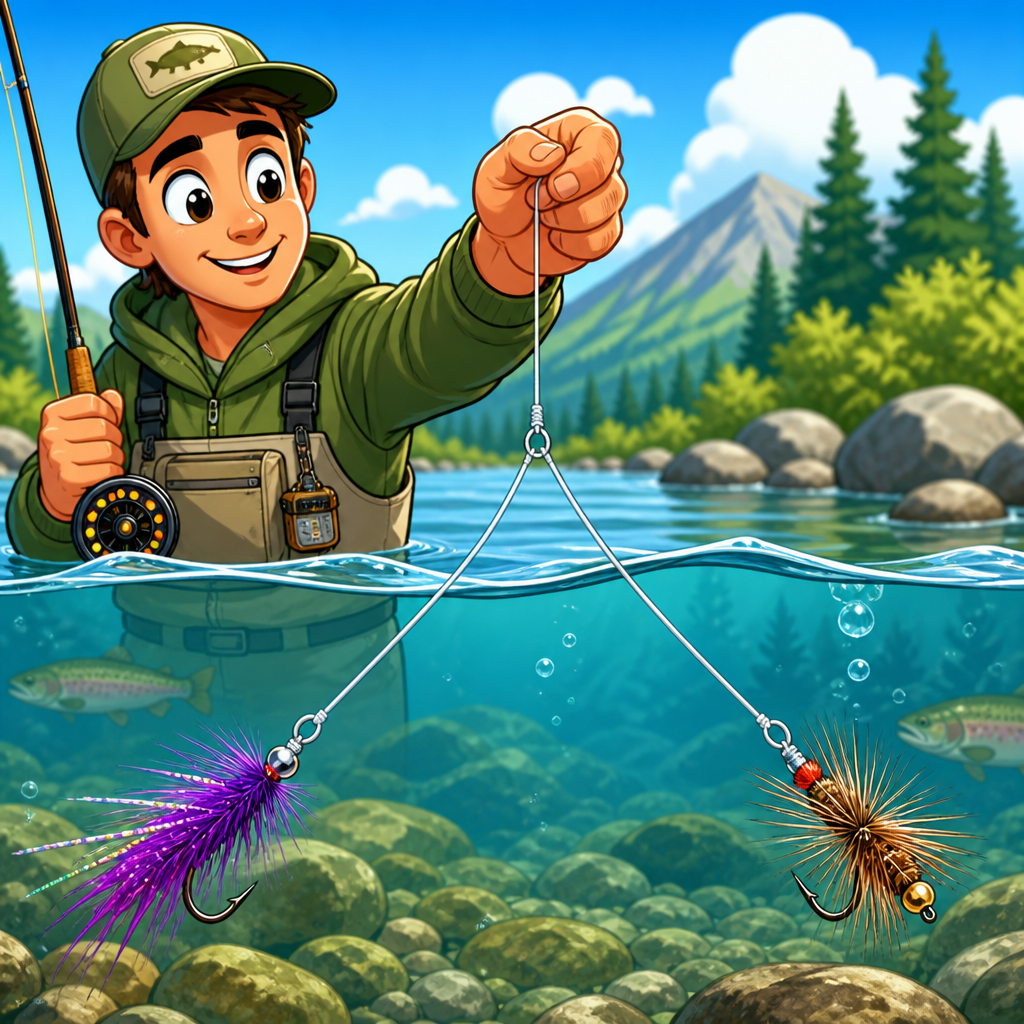
Fishing two flies on one leader is one of the most effective ways to cover multiple depths, imitate different food sources, and locate active fish faster, yet it frustrates many anglers because poor knot choice and poor spacing create constant tangles. In fly fishing, a two-fly rig usually means a point fly tied at the end of the leader and a second fly attached either on a dropper tag, from the bend of the first hook, or on a separate branch created by a knot in the tippet. The core challenge is simple: every added connection changes energy transfer during the cast, drift, and hook set. If those connections are poorly built, the rig twists, wraps, and collapses.
I have spent enough days rebuilding tangled leaders in current, wind, and low light to know that most problems are not caused by bad luck. They come from three fixable issues: mismatched fly size, weak knot selection, and poor rig geometry. When anglers solve those three, two-fly setups become practical, not painful. This matters because a balanced tandem rig can double your presentation options without doubling false casts. It also matters because knot tying is the foundation of the entire system. The right knots create strength, angle, separation, and turnover. The wrong knots leave a rig that fishes badly even before the first cast.
As a knot-tying hub within Fly Fishing Basics, this guide explains when to use each common two-fly attachment method, which knots reduce tangles, how long each section should be, and what tradeoffs to expect. It also points naturally toward related knot topics every angler should master next, including loop knots, terminal knots, blood knots, tippet rings, and leader repair. If you understand how to tie two flies on one leader cleanly, you also understand most of the practical knot mechanics that make modern trout rigs work.
Choose the right two-fly rig before you tie anything
There is no single best way to tie two flies on one leader. The best rig depends on water type, fly style, and casting demands. On small streams with overhanging brush, a compact dry-dropper with a short dropper is easier to turn over than a long Czech-style nymph rig. On broad tailwaters, a tag-based nymph rig tracks straighter and tangles less than tying the second fly from the bend. On stillwater, two unweighted flies can be spaced farther apart because there is less current pulling them into each other. Anglers who ignore those differences often blame knots for problems caused by rig choice.
The three most common two-fly systems are bend rigs, tag rigs, and in-line dry-dropper rigs. In a bend rig, the point fly is tied to the end of the tippet and the second fly is attached to the bend of the upper fly. This is quick and widely used, especially with chironomids and small nymphs, but it can restrict movement of the top fly and slightly reduce hooking efficiency. In a tag rig, the upper fly sits on a short tag end created by a blood knot, triple surgeon’s knot, or specialized sighter connection. This keeps flies separated and is the cleanest setup for contact nymphing. In a dry-dropper rig, the upper fly is a buoyant dry or terrestrial, and the lower fly hangs below it on lighter tippet.
The point is direct: if your goal is fewer tangles, start by matching the rig to the job. Heavy anchor nymphs with a light emerger fish best on a tag system. A foam hopper with a beadhead nymph below it works best as a dry-dropper. Two similarly weighted soft hackles can be fished in line on lakes or swung in current. Good knot tying begins with good system design.
Use knots that create separation, not just strength
Most anglers evaluate a knot by break strength alone. In a two-fly leader, that is incomplete. A useful knot must also create the correct angle and stiffness for the branch where the second fly sits. The improved clinch knot, for example, is excellent for attaching a fly to the terminal end of tippet, but it does nothing to create a clean dropper branch. A blood knot, by contrast, joins two tippet sections while leaving a short tag that can stand out from the leader if trimmed correctly. That mechanical difference matters more than many anglers realize.
For point flies, I rely most often on the improved clinch, Orvis knot, or Davy knot, depending on fly size and tippet diameter. The improved clinch remains a standard because it is fast, familiar, and strong enough in nylon and fluorocarbon when tied cleanly and lubricated. The Orvis knot is underrated; it is compact, tests well, and is easy to tie with cold hands. The Davy knot is excellent for small trout flies when speed matters, though I prefer the double Davy if I am using finer tippet. For loop freedom on streamers, a non-slip mono loop can be useful, but open loops generally increase the chance of wrapping in a tandem trout rig, so I use them selectively.
For creating the upper dropper, the blood knot and triple surgeon’s knot are the workhorses. The blood knot is slimmer and passes through guides better. It also leaves neater, more directional tags, which is one reason many competition anglers use it in contact nymphing leaders. The triple surgeon’s knot is faster and easier with uneven materials or cold fingers, but its tags can exit at less predictable angles. Both knots are legitimate. The mistake is trimming both tags flush when you actually need one to hold a fly.
Build the leader with deliberate spacing and proportion
Spacing is where tangle prevention becomes practical. If the upper and lower flies are too close, they collide on the cast and in fast current. If they are too far apart, the rig becomes harder to cast, harder to net, and harder to control during the drift. For most trout nymphing, a reliable starting point is 18 to 24 inches between flies. In faster water with a heavy point fly, 20 inches often tracks best. In shallower water or with smaller unweighted flies, 14 to 18 inches may be enough. For dry-dropper setups, 16 to 30 inches under the dry is common, depending on depth and buoyancy.
Leader proportion matters just as much as distance. A common mistake is using tippet sections that are too limp for the size of the flies. If you fish a size 8 tungsten stonefly above 6X tippet and a tiny dropper, the system collapses because the material cannot carry the mass. Another mistake is using equal-diameter materials everywhere. Good turnover usually comes from taper. For example, a 9-foot 4X leader extended with 18 to 30 inches of 4X or 5X tippet can support an upper nymph, then step down to 5X or 6X for the point fly. That diameter change helps the lower fly move naturally while keeping the upper section stable.
In practice, I tell anglers to think in terms of geometry, not magic formulas. The heavier fly usually belongs on the point unless you are intentionally using a tag system where the anchor rides below and the smaller fly sits on a short upper tag. Keep the upper tag short, usually 3 to 6 inches. Keep the dropper section long enough to separate the flies but short enough to cast as one unit. Fine tuning after ten drifts will teach more than changing knots every five minutes.
Pick the right attachment method for nymphs, dries, and streamers
Different fly categories behave differently in the air and in water, so the cleanest knot system changes with them. Nymph rigs benefit most from stiffness and controlled depth. Dry-dropper rigs need flotation and reduced hinge points. Tandem streamer rigs demand room to swim without fouling. Treating all fly combinations the same is one of the fastest paths to tangles.
| Rig style | Best knot or connection | Ideal spacing | Main advantage | Main risk |
|---|---|---|---|---|
| Tag nymph rig | Blood knot or triple surgeon’s knot with 3 to 6 inch tag | 18 to 24 inches between flies | Excellent separation and drift control | More knots to manage |
| Bend nymph rig | Improved clinch to point fly, clinch from hook bend to second fly | 16 to 22 inches | Fast to build on the water | Top fly movement can be restricted |
| Dry-dropper | Terminal knot to dry, clinch or Orvis knot to dropper tippet | 16 to 30 inches below dry | Visible strike indicator with natural presentation | Dry can drown if overloaded |
| Tandem soft hackle | In-line terminal knots | 20 to 30 inches | Simple for swings and lakes | Can twist during aggressive casting |
| Tandem streamer | Terminal knot or loop to lead fly, short trailing connection | 10 to 18 inches | Covers larger forage profile | Highest fouling risk |
For trout nymphs, the tag rig is the most dependable anti-tangle system. The upper fly sits on a short branch, not directly behind another hook, so it has less opportunity to wrap. This is why many anglers using European nymphing leaders, colored sighters, and tungsten anchors prefer a tag arrangement. For dry-dropper fishing, I usually attach the lower tippet to the bend of the dry only if the dry has a wide gape and enough buoyancy, such as a foam hopper, Chubby Chernobyl, or large stimulator. With smaller dries, tying the dropper off the eye or using a dedicated attachment point often preserves floatation and hook function better.
Streamers require extra caution. Two articulated or weighted streamers on one leader can cast like a pair of socks in a windstorm. If you do fish tandem streamers, use stout material, shorten the spacing, and open your casting loop. This is not a knot problem alone; it is a mass-and-momentum problem.
Cast and mend in ways that protect the knots you tied
Even a perfectly tied leader will tangle if it is cast with abrupt power and a tailing loop. The cast must match the rig. Two flies create more air resistance and more opportunities for one fly to overtake the leader leg. The fix is straightforward: slow down, widen the casting arc, and let the back cast straighten before driving forward. Many anglers rush tandem rigs because they feel heavier. That added force usually makes things worse. Smooth acceleration and a positive stop turn over a two-fly setup far better than brute power.
Open loops are not sloppy loops. They are controlled, slightly wider loops that keep the flies from crossing paths. On short nymph casts and lobs, especially with indicators or tungsten beads, a tuck cast can help sink the point fly quickly, but overdoing it can also drive the upper fly into the leader. On contact rigs, leading the flies with the rod tip instead of repeatedly false casting cuts down on tangles and preserves leader layout. The less time the rig spends whipping through the air, the fewer chances it has to knot itself.
Mending matters too. A violent upstream mend can throw slack directly over the upper tag and wrap it around the leader. Better mends are smaller and earlier. Set the line, then reposition only what you need. In pocket water, high-sticking or tight-line control often tangles less than repeated aerial mends. On lakes, a straightened leader with slow hand-twist retrieves keeps tandem soft hackles separated remarkably well. Good knot tying gives you the framework, but good line control keeps that framework functioning.
Troubleshoot recurring tangles and know when to rebuild
When a two-fly rig keeps tangling, diagnose the exact failure point. If the upper fly repeatedly wraps around the leader near the knot, the tag is likely too long or too soft. If the lower fly snags the upper fly during the cast, spacing may be too short or the casting stroke too narrow and forceful. If the whole rig twists after every fish or snag, your flies may spin in current; check for bent hackle, oversized indicators, or bead combinations that helicopter on the drift. Tangles leave clues, and those clues usually point to a mechanical fix.
I rebuild faster than many anglers expect because damaged tippet is a hidden cause of poor turnover. Once nylon gets coiled, kinked, or nicked, it loses both strength and clean alignment. Straightening helps, especially with a firm pull or leader straightener, but there is a point where replacing 24 inches is more efficient than untangling for ten minutes. Fluorocarbon resists abrasion well and sinks faster, which makes it useful for droppers and point sections, but it can be stiffer and less forgiving in certain dry-dropper applications. Nylon is often better above the fly when floatation and shock absorption matter.
Several support tools make knot management easier. Tippet rings reduce repeated shortening of the main leader and provide a clean junction for rebuilding droppers. Hemostats and nippers help trim tags precisely; that precision matters because a 5-inch tag behaves very differently from a 10-inch one. Floatant, split shot, and putty should be added with restraint. Every extra accessory adds weight, hinge points, or spin. If you want a dependable two-fly leader, simplify ruthlessly and rebuild the moment the system stops turning over cleanly.
Tying two flies on one leader without constant tangles comes down to a few durable principles. First, choose the right rig for the job instead of forcing one setup to do everything. Second, use knots for their function, not only for their strength. Terminal knots like the improved clinch, Orvis, and Davy secure flies efficiently, while connection knots like the blood knot and triple surgeon’s knot create useful droppers and leader transitions. Third, control spacing, tag length, and tippet diameter so the rig has separation and turnover. Most trout anglers fish best with short upper tags and about 18 to 24 inches between flies.
The bigger lesson is that knot tying sits at the center of the entire Fly Fishing Basics system. Once you can build a clean two-fly rig, related skills become easier: repairing leaders, adding tippet rings, choosing between nylon and fluorocarbon, and matching knots to fly type. You also spend less time untangling and more time presenting flies at the right depth and angle. That is the real advantage. Better knots do not just save tackle. They create better drifts, cleaner hook sets, and more fish brought to hand.
Use this page as your knot-tying hub, then practice each connection until you can tie it quickly without looking up the steps. Start with one dependable nymph tag rig, one dry-dropper setup, and one terminal knot you trust. Test them on the water, adjust spacing based on what the leader tells you, and rebuild before problems compound. When your knots are deliberate and your leader geometry is sound, fishing two flies on one leader stops feeling complicated and starts feeling efficient.
Frequently Asked Questions
What is the best way to tie two flies on one leader without creating constant tangles?
The best approach is to build a two-fly rig that matches your casting style, fly size, and water type rather than assuming one setup works for everything. In most situations, the cleanest and most tangle-resistant system starts with a point fly tied to the end of your leader or tippet, then a second fly added on a short dropper tag or a separate branch created at a knot. Many anglers can make a two-fly rig work, but tangles usually happen when the flies are too close together, the droppers are too long, or the flies are too heavy and wind-resistant for the leader being used.
A reliable rule is to keep the dropper shorter than the distance between the flies. For example, if your point fly hangs 18 to 24 inches below the upper fly, keep the dropper tag around 4 to 6 inches long. That way, the upper fly has less opportunity to wrap around the lower section during the cast. Stiff tippet material also helps because it kicks the fly away from the leader instead of letting it collapse into a knot. If you are fishing nymphs, many anglers prefer tying the upper fly off a tag from a blood knot or surgeon’s knot rather than off the bend of the first hook, because a tag dropper tends to drift cleaner and usually tangles less. If you are fishing two dries or a dry-dropper rig, tying the second fly off the bend can still work very well, especially when the top fly is buoyant and stable.
Just as important as the rig itself is how you cast it. Open your loop, slow down your tempo, and avoid overpowering the forward cast. A two-fly rig needs smooth turnover, not speed for its own sake. Most “bad rig” problems are partly casting problems. When spacing, tag length, and casting stroke work together, two flies on one leader become much more manageable and far less frustrating.
Should I tie the second fly to a dropper tag, to the bend of the first hook, or on a separate branch line?
Each method can work, but they behave differently on the water and in the air. Tying the second fly to a dropper tag is often the most versatile and tangle-resistant method for general fly fishing. In this setup, you create a tag end at a blood knot or triple surgeon’s knot and leave one side long enough to attach the upper fly. The point fly stays at the end of the tippet below. This keeps the two flies separated on distinct attachment points and usually improves drift, especially with nymphs and smaller streamers.
Tying the second fly from the bend of the first hook is common because it is simple and quick. You tie the top fly on normally, then run a piece of tippet from the bend of that hook to the lower fly. This method is especially popular in dry-dropper fishing because the top fly acts as both an attractor and an indicator. The downside is that it can restrict movement of the top fly, slightly alter how it rides, and increase leverage during fights if two fish or heavy current put pressure on the rig. It also tends to tangle more when used with mismatched fly sizes or with very limp tippet.
A separate branch line created by a knot is essentially a more structured version of the tag-dropper idea. It is excellent when you want clean fly separation and a controlled presentation. Competitive anglers often favor this style because it offers precise spacing and efficient depth control. The tradeoff is that it takes a little more planning and knot confidence. For many anglers, the best practical answer is this: use a tag dropper for nymphing, use bend attachment for simple dry-dropper rigs, and use a branch-style setup when presentation precision matters most.
How far apart should two flies be on the leader to reduce tangles and still fish effectively?
Spacing is one of the biggest keys to making a two-fly rig fish well. If the flies are too close, they collide during the cast and wrap around each other. If they are too far apart, the rig can become awkward to cast, hard to control, and difficult to land accurately. In many trout situations, 16 to 24 inches between flies is a strong starting range. That gives enough separation for the flies to work at different depths or imitate different food sources without constantly interfering with each other.
The right spacing depends heavily on the type of flies you are using. Larger, bushier, or heavier flies usually need more room. For example, a pair of beadhead nymphs often fishes more cleanly with closer to 20 to 24 inches between them, while two small unweighted flies may work fine at 14 to 18 inches apart. In a dry-dropper system, the lower fly might be suspended 18 to 36 inches below the dry depending on water depth and current speed. In that case, the concern is less about the lower fly tangling with the upper one and more about making sure the dry can support the weight below it.
Dropper length matters just as much as fly spacing. A common mistake is leaving the dropper tag too long. A long tag gives the fly freedom, but it also gives it more chances to wrap around the leader or lower tippet. Keeping the tag to roughly 4 to 6 inches is often enough. If you still get tangles, shorten the tag before changing everything else. In practice, efficient two-fly spacing is a balancing act: enough separation to fish two distinct levels, but not so much slack and freedom that the whole rig folds over on itself.
What knots and tippet materials help prevent tangles in a two-fly setup?
The best knots for a two-fly leader are strong, compact, and predictable under tension. For creating a dropper, the triple surgeon’s knot and blood knot are two of the most widely used options. A triple surgeon’s knot is quick, easy to tie on the water, and excellent when you need a tag end for the upper fly. A blood knot produces a neater, straighter connection and can create a very clean dropper tag, though it takes a bit more practice. Once the flies are attached, many anglers use an improved clinch knot, Orvis knot, or nonslip loop knot depending on the fly type and desired movement. For most nymphs and dries, a standard clinch-style knot is perfectly effective. For streamers, a loop knot can give the fly more action, though it may also slightly increase casting complexity.
Tippet material plays a major role in reducing tangles. Stiffer nylon monofilament generally resists tangling better than very soft material because it helps turn the flies over cleanly and keeps the upper fly from collapsing back into the leader. Fluorocarbon is popular for subsurface flies because it sinks, resists abrasion, and maintains good strength in a thinner diameter, but some fluorocarbon can be more wiry, which can be either an advantage or a drawback depending on the rig. For dry flies, nylon is often preferred because it floats better and handles delicately. If your two-fly rig keeps knotting up, going one size heavier or using a slightly stiffer tippet can make a noticeable difference.
Another smart habit is trimming tags cleanly, except when intentionally leaving one as a dropper. Stray knot ends can catch fibers, trap debris, or contribute to micro-tangles that become bigger problems after repeated casts. Also inspect your tippet regularly. Once material gets twisted, abraded, or curled, it becomes far more likely to foul. In other words, a low-tangle two-fly rig is not just about one magic knot. It is about a system: clean connections, the right stiffness, sensible diameters, and regular maintenance on the water.
Why do two-fly rigs tangle so badly during the cast, and how can I fix my technique?
Most two-fly tangles happen because the cast collapses. Instead of unrolling in a controlled line, the leader kicks, rebounds, or piles up, giving the flies time to cross paths. This usually comes from casting too hard, using loops that are too tight for the rig, or trying to force turnover with speed rather than timing. A two-fly leader carries more weight, more hinges, and more air resistance than a single-fly setup, so it demands a smoother stroke. If you use the same aggressive cast you use for one small dry fly, the rig often punishes you with knots.
The first fix is to open your casting loop. A slightly wider loop gives the flies more room to travel without colliding. The second fix is to slow down and let the back cast straighten before beginning the forward stroke. Rushing the transition is one of the fastest ways to create leader kick and airborne tangles. The third fix is to reduce false casting. Every extra cast is another chance for the flies to wrap around each other. Make one or two controlled false casts at most, then deliver. Water-loading, roll casting, or lobbing the rig with a more compact, deliberate motion can also help, especially with weighted nymphs or indicator setups.
Leader design matters here too. If the leader is too light for the flies, turnover becomes erratic.