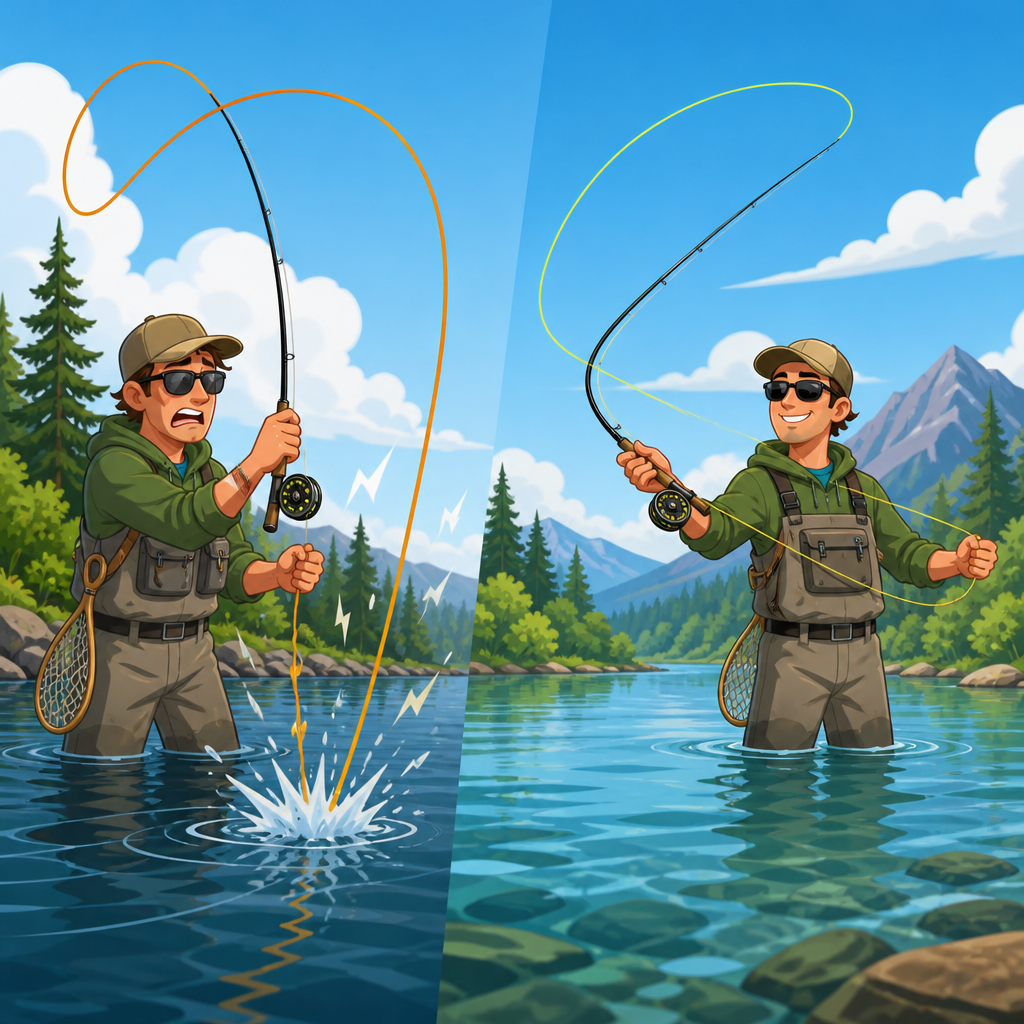
Fly line that slaps the water is more than a cosmetic problem. It is a casting fault with practical consequences: fewer accurate presentations, more spooked fish, poor turnover, and less control once the fly lands. In fly fishing basics, this issue sits at the center of casting techniques because it connects mechanics, timing, equipment balance, loop shape, and presentation. I have spent enough days teaching beginners on ponds, rivers, and salt flats to know that the sound of a line smacking the surface usually points to one of a short list of fixable causes. Once anglers understand those causes, they improve faster in every part of casting.
In simple terms, fly line slap happens when the line or leader lands with unnecessary force instead of unrolling and settling under tension. A good cast transfers energy progressively from rod to line to leader to fly. A bad cast dumps energy abruptly, often because the rod tip traveled a poor path, the caster rushed the forward stroke, or the loop lost shape before turnover. The result is a noisy presentation that lands in piles, kicks sideways, or crashes all at once. Whether you fish dry flies, nymphs, streamers, or saltwater patterns, reducing line slap is essential because fish detect both sound and abnormal surface disturbance.
This article is the casting techniques hub within fly fishing basics, so it covers the full picture rather than one isolated tip. You will learn why line slap happens, how to diagnose the exact fault, what changes fix it, and how related skills like loop control, timing, haul mechanics, and leader design influence the outcome. If you want cleaner deliveries and more fishable casts, start by understanding the landing phase. The water tells the truth about everything that happened in the air.
What line slap tells you about your cast
Line slap is a symptom, not the root problem. When I watch a student cast and hear the line smack down, I look backward through the sequence. Did the back cast straighten fully? Did the caster apply power too early? Was the stop crisp enough to form a controlled loop? Did the rod tip track straight? In most cases, the answer lies in one of those mechanics. The line lands badly because the cast was built badly.
The cleanest presentations come from efficient energy transfer. During both back cast and forward cast, the rod stores energy as it bends, then unloads that energy into the line. If the rod tip follows a relatively straight path during the power application, the line forms a narrow, stable loop. That loop unrolls smoothly, leader first, and the fly lands before the line piles on top. If the rod tip dips, curves, or bounces, the loop widens or tailing loops form. The line then collapses and hits the water flat. This is why experienced casters focus on rod tip path, not just arm motion.
Another clue comes from where the slap occurs. If the line crashes near the caster, the forward cast often started before the back cast straightened. If the whole line falls at once farther out, the caster may be overpowering the stroke or using a leader that cannot turn over. If only the final section kicks down loudly, the problem may be in the leader-to-fly match. Reading these patterns turns random frustration into usable diagnosis.
The most common causes of fly line slapping the water
Several faults create the same noisy result, but they do not require the same fix. The most common is poor timing. Beginners frequently rush the forward cast before the back cast has unrolled. The rod then loads against slack instead of line tension, and the forward loop collapses. Another common cause is excessive power. Anglers assume distance comes from force, so they hit the cast too hard. That abrupt acceleration drives the rod tip off plane and dumps the line. Good casting depends more on smooth acceleration to a decisive stop than brute force.
Too much wrist movement is another repeat offender. Wrist is not inherently wrong; in fact, controlled wrist use helps many casts. The problem is uncontrolled wrist break that makes the rod tip travel in a wide arc. A wide arc produces a wide loop, and wide loops often fall with a slap instead of unrolling tightly. I also see line slap from poor tracking, especially when anglers drift the rod around their body instead of moving it in one clean plane. The line crosses itself, opens, and lands without direction.
Equipment can contribute too. An overweight line, underpowered rod, or very short aggressive head can make timing feel jumpy. A leader that is too short or too thick for delicate dry fly work will kick over hard. A heavy fly tied to a leader built for tiny dries can also crash. Wind compounds every weakness by knocking open loops downward. None of this means the caster is helpless; it means the caster must match mechanics and tackle to the job.
How timing, acceleration, and the stop control presentation
If one section of casting techniques fixes the most problems fastest, it is this one. Good timing means waiting long enough on the back cast for the line to nearly straighten before beginning the forward stroke. You do not need to turn around every cast, but in practice sessions you should. Seeing the line straighten teaches the pause better than any verbal cue. The longer the line carried in the air, the longer the pause required. Short casts need short pauses; long carries need longer ones.
Acceleration should be smooth and progressive. Think of increasing speed through the stroke, not punching from the start. In instruction, I often tell anglers to begin at sixty percent and save the sharpest speed increase for the final part of the stroke. This creates a more stable bend in the rod and cleaner loop formation. The stop then matters just as much as acceleration. A crisp stop lets the rod unload efficiently and sends the loop forward. A mushy stop makes the tip continue traveling, widening the loop and bleeding energy before turnover.
Drift also helps. After the stop on the back cast, allowing the hand to reposition slightly without adding power can lengthen the casting stroke and reduce the urge to rush. Many anglers who slap the line on the water simply run out of stroke space and compensate by hitting the forward cast. Better timing plus a usable stroke length immediately quiets the landing. In practical terms, if your cast sounds loud, slow the tempo and sharpen the stop before changing anything else.
Loop shape, rod tip path, and why narrow loops land quietly
Loop shape determines much of what happens at presentation. A narrow loop cuts through the air, maintains energy, and turns over the leader efficiently. A wide loop bleeds speed and lets more line fall at once. The rod tip path creates that loop. When the tip travels close to a straight line during the power application, the loop stays tight. When it travels in a convex path, often from too much force or too long a stroke for the amount of bend, the line forms a tailing loop. When the tip follows a concave path, often from a drooping rod tip or soft stop, the loop opens too wide.
Quiet presentations are not always the narrowest possible loops. For short dry fly deliveries, a controlled open loop can be useful because it allows a gentler leader turnover. The key is intentionality. The loop should open because you changed the casting arc and power application on purpose, not because mechanics broke down. Instructors often describe this as matching loop size to the fishing problem. Streamers in wind benefit from tighter loops. Small dries near selective trout may need a slightly more open forward delivery and higher rod tip on the final presentation cast.
Watch tournament casters or skilled guides and you will notice how little wasted motion they use. Their hand path is compact, tracking is clean, and the loop remains stable through the unroll. That stability is exactly what prevents line slap.
Practical fixes for beginners and intermediate anglers
When I need to cure line slap quickly, I use a short checklist. It works because it addresses mechanics in the order they affect the cast most.
| Problem | What you see or hear | Likely cause | Best fix |
|---|---|---|---|
| Line crashes near you | Forward cast starts weak and collapses | Started forward stroke too early | Lengthen the pause on the back cast |
| Whole line lands flat and loud | No clean turnover | Applied power too abruptly | Use smooth acceleration to a firm stop |
| Leader kicks down hard | Fly and tippet snap over | Leader too short or too stiff | Lengthen leader or reduce butt stiffness |
| Loop opens and loses direction | Cast wanders side to side | Poor tracking | Keep hand moving in one plane |
| Line crosses itself | Kick, tail, or crack | Rod tip dipped then rose | Reduce force and shorten stroke |
Start practicing at thirty to forty feet with yarn instead of a fly. False cast only enough line you can control. Make ten casts focusing solely on waiting for the back cast to straighten. Then make ten more with less force than you think you need. Most anglers are surprised by how much quieter the line lands when they back off. If the problem remains, check grip pressure. A death grip transmits tension into the forearm and encourages jerky power application. A relaxed thumb-on-top grip usually improves smoothness.
For intermediate anglers, the next step is trajectory control. Many slapping presentations happen because the forward cast is driven too low too early. Aim the loop a bit higher on the final delivery, then let gravity complete turnover. This is especially useful with dry flies and longer leaders. On grass, lay out targets at twenty, thirty, and forty feet and practice landing the leader first with the fly line following under control.
How equipment, leader design, and fly choice affect splashdown
Not every loud landing is a pure technique error. The tackle system matters. A weight-forward floating line with an aggressive front taper is designed to turn over indicators, larger flies, or windy casts more decisively than a delicate double taper or presentation taper. That power is helpful in many situations, but it can make a short dry fly cast land harder than necessary. Rod action also changes feel. Fast rods recover quickly and generate high line speed, but they punish rushed timing. Moderate rods often help beginners sense load and unload more clearly, which can reduce line slap during skill development.
Leader formulas are just as important. Standard dry fly leaders in the nine- to twelve-foot range dissipate energy gradually through taper. If you cut them too short, the final turnover becomes abrupt. If the tippet is too heavy, the fly lands with more force and less drift. Conversely, leaders that are too long for the caster’s skill level may fail to straighten at all, causing puddles rather than slaps. The right setup depends on fly size, wind, and presentation goal. For example, a seven-and-a-half-foot leader with 0X or 1X for a weighted streamer is appropriate, but the same leader on a size 18 dry will rarely land delicately.
Fly choice changes aerodynamics. Beadhead nymphs, bushy hoppers, and weighted streamers carry momentum that can pull leader turnover downward. In those cases, perfection in quiet landing is less realistic; control and safety matter more. Still, even with heavy flies, better loop control and proper leader design reduce the violence of the landing.
Drills that build better casting techniques fast
Specific drills fix line slap faster than generic practice. My first choice is the pick-up and lay-down cast. Strip out a manageable amount of line, lift into one back cast, pause until it straightens, then make a single forward cast to the target. This removes endless false casting and exposes timing errors immediately. The second drill is the stop drill: cast short and exaggerate a crisp stop at roughly one o’clock on the forward stroke and two o’clock on the back cast, adjusting for style and plane. You should feel the rod unload instead of forcing the line down.
The third drill is the tracking lane drill. Place two objects on the ground to create a narrow lane for your hand path. Practice moving the rod hand through that lane without sweeping around your body. Clean tracking produces straighter loops and quieter presentations. The fourth is variable trajectory practice. Make one cast low, one medium, one high, and watch how the line lands. This teaches that presentation is not only about power but also delivery angle.
Film yourself if possible. Modern phones reveal faults instantly, especially creep, abrupt power application, and wrist collapse. Slow-motion video often explains what feel alone cannot. If you can work with a certified casting instructor, even one lesson can save months of guessing because a trained eye catches tiny errors before they become habits.
Applying the fix to real fishing situations
On trout rivers, the goal is usually controlled turnover followed by a gentle finish. That means longer leaders, measured tempo, and a final presentation cast aimed slightly higher. On lakes, where fish may tolerate more disturbance, line slap matters most when fish are shallow or calm conditions make sound obvious. In saltwater, speed and wind often require tighter loops and higher line speed, but line slap still costs shots by pushing wakes over nervous fish before the fly enters the feeding lane.
Different techniques also change the standard. Indicator nymphing accepts more surface disturbance because the rig is heavier and strike detection matters more than delicacy. Streamer fishing often prioritizes turnover and immediate control for the strip. Dry fly fishing demands the most refinement because the cast must place the fly naturally without telegraphing danger. Knowing which standard applies prevents overcorrecting. You do not need a whisper-soft landing for every cast; you need the right landing for the fish and method.
The main benefit of fixing fly line slap is not just a quieter presentation. It is a more efficient cast from start to finish. Better timing, cleaner loops, improved tracking, and matched tackle make every technique work better, from short dry fly shots to long wind-cutting deliveries. If your line slaps the water, treat it as useful feedback. Practice the pause, smooth the acceleration, sharpen the stop, and tune your leader to the fly. Then test those changes on the water, because the best casting techniques are the ones that let the fly land where it should, how it should, when it matters most.
Frequently Asked Questions
Why does my fly line slap the water at the end of the cast?
In most cases, fly line slapping the water is the result of a breakdown in timing, rod-tip path, or power application during the cast. When the rod unloads in a way that sends the line downward instead of allowing it to unroll smoothly above the surface, the line lands with force instead of settling under control. A common cause is starting the forward cast before the back cast has fully straightened. That rushed transition collapses the loop, robs the cast of tension, and often drives the line into the water. Another frequent issue is applying too much power too early, which creates a wide, inefficient loop and a poor turnover. Instead of the leader and fly extending cleanly, the whole system piles down and smacks the surface.
The rod tip also matters more than many anglers realize. Clean presentations come from a smooth rod-tip path that stays controlled and mostly straight through the power stroke. If the tip dips, rebounds excessively, or travels in a convex path, the loop shape suffers and the line tends to kick downward at the end. That is why line slap is not just a cosmetic annoyance. It usually signals a mechanical casting fault that affects accuracy, distance control, presentation, and your ability to place the fly quietly where fish are feeding. The good news is that once you identify whether the problem comes from rushing, overpowering, or poor tracking, it is usually very fixable with deliberate practice.
How does line slap affect presentation and my chances of catching fish?
Line slap directly hurts presentation, and presentation is often the difference between a fish eating and a fish vanishing. When the line lands hard, it creates noise and surface disturbance that can alert fish, especially in shallow water, slow currents, spring creeks, ponds, and salt flats where fish are sensitive to unnatural movement. Even when fish do not spook outright, a hard landing can put them on edge and reduce the odds of a confident take. Many anglers focus on the fly, but fish frequently notice the line and leader first. If those land heavily or off target, the fly rarely gets a fair chance.
There are practical control problems too. A slapping line often means poor turnover, which makes it harder to deliver the leader straight, manage drift, or set up the next mend. In dry-fly fishing, that can drag the fly almost immediately. In nymphing or streamer fishing, it can throw off depth, angle, and contact. In windy conditions, line slap often goes hand in hand with open loops and reduced accuracy, so the cast is not only loud but also less precise. In other words, the problem does not end when the line hits the water. It often starts there, affecting everything that happens after the cast, from drift quality to strike detection to line control.
What casting mistakes most commonly cause fly line to slap the water?
The most common mistakes are overpowering the cast, rushing the transition, and using an inconsistent stop. Overpowering is especially common among beginners who assume distance comes from force. In fly casting, distance and control come more from timing, line tension, and efficient loop formation than raw effort. When you hit the cast too hard, the rod tip tends to dip and rebound, creating tailing or overly wide loops that do not unroll cleanly. The result is often a cast that crashes down rather than turning over with control. Rushing the forward cast before the back cast straightens is just as common. Without that brief pause, the line never fully loads the rod, and the cast loses shape and direction.
Other mistakes include dropping the rod tip too low on the forward delivery, making the casting stroke too long for the amount of line out, and failing to track the rod in a straight path. Poor tracking sends energy off plane, which causes the loop to twist or collapse. Stopping too softly can also be a culprit. A crisp but controlled stop helps form a defined loop that unrolls efficiently. If the stop is mushy or drifting excessively, the line often loses structure and lands heavily. Finally, some anglers carry too much slack into the cast or fail to manage line tension on the pickup. A good cast starts before the rod ever comes forward. Clean tension, balanced tempo, and smooth acceleration all help the line land quietly instead of slapping the water.
Can the wrong fly rod, fly line, or leader setup make line slap worse?
Yes, equipment can absolutely contribute, even though technique is usually the main issue. A rod and line that are poorly matched can make timing more difficult and amplify casting errors. For example, if the line is too heavy or too light for the rod, the rod may load in a way that feels vague or abrupt, making it harder to control loop shape and turnover. Very fast rods can also exaggerate mistakes for newer casters because they recover quickly and respond sharply to uneven power application. That does not mean fast rods are bad, but they often demand better timing and smoother mechanics to avoid hard landings.
Leader design matters as well. A leader that is too short, too stiff, or poorly matched to the fly can kick over aggressively or fail to dissipate energy gracefully, both of which can contribute to noisy presentations. Heavier or wind-resistant flies also require adjustments in loop shape and casting tempo. If you cast them with the same narrow, delicate stroke used for a small dry fly, turnover often becomes erratic and the line can crash. In some cases, an overweight fly line, a bulky indicator rig, or an oversized streamer setup can create enough momentum that the line lands harder unless the caster compensates. The key point is that tackle should support the cast, not fight it. If your line consistently slaps despite good mechanics, it is worth checking whether your rod, line, leader, and fly are balanced for the kind of presentation you are trying to make.
What is the best way to fix line slap and make my presentations land more softly?
The best fix is to simplify the cast and rebuild it around smooth acceleration, proper pause, and a controlled stop. Start by shortening the amount of line you are casting so you can focus on clean mechanics rather than distance. Make a few false casts at a comfortable range and pay attention to whether the back cast fully straightens before you come forward. That pause is not a delay for its own sake; it allows the rod to load correctly and the line to stay under tension. On the forward cast, think of accelerating gradually to a firm stop instead of punching the rod. That one adjustment alone solves a surprising amount of line slap because it improves loop formation and keeps the rod tip from collapsing downward.
It also helps to lower your effort level. Many anglers are using far more force than necessary. Try making the same cast with less power and better timing, then watch how the loop behaves. In addition, keep the rod tip traveling in a clean path and finish with intention, not with a dramatic downward shove. If you want a softer final presentation, you can also learn to slightly check the line with your line hand as the cast unrolls, or make a gentle presentation adjustment such as a reach or controlled follow-down after the stop. Practice with yarn or a visible leader on calm water and listen for the sound of the landing. Quiet feedback is useful feedback. When the cast straightens, turns over, and settles instead of snapping down, you know you are moving in the right direction. Over time, softer presentations become less about trying to be delicate and more about repeating sound casting mechanics that naturally produce quiet, accurate landings.