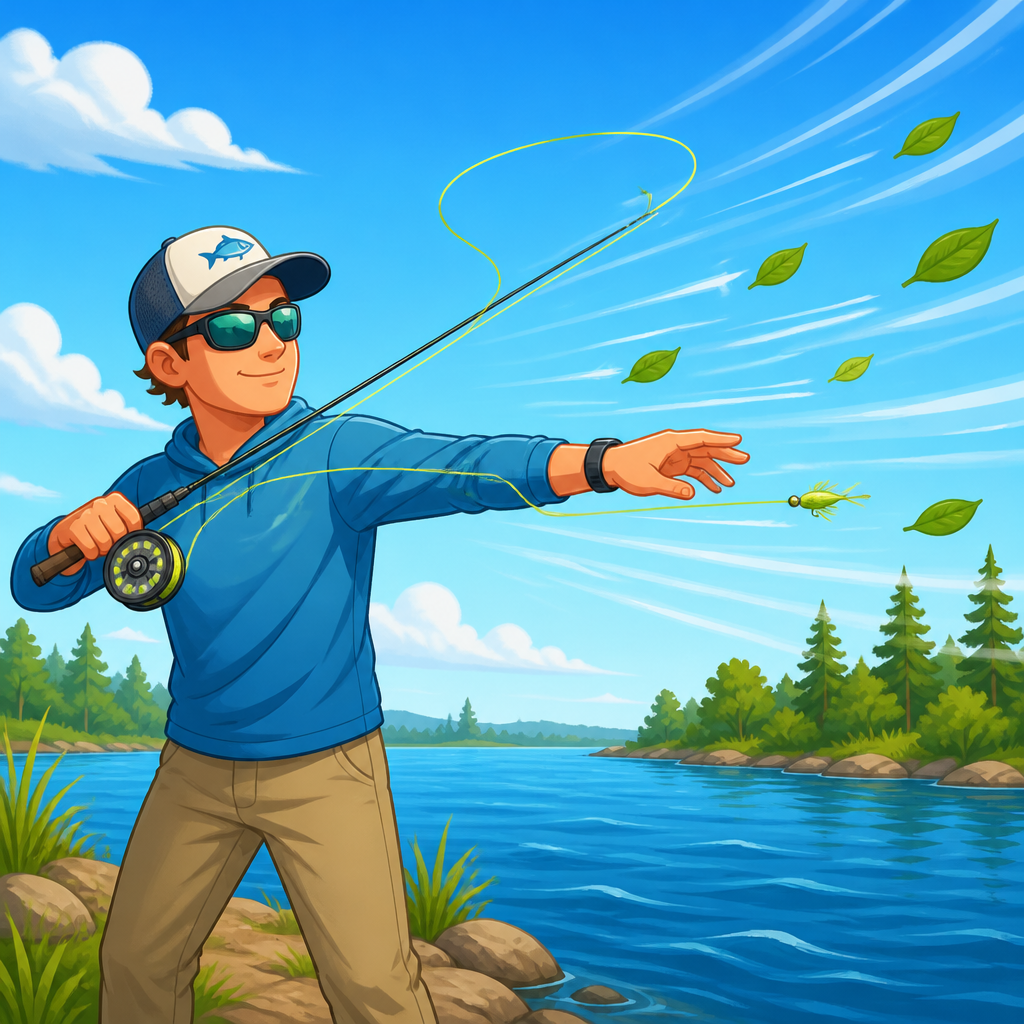
How to cast safely with wind blowing toward your casting arm is one of the most important skills in fly fishing basics because the wrong line path can drive a weighted fly, split shot, or even an unweighted hook directly into your hand, forearm, shoulder, or face. In practical terms, this wind direction means the breeze is pushing the leader and fly across the body on the casting side, which increases the chance of painful contact during both false casts and the final delivery. I have taught this scenario on rivers, lakes, and salt flats, and it is where beginners most often lose confidence. The good news is that safe casting techniques are teachable, repeatable, and effective even in difficult weather.
To handle this condition, an angler needs to understand three things: wind direction, rod-side risk, and line-plane control. Wind direction is not just a general weather note; it determines where the loop will drift after it unrolls. Rod-side risk refers to the side of your body holding the rod. For a right-handed caster, wind from the right is the danger setup. Line-plane control means choosing a casting path that keeps the fly away from the body by changing rod angle, stroke shape, stance, or even the casting arm. These adjustments matter because fly casting techniques that work in calm air can become unsafe when the wind changes by only a few degrees.
This article serves as a casting techniques hub within fly fishing basics, so it covers the full decision process rather than one trick. You will learn why the wind creates danger, how to set up a safer stance, when to use off-shoulder casts, when to switch hands, and how to adapt for trout streams, stillwaters, and saltwater flats. You will also see where common advice falls short. Telling anglers to “just cast lower” is incomplete unless they also control loop shape, stop position, anchor drift, and casting tempo. Safe fly casting in wind is a system, not a single correction, and once that system becomes habit, windy days become manageable rather than intimidating.
Why this wind direction is risky
When wind blows toward your casting arm, it moves the unrolling loop toward the rod side of your body. On a right-handed cast with wind from right to left, the leader and fly can track inward as the loop straightens, especially if the forward cast is delivered on a standard vertical plane. The danger increases with weighted nymphs, conehead streamers, heavily bead-headed rigs, and long leaders that collapse late. I have seen many near misses happen not during the back cast but on the forward stroke, when the caster assumes the loop will stay in front and the gust folds it across the shoulder. The basic principle is simple: if wind can push the fly into you, your line plane must move away from you.
Several factors make the problem worse. Wide loops expose more line surface to the wind, so they drift more. Tailing loops can kick the fly unpredictably. Late or weak stops allow the rod tip to travel too far, producing sag and poor loop control. Casting too hard often magnifies the problem because the caster opens the stroke, drops the elbow, and loses tracking. Wind also exaggerates small flaws in timing. A cast that is merely inefficient in calm conditions can become unsafe in a crosswind. That is why experienced instructors teach safety and mechanics together. Protective glasses and a hat are essential, but equipment is the last layer of defense. The first layer is changing the cast so the fly never enters the danger zone.
The safest default adjustments for most anglers
The safest default response is to move the rod tip and loop to the opposite side of the body. For a right-handed caster with wind on the right, that usually means one of three options: an off-shoulder cast, a backhand cast, or switching the rod to the left hand. Which choice works best depends on space, accuracy demands, and the caster’s skill. In beginner lessons, I start with the option that immediately repositions the fly farthest from the face and rod arm. If the angler can switch hands with basic competence, that is often the cleanest answer. If not, the off-shoulder cast is usually the fastest safety upgrade because it preserves familiar forehand mechanics while moving the line to the non-rod side.
Stance matters as much as arm motion. Opening the stance slightly, with the casting-side foot back, helps the torso rotate and keeps the line path outboard. Lowering the casting plane on the forward cast can also help, but only if the back cast has enough clearance and the loop remains tight. In many real fishing situations, I coach anglers to shorten the amount of line carried in the air, reduce false casts, and shoot line on the final delivery. Less aerial line means less time for the wind to interfere. A compact casting stroke with deliberate stops is safer than a long, forceful stroke. The goal is not to overpower the wind. The goal is to organize the cast so the wind cannot push the fly into the body.
How to use the off-shoulder cast correctly
The off-shoulder cast is one of the most useful fly casting techniques for dangerous crosswinds because it changes where the loop travels without forcing a full hand switch. For a right-handed angler in wind from the right, the rod remains in the right hand, but the cast is delivered on the left side of the head and shoulder. The key is to tilt the rod and adjust tracking so the line stays outside the body, not above it. I teach anglers to begin with short line, slow tempo, and crisp stops. The back cast should unroll with enough height to clear grass, rocks, or current, while the forward cast tracks slightly across the body into a safe left-side plane.
Common errors include letting the rod drift back to the dominant side, overpowering the forward stroke, and collapsing the wrist so the loop crosses over the caster’s head. To prevent that, think about moving the thumbnail on a clean, slightly canted path and finishing with the rod tip aimed at the target from the non-rod side. Accuracy usually improves when the caster looks directly at the target and rotates the torso instead of reaching with the arm. On small trout streams, the off-shoulder cast is especially practical because there is often not enough room to change feet dramatically. On a drift boat or skiff, it can also preserve deck safety by keeping hooks away from guides and passengers. It is not an advanced trick. It is a core safety cast.
When the backhand cast is the better answer
The backhand cast is often safer and more accurate than an off-shoulder cast when the presentation must stay low, straight, and quick. In this version, a right-handed caster with wind on the right uses a backhand forward stroke so the line unrolls on the left side of the body. The advantage is geometry: the fly remains downwind of the caster through the delivery. On open banks, stillwaters, and saltwater flats, this cast can be the most efficient response because it eliminates extra body movement and keeps the loop aligned with the target. Skilled anglers use it constantly when the wind angle changes by small increments during a drift or while wading.
Mechanically, the backhand cast requires firm tracking and a clear stop. Many anglers initially push the rod in a convex path, which creates a wide loop and poor turnover. I correct this by shortening the stroke, leading with the back of the hand, and emphasizing a straight rod-tip path. The cast often feels weaker at first because the caster is using a less practiced movement pattern, but distance returns quickly with repetition. This is also a cast where hauling helps. A controlled single haul on the forward backhand stroke raises line speed without adding dangerous body motion. If you fish windy rivers often, the backhand cast deserves dedicated practice, not emergency use only.
Switching hands is underrated and often the safest option
Many anglers resist switching the rod to the opposite hand because they assume it will ruin accuracy. In practice, a serviceable non-dominant-hand cast is easier to develop than most people think, especially for fishing distances under forty feet. When wind blows toward your casting arm, switching hands can instantly put the rod on the downwind side, which is exactly where you want it. I recommend this approach often for nymph rigs, small dry flies, and routine river presentations where precision matters more than maximum distance. The first few casts may feel awkward, but the safety margin is huge, and confidence rises quickly once the fly no longer threatens the rod arm.
A useful training method is to practice pickup-and-laydown casts with the non-dominant hand before attempting false casts. Focus on smooth acceleration and a distinct stop rather than power. Then add one false cast, then two, and finally a simple reach or mend if needed. On guided trips, I have seen anglers become effective left-hand casters in one morning because they stop trying to duplicate their full dominant-hand distance. They only need a reliable fishing cast. This option is especially valuable from boats, where changing body position may be limited by rails, coolers, anchor lines, or another angler. Hand switching is not a last resort. It is a practical wind-management skill that belongs in every casting toolkit.
Technique choices by fishing situation
Different water types reward different safe casting techniques. The best choice depends on room behind you, target angle, line weight, and the kind of fly you are carrying. The table below summarizes the adjustments I use most often when coaching anglers in crosswind conditions that blow toward the casting arm.
| Situation | Safest primary cast | Why it works | Common mistake |
|---|---|---|---|
| Small trout stream with brush | Off-shoulder cast | Keeps fly off rod side without large stance change | Letting loop drift back over the head |
| Open river bank or gravel bar | Backhand cast | Maintains straight delivery on downwind side | Pushing the rod and opening the loop |
| Drift boat or raft | Switch hands when possible | Creates maximum safety around passengers and gear | Carrying too much line in the air |
| Stillwater from shore | Backhand with haul | Handles distance while keeping fly away from body | Overpowering the stroke |
| Saltwater flats | Backhand or hand switch | Fast target changes require efficient line-plane control | Failing to reposition feet before the shot |
These are not rigid rules. Obstacles, current seams, and target movement can change the answer. Still, the pattern is consistent: choose the cast that places the fly on the downwind side of your body for the greatest portion of the stroke. Once anglers understand that principle, they make safer decisions even when conditions are messy.
Loop control, line speed, and fly selection
Safe casting in wind is not only about which cast you choose. It also depends on loop shape, line speed, and terminal tackle. Tight loops generally cut through wind better and spend less time drifting sideways, but they must be formed cleanly. A forced, tailing loop can be more dangerous than a controlled medium loop because it drives the fly erratically. The fix is efficient acceleration to a firm stop, not brute strength. Good casters create speed late in the stroke and let the rod do the work. Hauling can help, especially with larger flies, but only if timing is solid. Poorly timed hauling adds chaos rather than control.
Fly choice matters more than many anglers realize. Bushy indicators, multiple droppers, and heavily weighted streamers present a larger safety hazard than a single dry fly. In strong crosswind, simplify the rig if conditions allow. Use one fly instead of two. Reduce split shot. Fish a slightly heavier leader butt to improve turnover. On trout water, I often advise anglers to move from an air-resistant indicator setup to a tighter nymph rig or to fish dries when the hatch supports it. On saltwater flats, selecting a fly with moderate weight rather than oversized dumbbell eyes can make the cast significantly safer. The best rig is the one you can cast with control. Efficiency and safety beat theoretical perfection every time.
Practice methods that build safe habits fast
The fastest way to improve is structured practice in moderate wind before you need the skill on a hard day. Start on grass with yarn instead of a hook. Face a target at thirty feet and work one adjustment at a time: off-shoulder, backhand, then hand switch. Keep sessions short and technical. Ten accurate casts with a safe line path are worth more than fifty rushed deliveries. I use video frequently because anglers often misjudge where the loop is traveling. A phone placed behind the caster shows whether the line is truly staying on the downwind side. Visual feedback shortens the learning curve dramatically.
Build toward realism. After the basic cast is stable, add a single haul, then shooting line, then changing targets at different angles. Practice with the flies and leaders you actually fish, but keep barbs pinched and wear glasses. Standards from organizations such as Fly Fishers International emphasize loop control, tracking, and plane management for good reason: those fundamentals transfer directly to wind safety. If you are teaching yourself, set a clear benchmark. For example, aim to deliver three of five casts into a hula hoop at thirty-five feet using a backhand cast without the line crossing your head. Measurable drills create progress. Safe habits do not appear automatically on the river; they come from rehearsing the right movement under manageable pressure.
Conclusion
When wind blows toward your casting arm, the central rule is straightforward: move the fly’s path to the downwind side of your body and keep it there with disciplined mechanics. That can mean using an off-shoulder cast, a backhand cast, or switching hands. It also means controlling loop shape, reducing unnecessary false casts, matching the rig to conditions, and wearing eye protection every time. In my experience, anglers improve fastest when they stop treating windy casting as a strength contest and start treating it as a positioning problem. Once the line plane is organized, the cast becomes safer, cleaner, and usually more accurate.
As a fly fishing basics hub for casting techniques, this page gives you the framework to approach any dangerous rod-side wind with confidence. The next step is simple: practice one safe adjustment this week, then build from there until it becomes automatic on the water.
Frequently Asked Questions
What does it mean when the wind is blowing toward your casting arm, and why is it so dangerous in fly fishing?
When the wind is blowing toward your casting arm, it means the breeze is coming from the same side as your rod hand and pushing the line, leader, and fly inward across your body. For a right-handed caster, that usually means wind from the right side. For a left-handed caster, it is usually wind from the left. This matters because the wind can carry the fly off its normal casting plane and into your hand, forearm, upper arm, shoulder, neck, or face. Even a small fly can cause injury, and the risk goes up sharply when you are fishing weighted nymphs, streamers with heavy eyes, split shot rigs, or multiple-fly setups.
The real problem is not just the fly line itself. The dangerous part is the terminal tackle at the end of the cast. A breeze that seems manageable can still push the leader into you during false casts or on the forward delivery. That is why this particular wind direction gets so much attention in fly fishing instruction. It creates a direct path from the fly to the caster’s body if technique does not change. Many beginners assume they simply need to “cast harder” into the wind, but power alone often makes the problem worse by increasing line speed without changing the unsafe line path. The safer approach is to deliberately alter casting angle, body position, and presentation so the fly stays on the downwind side of your body rather than crossing toward you.
What is the safest casting adjustment to make when the wind is pushing the line toward my casting side?
The safest and most reliable adjustment is to move the casting plane so the line and fly travel away from your body instead of across it. In many situations, that means using a backhand cast, changing your stance, or tilting the rod so the loop forms on the opposite side from your casting arm. The exact solution depends on whether you are wading, on a boat, and how much room you have, but the principle stays the same: keep the fly downwind and outside your body line.
For example, a right-handed caster with wind blowing from the right often becomes much safer by turning the body slightly and making a backhand delivery, or by using a casting angle that places the rod tip more to the left side so the line tracks there as well. Another common solution is to lower the rod on the back cast or use a sidearm trajectory that keeps the fly well away from the casting shoulder. Some anglers also reposition their feet so the non-casting shoulder points more toward the target, which naturally encourages a safer line path. What you do not want is a standard upright forward cast that allows the loop to drift into your casting side under wind pressure. If you remember one rule, make it this: the safest cast is the one that keeps the fly from ever crossing your body in the first place.
Should I use a backhand cast, a sidearm cast, or change shoulders when dealing with this wind?
Yes, and in many cases one of those changes is exactly what makes the situation manageable. A backhand cast is one of the best answers because it lets you present the fly while keeping the wind on the outside of the line path. If you are right-handed and the wind is hitting your right side, a backhand presentation can move the fly to the left side of your body and keep it there. That simple change often turns an unsafe cast into a controlled one. It may feel awkward at first, but it is a fundamental safety skill worth practicing before you need it on the water.
A sidearm cast can also help because it lowers the plane of the loop and gives you more control over where the line travels relative to your body. However, sidearm only works if it sends the fly away from you. If you drop the rod to the wrong side, you can actually make the risk worse. Changing shoulders is another very useful option. Many anglers never practice casting with the opposite hand or opposite shoulder, but even a basic ability to do so can solve tough wind situations quickly. If obstacles, current seams, or fish position make a backhand cast impractical, switching shoulders may give you the safest and cleanest presentation. The best anglers are not locked into one style. They choose the cast that keeps the fly out of their personal space and still puts it on target.
What safety precautions should I take beyond changing my cast?
Start with eye protection every single time you fish. Polarized glasses are not optional in conditions like this. They protect your eyes from glare, but just as importantly, they provide a barrier against flies and split shot. A hat with a brim adds another layer of protection for your forehead and face. If you are teaching someone new to fly fishing basics, insist on both before they ever begin casting. These are simple precautions, but they prevent serious injury.
Next, consider your rig. If the wind is difficult and the space is tight, it may be wise to remove split shot, switch to a lighter fly, shorten the leader, or avoid multi-fly setups until conditions improve. Heavily weighted rigs are effective for fishing, but they are also the least forgiving when wind pushes them off track. You should also reduce unnecessary false casting. The more times the fly travels through the air, the more chances the wind has to move it into you. Make fewer, more deliberate casts. Check behind you before every stroke, especially if other anglers, trees, or brush are nearby. Finally, give yourself permission to stop casting if the angle is simply unsafe. A short repositioning move upstream, a few steps around a rock, or a cast from the opposite bank may be smarter than forcing a dangerous presentation. Good anglers do not measure skill by stubbornness. They measure it by control and judgment.
How can I practice handling this wind direction safely before I face it with fish rising or current pushing at me?
The best practice is controlled, intentional practice on grass or open water without the pressure of fishing. Begin with yarn or a hookless practice fly so there is no chance of injury while you learn new casting angles. Set up as if you were on the water, then imagine or identify a wind direction that would blow toward your casting arm. Practice rotating your stance, making backhand deliveries, changing rod tilt, and using sidearm casts that keep the loop safely away from your body. Focus less on distance at first and more on repeatable line control. You want to build the habit of recognizing danger and automatically choosing a safer line path.
It also helps to practice with a specific sequence. First, identify the wind. Second, decide which side of your body is safe. Third, choose the cast that keeps the fly on that safe side. Fourth, make one or two false casts at most and then deliver. This kind of decision-making rehearsal is extremely useful because it transfers directly to real fishing situations. If possible, work with an instructor or experienced caster who can stand off to the side and watch your loop shape and tracking. Many anglers think they are keeping the line away from themselves when, in reality, the wind is still collapsing the loop inward. Outside feedback speeds up improvement. With a little practice, these adjustments become instinctive, and that is the goal. When wind blows toward your casting arm, you should not have to guess. You should already know how to protect yourself and still make an effective cast.