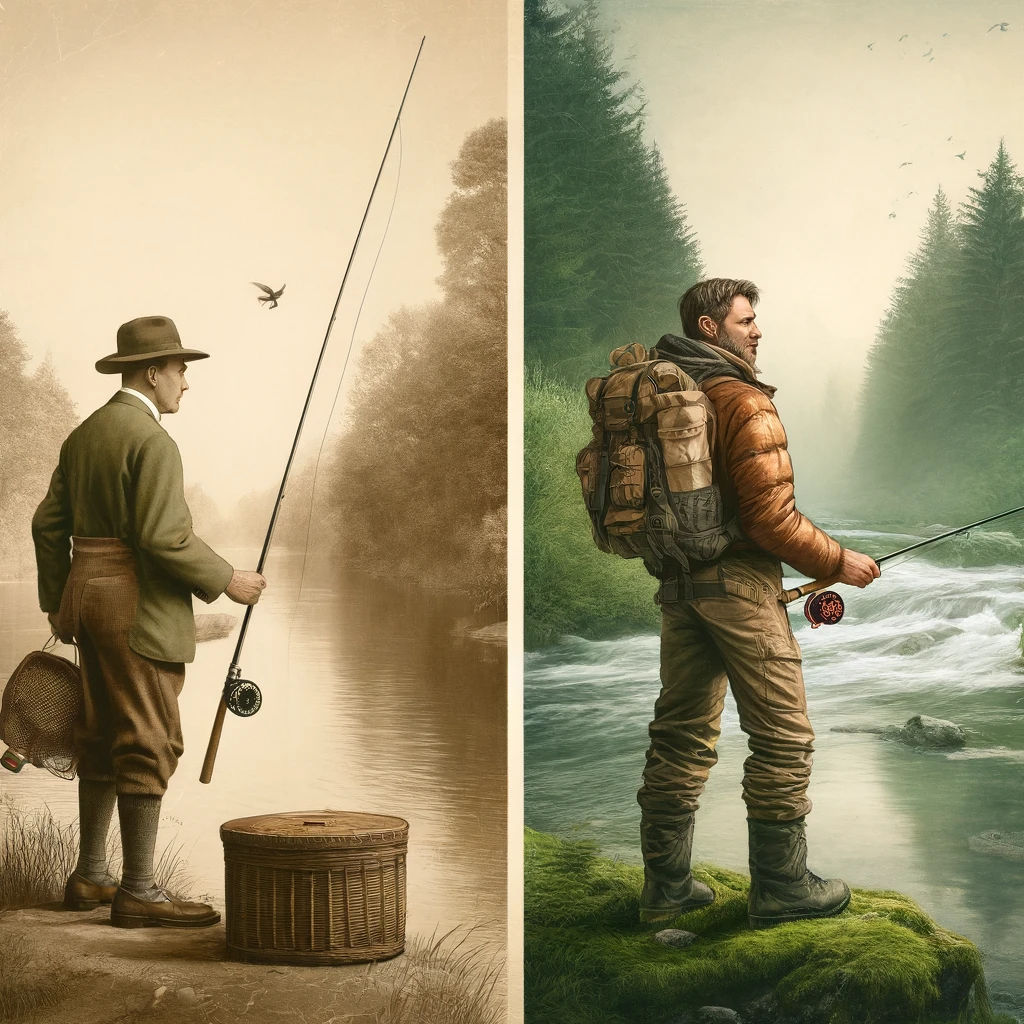
Fly fishing, a method of angling that uses a light-weight lure—known as an artificial fly—to catch fish, has a rich history that spans centuries and continents. This journey from ancient methods to modern techniques highlights the evolution of a sport beloved by many today.
Ancient Beginnings
The earliest records of fly fishing date back to ancient civilizations. Around 200 CE, the Roman writer Claudius Aelianus described a form of fly fishing practiced by Macedonian anglers on the Astraeus River. These anglers used artificial flies made of red wool and two feathers from a rooster. They crafted these flies to mimic the behavior and appearance of insects, tricking fish into biting.
Medieval Advances
Fly fishing continued to develop through the Middle Ages. In the 13th century, English monk Thomas Aquinas mentioned fly fishing in his writings. By the 15th century, the sport had evolved significantly. Dame Juliana Berners, an English prioress, published a comprehensive guide titled “A Treatyse of Fysshynge wyth an Angle” in 1496. This work detailed various aspects of angling, including the use of artificial flies and the construction of rods and lines, laying the groundwork for modern fly fishing techniques.
The Renaissance of Fly Fishing
The 16th and 17th centuries marked a period of innovation and refinement in fly fishing. During this time, anglers began to experiment with different materials and techniques to improve their craft. The introduction of silk lines and horsehair leaders allowed for more delicate and precise presentations of the fly. Additionally, anglers started to categorize flies based on their resemblance to specific insects, a practice that remains fundamental in fly fishing today.
The Birth of Modern Fly Fishing
The 18th century saw fly fishing become more popular and accessible. Fishing clubs and societies were established, and the exchange of ideas and techniques became more widespread. Charles Cotton, an English writer and angler, contributed to this development with his work “The Compleat Angler,” which he co-authored with Izaak Walton. This book, published in 1653, became a cornerstone of fly fishing literature and provided detailed instructions on fly tying and casting techniques.
The American Influence
Fly fishing crossed the Atlantic and found a new home in North America in the 19th century. American anglers adapted the techniques they learned from their European counterparts and began to innovate on their own. The vast and varied waterways of the United States and Canada provided a perfect playground for the sport’s growth.
One notable figure in American fly fishing history is Theodore Gordon, often referred to as the father of American dry fly fishing. In the late 19th and early 20th centuries, Gordon adapted British fly patterns to better suit American trout species and conditions. His innovations helped popularize dry fly fishing, where the angler uses a floating fly to mimic an insect on the water’s surface.
Technological Advancements
The 20th century brought significant technological advancements that revolutionized fly fishing. The development of synthetic materials, such as nylon and fiberglass, transformed the construction of rods, lines, and flies. These new materials made equipment lighter, more durable, and more efficient.
The invention of the fiberglass fly rod in the 1940s and the subsequent development of graphite rods in the 1970s provided anglers with unprecedented control and accuracy. These advancements, combined with the introduction of modern reel designs and fly lines, elevated the sport to new heights.
Fly Fishing in Popular Culture
Fly fishing has also found its way into popular culture, thanks to literature and film. Norman Maclean’s novella “A River Runs Through It,” published in 1976, and its subsequent film adaptation in 1992, brought fly fishing into the mainstream. The story’s depiction of the beauty and tranquility of the sport resonated with audiences, sparking a renewed interest in fly fishing.
Conservation and Fly Fishing
In recent decades, the fly fishing community has become increasingly involved in conservation efforts. Organizations such as Trout Unlimited and the Federation of Fly Fishers (now Fly Fishers International) work to protect and restore fish habitats and advocate for sustainable fishing practices. The catch-and-release ethic, where anglers release fish back into the water after catching them, has become a standard practice among fly fishers, reflecting a commitment to preserving fish populations for future generations.
The Global Fly Fishing Community
Today, fly fishing is a global sport enjoyed by millions. Each region has its unique fly fishing culture and traditions, from the trout streams of the Rocky Mountains to the salmon rivers of Scandinavia and the chalk streams of England. The sport continues to evolve, with new techniques and technologies emerging regularly.
The Future of Fly Fishing
The future of fly fishing looks bright as the sport continues to grow in popularity. Advances in technology, such as digital mapping and fish-finding devices, are making it easier for anglers to locate fish and plan their trips. Additionally, the rise of social media has created a vibrant online community where anglers can share their experiences, tips, and knowledge.
Fly fishing schools and guided trips have also made the sport more accessible to newcomers. These educational resources help beginners learn the basics of casting, fly tying, and reading water, ensuring that the tradition of fly fishing will be passed down to future generations.
From its ancient origins on the rivers of Macedonia to its modern-day status as a beloved pastime worldwide, fly fishing has undergone a remarkable evolution. The sport’s rich history is a testament to the ingenuity and passion of the anglers who have contributed to its development. Whether you are a seasoned fly fisher or a curious beginner, understanding the history of fly fishing enhances your appreciation for this timeless pursuit.
Fly fishing is more than just a method of catching fish; it is a connection to nature, a practice of skill and patience, and a community of enthusiasts who share a love for the water and the fish that inhabit it. As we look to the future, the legacy of fly fishing continues to grow, promising new adventures and discoveries for generations to come.

Innovations in Fly Tying
One of the most fascinating aspects of fly fishing is the art of fly tying. Over the centuries, fly tyers have developed an incredible variety of patterns designed to imitate the myriad of insects and other prey that fish feed on. These patterns range from simple and functional to highly intricate and artistic.
In the 20th century, the introduction of new materials such as synthetic fibers, foam, and specialized hooks expanded the possibilities for fly tyers. Innovations like the Parachute Adams, a dry fly with a distinctive post that allows it to float perfectly on the water’s surface, have become staples in the fly boxes of anglers worldwide.
Fly Fishing Techniques
The techniques used in fly fishing have also evolved significantly. Traditional methods such as dry fly fishing, wet fly fishing, and nymphing have been supplemented with newer techniques like Euro-nymphing and streamer fishing.
Dry Fly Fishing: This technique involves casting a floating fly, or dry fly, that mimics an insect resting on the water’s surface. It requires precise casting and a delicate presentation to avoid spooking the fish.
Wet Fly Fishing: In contrast, wet fly fishing uses flies that sink below the surface, imitating insects or other prey moving through the water. This method can be highly effective in deeper waters and during times when fish are feeding below the surface.
Nymphing: Nymphing involves using flies that imitate the larval stage of aquatic insects. These flies are fished below the surface, often with the help of a strike indicator to detect subtle takes. Euro-nymphing, a highly effective variation, uses long, lightweight rods and specialized leader setups to achieve precise drifts.
Streamer Fishing: This technique uses larger flies, or streamers, that imitate baitfish or other larger prey. Streamer fishing often involves stripping the fly through the water to provoke aggressive strikes from predatory fish.
The Cultural Significance of Fly Fishing
Fly fishing is more than just a sport; it has cultural significance in many regions. In Japan, for instance, the traditional practice of Tenkara fly fishing dates back to the 8th century. Tenkara uses a simple setup with a rod, line, and fly, and it focuses on a minimalist approach to fishing mountain streams.
In the British Isles, chalk stream fly fishing has a storied history, with the clear, spring-fed rivers of southern England providing ideal conditions for dry fly fishing. The tradition of fishing these waters is deeply embedded in the local culture, with a strong emphasis on conservation and respect for the environment.
Women in Fly Fishing
Historically, fly fishing was often seen as a male-dominated sport, but women have always played a vital role in its history and continue to do so today. Pioneers like Joan Wulff, known as the “First Lady of Fly Fishing,” have paved the way for future generations of female anglers. Wulff’s contributions to casting techniques and education have been instrumental in making the sport more inclusive.
Today, organizations like Trout Unlimited and Casting for Recovery promote fly fishing as a therapeutic and empowering activity for women, including breast cancer survivors. These initiatives highlight the broader impact of fly fishing beyond just catching fish.
Modern Challenges and Opportunities
As fly fishing moves into the 21st century, it faces both challenges and opportunities. Environmental issues such as habitat destruction, pollution, and climate change threaten fish populations and the ecosystems they inhabit. Fly fishers are increasingly taking on the role of conservationists, advocating for sustainable practices and the protection of waterways.
Technological advancements continue to shape the sport, offering new tools and techniques for anglers. However, the essence of fly fishing remains unchanged—a deep connection to nature, a sense of tranquility, and the thrill of the chase.
Conclusion
The history of fly fishing is a testament to the enduring appeal of this elegant and challenging sport. From its ancient origins to its modern-day practice, fly fishing has captivated anglers with its blend of art and science, patience and skill. As the sport continues to evolve, it remains a beloved pastime that connects people to the natural world and to each other.
Whether you are casting a delicate dry fly on a quiet stream, swinging a wet fly through a swift current, or stripping a streamer in search of a trophy fish, the spirit of fly fishing endures. It is a journey through time, a celebration of tradition, and an ever-evolving pursuit that promises endless exploration and enjoyment.
Fly fishing’s rich history, coupled with its ongoing innovation and passionate community, ensures that it will remain a cherished activity for generations to come. As you step into the water and make that first cast, you become part of a legacy that stretches back through the ages—a legacy built on respect for nature, the thrill of the catch, and the simple joy of spending time in the great outdoors.