Fly fishers spend more time in rivers, estuaries, marshes, and alpine lakes than most recreationists, which makes them unusually well positioned to protect wildlife before damage becomes permanent. Wildlife protection, in this context, means safeguarding fish, birds, mammals, amphibians, insects, and the habitats they rely on from avoidable harm caused by pollution, disturbance, poor handling, invasive species, and unmanaged recreation. It matters because healthy fisheries depend on entire food webs, not only target species. A trout stream without cold-water invertebrates, nesting riparian birds, stable streambanks, and connected spawning habitat may still look fishable for a season, yet it is already declining.
I have seen this firsthand on heavily pressured tailwaters and small wild creeks: the difference between a fishery that remains resilient and one that unravels is often the accumulation of small choices made by anglers. Barbless hooks shorten release time. Staying off redds prevents egg mortality. Cleaning boots stops the spread of whirling disease, didymo, and invasive snails. Giving nesting waterfowl distance reduces abandonment risk. Reporting poaching can save an entire year class in a small stream. None of these actions feels dramatic on its own, but together they define ethical fly fishing. For anyone interested in conservation and ethics, wildlife protection is the practical center of the conversation because it turns values into daily decisions on the water.
This hub article explains how to make a difference in wildlife protection as a fly fisher by focusing on the actions that create measurable benefit. It covers habitat awareness, fish handling, birds and mammals, invasive species prevention, seasonal closures, responsible access, community science, and advocacy. Use it as a foundation for deeper reading across related conservation and ethics topics, because the strongest anglers are not only skilled casters; they are reliable stewards of the ecosystems that make fly fishing possible.
Understand What Wildlife Protection Means on the Water
Wildlife protection begins with recognizing that every cast happens inside a living system. Fly fishers often focus on trout, salmon, bass, or carp, yet the stream corridor also supports mayflies, caddisflies, stoneflies, crayfish, bats, otters, beavers, mink, herons, kingfishers, ducks, frogs, and spawning forage fish. Protecting wildlife means reducing direct mortality, minimizing stress, and preserving habitat function. In practical terms, that includes avoiding trampling spawning beds, not disturbing nesting banks used by swallows or kingfishers, preventing monofilament and leader waste, and keeping chemicals such as sunscreen, fuel, and litter out of the water. The U.S. Fish and Wildlife Service, Trout Unlimited, and many state fish and game agencies all frame habitat integrity as the basis of fish and wildlife recovery, and that principle should guide every angler decision.
A useful rule is to think beyond the fish you intend to catch. If a riffle is full of aquatic insect shucks, that is food production. If a side channel holds juvenile fish, that is nursery habitat. If overhanging willows host songbirds and stabilize banks, that is erosion control and nesting cover at the same time. I learned to fish more carefully once I started reading water as habitat, not just as structure. The anglers who make the biggest difference are the ones who slow down enough to ask a simple question at each spot: what else lives here, and how could my presence affect it?
Protect Fish Through Better Handling and Smarter Tactics
The most immediate wildlife protection step for fly fishers is reducing catch-and-release mortality. Research across salmonids shows mortality rises when fish are played too long, exposed to air, handled with dry hands, or angled in warm water. Water temperature is one of the clearest thresholds. As temperatures approach the upper sixties Fahrenheit for trout, dissolved oxygen drops and post-release stress increases sharply; many responsible anglers stop targeting trout around 68°F, and some fisheries issue formal hoot owl restrictions. A stream thermometer is therefore a conservation tool, not an accessory.
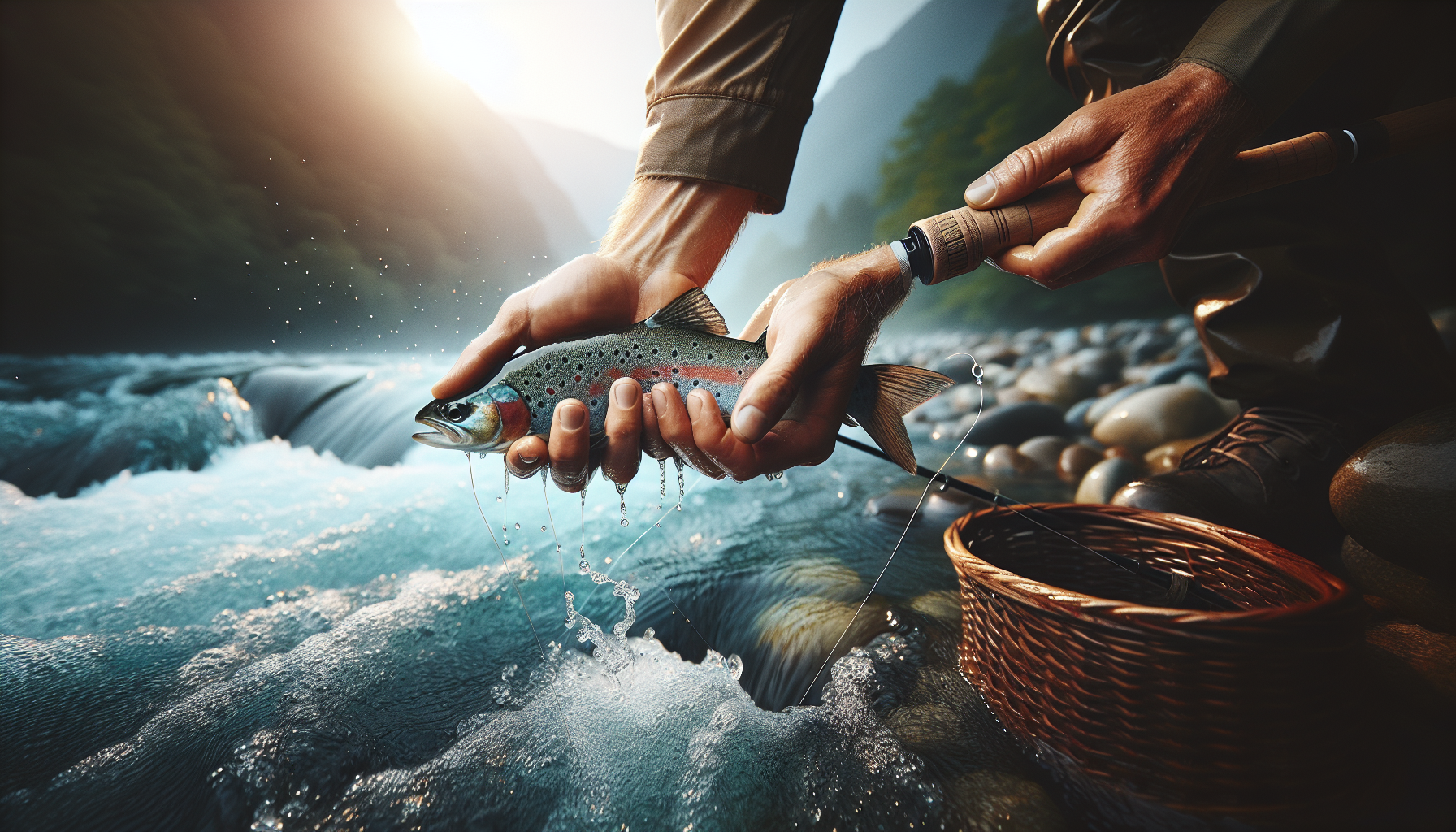
Use tackle that matches the fishery so fights stay short. Heavy enough tippet, a landing net with rubberized mesh, and barbless hooks all reduce injury. Keep fish in the water while removing the fly, support them horizontally, and never squeeze the gill plate or lift large fish vertically by the jaw. Photo time should be measured in seconds, ideally with the fish partially submerged until the camera is ready. If a fish does not recover quickly facing into gentle current, stop fishing that run and reassess conditions. Ethical practice means treating repeated signs of stress as information, not bad luck.
Technique matters before the hookset as well. Avoid repeatedly casting to visibly exhausted fish in low clear water. During spawning periods, leave paired fish and redds alone entirely. Redds usually appear as cleaned, lighter gravel patches in riffle tails or shallow glides. Wading through them can crush eggs and dislodge developing embryos for months after spawning. On small streams, this damage compounds fast because suitable gravel is limited. Protecting future fish starts with seeing spawning habitat and stepping around it.
Respect Birds, Mammals, Amphibians, and Riparian Life
Wildlife protection is broader than fish care. Many of the richest fly-fishing waters are also breeding areas for waterfowl, raptors, shorebirds, beavers, muskrats, turtles, salamanders, and amphibians that depend on intact bankside cover. Disturbance during nesting or denning season can push animals off critical habitat even when no physical contact occurs. Wading too close to reed beds can flush ducks from nests. Repeatedly approaching gravel bars may disrupt plovers or terns. Walking under colony nesters on cutbanks can trigger alarm flights that expose eggs and chicks to predators and heat stress.
Good anglers learn buffer distances and seasonal sensitivity. If a bird vocalizes repeatedly, dive-bombs, or circles overhead, you are too close. If beavers tail-slap and stay agitated, move on rather than forcing them to habituate. Dogs add another layer of risk; even well-behaved pets can disturb nesting birds or chase deer fawns hidden in grass. In areas with amphibian breeding pools, avoid slogging through shallow margins where egg masses attach to vegetation. Riparian plants also deserve attention because sedges, rushes, alders, and willows are wildlife infrastructure. When anglers create social trails or crush streamside vegetation to reach every seam, they increase erosion and reduce cover used by juvenile fish and songbirds alike.
Prevent Invasive Species and Wildlife Disease Spread
One careless transfer between waters can do more damage than years of responsible catch-and-release can repair. Invasive species prevention should be a standard part of every trip. Felt-soled boots have been restricted in some places because they can transport organisms effectively, but any wader, net, boot tread, anchor rope, or boat carpet can move invasive snails, plant fragments, and pathogens. The basic protocol is inspect, remove, drain, clean, and dry gear completely before entering a new watershed. Many agencies recommend hot water disinfection when practical, especially after fishing waters known for New Zealand mud snails, didymo, or whirling disease risk.
The reason this matters for wildlife protection is straightforward: invasive species alter food webs and habitat conditions. New Zealand mud snails can reach extraordinary densities and displace native invertebrates. Didymo blooms can blanket streambeds and change insect habitat. Whirling disease affects salmonid populations through a parasite with complex life stages involving aquatic worms. Viral hemorrhagic septicemia and other fish diseases create additional transport concerns for boats and bait containers. Fly fishers should also avoid moving baitfish, never dump aquarium contents, and refrain from transporting live organisms between waters for photography or identification. Prevention is vastly cheaper and more effective than eradication, which is often impossible once a species becomes established.
Follow Seasonal Closures, Access Rules, and Local Management
Wildlife protection often depends on respecting regulations that some anglers see as inconvenient but that managers adopt for biological reasons. Seasonal closures protect spawning fish, wintering waterfowl, roosting bats, nesting birds, and vulnerable habitat during wet conditions. Catch-and-release sections may preserve broodstock. Fly-only rules can reduce deep hooking. Gear restrictions may be designed to limit spread of invasives or protect sensitive spawning reaches. On tailwaters, fluctuating dam releases can strand fish and nests in side channels, so reading flow schedules is part of responsible planning.
I have watched productive water decline after anglers ignored soft closures, hopped fences, or pushed into thermal refuges where cold tributaries meet warmer main stems. Those confluences attract stressed fish seeking survivable temperatures and should be treated as sanctuaries during heat events. The same principle applies to drought conditions, low flows, and wildfire impacts. A legal day is not always an ethical day. Check agency advisories, stream temperatures, flow gauges, and local conservation group updates before fishing. If conditions point to elevated stress, choose a different species, fish early, or stay home. Wildlife protection requires judgment where regulations end.
Make Low-Impact Choices in Travel, Wading, and Waste
Many harms to wildlife come from routine movement rather than dramatic mistakes. Driving off established roads can crush wetland vegetation and fragment habitat. Launching in shallow vegetated areas can disturb spawning fish and amphibians. Anchoring on sensitive flats may damage submerged plants that support invertebrates and juvenile fish. Even on foot, repeated bank entry at the same soft spots accelerates erosion, adds sediment, and widens informal access trails. Sediment may sound minor, but excess fine material can smother eggs, reduce insect production, and cloud feeding lanes.
The most effective low-impact habit is concentration: use durable access points, established paths, and stable wading lines instead of creating new ones. Pack out all tippet clippings, indicators, split shot packaging, food wrappers, and cigarette butts. Monofilament and fluorocarbon can entangle birds, turtles, and small mammals for months. If you find discarded line, pick it up even if it is not yours. Lead is another concern. Some regions restrict or discourage small lead weights because waterfowl can ingest them; tungsten and tin alternatives reduce that risk. Sunscreen and insect repellent should be applied well away from the water and allowed to dry before handling fish. Small contaminant reductions matter on heavily used urban and suburban fisheries where cumulative pressure is high.
Turn Observation Into Action Through Stewardship and Reporting
Fly fishers are field observers with unusual reach across seasons, flows, and watersheds. That makes anglers valuable contributors to stewardship and enforcement. If you regularly fish a system, you can notice illegal netting, fish trapped below barriers, sediment pulses from construction, algae blooms, dewatered side channels, dead fish events, or repeated disturbance at nesting sites long before a formal survey happens. Reporting these issues to state agencies, tribal resource departments, land trusts, or watershed groups can trigger action when timing matters most.
Stewardship also includes hands-on work. River cleanups remove hooks, line, cans, and plastic before wildlife encounters them. Riparian planting projects stabilize banks and improve shade, which is increasingly important as climate warming raises summer water temperatures. Barrier removal and culvert replacement reconnect spawning and rearing habitat. Volunteer monitoring programs collect macroinvertebrate samples, temperature data, and redd counts that inform management decisions. Here is where fly fishers can contribute most effectively:
| Action | Why it protects wildlife | Example |
|---|---|---|
| Report poaching or habitat damage | Stops immediate mortality and documents patterns for enforcement | Calling a tip line after seeing fish taken from a closed spawning reach |
| Join stream cleanups | Removes entanglement and ingestion hazards | Collecting tippet, hooks, and cans along a popular access trail |
| Volunteer for habitat projects | Improves cover, shade, bank stability, and fish passage | Planting willows or helping replace a perched culvert |
| Contribute observations and data | Supports management with timely local information | Submitting water temperature logs or invasive species sightings |
These efforts are not symbolic. On several rivers I fish, volunteer temperature logging has helped justify angling advisories during heat waves, and citizen reports have led to fast responses to illegal dumping and fish kills. Wildlife protection improves when anglers become dependable witnesses as well as users.
Support Policy, Education, and a Culture of Ethical Fly Fishing
Long-term wildlife protection depends on more than personal behavior; it also requires public support for good policy and strong local culture. Funding matters. Fishing license revenue, excise taxes under the Federal Aid in Sport Fish Restoration framework, nonprofit memberships, and targeted donations help pay for habitat restoration, hatchery reform where appropriate, law enforcement, research, and access management. Supporting organizations such as Trout Unlimited, Backcountry Hunters & Anglers, Native Fish Society, Bonefish & Tarpon Trust, local watershed councils, and regional land trusts can produce outcomes far beyond what one individual can do alone.
Education is equally important. New fly fishers often want to do the right thing but have never been shown how to identify redds, release fish in current, disinfect gear, or recognize a thermal refuge. Share that knowledge clearly and without gatekeeping. If you guide, teach, or simply fish with friends, model best practices every time. Explain why a fish stays in the net, why a side channel is off limits, why a bird colony deserves space, and why clipping line into the water is unacceptable. Culture changes when good habits become normal and poor habits become socially out of bounds. The strongest conservation communities are built by anglers who combine skill with restraint, generosity, and attention.
Making a difference in wildlife protection as a fly fisher does not require celebrity status, large donations, or a biology degree. It requires consistent, informed choices that reduce harm and improve habitat over time. Start with the fundamentals: fish only when conditions support safe release, handle fish quickly and gently, avoid redds and thermal refuges, keep distance from nesting or stressed wildlife, clean gear between waters, and leave no line or trash behind. Then expand your impact by following local management, reporting violations, volunteering for restoration, and supporting organizations that protect rivers, wetlands, estuaries, and public access.
The central lesson is simple. Fly fishing is never separate from wildlife protection because every fishery is part of a larger ecological network. When anglers protect insects, bankside vegetation, birds, amphibians, forage species, and water quality, they also protect the future of the sport itself. That is why wildlife protection belongs at the heart of conservation and ethics, and why this topic functions as a hub for deeper learning. Each related subject—fish handling, invasive species prevention, habitat restoration, seasonal ethics, and responsible access—connects back to the same goal: keeping wild systems intact enough to sustain both biodiversity and meaningful angling.
If you want to make a real difference, choose one new practice for your next trip and one larger commitment for this season. Carry a thermometer, switch to barbless hooks, join a cleanup, log observations, mentor a newer angler, or donate to a local watershed project. Small actions repeated by many fly fishers protect wildlife in ways that are immediate, measurable, and lasting.
Frequently Asked Questions
How can fly fishers actively contribute to wildlife protection beyond simply following fishing regulations?
Following regulations is the baseline, but fly fishers can make a much bigger difference by treating every outing as an opportunity for stewardship. Because anglers regularly visit rivers, estuaries, marshes, spring creeks, and alpine lakes, they often notice changes long before agencies or the general public do. That might include a sudden fish kill, unusual algae blooms, trampling in nesting areas, bank erosion, poaching activity, abandoned fishing line, invasive plants, or a drop in insect life. Reporting these issues promptly to local wildlife agencies, watershed groups, or land managers can prevent small problems from becoming long-term damage.
Practical action also matters. Picking up litter, removing discarded mono and tippet, cleaning up access points, and staying on established trails all reduce direct harm to wildlife and habitat. Fly fishers can volunteer for stream restoration projects, fish population surveys, invasive species removal days, and community science programs that track water quality, aquatic insects, amphibians, or bird populations. Supporting conservation organizations financially or through volunteer time also helps protect the broader ecosystems fisheries depend on. In short, the most effective fly fishers are not just users of wild places; they become informed observers, careful participants, and reliable advocates for the species and habitats around them.
What are the best fish handling practices for protecting fish and other wildlife during catch-and-release fly fishing?
Good fish handling is one of the most immediate and important ways a fly fisher can reduce harm. Catch-and-release only works well when fish are landed quickly, handled minimally, and released in strong condition. That starts with using tackle appropriate for the species and conditions so fish are not overplayed to exhaustion. Barbless hooks or pinched barbs make releases faster and cleaner, reducing tissue damage and shortening the amount of time a fish spends under stress. Keeping the fish in the water as much as possible is critical, since air exposure can severely impair recovery, especially during warm water periods.
Wet your hands before touching a fish, avoid squeezing the body, and never hold fish by the jaw alone unless the species can safely tolerate it and the fish is fully supported. Trout and many other species rely on a protective slime coating, so rough nets, dry hands, and contact with sand, rocks, or boat decks can increase infection risk after release. Rubber or knotless landing nets are much safer than traditional abrasive mesh. If a fish is deeply hooked, it is often better to cut the fly off rather than force a difficult removal. Release should be deliberate, not rushed: face the fish into gentle current if needed, allow it to regain balance, and let it swim off on its own. These practices help not only individual fish but also the predators, scavengers, and food webs that depend on healthy fish populations over time.
Why does habitat awareness matter so much in wildlife protection for fly fishers?
Habitat awareness matters because healthy fishing depends on much more than fish alone. The waters fly fishers love are connected systems that support aquatic insects, amphibians, riparian birds, small mammals, spawning fish, and the plants that stabilize banks and filter runoff. Damaging habitat, even unintentionally, can disrupt these relationships quickly. Wading through spawning beds can crush eggs. Repeatedly cutting across soft banks can accelerate erosion and send sediment into nursery habitat. Letting dogs roam through marshes or shoreline vegetation during nesting season can disturb birds and other wildlife at vulnerable times. Even seemingly minor actions at access points can compound over a season when many recreationists do the same thing.
For that reason, attentive anglers should learn to recognize sensitive areas and adjust their behavior accordingly. Stay on established paths, avoid trampling streamside vegetation, and be especially cautious during spawning periods, low flows, or drought conditions. In estuaries and marshes, give feeding and nesting birds wide space and avoid pushing fish or wildlife into shallow refuge areas during extreme temperatures. On lakes and small streams, be mindful of amphibian habitat, shoreline cover, and insect-rich margins that sustain the broader food web. The key idea is that conservation-minded fly fishing is not just about minimizing direct harvest; it is about understanding that every cast happens inside a living ecosystem, and protecting habitat protects everything that depends on it.
How can fly fishers help prevent pollution and the spread of invasive species?
Fly fishers can play a major role in preventing both pollution and invasive species because they move frequently between waters and often carry gear that can transport contaminants or hitchhiking organisms. One of the simplest but most effective habits is cleaning, draining, and thoroughly drying boots, waders, nets, boats, and other equipment before entering a new waterbody. This helps stop the spread of invasive plants, invertebrates, fish pathogens, and microscopic organisms that may cling to felt, seams, gravel guards, or damp gear. Where disinfection protocols are recommended locally, anglers should follow them carefully, especially in regions affected by invasive mussels, whirling disease, didymo, or other aquatic threats.
Pollution prevention is just as important. Never leave tippet clippings, leaders, soft plastics, food waste, or any trash at access sites or along the bank. Monofilament and other fishing debris can entangle birds, mammals, turtles, and fish long after an angler leaves. Be careful with fuel, sunscreen, insect repellent, and vehicle leaks near water, and avoid washing gear in ways that send soap or chemicals into streams or wetlands. If you witness dumping, chronic runoff, sewage odors, oily sheen, or suspicious discoloration, report it to the proper local authority rather than assuming someone else already has. Fly fishers are often the first people on scene when a problem appears, and fast reporting can make a real difference in limiting ecological damage.
What does responsible wildlife-friendly behavior look like when sharing rivers, marshes, and lakes with birds, mammals, and other species?
Responsible wildlife-friendly behavior starts with giving animals space and recognizing that being present in their habitat has an effect, even when intentions are good. Birds may abandon nests or feeding areas if repeatedly approached. Mammals using stream corridors for travel or watering can be displaced by noise, crowding, or off-leash dogs. Amphibians and reptiles along shorelines can be crushed or disturbed in places where anglers frequently enter and exit the water. The goal is not to avoid the outdoors, but to move through it in a way that reduces stress and disruption for the species that live there full-time.
In practice, that means observing wildlife from a distance, avoiding nesting colonies or denning areas, keeping voices and movement subdued, and resisting the urge to get closer for photos. If an animal changes behavior because of your presence, that is usually a sign you are too close. Dawn and dusk can be especially sensitive times for feeding and movement, so extra caution is wise. Keep dogs under close control where allowed, and understand that seasonal closures, buffer zones, and restricted areas are often in place to protect critical life stages such as spawning, nesting, molting, or migration stopovers. Responsible fly fishers also model good behavior for others by respecting closures, explaining why they matter, and helping create a culture where wildlife protection is seen as part of the sport rather than separate from it.