Catch and release is a fishing practice in which anglers return captured fish to the water rather than keeping them, and its impact on fish populations depends on how, where, and when the fish are handled. In conservation and ethics discussions, catch and release is often presented as a simple good, but in my experience working with angling guidelines and fisheries science summaries, the reality is more precise: it can reduce harvest pressure substantially, yet it does not guarantee survival or eliminate stress. Understanding that distinction matters because recreational fishing pressure is high in many freshwater lakes, rivers, estuaries, and coastal systems, and management agencies increasingly rely on release regulations to protect spawning adults, trophy-size fish, and vulnerable species. The key terms are straightforward. Post-release mortality means fish that die after being let go, whether immediately or days later. Sublethal effects include stress, impaired swimming, reduced feeding, infection risk, or lower spawning success. Population impact refers not just to individual survival, but to whether released fish continue contributing to the stock over time. This topic matters because ethical angling and effective conservation depend on the same question: does release actually help maintain healthy fish populations under real fishing conditions?
The answer is yes, but with limits that every angler and fishery manager should understand. Species, water temperature, hook type, fight duration, air exposure, handling method, and depth of capture all influence outcomes. A trout released quickly in cool water on a barbless single hook may survive at very high rates, while a deep-caught reef fish suffering barotrauma or a muskellunge played too long in warm water may face much higher delayed mortality. Agencies such as NOAA Fisheries, state natural resource departments, and provincial ministries often build regulations around these differences, using seasonal closures, gear restrictions, and mandatory release rules to protect stock productivity. Catch and release also affects fish populations indirectly by shaping angler behavior. It can sustain quality fisheries where harvest would otherwise remove too many large fish, but high catch rates on the same individuals may increase cumulative stress, especially in small systems or heavily pressured urban waters. For a hub article on catch and release, the central point is clear: releasing fish is not a single action but a chain of decisions, and each step influences whether fish populations benefit, merely break even, or quietly decline despite good intentions.
How Catch and Release Changes Population Dynamics
At the population level, catch and release works by lowering fishing mortality from harvest, which can preserve more breeding adults in the water. That matters most for species where larger, older fish produce disproportionately more eggs or higher-quality offspring. In many bass, pike, tarpon, and trout fisheries, protecting these fish stabilizes age structure and can improve resilience after drought, winterkill events, habitat loss, or recruitment swings. Managers often use mandatory release rules for broodstock conservation, slot limits to protect both small and large fish, or seasonal release-only periods during spawning runs. The biological logic is simple: if fewer mature fish are permanently removed, more remain to reproduce and maintain abundance.
However, released fish only contribute to population health if they survive and retain normal function. Fisheries biologists therefore focus on total fishing mortality, not just harvest mortality. If an angler catches one hundred fish and ninety-five survive release, the conservation gain is obvious compared with keeping all one hundred. But if high water temperatures, deep hooking, or repeated recapture push survival far lower, the benefit narrows quickly. This is why the phrase catch and release saves fish populations is accurate only when paired with best handling practices and species-specific regulation. In heavily used fisheries, even modest release mortality can add up across thousands of angler hours. A river with intense summer trout pressure, for example, may experience enough stress-related mortality to justify afternoon closures when water temperatures rise above safe thresholds.
What Science Says About Survival After Release
Research across freshwater and marine fisheries consistently shows that post-release survival varies widely by context. Many studies report low mortality for some species under ideal conditions, often in the single digits, but much higher rates under poor handling or extreme environmental stress. Black bass tournaments, for example, have driven decades of work on livewell management, fizzing debates, delayed mortality, and weigh-in procedures because a fish that swims away from the boat ramp may still die later from stress or infection. In salmonid fisheries, temperature is one of the strongest predictors of release success. Trout and salmon are coldwater fish with narrower thermal tolerances, so elevated summer temperatures can compound exhaustion and reduce recovery even when handling appears careful.
Marine examples are equally instructive. Billfish catch and release has become common in many sport fisheries, and survival can be high when fish are fought efficiently and released without bringing them fully aboard. By contrast, some bottom species experience barotrauma when reeled rapidly from depth; expanded gases can damage tissues and prevent fish from descending. Red snapper management in the Gulf has highlighted this problem, leading to guidance on descending devices and venting considerations. The lesson is not that release fails, but that evidence matters. Fisheries outcomes depend on mechanism. If stress comes from hypoxia, heat, acid-base imbalance, tissue damage, or pressure change, anglers need techniques matched to that mechanism rather than generic advice.
Factors That Most Influence Release Mortality
The most important drivers of release mortality are hook placement, handling time, air exposure, water temperature, depth, and gear choice. Deep-hooked fish generally fare worse because bleeding and organ damage are more likely. J-hooks baited with natural bait often result in deeper hooking than artificial lures or circle hooks, which is why circle hooks are widely recommended in many marine catch and release fisheries. Rubberized landing nets reduce slime loss and fin damage compared with knotted nylon nets. Wet hands protect the mucous layer better than dry gloves or rough boat carpet. Keeping fish in the water during unhooking can materially improve survival, especially for sensitive species.
Fight duration matters because exhaustion creates physiological stress. During prolonged struggle, fish accumulate lactate, experience ionic imbalance, and may lose equilibrium after release. This problem is amplified in warm water because oxygen availability decreases while metabolic demand rises. I have seen anglers do almost everything right at boatside, then undermine the release by taking multiple photos while the fish gasps in summer heat. Air exposure is a known risk factor in many studies; even brief periods out of water can damage gill function and slow recovery. For large fish such as muskellunge, sharks, or tarpon, support of the body is also essential. Hanging a heavy fish vertically by the jaw can injure connective tissue and internal organs.
| Factor | Lower-Risk Practice | Higher-Risk Practice | Population Effect |
|---|---|---|---|
| Hook type | Circle or barbless single hooks | Deep-set J-hooks with bait | More fish survive to spawn |
| Water temperature | Fishing during cool periods | Targeting fish in thermal stress | Lower delayed mortality |
| Handling | Wet hands, fish in water, quick release | Dry surfaces, squeezing, long photo sessions | Less injury and infection |
| Depth | Use descending devices when needed | Ignoring barotrauma symptoms | Better return of deep-caught fish |
Species Differences and Why One Rule Never Fits All
Fish populations do not respond uniformly to catch and release because species differ in anatomy, behavior, habitat, and tolerance for stress. Largemouth bass often withstand brief handling better than wild summer steelhead or stream trout in marginal temperatures. Esox species such as northern pike and muskellunge have sharp teeth and elongated bodies that require specialized tools, large nets, and fast unhooking to avoid excess time at boatside. Bonefish and permit may appear strong on release, yet improper air exposure or beach handling can increase predation risk from sharks before full recovery. Reef species like grouper and snapper present another challenge because depth-related injury can dominate outcomes even when hook removal is efficient.
Reproductive timing also changes the stakes. Catching and releasing fish on spawning beds or during migration bottlenecks may disrupt guarding behavior, expose eggs to predators, or reduce successful reproduction despite high adult survival. Smallmouth bass are a classic case: removing a nest-guarding male, even briefly, can allow sunfish or minnows to consume eggs or fry. For that reason, some anglers voluntarily avoid bed fishing, while some jurisdictions regulate it differently depending on conservation goals. Anadromous fish provide another example. A salmon released after a hard fight in warm river water may survive the immediate event yet fail to complete migration or spawn effectively. Population benefit therefore requires looking beyond swim-away behavior to actual biological performance.
Ethical Angling and Practical Best Practices
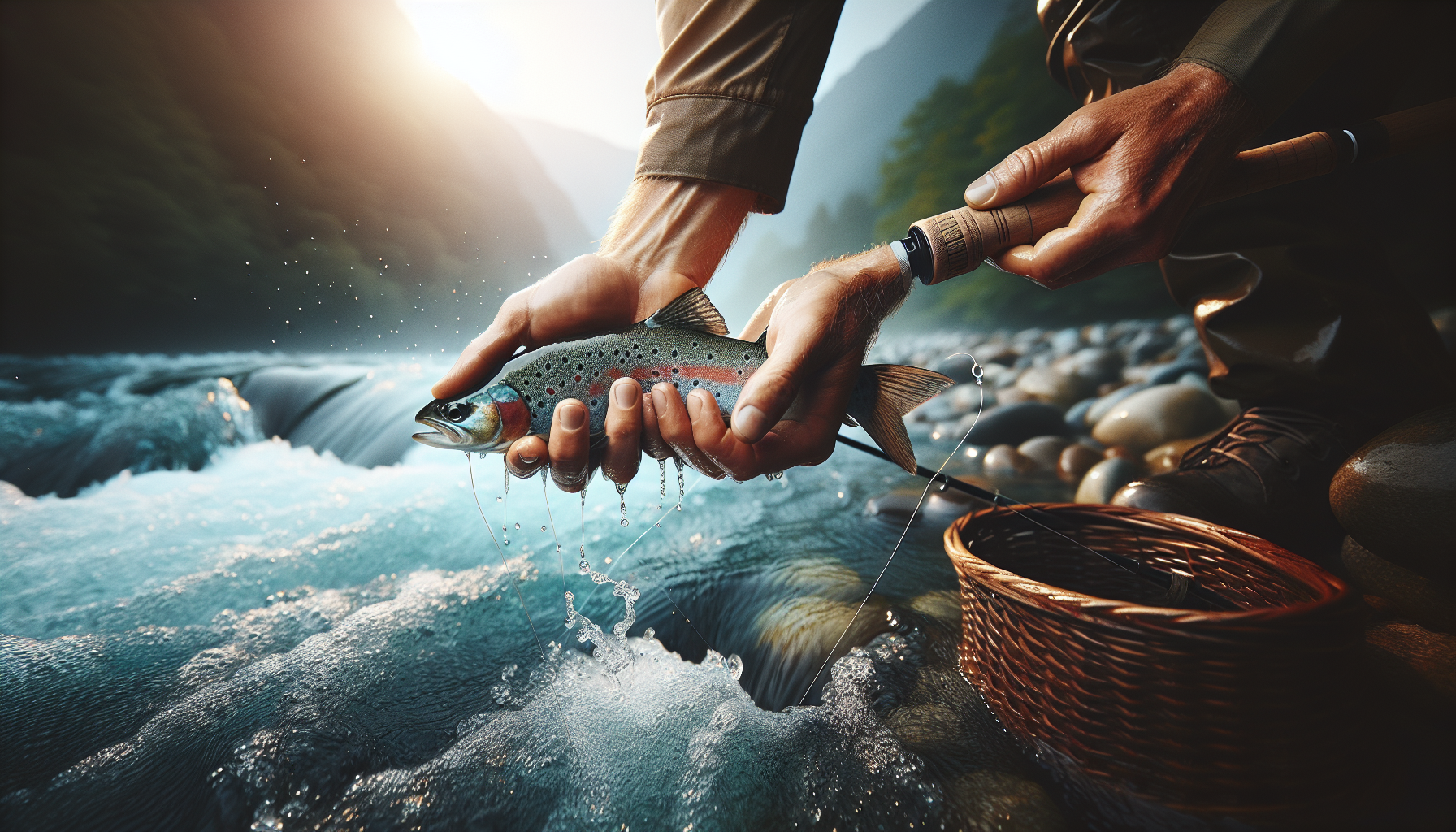
Ethical catch and release is about minimizing avoidable harm, not claiming zero impact. The best practices are well established. Match tackle to the fish so landing is efficient. Use hooks that reduce deep hooking, and crimp barbs when regulations and conditions allow. Keep release tools ready before the fish is landed: long-nose pliers, line cutters, a rubber net, and for some fisheries a descending device. If a hook is buried in the throat or gills, cutting the line is often better than tearing tissue during removal. Support fish horizontally, avoid contact with hot decks and dry sand, and revive only as long as necessary in upright orientation with water flowing naturally across the gills.
Ethics also includes deciding not to fish when conditions are poor for survival. Many experienced trout anglers stop targeting fish when water temperatures exceed recommended thresholds, often around the upper 60s Fahrenheit depending on species and local guidance. Saltwater anglers may avoid prolonged fights with oversized tackle imbalances during periods of low dissolved oxygen. Tournament organizers increasingly adjust formats, add immediate-release boats, shorten transport time, or cancel events during heat waves. These are not symbolic gestures. They directly influence cumulative mortality and therefore fish population outcomes. A conservation-minded angler measures success not only by fish landed, but by fish released in condition to feed, evade predators, and reproduce.
Limits, Controversies, and What Managers Still Debate
Catch and release is valuable, but it is not a universal substitute for habitat protection, water quality improvement, and sound harvest management. A degraded river with blocked passage, sedimentation, and warm effluent will not recover simply because anglers release fish. Likewise, populations can still decline when hooking pressure is intense, invasive species alter food webs, or drought shrinks refuges. One ongoing debate concerns repeated capture. In some highly visible flats, urban ponds, and trophy lakes, the same fish may be hooked multiple times in a season. The long-term effects on growth, behavior, and reproductive success are still being studied, and managers must weigh social benefits against cumulative stress.
Another controversy involves messaging. If catch and release is promoted without nuance, anglers may assume every released fish survives, which is demonstrably false. If it is criticized too broadly, however, people may overlook the substantial conservation gains it has delivered in many recreational fisheries. The balanced view is the correct one. Release can be highly effective when tied to species biology, environmental conditions, and proper technique. It is less effective when used as a feel-good label detached from evidence. For fisheries managers, the best approach combines regulation, angler education, creel data, telemetry studies, and adaptive policy. For anglers, the responsibility is simpler: learn the fishery, use appropriate gear, and treat release as a serious conservation tool rather than the last step of a photo opportunity.
The impact of catch and release on fish populations is therefore neither myth nor magic. It is a measurable management strategy that reduces harvest, protects valuable breeders, and supports sustainable recreation when fish are handled correctly and environmental conditions are suitable. The strongest evidence shows that survival improves when anglers shorten fight times, minimize air exposure, avoid deep hooking, use species-appropriate gear, and respect temperature and depth-related limits. The same evidence shows that poor handling, warm water, spawning disturbance, and barotrauma can erode or even reverse the expected benefit. In other words, catch and release helps fish populations most when it is practiced deliberately, not casually.
As the hub for this conservation and ethics topic, this article sets up the broader lesson behind every related question: regulations matter, science matters, and angler choices matter just as much. Whether you fish for trout in small streams, bass in reservoirs, redfish on the flats, or reef species offshore, the goal is the same—return fish in a condition that lets them survive and continue contributing to the population. If you want your fishing to align with conservation, review your current tackle, handling habits, and seasonal decisions, then apply one improvement on your next trip. Better release practices are one of the most immediate ways any angler can protect the future of a fishery.
Frequently Asked Questions
Does catch and release actually help fish populations?
Yes, catch and release can help fish populations, but its benefits depend heavily on how it is practiced. At its core, catch and release reduces harvest pressure because fewer fish are permanently removed from a lake, river, or coastal fishery. That can be especially valuable in waters where fish grow slowly, where larger breeding adults are important to reproduction, or where fishing pressure is high enough that keeping every legal catch would reduce population stability over time. In that sense, catch and release can be a practical conservation tool rather than just an ethical preference.
That said, releasing a fish does not automatically mean it survives or returns to normal behavior immediately. Some fish die shortly after release from stress, injury, exhaustion, or infection, while others survive but experience reduced feeding, slower recovery, or greater vulnerability to predators. The overall population effect therefore depends on release mortality rates, species sensitivity, water temperature, fight time, hook location, and fish handling methods. Fisheries scientists often look beyond the simple question of whether fish are released and focus instead on post-release survival. When handled well, catch and release can significantly support population health; when handled poorly, its conservation value drops considerably.
What causes fish to die after being released?
Post-release mortality usually comes from a combination of physical injury and physiological stress. A deeply hooked fish may suffer damage to the gills, throat, stomach, or internal tissues, which can cause bleeding or later infection. Even fish that appear to swim away strongly can die later if they have experienced severe stress. During a long fight, fish build up lactic acid, use oxygen rapidly, and can become exhausted to the point that recovery is difficult, especially in warm water where dissolved oxygen is lower. Removing the protective slime layer, squeezing the body, or dropping a fish onto dry surfaces can also increase injury and disease risk.
Environmental conditions matter just as much as handling. Fish released in very warm water often have lower survival because their metabolism is already elevated while oxygen availability is reduced. Cold-water species such as trout are especially vulnerable during summer heat. Deep-water species can suffer barotrauma when brought up quickly from depth, while species caught in strong current, surf, or during spawning periods may face additional strain. In other words, fish do not die after release for one single reason; they die because several stressors can stack together. That is why best practices focus on minimizing total stress from hook-up to release, not just getting the fish back into the water.
What are the best catch and release practices to improve fish survival?
The most effective catch and release practices are the ones that reduce air exposure, handling time, and injury. Using appropriate tackle helps land fish quickly, which lowers exhaustion. Many anglers choose circle hooks or barbless hooks because they can reduce deep hooking and make removal easier. Keeping the fish in the water as much as possible is one of the most important habits. Wet hands before touching the fish, avoid placing it on hot rocks, boat decks, or dry grass, and support its body gently rather than gripping it tightly by the midsection or jaw alone. If a fish is deeply hooked, cutting the line may be safer than forcing the hook out and causing more damage.
Photography should be quick and planned in advance if it is done at all. A useful rule is to have tools ready before landing the fish: pliers, net, line cutters, and camera if needed. Knotless rubber nets can reduce scale loss and slime damage compared with rough mesh. Reviving a fish should mean allowing it to recover naturally in the water with gentle support and facing into current if appropriate, rather than moving it back and forth aggressively. Just as importantly, anglers should adapt to conditions. If water temperatures are dangerously high or fish are showing clear stress, the most responsible choice may be to stop targeting that species altogether. Good catch and release is not just about technique; it is about judgment.
Are some fish species or situations less suitable for catch and release?
Absolutely. Catch and release is not equally effective across all species, habitats, and seasons. Some fish are relatively hardy and recover well when handled correctly, while others are much more sensitive to stress, pressure change, or temperature. Cold-water fish such as trout and salmon can be particularly vulnerable in warm conditions. Deep-water reef fish and other species prone to barotrauma may suffer serious internal injury when reeled up from depth. Fish targeted during spawning seasons may also be less suitable for repeated catch and release because the added stress can interfere with reproduction, nest defense, or migration.
There are also situational limits that matter. If fish are being caught on light tackle that causes prolonged fights, if they are regularly hooked deeply because of bait choice, or if they are handled extensively for photos and measurement, survival can drop. In heavily pressured fisheries, even modest release mortality can become meaningful when multiplied across thousands of fish. That is why many management agencies create species-specific rules, seasonal closures, gear restrictions, or temperature advisories rather than relying on a one-size-fits-all catch and release message. The best approach is to understand the biology of the target species and the local conditions, because the effectiveness of release depends on those details.
Is catch and release always the most ethical choice in recreational fishing?
Not always, and that is where the conversation becomes more nuanced. Catch and release is often described as the most ethical option because it avoids harvesting fish, but ethics in fishing are not only about whether a fish is kept. They also involve the amount of stress, injury, and mortality associated with the experience. If a fish is likely to die after release because of high water temperatures, deep hooking, or species sensitivity, then releasing it may not produce the humane or conservation outcome people assume. In some contexts, following harvest regulations and keeping a legal fish for food may be more honest and responsible than repeatedly catching and releasing fish with poor survival odds.
From both a conservation and ethical perspective, the strongest position is usually a practical one: minimize unnecessary harm and match your behavior to the conditions. That means knowing when catch and release is genuinely beneficial, when it needs careful technique to be effective, and when it may be better to avoid fishing entirely. Ethical angling is less about slogans and more about informed choices. Anglers who understand fish biology, local regulations, seasonal stressors, and proper handling methods are in the best position to make decisions that support both fish welfare and long-term population health.