Catch and release is the practice of landing a fish, minimizing harm during handling, and returning it to the water in the best possible condition so it can survive, recover, and reproduce. In conservation terms, effective catch and release is not just letting a fish go. It is a sequence of decisions involving tackle choice, fish fighting time, net design, hook style, air exposure, water temperature, and fish handling technique. I have spent enough days on rivers, reservoirs, and coastal flats to see the difference good gear makes. Fish released with the right tools often kick away hard. Fish handled with outdated or careless methods may swim off, then die minutes later from exhaustion, injury, or stress.
That distinction matters because many fisheries now depend on high post-release survival. Wild trout streams, bass lakes with slot limits, muskie waters, and saltwater flats all rely on anglers releasing fish that still have a realistic chance to live. Regulations can require release, but regulations alone do not protect fish. The practical details do. A barbless single hook, rubberized landing net, quality pliers, and a ready camera setup can reduce handling time dramatically. Heavy enough line to land fish quickly can matter more than ultralight sport when water temperatures rise. Even something as simple as keeping fish submerged while removing the hook can improve outcomes.
As a hub article under conservation and ethics, this guide covers the core tools and gear for effective catch and release, explains what each item does, and shows where tradeoffs exist. It also points to the bigger principle behind every purchase: choose equipment that shortens the fight, limits tissue damage, protects the slime coat, and supports fast, controlled release. If you want a reliable standard, think of your gear as a fish-care system, not a collection of accessories. Each item should help answer the same question: will this improve the fish’s odds after release?
Why gear choice determines release success
The best catch and release gear reduces four main risks: deep hooking, excessive fight time, rough handling, and prolonged air exposure. Those risks are well documented across fisheries science and on-the-water experience. A fish can appear strong at release and still suffer delayed mortality if lactate levels spike from a long fight, if gills are damaged while being lifted, or if the protective mucus layer is stripped by dry hands or abrasive nets. That is why gear selection should start before the first cast. You are not only trying to hook fish efficiently; you are managing stress and injury from strike to release.
Rod, reel, and line setup matter first. Many anglers assume lighter tackle is always more sporting. In reality, using tackle that is too light for the species often extends the fight and increases exhaustion. For largemouth bass around cover, a medium-heavy rod with appropriate braid or fluorocarbon lets you land the fish quickly and control it around weeds or timber. For trout in cold current, balanced light gear can still be ethical if it has enough backbone to end the fight efficiently. On saltwater flats, underpowered tackle for species like bonefish or redfish can be especially harmful in warm water because long runs amplify stress and expose fish to predators after release.
Hook design also changes survival odds. Circle hooks are widely recognized as reducing deep hooking in many bait-fishing situations, especially in saltwater and catfish applications. Inline circle hooks, used correctly without a hard hookset, tend to catch in the corner of the mouth. For artificial lures, single hooks or barbless trebles often release more cleanly than standard barbed trebles. There is a tradeoff: some anglers lose more fish. But from a fish-care perspective, easier hook removal and less tissue tearing are major advantages.
Nets, pliers, cutters, and measuring tools then shape the handling phase. A cheap knotted nylon net can remove slime and split fins. A coated rubber net supports the fish and prevents tangling, especially with treble-hooked lures. Long-nose pliers and hemostats speed hook removal. Side cutters are critical when a hook is buried beyond safe extraction; cutting a treble and backing out the remaining points is often faster and less damaging than wrestling with the entire lure. If you intend to document a catch, a bump board, scale, and camera should be organized before landing the fish, not searched for while the fish is suffocating on the deck or bank.
Essential rod, reel, line, and hook setups
Effective catch and release starts with tackle matched to species, cover, and water conditions. The goal is simple: maintain enough control to land fish fast without tearing hooks free. In freshwater, that usually means avoiding ultra-finesse setups when fish are large, temperatures are high, or heavy cover is present. For example, when I fish summer largemouth around milfoil, I use a rod with enough power to steer fish up and out, because extra minutes buried in weeds can push a releasable fish into dangerous exhaustion. In trout streams, I scale down carefully, but I still avoid under-gunning fish during low-flow, warm conditions.
Reel drag deserves more attention than it gets. A smooth drag reduces sudden surges that can increase injury, especially on lighter lines. It also lets anglers pressure fish consistently rather than backing off excessively. For spinning tackle, a properly set front drag is more than a convenience; it is part of fish welfare. Braided line can further reduce fight time because of direct pressure and strong hook penetration, though it should be paired with rods and drag settings that prevent tearing soft mouths. Fluorocarbon and monofilament remain useful where stretch, invisibility, or abrasion resistance fit the fishery.
Hooks deserve deliberate selection. For bait anglers, inline circle hooks should be the default in many catch and release situations because they significantly reduce gut hooking when fish take baits deeply. J-hooks can still be appropriate for some presentations, but they demand tighter strike timing and often cause more internal injury. For lure anglers, replacing stock trebles with barbless trebles or singles is one of the simplest upgrades available. On jerkbaits and topwaters, that swap can reduce hook tangles in nets and hands while making release faster. On spoons and spinners, a single siwash or inline hook is often both legal and fish-friendly.
| Gear choice | Best use | Catch and release benefit | Main tradeoff |
|---|---|---|---|
| Medium-heavy rod with strong line | Bass, pike, cover-heavy water | Shorter fights, better fish control | Less finesse with small lures |
| Balanced light or medium setup | Trout, panfish, open water | Controlled landing without overplaying fish | Can be underpowered in warm water |
| Inline circle hook | Natural bait presentations | Fewer deep-hooked fish | Requires technique change, no hard hookset |
| Barbless single hook | Flies, spoons, many lures | Fast removal, less tissue damage | Higher risk of thrown hooks |
| Barbless treble | Hard baits needing multiple points | Easier release than barbed trebles | Still more complex than singles |
The practical standard is this: use the heaviest ethical tackle and least damaging hook style that still allows the presentation you need. That approach is not anti-sport. It is how skilled anglers protect the resource while still fishing effectively.
Landing nets, fish handling tools, and measurement gear
If you only upgrade one piece of catch and release equipment, upgrade your landing net. A rubberized or silicone-coated net is vastly better than old knotted nylon for most species. It supports the fish, reduces scale loss, protects fins, and prevents hooks from twisting into the mesh. That matters with bass and trout, but it is especially noticeable when fish are hooked on trebles. A fish that would spend thirty seconds thrashing in a tangled nylon net can often be unhooked in ten seconds from a rubber basket. Those seconds are meaningful when a fish is stressed and out of water.
Net size matters too. The basket should be deep enough to hold the fish calmly in the water while you prepare for hook removal. Tiny nets encourage bending, squeezing, and partial support. Oversized nets can be awkward from kayaks or while wading, but they are often worth it for larger species such as pike, muskie, salmon, or stripers. In many guide boats, fish-friendly net choice is one of the clearest markers of whether the operator treats release seriously.
Pliers, forceps, and hook-out tools each have a place. Long-nose pliers are the all-around standard for bass, walleye, pike, and inshore species. Hemostats are ideal for small trout flies and panfish hooks. A dehooking tool can help with toothy fish or species that should remain in the water. Side cutters are non-negotiable whenever large trebles or heavy-gauge hooks are involved. I carry compact bolt cutters for pike and muskie because cutting a hook is often the cleanest option for both fish and angler safety. Good fish care includes not wrestling a flailing predator with three exposed points while trying to save a five-dollar lure.
Measurement and weighing tools should also support low-stress handling. A rigid bump board gives a quick, repeatable length without the inaccuracy and abuse of laying fish on hot carpet, gravel, or dry grass. Wet the board before use, keep the fish horizontal, and return it promptly. If you use a scale, choose a fish-friendly sling or lip-grip method only where species and body structure permit it. Lip grips can help with some fish, especially for control in boats, but they are not universally safe. Suspending heavy fish vertically can strain jaws and internal structures, particularly in larger bass and many saltwater species. Horizontal support is the safer default.
How to reduce stress during the fight and release
Catch and release success depends as much on process as on products. The first rule is to shorten the fight. Apply steady pressure, use the rod butt correctly, and avoid playing fish for spectacle. This becomes critical in warm water, where dissolved oxygen declines and metabolic stress rises. Trout anglers know this well: when water temperatures approach the upper 60s Fahrenheit, even clean releases can become risky. Many responsible anglers stop targeting trout around 68 degrees and become highly cautious before that point, because post-release mortality can increase sharply as temperatures climb.
The second rule is to keep fish in the water whenever possible. For boat and bank anglers alike, the ideal sequence is land the fish, control it in the net or by hand in the water, remove the hook, then lift briefly only if a photo or measurement is necessary. Wet hands before touching the fish. Do not squeeze the belly. Support the body horizontally. Never insert fingers into gills unless local best practices for a specific species and emergency hook removal leave no alternative. Gill tissue is delicate, highly vascular, and essential to survival.
Air exposure should be treated like a countdown. Research and field guidance from fisheries agencies consistently show that reducing cumulative air exposure improves outcomes. A good rule is to keep total time out of water under ten seconds when possible, and well under thirty seconds if absolutely necessary. That means camera readiness matters. I tell partners to frame the shot before the fish comes up. If the camera app is not open, the fish stays in the water. It is better to lose a photo than a fish.
Revival is often misunderstood. A fish that is merely held for a long time is not necessarily reviving. The right method depends on the species and conditions. In current, face the fish into the flow and support it gently until it maintains balance and swims away under power. In still water, move the fish slowly enough to pass water over the gills without forcing it backward aggressively, which can damage gill function. If a fish cannot remain upright after a careful release attempt, it has been stressed beyond a safe threshold, and that reality should inform future tackle and handling choices.
Species-specific considerations and common mistakes
Different fish require different release tactics. Bass are hardy compared with some species, but they are still vulnerable to long air exposure, hot livewell surfaces, and jaw stress from vertical holds. Trout are more temperature-sensitive and slime-coat dependent, so soft nets, wet hands, and minimal contact are essential. Pike and muskie demand reach tools, jaw spreaders only when truly necessary, and cutters because their mouths combine sharp teeth with large hooks. Catfish tolerate handling better than many anglers assume, yet deep-hooked fish still benefit greatly from circle hooks. In saltwater, bonefish, tarpon, snook, and redfish each have handling norms shaped by body structure, predation risk, and warm-water stress.
Several common mistakes undo otherwise good intentions. The first is using gear chosen for angler convenience instead of fish recovery. Examples include tiny trout nets for large fish, decorative rope landing nets that abrade slime, or ultralight tackle in midsummer for social media drama. The second mistake is delaying release for photos, measurements, and admiration. The third is believing a fish that swims away has fully recovered. Delayed mortality is real, especially after deep hooking, heavy bleeding, or long exertion. The fourth is ignoring conditions. Water temperature, current, salinity, and depth all affect how much stress a fish can tolerate.
One of the biggest practical improvements anglers can make is building a release routine. Mine is simple: pliers clipped high, cutters accessible, net ready, board wet, camera prepared, fish in water until everything is set. That routine removes hesitation and chaos. It also makes group fishing better, because everyone knows their role when a fish comes to hand. On guided trips and in tournaments, disciplined systems consistently separate low-impact release practices from rushed, damaging ones.
Effective catch and release is ultimately about respect backed by competent gear choices. The right rod and line shorten the fight. The right hook reduces deep injury. A rubberized net, quality pliers, and cutters make unhooking faster and safer. Wet hands, horizontal support, short air exposure, and species-specific handling turn good equipment into real conservation outcomes. If this hub article serves one purpose, it should be to make every future catch more deliberate from the moment of hookup to the moment of release. Review your current setup, replace the items most likely to harm fish, and build a release kit you can trust on every trip.
Frequently Asked Questions
What are the most important tools for effective catch and release?
The most important catch and release tools are the ones that reduce injury, shorten handling time, and help you return fish to the water in strong condition. At the top of the list is a rubber or silicone landing net. Unlike traditional knotted nylon nets, rubberized nets are far less abrasive on scales, fins, and protective slime. That slime coat is a fish’s first line of defense against infection, so preserving it matters. A good pair of hemostats, forceps, or long-nose pliers is also essential for quick, controlled hook removal, especially when hooks are lodged deep or the fish is moving around.
Barbless hooks or hooks with crushed barbs are another major upgrade for anglers who want to release fish responsibly. They are easier to remove, usually cause less tissue damage, and can dramatically cut down on time out of the water. If you fish with larger flies, lures, or bait rigs, hook cutters are worth carrying too. In some situations, cutting a hook is safer and faster than trying to wrench it free. Beyond that, a knotless mesh net, fish-friendly measuring board, and a pair of wet hands or wet gloves can make a meaningful difference. If you plan to take photos, having your camera or phone ready beforehand prevents extra delay while the fish is held out of water.
Other gear choices matter just as much as dedicated release tools. Tackle should be matched to the fish and the conditions so you can land fish efficiently rather than exhausting them on light gear for sport. A quality leader material, appropriately strong rod, smooth drag system, and hooks sized correctly for the species all contribute to a cleaner, faster release. Effective catch and release is really about building a system: use gear that lands fish quickly, controls them gently, removes hooks efficiently, and gets them back into the water with as little stress as possible.
Why are rubber landing nets recommended for catch and release fishing?
Rubber landing nets are recommended because they are one of the simplest and most reliable ways to reduce handling damage. Fish often arrive at the net already stressed from the fight, so what happens in the next few seconds matters. Traditional string or knotted nylon nets can scrape off slime, split fins, and catch on gill covers, teeth, and hooks. Rubber or silicone nets are much gentler. Their smooth, flexible coating helps support the fish without grinding away the protective layer that shields against bacteria, fungi, and parasites.
They also make the release process more efficient. Hooks tend to tangle less in rubber netting than in conventional mesh, which means less fumbling and less time with the fish restrained. In many cases, especially with single barbless hooks, you can leave the fish partly in the water and remove the hook right in the net. That is ideal because it keeps the fish supported and oxygenated while you work. For species that are particularly sensitive to handling, that benefit is hard to overstate.
Net size and shape matter too. A net should be large enough to cradle the fish without folding it sharply or forcing it into an unnatural position. Deep, fish-friendly bags can support bigger fish horizontally, which is much safer than lifting them vertically by the jaw or gill plate. On rivers, lakes, and coastal flats, a good rubber net is more than a convenience item; it is a core conservation tool. If an angler changes only one piece of gear to improve release outcomes, switching to a proper rubberized landing net is often the best place to start.
Are barbless hooks really better for catch and release?
In most catch and release situations, yes, barbless hooks are better because they speed up hook removal and usually reduce tissue damage. The point is not that barbless hooks eliminate harm entirely, but that they make the release process cleaner and faster. A barbed hook is designed to resist backing out, which is useful for landing fish, but that same feature can create more tearing when you remove it. A barbless hook, or a barb that has been pinched down, often slips out with much less force. That matters when every second of handling adds stress.
Barbless hooks are especially helpful when fish are hooked in delicate areas such as the corner of the mouth, tongue, or near the gills. They are also safer for anglers, guides, and anyone handling fish in close quarters. If a hook ends up in clothing, skin, or net mesh, the lack of a barb makes the problem much easier to solve. From a practical standpoint, many anglers worry that barbless hooks will cost them fish. That can happen if pressure is sloppy, but with steady tension, a proper rod angle, and a balanced drag, anglers usually adapt quickly.
Hook style matters along with barb choice. Single hooks are generally more release-friendly than trebles because they are less likely to penetrate multiple points of tissue or snag eyes and gill structures. Replacing treble hooks on some lures with inline single hooks can be a smart move for conservation-minded anglers. The goal is not simply to release the fish after the fact. The goal is to fish with gear that makes a healthy release more likely from the moment the fish eats the bait or lure.
How should you handle a fish to give it the best chance of survival after release?
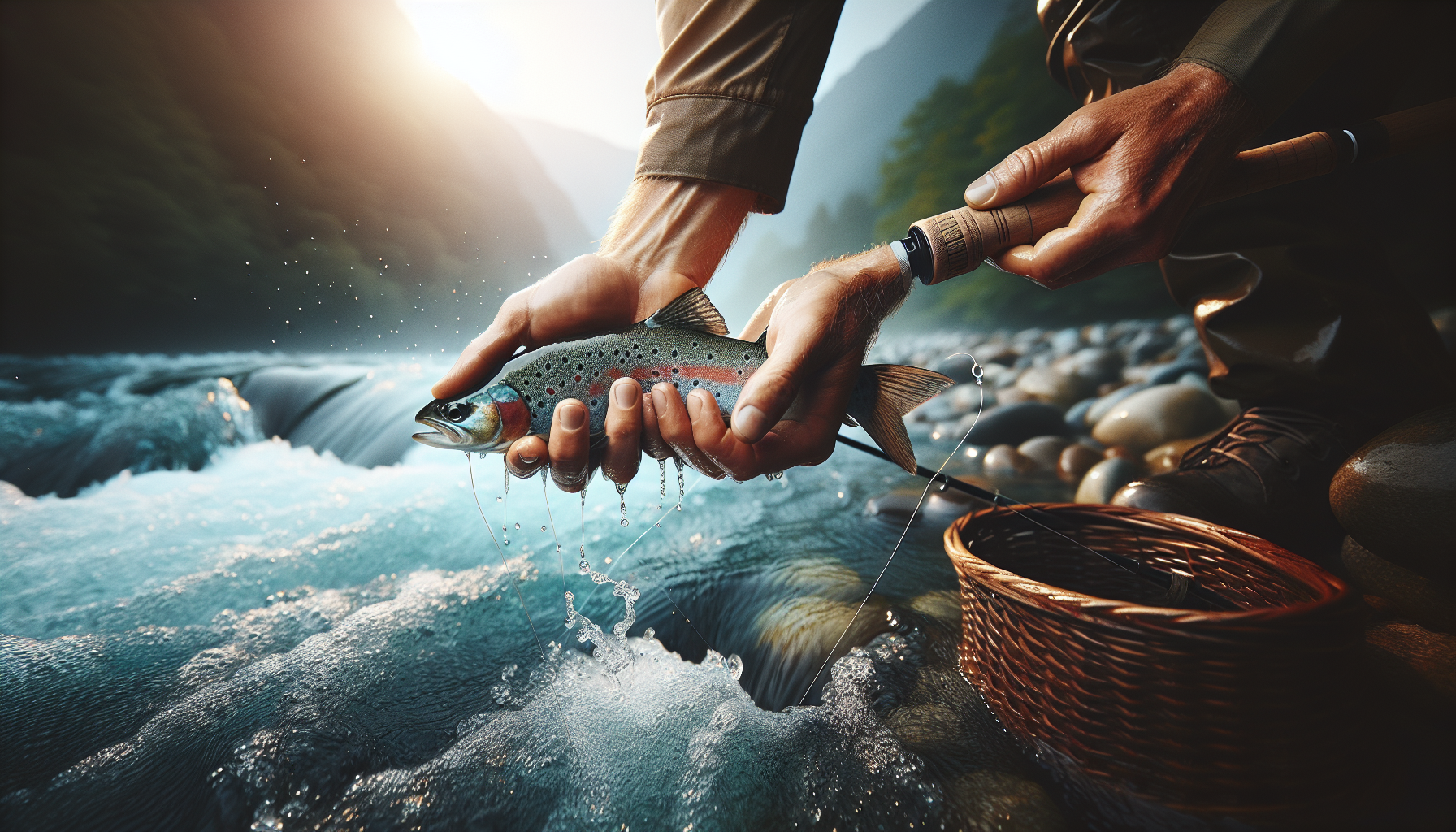
The best fish handling technique is simple in principle: keep the fish wet, keep it supported, and keep the process short. Whenever possible, unhook the fish without removing it from the water. If you need to lift it briefly for a photo or measurement, get everything ready first so the fish is out of the water for only a few seconds. Wet your hands before touching the fish, because dry hands can remove slime and increase the risk of skin damage. Avoid squeezing the fish’s body, and never put fingers into the gills or eyes. If the fish is large, support it horizontally with both hands rather than hanging it vertically by the jaw.
Handling should be adapted to the species and conditions. Some fish are hardy and recover quickly, while others are highly sensitive to stress, especially in warm water or low-oxygen environments. During hot weather, fish can become physiologically overwhelmed by a long fight and even brief air exposure. That is why using strong enough tackle to shorten the fight is a key part of handling, not a separate issue. By the time the fish reaches your hands or the net, much of the damage has either already been avoided or already been done.
Revival should also be approached carefully. In current, hold the fish upright and facing into the flow so water passes naturally over the gills, but do not shove it back and forth aggressively. In still water, support it gently until it regains balance and swims away on its own. If the fish rolls, drifts, or cannot maintain posture, it may need more time. Effective catch and release is not about the quick gesture of letting go. It is about controlling the whole sequence so the fish leaves with strength, orientation, and a realistic chance to recover.
Does water temperature affect which catch and release gear and techniques you should use?
Absolutely. Water temperature is one of the most important variables in catch and release success because it directly affects oxygen availability, fish metabolism, and stress tolerance. In warm water, fish accumulate stress faster during the fight and recover more slowly after release. That means your gear and methods should become more conservative as temperatures rise. Use stronger tackle to reduce fight time, avoid overplaying fish, and make sure your release tools are immediately accessible so there is no delay once the fish is landed.
Warm-water conditions also raise the importance of minimizing air exposure. A fish that might tolerate a brief photo in cool water can struggle badly in summer temperatures, especially if dissolved oxygen is low. In those situations, keeping the fish in the water while removing the hook is often the right call, and skipping the photo altogether may be the responsible choice. Nets, pliers, hook cutters, and camera should all be organized before you make the cast, because preparation becomes even more important when fish are already under environmental stress.
In very cold water, fish may appear sluggish, but that does not mean they can be handled casually. Cold can make tissues more vulnerable in some species, and icy conditions can expose fish to freezing air during handling. Seasonal best practices may also vary by species, region, and local regulations. Some fisheries impose thermal closures or advise anglers to stop targeting certain fish once water temperatures pass a threshold. The most effective gear for catch and release is not just fish-friendly in a general sense; it is matched to the season, species, and conditions so your equipment and technique work together to protect the fish when it is most vulnerable.