Catch and release is the practice of landing a fish and returning it to the water in condition to survive, recover, and reproduce, and minimizing stress during catch and release is the difference between a fish that swims away and a fish that actually lives. In conservation work, I have seen anglers do everything “right” by intention and still harm fish through long fights, dry handling, or poor hook choices. Stress in fish is not abstract. It includes physiological strain such as lactate buildup, oxygen debt, disrupted equilibrium, damaged gills, scale loss, and elevated cortisol, all of which reduce short-term survival and can impair feeding, predator avoidance, and spawning success. Because many waters rely on wild recruitment, size limits, seasonal closures, and voluntary release ethics, understanding low-stress catch and release is essential for protecting fisheries. This hub explains the full process: selecting gear that shortens fight time, using fish-friendly tackle, landing and handling fish correctly, reducing air exposure, knowing when not to target vulnerable fish, and adapting techniques for species, temperature, and habitat.
Why Catch and Release Stress Matters
Catch and release works best when release mortality stays low, but mortality is not the only concern. Sublethal stress can affect a fish for hours or days after release. Scientific studies across trout, bass, salmonids, pike, tarpon, and reef species have shown that longer fight times, higher water temperatures, deep hooking, and prolonged air exposure all increase risk. For example, warmwater angling during summer can push dissolved oxygen lower just as a fish’s metabolic demand rises. A fish may appear to recover, then die later from exhaustion or predation. Coldwater species such as trout are especially vulnerable once water temperatures climb into the upper 60s Fahrenheit, and many responsible anglers stop targeting them entirely around 68 to 70 degrees. That decision is one of the clearest examples of ethical fishing.
Stress also matters because released fish are part of the future stock. Large females often contribute disproportionately to reproduction, and repeated capture pressure on popular fisheries can compound harm even when legal harvest is low. On heavily used rivers, guides and experienced anglers now treat fish handling as carefully as knot tying. The core principle is simple: reduce the intensity and duration of every stressful event from hookset to release. If the fish spends less time fighting, less time out of water, and less time touching damaging surfaces, odds improve dramatically.
Choose Gear That Ends the Fight Fast
The best catch and release gear is not ultralight for sport; it is balanced tackle that lands fish efficiently. Rod power, reel drag, line strength, and terminal tackle should match the species and cover. I routinely advise anglers to step up line class if it means cutting fight time in half. A bass pulled from submerged timber on tackle that is too light may fight to collapse, while the same fish on appropriate gear can be brought in quickly, unhooked fast, and released strong. For trout in current, a rod with enough backbone to steer the fish out of heavy flow is often kinder than a soft rod that prolongs the contest.
Hooks are equally important. Barbless hooks or crimped barbs reduce handling time and tissue damage, especially for fish that thrash in the net. Circle hooks are strongly recommended when using natural bait for species prone to swallowing hooks because they tend to catch in the jaw corner when used correctly. In contrast, J-hooks with bait frequently lead to deep hooking and difficult extractions. Replace rusty trebles, consider single-hook conversions on some lures, and keep hook points sharp so penetration is fast and clean. A rubberized knotless landing net is another high-value tool. It supports the fish, reduces fin fraying, and is much less damaging than old nylon mesh that strips slime and tangles hooks.
Prepare Before You Make a Cast
Low-stress release starts before a fish bites. Anglers who scramble for pliers, cameras, or measuring tapes after landing a fish waste the recovery window. Set up tools where you can reach them with one hand. Carry long-nose pliers, hemostats for small hooks, side cutters for treble hooks, and a net large enough to contain the fish without folding it sharply. If you plan to photograph a catch, decide in advance who will take the photo and where the fish will be held. If you fish from a boat, clear the deck of hot carpeting, dry surfaces, and clutter that could injure a fish.
Environmental preparation matters too. Check water temperature with a stream thermometer or sonar unit before fishing, especially for trout, salmon, and other coldwater species. Watch for algal blooms, low-flow conditions, and obvious signs of thermal stress such as fish holding listlessly near inlets. Regulations are the minimum standard, not the full ethical standard. Some jurisdictions permit fishing during periods when voluntary restraint is wiser. If the fishery is under unusual pressure during spawning runs, heat waves, or drought, the least stressful catch and release choice may be not fishing for that species at all.
Best Practices From Hookset to Net
Once hooked, the goal is steady control. Keep pressure consistent, use the rod butt instead of only the tip, and avoid “playing” the fish for drama. Pumping too aggressively can tear tissue, but giving line unnecessarily extends exhaustion. If the fish runs, let the drag work, then regain line efficiently. Move to a better angle when possible. On rivers, guiding the fish into slower water helps end the fight sooner. On boats, repositioning with a trolling motor can prevent drawn-out battles around structure.
Landing technique is where many fish incur preventable injury. Do not beach fish onto rocks, dry sand, dock boards, or boat carpet unless harvest is intended and legal. Lead the fish headfirst into a rubberized net. For larger fish that cannot be safely netted, support them in the water with wet hands or a proper tailing grip used only on suitable species. Never lift heavy fish vertically by the jaw alone if their body weight is unsupported. That can damage joints and internal structures, especially in larger bass and pike. If a fish is foul-hooked, bleeding heavily, or exhausted beyond recovery, follow local regulations and make a realistic decision rather than assuming every fish can be released successfully.
Handling, Air Exposure, and Hook Removal
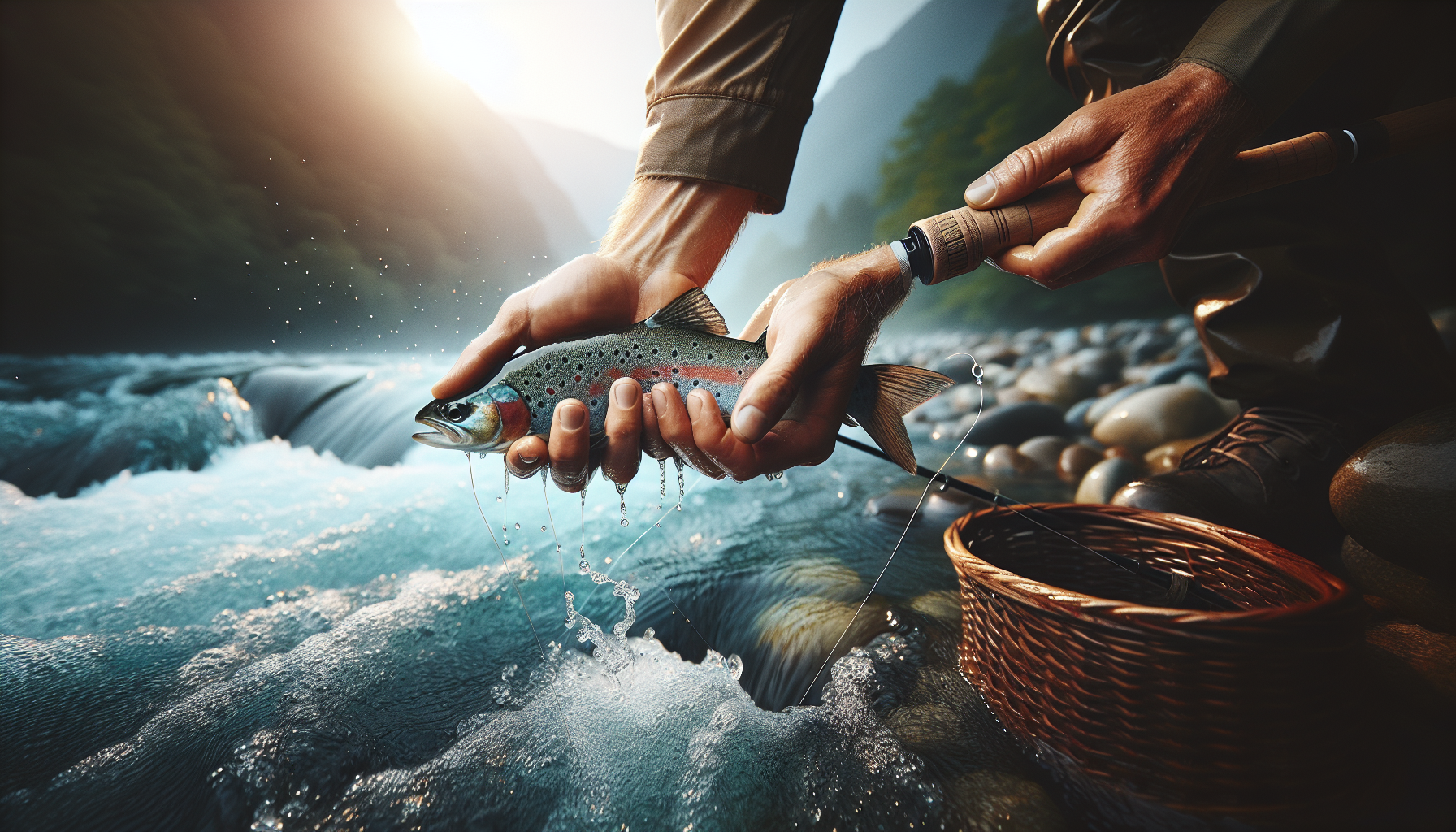
The fish’s protective slime coat is a living barrier against infection, so wet your hands before touching the fish and avoid gloves or towels unless a specific fishery authority recommends them for safety. Keep the fish in the water whenever possible during hook removal. Many single hooks can be backed out with forceps while the fish remains partially submerged in the net. If the hook is buried or a treble is twisted into tissue, cut the hook rather than wrestling it free. Side cutters save fish and fingers.
Air exposure should be measured in seconds, not minutes. Research on salmonids has repeatedly shown that survival declines as air exposure increases, particularly after exhaustive exercise and in warm water. A practical rule many guides use is one short lift for a quick photo, then immediate return. If you need a second photo, do not. For deeply hooked fish, cut the leader as close to the hook as practical unless removal is straightforward and quick. Trying to excavate a hook from the throat often causes fatal damage. Many fish can shed or encapsulate hooks over time, while severe handling trauma is immediate.
| Situation | Lowest-Stress Action | Why It Works |
|---|---|---|
| Fish hooked on a lure with trebles | Keep fish in net, use pliers or side cutters, remove one point at a time | Reduces thrashing, tissue tearing, and handling time |
| Trout caught in 69°F water | End session or switch species | High temperature sharply increases metabolic stress and mortality risk |
| Bait-caught fish likely to swallow the hook | Use inline circle hooks | Improves jaw hookups and lowers deep-hooking rates |
| Large fish for a photo | Lift briefly with both hands supporting body, then return immediately | Prevents jaw and spinal injury while limiting air exposure |
| Hook deeply embedded in throat | Cut the line or hook instead of forcing removal | Avoids major bleeding and internal damage |
Reviving Fish the Right Way
A fish that is upright and moving is not always fully recovered, so revival should be deliberate. In current, hold the fish facing into gentle flow just strong enough to pass water over the gills naturally. In still water, support it upright and move only enough to maintain balance; forcefully pushing a fish back and forth is counterproductive because gills are designed for one-way flow. When the fish can hold itself, clamp its fins normally, and make controlled attempts to swim, release it. If it rolls repeatedly, continue supporting it or move to calmer water where recovery demands less energy.
Species behavior matters. Trout often need quiet support and minimal handling. Bass may kick free decisively once recovered. Pelagic or highly migratory species such as tarpon, billfish, and some sharks present special challenges because fight time, handling methods, and boat-side release procedures differ significantly. For these fish, keeping them in the water beside the boat is usually best. Some fish simply should not be hoisted aboard. Follow species-specific guidance from fishery agencies, tournament best-practice documents, and local experts who understand that anatomy and habitat shape the safest release method.
Adjust for Species, Seasons, and Conditions
No single method fits every fishery. Trout, char, and salmon are sensitive to warm water and rough handling. Esox species such as pike and muskellunge demand jaw-safe tools, long pliers, and quick hook management because they often strike lures armed with multiple trebles. Largemouth and smallmouth bass are comparatively hardy, but that should not be mistaken for invulnerability; delayed mortality still rises with heat, extended livewell confinement, and poor handling. Reef fish can suffer barotrauma when brought up from depth, making descending devices or release weights essential in many saltwater fisheries. Ignoring species-specific physiology is one of the most common catch and release mistakes.
Season matters as much as species. During spawning, fish are already under energetic strain and may be protecting nests or staging in shallow water. Repeated disturbance can reduce reproductive success even if every fish survives release. In summer, low flows and high temperatures compress fish into limited refuges, increasing vulnerability and reducing recovery potential. In winter, fish may recover more slowly because cold reduces activity and handling on freezing surfaces can damage eyes and skin. This is why a good conservation angler builds a decision tree around conditions, not just regulations. The question is never only “Can I catch them?” but “Can I release them well today?”
Build Better Habits and Teach Them
The strongest catch and release results come from repeatable habits. Pinch barbs before the first cast. Keep fish in the water while you organize tools. Set a personal limit for air exposure, ideally under ten seconds. Carry a thermometer and stop targeting temperature-sensitive species when conditions turn risky. Replace oversized photo sessions with one prepared shot. Fish with partners who share those standards. On guided trips, tournaments, club outings, and family days, I have seen culture change quickly when the most experienced angler models calm, fast handling and explains why each step matters.
This page serves as a hub for the broader catch and release conversation under conservation and ethics: hook selection, fish handling, water temperature decisions, species-specific release techniques, and ethical trip planning. The key takeaway is straightforward. Minimize fight time, minimize contact, minimize air, and match your methods to the fish and the conditions. Those choices protect individual fish and improve the health of the fishery over time. If you want your local waters to keep producing wild, resilient fish, audit your gear, refine your release routine, and make every landing as careful as the cast that came before it.
Frequently Asked Questions
What is the most important thing anglers can do to minimize stress during catch and release?
The single most important step is to reduce the total strain the fish experiences from the moment it strikes to the moment it swims away. In practice, that means using gear heavy enough to land the fish quickly, handling it as little as possible, and keeping it in the water whenever you can. Many anglers focus only on release, but stress starts during the fight. A prolonged battle forces the fish to burn energy reserves and build up metabolic waste such as lactate, which can leave it exhausted even if it appears to swim off strongly. A fast, controlled landing gives the fish a much better chance to recover and survive.
Once the fish is close, avoid turning a successful catch into a harmful release by fumbling with tools, dragging the fish onto dry surfaces, or holding it out of the water for too long. Wet your hands before touching it, support its body gently, and remove the hook efficiently with forceps or pliers. If a photo is important, prepare everything in advance and keep air exposure as brief as possible. The best catch and release approach is simple: fight the fish hard enough to land it quickly, handle it carefully, and release it before stress compounds into injury or delayed mortality.
How does a long fight affect a fish after release?
A long fight can seriously reduce a fish’s odds of survival, even if there is no obvious bleeding or physical trauma. When a fish struggles on the line for too long, it experiences intense physiological stress. Its muscles shift into high-demand activity, oxygen use spikes, and lactate can accumulate in the blood and tissues. That leaves the fish fatigued, disoriented, and slower to recover. In warm water or low-oxygen conditions, this effect becomes even more dangerous because the fish has less capacity to repay that energy debt after release.
The consequences are not always immediate. A fish may swim away but still be vulnerable to predation, disease, or delayed mortality because it is too exhausted to feed, hold position, or escape danger effectively. This is why using undersized tackle is often a hidden catch and release problem. Light gear may feel sporting, but if it turns a short landing into a drawn-out fight, the fish pays the price. Matching rod, reel, line, and terminal tackle to the species and conditions is one of the most practical conservation choices an angler can make.
What hook types and rigging choices are best for safer catch and release?
In most catch and release situations, hooks that are easy to remove and less likely to cause deep injury are the best choice. Barbless hooks or hooks with pinched barbs are especially helpful because they come out faster and with less tissue damage. That means less handling time, less air exposure, and less trauma to the mouth. Circle hooks are also highly effective in many bait-fishing situations because they tend to catch in the corner of the mouth rather than being swallowed deeply, which greatly improves release outcomes.
Good rigging choices matter just as much as hook style. If you are targeting fish you intend to release, avoid setups that encourage deep hooking, especially when fish are likely to swallow bait quickly. Check lines promptly, use appropriately sized hooks, and be ready with dehooking tools before you cast. If a fish is deeply hooked, forcing the hook out can do more damage than leaving it in some cases; cutting the line close to the hook may be the better option. The broader principle is to choose tackle that speeds landing, reduces injury, and allows the fish to return to the water in the best condition possible.
Why is keeping a fish in the water so important during handling and release?
Keeping a fish in the water helps protect it from several major sources of stress at once. First, water supports the fish’s body. Out of water, especially with larger fish, internal organs and skeletal structures can be strained by improper lifting or hanging vertically. Second, the fish can continue moving water over its gills while partially submerged, which is essential after the exertion of a fight. Third, keeping the fish wet protects its slime coat, the thin mucus layer that serves as a barrier against infection and helps maintain overall health.
Air exposure is a bigger problem than many anglers realize. Even short periods out of the water can worsen post-release stress, especially for fish already exhausted from the fight. This is why nets with rubberized mesh, in-water hook removal, and ready-to-use tools make such a difference. If you need to lift the fish briefly, do it only when everything is prepared and return it immediately. A good rule is that if you are not actively removing the hook or taking a quick photo, the fish should remain in the water. That simple habit can dramatically improve survival rates.
How should anglers revive and release a fish properly?
Proper revival begins with reading the fish rather than following a rigid routine. After hook removal, hold the fish upright in the water and support it gently until it shows strong, controlled movement. The goal is to give it time to regain balance and normal respiration. In rivers or current, face the fish into the flow so water moves naturally across the gills. In still water, move the fish slowly and carefully only if needed; aggressive back-and-forth pumping is not recommended because it can interfere with normal gill function rather than help it.
Release should happen only when the fish can maintain its position and swim away under its own power. If it rolls, drifts, or cannot hold itself upright, it needs more time. Also remember that not all fish recover equally well under all conditions. Warm water, deep-hooking, long fights, and visible bleeding all increase risk. In those situations, prevention matters more than revival technique. The best release is one that required minimal revival because the fish was landed quickly, handled gently, and kept in the water as much as possible. Effective catch and release is not just about getting a fish to move off; it is about giving it a realistic chance to survive, recover, and reproduce.