Catch and release is the practice of landing a fish and returning it to the water in condition strong enough to survive, recover, and continue normal behavior, including feeding and spawning. In conservation and ethics, it sits at the intersection of fish welfare, fishery management, and angler responsibility. I have seen the difference that good technique makes: trout revived carefully in cold current kick away hard, while fish handled too long on a hot bank often drift off weakly. Best practices for catch and release matter because release does not automatically mean survival. Outcomes depend on species, water temperature, hook placement, fight time, air exposure, and how the fish is handled from strike to release.
For many fisheries, catch and release supports population stability by reducing harvest while still allowing recreational access. That does not mean it is a cure-all. A released fish can suffer immediate mortality, delayed mortality, or sublethal effects such as reduced spawning success or vulnerability to predators. Fisheries agencies therefore pair release guidance with regulations like seasonal closures, gear restrictions, and slot limits. Understanding those terms is essential. Immediate mortality means the fish dies before swimming away. Delayed mortality means it appears to recover but dies hours or days later. Sublethal stress refers to physiological strain, such as lactic acid buildup or gill damage, that may impair survival even when the fish departs strongly.
The goal of ethical catch and release is simple: minimize stress, injury, and handling time at every stage. That requires gear choices before a cast, fish-fighting decisions during the hookup, disciplined handling at boatside or shore, and an honest assessment of conditions. In my experience, most preventable harm comes from small mistakes that anglers normalize: using tackle that is too light, squeezing the fish for a photo, laying it on dry carpet, or fishing warm water long after temperatures have crossed safe thresholds. This hub article explains the core best practices for catch and release, why each matters biologically, and how to make sound decisions that align recreation with conservation.
Use tackle and hooks that reduce fight time and injury
The first best practice for catch and release happens before the fish bites. Tackle should match the target species and conditions closely enough to bring fish in quickly. Long fights exhaust fish by depleting energy stores and increasing blood lactate. That stress is especially dangerous in warm water, where dissolved oxygen is lower and recovery is slower. For bass around heavy cover, for example, medium-heavy or heavy rods with appropriately strong line let anglers land fish efficiently and prevent prolonged struggles. For trout in rivers, balanced tackle matters even more during summer, when a few extra minutes of fighting can push a fish past its recovery threshold.
Hook selection also influences survival. Single hooks generally cause less damage and are easier to remove than trebles. Barbless hooks or hooks with pinched barbs reduce tissue tearing and shorten unhooking time without dramatically reducing landing rates when anglers maintain pressure. Circle hooks are widely recognized as effective for natural bait presentations because they tend to hook fish in the jaw rather than deep in the throat or gut. Many saltwater and some freshwater regulations now require non-offset circle hooks for certain species because the evidence on reduced deep hooking is strong. Artificial lures rigged with inline single hooks can also improve release outcomes for species commonly caught on hard baits.
Terminal tackle should be checked constantly. Dull hooks increase fight time. Frayed leaders and sticky drags create breakoffs that leave fish trailing gear. Landing tools matter too. A rubberized knotless net is far safer than coarse nylon mesh, which strips protective slime and can split fins. If a fishery sees frequent release of large fish, a quality net with a deep bag and supportive frame is not a luxury; it is essential fish-handling equipment.
Fight fish efficiently and keep them in the water whenever possible
Once hooked, the fish should be landed with steady pressure and a clear plan. Efficient fighting does not mean horsing a fish carelessly; it means using rod angle, drag, and positioning to end the fight before exhaustion becomes severe. On rivers, I often move downstream with a fish when safe rather than forcing it against heavy current. In boats, clearing the deck and preparing pliers before the fish reaches the net prevents the frantic delay that often follows capture. These habits shorten total handling time, which is one of the most controllable factors in catch and release survival.
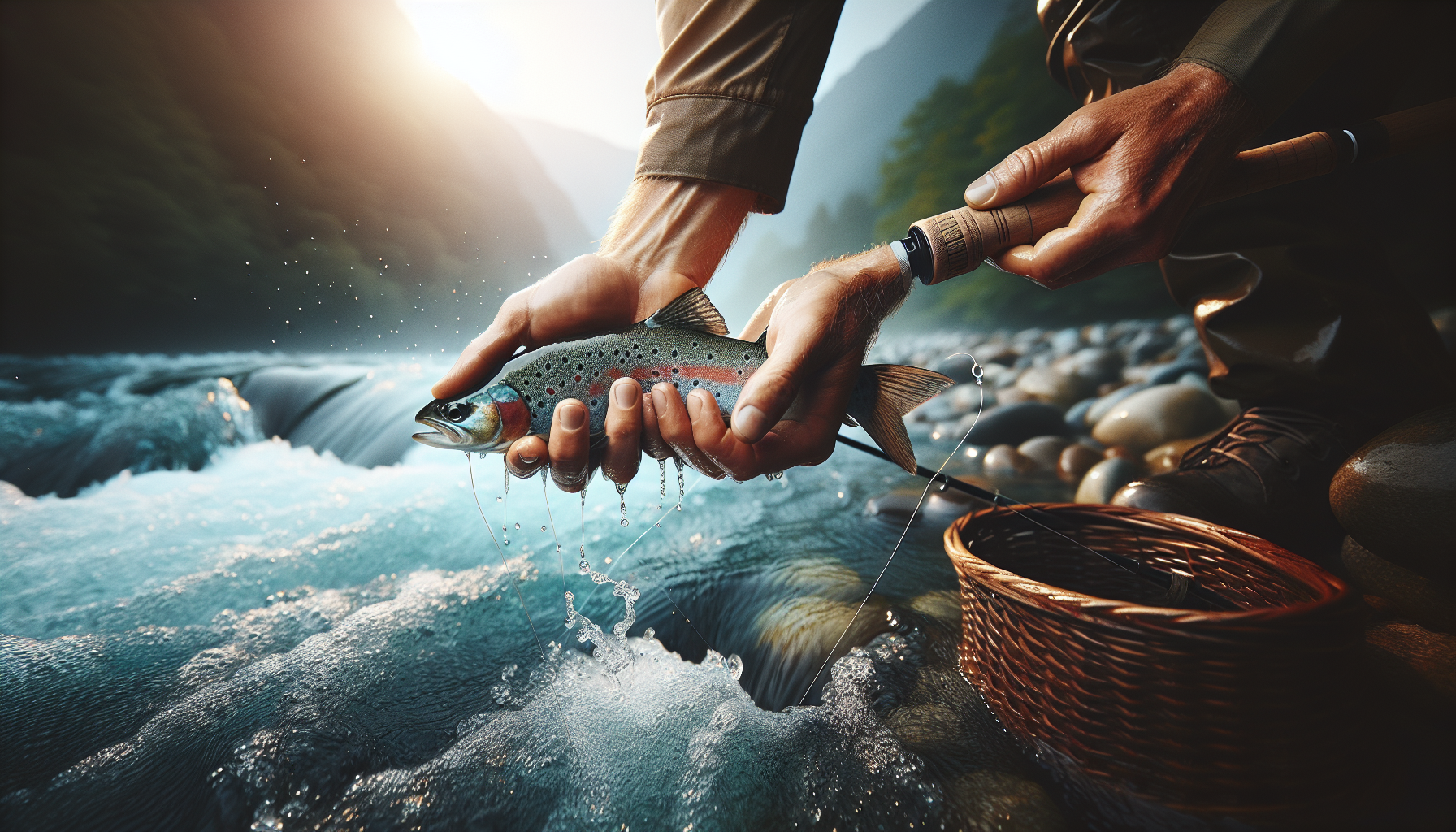
Keeping fish in the water is one of the most repeated catch and release recommendations because it works. Fish breathe by passing water over their gills. The moment they are held in air, gas exchange stops and stress compounds rapidly. Research summarized by agencies such as NOAA Fisheries and many state wildlife departments consistently shows that air exposure increases mortality, particularly after exhaustive exercise or at high temperatures. A practical rule is to complete as much of the release process as possible without lifting the fish out of the water at all. Unhook fish in the net, beside the boat, or in a shallow current seam if conditions allow.
Some species demand even stricter care. Trout, salmon, bonefish, tarpon, muskellunge, and large breeding fish generally benefit from minimal lifting and firm support. Fish should never be dragged onto rocks, hot sand, boat carpet, or dry docks. If a brief lift is necessary, it should be planned in advance: net ready, pliers ready, camera ready, and hands wet.
Handle fish correctly to protect slime, gills, jaws, and internal organs
Proper handling is the center of best practices for catch and release because poor handling can injure fish even when hook removal is easy. Always wet your hands before touching the fish. The mucous coating, commonly called slime, is part of the fish’s defense against infection and parasites. Dry hands, gloves with rough fabric, and abrasive surfaces remove that barrier. Support the fish horizontally whenever possible, especially larger fish. One hand can cradle the belly while the other gently controls the wrist of the tail. Hanging a heavy fish vertically by the jaw can strain connective tissue and damage the mouth, especially in species like largemouth bass and pike.
The gills and eyes should never be touched. Gills are delicate respiratory organs rich with blood vessels, and even minor trauma can compromise oxygen exchange. Lip-gripping tools have a place, particularly for controlling boatside fish with teeth or dangerous hooks, but they should not be used to suspend heavy fish for long periods. A better approach is to use the tool briefly for control while supporting the body with the other hand or while the fish remains partly in the water. For species known to thrash, such as pike and muskie, a large rubber net acts as an in-water holding pen and greatly reduces chaotic handling.
Photography is where many good intentions fail. If you want a picture, think “lift, click, release.” Frame the shot before lifting the fish. Keep the fish low over the water in case it slips. One quick photo is enough; a sequence of poses is not. I tell anglers to hold their breath while the fish is out of water. If you need to inhale before the picture happens, the fish has been out too long.
Remove hooks safely and know when to cut the line
Fast, gentle hook removal is a defining catch and release skill. The right tools are long-nose pliers, hemostats for small hooks, and hook cutters for deeply embedded trebles or large saltwater hardware. The basic method is to back the hook out along the path it entered while minimizing twisting. Barbless hooks make this straightforward. Treble-hooked fish are more complicated because one point can be in the fish while another is in the net or your hand. In those cases, cutting a point or shank is often faster and safer than wrestling the hook free intact.
Deep hooking requires judgment. For fish hooked in the tongue, jaw hinge, or just inside the mouth, skilled use of hemostats may solve the problem quickly. But when a hook is in the throat, gullet, or stomach area, trying to dig it out can cause catastrophic bleeding or tissue damage. The best practice in that situation is often to cut the line as close as practical and release the fish promptly. Many studies and management recommendations support line cutting because some hooks corrode, loosen, or become encapsulated, whereas forced removal can be immediately lethal. Hook material affects this outcome, so non-stainless hooks are often preferred where release rates are high.
| Situation | Best practice | Why it improves survival |
|---|---|---|
| Fish lightly hooked in jaw | Remove with pliers in water | Short handling time and minimal tissue damage |
| Fish hooked on a treble lure | Use rubber net and cut troublesome hook points | Prevents tearing and reduces thrashing injuries |
| Fish deeply hooked in throat | Cut line close to hook, do not rip it out | Avoids severe bleeding and internal trauma |
| Large fish boatside | Control briefly, support body horizontally | Protects jaw structure and internal organs |
Match release methods to species, water temperature, and fishing conditions
Not every fishery presents the same risks, so best practices for catch and release must be adjusted to conditions. Water temperature is one of the most important variables. Trout and salmon are coldwater species, and many fisheries become ethically questionable once water temperatures rise into the upper sixties Fahrenheit, with local guidance often becoming restrictive or cautionary around that range. Warmwater species such as bass tolerate higher temperatures better, but they are still affected by prolonged fights and low dissolved oxygen, especially in midsummer reservoirs or weedy ponds during calm mornings.
Saltwater species add other considerations. Pelagic fish such as tuna and mackerel may need rapid boatside release because exhaustive fights create severe metabolic stress. Sharks and rays require species-specific handling because some are vulnerable to spinal injury, suffocation, or trailing gear. Reef fish can experience barotrauma when brought up from depth; symptoms include bulging eyes, stomach eversion, and loss of equilibrium. In those fisheries, descending devices are increasingly recommended or required because they return fish to pressure at depth more effectively than simply tossing them overboard. Venting can help when done correctly, but descending tools have become the preferred option in many programs due to consistency and lower handling risk.
Current, surf, ice, and bank access also change what safe release looks like. In strong current, revive fish facing upstream only enough to let water pass naturally over the gills; do not shove fish back and forth, which can damage gill lamellae. In surf, time the release so the fish is not rolled by receding waves. Through the ice, prepare tools before lifting a fish from the hole because freezing air can damage eyes and gills quickly. On steep banks, it may be more ethical to fish only where landing and release are realistic.
Know the limits of catch and release and make ethical decisions
Catch and release is not automatically ethical simply because the fish swims away. Ethical angling means recognizing when not to fish, when to stop targeting a stressed species, and when regulations set a minimum standard rather than the ideal one. During heat waves, low flows, spawning periods, or harmful algal blooms, skipping a session can be the best conservation choice. Many experienced anglers voluntarily avoid trout in warm afternoons, avoid sight-fishing bedding bass during vulnerable nesting periods, or stop targeting fish concentrated below dams when water conditions are poor. Those decisions protect fisheries more effectively than perfect hook removal on a single fish.
Regulations should be read closely because they often encode biological realities. Seasonal closures protect spawning congregations. Slot limits preserve prime breeding fish. Gear restrictions such as artificial-only rules, circle-hook requirements, or single-hook mandates are designed to reduce mortality patterns documented over years of management data. Good anglers go beyond compliance by keeping records, noting water temperatures, carrying release tools, and sharing fish-handling expectations with partners. If you guide, fish clubs, or mentor beginners, your standards influence many more fish than the ones on your own line. The long-term benefit is not abstract. Better catch and release preserves age structure, improves trophy potential, supports natural reproduction, and sustains public trust in angling as a legitimate use of wild resources.
Best practices for catch and release come down to a disciplined sequence: use appropriate tackle, land fish fast, keep them wet, handle them gently, remove hooks efficiently, and adapt to species and conditions. When any part of that chain breaks, survival drops. When the full process is done well, released fish have the strongest chance to recover, spawn, and be caught again. For anglers who care about conservation and ethics, that is the real standard. Review your gear, learn your local seasonal thresholds, and make every release intentional rather than incidental.
Frequently Asked Questions
What does catch and release actually mean, and why does technique matter so much?
Catch and release means more than simply letting a fish go after it has been landed. The goal is to return the fish to the water in a condition strong enough to survive, recover quickly, and resume normal behavior such as feeding, avoiding predators, and spawning. That distinction matters because a fish can swim away and still suffer delayed mortality if it was overly stressed, injured, or exposed to poor handling conditions. In other words, release is not automatically successful just because the fish leaves your hands.
Technique matters because every step of the encounter affects the fish’s chances. Long fights can exhaust a fish and build up physiological stress. Dry hands or rough surfaces can damage the protective slime coat that helps defend against infection. Holding a fish out of the water too long can impair breathing and worsen stress, especially in warm conditions. Poor hook placement, excessive squeezing, or dragging a fish onto rocks, sand, or hot banks can also cause serious injury. Good catch-and-release practice is about reducing those harms wherever possible.
From a conservation perspective, proper release helps sustain fisheries by preserving spawning adults and maintaining healthy fish populations. From an ethical perspective, it reflects angler responsibility: if you choose to release a fish, you also take on the obligation to give it the best possible chance of survival. The best anglers treat release as a skill, not an afterthought. They prepare in advance, land fish efficiently, handle them minimally, and make decisions that prioritize fish welfare over photos or prolonged admiration.
What are the best practices for landing and handling a fish so it has the best chance of survival?
The most effective approach is to minimize fight time, air exposure, and physical handling. Start by using gear that is appropriately matched to the species and conditions so you can land the fish efficiently rather than prolonging the battle to the point of exhaustion. A fish that is fought to complete fatigue may look strong at release but can be far more vulnerable afterward, particularly in warm water or strong current. Tackle that is too light for the fishery may be sporting from an angling perspective, but it often increases stress on the fish.
Once the fish is close, use a rubberized, knotless landing net whenever possible. These nets are much easier on fins, scales, and slime coat than abrasive mesh. Keep the fish in the water while preparing to unhook it. Before touching the fish, wet your hands thoroughly. Wet hands reduce friction and help protect the fish’s delicate outer coating. Support the fish gently and horizontally, especially larger fish, because hanging a fish vertically by the jaw can strain internal structures and the spine. Never squeeze the body to control it, and avoid placing fingers in the gills or eyes.
Unhook the fish quickly with hemostats, pliers, or a hook remover if needed. If the hook is deeply embedded and removal would cause major damage, it is often better to cut the line as close to the hook as possible rather than tearing tissue in an attempt to retrieve it. Many fish can shed or encapsulate hooks over time, whereas severe hook removal injuries can be immediately life-threatening. Planning ahead helps here: keep tools accessible, know where your camera is if you want a quick photo, and avoid fumbling while the fish is out of water.
If you choose to take a picture, think in seconds, not minutes. Keep the fish in the water until everything is ready, lift it briefly, support it properly, and return it immediately. A helpful rule is “water-to-camera-to-water” as quickly as possible. Avoid laying fish on dry grass, sand, boat decks, or rocks. Those surfaces remove slime, can damage scales, and may be hot enough to injure tissue. The smoother and calmer your process, the stronger the fish’s odds of making a full recovery.
How do water temperature and environmental conditions affect catch-and-release success?
Environmental conditions are a major part of responsible catch and release, and water temperature is one of the biggest factors. Fish physiology is closely tied to the temperature and oxygen level of the water around them. As water warms, it holds less dissolved oxygen, while a fish’s metabolic demands often increase. That combination can sharply raise stress during and after capture. A fish that might recover quickly in cold, oxygen-rich current can struggle badly in warm, slow water even if it is handled with care.
This is especially important for coldwater species such as trout and salmon. In hot weather or during low summer flows, these fish can be pushed close to their limits. Even short fights and brief handling can become much more dangerous. In those conditions, anglers should shorten outings, target more resilient species, fish only during the coolest parts of the day, or stop fishing entirely if temperatures are too high. Many fisheries agencies publish temperature guidelines or seasonal advisories, and those should be taken seriously. Ethical angling sometimes means deciding not to fish.
Other conditions matter too. Fast current can help a fish recover by moving oxygenated water across its gills, but only if the fish is upright and not being forced unnaturally through the water. Deep-hooking risk may increase when fish are aggressively feeding. Salinity, spawning stress, low water levels, and post-release predation can also affect outcomes. Fish released into shallow, warm, stagnant margins may be far less likely to recover than fish released quickly in cooler, well-oxygenated water.
The key takeaway is that best practices are not one-size-fits-all. Good anglers adapt to conditions. They understand that a “safe enough” release on a cool spring morning may not be acceptable on a hot afternoon. Paying attention to temperature, flow, oxygen, and seasonal stress helps turn catch and release from a slogan into an informed conservation practice.
Are barbless hooks and certain tackle choices really better for catch and release?
Yes, in many situations they are. Tackle choices can make a meaningful difference in both how quickly a fish is landed and how much injury occurs during hook removal. Barbless hooks, or hooks with the barb pinched down, are widely recommended because they are usually easier and faster to remove. Faster hook removal means less handling, less air exposure, and less tissue damage. That does not mean barbless hooks eliminate all harm, but they often reduce it significantly, especially when anglers are practiced in keeping steady pressure during the fight.
Hook style matters as well. Circle hooks are often beneficial in bait fishing because they tend to catch fish in the corner of the mouth rather than deep in the throat, which can reduce serious hooking injuries. For many catch-and-release situations, artificial lures may also lower the frequency of deep hooking compared with natural bait, since fish are often hooked sooner and more visibly. Single hooks can be easier to remove than treble hooks, and replacing treble hooks with singles on some lures may improve release outcomes while still allowing effective fishing.
Rod, reel, line, and leader should also be selected with fish welfare in mind. Heavy enough tackle helps you land fish promptly and maintain control. This is not about overpowering fish carelessly; it is about avoiding unnecessarily prolonged battles that create exhaustion. A quality drag system, appropriate rod backbone, and line strong enough for the species and habitat all help reduce stress. Nets are part of tackle too, and a rubberized net is generally one of the best investments an angler can make for safer releases.
None of this means there is a single perfect setup for every fishery. Regulations, species behavior, water type, and angling method all influence what makes sense. But as a general rule, tackle that reduces fight time, minimizes deep hooking, and allows quick, low-impact hook removal is better for catch and release. When anglers choose gear intentionally rather than purely for convenience or tradition, released fish usually benefit.
How should you revive a fish before release, and how can you tell if it is ready to swim away?
Revival should be gentle, patient, and based on helping the fish regain balance and effective respiration without adding more stress. In many cases, a lightly stressed fish will recover best if it is simply kept upright in the water and allowed to regain strength on its own. Support the fish facing into a moderate current so water naturally passes over the gills. If there is no current, hold the fish upright and steady in calm water. The important point is to let water flow naturally across the gills rather than aggressively pushing the fish back and forth, which can interfere with normal gill function and do more harm than good.
Watch the fish closely. A recovering fish will usually begin to hold itself upright, show stronger gill movement, and make purposeful body or tail movements rather than limp, uncoordinated ones. You may feel it start to brace against your hand or push away with increasing strength. That is usually the best sign that it is regaining the power needed to leave on its own. If it rolls onto its side repeatedly, cannot maintain balance, or drifts without control, it likely needs more time, and in some situations those signs may indicate severe stress from which recovery is uncertain.
Be realistic about the limits of revival. If a fish has been fought too long, deeply hooked, handled excessively, or caught in water that is very warm and low in oxygen, even careful revival may not overcome the accumulated stress. That is why revival