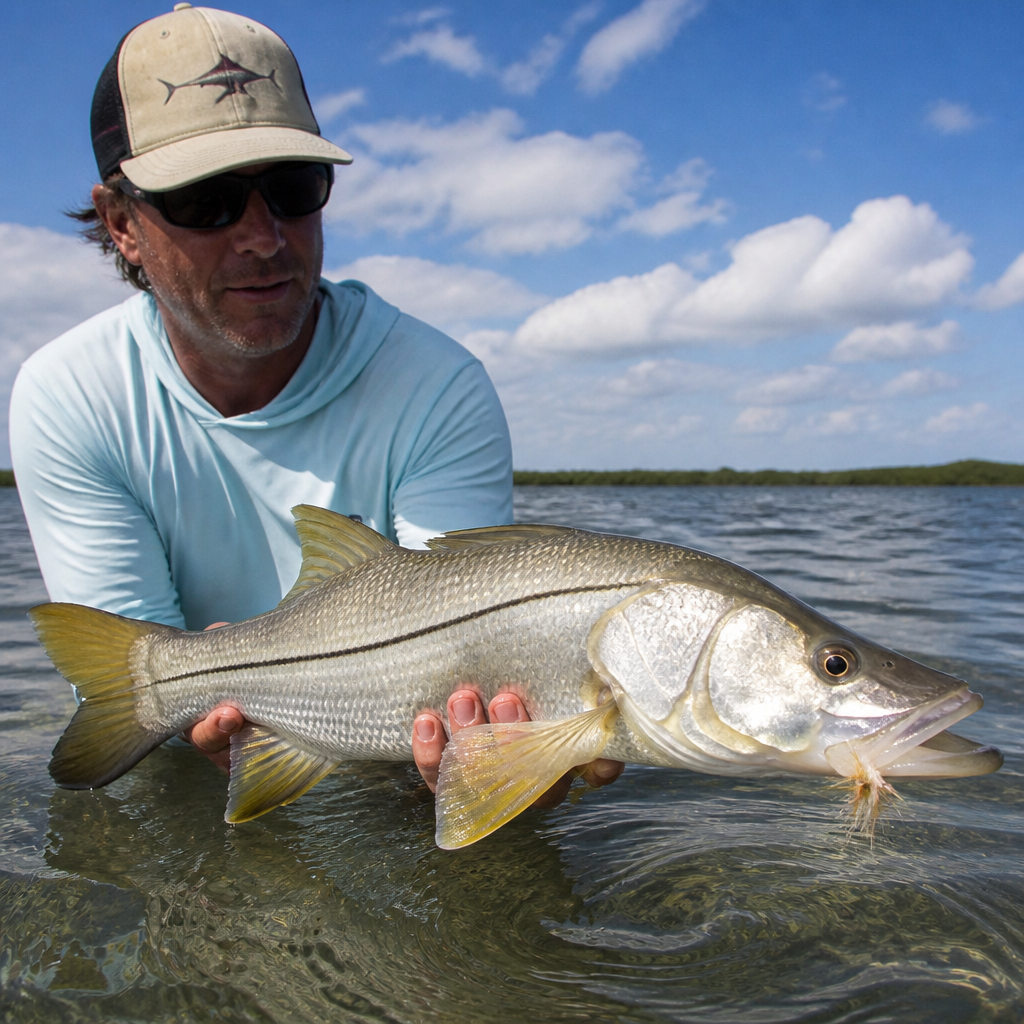
Fly fishing for snook blends technical casting, fish behavior, and habitat reading into one of the most rewarding challenges in saltwater angling. Snook are aggressive ambush predators found across tropical and subtropical coastlines, especially around mangroves, bridges, docks, beaches, and estuaries. In practical terms, a hub article on saltwater species should explain not only how to catch snook on fly, but also how snook relate to the broader world of inshore gamefish, coastal habitat, tackle selection, and seasonal movement. That matters because anglers rarely pursue a species in isolation. A snook session often overlaps with tarpon, redfish, seatrout, jacks, ladyfish, and juvenile reef visitors, and success depends on understanding the entire system, not just one fish.
When I guide newer saltwater fly anglers, I define a few terms immediately. Structure means any physical feature that changes current or provides shade, cover, or feeding advantage: mangrove roots, dock pilings, bridge fenders, seawalls, or troughs along a beach. Current seam refers to the line where faster and slower water meet; predators sit near these seams to intercept bait with minimal effort. Presentation is the total delivery of the fly, including casting angle, entry, sink rate, strip speed, and where the fly passes relative to the fish. Snook are exceptionally presentation sensitive. They may track a fly for ten feet and refuse at the last moment if the angle, speed, or depth looks wrong.
Snook matter as a centerpiece of saltwater species coverage because they reward observation more than brute force. They are visual feeders with explosive power, but they are also tightly linked to water temperature, tide stage, dissolved oxygen, and bait concentration. In Florida, common snook are managed carefully, with seasons and slot limits changing by region, and responsible anglers already know that catch-and-release best practices are part of the game. Fly fishing elevates that responsibility. You are usually fishing single hooks, often at close range, and you have unusual control over fly size, profile, and action. That makes snook an ideal species for anglers who want a technical, thoughtful approach to saltwater fishing.
As the hub for saltwater species, this article connects the core ideas you will reuse across inshore fisheries: matching forage, reading moving water, selecting rods and lines for wind and depth, and adjusting tactics for structure, open beach, and nighttime feeding. Learn these patterns with snook, and you gain a framework that carries into trips for baby tarpon in backcountry creeks, redfish on flooded grass, striped bass around current edges, or sea-run predators in harbor systems worldwide.
Understanding Snook Behavior and Habitat
Snook are built for ambush. Their lateral line is pronounced, their mouths are oversized, and their body shape allows sudden acceleration over short distances. Most feeding events happen because a fish positions itself beside structure, inside a shadow line, along a mangrove point, or under a dock where current funnels bait directly into its strike zone. That behavior explains why many missed opportunities are really positioning mistakes by the angler. If your skiff, kayak, or wading path places you too close, or if your cast lands beyond the useful lane, the fish never gets a natural look.
In estuaries, snook move with salinity and temperature. Water below roughly 60 degrees Fahrenheit can stress or kill them, which is why severe cold events have historically caused major losses in Florida populations. During warm months, fish spread through creeks, rivers, residential canals, and beach zones. During spawning periods, larger snook stage near passes, inlets, and beaches with strong tidal exchange. Juveniles often hold far upriver in brackish water among overhanging cover. This spread makes snook a practical anchor species for a saltwater species hub: the same angler may encounter them in backcountry mangrove tunnels at dawn, under docks on a midday incoming tide, and in beach troughs during a calm evening hatch of glass minnows.
The simplest rule is that snook want three things at once: food, protection, and efficient current. Food means mullet, pilchards, pinfish, shrimp, crabs, glass minnows, and juvenile baitfish. Protection means shade, depth, roots, pilings, undercut banks, or wave-stained water that conceals them. Efficient current means moving water that brings forage while allowing the fish to hold with minimal energy use. Once you start reading water this way, the species becomes more predictable.
Tackle Selection for Fly Fishing for Snook
The best all-around rod for fly fishing for snook is an 8-weight, but that answer needs context. For small creek fish under mangroves, a 7-weight can be enjoyable and accurate. Around bridges, larger passes, or the beach during spawning season, a 9-weight gives better line control, lifting power, and wind penetration. I keep an 8-weight rigged with a floating line for shallow structure and a 9-weight with an intermediate line for deeper edges, surf, or fast current. Reels should have a reliable sealed drag, but startup inertia matters more than maximum drag number. Snook hit hard and often surge instantly toward cover. A drag that engages smoothly protects light tippets and helps you steer fish before they reach barnacles.
Leaders should be simple. A typical setup is 7.5 to 9 feet tapering to 16- or 20-pound class tippet, with 25- to 40-pound shock tippet when structure is severe or fish are larger. Fluorocarbon is useful around docks and clear water because of abrasion resistance and sink characteristics, but stiff nylon butt sections still turn over bulky flies well. The right leader depends on fly size, wind, and how delicately you need the fly to land. In tight mangrove shots, accuracy usually matters more than long, subtle leaders.
Fly lines do much of the tactical work. Floating lines excel around shoreline cover, topwater situations, and skinny water where an immediate pickup for a second shot is critical. Intermediate lines are often the most versatile for snook because they keep the fly under surface chop and in the feeding lane longer. Fast-sinking lines become useful around bridges, channels, and deep dock edges at night, though they demand better boat positioning and strip timing.
| Scenario | Recommended Setup | Why It Works |
|---|---|---|
| Mangrove shorelines | 8-weight, floating line, 20-pound tippet | Quick pickups, accurate short casts, controlled landings near roots |
| Residential docks | 8- or 9-weight, intermediate line, 20-pound tippet plus shock | Keeps fly in shadow lanes and handles abrasion from pilings |
| Bridges and passes | 9-weight, sink-tip or fast intermediate, 25-pound class with shock | Maintains depth in heavy current and turns larger fish from structure |
| Beach snook | 8-weight, intermediate line, longer leader | Matches baitfish profile, manages surf, and presents cleanly in troughs |
Best Flies, Colors, and Presentation Angles
Snook flies do not need to be elaborate, but they must match bait size, push enough water to be noticed, and ride at the correct depth. Proven patterns include Deceivers, EP baitfish flies, Clouser Minnows, Schminnows, Gurglers, and synthetic shrimp patterns. White remains the baseline color because so much inshore forage is pale or translucent. White and chartreuse, olive and white, tan, gray, and black all earn their place. Black is especially effective at night because it creates a strong silhouette against artificial light or the faint surface glow.
Size is often more important than exact pattern. During glass minnow feeds, a bulky 3/0 fly can spook fish that are keyed on tiny translucent bait. Around dock lights with pilchards present, a 2.5- to 4-inch profile is standard. Along mangrove edges where snook ambush juvenile mullet, a broader 4- to 5-inch fly may draw larger fish. Weighted eyes help in deeper lanes, but too much weight can cause noisy landings in shallow water and snag roots or oysters. That is why many experienced anglers carry the same baitfish profile in unweighted, bead-chain, and lead-eye versions.
Presentation angle separates casual success from consistent success. Cast beyond the fish only if current will sweep the fly naturally into the strike zone. Often the better shot is slightly up-current and tight to cover, letting the fly sink a foot, then stripping it parallel to the structure. A fly moving directly at a laid-up snook often gets refused. A fly moving across its field of vision like escaping bait gets eaten. The first strip matters. I want tension immediately after the fly lands, but not a violent rip unless fish are feeding aggressively. Think controlled escape, not panic, until the fish tells you otherwise.
Tides, Time of Day, and Seasonal Strategy
Tide stage determines where snook can feed, but tidal movement determines whether they want to. Moving water concentrates bait and positions fish. Slack water usually reduces urgency unless light levels are low or bait is trapped. An incoming tide often pushes cleaner, cooler, or more oxygenated water into backcountry areas, activating fish along mangrove points and dock mouths. Outgoing tides can be excellent where creeks drain shrimp and bait from marsh edges or canals into defined current lines. The correct question is not simply whether the tide is high or low, but where forage is being funneled during that stage.
Time of day changes both fish behavior and your presentation options. Early morning allows quieter approaches and easier visual spotting along banks and beaches. Midday can still be productive around deeper shade, bridge shadow lines, and docks with current. Night fishing is a distinct game. Around lighted docks and bridges, snook often set up just outside the brightest water, facing into current and picking off disoriented bait. Cast beyond the light edge, let the fly enter the transition zone, and strip it naturally through that seam. Directly lining fish in the cone of light is one of the most common mistakes.
Seasonally, spring and early summer are prime in many regions because water temperatures stabilize, bait is abundant, and snook spread across accessible inshore habitat. Summer beach fishing can be outstanding during spawning movements, especially along troughs, points, and passes with schools of bait. Fall often brings aggressive feeding as fish exploit mullet runs and prepare for winter. In colder periods, deeper residential canals, warm discharges where legal, and protected rivers may hold fish, but careful handling becomes even more important because cold-stressed snook are vulnerable.
How to Fight, Land, and Release Snook Properly
The hook-set for snook on fly is a strip-set, not a trout lift. Keep the rod tip low, pull firmly with the line hand until the hook is buried, then raise the rod only after tension is solid. Many lost fish happen in the first second because anglers react upward, creating slack or pulling the fly away before the point penetrates the tough mouth. After the set, the priority is angle. Pull from the side to turn the fish away from mangrove roots, dock pilings, bridge columns, or outboard motors. Straight-up pressure often lets a snook use structure more effectively.
Landing should be fast and controlled. Long fights build lactic acid and reduce survival, particularly in warm water where oxygen levels are lower. Use tackle heavy enough to pressure the fish. Wet hands before handling, support larger fish horizontally, avoid hanging heavy snook vertically by the jaw, and keep them in the water as much as possible. If a fish needs revival, face it into current and let it kick away under its own power. These habits are not optional details. They are central to responsible saltwater fly fishing, especially for a species with weather sensitivity and regulated harvest.
To get better at fly fishing for snook, practice three things deliberately: accurate casts inside a hula-hoop at forty feet, immediate strip-sets without raising the rod, and reading current before making a shot. Those skills catch fish across the entire saltwater species category. Snook simply make the lesson obvious. Learn where they hold, match the forage, deliver the fly from the right angle, and fight them hard away from structure. Build your next trip around one variable at a time, whether that is dock lights, beach troughs, or mangrove points on the incoming tide, and your results will improve quickly.
Snook are the ideal hub species for understanding saltwater fly fishing because they connect tackle, habitat, tides, bait, and fish behavior in one practical system. The same observation skills you use for snook will help with redfish on edges, tarpon in channels, and seatrout over grass. Start with a balanced 8-weight outfit, a small box of proven baitfish and shrimp flies, and a plan built around moving water. Then fish with intention: approach quietly, make the first cast count, strip-set hard, and release fish carefully. If you want to grow within saltwater species angling, put snook at the center of your learning and spend your next outing reading current before you ever false cast.
Frequently Asked Questions
What makes snook such a popular target for fly anglers?
Snook are prized on fly because they combine power, intelligence, and a strong connection to structure. They are classic ambush predators, often holding tight to mangrove edges, dock pilings, bridge shadows, creek mouths, and troughs along the beach, then exploding on a well-placed fly with very little warning. That visual, close-range style of fishing is a major part of their appeal. Unlike species that roam featureless water, snook usually reward anglers who can read current seams, shade lines, bait movement, and tidal positioning. Every cast tends to feel purposeful.
They are also one of the most technical inshore gamefish to pursue consistently. Catching snook on fly is not just about owning the right rod or making long casts. It requires accurate presentation, controlled line management, and a good understanding of how fish position themselves around current and cover. A fish may only give you a narrow window to present a fly before it slides back under roots or turns away from the light. That challenge is exactly why many anglers become obsessed with them.
From a broader saltwater perspective, snook sit at the intersection of many inshore fishing skills. Learning to target them improves your ability to fish estuaries, beaches, mangroves, and man-made structure for other coastal species as well. The same habitat-reading skills that help you find snook often translate to redfish, tarpon, seatrout, jacks, and other inshore predators. In that sense, fly fishing for snook is both a specialized pursuit and an excellent gateway into understanding coastal ecosystems and inshore gamefish behavior.
What fly tackle works best for snook in different situations?
An 8- or 9-weight outfit is the standard starting point for most snook fly fishing because it provides enough power to cast larger baitfish patterns, handle wind, and pressure fish away from mangroves, docks, and bridge structure. An 8-weight is a great choice for beach snook, smaller fish in backcountry creeks, and calmer conditions where presentation matters most. A 9-weight gives you more lifting strength around heavier cover and is often the better all-around option if you regularly fish structure, deeper channels, or areas with stronger current. In especially demanding scenarios, such as big dock snook at night or fish holding around bridge pilings, some anglers step up to a 10-weight for additional control.
A quality saltwater reel with a smooth, reliable drag is essential. Snook are not usually long-distance runners in the same way as tarpon or false albacore, but they are extremely good at making short, destructive runs into cover. A dependable drag helps maintain pressure without popping the tippet, and corrosion resistance matters because this fishery often involves salt, sand, and repeated exposure to harsh conditions. Floating lines cover a large share of snook situations, especially around mangroves, shorelines, and beaches. Intermediate lines are excellent when fishing deeper troughs, channels, or windy open water where keeping the fly just below the surface improves control and strike conversion.
Leaders should match the environment. In open water or on the beach, a 9- to 12-foot leader tapering to 16- or 20-pound tippet is common. Around heavy structure, many anglers shorten leaders for turnover and increase tippet strength to 25 or 30 pounds to survive abrasion. Snook have abrasive mouths and often feed around sharp cover, so fluorocarbon is popular for its toughness and sink rate. Fly selection usually centers on baitfish imitations, shrimp patterns, and occasionally gurglers or sliders for surface takes. White, tan, chartreuse, olive, and black are proven colors, and the best choice often depends on light level, water clarity, and local forage. Matching the fly to the depth and speed of the water is usually more important than obsessing over exact color.
Where should I look for snook, and how do tides and habitat affect their behavior?
Snook are strongly tied to structure, current, and feeding opportunities, so location is everything. In mangrove-lined estuaries, they often hold in undercut banks, creek mouths, shaded pockets, and points where moving water pushes bait within striking distance. Around docks and bridges, they use pilings, eddies, shadow lines, and current breaks as feeding stations. On beaches, they patrol troughs, cuts, bait schools, and areas where wave action disorients prey. In all of these environments, snook are usually not random. They position where energy expenditure is low and feeding odds are high.
Tides are one of the biggest keys to finding active fish. Moving water generally creates the best opportunities because it concentrates bait and gives snook predictable ambush lanes. An incoming tide may pull fish farther into mangrove shorelines, back creeks, and flooded edges where they can hunt shrimp and small baitfish. An outgoing tide often funnels prey out of those areas, creating prime feeding points at creek mouths, drains, and shoreline pinch points. Around bridges and passes, current strength can dictate whether fish set up on the up-current face, behind pilings, or along softer seams where they can dart out and feed efficiently.
Light and temperature matter too. Snook often become more confident in low-light periods such as dawn, dusk, and nighttime, especially in clear or pressured water. Shade lines under mangroves, seawalls, and dock platforms can be productive even during bright conditions because they give fish concealment and a visual advantage over prey. In tropical and subtropical systems, seasonal temperature changes can alter their distribution, pushing fish toward warmer backwaters during cool periods and spreading them across beaches, passes, and open estuaries when conditions stabilize. The more you understand how habitat, current, and forage overlap, the easier it becomes to predict where snook should be rather than simply searching for them blindly.
What are the best fly presentation strategies for snook around mangroves, docks, bridges, and beaches?
Presentation is usually the deciding factor in snook fishing. Around mangroves, the goal is to place the fly as close to the roots, cuts, and shade pockets as possible without hanging up. Snook commonly sit inches from cover, so a cast that lands a few feet too far out may be ignored completely. Accuracy matters more than distance in many cases. A quiet entry followed by a short, controlled strip can trigger a reaction, especially if the fly appears to be escaping from the cover. If the fish does not respond immediately, changing the retrieve speed or angle can make a big difference.
At docks and bridges, current and line control become more important. You often need to cast slightly up-current and allow the fly to drift or swing into the strike zone naturally rather than pulling it unnaturally across the flow. Shadow lines are especially productive because snook use contrast to ambush prey. A baitfish pattern worked along the edge of light and dark can be deadly. Around pilings, be ready for the take as the fly enters the soft seam behind structure. Once a fish eats, apply side pressure quickly and decisively to keep it from wrapping you around the nearest obstruction.
Beach snook fishing usually calls for a more open-water approach. Look for fish cruising parallel to shore, staging near bait schools, or holding in troughs and cuts. Long casts can help, but a smart angle is often more important than pure distance. Present the fly ahead of the fish’s path, then strip just enough to keep the fly moving naturally without overworking it. If fish are feeding on small glass minnows or anchovies, a subtle retrieve may outperform aggressive stripping. In rougher surf or stained water, a slightly larger profile or a more distinct stripping cadence can help fish locate the fly.
Across all habitats, one of the best habits is to vary your retrieve based on fish mood and water conditions. Some days snook want a sharp, fleeing motion that triggers a predatory response. Other times they respond better to a pause, a slow hand-twist, or short strips that keep the fly hovering near the strike zone. Watch the fish whenever possible. A flare of the gills, a turn of the body, or a follow without commitment often tells you whether to speed up, slow down, or recast from a different angle.
What are the biggest mistakes anglers make when fly fishing for snook, and how can they improve their success?
One of the most common mistakes is poor casting accuracy. Many anglers focus on distance, but snook frequently hold tight to specific pieces of cover, and being off target by even a foot or two can cost the shot. Practice quick, accurate casts at realistic inshore distances, especially with minimal false casting. In many snook situations, you get one or two chances before the fish spooks, slides deeper into cover, or changes position with the current.
Another major mistake is stripping too much or too fast without reading the fish’s behavior. Snook can be explosive, but they are not always looking for a high-speed chase. If a fish follows and refuses, that is information. Try pausing, shortening the strips, changing fly depth, or approaching from a different angle. Many refusals are not because the fish is uninterested in feeding, but because the fly did not enter the zone naturally or did not