Fly fishing can protect wildlife or harm it, and the difference often comes down to the gear an angler chooses before ever stepping into the water. Wildlife-friendly gear in fly fishing means equipment designed and used to reduce injury, stress, habitat damage, and accidental deaths affecting fish, birds, mammals, amphibians, and aquatic insects. In practical terms, that includes barbless hooks, non-toxic weights, rubber landing nets, fish-safe handling tools, wading gear that limits invasive spread, and storage systems that prevent lost line and hooks from becoming hazards. I have seen excellent catch-and-release intentions undermined by small choices: a cheap nylon net that strips protective slime, split shot containing lead left on a gravel bar, or a discarded tippet coil wrapped around streamside vegetation where songbirds forage. For anglers who care about conservation and ethics, gear selection is not a side issue. It is one of the most direct ways to reduce preventable damage while keeping fly fishing effective, legal, and sustainable on pressured waters.
This matters because wildlife protection in fly fishing extends beyond the target species. A trout released in poor condition may die later from stress. A loon or duck can ingest lost lead shot. Monofilament can entangle herons, otters, turtles, and deer near access points. Felt soles, once common for traction, have been restricted in some regions because they can transport invasive organisms between watersheds. Regulations increasingly reflect this broader understanding. National parks, state fish and wildlife agencies, and organizations such as Trout Unlimited and Keep Fish Wet all emphasize tackle choices and fish handling as core conservation practices. If this article is your hub for wildlife protection, the central idea is simple: every piece of gear either lowers or raises ecological risk. Choosing wildlife-friendly fly fishing gear helps anglers catch fish efficiently while protecting ecosystems, complying with regulations, and setting a standard for ethical time on the water.
Choose terminal tackle that reduces injury and pollution
The most important place to start is terminal tackle because hooks, weights, and tippet make direct contact with fish and often become lost in the environment. Barbless hooks are the clearest upgrade. They penetrate quickly, are easier to remove, and reduce tissue damage, especially in small fish or deeply hooked fish. Many anglers pinch barbs with hemostats instead of buying barbless-only patterns, and that works if the barb is fully flattened. In my own guiding and personal fishing, landing percentages stay high when anglers maintain tension and use properly sized hooks; the conservation benefit is real, while the performance cost is smaller than many expect. Circle-style patterns are uncommon in traditional fly fishing, but hook shape still matters. Short-shank, wide-gap hooks can reduce deep hooking on some stillwater and warmwater setups, while oversized hooks often increase injury for small fish.
Weights deserve equal attention. Lead split shot and lead wire remain legal in some places, but they are not wildlife-friendly. Waterfowl and other birds can ingest lead while feeding, and lead poisoning remains a documented mortality factor in many aquatic systems. Non-toxic alternatives include tin, tungsten, bismuth, and steel. Tungsten is especially useful in fly fishing because it is denser than lead, allowing smaller profiles for nymphs and weighted flies that sink fast with less material. The tradeoff is cost, but the environmental gain and improved sink rate usually justify it. Tippet choice also affects wildlife. Strong enough tippet shortens fights, lowering exhaustion and post-release mortality. At the same time, anglers should avoid leaving long break-offs in trees, root wads, or along banks. A small waste container clipped to a vest or pack prevents used mono and fluorocarbon from becoming entanglement hazards. If an angler asks what single category of gear change protects the most wildlife immediately, the answer is barbless hooks, non-toxic weights, and disciplined line disposal.
Use landing and handling gear that protects fish during release
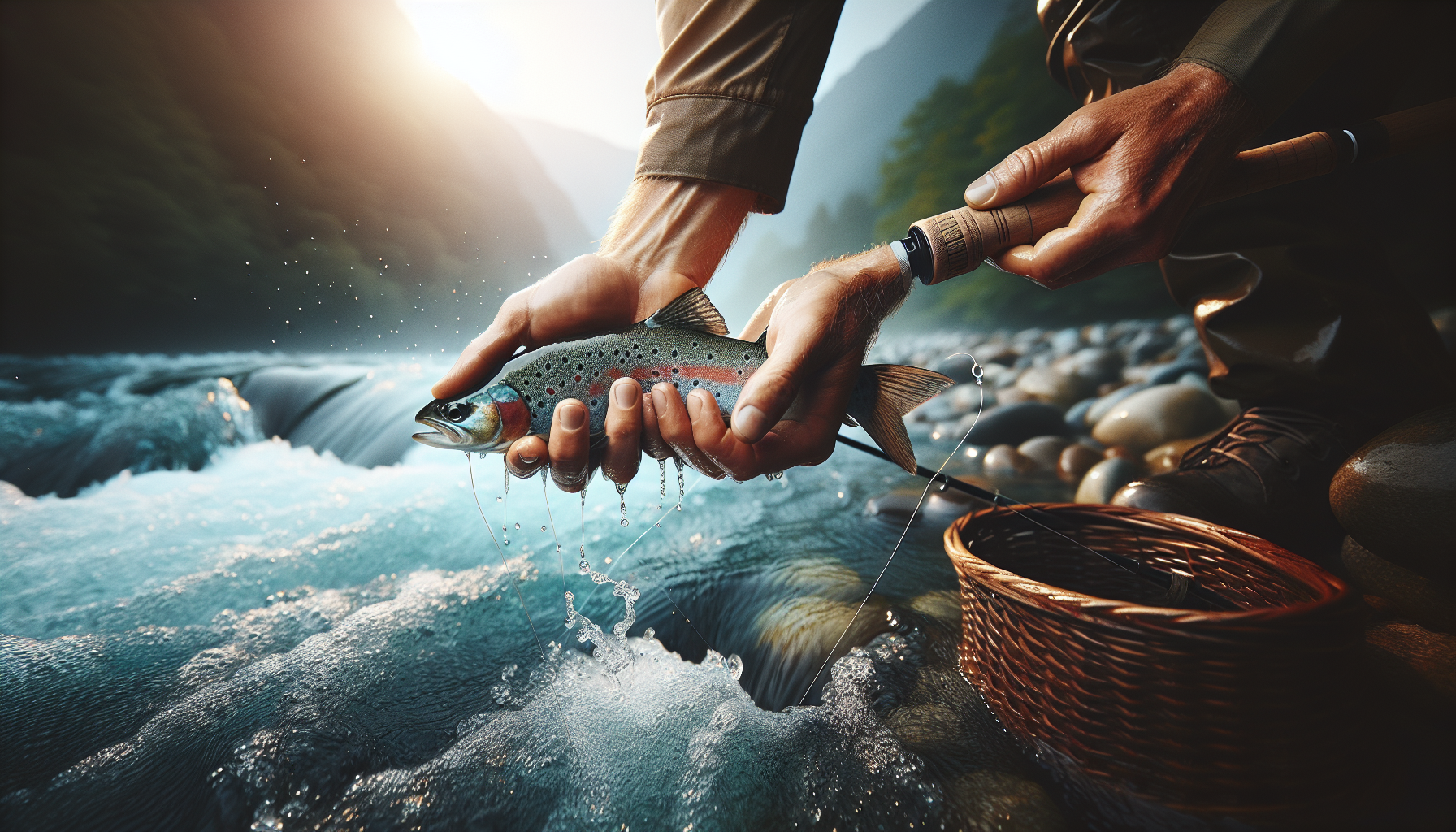
Catch-and-release only works when fish survive, and survival depends heavily on landing and handling gear. The gold standard is a knotless rubber or silicone landing net with a shallow basket sized to the fishery. Rubberized mesh supports the fish, reduces fin fraying, and is far less likely than abrasive nylon to remove the protective mucus layer that helps fish resist infection. A net that is too small forces fish to fold sharply and increases handling time. A net that is too deep tangles flies and prolongs air exposure. For trout and char, a medium basket with a sturdy frame is usually ideal; for pike, carp, or steelhead, scale up accordingly. Hemostats, forceps, and de-hooking tools should be easy to reach so the fly is removed quickly. Long-nose tools are especially valuable for fish hooked near the corner of the jaw or for warmwater species with stronger mouths.
Handling gear is not just about the net. Wet hands or wet fish-friendly gloves reduce scale loss compared with dry handling, although bare wet hands are generally better than textured gloves for delicate trout. A thermometer is another wildlife-friendly tool because it informs whether fishing should continue. When water temperatures rise above species-specific stress thresholds, catch-and-release mortality climbs sharply. For many trout fisheries, sustained temperatures around 68°F to 70°F are a red flag, and some agencies recommend stopping entirely in hotter periods. Nippers and forceps seem basic, but accessibility matters: the faster the release, the lower the stress. I advise anglers to keep the fish in the water during hook removal, prepare the camera in advance if a photo is necessary, and skip hero shots when conditions are warm. The gear itself supports this routine. A fish-friendly net, reachable tools, and a stream thermometer create a release system rather than a collection of accessories.
Select wading and clothing systems that limit habitat damage and species transfer
Wildlife protection includes the streambed and surrounding ecosystem, not just the fish in hand. Wading boots, soles, and clothing can spread invasive species, crush redds, disturb amphibian habitat, and damage banks if used carelessly. Felt soles are the best-known example. They grip algae-slick rocks well, but they also retain moisture and organic matter, increasing the chance of transporting organisms such as didymo, whirling disease spores, or invasive invertebrates between rivers. Several jurisdictions have restricted or banned felt for that reason. Modern rubber soles with studs often provide enough traction while drying faster and cleaning more thoroughly. The best wildlife-friendly practice is simple: inspect boots, remove debris, clean with appropriate disinfectants when moving between waters, and dry gear completely. Waders should also be rinsed and dried, especially after fishing multiple systems in a short period.
Bank impact is another overlooked issue. Heavy boots and repeated access on soft edges can erode vegetation used by nesting birds and small mammals. Studs improve safety on rocks but can scar drift boats and boat ramps, so anglers should use them intentionally and avoid needless trampling. Clothing color and movement also influence wildlife disturbance. Neutral tones are not just for stealth with fish; they reduce startling waterfowl and mammals in close quarters. Polarized glasses, often discussed only as a fish-spotting tool, are wildlife-friendly because they help anglers see spawning redds, weed beds, frogs, and mussel habitat that should not be stepped on. A wading staff can prevent falls that lead to sudden substrate disturbance. In sensitive tributaries during spawning season, the most ethical choice may be to avoid wading altogether and fish from established banks. Good gear supports low-impact movement, but the principle is bigger than any product: move through the river corridor as if every step affects living habitat, because it does.
Build a wildlife-friendly gear kit for common fly fishing situations
Many anglers want a practical checklist, so the easiest way to apply wildlife protection is to match gear choices to common conditions. The core standard remains consistent: minimize physical injury, avoid toxic materials, reduce fight time, and leave nothing behind. The table below summarizes a reliable setup I recommend for trout streams, warmwater rivers, and stillwaters where conservation and ethics are priorities.
| Situation | Wildlife-friendly gear choice | Why it helps |
|---|---|---|
| Trout catch-and-release | Barbless hooks, rubber net, 4X-6X matched to fly size, stream thermometer | Speeds release, lowers injury, reduces overplaying fish in warm water |
| Nymphing deep runs | Tungsten flies or tin shot instead of lead split shot | Avoids toxic lost weight and often improves sink efficiency |
| Warmwater bass or panfish | Wide-gap hooks sized to target species, long forceps, stronger tippet | Reduces deep hooking and shortens fights around cover |
| Boat or float fishing | Dedicated mono disposal container, secure fly patch, covered hook storage | Prevents line, flies, and hooks from entering shoreline habitat |
| Travel between watersheds | Rubber-soled boots, cleaning brush, disinfecting routine, fully dried gear | Lowers risk of spreading invasive species and pathogens |
This kit should be adapted, not copied blindly. In spring creeks with selective fish, very fine tippet may still be necessary, but anglers can compensate by using side pressure, larger reels with smooth drags, and faster releases. In pike fisheries, bite protection may require wire or heavy fluorocarbon; the wildlife-friendly point is to prevent bite-offs that leave fish trailing flies. In stillwaters with abundant waterfowl, strict attention to non-toxic materials becomes even more important. Hub-level conservation planning also means linking this gear discussion to other wildlife protection practices: seasonal closures, spawning avoidance, safe fish photography, invasive cleaning protocols, and proper disposal of all soft plastics, tippet, and packaging. Wildlife-friendly gear is most effective when it is treated as an integrated system, not a shopping list.
Avoid the mistakes that turn good intentions into wildlife harm
The biggest problems I see are rarely dramatic. They are ordinary habits repeated over years. Anglers carry old lead shot because it is already in the vest. They use a small trout net for larger fish and end up beaching them on rocks. They clip tippet onto the ground while changing flies. They continue fishing through afternoon heat because fish are still rising. Each choice seems minor, but cumulative harm is exactly how pressured waters decline. Another common mistake is focusing only on released fish while ignoring non-target wildlife. A single lost spool of mono near a launch can threaten birds long after the trip ends. Hooks stuck in carpeted drift-boat decks or vehicle mats can later be tracked to access points. Open fly patches on the outside of packs increase the chance of snagging brush and losing flies where mammals or birds can encounter them.
There are also tradeoffs worth addressing honestly. Barbless hooks make release easier, but beginners may lose more fish until technique improves. Rubber soles are cleaner than felt, but on certain freestone rivers they can be less secure without studs or careful foot placement. Tungsten is highly effective, yet more expensive than lead. None of these limitations outweigh wildlife benefits, but they do require adaptation. The practical answer is training, not retreat. Practice keeping a steady bend in the rod with barbless hooks. Learn how your boots perform on different substrates before wading difficult runs. Budget for the terminal tackle changes that matter most first. Finally, pay attention to local rules. Some waters mandate barbless hooks, prohibit certain materials, restrict wading seasonally, or publish temperature guidance. Responsible fly fishing is not only about what works for you; it is about what your chosen water can sustain. Review your gear before the next trip, replace the high-risk items, and fish in a way that leaves wildlife safer after you pass through.
Frequently Asked Questions
1. What does wildlife-friendly gear in fly fishing actually include?
Wildlife-friendly fly fishing gear includes any equipment that helps reduce injury to fish, limits harm to birds and other animals, and protects the stream or lake habitat itself. In most cases, that starts with barbless hooks, which are much easier to remove and typically cause less tissue damage than barbed hooks. It also includes non-toxic split shot or other weights made from materials such as tin, tungsten, or steel instead of lead, which can poison birds and other wildlife if swallowed. A rubber or rubber-coated landing net is another key item because it supports fish gently, helps preserve their protective slime layer, and reduces fin damage compared with older knotted nylon nets.
Other wildlife-friendly choices include forceps or hemostats for quick hook removal, line cutters that help prevent dangerous line scraps from being left behind, and wading boots and gear designed to reduce the spread of invasive species between waterways. Anglers should also think about tippet and leader strength in a conservation-minded way. Using tackle that is too light can unnecessarily prolong the fight, increasing exhaustion and post-release mortality in fish. Polarized glasses can even be part of responsible gear use, since they help anglers spot fish and structure more clearly, which can reduce poor casts, accidental snagging, and trampling in sensitive areas. In short, wildlife-friendly gear is not one single product. It is a full setup chosen to make fly fishing safer for fish, safer for surrounding wildlife, and less disruptive to the ecosystem.
2. Why are barbless hooks considered better for wildlife?
Barbless hooks are widely considered one of the simplest and most effective wildlife-friendly upgrades because they make catch-and-release less damaging. Without a barb locking the hook in place, the hook can usually be removed faster and with less tearing. That matters because the shorter the handling time, the less stress the fish experiences. Quick releases are especially important in warm water, during low flows, or when targeting species that are already vulnerable to exhaustion. A barbless hook also lowers the chance of severe mouth, gill, or eye injury if a fish is hooked awkwardly.
The wildlife benefits go beyond the fish being targeted. Barbless hooks are easier to remove from birds, mammals, and even people if an accidental snag occurs. While no hook is harmless, a barbless design reduces the severity of many common accidents. Some anglers worry that barbless hooks lead to more lost fish, but in practice, good line control, proper rod angle, and steady pressure usually matter more than the barb. Many anglers find they adapt quickly and still land fish effectively. If a favorite fly comes with a barbed hook, flattening the barb with forceps is an easy solution. For anglers who want to fish responsibly, barbless hooks are one of the clearest examples of how a small gear decision can produce a meaningful conservation benefit.
3. Are non-toxic weights really necessary in fly fishing?
Yes, non-toxic weights are an important part of wildlife-friendly fly fishing, and they are especially important anywhere birds feed, nest, or scavenge. Traditional lead split shot and sinkers may seem small, but they create a serious risk when lost in the water or along the shoreline. Waterfowl and some other birds can ingest lead while feeding, mistaking it for grit or food. Once swallowed, even a small amount of lead can cause poisoning that leads to weakness, organ damage, and death. Lead also persists in the environment, which means its impact can extend long after an angler has packed up and gone home.
Switching to alternatives such as tin, tungsten, bismuth, or steel helps eliminate that risk. These materials may cost a little more, but they support a more responsible approach to the sport and align with the broader goal of reducing preventable wildlife deaths. Non-toxic weight is also part of a bigger ethic of preventing tackle loss and pollution. Anglers should carry only what they need, crimp weights carefully so they stay secure, and retrieve any lost gear when possible without damaging habitat. If a stream or lake is popular with waterfowl, amphibians, or shoreline wildlife, the case for non-toxic weights becomes even stronger. In practical terms, this is one of the easiest gear changes an angler can make to protect animals they may never even see while fishing.
4. How do landing nets and fish handling tools affect fish survival after release?
Landing nets and handling tools can have a major effect on whether a released fish recovers successfully. A rubber or rubber-coated net is one of the best options because it cradles the fish with less abrasion than rough mesh or knotted nylon. That matters because fish are protected by a delicate slime layer that helps defend them against infection and disease. Nets that scrape off that coating can leave fish more vulnerable long after they swim away. Rubber nets also tend to reduce tangles with flies and fins, which means less time spent struggling and less time spent with the fish out of the water.
Handling tools matter just as much. Forceps, hemostats, or other fish-safe hook-removal tools allow anglers to remove hooks quickly and precisely. Wet hands before touching a fish, support the body gently, and avoid squeezing around the gills or midsection. If possible, keep the fish in the water while removing the hook and preparing for release. Using appropriately strong tippet helps here too, because it shortens the fight and reduces exhaustion. Together, these gear choices and handling methods can substantially improve post-release outcomes. In other words, releasing a fish is not automatically the same as releasing it in good condition. Wildlife-friendly nets and tools help ensure that catch-and-release is more than a gesture and becomes a truly conservation-minded practice.
5. What gear choices help protect habitat and prevent the spread of invasive species?
Wildlife-friendly fly fishing is not only about the fish on the line. It is also about protecting the water, streambanks, insects, amphibians, and plant life that make healthy fisheries possible. Wading gear is an important place to start. Boots and soles should be chosen and maintained with biosecurity in mind, since mud, plant fragments, and microscopic organisms can hitchhike from one river to another. Cleaning and drying boots, nets, and waders thoroughly between trips helps prevent the spread of invasive species and aquatic diseases. In many areas, anglers now avoid felt soles because they can retain moisture and debris more easily than some modern alternatives, though local regulations and conditions should always guide that decision.
Other habitat-friendly gear choices include using staffs or stable footwear to reduce unnecessary slipping and trampling, carrying packs that help organize tools so less gear is dropped or lost, and choosing compact accessories that do not encourage overhandling fish or overdisturbing shoreline vegetation. Polarized sunglasses can help anglers read water more accurately, which makes it easier to avoid stepping on spawning beds, crushing aquatic vegetation, or walking through shallow nursery habitat. Even simple habits like packing out tippet clippings, discarded leaders, and damaged flies matter, since monofilament and other fishing debris can entangle birds, turtles, mammals, and amphibians. The best wildlife-friendly setup is one that supports low-impact movement through the environment, prevents contamination between waterways, and leaves the habitat in as close to its natural condition as possible.