Wildlife protection in fly fishing competitions is no longer a side issue handled at the weigh-in table; it is the operating standard that determines whether competitive angling can claim a legitimate place inside modern conservation and ethics. In this context, wildlife protection means reducing harm to target fish, preventing disturbance to birds, mammals, amphibians, and invertebrates, and managing events so rivers, lakes, riparian habitat, and spawning grounds remain healthy after the last cast. Fly fishing competitions matter because they concentrate effort, travel, and handling pressure into specific waters over short periods, which can magnify stress on fish and surrounding wildlife if rules are weak. I have worked around event rulebooks, fish care briefings, and post-tournament reviews long enough to know that good intentions are not enough; outcomes depend on measurable procedures, trained officials, and a culture that treats conservation as part of competitive skill. This wildlife protection hub explains the principles, rules, risks, and field practices that should anchor every event, from small club contests to international catch-measure-release formats. It also serves as a map for deeper articles on fish handling, habitat stewardship, invasive species prevention, ethical photography, and seasonal closures, giving readers one central resource for the full wildlife protection picture.
Why wildlife protection is central to competition design
Competitive fly fishing can coexist with conservation only when event design begins with biology rather than convenience. The first question is not how many anglers can fit on a beat, but how much angling pressure a waterbody can absorb without elevating mortality, suppressing spawning success, or displacing non-target wildlife. Fisheries managers often look at water temperature, dissolved oxygen, recent flow conditions, species sensitivity, and the timing of migration or reproduction before approving an event. Trout, grayling, salmon, char, and warmwater species all respond differently to capture stress. A rainbow trout released quickly in cool, oxygen-rich water may recover well, while the same fish handled during a summer heat event faces much higher physiological strain. The best competitions account for this by setting temperature cutoffs, restricting hours, shortening sessions, or moving venues entirely.
Wildlife protection also extends beyond fish. A poorly timed event can push wading anglers through redds, trample amphibian breeding margins, disturb nesting birds along gravel bars, and increase bank erosion in sensitive riparian corridors. On stillwaters, repeated boat movement can disrupt waterfowl broods or nesting areas. On rivers, concentrated foot traffic can compact banks and destroy vegetation that stabilizes sediment. These effects are rarely dramatic in a single moment, but repeated annually they become real management problems. That is why well-run events use beat rotations, no-entry sanctuary zones, designated paths, and pre-event ecological assessments. When organizers protect habitat structure and seasonal wildlife use, they reduce cumulative damage and improve fishery resilience.
There is also a direct competitive benefit. Events with strong wildlife protection rules produce more consistent fish condition, better public credibility, and fewer disputes with regulators, landowners, and local communities. In practice, conservation-minded formats are easier to sustain over many years than extractive models that generate backlash. The strongest clubs and federations understand this: if competitors want future access, they must show they can leave a river functioning as a living ecosystem, not merely a scoring venue.
Core risks to fish and non-target species during tournaments
The most immediate wildlife risk in fly fishing competitions is capture stress. Fish experience a surge of lactate and cortisol during the fight, followed by oxygen debt and impaired equilibrium after release. Stress increases when anglers overplay fish on light tippet, beach them on dry surfaces, squeeze them for control, or keep them out of the water too long for photos and measurement. Scientific guidance used by many fisheries agencies is clear: air exposure is one of the strongest predictors of release mortality, especially when combined with warm water. Even ten to fifteen seconds can matter for fish already pushed toward their thermal limits.
Hooking injury is the second major risk. Fly fishing generally has lower deep-hooking rates than bait fishing, but not all flies are equal. Small nymphs, droppers, and competition rigs with multiple patterns can increase handling complexity. Barbless hooks reduce tissue damage and speed release, which is why they are standard in serious catch-and-release events. Hook size and gape also matter, particularly where juvenile fish or protected species are present. Organizers should prohibit patterns likely to cause excessive damage, and they should address fly materials that may shed or persist in the environment.
Non-target wildlife faces different hazards. Birds can become entangled in discarded tippet. Otters, mink, or waterfowl may be disturbed around resting areas. Wading in side channels can crush lamprey nests or amphibian eggs. Even volunteer activity creates pressure if parking, access, and shoreline congregation are unmanaged. I have seen events improve dramatically simply by moving check-in away from the water’s edge, banning streamside spectators in sensitive stretches, and assigning marshals to monitor known nesting areas. Wildlife protection often depends less on one dramatic rule and more on dozens of small decisions that prevent avoidable harm.
Rules that protect wildlife without undermining fair competition
Effective rules are specific, enforceable, and tied to known conservation outcomes. The modern benchmark is catch-measure-release, in which fish remain in the water whenever possible, are measured in approved nets or trough systems, and are released immediately after verification. This format avoids transport to centralized weigh stations and sharply reduces delayed mortality compared with traditional kill or live-retention methods. Many international fly fishing events now require knotless rubber nets, barbless hooks, single-hook configurations, and immediate release after scoring. Those rules are not symbolic; each one addresses a proven injury pathway.
Thermal and flow triggers are equally important. If water temperatures exceed a preset threshold, often around 18 to 20 degrees Celsius for coldwater trout fisheries depending on local management advice, sessions should be shortened, delayed, or canceled. High flows may reduce fish handling time but can increase wader impact on banks and redds, while low flows can concentrate fish in vulnerable holding water. Good rulebooks build in adaptive authority so chief stewards can change beats, close sectors, or suspend fishing for conservation reasons without procedural confusion.
Fairness is preserved by making these requirements universal and transparent. Every competitor should receive the same fish care briefing, the same tackle restrictions, and the same penalty structure for violations. Penalties must be serious enough to deter misconduct: for example, fish disqualification for excessive air exposure, point deductions for fish touched with dry hands, and removal from the event for entering exclusion zones. Conservation rules work best when they are treated exactly like competitive rules, because they shape valid performance rather than sitting outside it as optional etiquette.
Operational practices that reduce harm on the water
Wildlife protection depends on execution long before the first session starts. The strongest events conduct a pre-competition risk assessment with fishery managers, local biologists, and beat stewards. That review should identify spawning areas, nursery habitat, nesting sites, invasive species concerns, bank stability problems, and emergency access points. Organizers then translate those findings into beat maps, buffer zones, rotation schedules, and marshal assignments. When this groundwork is skipped, volunteers end up improvising under pressure, which is when avoidable mistakes happen.
Competitor training is often overlooked, yet it delivers immediate gains. A short mandatory briefing on fish handling, net positioning, hook removal, wading discipline, and line disposal can noticeably improve compliance. In events I have helped review, simple demonstrations reduced fish dropped on rocks and shortened average handling time because anglers stopped fumbling with measurement and release procedures. Officials should also carry thermometers, incident logs, and clear escalation protocols. If a beat warms rapidly, if a bird nest is found near an access path, or if repeated foul-hooking occurs, someone must have authority to act at once.
| Protection measure | Why it matters | Practical event standard |
|---|---|---|
| Barbless single hooks | Reduce tissue damage and speed unhooking | Mandatory for all sessions and practice days |
| Knotless rubber nets | Lower fin abrasion and slime loss | Approved net list in competitor packet |
| Temperature thresholds | Prevent high release mortality in warm water | Automatic delay or cancellation trigger |
| Exclusion zones | Protect redds, nests, and sensitive banks | Marked on maps and enforced by marshals |
| Decontamination protocol | Limits spread of invasive species and pathogens | Check, clean, dry station at launch and check-in |
Decontamination deserves special emphasis because wildlife protection includes stopping the movement of invasive organisms such as didymo, New Zealand mudsnails, and zebra mussels, as well as fish pathogens. Waders, boots, nets, boats, and livewells are all vectors. Many agencies promote the “Check, Clean, Dry” method, and competitions should make compliance visible with wash stations, drying requirements, and gear declarations for traveling anglers. An event that avoids direct fish mortality but spreads invasives has still failed its conservation duty.
Habitat stewardship, monitoring, and accountability
A wildlife protection hub would be incomplete without habitat stewardship, because fish care and habitat care are inseparable. Riparian vegetation shades water, filters runoff, supports insects, and stabilizes banks; once it is trampled repeatedly, water quality and fish cover decline. Competitions should use designated entry points, cap spectator density, and avoid repeated rotations through fragile side channels. On lakes and reservoirs, organizers should manage launch areas to reduce shoreline scarring and fuel spills. Litter control must cover leaders, tippet tags, strike indicators, food packaging, and cigarette waste, all of which can injure wildlife directly or degrade the site over time.
Monitoring turns promises into evidence. At minimum, organizers should record water temperature, weather, fish counts, notable mortality, wildlife incidents, and rule violations. Better events add post-event reviews with local managers and compare trends year over year. If one beat repeatedly shows stressed fish, high bank wear, or bird disturbance, it should be modified or dropped. Some fisheries also benefit from volunteer habitat restoration tied to the competition calendar, such as bank planting, invasive vegetation removal, or rubbish collection. These efforts do not excuse poor event management, but they can deepen local trust when paired with strict protection standards.
Accountability is the final layer. Publish the rules, incident procedures, and conservation results. If a fish kill occurs because conditions changed and the event continued too long, say so plainly and revise the protocol. Transparent reporting is how clubs, sponsors, and governing bodies earn long-term credibility. It also helps newcomers understand that ethical competition is built through discipline, not slogans. A fly fishing event that protects wildlife well is usually one where every detail has been thought through: access, timing, tackle, handling, habitat, enforcement, and review.
Building a wildlife protection culture across the sport
Lasting progress comes from culture, not just compliance. Competitors should see wildlife protection as part of angling excellence, the same way they view casting accuracy, drift control, and tactical adaptation. The angler who lands fish efficiently on appropriate tackle, keeps them submerged, avoids sensitive water, and reports problems quickly is not fishing less competitively; that angler is meeting the full standard of the sport. Clubs can reinforce this by mentoring new participants, recognizing conservation leadership, and linking every event page to deeper guidance on fish handling, seasonal ethics, invasive species prevention, and habitat care. Sponsors also influence behavior. Brands that support approved nets, barbless hook rules, and decontamination stations help normalize better practice across the competition scene.
The key takeaway is simple: wildlife protection in fly fishing competitions is a system. Good rules, trained officials, habitat safeguards, and transparent monitoring work together to reduce fish mortality, prevent disturbance, and preserve access for the future. If you organize, judge, sponsor, or fish events, review your current standards against these principles and upgrade the weakest link first. Better competition starts with better protection.
Frequently Asked Questions
Why is wildlife protection such a central issue in fly fishing competitions today?
Wildlife protection is now at the core of fly fishing competitions because the success of an event can no longer be measured only by catch totals, rankings, or angler participation. Modern competitive angling is judged by whether it can operate without causing avoidable harm to fish, surrounding wildlife, and the habitats that sustain both. That includes minimizing stress and injury to target species, preventing disruption to nesting birds and shoreline mammals, avoiding trampling of riparian vegetation, and ensuring spawning areas remain intact before, during, and after the event.
This shift reflects both scientific understanding and public expectation. Fisheries biologists, conservation agencies, and responsible event organizers recognize that fish caught under tournament pressure may face elevated stress from repeated handling, warm water, crowding, or delayed release. At the same time, competitive events often bring concentrated foot traffic and human activity into sensitive ecosystems. Without clear standards, a single competition can unintentionally affect amphibians in shoreline vegetation, aquatic insects that form the base of the food web, or birds using river corridors for feeding and breeding.
In practical terms, wildlife protection has become the operating standard that gives the sport credibility. Competitions that build conservation into rules, timing, venue selection, fish handling, and participant education are far more likely to be accepted by land managers, regulators, local communities, and conservation-minded anglers. In other words, wildlife protection is not a side concern anymore; it is what determines whether a fly fishing competition is ethically defensible and ecologically responsible.
How do well-run fly fishing competitions reduce harm to fish during the event?
Responsible competitions reduce harm to fish by designing every part of the event around low-impact catch-and-release practices. That usually starts with rule choices such as barbless hooks, artificial flies only, minimum fight-time expectations, and mandatory in-water release procedures whenever conditions allow. These rules matter because they reduce hooking injury, shorten exhaustion time, and limit physical contact that can remove protective slime or damage gills and fins.
Good tournament management also pays close attention to environmental conditions. Water temperature, dissolved oxygen, flow levels, and seasonal fish behavior all influence how well fish tolerate capture and release. For example, when water is unusually warm, fish may already be physiologically stressed before an angler even makes a cast. A conservation-focused event may shorten fishing windows, impose species-specific restrictions, move the venue, or cancel the competition entirely if post-release survival is likely to be compromised. That kind of decision-making is one of the clearest signs that wildlife protection is being taken seriously.
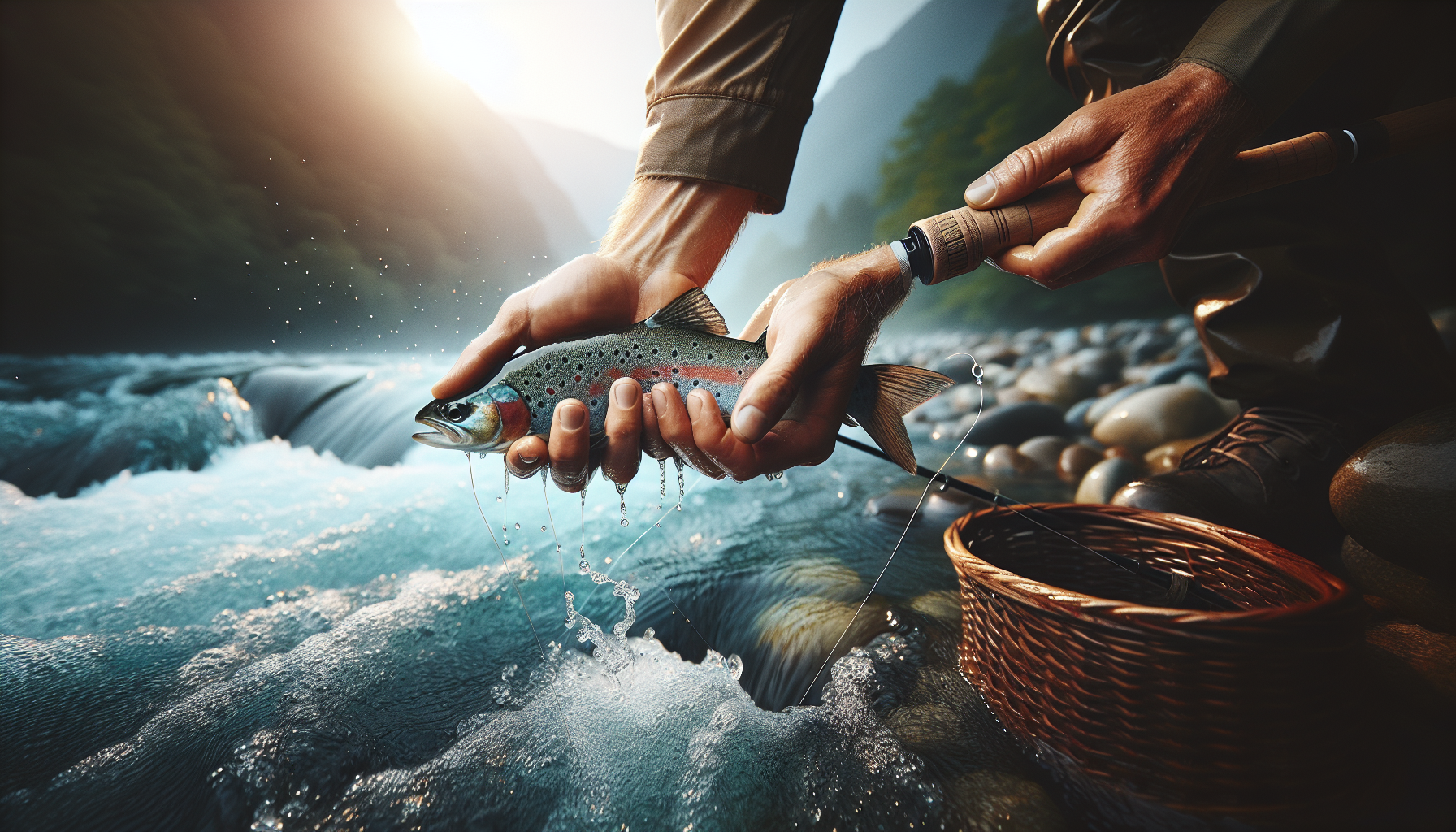
Angler behavior is equally important. Competitors are often trained or reminded to keep fish wet, avoid squeezing, use rubberized nets, refrain from beaching fish on rocks or dry banks, and complete measurement or scoring quickly. In many modern formats, fish are measured in the water or documented through rapid, controlled systems that eliminate the need for carrying fish to weigh-in stations. When these practices are paired with enforcement, steward oversight, and a culture that values fish welfare more than aggressive handling, the result is a substantial reduction in injury and delayed mortality.
What kinds of wildlife other than fish can be affected by fly fishing competitions?
Although fish are the most obvious concern, fly fishing competitions can affect a much wider range of wildlife if they are not carefully managed. Birds are particularly vulnerable in river and lake environments. Wading near nesting banks, repeated movement through shallow margins, loud shoreline activity, and boat traffic can disturb feeding waterfowl, nesting songbirds, or raptors using riparian corridors. During sensitive breeding periods, even short-term disturbance can cause nest abandonment or reduced feeding success.
Mammals can also be affected, especially in areas where otters, beavers, muskrats, deer, or other species rely on shoreline cover and predictable access to water. Concentrated competition activity may alter normal movement patterns or displace animals from preferred habitat for the duration of the event. Amphibians are another often-overlooked group. Frogs, salamanders, and their eggs can be vulnerable to trampling in wet margins, side channels, and backwater areas where anglers enter and exit the water. Invertebrates, including aquatic insects, are equally important because they underpin freshwater food webs. Excessive bank erosion, careless wading, and habitat disturbance can damage the very ecological systems that support healthy fisheries.
That is why wildlife protection in competitions must be broader than fish handling rules alone. Organizers need to think in ecosystem terms. Access routes, parking areas, beat rotation, spectator control, seasonal closures, and habitat buffers all play a role in preventing harm to non-target species. A well-managed event recognizes that healthy fish populations depend on healthy riversides, intact insect communities, stable spawning zones, and minimal disturbance across the whole habitat.
What event rules and planning practices best protect rivers, lakes, and riparian habitat?
The strongest wildlife protection measures begin long before the first cast. Smart planning includes selecting venues that can handle angling pressure, avoiding ecologically fragile reaches, consulting local fisheries managers and biologists, and scheduling events outside spawning periods, migration bottlenecks, or bird nesting seasons. Organizers should assess access points, bank stability, habitat sensitivity, and likely participant density so they can prevent crowding in vulnerable areas.
On the rules side, effective protections often include restricted wading zones, no-entry buffers around spawning beds and side channels, limits on boat use, designated access and exit paths, and strict litter and gear-loss policies. Some competitions also rotate anglers through beats to spread pressure more evenly rather than allowing repeated concentration in a few productive sections. This helps reduce bank erosion, vegetation damage, and repeated disturbance to the same fish and wildlife. Clear guidance on where competitors may stand, walk, anchor, or land fish can make a major difference in preserving habitat quality.
Post-event stewardship is just as important. Organizers should inspect sites for trash, monofilament, damaged signage, and habitat impacts, then document lessons for future events. In the best cases, competitions include conservation partnerships, habitat restoration funding, volunteer cleanup efforts, or data collection that benefits local fisheries management. These practices show that a competition is not merely trying to avoid damage in the short term; it is actively contributing to the long-term health of rivers, lakes, and riparian ecosystems.
How can fly fishing competitions balance competitive fairness with strong conservation and ethics standards?
Balancing competition and conservation is absolutely possible, but it requires organizers to define success more broadly than who catches the most fish. Fairness in a modern fly fishing event should mean that all anglers compete under the same fish-protective rules, environmental thresholds, and habitat safeguards. When conservation standards are clear, consistently enforced, and applied equally, they do not weaken competition; they improve its legitimacy. Anglers still test skill, adaptation, presentation, water reading, and strategy, but they do so within limits designed to protect the resource.
In practice, that balance comes from thoughtful rule design. If warm water conditions trigger shortened sessions for everyone, that is fair. If sensitive habitat zones are closed to all competitors, that is fair. If fish must be kept in the water during scoring, handled with approved nets, and released immediately, that is fair. These standards create a level playing field while reducing unnecessary ecological harm. They also reward anglers who can perform efficiently and responsibly rather than those willing to push fish or habitat beyond safe limits.
Perhaps most importantly, strong ethics standards build trust with the public and with the broader angling community. Competitive fly fishing will continue to face scrutiny wherever wildlife welfare and habitat protection are at stake. Events that openly prioritize conservation, explain their rules, monitor outcomes, and adapt when conditions change are far more likely to be respected. The future of fly fishing competitions depends on proving that excellence on the water and protection of wildlife are not competing goals, but inseparable ones.