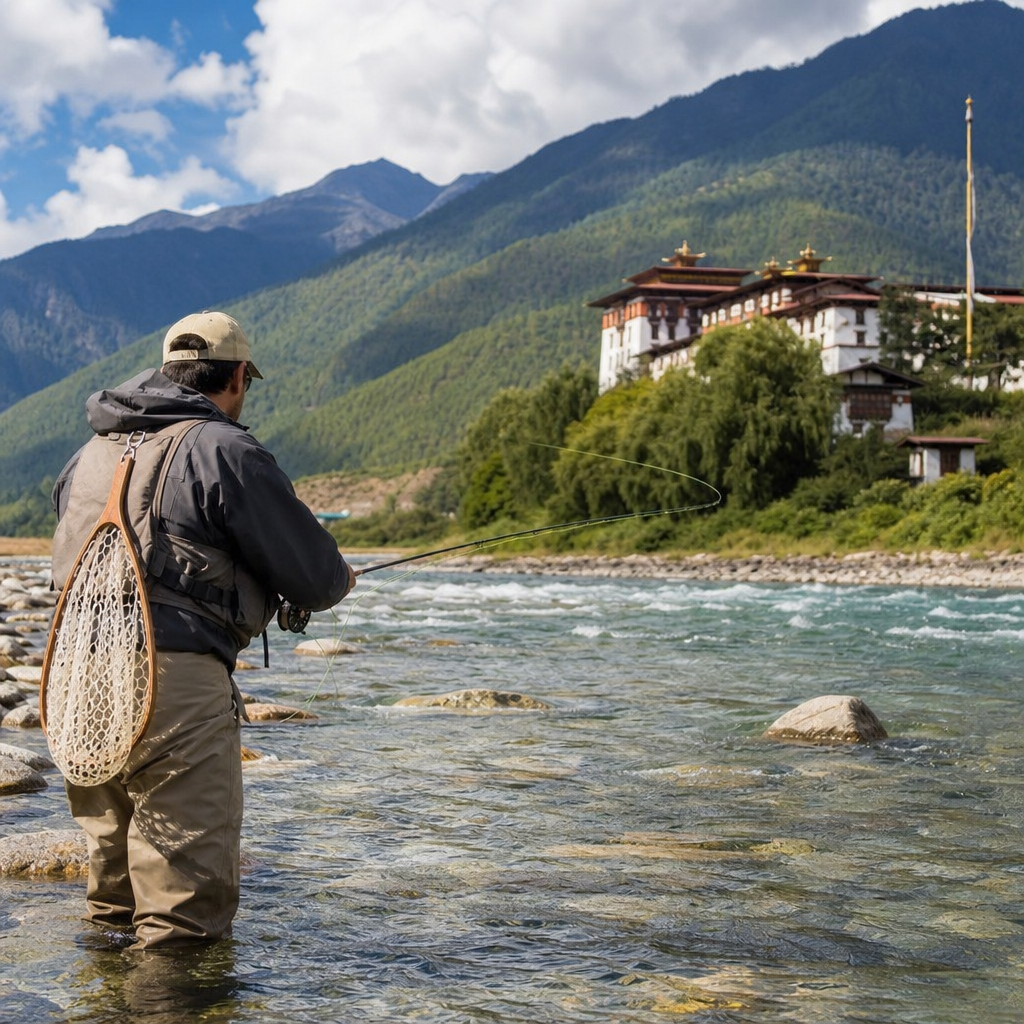
Fly fishing in Bhutan offers something rare in modern angling: cold, clear mountain water, wild trout in low-pressure rivers, and a travel experience shaped as much by Buddhist culture and conservation policy as by fishing technique. In practical terms, fly fishing means presenting an artificial fly with a weighted line rather than a heavy lure, allowing delicate drifts, mends, and controlled swings that matter on fast Himalayan streams. Bhutan, a small landlocked kingdom between India and China, has become one of Asia’s most intriguing fly fishing destinations because its river systems remain relatively intact, access is regulated, and many valleys still feel genuinely remote. I have planned and reviewed itineraries across the region, and Bhutan consistently stands out for anglers who want quality over volume.
For a hub page covering fly fishing destinations in Asia, Bhutan is the natural place to begin because it combines iconic species, varied elevations, and a strong narrative of stewardship. The country is best known internationally for golden mahseer in its warmer southern rivers and for trout fisheries in cooler central and western waters, including brown trout and rainbow trout introduced during the twentieth century. Anglers also encounter snow-fed tributaries where insect life, water temperature, and seasonal flow changes demand precise tactics. That mix makes Bhutan ideal both for experienced fly fishers who enjoy technical water and for destination travelers comparing Asia fly fishing trips by species, season, and access.
Why does it matter? Because many anglers searching for fly fishing in Asia want alternatives to crowded Western rivers and heavily stocked commercial beats. Bhutan answers that search with a destination where fishing remains secondary to the landscape rather than industrialized around it. At the same time, the country is not effortless. Permits, logistics, road travel, altitude, and short seasonal windows all affect success. Understanding top spots and techniques before you go saves time, protects fisheries, and improves catch rates. This guide explains where to fish in Bhutan, when to go, what methods work, and how Bhutan fits into the broader map of Asian fly fishing destinations.
Why Bhutan Belongs on Every Asia Fly Fishing Shortlist
Bhutan belongs on any serious Asia fly fishing shortlist for three reasons: water diversity, fish quality, and conservation-minded tourism. Within one trip, anglers can move from broad, lower-elevation rivers suited to mahseer tactics to pocketwater, runs, and riffles where trout respond to nymphs, dry flies, and small streamers. Few Asian destinations deliver that range without crossing several borders. In western and central Bhutan, rivers draining high valleys often run clear outside peak monsoon periods, with freestone structure that rewards reading seams, plunge pools, and tailouts. In southern systems, warmer flows and migratory fish create a completely different game built around current breaks, boulders, and seasonal movement.
Bhutan also limits visitor volume through its tourism model. That does not guarantee easy fishing, but it does reduce the kind of bank pressure common on famous international trout rivers. Lower pressure often means fish hold in more obvious lies and remain less conditioned to repetitive presentations. On several Himalayan systems I have seen the opposite problem elsewhere in Asia: beautiful water with fish that have become deeply selective because every run is hit hard. Bhutan’s controlled access changes that equation. The result is not necessarily more fish per hour, but a stronger chance of finding unspoiled water and fish behaving naturally.
Another reason Bhutan matters as a hub topic is geographic context. Anglers researching fly fishing Asia often compare Bhutan with Mongolia, Japan, India, Nepal, and parts of Central Asia. Bhutan occupies a distinctive middle ground. It is more structured and permit-driven than some frontier fisheries, less urbanized than Japan’s managed trout waters, and more compact for itinerary planning than many large-country options. For readers exploring this broader destination cluster, Bhutan works as a benchmark: if you want wild scenery, technical trout fishing, and the possibility of trophy mahseer without a mass-tourism atmosphere, it is one of the strongest choices in the region.
Top Fly Fishing Spots in Bhutan
The Mo Chhu and Pho Chhu near Punakha are among Bhutan’s best-known trout waters and a smart starting point for visiting anglers. These rivers meet below Punakha Dzong, and their upper and middle reaches offer classic Himalayan trout structure: broken runs, riffled glides, midstream boulders, and softer edges where fish rest out of the main current. Water clarity is often best outside the monsoon, and early spring can produce excellent nymphing with occasional dry-fly windows when insect activity lifts in the afternoon. Brown trout commonly hold tight to seams and depth transitions, while rainbows often show in oxygenated runs and pocketwater. Because these waters are accessible from a cultural center many travelers already visit, they fit well into mixed fishing and sightseeing itineraries.
The Haa Valley is another standout area for anglers who value scenery and technical presentation. Streams here are generally smaller, cooler, and more intimate than the larger valley rivers, demanding stealth, short accurate casts, and careful wading. Overhead cover, undercut banks, and plunge pools create ideal habitat for trout willing to eat a well-drifted nymph or a terrestrial pattern in summer. In practical terms, Haa rewards anglers comfortable with high-stick nymphing and quick line control rather than long-distance casting. It is one of the best examples in Bhutan of water where approach matters as much as fly selection.
For mahseer, the Sankosh River is the headline destination. The river is powerful, broad in sections, and famous among South Asian anglers for producing large fish. Golden mahseer are often described as the “tiger of the river,” and the comparison is justified by their speed, strength, and tendency to use heavy current and structure ruthlessly. On the Sankosh, fly anglers focus on travel corridors near drop-offs, current tongues, and softer holding water adjacent to the main flow. This is not delicate chalk-stream fishing. It requires stout tackle, disciplined stripping, and patience during low-percentage windows when big fish move or feed.
The Mangde Chhu and selected tributaries in central Bhutan deserve attention as well, especially for anglers building a broader Asia destination plan. These waters can offer less-publicized but highly rewarding trout fishing, often with a better sense of exploration than more established stretches. Conditions vary by elevation and weather, so local guidance matters. As a rule, anglers should prioritize rivers with stable clarity, manageable flow, and good access to multiple beat types in a single day.
| River or Area | Main Species | Best Conditions | Most Effective Approach |
|---|---|---|---|
| Mo Chhu | Brown trout, rainbow trout | Spring and autumn, clear moderate flows | Euro nymphing, dry-dropper, small streamers |
| Pho Chhu | Brown trout, rainbow trout | Cool water, stable visibility | Indicator nymphing, pocketwater presentations |
| Haa Valley streams | Trout | Low clear water, summer terrestrials | High-stick nymphing, short dry-fly casts |
| Sankosh River | Golden mahseer | Pre- and post-monsoon windows | Large streamers, swing-and-strip retrieves |
| Mangde Chhu | Trout | Stable seasonal flows | Nymph rigs, opportunistic dry-fly fishing |
Best Seasons, Water Conditions, and Trip Planning
The best time for fly fishing in Bhutan usually falls into two broad windows: spring, roughly March through May, and autumn, roughly late September through November. Spring is particularly strong for trout because snowmelt has not always reached peak intensity, insect activity begins to build, and fish feed actively after winter. Autumn can be even better when monsoon rains recede and rivers regain clarity. In both windows, exact timing matters more than the calendar headline. A week of unseasonal rain can color rivers quickly, while a stable weather pattern can create excellent fishing across several valleys.
Monsoon season, typically June through early September, is the major planning constraint. Heavy rain raises flows, reduces visibility, and can make road movement difficult. Winter is possible in lower areas, but cold temperatures at elevation slow trout activity and narrow the most productive hours. Mahseer anglers often target shoulder periods around changing flows, when water temperatures and migration behavior align. Because Bhutan’s river systems are elevation-dependent, the best strategy is to build flexibility into the itinerary. If one basin is high or dirty, another may remain fishable.
Travel logistics also shape success. Reaching water often involves mountain roads, changing altitudes, and early starts. Anglers should plan for layered clothing, quality rain gear, felt-free boots with strong grip, polarized glasses, and backup leaders and tippet. On destination trips in Asia, I advise packing as if tackle replacement will be difficult, because it often is. That is especially true for specialty lines, large articulated flies for mahseer, and locally uncommon hook sizes. Readers using this page as an Asia sub-pillar should note that Bhutan is less about casual self-drive exploration and more about coordinated planning through approved operators and guides.
Proven Techniques for Trout and Mahseer
For trout, nymphing is the highest-percentage technique in Bhutan. Fast freestone rivers create short feeding windows and complex currents, so getting flies down quickly and maintaining a natural drift is essential. Euro nymphing works well in pocketwater and structured runs because direct contact improves strike detection and line control. A two-fly setup with a heavier anchor fly and a smaller dropper often covers both depth and profile. Pheasant tails, hare’s ears, perdigon-style patterns, and stonefly imitations are dependable starting points. Split shot and indicators still have a place, especially in deeper runs where longer drifts matter more than tight-line precision.
Dry-fly fishing is available, but anglers should treat it as a window rather than a guarantee. Caddis, mayflies, and terrestrials can all bring fish up depending on season and elevation. In smaller streams, attractor dries such as stimulators or parachute patterns can pull opportunistic trout from broken water. On clearer flats and softer seams, downsizing is often necessary. Long leaders, careful mending, and a low profile matter far more than heroic casting distance. Bhutanese trout water often punishes drag instantly.
Streamer fishing becomes important in colored water, low light, or whenever larger trout sit near structure. Short downstream swings, cross-current strips, and controlled depth changes can trigger fish that ignore dead-drifted nymphs. Use enough weight to reach the lane quickly, but not so much that the fly snags every boulder. I prefer compact streamers in olive, black, and natural tones, with brighter accents only when visibility drops.
Mahseer demand a separate system. An 8- to 10-weight rod, a strong reel with smooth drag, tropical or warmwater lines matched to current depth, and abrasion-resistant leaders are standard. Flies are usually larger baitfish patterns, deceivers, or heavily dressed streamers that push water. Presentation is deliberate: cast across or slightly downstream, allow the fly to enter the holding lane, then retrieve with varied strips. When a mahseer eats, the mistake most trout anglers make is striking too early or too hard. A firm strip-set followed by immediate pressure and disciplined rod angles improves hookup rates and reduces break-offs around rocks.
Gear, Ethics, and How Bhutan Fits the Wider Asia Hub
A practical Bhutan trout setup is a 9-foot 5-weight for general use and a 10- or 11-foot 3-weight or 4-weight for modern nymphing. Carry floating lines, leaders from 9 to 12 feet, fluorocarbon tippet for subsurface work, and enough flies to adapt to changing water color and insect activity. For mahseer, bring gear that would not look out of place on a light saltwater trip. Reels should have substantial backing, and hooks must be strong enough to withstand heavy pressure. Barbless or de-barbed hooks are preferable for fish care and easier release.
Ethics matter in Bhutan because the destination’s appeal depends on maintaining wild, low-pressure fisheries. Minimize handling, keep fish wet, and avoid fishing redds or visibly stressed fish in marginal temperatures. Respect local regulations and cultural norms. Some access areas may pass near monasteries, villages, or agricultural land, and good destination anglers behave like guests first. That principle applies across Asia, but it feels especially important in Bhutan, where travel is closely tied to national identity and environmental values.
As the hub for fly fishing destinations in Asia, this page positions Bhutan as a model destination for anglers who want depth rather than easy marketing claims. It offers technical trout rivers, legitimate trophy potential with mahseer, and a travel framework built around quality access instead of crowd volume. If you are comparing Asia fly fishing trips, start by matching your goal to Bhutan’s strengths: wild water, seasonal precision, and guided exploration. Then use that benchmark to evaluate the rest of the region. Plan carefully, fish thoughtfully, and Bhutan can deliver one of the most memorable fly fishing experiences in Asia.
Frequently Asked Questions
What makes fly fishing in Bhutan different from fishing in other trout destinations?
Fly fishing in Bhutan stands apart because the experience is shaped by far more than just the fish. Anglers come for the cold, clear Himalayan rivers and wild trout, but what makes Bhutan memorable is the combination of low-pressure water, dramatic mountain scenery, strong environmental values, and a cultural setting unlike any other fishing destination. Many rivers flow through steep valleys, forests, monasteries, and small rural communities, so a day on the water often feels as much like a journey through Bhutanese landscape and tradition as it does a technical fishing session.
From a fishing perspective, Bhutan rewards classic fly-fishing skills. Its streams often demand precise presentations, drag-free drifts, thoughtful mending, and careful line control. In fast pocket water and freestone currents, trout usually hold in seams, plunge pools, and oxygen-rich runs, so anglers who can read moving water and adjust quickly tend to do well. Because many waters receive relatively light fishing pressure compared with famous trout regions elsewhere, fish can behave more naturally, but that does not mean they are easy. Clear water and variable currents still require stealth, sound casting, and fly choices that match local conditions.
Another key difference is the travel structure. Bhutan manages tourism carefully, and that influences how anglers plan trips, access rivers, and move between regions. Instead of a purely independent road-trip model common in some countries, fishing in Bhutan is often part of a broader guided or structured travel experience. For many visitors, that is actually a benefit: logistics, permits, transport, and local knowledge become easier to manage, leaving more time to focus on fishing and enjoying the destination responsibly.
What are the best rivers and regions for fly fishing in Bhutan?
Bhutan has a range of fishable waters, but the best-known fly-fishing opportunities are generally found in its cold mountain rivers and tributaries where trout can thrive. Productive areas are typically associated with higher-elevation systems and clear, fast-flowing streams that offer the broken current, oxygenation, and gravel structure trout prefer. Depending on the season and exact location, anglers may encounter water ranging from compact pocket-water creeks to larger river sections with riffles, glides, runs, and deeper holding pools.
When anglers talk about top spots in Bhutan, they are often referring less to a single famous named beat and more to regions where river quality, access, and trout habitat come together consistently. Valleys with stable flows, healthy insect life, and a mix of riffled current and softer holding water are especially attractive. Good trout water in Bhutan often includes boulder gardens, plunge pools below rapids, tailouts, undercut banks, and current seams along drop-offs. These features create feeding lanes and shelter, which are exactly the places experienced fly fishers target first.
Because conditions can vary significantly with snowmelt, rainfall, and elevation, the “best” river is often the one that is clearest and most fishable during your travel window. A knowledgeable local guide can be extremely valuable here, helping match anglers with rivers that suit both the season and skill level. For newcomers, medium-sized rivers with manageable current and visible structure can be ideal. More advanced anglers may prefer technical freestone stretches where trout lie tight to structure and every cast must be deliberate. In short, Bhutan’s top fly-fishing waters are defined by clean, cold, lightly pressured habitat and the need for adaptable technique rather than by crowded, heavily advertised hotspots.
What fly-fishing techniques work best on Bhutan’s fast mountain streams?
On Bhutan’s fast Himalayan streams, success usually comes from mastering fundamentals rather than relying on complicated tactics. The most effective approach is often a short-to-medium-range presentation with strong line control. In pocket water, anglers frequently need to make quick casts into narrow lanes, keep as much line off conflicting currents as possible, and achieve a natural drift before the fly starts dragging. High-stick nymphing, tight-line presentations, and short upstream casts are especially effective in fast runs, plunge pools, and broken water where trout have only a brief window to inspect food.
Dry-fly fishing can be excellent when fish are rising, but presentation matters enormously. A delicate landing, immediate drag control, and accurate placement along seams, behind rocks, or at the heads of pools can make the difference between refusal and a confident take. On clear water, longer leaders and careful wading often help. Anglers should approach from downstream when possible, stay low, and avoid unnecessary false casting over the target zone. In brighter conditions or lower flows, stealth becomes even more important.
Nymphing is often the most consistent producer because mountain trout feed below the surface much of the time. Weighted nymphs, tungsten bead patterns, and two-fly rigs can be useful if currents are deep and quick, but the setup should still match the size of the water. In smaller streams, overcomplicating the rig can reduce accuracy and create snags. Mending is also essential on larger currents. Good upstream or reach mends help maintain a natural drift and keep the fly in the strike zone longer. In some river sections, soft-hackle or small streamer swings can also work well, particularly when fish are aggressive or when covering broader runs. Overall, the best techniques in Bhutan are controlled, adaptable, and rooted in reading current speed, depth, and trout holding positions.
What flies and gear should you bring for a fly-fishing trip to Bhutan?
A versatile trout setup is the safest choice for Bhutan. For most river situations, a 4-weight to 6-weight rod is practical, with many anglers finding a 5-weight ideal because it balances delicacy and control. Shorter rods can be handy on smaller, tighter streams, while a slightly longer rod helps with mending and line control on broader currents. A floating line will cover most situations, especially when fishing dry flies, nymphs with indicators, or tight-line methods adapted to mountain water. Leaders should include a range of lengths and tippet sizes so you can adjust for water clarity, fly size, and presentation style.
As for flies, a compact but well-rounded selection is better than carrying an oversized box with unnecessary patterns. Dry flies should include attractors and general-purpose patterns suitable for mountain trout water, along with smaller imitative options for calmer stretches or selective fish. Nymph boxes should cover classic trout food forms such as mayfly and caddis imitations, plus weighted attractor nymphs for faster, deeper runs. Small streamers or wet flies are worth packing for larger pools, undercut banks, or periods when fish respond to movement. It is also smart to carry flies in multiple sizes and weights, because Bhutan’s rivers can shift quickly from shallow riffles to fast, deep slots.
Wading gear deserves careful thought. Studded boots or excellent traction soles can be very helpful on slick rocks, and layered clothing is important because mountain weather can change rapidly with altitude and time of day. Polarized sunglasses, rain protection, a compact net, floatant, strike indicators, split shot, and forceps should all be considered standard items. If you are traveling internationally, check in advance whether guides or outfitters provide tackle, because some anglers prefer to bring core equipment but rely on local insight for fly selection. In general, bring gear that supports precision, mobility, and safety rather than bulky equipment designed for large stillwaters or heavy warmwater fishing.
When is the best time to go fly fishing in Bhutan, and what should anglers expect from the trip?
The best time to fly fish in Bhutan usually depends on water conditions, weather, and the type of river you want to fish. In broad terms, anglers often look for periods when flows are stable, visibility is good, and river temperatures remain favorable for trout activity. Spring and autumn are commonly attractive because they can offer clearer water, comfortable daytime conditions, and excellent scenery. Seasonal timing matters in the Himalayas, as snowmelt, rainfall, and monsoon influence can affect both access and fishability. Even strong rivers can become difficult or unsafe when flows are high and colored, so the ideal trip window is one that aligns with relatively settled conditions.
Beyond the fishing calendar, anglers should expect Bhutan to be a destination where travel logistics and cultural context are part of the experience. Reaching river valleys may involve mountain roads, changing elevations, and a pace of travel that is slower than in more developed angling hubs. That slower rhythm is often part of the appeal. A fishing trip may include time in villages, views of dzongs and monasteries, and exposure to Bhutan’s conservation-minded approach to land and tourism. For many visitors, this creates a richer and more immersive experience than a standard fish-camp itinerary.
It is also important to arrive with realistic expectations. Bhutan is not best approached as a numbers-only destination where anglers measure success solely by fish count. Instead, it is a place where quality of water, wild fish, solitude, and setting matter enormously. Some days may be highly productive, while others are shaped by changing flows, weather, or the technical demands of mountain streams. Anglers who come prepared to adapt, fish carefully, and appreciate the broader environment usually find Bhutan exceptionally rewarding. In that sense, the best time to go is when conditions are favorable and you are ready to enjoy both the fishing and the larger journey that surrounds it.