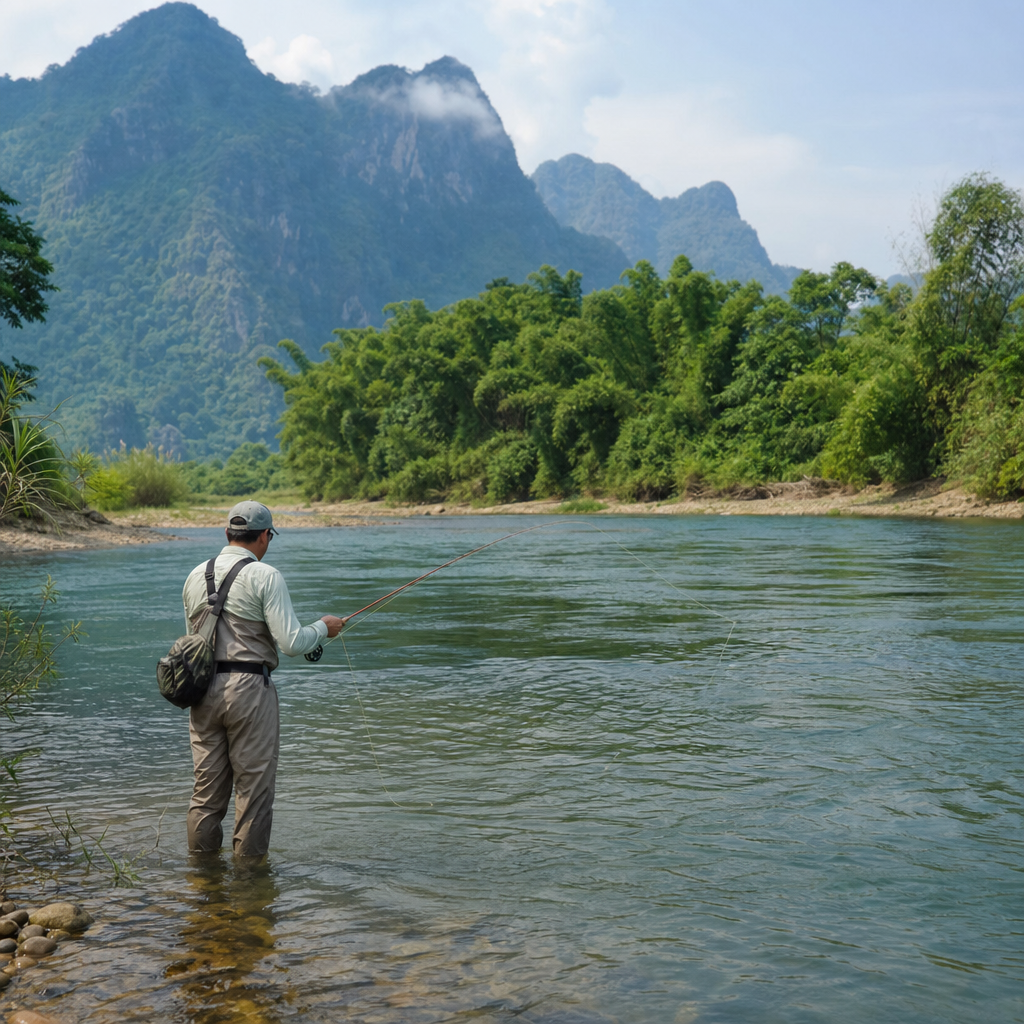
Fly fishing in Laos rewards anglers who want wild water, lightly pressured fish, and a Southeast Asian setting far removed from the crowded trout rivers most people imagine when they hear the term fly fishing. In this Asia-focused hub, Laos deserves special attention because it combines major river systems, mountain tributaries, and reservoir edges where predatory freshwater species respond well to streamers, poppers, and carefully drifted nymph patterns. Fly fishing, in simple terms, is the use of a weighted or nearly weightless artificial fly cast with a specialized line and rod rather than a lure propelled by its own mass. In Laos, that distinction matters because presentation often determines success more than distance. A well-placed deer-hair popper beside flooded timber or a streamer swung through a Mekong side channel routinely outfishes hardware.
I have planned and fished remote Asian freshwater trips where access, river level, and local knowledge mattered more than tackle cost, and Laos consistently stands out for anglers willing to adapt. The country is not a classic, infrastructure-heavy fly destination like New Zealand or Montana. It is a frontier fishery. That makes trip design critical. You need to understand where fish hold during dry and wet seasons, which species are realistic targets on fly, how water clarity changes after monsoon rain, and why hiring a local boatman can be as important as choosing the right line density. This guide explains the premier locations, species, tactics, timing, and travel considerations, while also helping readers connect Laos to the broader Asia fly fishing landscape under the wider Fly Fishing Destinations topic.
Why Laos matters within Asia fly fishing
Across Asia, fly anglers usually focus first on Himalayan trout, Japanese mountain streams, or saltwater flats in the Indian Ocean and western Pacific. Laos broadens that map. It offers tropical and subtropical freshwater systems dominated not by salmonids but by snakehead, mahseer in select watersheds, jungle perch-like species, catfish, barb, and opportunistic predators that readily attack flies when conditions align. For anglers building an Asia itinerary, Laos works especially well as a freshwater counterpart to more established regional destinations. A trip through Thailand, Vietnam, or Cambodia can be extended into Laos for quieter water and a more exploratory experience.
The country’s geography explains the opportunity. Laos is landlocked but threaded by the Mekong and a web of tributaries including the Nam Ou, Nam Khan, Nam Ngum, Xe Kong, and many smaller mountain rivers. Elevation shifts create varied habitat, from broad lowland channels to broken runs over rock and gravel in the north. Extensive hydropower development has altered some systems, which is a reality anglers must understand, yet large stretches remain fishable and underexplored by fly standards. In practical terms, that means more need for scouting, but also more chances to encounter fish that have not seen many artificial flies.
For a hub article covering Asia comprehensively, Laos also illustrates a larger regional truth: success often comes from targeting species behavior rather than copying Western trout templates. On Asian freshwater trips, I carry sinking and intermediate lines, articulated streamers, gurglers, foam poppers, and durable nymphs because fish are often territorial, predatory, or opportunistic. Laos rewards that approach. If you arrive expecting delicate dry-fly hatches to define the experience, you may struggle. If you arrive ready to read current seams, flooded margins, undercut banks, and ambush cover, Laos can be exceptional.
Premier fly fishing locations in Laos
The Mekong is the headline water. In Laos, it is not one uniform fishery but a sequence of distinct environments. Around Luang Prabang, confluences and side channels can be productive during stable flows, particularly in the dry season when visibility improves and fish concentrate along current edges, drop-offs, and rocky banks. Further south, broader reaches around islands, backwaters, and flooded structure create opportunities for snakehead and mixed warmwater species. The river’s scale means boat access is often the difference between merely seeing water and effectively fishing it. Drifting streamer patterns on intermediate lines across current transitions is one of the most reliable methods.
The Nam Ou in northern Laos is one of the country’s most interesting tributaries for exploratory anglers. It mixes deeper pools, boulder gardens, and narrower runs that can suit both streamer fishing and short-range presentations to structure. Water releases and development can affect sections, so recent local information is essential. When the river has manageable flow and reasonable clarity, it offers the type of mixed-habitat fishing where a morning might involve stripping baitfish imitations through deeper slots and an afternoon of casting surface flies to shaded banks. It is not a guaranteed numbers fishery, but it is exactly the sort of river where fly anglers find quality and surprise.
Near Luang Prabang, the Nam Khan is smaller and more approachable than the Mekong, especially for anglers who prefer wading opportunities where safe and seasonally possible. Its accessibility makes it useful for travelers with limited time, though it should be approached with realistic expectations. Productive stretches tend to be those with alternating riffles and pools, overhanging vegetation, and less local netting pressure. In lower, warmer sections, small streamers and lightly weighted nymphs can produce. After rain, the river can color quickly, and then larger dark flies with vibration or silhouette become more effective.
The Nam Ngum system, including reservoir margins and inflows, is another serious option. Reservoir fisheries are often overlooked by traveling fly anglers, yet in Laos they can be among the most practical places to target aggressive fish. Around points, weed edges, submerged timber, and creek mouths, floating lines with poppers at dawn and intermediate lines with baitfish patterns after sun-up are proven tactics. I have seen reservoir fish in Asia ignore precise subsurface retrieves, then crush a noisy foam pattern worked slowly over structure at first light. That surface window can be short, but it is worth planning around.
Southern drainages, including parts of the Xe Kong basin near the Cambodian border, deserve attention from anglers willing to accept logistical complexity. These waters can hold powerful fish and often see less fly pressure than northern rivers. Heat, access, and seasonal turbidity are real constraints, and some stretches are best approached only with local support. Still, for anglers chasing a true exploratory experience in Southeast Asia, southern Laos offers the strongest sense of untapped potential.
Target species and the flies that work
Snakehead are the signature fly target in Laos because they are aggressive, structure-oriented, and willing to eat surface and subsurface patterns. Giant snakehead and smaller species inhabit weedy margins, backwaters, reservoir coves, and slow river edges. They are air breathers, so watching for rolling fish can reveal exact feeding lanes. The standard approach is straightforward: cast a foam popper, slider, or gurgler beyond visible cover, let the rings fade, then move the fly in short strips. When fish will not rise, switch to a large streamer in black, olive, white, or fire-tiger tones. Strong hooks and abrasion-resistant leaders matter because strikes are violent and cover is unforgiving.
Mahseer are less common and more location-specific in Laos than in India, Bhutan, or parts of Malaysia, but where present they are an important prize. These fish favor current, oxygen, and structure, often taking flies on the swing or after a controlled drift through seams and tailouts. Small streamers, weighted nymphs, and occasionally surface flies during active periods can all work. The key is not to overplay them on light gear. In warm water, prolonged fights can be hard on fish, so a six- to eight-weight with a firm butt section is usually more responsible than ultralight tackle.
Other realistic catches include barb, catfish, jungle perch-type species, and various local predators that may not appear in every international angling catalog but absolutely count as worthy fly targets. In Asia, I rely on a versatile warmwater box rather than species-specific obsession. Clouser Minnows, Lefty’s Deceivers, Woolly Buggers, EP-style baitfish, zonker streamers, foam beetles, and robust nymphs cover most situations. Color selection follows water clarity: natural olives, tans, and white in clear flows; black, purple, and chartreuse when the river carries color.
| Species or group | Typical habitat | Best fly styles | Recommended tackle |
|---|---|---|---|
| Snakehead | Weeds, timber, backwaters, reservoir edges | Poppers, gurglers, large streamers | 7-9 wt, floating or intermediate line |
| Mahseer | Runs, pools, seams, rocky current | Streamers, nymphs, occasional dries | 6-8 wt, floating line with sink tips |
| Barb and mixed river fish | Riffles, tailouts, slower margins | Nymphs, small baitfish, terrestrials | 5-6 wt, floating line |
| Catfish and nocturnal predators | Deep holes, undercut banks, structure | Dark streamers, bulky patterns | 8 wt, sink tip or full sink |
When to go, what to bring, and how to fish effectively
The dry season, generally from November through April, is the best starting point for planning a fly fishing trip to Laos. Lower rainfall usually means better water clarity, easier road access, and more predictable river levels. Within that window, December through February often provides the most comfortable temperatures in the north, while March and April can be excellent for warmwater predators if you can handle the heat. The monsoon, typically running from about May through October, does not make fishing impossible, but it sharply narrows your margin for error. Rivers rise quickly, color up, and become dangerous or unfishable after sustained rain.
For tackle, think durable and adaptable. A six-weight covers smaller rivers and mixed species. A seven- or eight-weight is the true workhorse for Laos and much of tropical Asia freshwater fly fishing. Bring tropical-rated floating and intermediate lines; if you expect deep reservoirs or heavy current, add a sink-tip or full-sinking option. Leaders should be stout. I rarely fish below 12-pound tippet around cover and often go heavier for snakehead. Polarized glasses are mandatory for safety and fish spotting. So are quick-dry clothing, sun gloves, a rain shell, and wading footwear that handles mud as well as rock.
Technique in Laos is about angle, cover, and retrieve control. In rivers, cast across or slightly downstream and let streamers track naturally through the current before beginning short strips. In backwaters and reservoirs, make repeated casts to likely ambush points rather than blind-fishing open water. Early and late hours are consistently best for surface activity. Midday often favors deeper presentations, shaded banks, and structure with oxygen flow. Boat positioning matters immensely. A local guide who understands current breaks, seasonal navigation hazards, and community fishing pressure can transform the trip from scenic casting to targeted angling.
Travel logistics are part of the strategy. Regulations, local customs, and conservation norms vary by area. Some waters face netting pressure, hydroelectric impacts, or access restrictions near villages and infrastructure. Ask before fishing, practice careful catch and release where appropriate, and support guides or lodges that respect local communities. If you are building a wider Asia itinerary, use Laos as a freshwater exploration stop and pair it with more established destination pages on neighboring countries for species variety and seasonal flexibility. Start with a realistic plan, keep your tackle simple and strong, and Laos will reward you with the kind of fly fishing that still feels genuinely discovered.
Fly fishing in Laos is compelling because it offers something increasingly rare in global angling: room to explore. The country sits within Asia’s freshwater network as a destination where rivers still feel large, species still surprise visiting anglers, and success depends on observation rather than routine. The premier locations are not interchangeable. The Mekong delivers scale, current edges, and boat-based opportunity. The Nam Ou provides a more varied northern river experience with structure-rich water that rewards streamer and surface tactics. The Nam Khan offers convenience near Luang Prabang and a manageable option for shorter trips. The Nam Ngum system proves that reservoirs and inflows can be highly productive on fly, especially for snakehead. Southern drainages add a final layer for anglers who want remote, lightly explored water and accept harder logistics.
The practical lessons are clear. Go in the dry season if possible. Bring seven- or eight-weight gear, tropical lines, strong hooks, and abrasion-resistant leaders. Target habitat before species names: weeds, timber, seams, drop-offs, confluences, and oxygenated runs. Use poppers and gurglers at low light, streamers when fish hold deeper, and durable nymphs in smaller rivers. Most importantly, work with current local information. In Laos, water level, access, and pressure can change quickly, and recent knowledge is worth more than generic advice.
As a sub-pillar hub within Fly Fishing Destinations for Asia, this guide should help you see Laos not as an outlier, but as a core part of the continent’s freshwater fly map. It is not the easiest destination in Asia, and that is part of its value. If you want fly fishing that combines wild scenery, adaptable tactics, and genuine discovery, put Laos on your shortlist and start mapping the season, river, and species that fit your next trip.
Frequently Asked Questions
What makes Laos a compelling destination for fly fishing?
Laos stands out because it offers something many fly anglers now struggle to find elsewhere: genuinely wild water, relatively light fishing pressure, and a broad mix of environments that reward exploration. Instead of a fishery built around famous hatch charts and heavily trafficked access points, Laos presents major rivers, jungle-lined tributaries, upland streams, backwaters, and reservoir margins where fish often see far fewer artificial flies. That combination gives anglers a more exploratory style of fishing, where observation, adaptability, and water reading matter as much as pattern selection.
Another major draw is species diversity. Fly fishing in Laos is less about a single iconic trout and more about targeting aggressive freshwater predators and opportunistic feeders that respond to streamers, poppers, baitfish imitations, and weighted nymphs. Depending on location, water level, and season, anglers may encounter snakehead, jungle perch, mahseer in suitable systems, various barbs, and other regional freshwater species that fight hard in current or strike explosively in calmer water. For anglers who enjoy visual takes, warmwater fly tactics, and the possibility of fishing everything from pocket water to broad river edges, Laos delivers a very different but highly rewarding experience.
The setting also adds to the appeal. Fishing in Laos often means being surrounded by forested hills, quiet villages, and river corridors that still feel remote and undeveloped compared with many better-known international destinations. That atmosphere gives the experience a strong adventure component. In practical terms, Laos is compelling because it combines scenic wildness, technical variety, and the real possibility of memorable fishing without the crowding that defines so many established fly fishing hotspots.
Where are the best places to fly fish in Laos?
The best fly fishing locations in Laos are usually defined less by famous named beats and more by water type. The Mekong and its connected systems are central to any serious discussion because they create extensive habitat for predatory and migratory freshwater species. While the main river can be large, powerful, and challenging to fish effectively on a fly rod in some stretches, side channels, slower banks, eddies, tributary mouths, and seasonal backwaters can be highly productive, especially for streamer and surface presentations. Areas where forage gathers and current softens often provide the best opportunities.
Mountain tributaries and upland streams are another premier option, especially for anglers who enjoy covering water on foot and presenting smaller flies with more precision. These streams can hold hard-fighting fish in runs, plunge pools, undercut banks, and pocket water. In these environments, lighter tackle, weighted nymphs, compact streamers, and attractor patterns can all be effective. Because many of these waters remain lightly pressured, stealth and presentation often matter more than exact fly imitation.
Reservoir edges, impoundments, and slower stillwaters also deserve attention. In Laos, these areas can produce exciting fly fishing for predatory species that patrol weed lines, submerged structure, flooded timber, and drop-offs. Early mornings and low-light periods are especially productive for poppers and baitfish patterns. During brighter periods, sinking lines or weighted flies can help reach fish holding deeper along ledges and cover.
If you are planning a trip, the most productive strategy is usually to think in terms of regions with mixed access to rivers, tributaries, and stillwaters rather than searching for a single famous fly fishing river. Local guidance is extremely valuable because conditions shift with rainfall, dam influence, access changes, and seasonal fish movement. In Laos, the “best” place is often the water that matches current conditions and the species you most want to target.
What species can you catch on the fly in Laos, and what techniques work best?
Laos offers a warmwater and tropical freshwater fly fishing experience, so the species list differs from what many anglers expect in Europe or North America. One of the most exciting targets is snakehead, a powerful ambush predator known for violent surface takes and aggressive responses to large flies. In weedy margins, floodplain edges, and calm backwaters, snakehead often respond well to poppers, divers, deer-hair style surface flies, and bulky streamers stripped with pauses. Sight-fishing opportunities can be excellent when water clarity allows.
Mahseer, where present in appropriate river systems, are another prized species because of their strength, speed, and reputation as premier sport fish in Asian rivers. These fish often reward anglers who cover likely current seams, deeper runs, and boulder water with streamers, nymphs, and occasionally attractor-style patterns. Jungle perch, barbs, and other river fish may take smaller streamers, nymphs, wet flies, and terrestrials, especially in tributaries and faster water.
Technique in Laos is usually driven by habitat. In larger rivers and reservoirs, streamer fishing is often the most versatile approach. Baitfish imitations in white, olive, black, tan, and combinations with flash can trigger predatory fish in stained or clear water alike. In calm or shallow areas, poppers and gurglers can draw explosive surface eats, especially early and late in the day. In pocket water and mountain streams, a dead-drifted nymph, lightly weighted buggy fly, or short-strip micro streamer can be extremely effective for mixed species.
The biggest tactical key is flexibility. Fish behavior in Laos can change quickly with water temperature, current speed, rain, turbidity, and light levels. If fish refuse a fast retrieve, a slower hand-twist or swing may work better. If they ignore large streamers, downsizing to a slimmer baitfish pattern or drifting a nymph through holding water can change the day. Anglers who treat Laos as a dynamic, multi-technique fishery usually do far better than those who arrive committed to one style only.
What gear and fly patterns should you bring for a fly fishing trip to Laos?
A practical fly fishing setup for Laos should cover both river and stillwater situations and be capable of handling strong, aggressive freshwater fish. For most situations, a 6- to 8-weight rod is an excellent all-around choice. A 6-weight can be ideal for tributaries, smaller rivers, and lighter presentations, while a 7- or 8-weight gives more control over bigger fish, larger flies, and windy reservoir conditions. If snakehead or other heavy predators are a primary target, leaning toward a 7- or 8-weight is usually the smarter move.
Bring reels with smooth drags and enough backing for fast runs in open water. Floating lines are essential, especially for poppers, shallow streamers, and wade-friendly river fishing. An intermediate line is very useful for reservoir edges, deeper runs, and fish that suspend below the surface. In some situations, a sink-tip can also help present flies effectively along drop-offs, current seams, and deeper holding water without sacrificing too much casting control.
Leader selection should be straightforward and durable. Tapered leaders in the 7.5- to 9-foot range are useful for general work, but many anglers in Laos do well building simple, stout leaders for turnover and abrasion resistance. Heavier tippet is often appropriate because fish hit hard and many environments include wood, rock, weeds, or submerged structure. If toothy species are possible in a particular area, local advice on bite protection is worth seeking before you fish.
For flies, prioritize versatility over sheer quantity. Productive patterns usually include baitfish streamers, Clouser-style minnows, Deceiver-type flies, woolly bugger variations, compact craw or leech imitations, poppers, gurglers, and foam attractors. For river work, add weighted nymphs, beadhead buggy patterns, soft hackles, and smaller streamers for mixed-species fishing. Color choices should include natural and high-contrast options: olive, white, black, brown, tan, and chartreuse all have a place depending on light and water clarity. Laos rewards anglers who carry durable patterns that can fish through wood, current, and repeated strikes without falling apart.
When is the best time to go fly fishing in Laos, and what local conditions should anglers watch?
The best time to fly fish in Laos usually depends on balancing water level, clarity, and access. In general, many anglers prefer periods outside the heaviest rains, when rivers are more manageable, roads and trails are easier to navigate, and fishable water is easier to identify. Lower or more stable water often improves presentation and makes tributaries, river edges, and reservoir shorelines more predictable. That said, some species feed very actively around rising water, floodplain transitions, or post-rain conditions, so there is no single answer that applies everywhere in the country.
The most important factor to monitor is seasonal rainfall. Laos experiences strong wet and dry period contrasts, and those shifts can transform a promising river from clear and wadable to high, fast, and heavily colored in a short time. Tributaries may become more productive when big rivers are swollen, while backwaters and impoundments can offer better alternatives during unstable conditions. Water clarity matters because it influences how fish locate flies and whether visual surface tactics are realistic. In stained water, larger profiles, added vibration, darker silhouettes, and brighter colors often work better.
Temperature, light, and daily timing also matter. In warm climates, dawn and dusk often