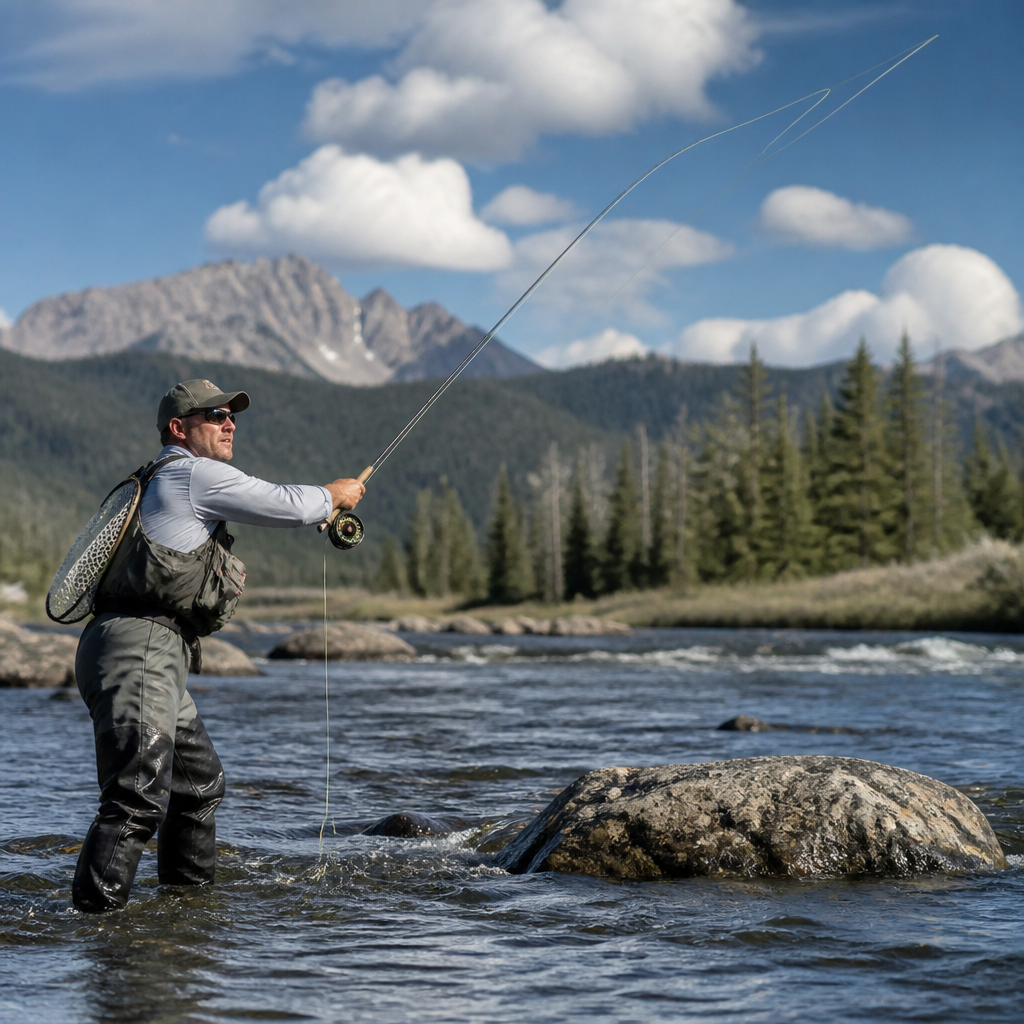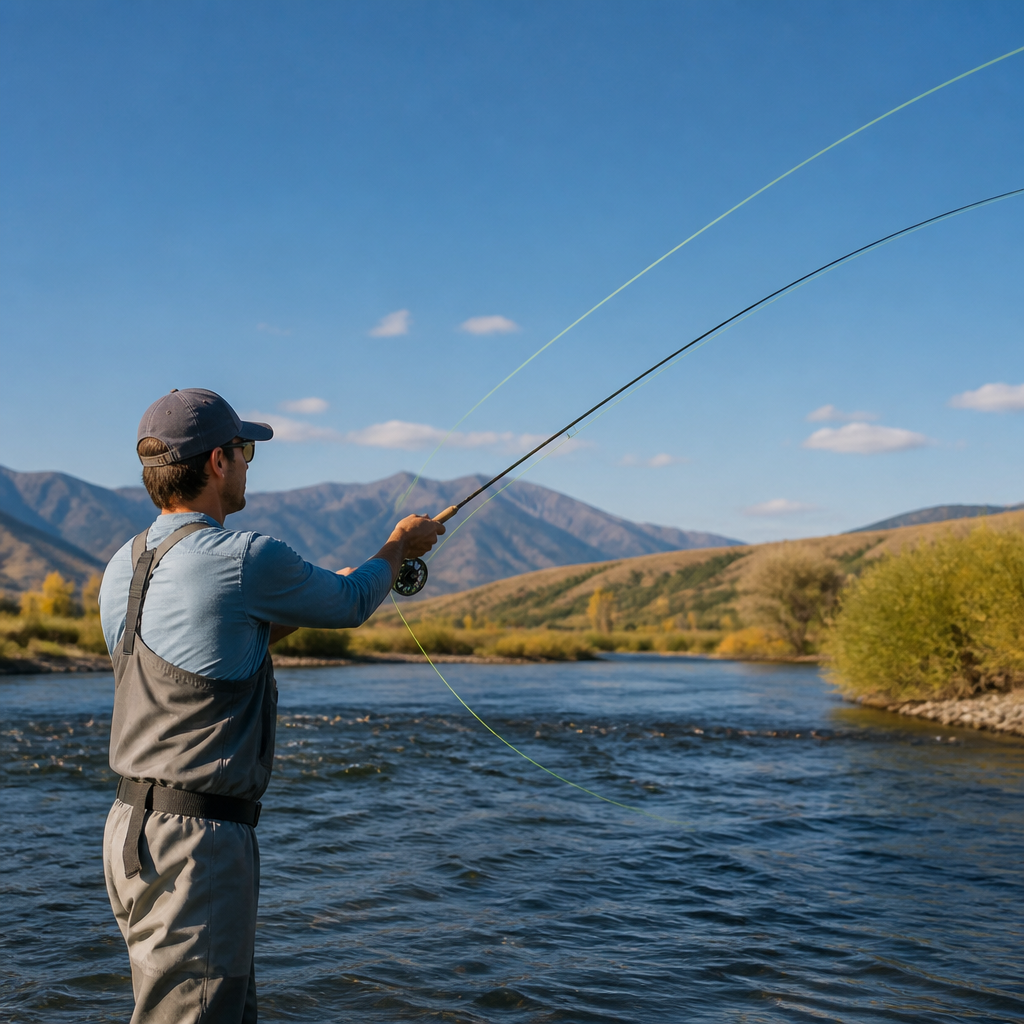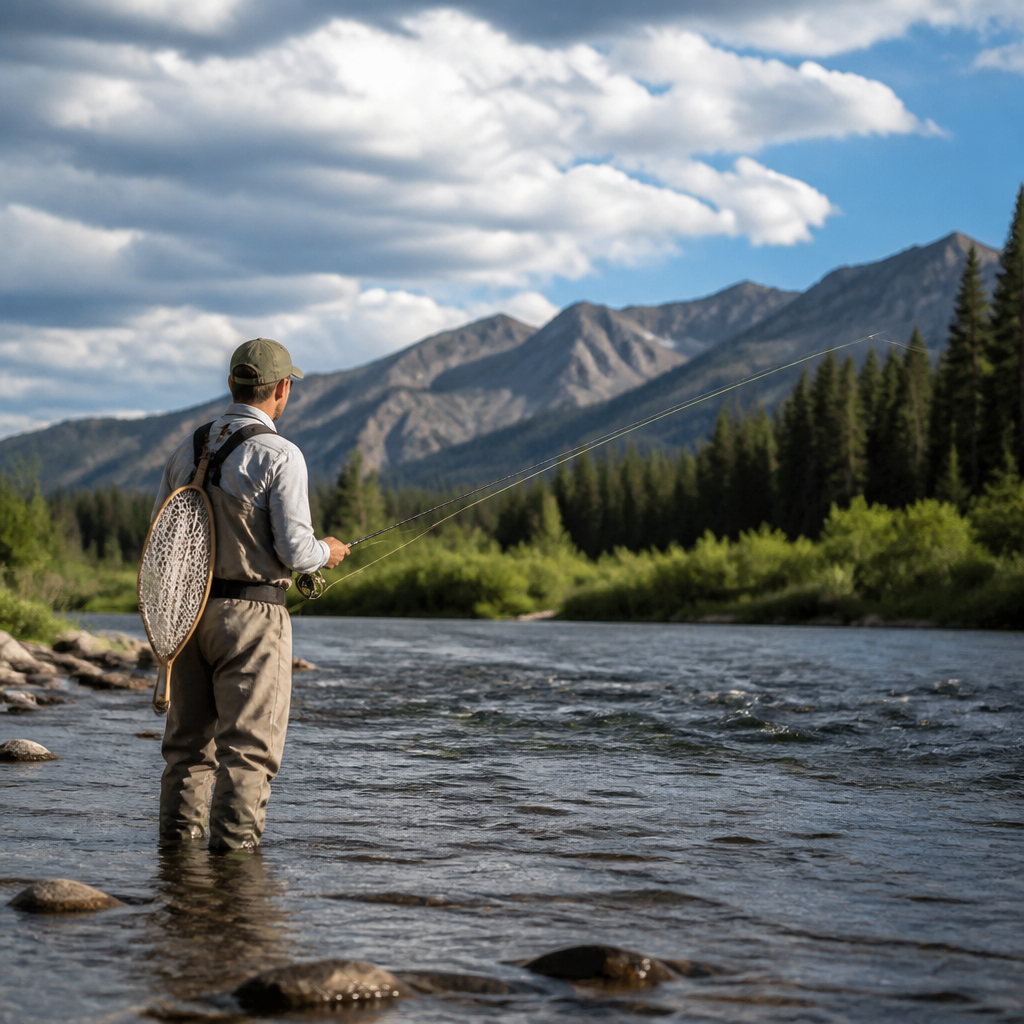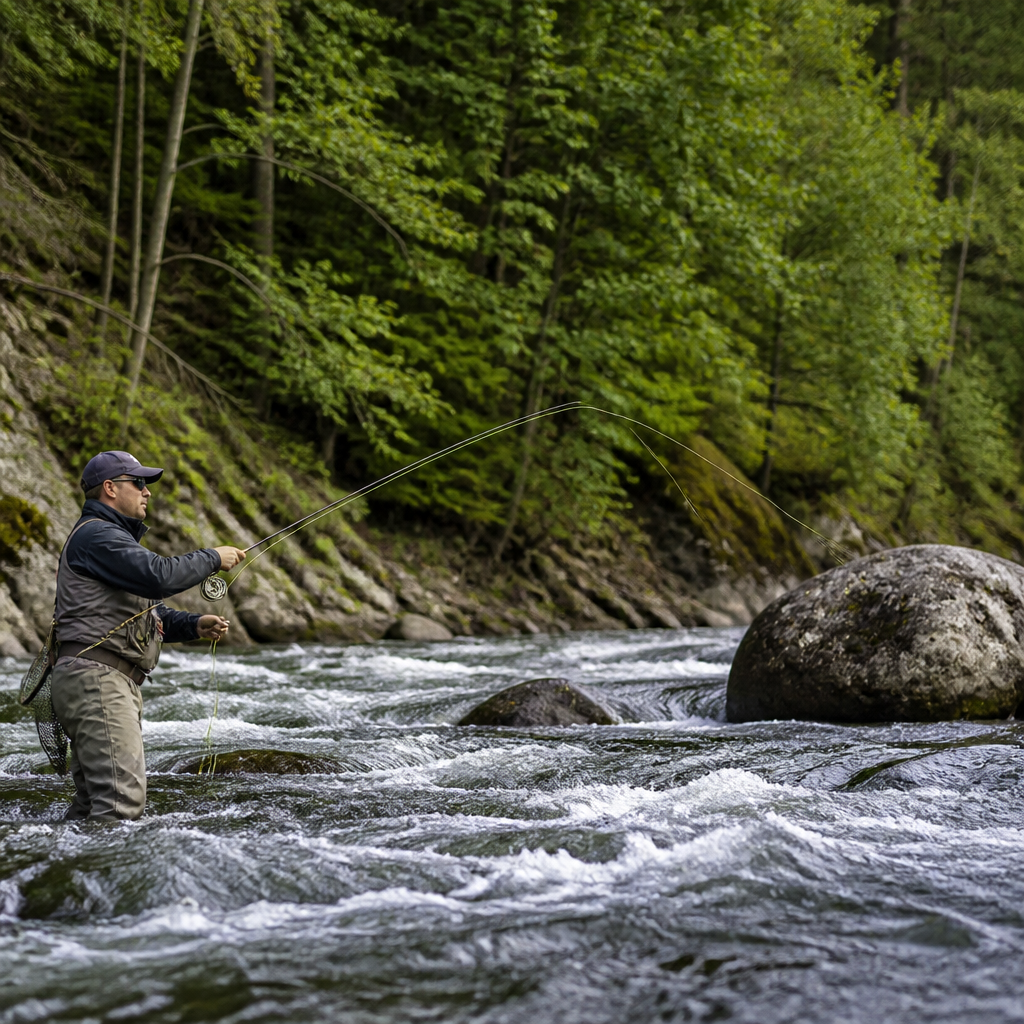
Nymphing in fast water is one of the most productive ways to catch trout because swift currents concentrate food, reduce the time fish have to inspect a fly, and create oxygen-rich holding lies that larger fish use throughout the season. In practical terms, fast-water nymphing means presenting subsurface flies at the same speed and depth as the natural insects drifting in riffles, pocket water, runs, and chutes. Nymphs are aquatic immature insects such as mayflies, caddisflies, and stoneflies, but the term also covers larval patterns, worms, eggs, and other subsurface imitations that trout regularly eat. When anglers struggle in heavy current, the cause is usually not fly choice alone. The real problem is poor drift control, incorrect weight, weak line management, or fishing water too quickly.
I learned that lesson the hard way on freestone rivers where beautiful runs produced nothing until I stopped casting everywhere and started reading current seams, depth changes, and feeding lanes. Fast water matters because it often holds the most reliable fish during changing light, rising flows, and cold conditions when trout stay near the bottom. It also rewards efficient anglers. Cover ten good pockets correctly and you may outfish someone who blind-casts a hundred feet of river. As a hub for nymphing techniques, this guide explains the essential tactics that support every related method: tight-line approaches, indicator rigs, euro-style contact presentations, high-stick drifts, short-line pocket water work, and two-fly system design. The goal is simple: get your flies down quickly, keep them in the strike zone, maintain controlled contact, and detect subtle takes without dragging the flies unnaturally.
Fast water compresses decisions. Where are fish holding? How much weight is enough? Should you use split shot, a tungsten bead, a sighter, or an indicator? How long should the leader be? The answers depend on current speed, depth, bottom structure, and the angle of presentation. A useful definition is this: effective nymphing is depth-first fishing. Trout feeding on drifting nymphs usually sit close to the riverbed, often within inches of it, because current is slower there and food funnels through that layer. If your flies are riding too high, they are largely invisible to feeding fish. This article breaks down how to read fast water, choose rigs, manage line, set depth, detect strikes, and adapt to common problems so you can build a dependable system for nymphing techniques across rivers and seasons.
Read Fast Water Before You Cast
The first strategy in nymphing in fast water is identifying where trout can hold without burning excessive energy. Trout rarely sit in the heaviest tongue of current unless a specific feeding event is happening. More often they use soft edges beside boulders, depressions behind ledges, slots between rocks, the cushion at the front of a large stone, and the seam where fast and slow currents meet. In pocket water, every rock can create a miniature feeding station. In long runs, fish stack along depth transitions, especially where a three- to five-foot trough lets them intercept drifting insects while conserving energy near the bottom. In high-gradient freestones, the shortest drifts often produce the best fish because the lies are compact and highly oxygenated.
A quick way to read productive water is to look for three things at once: broken surface texture, nearby depth, and a current break. Broken water hides you from fish and speeds oxygen exchange. Depth provides security. A current break reduces energy expenditure. When all three overlap, trout usually have a reason to be there. For example, a boulder garden may look chaotic, but each downstream pillow and side seam can hold fish. The mistake I see most often is fishing only the obvious center seam while ignoring the one-foot slots beside rocks where trout feed aggressively. Another overlooked lie is the short shelf at the tail of a pocket, where nymphs tumble free after being dislodged upstream.
Approach matters just as much as location. In fast water, close range usually beats long casting because drag develops instantly once line crosses multiple current speeds. Wading to a controlled distance and fishing one lane at a time gives you better depth and strike detection. Move slowly, stand below the target when possible, and plan your path so you do not send pressure waves through likely holding water. Good fast-water nymphing begins with positioning, not casting distance.
Build the Right Rig for Depth, Contact, and Control
The best nymphing rig for fast water is the one that reaches bottom quickly without sacrificing drift quality. For indicator nymphing, that usually means a floating line, a nine-foot leader tapered to stronger tippet than many dry-fly anglers expect, and enough weight to touch or nearly touch the substrate during the drift. For tight-line nymphing, it means a long leader with a sighter, a heavily weighted point fly, and direct connection that minimizes slack. Both systems work. The choice depends on water size, casting room, current complexity, and how close you can get to the target. On broad runs with mixed speeds, an indicator can suspend flies effectively. In compact pocket water, short-line contact methods are often superior because they reduce conflicting currents on the line.
Weight placement is a decisive variable. Many anglers use too little because they dislike snagging, but occasional bottom contact is confirmation that the flies are in the feeding zone. Tungsten beads sink faster than brass and are the standard for serious fast-water work. Split shot adds versatility when current increases or depth changes from one slot to the next. A two-fly rig is especially useful because it covers different food forms and depths simultaneously. The point fly is usually heavier and acts as the anchor, while the dropper can be a smaller mayfly nymph, caddis pupa, or attractor pattern. If fish are selective, the dropper often gets the eat. If fish are hugging bottom in cold water, the point fly may dominate.
| Fast-water situation | Best rig style | Typical weight strategy | Why it works |
|---|---|---|---|
| Short pocket water under 6 feet wide | Tight-line or high-stick | Tungsten point fly, optional small dropper | Maximum contact, minimal drag, precise placement |
| Medium riffle with mixed seams | Indicator two-fly rig | Split shot above flies plus tungsten nymph | Maintains depth across longer drifts and varied currents |
| Deep fast run 4 to 7 feet | Indicator or tuck cast setup | Heavier shot and larger anchor fly | Gets flies down quickly before they sweep out |
| Boulder garden with plunge pockets | Short-line contact rig | Heavy anchor nymph or jig fly | Drops fast into compact lies behind rocks |
| Cold high water after rain or snowmelt | Two-fly searching rig | Extra shot and larger profile flies | Reaches slower bottom lanes where trout shelter |
Leader length should match water depth and presentation angle. In indicator nymphing, the distance from indicator to fly often exceeds the visible depth because the current sweeps flies upward during the drift. In contact nymphing, a long leader helps keep fly line off the water. Sighter material in bright colors improves strike detection, but it is not magic; it works only if tension is controlled and the rod tracks the drift without pulling. Knots, tippet diameter, and fly spacing all influence sink rate. Thinner tippet sinks faster but can compromise turnover and abrasion resistance around rocks. Fast-water anglers should carry multiple shot sizes, tungsten patterns in several bead diameters, and enough tippet options to adjust quickly rather than forcing one rig to do everything.
Master Presentation: Drift, Angle, and Line Management
Presentation in fast water is about achieving immediate depth and a natural drift in a very short window. That is why upstream or slightly up-and-across casts usually outperform straight-across presentations. They give the flies time to sink before they pass the prime holding lie. A tuck cast is especially valuable because it drives the weighted flies down first and places leader and line behind them. In pocket water, an overhead or compact lob upstream followed by an elevated rod tip often works better than a longer cast. The shorter the line on the water, the fewer currents can grab it.
Line management is where many fish are won or lost. After the cast, lead the drift with the rod tip at the speed of the bubbles or slightly slower if you are maintaining bottom contact. Do not pull the flies; simply stay connected. Excess slack delays strike detection, but too much tension lifts the flies unnaturally. The correct feeling is controlled contact, not tight drag. In indicator fishing, mend early and often. The first mend is usually the most important because it buys sink time. Stack mends can extend a dead drift through a long seam, but every mend must preserve the indicator’s track rather than yanking it. In tight-line nymphing, the equivalent is tracking the rod tip smoothly downstream while keeping only the thinnest leader sections in contact with the water.
Drift length is another misunderstood factor. In fast water, the first few feet often matter most because that is when the flies are deepest and most natural. If the drift starts badly, recast. Repeated short, accurate drifts are more effective than one long drift with poor control. Cover water methodically: near seam first, center lane second, far seam third, then adjust depth or angle before moving. On a productive slot, change only one variable at a time. Add one BB shot, shorten the cast by two feet, or swap the dropper pattern. That disciplined approach reveals the real reason fish respond.
Detect Strikes and Set the Hook Efficiently
Trout eats in fast current are often subtle. Even strong fish may simply stop the flies, open their mouths and close them, or shift sideways an inch. If you wait for a dramatic indicator plunge, you will miss many takes. Watch for any hesitation, twitch, unnatural acceleration, or stall. In contact rigs, watch the sighter for micro-pauses, straightening, or a sudden loss of tension. Hook sets should be compact and immediate, driven mostly by the forearm and wrist, not a giant overhead motion. In heavy current, a short lift upstream or sideways is enough to test whether the resistance is rock or fish.
One reason skilled nymph anglers catch more fish is that they set on uncertainty. If you are not sure whether the drift bumped a stone or a trout inhaled the fly, set the hook. The cost is minor. The benefit is significant. Fast water creates visual noise, and trout have less time to inspect the fly, so takes can happen anywhere in the drift, including right at the end as flies rise. That makes the induced lift a useful trigger. Many caddis pupae and emerging mayflies ascend before hatching, and trout recognize that movement. Before picking up to recast, let the flies swing slightly and then lift smoothly. Countless fish eat at that moment.
Once hooked, control angle and pressure immediately. Keep the rod high enough to absorb surges but low enough to steer fish away from strong center currents if possible. Side pressure is especially useful around boulders because it turns the fish’s head and shortens the fight. Heavy current magnifies leverage, so playing fish too delicately often leads to long fights and lost trout. Use tippet strength appropriate for weighted flies and rough bottoms, and bring fish to the net efficiently.
Choose Effective Flies and Adjust to Conditions
Fly selection for fast-water nymphing should begin with size, weight, and profile, then move to exact imitation if needed. In many rivers, a #12 to #18 mayfly nymph, a caddis pupa, and a larger stonefly or attractor anchor cover most situations. Pheasant Tail, Hare’s Ear, Perdigon, Walt’s Worm, Frenchie, Pat’s Rubber Legs, Prince Nymph, and Zebra Midge all earn their place because they sink efficiently and suggest common food forms. Jig-style hooks with slotted tungsten beads reduce snagging and ride point-up, which is a genuine advantage around rocky bottoms. Slim patterns sink faster than bushy ones, so in deep fast runs a sparse perdigon often reaches fish before a buggy but bulkier fly.
Match adjustments to conditions. In cold water, trout frequently hold tight to bottom and prefer a slower, depth-focused drift with larger or more visible flies. During runoff or stained flows, black, purple, pink, chartreuse, and heavy stonefly patterns can stand out. In low clear conditions, smaller natural mayfly nymphs and finer tippet may be necessary, but do not underweight the rig just to look delicate. A perfectly realistic fly drifting two feet above the fish is less effective than a slightly larger fly in the right lane and depth. Seasonal clues help. Spring often favors stoneflies and larger searching patterns; summer riffles can be rich with caddis and PMD nymphs; autumn may bring baetis, October caddis, and egg opportunities near spawning activity where legal and ethical.
This hub should also point anglers toward a broader system of learning. Refine strike detection with tight-line methods, improve reach and mending with indicator rigs, study seasonal insect life, and practice reading pocket water separately from long runs. The strongest nymph anglers are not attached to one style. They understand the core mechanics and adapt them to each river.
Nymphing in fast water becomes far less intimidating once you reduce it to repeatable principles. Read the water for current breaks, depth, and feeding lanes. Choose a rig that reaches bottom quickly and maintains controlled contact. Present from a favorable angle, manage line aggressively, and treat every hesitation as a possible strike. Adjust weight before obsessing over fly changes, and remember that short precise drifts usually beat long sloppy ones. These are the foundations that support every effective nymphing technique, from high-stick pocket water fishing to two-fly indicator systems and modern tight-line approaches.
The biggest benefit of mastering fast-water nymphing is consistency. Hatches come and go, but trout feed subsurface every day, and swift runs often hold fish when slower flats seem empty. If you can get flies into the lower part of the water column and keep them drifting naturally, you can catch trout in a wide range of seasons, flows, and light conditions. Start on one short run, map the likely lies, and fish them methodically with deliberate depth adjustments. Then build outward into more specialized tactics across the rest of your nymphing techniques toolkit. The river will tell you quickly when your drift is right. Get out, practice on moving water, and let fast current become an advantage instead of an obstacle.
Frequently Asked Questions
Why is nymphing in fast water so effective for trout?
Nymphing in fast water is effective because fast current naturally stacks the odds in the angler’s favor. Swift flows funnel drifting insects into predictable lanes, seams, pockets, and feeding cushions, so trout do not have to move far to eat. At the same time, the broken surface and speed of the current reduce a fish’s ability to closely inspect a fly, which means a well-presented nymph often gets eaten with less hesitation than it might in flat, clear water. Fast water also tends to be highly oxygenated, making it attractive to trout throughout the season, especially larger fish that want security, steady food, and efficient holding lies.
Another major reason it works so well is that many of the river’s most important food sources live and drift there. Mayfly nymphs, caddis larvae and pupae, and stonefly nymphs are constantly being dislodged in riffles, runs, pocket water, and chutes. When flows are strong, these insects are carried directly into feeding lanes where trout can intercept them with minimal effort. In practical terms, that means if your flies are drifting at the right depth and speed, you are putting them exactly where fish expect real food to be. Fast water rewards anglers who can control depth, manage line, and maintain a natural drift.
What is the most important factor in presenting nymphs correctly in fast water?
The most important factor is achieving a natural drift at the proper depth. In fast water, trout usually have only a brief window to see and react to a fly, so your nymph must be moving at the same speed as the current around it and traveling where fish are feeding, which is often near the bottom. If the fly drags, swings unnaturally, or rides too high in the water column, your chances drop quickly. Good fast-water nymphing is really a controlled race to sink the fly quickly enough, keep it drifting naturally long enough, and maintain contact well enough to detect subtle takes.
That usually means using enough weight, either in the fly, on the leader, or both, to get down fast. It also means keeping as much unnecessary line off the water as possible, because line on conflicting currents creates drag and pulls the nymph out of the drift. Short drifts are often best in fast water because they are easier to control. Rather than casting far, many skilled anglers target one seam, pocket, or slot at a time, making repeated drifts from slightly different angles. If you are not occasionally ticking the bottom, hanging up once in a while, or adjusting your rig depth and weight regularly, you are probably not fishing deep enough.
How do you choose the best fast-water holding lies to target?
In fast water, trout usually avoid the strongest current and instead hold in places where they can conserve energy while staying close to food. The best lies are current breaks and transition zones: seams between fast and slow water, the soft edges beside boulders, depressions in riffles, slots between rocks, the inside edge of a chute, and the cushion of softer water just upstream or downstream of structure. These spots let trout sit in manageable flow while food is delivered to them by the faster current nearby. If you learn to identify those feeding lanes, your efficiency goes up dramatically.
Pay special attention to pocket water and short, defined feeding windows. In rough water, fish often hold in very small zones, sometimes only a foot or two wide. That means precise placement matters more than long casts. Work the near water first, then move systematically upstream or across the run. Fish the obvious seam, then the softer inside lane, then the bucket below a drop, then the pocket behind the rock. Larger trout frequently occupy the most efficient lies, not necessarily the most obvious ones, so look for spots with depth, cover, oxygen, and a direct conveyor belt of food. If a lie offers shelter from the heaviest push while staying connected to a drifting food lane, it is worth fishing carefully.
What nymph rigs and flies work best in fast water?
The best rigs for fast water are the ones that help you sink quickly, maintain control, and detect strikes efficiently. Common effective setups include a two-fly indicator rig, a tight-line or euro-style nymphing rig, and a short-line high-stick presentation. An indicator rig is excellent when you need flotation, visual strike detection, and the ability to suspend weight and multiple flies through riffles or runs. Tight-line methods shine when you are close to the target and want direct contact, minimal drag, and precise depth control. In heavy pocket water, a short, controlled drift with a heavily weighted anchor fly and a lighter dropper is often hard to beat.
For flies, confidence patterns that suggest common fast-water food are usually better than overcomplicating the selection. Stonefly nymphs, caddis larva patterns, perdigons, pheasant tails, hare’s ears, and other slim, weighted mayfly imitations are all dependable choices. In fast water, profile, sink rate, and size often matter more than exact color matching. Heavier bead-head flies or tungsten patterns are especially useful because they cut through the current quickly. A good strategy is to pair a larger, heavier point fly that gets the rig down with a smaller, more natural trailer that drifts just above it. Adjust size and color based on season, water clarity, and local insect life, but always prioritize getting the flies into the feeding zone quickly and consistently.
How can you detect more strikes and hook more trout when nymphing fast water?
Strike detection in fast water is challenging because takes are often quick, subtle, and masked by turbulence. The key is staying connected to the flies without creating drag. If you are fishing an indicator, watch for any hesitation, dip, twitch, unnatural stall, or slight change in speed. In rough current, not every take looks dramatic; many fish simply inhale the nymph and hold in place. With tight-line methods, pay attention to any pause, tap, tightening, or unexplained loss of tension. When in doubt, set the hook. A controlled, frequent hook set is far better than letting fish eat unnoticed.
Hook-up rates also improve when you shorten the drift and keep the rod in a position that allows immediate response. Leading the flies with the rod tip, rather than letting line pile downstream, helps preserve contact. Good wading position matters too: being closer to the target reduces slack and improves both depth control and strike detection. Use enough weight to stay near the bottom, but not so much that the rig constantly snags and becomes unmanageable. Finally, fish each likely lie from a few different angles before moving on. In fast water, a small adjustment in cast angle, drift length, or split-shot placement can turn an unproductive pocket into a fish-producing one. The anglers who catch the most trout are usually the ones making constant micro-adjustments and treating every unusual movement as a possible take.