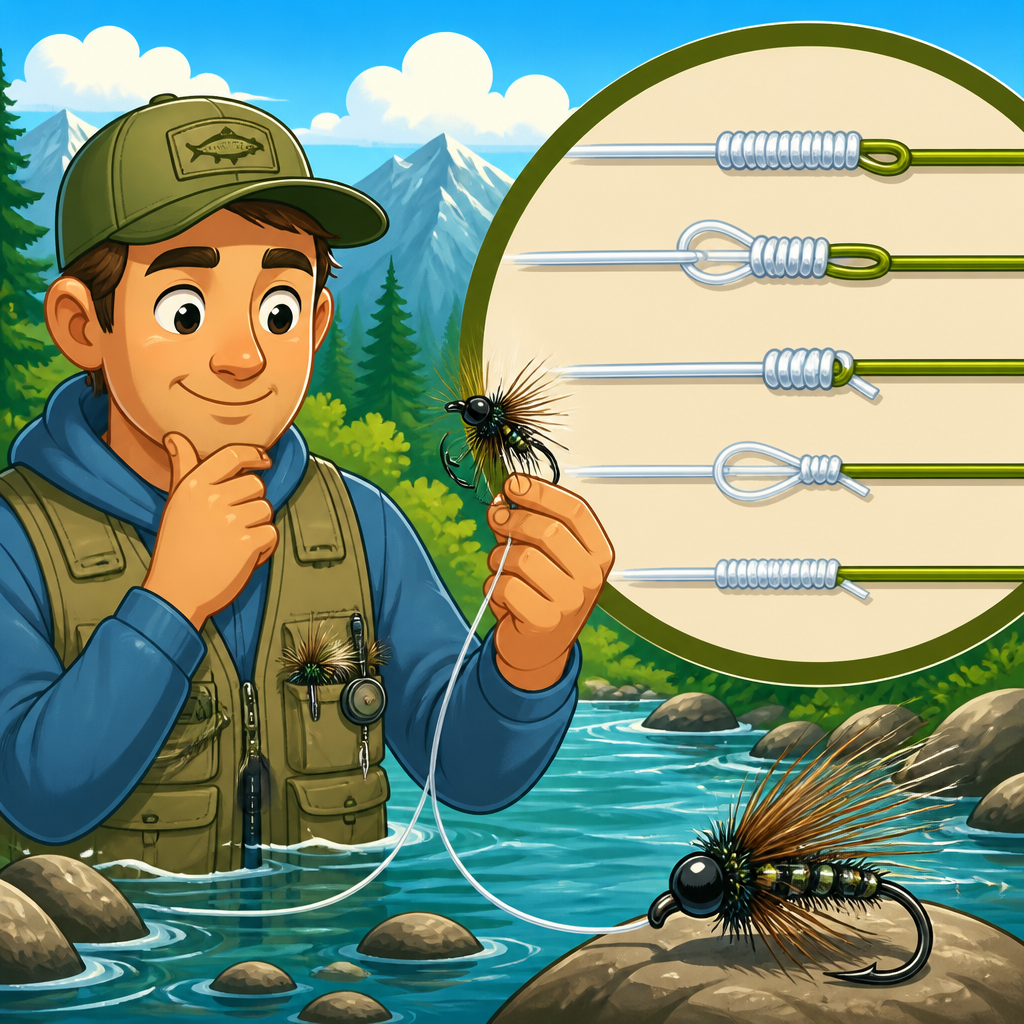
Choosing the right knot for thin tippet and heavy flies is one of the most practical skills in fly fishing because the wrong connection costs fish, flies, and confidence. In fly fishing, “tippet” means the final, narrow section of monofilament or fluorocarbon between your leader and fly, while “heavy flies” usually refers to weighted nymphs, conehead streamers, articulated streamers, beadhead patterns, and bulky bass or saltwater flies that create extra mass, drag, and shock on the cast. Those two factors work against each other. Thin tippet is excellent for stealth, natural drift, and delicate presentation, but it has less margin for abrasion, heat damage during tightening, and shock from a heavy pattern turning over or colliding with the water. I have seen anglers blame the tippet material when the real failure came from using the wrong knot, tying it poorly, or choosing a knot that cinched unevenly against a large hook eye.
This matters far beyond landing one fish. Good knot selection affects presentation, sink rate, fly action, turnover, and how often you must retie on the water. A knot that seats straight can preserve breaking strength and help a nymph track naturally. A loop knot can transform a streamer’s motion, but on very fine tippet it may also introduce more failure risk than a snug knot. Hook eye diameter, wire thickness, fly weight, and the stiffness of fluorocarbon versus nylon all influence the best choice. As a hub for knot tying within Fly Fishing Basics, this guide explains which knots belong in every angler’s system, when to use each one, where they struggle, and how to match knot, tippet, and fly so the connection works under real fishing pressure.
Why knot choice changes with thin tippet and heavy flies
Thin tippet and heavy flies create a specific mechanical problem: a small-diameter line must absorb the force generated by a comparatively large, often weighted object. During casting, that fly can kick, tumble, and momentarily shock-load the knot. During the drift, split shot or a tungsten bead may help the rig sink, but the knot still takes the stress when the fly ticks rocks, hangs bottom, or gets eaten by a strong fish in current. On the strip set with streamers, impact loads can be much higher than many beginners expect. In practice, knots that are acceptable on 2X with a small dry fly may become unreliable on 5X tied to a heavy beadhead or articulated bugger.
The main failure points are consistent. First, tight turns in the knot can create stress concentration, especially in fluorocarbon, which is harder and less forgiving than nylon. Second, thin material burns easily from friction if not lubricated before tightening. Third, some knots seat at an angle against oversized or rough hook eyes, leading to uneven load distribution. Fourth, tag ends that are trimmed too short can pull through after repeated casting with weighted flies. Finally, heavy flies amplify abrasion because they often fish near rocks, wood, shell, or teeth. That is why smart knot tying is not just about absolute lab strength. It is about practical strength after casting, drifting, snagging, and landing fish.
The core knots every fly angler should know in knot tying
If this page is your knot tying hub, start with a small, reliable toolkit rather than memorizing every knot ever published. For attaching fly to tippet, four knots matter most: the improved clinch knot, the Orvis knot, the Davy knot, and the non-slip loop knot. For joining tippet to leader or adding tippet, the blood knot, double surgeon’s knot, and triple surgeon’s knot are the practical standards. For loop-to-loop systems used with leaders and some specialty rigs, perfection loops matter. In my own fishing and guide-day repairs, these are the knots that repeatedly solve most on-water problems without wasting time.
The improved clinch knot remains common because it is familiar, compact, and easy to inspect, but it is not always the best option for very fine tippet and heavy flies. The Orvis knot is underused despite being exceptionally strong, easy to tie through small hook eyes, and dependable with both nylon and fluorocarbon. The Davy knot is excellent when cold hands, wind, or tiny flies make complex wraps impractical, though it gives up some margin when tied carelessly or used with large, weighted patterns. The non-slip loop knot is the streamer specialist because it allows free movement, but it must be sized correctly and tightened perfectly on thin tippet.
For line-to-line connections, the surgeon’s family wins for speed and reliability. A triple surgeon’s knot is especially useful when diameters differ and you need a fast tippet extension while standing midstream. The blood knot is slimmer and cleaner, making it ideal for hand-tied leaders or anglers who want smooth turnover and less hinge effect. A perfection loop is compact and neat for loop-to-loop leader systems, but loops add another hinge point and are not automatically the strongest option for every thin-tippet application. The best knot tying system is the one you can tie correctly every time under pressure.
Best knots for attaching heavy flies to thin tippet
For most situations, the Orvis knot is the best all-around answer when you need to attach a heavy fly to thin tippet. It is strong, compact, and less prone to the uneven seating problems that affect some clinch-style knots on large-eyed hooks. It also uses fewer wraps than a clinch knot, which reduces friction and bunching in fine material. When I am fishing 5X or 6X fluorocarbon to a tungsten nymph, or 4X nylon to a small conehead streamer, the Orvis knot gives me a very consistent result. Lubricate it, tighten it gradually, and leave a sensible tag end. It is one of the most forgiving choices for anglers building dependable habits.
The improved clinch knot still works well in moderate conditions, especially with nylon and flies that are weighted but not oversized. It is easy to teach and easy to recognize, which explains its staying power in fly fishing basics. However, as hook eye diameter increases or tippet gets finer, it can stack poorly if the wraps cross. That crossed wrap is where many break-offs begin. If you use the improved clinch, reduce unnecessary wraps on very light diameter tippet, wet the knot thoroughly, and test every tie with a firm pull before making the next cast.
The non-slip loop knot is often the best choice for streamers because movement matters as much as strength. A weighted sculpin, baitfish, or articulated trout streamer usually looks better on a loop than on a tight cinch knot. The tradeoff is that loop knots require cleaner tying and more attention to tag length. On truly fine tippet, especially below what most anglers would choose for streamers, a loop knot may not be the safest answer. If the fly is heavy enough to justify a loop, it may also justify stepping up tippet diameter.
| Knot | Best use | Main advantage | Main limitation |
|---|---|---|---|
| Orvis knot | Thin tippet to weighted nymphs or medium heavy flies | High practical strength and clean seating | Less familiar to many beginners |
| Improved clinch | General fly attachment with nylon or moderate fly weight | Widely known and compact | Can cross or weaken on fine tippet and big eyes |
| Davy knot | Small flies, cold hands, quick retying | Fast and simple | Less margin with heavy flies |
| Non-slip loop | Streamers that need action | Excellent fly movement | Not ideal on ultra-fine tippet |
How material, fly design, and conditions affect knot performance
Not all tippet behaves the same. Nylon is generally more supple, easier to cinch, and more forgiving in many common knots. Fluorocarbon is denser, more abrasion resistant, and often better for subsurface presentations, but it can be stiffer and less tolerant of badly seated knots. That does not mean fluorocarbon is weaker. It means your knot tying must be cleaner. On thin fluorocarbon, I avoid rushed tying and pay close attention to lubrication and even tightening. If a knot grabs in stages instead of seating smoothly, I cut it off and retie.
Fly design also matters. A jig nymph with a slotted bead, a heavy stonefly with lead wraps, and an articulated streamer all stress the connection differently. Large hook eyes can help threading but may let a cinch knot slide and settle at a bad angle. Small, rough, or unfinished eyes can nick thin tippet during tying. Articulated flies add leverage because their length can twist during casting and fish fights. Coneheads and dumbbell eyes increase momentum and make hard stops more punishing. In practical terms, the heavier and bulkier the fly, the more conservative you should be with both knot choice and tippet diameter.
Conditions finish the equation. In cold weather, hands lose dexterity, making simple knots more valuable. In fast pocket water, trout often strike hard and immediately use current, so shock resistance matters. In stillwater, fish may not hit as violently, but repeated casting of weighted flies can fatigue poor knots over time. In saltwater, heat, UV, and abrasive mouths demand stronger materials and meticulous trimming. The best anglers do not ask for one universally strongest knot. They ask which knot is strongest after accounting for material, fly style, temperature, current, and the way the fish will likely be fought.
Choosing the right line-to-line knot in your tippet system
Fly attachment gets attention, but many failures happen where leader meets tippet. If this article is your knot tying hub, remember that a perfect fly knot cannot save a weak tippet junction. For adding fresh tippet to a leader, the triple surgeon’s knot is usually the best blend of speed, strength, and field reliability. It handles different diameters better than a blood knot and is easier to tie with cold fingers or fading light. That makes it the workhorse choice for beginners and experienced anglers alike.
The blood knot still deserves a place in any serious fly fishing basics system. It creates a slim profile that passes smoothly and maintains a straight leader layout, which supports better turnover. I use it most when building or rebuilding leaders at home, especially for dry fly and nymph leaders where clean energy transfer matters. Its weakness is not performance but complexity. Under streamside pressure, many anglers tie one side incorrectly or fail to seat both barrels evenly. If that sounds familiar, use a surgeon’s knot on the water and practice the blood knot at home until it becomes automatic.
Perfection loops and loop-to-loop connections can be convenient when swapping leaders, Euro nymphing setups, or specialty sink-tip systems. They are efficient, but they do create a hinge point and add hardware-like bulk without actual hardware. For delicate presentations with thin terminal sections, I generally prefer direct knots over extra loops unless fast leader changes are essential. The point is not that one system is always better. It is that knot tying should support the way you fish, not follow habit without thought.
Mistakes that make good knots fail
Most knot failures blamed on thin tippet are preventable. The first common mistake is using too many wraps. Anglers often assume more wraps equal more strength, but on fine tippet extra wraps can bunch, burn, and seat poorly. The second mistake is tightening too fast. A knot should draw down gradually with steady tension, not snap into place. Third is failing to lubricate. Water or saliva reduces friction and heat, which is especially important with fluorocarbon. Fourth is trimming tags too short. Heavy flies generate repeated shock, and a marginal tag can slip after dozens of casts even if the knot looked fine at first.
Another major error is mismatching tippet to fly mass. If you are trying to throw a heavily weighted streamer on 6X because the water is clear, the issue is not only the knot. The entire system is out of balance. Skilled anglers solve that by adjusting fly size, adding length for stealth instead of dropping diameter too far, or changing presentation angle. Finally, many people skip post-tie testing. After every critical knot, pull firmly on both standing line and fly. If it slips, creaks, curls, or seats crooked, retie immediately. The minute spent there saves far more time than replacing a lost rig after a break-off.
Building a simple knot strategy for real fishing
The easiest way to improve knot tying is to standardize your decisions. Use the Orvis knot as your default fly knot for thin tippet and weighted flies. Use the improved clinch when conditions are easy and you already tie it perfectly. Use the non-slip loop knot for streamers that need action, but pair it with appropriately stout tippet. Use the triple surgeon’s knot as your default tippet-to-leader connection, and practice the blood knot for leader building at home. This small system covers most trout, bass, and light saltwater situations without clutter.
Keep your process equally simple. Inspect the hook eye. Thread enough tag to work comfortably. Tie slowly, lubricate fully, and tighten in stages. Watch the knot seat. Leave a practical tag end, especially with fluorocarbon and heavy flies. Then test it. After catching a fish, dragging bottom repeatedly, or changing from a light fly to a tungsten pattern, inspect again. Good knot tying is not a one-time event; it is part of routine rig maintenance. That habit matters as much as the specific knot name.
For anglers learning Fly Fishing Basics, the biggest benefit of mastering knot selection is confidence. You cast better when you trust the connection. You fish deeper, drift closer to structure, and fight stronger fish with more control. Start with two fly knots and one line-to-line knot, practice them until they are automatic, and use them deliberately. If you want better results on the water, make knot tying a core skill, not an afterthought.
Frequently Asked Questions
What is the best knot for tying heavy flies to thin tippet?
There is no single perfect knot for every situation, but for many fly anglers, the improved clinch knot, the Orvis knot, and the non-slip loop knot are the most practical choices when connecting thin tippet to heavy flies. The best option depends on the size of the tippet, the style and weight of the fly, and how much movement you want the fly to have in the water. If you are fishing a standard beadhead nymph or a moderately weighted streamer on light tippet, a well-tied Orvis knot or improved clinch knot is often a strong, compact, reliable choice. If you are fishing a bulky streamer, conehead pattern, or articulated fly that benefits from extra action, a non-slip loop knot can improve movement and reduce leverage on the knot during erratic strips.
What matters most is not just the knot design, but whether that knot performs well with fine-diameter material under repeated casting stress. Thin tippet is vulnerable because it can be nicked, overheated by friction during tightening, or weakened when cinched unevenly against a large, heavy hook eye. Heavy flies magnify those weaknesses because their mass creates shock on the forward cast, on abrupt stops, and during false casting. A knot that tests strong on paper can still fail quickly if it slips on fine fluorocarbon or if the fly’s weight causes the knot to seat badly. That is why many experienced anglers favor knots that are easy to tie correctly in poor light, easy to inspect streamside, and dependable with the specific tippet material they use most often.
As a practical rule, choose a snug knot such as an Orvis or improved clinch for smaller heavy flies and choose a loop knot when the fly is larger, bulkier, or intended to swim freely. Then test that knot at home with the exact tippet size and fly style you plan to fish. In real-world fly fishing, the “best” knot is the one that keeps its strength, seats cleanly, and holds up after repeated casts with weight at the end of fine tippet.
Why do knots fail more often when using thin tippet with weighted or bulky flies?
Knots fail more often in this setup because thin tippet and heavy flies create a mismatch in force. Thin tippet is designed for stealth, drift, and finesse, while heavy flies introduce sudden mass, drag, and momentum. Every cast puts stress on the connection, especially when the fly changes direction sharply, hits the end of the leader hard, or tumbles in the air. Weighted nymphs, conehead streamers, beadheads, and articulated patterns all create more shock than a lightly dressed dry fly. That added energy is transmitted directly into the knot.
There are several common failure points. First, fine tippet can cut into itself when a knot is tightened improperly, especially if it is dry and not lubricated. Second, some knots do not grip slick fluorocarbon as well as anglers expect, which can cause slow slipping rather than an obvious break. Third, larger hook eyes and thicker wire hooks can affect how the knot seats, concentrating pressure at awkward angles. Fourth, repeated false casting with a heavy fly can fatigue the tippet material near the knot, even when the knot itself was tied correctly. A knot may hold one fish and then break on the next cast simply because the material has already been stressed.
Environmental factors also matter. Cold weather can reduce finger dexterity and lead to poor wraps or crossed turns. Rocks, fish teeth, woody cover, and split shot can nick light tippet so the knot becomes the place where that hidden damage finally shows up. In many cases, anglers blame the knot when the real problem was abrasion, poor seating, too-short tag ends, or choosing too light a tippet for the fly being cast. The takeaway is simple: knot failure with thin tippet and heavy flies is usually a systems problem, not just a knot problem. The fly, hook eye, tippet diameter, material type, casting style, and knot choice all interact.
Should I use a loop knot or a snug knot with heavy flies on light tippet?
You should use a loop knot when fly action is a priority and a snug knot when maximum simplicity, compactness, and direct alignment are more important. A loop knot, such as a non-slip mono loop, allows the fly to move more freely because it does not cinch tightly against the hook eye. That extra freedom can make a major difference with streamers, baitfish patterns, leeches, and articulated flies, especially when you are stripping, swinging, or animating the fly. In many cases, a loop knot also reduces the rigid hinge effect that can occur when a big, wind-resistant fly is pinned tightly to very fine tippet.
A snug knot still has important advantages. For heavily weighted nymphs, jig flies, or flies fished under an indicator where you want a clean, direct connection, a snug knot often tracks better and tangles less. It is also more compact, which can be useful when threading small eyes or tying with numb fingers. Many anglers find that a snug knot is easier to tie consistently on the water, and consistency often matters more than theoretical knot performance. If you can tie one knot perfectly every time and another knot only adequately, the better real-world choice is obvious.
The decision should also reflect tippet strength and fly size. On extremely fine tippet, a poorly tied loop knot can become bulky or waste too much material, while on larger but still relatively light tippet, it may be ideal for heavy streamers. If you notice that your streamer seems constrained or does not swim naturally, try a loop knot. If you notice tangles, hinge-like casting problems, or trouble with knot consistency, switch to a snug knot. Both styles have a place. The smartest anglers match the knot to the presentation, not just to habit.
How can I make my knot stronger when fishing thin tippet to heavy flies?
The strongest improvement you can make is to tie more carefully, not more creatively. Start by selecting a knot known to perform well with your tippet material and diameter, then tie it cleanly and deliberately. Lubricate the knot before tightening so friction does not burn or weaken the monofilament or fluorocarbon. Cinch the knot slowly so the wraps seat evenly instead of crossing or bunching. After the knot is fully set, pull firmly on both the standing line and the fly to test it before making a cast. Many failures can be prevented simply by discovering a bad knot immediately instead of after a fish eats.
You should also pay attention to compatibility. Fine fluorocarbon can be slicker than nylon and may perform better with some knots than others. Heavy flies with oversized eyes or thick hook wire can change how a knot tightens. In some cases, stepping up slightly in tippet diameter is a better solution than searching for a miracle knot. If the fly is so heavy that it repeatedly shocks the connection, the issue may be that the tippet is undersized for the task. Better turnover, fewer violent kickbacks, and a safer margin of knot strength often come from matching the tippet more appropriately to the fly.
Finally, maintain the connection during the day. Retie after catching fish, after hitting rocks or brush, after dragging flies free from snags, or anytime the tippet near the knot feels rough. Leave a sensible tag end rather than trimming too close, especially with fine fluorocarbon that may settle slightly after tightening. Check that the eye of the hook is smooth and not poorly finished. If the fly lands hard enough to crack beads, chip coneheads, or twist leaders, it is hard enough on your knot to justify frequent inspection. Strong knots are the result of good materials, correct matching, careful tying, and disciplined reties.
Is fluorocarbon or monofilament better for tying heavy flies to thin tippet?
Neither material is universally better, but each has strengths that matter when you are attaching heavy flies to thin tippet. Fluorocarbon is often preferred because it is denser, more abrasion resistant, and generally less visible underwater. It can be an excellent choice for nymphing, streamer fishing, and situations where flies are ticking bottom, rubbing structure, or moving through clear water. However, fluorocarbon can also be stiffer and slicker than nylon monofilament, which means some knots demand extra care to seat properly and hold reliably, especially in very light diameters.
Monofilament, by contrast, is often easier to handle and easier to knot well. It has a bit more stretch, which can help absorb the shock created by casting and fishing weighted flies. That slight elasticity can be useful when a fish strikes hard or when an angler makes an abrupt cast with a beadhead or conehead pattern. Mono also tends to be more forgiving for anglers who want simple, repeatable knot tying on the water. The tradeoff is that it may be less abrasion resistant and can wear faster around rocks, wood, or sharp hook eyes.
The best choice comes down to technique and conditions. If you are fishing deep nymphs, streamers near cover, or clear water where abrasion resistance and sink rate matter, fluorocarbon is often the better tool. If you value easy handling, shock absorption, and knot forgiveness,