Dropper nymphing is the practice of fishing two or more subsurface flies on the same leader so anglers can cover different depths, imitate multiple food forms, and find what trout are eating faster. Within nymphing techniques, it is one of the most versatile systems because it combines searching efficiency with precise presentation. A standard rig usually includes a point fly at the end of the tippet and a dropper fly attached above it, though some anglers fish three flies where regulations allow. The method matters because trout often feed in narrow depth bands, currents separate food by size and weight, and insect activity can change hour by hour. By using multiple flies, you test those variables in one drift instead of changing one pattern at a time.
I rely on dropper nymphing whenever I need information quickly. On unfamiliar water, a two-fly rig tells me whether fish want a heavy mayfly imitation near the bottom, a smaller midge in mid-column, or a bright attractor as a trigger. On pressured rivers, it also lets me fish one confidence pattern and one experimental pattern without sacrificing consistency. This article serves as a hub for nymphing techniques by explaining how multi-fly rigs fit into river reading, strike detection, weighting, leader design, fly selection, and presentation. If you understand dropper nymphing well, many other methods, from indicator setups to tight-line systems, become easier to adapt.
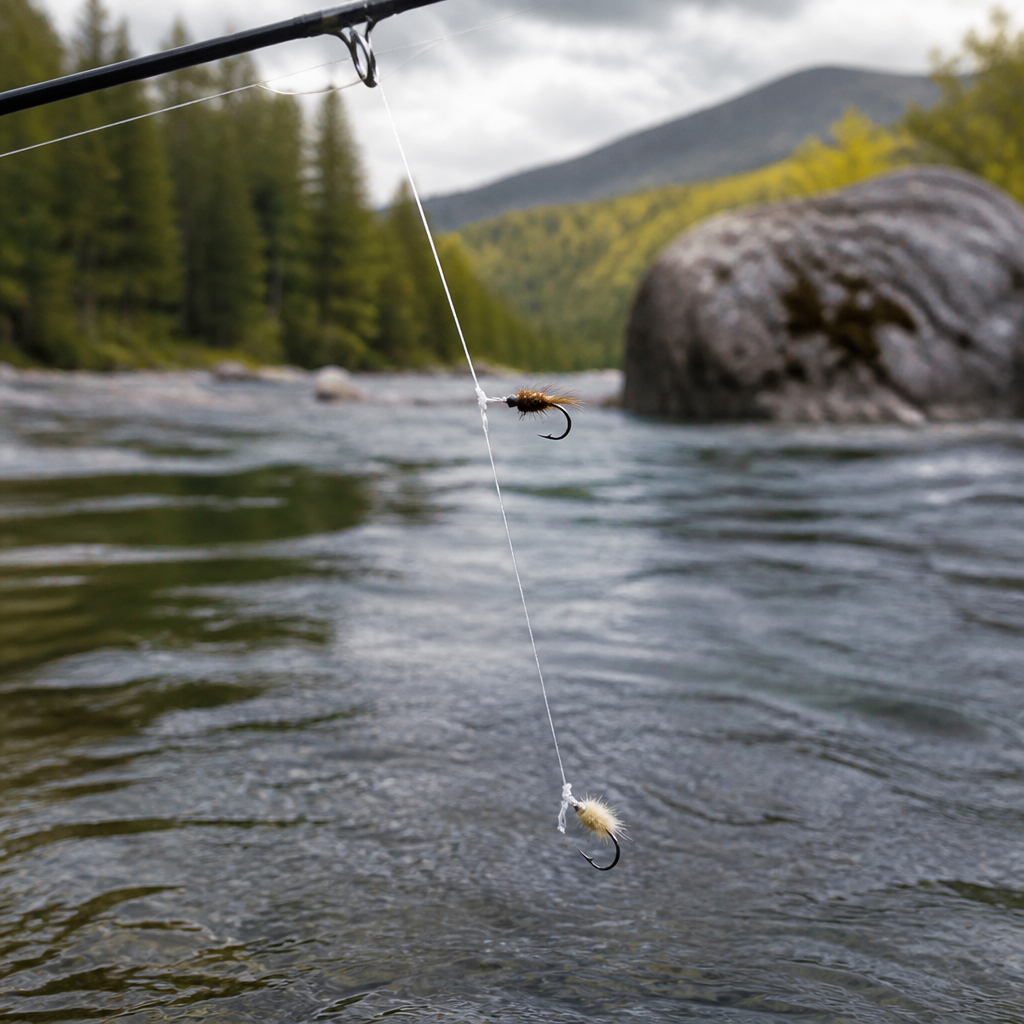
Key terms are straightforward. The point fly is the bottom or terminal fly. The dropper is any additional fly tied above it. Tag droppers extend from a short tag left at a knot, while in-line droppers are tied from the bend of the upper fly or attached directly into the leader system. Split shot adds external weight, while anchor flies use beadheads or tungsten bodies to sink the rig. Strike indicators suspend the flies and signal takes; sighters and tight leaders transmit contact directly. Depth control, drift speed, and angle are the core variables. Most missed fish in nymphing come from poor control of those three factors, not from the exact shade of pheasant tail or hare’s ear.
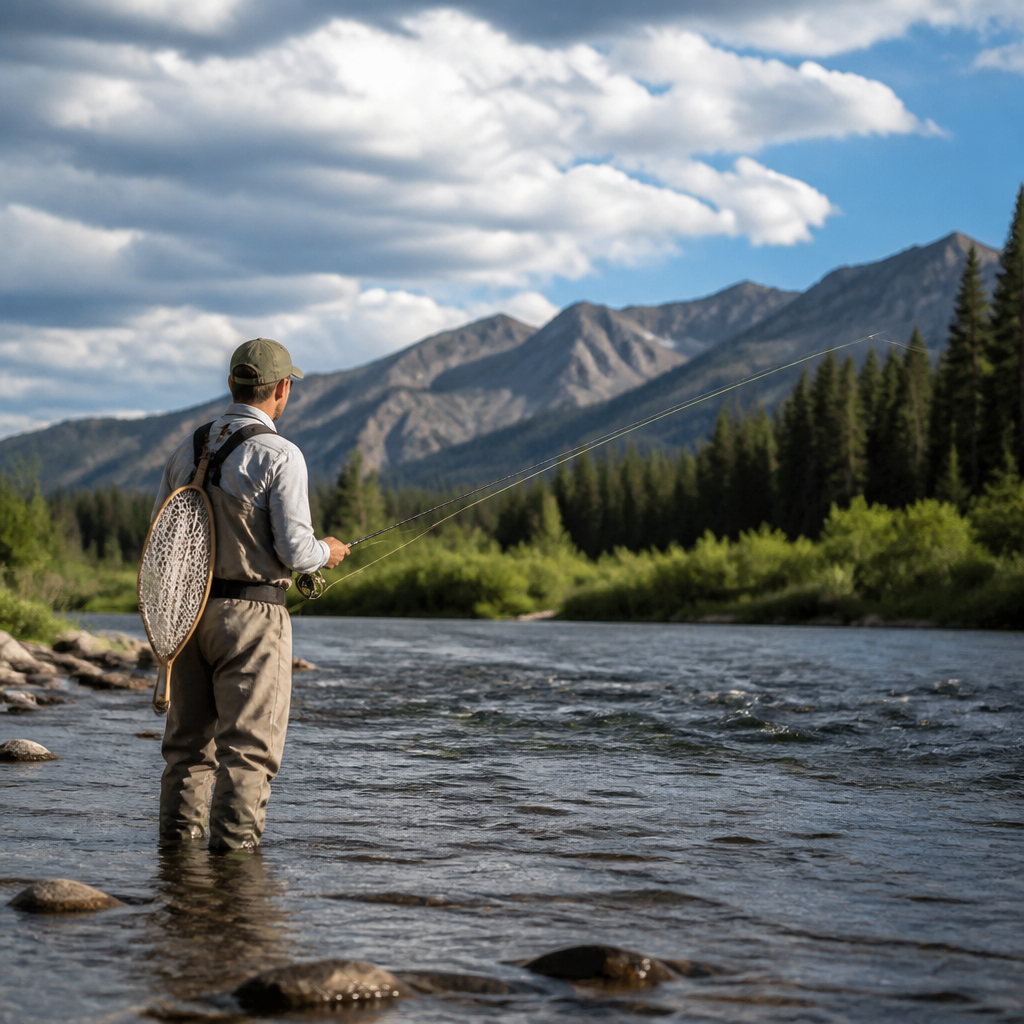
Dropper nymphing also deserves attention because it bridges styles. A Western indicator angler can use a balanced two-fly setup under a yarn indicator. A Euro nymph angler can run a jig point fly with a lighter perdigon on a tag. An angler fishing pocket water can high-stick a short line through seams with a heavy anchor and a soft hackle dropper. The principles are shared even when the tackle differs. That makes this topic central to any serious discussion of nymphing techniques: learning how multiple flies behave in current teaches you how trout position, how leaders transmit energy, and how small rigging changes affect sink rate and snag rate.
Why Multiple Flies Work in Current
Trout live in moving water that sorts food constantly. Heavier nymphs tumble close to the streambed, emerging insects rise through the column, and drifting larvae may suspend briefly in softer current. A single fly samples one lane and one depth most effectively. A dropper rig samples several at once. That is the core advantage. If your upper fly tracks six inches higher than the point fly, you have doubled your chance of intersecting a fish holding above rocks or just off the bottom. On rivers with mixed insect life, the second fly also broadens imitation. One cast can represent a size 14 golden stone nymph and a size 18 baetis nymph, which is far closer to what trout actually see than a one-pattern offering.
There is also a behavioral reason. Trout often respond to contrast. I have watched fish on clear tailwaters refuse a plain small nymph, then eat the trailing fly after a brighter upper fly passed first and appeared to create competition. The upper fly may act as a trigger, while the lower fly gets eaten because it looks vulnerable or isolated. This is common with combinations like a flashy Frenchie above a natural pheasant tail, or a worm pattern above a drab caddis pupa in stained flows. Multiple flies are not simply more hooks in the water; they create a sequence of cues, and trout frequently key on one fly because of what the other fly suggests.
Efficiency matters too. During short feeding windows, testing flies one by one wastes drifts. Guides use dropper nymphing because it shortens the learning curve on a beat. You can probe depth, profile, and color simultaneously, then refine. If three trout eat the tag fly in ten minutes, you have immediate evidence about size and level in the water column. If both flies snag repeatedly, the rig is too deep or too heavy. Every drift provides feedback. Good nymph anglers think of each pass as data collection, and a multi-fly system gathers better data than a single-fly rig in most subsurface situations.
Rigging Systems for Dropper Nymphing
The best rig depends on current speed, depth, and your preferred contact style. For indicator nymphing, a common setup starts with a tapered leader to 3X or 4X, then a section of tippet, the upper fly, another tippet section, and the point fly. The indicator is set at roughly one and a half to two times the water depth, adjusted for speed and turbulence. In classic freestone runs, many anglers place the heavier fly on point so it sinks first and keeps the rig stable. That arrangement is simple, legal in most places that allow two flies, and effective in water from knee deep riffles to chest deep slots.
Tag-dropper systems are especially useful in technical water. Instead of tying the second fly from the bend of the first, you leave a short tag when joining tippet sections with a blood knot or triple surgeon’s knot. The dropper rides off that tag, usually four to six inches long. This improves movement, reduces leverage during the fight, and often tangles less than bend rigs when using small flies. Tight-line anglers favor tags because the upper fly can hover naturally while the point fly anchors the system. Jig flies on tags also ride hook point up, which lowers snagging around cobble and ledge rock.
Bend droppers still have a place. They are quick to tie streamside and work well with robust flies like stoneflies, worms, and larger caddis larvae. However, the bend connection can restrict motion of the upper fly and create awkward angles with tiny hooks. On spring creeks and heavily pressured tailwaters, I generally prefer tags for flies smaller than size 16. For bigger searching rigs in rough water, bend droppers are perfectly practical. The key is not dogma but function: your rig should sink efficiently, drift naturally, and land fish without constant tangles.
| Rig style | Best use | Main advantage | Main limitation |
|---|---|---|---|
| Indicator with point and dropper | Runs, seams, deeper buckets | Excellent depth control at distance | Can drag in complex currents |
| Tag-dropper tight-line rig | Pocket water, riffles, short to medium range | Direct contact and fast strike detection | Less efficient on long downstream drifts |
| Bend-dropper rig | Quick changes, larger flies, stained water | Simple streamside setup | More leverage and occasional tangles |
| Three-fly rig where legal | Searching broad insect menus | Maximum coverage of depth and pattern | More tangles, slower casting, regulation limits |
Choosing Flies, Weight, and Spacing
Good fly pairing starts with role assignment. In most two-fly rigs, one fly is there primarily to sink the system or match the dominant large food form, and the other is there to match smaller prey or add a trigger. Productive anchors include tungsten jig stones, perdigons, and heavy hare’s ear variants. Productive droppers include pheasant tails, zebra midges, caddis pupae, soft hackles, and small perdigons. The exact patterns matter less than profile, weight, and size. If fish are feeding on tiny baetis in winter, a size 18 or 20 dropper above a size 14 anchor often outfishes two large flies. In runoff, a size 8 stonefly with a San Juan Worm or hot-spot perdigon above it can be the better pair.
Weight must match current, not preference. Many anglers underweight because they dislike snags, but nymphs that drift above the feeding lane are simply not in the game. In moderate current, your point fly should touch bottom occasionally, not constantly. If it never ticks, add weight or lengthen the indicator depth. If it hangs every cast, lighten the point fly, shorten the drop, or adjust angle. Tungsten beads sink faster than brass, and slim perdigon bodies penetrate quicker than bushier dubbed flies. External split shot remains useful, especially when regulations or fly sizes make bead weight insufficient. The old idea that shot is somehow less sophisticated than weighted flies ignores physics; depth is nonnegotiable.
Spacing between flies affects both sink and presentation. Twelve to twenty-four inches is a practical starting range for most trout rivers. Shorter spacing keeps the flies in similar lanes and helps in pocket water where drifts are brief. Longer spacing expands vertical coverage in smoother runs and deeper slots. I often begin with about sixteen inches in riffles and twenty inches in glides, then adjust based on where fish eat and how the rig behaves. If the upper fly gets strikes and the lower does not, the system may be too deep, too heavy, or simply telling you trout are feeding above bottom. If the point fly takes all the fish, shorten slightly and get both flies closer to the productive lane.
Presentation, Strike Detection, and Common Mistakes
Presentation decides whether a dropper rig works. The standard goal is a dead drift that matches current speed at the level where trout are feeding. Cast slightly upstream or up-and-across, mend early, and remove slack without pulling the flies. Under an indicator, the drift should be controlled from the indicator back to the rod tip; under tight-line contact, the leader angle should stay connected but not tight enough to lift the flies. In either style, the first third of the drift is usually about sinking, the middle third about fishing, and the final third about managing lift or swing. Many takes happen as the flies rise at the end, especially with caddis pupae or soft hackles.
Strike detection is partly visual and partly tactile. With indicators, watch for stalls, hesitations, sideways movement, or subtle dips that differ from current rhythm. With contact rigs, watch the sighter and trust any unnatural pause. I set the hook on almost everything suspicious because trout can inhale and reject a nymph faster than most anglers react. The cost of an extra hook set is low; the cost of hesitation is a missed fish. Barbless hooks and compact motions help. A short, crisp lift is usually enough. Sweeping too hard with two flies often creates tangles or breaks the finer tippet section first.
The most common mistake is fishing too fast. Anglers rush from pocket to pocket and never let the flies reach depth before they start the next cast. The second mistake is poor line control, especially too much slack between rod tip and indicator or between sighter and flies. Third is overcomplicating fly choice while ignoring depth and drift. Fourth is using mismatched hooks and tippet diameters that twist the rig. Finally, many anglers fail to check regulations. Some waters limit the number of flies, prohibit added weight, or require single barbless hooks. A smart nymphing strategy always begins with legality, then mechanics.
Adapting Dropper Nymphing to Water Types and Seasons
Freestone rivers reward a mobile approach. In pocket water, I prefer a shorter leader, a heavy point fly, and a compact dropper spacing so the rig sinks quickly and remains easy to steer around boulders. High-sticking short drifts through likely slots is often better than long casts because drag develops quickly in broken currents. Tailwaters call for more precision. Fish hold in softer seams, inspect flies longer, and often prefer smaller patterns. There I lengthen tippet, reduce fly size, and use tag droppers for cleaner drifts. Spring creeks are even less forgiving; thin tippet, small natural nymphs, and careful wading matter more than extra weight.
Season changes the menu and the rig. Winter trout usually hold slower and feed selectively on midges and small baetis, so lighter droppers and finer tippet become important, though the point fly still needs enough mass to reach the lane. Spring runoff often favors larger, darker patterns, worms, eggs below spawning zones where legal, and heavy anchors that punch through fast water. Summer brings diverse hatches, making a multi-fly rig especially useful: a caddis pupa with a mayfly nymph, or a small attractor paired with a technical natural. In fall, trout often feed aggressively before winter, and stonefly nymphs, sowbugs on fertile tailwaters, and baetis combinations can all be strong.
This makes dropper nymphing the ideal hub within nymphing techniques. It teaches fly selection, weight management, leader construction, drift control, and seasonal reading in one system. From here, anglers can branch into specialized topics such as indicator placement, Euro leader formulas, fishing split shot effectively, choosing tungsten versus brass beads, targeting pocket water, or matching specific mayfly and caddis hatches subsurface. The core lesson remains consistent: use multiple flies to ask the river better questions, then let trout answer with their behavior.
Dropper nymphing is effective because it multiplies information without sacrificing presentation. By covering more than one depth and food form in the same drift, you learn faster, adapt faster, and keep your flies in front of more trout. The best rigs are not complicated. They are balanced systems built around current speed, water depth, legal constraints, and a clear role for each fly. One anchor or point fly controls depth. One dropper broadens imitation or adds a trigger. The rest comes down to leader design, spacing, and disciplined line control.
For anglers building a complete understanding of nymphing techniques, this method belongs at the center. It connects indicator tactics with tight-line contact, translates across freestones, tailwaters, and spring creeks, and scales from simple two-fly setups to more technical tag systems. It also teaches the most important truth in subsurface fishing: trout feed where the drift is right, not where the angler hopes it will be. If your flies are not in the correct lane at the correct speed, pattern changes rarely save the day.
Start simple on your next trip. Fish one heavier point fly, add one complementary dropper, and pay close attention to depth, spacing, and strike detection before changing patterns endlessly. Keep notes on which fly gets eaten, where in the drift the take happens, and how current speed affects contact. Those observations will improve every other nymphing method you use. Master dropper nymphing, and you build a practical foundation for consistent trout fishing in nearly any river condition.
Frequently Asked Questions
What is dropper nymphing, and why do anglers use multiple flies on the same leader?
Dropper nymphing is a subsurface trout-fishing setup that uses two or more flies tied on the same leader so the angler can present different patterns and depths during the same drift. In most cases, the fly at the very end of the tippet is called the point fly, while the upper fly is the dropper. This arrangement allows anglers to imitate more than one food source at once, such as a mayfly nymph paired with a midge, caddis larva, or attractor pattern. It is one of the most effective ways to speed up the process of finding what fish are feeding on because trout can show a preference for one size, color, or profile over another on any given day.
Another major advantage of dropper nymphing is depth coverage. One fly can ride deeper while the other tracks slightly higher in the water column, which is especially useful in rivers where trout shift feeding lanes based on current speed, water temperature, and insect activity. Instead of guessing a single perfect depth, anglers can fish a broader range with one cast. This makes dropper nymphing a highly versatile tactic for everything from pocket water and riffles to deeper runs and seams. In practical terms, it helps anglers search efficiently while still maintaining a controlled, natural presentation that trout are willing to eat.
How should a standard dropper nymph rig be set up?
A standard dropper nymph rig usually begins with a leader suited to the water type and fishing method, followed by a tippet section that carries the flies. The point fly is tied to the end of the tippet, and the dropper fly is attached above it, often using a tag end or a separate piece of tippet tied from the bend or knot area, depending on personal preference and local conditions. Many anglers space the dropper roughly 12 to 24 inches above the point fly, though the exact distance can be adjusted based on water depth, current speed, and how close together the food forms naturally appear.
Weight and strike detection are also important parts of the system. Split shot may be added above the flies if extra sink rate is needed, and a strike indicator or tight-line contact method may be used to monitor takes. In deeper or faster water, the point fly is often the heavier pattern because it helps sink the entire rig and keeps the upper fly in the zone. In shallower water, a lighter setup can drift more naturally and reduce snagging. The key is balance: the flies need to reach productive depth without becoming so heavy or tangled that drift quality suffers. A well-built rig should turn over cleanly, sink efficiently, and keep both flies fishing rather than spinning or riding unnaturally.
How do you choose the best point fly and dropper fly combination?
The most effective combinations usually pair flies that serve different jobs. A common approach is to make the point fly the anchor pattern: something heavier, slightly larger, or more likely to get down quickly. This might be a beadhead stonefly, hare’s ear, pheasant tail, or other confidence nymph. The dropper fly is often smaller, lighter, or more specific to what trout may be feeding on higher in the drift, such as a midge, emerger-style nymph, or slim mayfly imitation. By combining a searching pattern with a more selective pattern, anglers give trout more than one reason to eat.
Fly selection should also match river conditions and seasonal food sources. If trout are feeding opportunistically, an attractor-style point fly with a natural dropper can be a smart starting point. If fish are clearly keyed in on a hatch or a narrow size range, both flies can be chosen to imitate that exact forage at slightly different stages or sizes. Color contrast can also help. For example, pairing a darker point fly with a lighter or flashier dropper can reveal preferences quickly. The goal is not just to fish two random patterns, but to create a combination that covers depth, profile, and behavior in a logical way. When one fly consistently outperforms the other, that information becomes a valuable clue for refining the rig.
When is dropper nymphing most effective, and what water types does it fish best?
Dropper nymphing is at its best when trout are feeding below the surface and conditions call for versatility. That includes cold water periods, non-hatch hours, stained flows, and many everyday river situations where fish are not rising but are still actively feeding on drifting insects. It is especially effective when anglers need to locate the feeding depth quickly or when multiple food forms are present at the same time. Because trout often shift between bottom-oriented nymphs, emerging insects, and suspended larvae, a multi-fly rig gives you a better chance of matching what is happening in real time.
As for water types, the method excels in riffles, runs, seams, pocket water, and moderate-depth pools where currents create distinct feeding lanes. In pocket water, the added searching capability helps cover many micro-holding lies efficiently. In longer runs, the two-fly setup can probe different levels as the rig drifts through changing current speed and bottom contour. It can also be very productive in tailwaters and freestone rivers alike, provided the rig is adjusted to suit flow and depth. The only real limitation is when the water is so shallow, weedy, or snag-filled that multiple flies constantly foul or hang up. Even then, careful spacing, lighter weight, and shorter drifts can often keep the system practical and effective.
What are the most common mistakes anglers make with dropper nymphing?
One of the biggest mistakes is overcomplicating the rig. Fishing multiple flies can be highly productive, but if the setup is too long, too heavy, or built with poor spacing, it becomes hard to cast, drifts poorly, and tangles constantly. Another common problem is using flies that do not complement each other. If both patterns are too large, too light, or meant to fish the exact same part of the water column, the angler gives up much of the advantage that dropper nymphing provides. Effective rigs are purposeful, with each fly helping cover a different possibility.
Depth control is another frequent issue. Many anglers either fish too shallow and never reach trout, or fish so deep that they drag the bottom nonstop. Strike detection can also suffer if there is too much slack or if the indicator is poorly positioned. In addition, anglers sometimes ignore the feedback the rig provides. If the dropper gets all the takes, that may signal fish are feeding higher or preferring a smaller pattern. If the point fly catches all the fish, trout may be hugging the bottom or responding to a larger meal. Finally, it is essential to know local regulations. Some waters limit the number of flies allowed, and those rules must always determine how the rig is built. The best results come from a clean, legal setup that is easy to manage, tuned to the water, and adjusted based on what the trout are telling you.