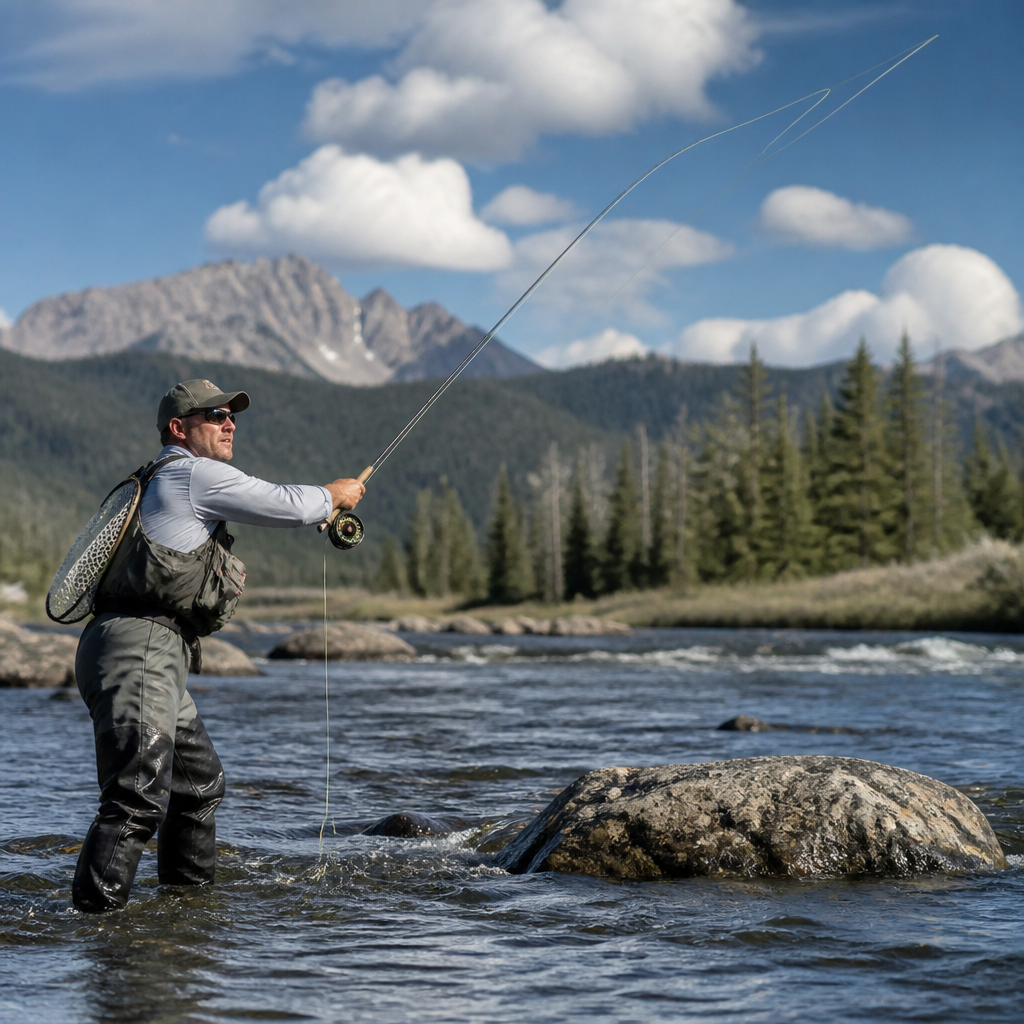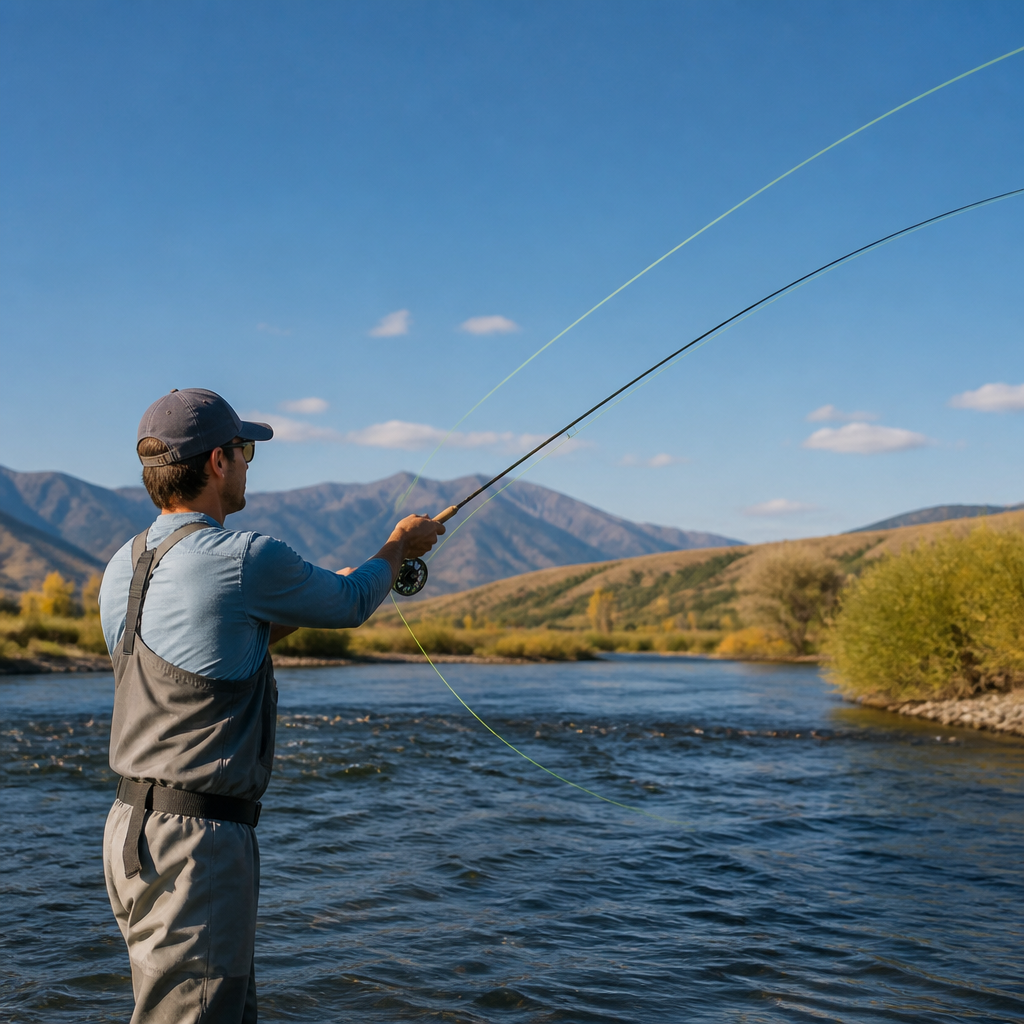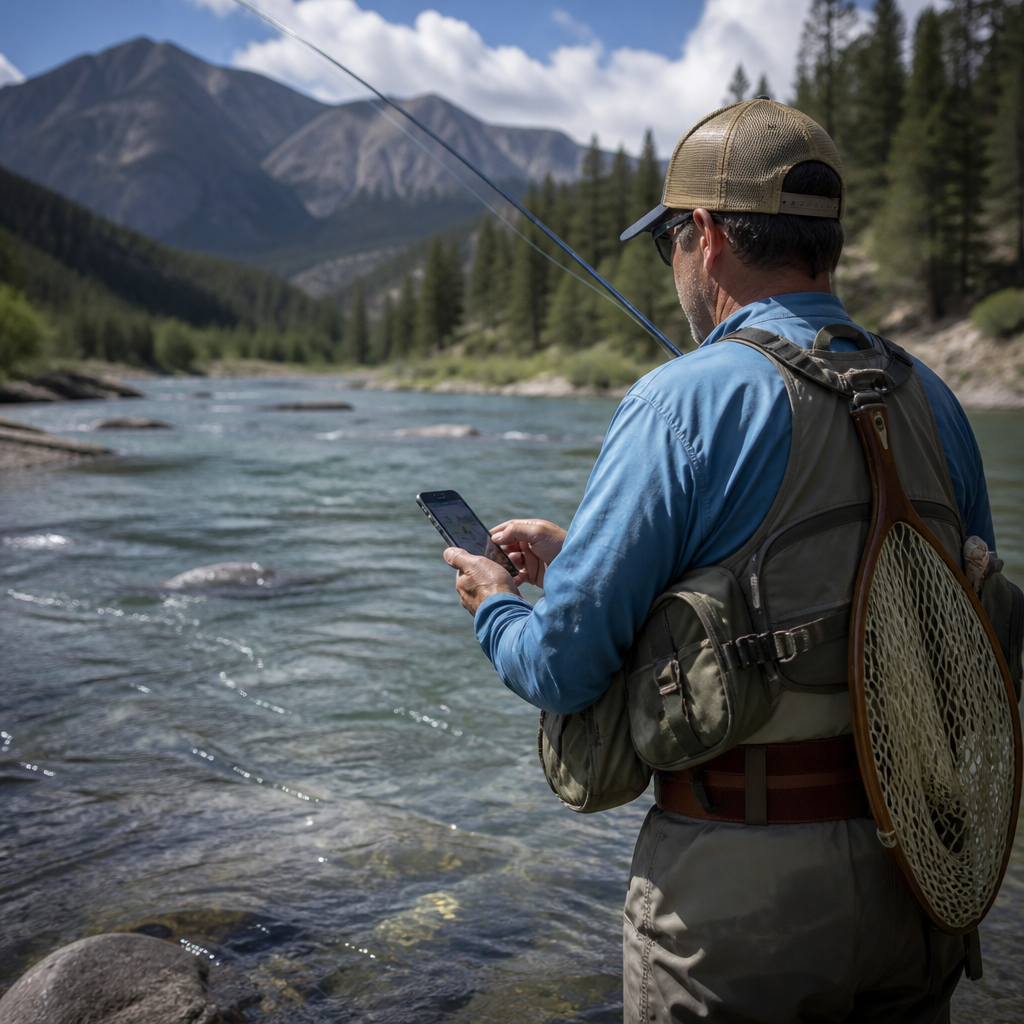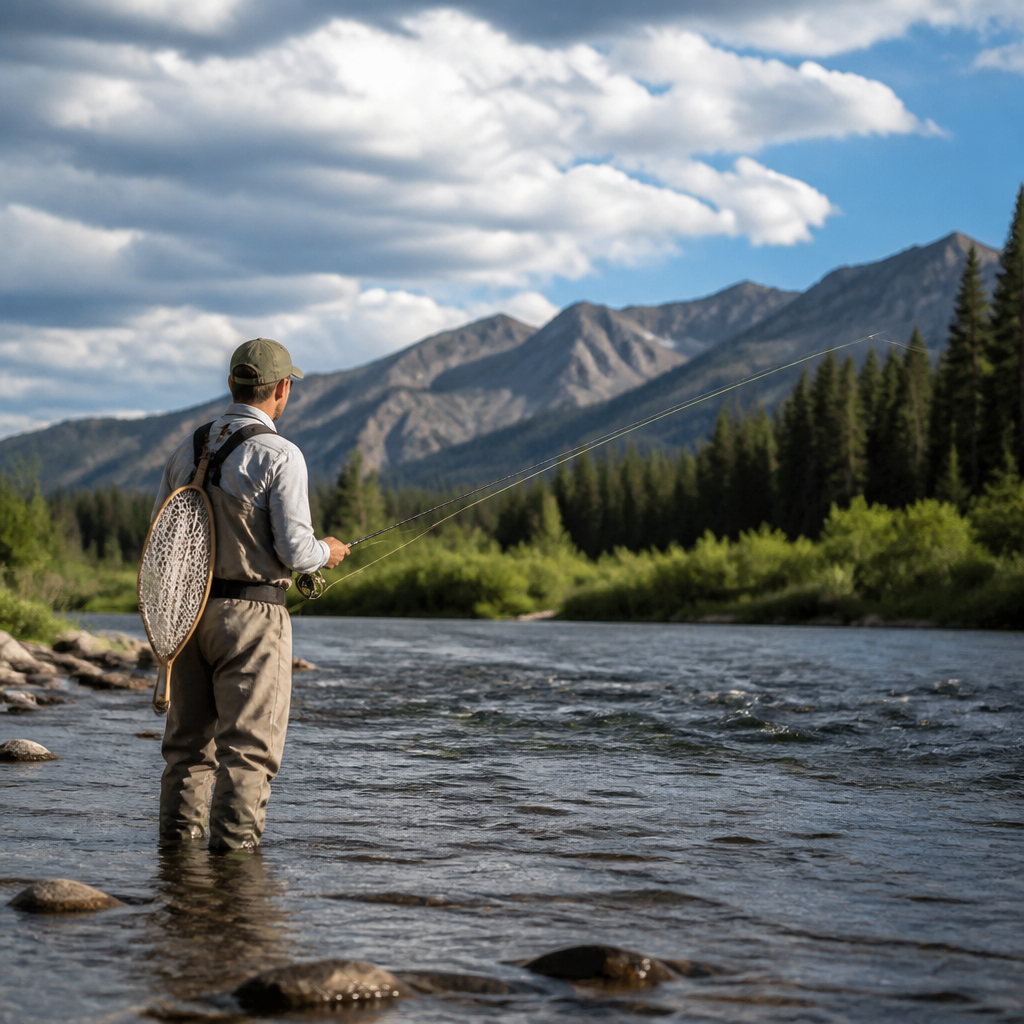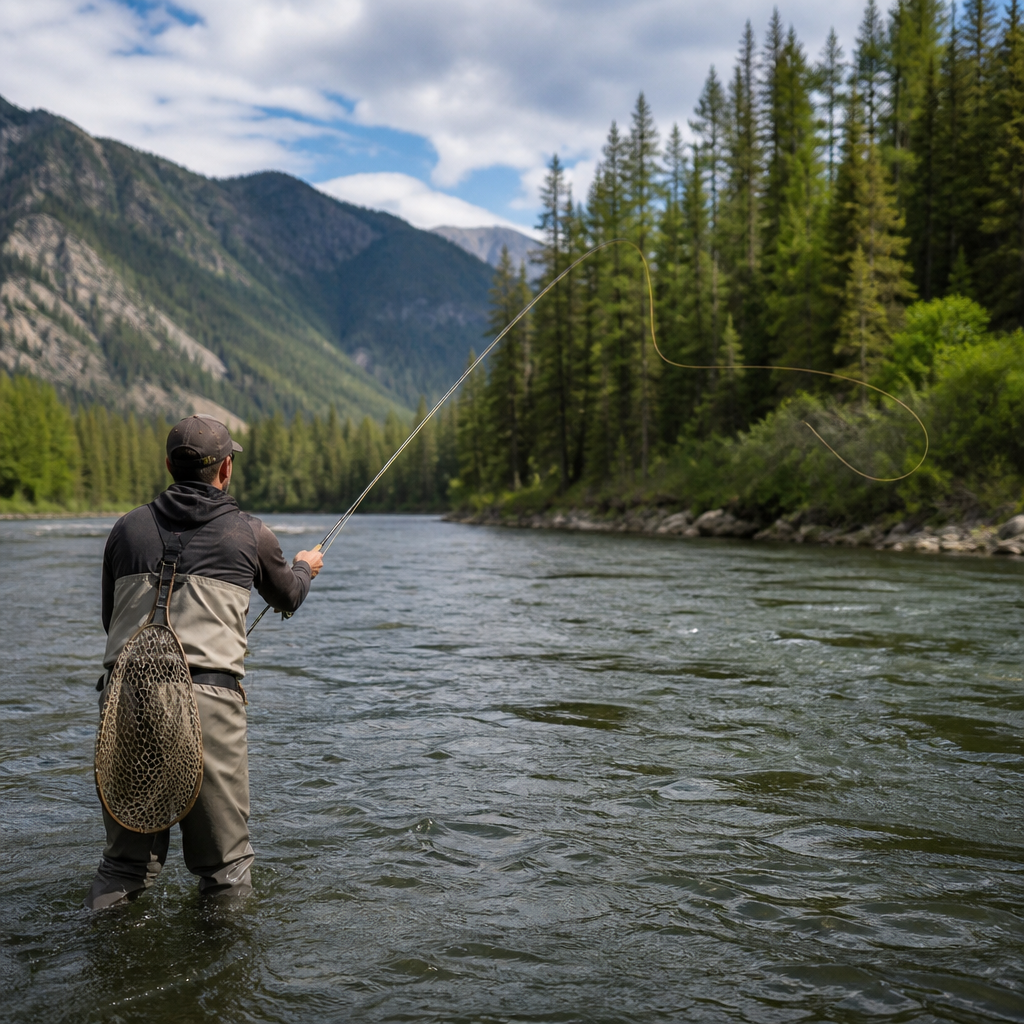
Nymphing in large rivers rewards anglers who combine efficient drift control, depth management, and careful observation. In broad, pushy water, trout and steelhead rarely feed everywhere at once; they hold where current speed, oxygen, shelter, and food delivery intersect. Nymphing means presenting subsurface imitations of aquatic insects, crustaceans, worms, or eggs at the depth and speed fish expect to see them. Large rivers add complexity because their many seams, shelves, channels, and microcurrents can defeat a good cast in seconds. Yet those same features create dependable feeding lanes that can be read and fished methodically.
I have spent enough dawns on tailwaters and freestones to know that success in big water is usually less about secret flies than about angle, weight, and lane control. Many anglers fish too shallow, too fast, or too far from where trout are actually stationed. Others cover water quickly without learning how a run is structured from bank to bank. A true large-river nymphing strategy starts with understanding hydraulics, then choosing the right rig, then adjusting constantly. When those pieces align, nymphing becomes the most consistent way to catch fish through changing flows, temperatures, and insect activity.
This hub article covers the essential nymphing techniques for large rivers, from reading holding water to selecting indicators, split shot, euro-style systems, and boat versus wade approaches. It also explains why certain methods excel in particular conditions, such as cold releases below dams, high spring runoff, low clear autumn flows, or winter midday windows. If you want a practical framework for fishing broad rivers with confidence, the core principle is simple: put the right fly at the right depth on the right line through the right lane, then repeat with disciplined adjustments.
Read Large-River Structure Before You Make the First Drift
The biggest mistake I see on large rivers is treating a wide run as one uniform piece of water. Trout do not. In large rivers, fish position according to current economy and food availability. Prime nymphing water often includes inside seams beside faster tongues, gravel shelves dropping into bucket water, submerged ledges, tailouts with defined walking-speed current, and soft cushions behind boulders or bridge pilings. On tailwaters, long slicks can hold fish surprisingly close to the bottom where a subtle depth change concentrates midge and mayfly nymphs. On freestones, broken pocket edges and transition water usually outproduce obvious whitewater.
Start by dividing the river into lanes. Near-bank soft water may hold fish during high flows, while the central channel can become the main feeding corridor when flows stabilize. Watch the speed of bubbles, foam, and leaf fragments to identify current differentials. If the surface is moving significantly faster than your rig can drift naturally beneath it, you will need more weight, a different angle, or a shorter presentation. Good nymph anglers map the run mentally: fast conveyor above, feeding seam in the middle, soft recovery water below. Once you can describe that structure in plain terms, your fly placement improves immediately.
Large rivers also demand seasonal reading. During winter, fish often compress into slower, deeper slots with stable temperatures. During spring runoff, they slide toward banks, eddies, and side channels where they can feed without burning energy. In summer, oxygen and temperature push fish toward riffle heads, deeper troughs, and dam-influenced currents. In autumn, spawning activity and bait movement can shift attention to gravel transitions and tailouts. Reading water is not abstract theory; it is the daily process of asking where fish can hold comfortably and still intercept subsurface food with minimal effort.
Build a Nymphing Rig That Matches Depth, Speed, and Visibility
Your nymphing rig for large rivers should match three variables first: water depth, current speed, and visual control. A general suspended rig starts with a 9-foot leader tapered to 3X, 4X, or 5X, depending on fly size, water clarity, and fish pressure. Add a buoyant strike indicator, split shot or tungsten putty, then one or two flies attached on tag droppers or in-line. In broad rivers, I prefer indicators that remain visible at distance without dragging the rig. New Zealand wool can land lightly, but foam or air-lock styles are easier to track in glare, chop, and mixed currents.
Weight is the true engine of nymphing success. In heavy current, tungsten-bead flies alone are rarely enough. Split shot placed 6 to 12 inches above the upper fly gives direct depth control, while additional anchor weight may be needed for deep slots over six feet. The rule I teach is straightforward: if you are not occasionally ticking bottom in likely holding water, you are probably too light. That does not mean dredging snag piles recklessly; it means using contact with the riverbed as feedback. Bottom ticks, brief stalls, and slower-than-surface drift signal that your rig has entered the feeding zone.
Leader length should also reflect river scale. On large rivers with long drifts, many anglers fish indicators too close to the flies. A rough starting point is one and a half to two times the water depth from indicator to point fly, then adjust for current speed. Faster flows require more distance because the rig needs time to sink. In clear shallower tailouts, shorten up for turnover and precision. Fluorocarbon tippet offers abrasion resistance and sinks faster than nylon, which helps with deep nymphing, though nylon can provide better shock absorption with lighter wire hooks and smaller fish.
Choose the Right Presentation Method for the Water in Front of You
There is no single best nymphing method for every large river. The most effective anglers switch between indicator nymphing, tight-line approaches, short-line high sticking, and boat-based dead drifts based on structure and access. Indicator nymphing shines when you need long, controlled drifts across broad seams or along shelf drop-offs. Tight-line methods excel in near-to-midrange runs where direct contact improves strike detection and depth control. High sticking remains deadly in broken pocketwater close to the angler. From a drift boat or raft, reach and repositioning allow repeated passes through productive lanes that are hard to cover effectively on foot.
What matters most is matching method to current complexity. If the run contains several speeds between you and the target lane, a floating indicator often gives cleaner drift tracking than a direct-contact setup, because conflicting currents will pull a tight line off course. If fish are stationed in a narrow slot twenty feet away, a tight-line approach can keep far more of the leader off the water and put the flies down quickly. On broad western tailwaters, I often alternate: indicator rigs for deeper shelves and long insides, then a compact euro-style setup along close seams or around structure where immediate strike transmission matters.
| Condition | Best Method | Why It Works |
|---|---|---|
| Wide seam, long drift, mixed surface chop | Indicator nymphing | Tracks drift at distance and keeps depth consistent across a broad lane |
| Near-bank slot, moderate depth, precise lane | Tight-line nymphing | Improves contact, strike detection, and sink rate with less line on the water |
| Broken pocketwater within rod length | High sticking | Maintains short, drag-free drifts through fast microcurrents |
| Deep center channel unreachable by wading | Boat-based dead drift | Extends access and allows repeated presentations through prime holding water |
Presentation angle is equally important. Across-and-up casts buy sink time before the flies reach the prime lane. Upstream lobs help in short pockets where immediate depth matters. Across-and-down drifts can work from a boat or when swinging the end of the drift intentionally, but they often speed up flies unnaturally if mending is poor. On large rivers, the best anglers are rarely making hero casts. They are making manageable casts that lead to controlled drifts, because a perfect depth profile beats extra distance almost every time.
Control Depth and Drift With Mends, Reach, and Lead
Once the rig lands, line control determines whether the flies drift naturally or skate above the fish. In large rivers, mend early and mend with purpose. An upstream mend right after the cast slows the indicator and allows the weighted rig to sink. Stack mends extend dead drift by feeding line upstream in controlled increments, especially useful when the target seam is farther away. Reach casts can place slack into the system before it lands, reducing the need for an immediate mend. Each of these tools addresses the same challenge: the top of the system is being pushed by currents different from those acting on the flies below.
Leading the rig is another underused skill. Lead means tracking the indicator or sighter slightly ahead of the flies without dragging them. Too little lead and the line bellies, delaying strike detection and lifting the flies. Too much lead and you pull the rig unnaturally. In practice, I watch the indicator carefully and move the rod tip just enough to stay connected while preserving a dead drift. The correct amount changes within a single run. As the drift enters softer water, reduce lead. As it hits a faster tongue, recover slack and guide the system so the flies continue at the speed of the subsurface current.
Depth control is never static. If you fish a lane thoroughly without touches, fish, or visible hesitation from the indicator, change something measurable. Move the indicator two inches, add a small shot, switch the point fly to a heavier pattern, or adjust your casting angle for more sink time. Small changes often matter more than fly swaps. On rivers like the Madison, Delaware, or South Platte, I have seen anglers waste an hour changing color when six inches of additional depth would have solved the problem in two drifts. Successful nymphing is disciplined experimentation, not random tinkering.
Select Flies That Match Food Sources and Trigger Responses
Fly selection for large-river nymphing should begin with the dominant food forms present in that system. In many tailwaters, midges, baetis, scuds, sowbugs, and small mayfly nymphs drive year-round feeding. In freestones, stoneflies, caddis larvae, mayfly nymphs, worms, and terrestrially washed food become more prominent. The best hub approach to nymphing techniques is to think in categories: attractor nymphs to gain attention, imitative nymphs to match common prey, and anchor flies to reach depth quickly. A Pat’s Rubber Legs, Walt’s Worm, Perdigon, Hare’s Ear, Pheasant Tail, Zebra Midge, or caddis pupa can all be excellent, but each serves a different job.
Use larger, heavier, high-contrast patterns when visibility is low, flows are high, or fish are opportunistic. Slim natural imitations excel in clear water and on pressured trout that inspect drifts closely. Pairing flies intelligently matters. A heavy point fly such as a jigged stonefly or tungsten perdigon gets the rig down, while a smaller trailing baetis or midge covers selective feeders higher in the column. During caddis activity, a pupa with a slight lift at the end of the drift can outfish static presentations. During midge periods below dams, size 18 to 22 patterns on fine tippet often outperform larger searching flies even in water that looks featureless.
Do not ignore eggs and worms where they are legal and biologically relevant. On Great Lakes tributaries, western tailwaters with spawning suckers, or rivers after rain, these patterns can be high-percentage choices. The key is context. Matching likely food does not mean copying one insect perfectly; it means presenting something fish are accustomed to eating at the depth where they are feeding. Confidence grows when you know why a fly is on the leader. Every pattern should answer a question: Is it getting us deeper, matching the hatch, adding motion, or providing a visual target in stained water?
Adjust to Flow Changes, Seasons, and Fish Behavior
Large rivers are dynamic systems, and nymphing success depends on adaptation. On dam-controlled rivers, a scheduled release can transform a gentle shelf into a heavy conveyor within minutes. That often pushes fish toward softer edges, behind structure, or into secondary channels. During rising water, increase weight, shorten your target water to protected seams, and prioritize safety over stubbornness. During dropping flows, fish may slide back toward midriver shelves and defined buckets. In low clear conditions, longer leaders, finer tippet, and smaller flies become more important, but stealth and approach angle matter just as much as terminal tackle.
Seasonal biology should guide timing. Winter fish commonly feed in short windows during the warmest part of the day and prefer slower presentations near the bottom. Spring pre-runoff can produce excellent nymphing on stones and baetis, while runoff itself often favors large dark patterns along banks. Summer mornings may reward deep nymphing before dry-fly activity develops, and hot afternoons can concentrate fish in oxygen-rich riffles or dam-cooled channels. Autumn brings both opportunity and caution: trout feed aggressively, but anglers should avoid disturbing redds and target deeper slots downstream of spawning gravel instead of walking through vulnerable areas.
Fish behavior also changes with pressure. On heavily fished rivers, trout become conditioned to common indicator drifts and oversized split shot plopping overhead. Downsizing indicators, lengthening drifts, repositioning shot, or approaching from a different angle can restore effectiveness. Boat traffic, wader shadows, and repeated false casts all reduce odds in clear water. I have learned to treat the first few drifts into a prime seam as the best chance at the largest fish there. Make those drifts count by setting depth before you enter the run, minimizing adjustments in the strike zone, and covering the lane methodically from near to far.
Avoid Common Mistakes and Build a Repeatable System
Most large-river nymphing failures come from a handful of repeated errors. Anglers fish too little weight, set indicators too shallow, cast farther than they can control, neglect mending, and leave productive water too quickly. Another common mistake is confusing motion for progress. Covering a mile of river badly teaches less than dissecting two excellent runs carefully. Build a repeatable system instead. Before each drift, identify the target lane, estimate depth, choose a cast angle that buys sink time, and decide where the first mend will occur. After each drift, ask what the rig told you. Did it tick bottom, hesitate, or ride too cleanly?
Strike detection deserves special mention because many trout eat nymphs subtly. Set on any unnatural pause, dip, sideways slide, or slight acceleration of the indicator. Tight-line anglers should react to stalls, twitches, or a straightening leader. In large rivers, delayed hooksets lose fish because slack accumulates quickly over distance. Keep hooksets compact and downstream-to-upstream with enough authority to move line but not so much that you launch flies. Strong barbless hooks, checked knots, and fresh tippet matter because deep fish and heavy currents expose weak links fast.
The main benefit of mastering nymphing in large rivers is consistency. When hatches are sparse, wind ruins surface presentations, or fish refuse streamers, a well-managed nymph rig still reaches feeding trout. Start by reading current lanes, then fish the right depth with a controllable presentation, then refine based on feedback from every drift. That process works on tailwaters, freestones, and tributary systems across seasons. If you want to improve quickly, choose one large-river run on your next trip and fish it systematically from top to bottom, changing only one variable at a time until the pattern becomes obvious.
Frequently Asked Questions
What water should I target first when nymphing a large river?
Start by eliminating water that looks impressive but is inefficient. In large rivers, fish usually do not spread out evenly across the entire width of the flow. Instead, trout and steelhead concentrate where current speed, depth, shelter, oxygen, and food delivery line up in their favor. That means your highest-percentage zones are often current seams, drop-offs, inside edges of heavy runs, softer lanes beside fast water, shelves that transition from shallow to deep, tailouts with defined walking-speed current, and pockets behind structure that break the force of the flow. Broad rivers can look overwhelming, but they become much easier to read when you focus on transitions rather than featureless water.
A good rule is to look for places where fish can hold comfortably while food comes to them. The classic example is a softer cushion next to stronger current. Fish can sit in the reduced flow, conserve energy, and slide a short distance to intercept drifting nymphs. Depth changes matter too. A trough that is only a foot deeper than the surrounding flat can hold fish consistently, especially in bright light or colder water. Likewise, a submerged boulder field, ledge, or gravel shelf can create small but important feeding lanes that are easy to overlook unless you study the surface carefully.
If you are new to a large river, break it into manageable sections. Fish the near bank first, then obvious seams, then mid-river shelves or channels if they are safely reachable. Many anglers waste time trying to cast to the far side simply because it is there, when productive fish may be only a rod length or two away along a depth change at their feet. Watch for subtle clues such as foam lines, slower slicks between broken currents, changes in surface texture, or spots where bubbles drift at a different speed. Those signs often reveal the underwater structure and current edges that matter most.
How do I know if my nymphs are drifting at the right depth in a big river?
Depth is one of the most important variables in successful nymphing, especially in large rivers where fish often hug the bottom to avoid heavy current and intercept food efficiently. If your flies are too high, you may drift over fish all day without getting touched. If they are too deep, you will snag constantly and lose efficiency. The goal is not simply “get deep,” but get deep enough to place the flies in the feeding zone while maintaining a natural drift. On many large rivers, that feeding zone is in the lower portion of the water column, sometimes just inches above the bottom.
One practical way to judge depth is by how frequently you make controlled contact with the riverbed. Occasional ticks are usually a good sign. Constant snagging means your rig is too deep or your weight is too concentrated. No contact at all in a deep, fast run may mean you are not getting down. Strike indicators, sighter systems, or tight-line feedback can all help, but the river itself provides the best information. Adjust until the flies drift naturally and you feel or see just enough bottom interaction to tell you the rig is in the right layer.
In big water, anglers often need more weight than they expect because surface speed can disguise how powerful the deeper current really is. Split shot placement matters as much as total weight. Weight positioned too far from the flies may delay sink rate; weight too close can make the presentation less natural in some situations. Indicator placement matters too. If the indicator is too close to the flies, the rig may never reach the target depth before the drift ends. If it is too far, casting and strike detection become less efficient. Make small changes one at a time, and let the response of the drift guide you. Fish often tell you quickly when your flies finally enter the correct depth band.
What is the best way to control drag and get a natural drift across complex currents?
On large rivers, drift control usually separates consistent nymph anglers from everyone else. Even a perfect fly pattern will be ignored if it moves unnaturally across conflicting currents. Big rivers create multiple current speeds between the bank, the seam, the center channel, and the bottom. Your fly line, leader, indicator, and flies may all be influenced by different flows at the same time. The key is to reduce the amount of line and leader that fast current can grab while setting up a drift that allows the nymphs to travel at the speed of the water where fish are holding.
That starts with approach and positioning. Instead of casting straight across and hoping for the best, try to stand where you can cast slightly upstream or quartering upstream into the lane you want to fish. This gives your flies time to sink and lets you lead the drift as it comes toward you. Mend early and deliberately, especially right after the cast, before drag fully develops. A stack mend, reach cast, or upstream repositioning of line can buy valuable seconds of natural drift. If you are indicator nymphing, keep as much line off conflicting surface currents as possible. If you are tight-line nymphing, maintain contact without pulling the flies faster than the subsurface current.
Short, efficient drifts often outperform long heroic ones in difficult water. In large rivers, anglers are tempted to make maximum-length casts, but long casts create more opportunities for drag, delayed strike detection, and poor depth control. You are usually better off fishing a prime seam thoroughly with repeated controlled presentations than covering a lot of water poorly. Watch the indicator, leader butt, sighter, or line angle carefully. If the rig starts to skate, hesitate, or accelerate relative to the natural flow, something is wrong. Refine angle, mending, and line management until the drift looks boringly natural. That is when nymphing starts to become productive.
How should I rig for nymphing in large rivers when current, depth, and fish holding zones change constantly?
A versatile rig is the best answer because large rivers rarely allow one static setup to solve every problem. In general, your rig should give you three forms of control: enough weight to reach the zone, enough adjustability to respond to changing depth and speed, and enough strike detection to notice subtle takes in turbulent water. Many anglers do well with an indicator rig built around a longer leader, a visible indicator, one or two nymphs, and removable split shot. That system is practical because it can be adapted quickly as you move from a softer inside seam to a deep central slot or a broken pocket along structure.
Fly selection should match both food sources and conditions. On large rivers, fish often see a broad menu that may include mayfly nymphs, caddis larvae, stonefly nymphs, midges, scuds, sow bugs, worms, and egg patterns depending on season and species. A larger, heavier anchor fly can help the rig sink and offer a strong visual target, while a smaller trailing fly can imitate the more common food items drifting naturally. However, the “best” pairing depends on water clarity, bottom color, pressure, and what insects are actually present. If fish are not responding, do not change flies blindly without first asking whether the presentation is drifting at the correct depth and speed.
As for rig adjustments, think in terms of systems rather than fixed formulas. If you move into deeper or faster water, add weight or lengthen the indicator-to-fly distance. If the drift becomes too snag-prone in shallower water, remove weight or shorten up. If takes are subtle, improve visibility and reduce slack. If fish appear concentrated in short feeding lanes, tighten the rig so you can turn over accurately and get down quickly. The most successful anglers on big rivers are rarely those with the most complicated setups; they are the ones who can diagnose what the water demands and make clean, efficient rig changes without wasting half the session retuning everything.
What are the biggest mistakes anglers make when nymphing large rivers?
The most common mistake is fishing too much water and too little structure. Large rivers can make anglers feel like they need to cover everything, but that usually leads to rushed presentations in low-percentage areas. Fish hold selectively. If you spend your time in featureless current with no defined seam, depth change, or shelter, you are depending on luck more than strategy. A smarter approach is to identify a few likely holding lanes and fish them methodically at multiple depths and angles before moving on. Efficiency matters more than sheer casting volume.
Another major mistake is underestimating depth and current. Many anglers do not use enough weight, do not set their indicator deep enough, or strip the flies out of the zone too quickly. In big water, the bottom current often moves differently from the surface, and fish frequently feed lower than people expect. Related to this is poor line control. A drift that looks acceptable on top can still be dragging badly underneath because the line is being pulled by a faster seam. If your presentation is not getting deep enough or is moving unnaturally, changing flies alone will not solve the problem.
Finally, many anglers fail to observe and adapt. They repeat the same cast, with the same rig, in the same lane, even when the river is clearly telling them to adjust. Successful large-river nymphing is an ongoing process of reading clues: Where are bubbles traveling? Where does the surface flatten? Where does the indicator stall? Where did you tick