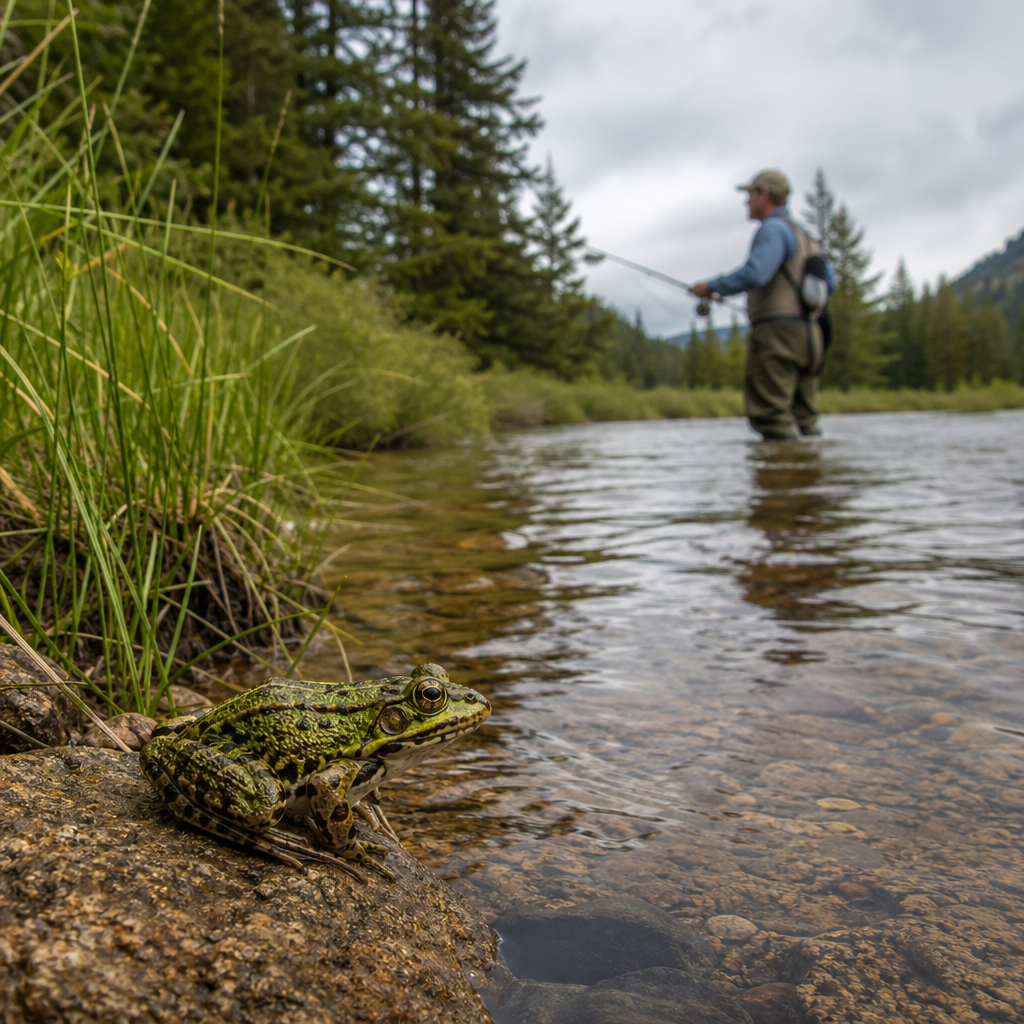
Fly fishing affects amphibians and reptiles in ways many anglers never see, yet these overlooked impacts matter because frogs, salamanders, turtles, lizards, and snakes are essential parts of healthy rivers, lakes, ponds, marshes, and riparian corridors. In practical conservation terms, wildlife protection means reducing direct harm, limiting habitat disturbance, and managing recreation so native species can feed, breed, move, and overwinter successfully. Amphibians are especially sensitive because their permeable skin and aquatic life stages expose them to water quality changes, handling stress, and shoreline trampling. Reptiles face different pressures, including nest disturbance, basking disruption, incidental hooking, and collisions with wading anglers or boats. After years around trout streams, spring creeks, and stillwaters, I have seen how small choices—where boots land, where packs are set down, how fish are landed, and how access paths are used—can influence wildlife far beyond the target species. This article explains those connections, shows where fly fishing creates risk, and outlines the wildlife protection practices that should anchor ethical angling in every season.
Understanding the impact of fly fishing on amphibians and reptiles is important because these animals provide measurable ecological services. Amphibians consume large numbers of insects, transfer nutrients between aquatic and terrestrial food webs, and serve as prey for fish, birds, and mammals. Reptiles regulate rodent and invertebrate populations, disperse nutrients, and often indicate the condition of wetlands and floodplains. Many species already face steep pressure from habitat loss, chytrid fungus, ranavirus, road mortality, invasive predators, altered flow regimes, and climate change. Recreational use rarely acts alone, but it can compound existing stressors at the exact places these species concentrate: shallow margins, side channels, backwaters, undercut banks, beaver ponds, and sunlit gravel bars. That is why wildlife protection in fly fishing should not be treated as a niche concern. It is central to conservation and ethics. A strong protection approach starts with species awareness, continues through low-impact technique, and extends to supporting regulations, habitat restoration, and site-specific stewardship across the waters anglers value most.
How Fly Fishing Interacts With Amphibians and Reptiles
Fly fishing influences amphibians and reptiles through both direct and indirect pathways. Direct effects include accidental hooking of turtles or water snakes, stepping on egg masses or juveniles in shallow margins, disturbing basking turtles from logs, and crushing cover objects such as cobbles, woody debris, and emergent vegetation. Indirect effects often matter more. Repeated shoreline access can compact soils, widen informal trails, and reduce bank vegetation that shelters frogs, toads, skinks, and snake species. Wading can resuspend fine sediments, which can smother amphibian eggs or reduce oxygen around developing embryos in slack-water habitats. Dogs accompanying anglers may harass basking reptiles or forage through breeding pools. Night fishing with headlamps can disrupt amphibian breeding behavior, especially during spring chorusing periods when adults gather in predictable shallow sites.
Hooks, tippet, and discarded line create another set of risks. Freshwater turtles can ingest baited or scented materials left by other users, but even in fly fisheries they can become entangled in monofilament or snagged while investigating movement. Line wrapped around limbs or necks can lead to infection, impaired movement, or drowning. Lead split shot, where still legal, adds toxic exposure concerns for wildlife. The U.S. Fish and Wildlife Service and many state agencies have long documented lead poisoning in waterbirds; the same precautionary principle applies in wetlands and shallow edges used by reptiles and amphibians. Choosing non-lead alternatives, packing out all tackle, and cutting away snagged line only when full retrieval is impossible are simple measures with outsized conservation value.
Why Amphibians Are Particularly Vulnerable
Amphibians respond quickly to environmental disturbance because their biology leaves little margin for error. Most species rely on moist skin for gas exchange and water balance, and many lay gelatinous eggs in shallow water attached to vegetation, sticks, or leaf litter. Those egg masses can be nearly invisible to an angler entering a pond edge or side channel. Salamander larvae, tadpoles, and recently metamorphosed juveniles often occupy the exact calm shallows where anglers launch float tubes, beach small craft, or rinse gear. In mountain streams, giant salamanders and larval stages shelter beneath rocks that anglers frequently move while crossing or freeing snagged flies. Replacing rocks incorrectly can destroy the cool, stable cavities these animals need.
Disease transmission is an equally serious issue. Chytridiomycosis, caused by the fungus Batrachochytrium dendrobatidis, has devastated amphibian populations worldwide, and ranavirus outbreaks can rapidly kill larvae and metamorphs in ponds and wetlands. Mud on boots, nets, waders, and vehicle tires can move pathogens, invasive plants, and invertebrates between watersheds. Anglers are not the sole vector, but they are mobile users of exactly the habitats where biosecurity matters. Drying gear thoroughly, cleaning with approved disinfectants when moving between sites, and avoiding transfers of water, mud, or vegetation are no longer optional best practices on sensitive waters. They are a baseline wildlife protection standard.
Reptile Risks Along Rivers, Lakes, and Wetlands
Reptiles encounter different patterns of disturbance tied to temperature, nesting, and basking behavior. Freshwater turtles use logs, banks, and emergent structures for thermoregulation. On heavily fished waters, repeated close approaches can flush them so often that feeding and basking time declines. During nesting season, anglers walking gravel bars and sandy banks may unknowingly crush nests or create trails that attract predators such as raccoons and foxes. Water snakes resting in shoreline vegetation are often treated as hazards and intentionally displaced, even though they are native predators that help keep food webs balanced. In desert and warm-climate fisheries, lizards and snakes use riparian cover near access points, where cooler microhabitats and insect concentrations are highest.
Accidental capture is also underappreciated. Turtles will readily strike nymphs, streamers, and small fish imitations, particularly in warm stillwaters. Once hooked, they are difficult to handle safely and should not be dragged long distances on light tippet. The right response is steady pressure, minimal fight time where feasible, and careful dehooking with forceps while keeping the animal supported and away from line tension that can worsen injury. Some situations require cutting the hook as close as possible or contacting wildlife rehabilitators. For snakes, the first rule is distance. Do not attempt handling for photographs or relocation unless there is an immediate safety issue and you are legally authorized and trained.
High-Risk Situations and Better Angling Decisions
Certain fishing scenarios repeatedly create wildlife protection problems. Spring pond edges are high risk because amphibians breed there before vegetation fully conceals egg masses. Summer backwaters concentrate juvenile frogs, basking turtles, and hunting herons in limited habitat. Low-flow periods expose side channels and isolate pools where reptiles and amphibians are easier to disturb. Night fishing around wetlands during warm rain events can coincide with mass amphibian movements. These conditions do not always require avoiding the fishery, but they do demand more deliberate decisions about access, timing, and technique. In my own fishing, the most effective habit has been slowing down at the water’s edge and scanning before the first step.
| Situation | Main Wildlife Risk | Best Practice |
|---|---|---|
| Entering shallow pond margins in spring | Crushing egg masses, tadpoles, and metamorphs | Use established entry points and avoid vegetated shallows |
| Wading side channels and backwaters | Disturbing salamander cover and turtle foraging areas | Stay in deeper current lanes when possible |
| Fishing near basking logs | Repeatedly flushing turtles | Increase casting distance and avoid close approaches |
| Moving between watersheds | Transporting mud, plants, and pathogens | Clean, drain, dry, and disinfect gear |
| Leaving clipped line or split shot behind | Entanglement and toxic exposure | Pack out all waste and use non-lead tackle |
Gear choices can lower risk. Rubber-soled wading boots often cause less transfer of organisms than absorbent felt, though local traction and safety considerations still matter. Barbless hooks simplify releases for both fish and incidental wildlife. Compact landing nets reduce beaching and dragging. A small zip bag for line clippings should be standard in every vest or sling pack. If you fish from a kayak, canoe, or raft, avoid dragging hulls across vegetated margins where amphibians shelter. Launch from durable surfaces when available. If children or new anglers are present, treat wildlife awareness as part of the day’s instruction rather than an afterthought. People protect what they are taught to notice.
Habitat Protection, Regulations, and Site Stewardship
The most durable way to reduce the impact of fly fishing on amphibians and reptiles is to protect habitat at the fishery scale. Buffer vegetation, large wood, undercut banks, clean gravel, off-channel wetlands, and natural flow variation all support fish while also sustaining herpetofauna. When managers harden banks, simplify channels, mow riparian strips to the edge, or disconnect floodplains, both target and non-target species lose refuge and productivity. By contrast, restoration approaches such as beaver-based process restoration, livestock exclusion fencing, native planting, culvert replacement, and reconnection of side channels improve water retention, cover, and breeding habitat across taxonomic groups. The same project that cools summer water for trout often benefits frogs and turtles immediately.
Regulations play a necessary role. Seasonal closures around spawning runs, amphibian breeding pools, or turtle nesting areas are justified where monitoring shows concentrated use and measurable disturbance. Access design matters just as much. Boardwalks, defined trails, boot-brush stations, signage at launch points, and parking setbacks reduce random trampling and create compliance through convenience. Local rules may also govern invasive species decontamination, lead tackle restrictions, and wildlife handling. Responsible anglers should know them before arrival, not after an incident. Clubs, guides, and conservation groups can reinforce compliance by building amphibian and reptile protection into trip briefings, volunteer days, and ethics statements. A fishery is healthier when its culture treats wildlife protection as ordinary behavior, not specialist advocacy.
Building a Wildlife Protection Ethic in Fly Fishing
Ethical fly fishing is not only about fish mortality or catch-and-release technique. It is about recognizing that every cast happens inside a living system shared with species that cannot absorb endless disturbance. The practical ethic is straightforward: stay on durable access routes, keep dogs controlled, scan margins before wading, avoid breeding habitats when they are active, use non-lead tackle, decontaminate gear, and leave no line behind. If you observe egg masses, turtle nests, road-crossing migrations, or unusual die-offs, report them to the relevant wildlife agency or local conservation organization. Useful conservation often starts with simple observations made by people who are on the water regularly.
For a hub page under conservation and ethics, the core lesson is clear. Wildlife protection in fly fishing extends beyond fish to the amphibians and reptiles that stabilize aquatic food webs, signal habitat quality, and enrich the places anglers value. Small actions at the water’s edge can either multiply stress or reduce it. The better path is not complicated, but it does require attention and discipline. Make wildlife-safe choices part of every outing, support habitat restoration and sensible regulations, and share these standards with other anglers. If you want healthier fisheries for the long term, start by protecting all the animals that make those waters whole.
Frequently Asked Questions
How can fly fishing affect amphibians and reptiles if anglers are mainly targeting fish?
Fly fishing can influence amphibians and reptiles in several indirect but important ways, even when anglers never intentionally interact with those animals. The biggest issue is disturbance. Frogs, salamanders, turtles, water snakes, and other species often rely on the same shorelines, backwaters, marsh edges, gravel bars, and vegetated banks that anglers use for access, wading, casting, and resting gear. Repeated foot traffic can crush egg masses, compact soft soils, damage shoreline vegetation, and alter the damp cover that many amphibians need to avoid drying out. Reptiles such as turtles and snakes may also be displaced from basking, nesting, or shelter sites when people frequently move through those areas.
There is also the risk of direct injury from hooks, line, and tackle. A frog or turtle can become accidentally snagged, and discarded monofilament can entangle animals moving through shallow water or vegetation. In some places, amphibians and reptiles may investigate bait-like flies, especially in warm months when feeding activity is high in shallow habitats. Even low levels of accidental contact can matter because many of these species already face pressure from habitat loss, pollution, invasive species, and climate stress.
Another overlooked impact is habitat degradation associated with recreation pressure. Informal trails to favorite fishing spots can erode streambanks, increase sediment in breeding pools, and reduce riparian cover that helps regulate water temperature and humidity. Amphibians are especially sensitive because their permeable skin makes them vulnerable to changes in moisture, temperature, and water quality. In short, the issue is not that fly fishing is uniquely harmful by definition, but that repeated recreational use in sensitive habitats can create cumulative effects on wildlife that depend on those same places for feeding, breeding, movement, and overwintering.
Why are amphibians considered especially vulnerable around rivers, ponds, marshes, and riparian fishing areas?
Amphibians are widely recognized as some of the most environmentally sensitive vertebrates, and that vulnerability is especially relevant in areas popular with anglers. Frogs, toads, salamanders, and newts often depend on a combination of aquatic and terrestrial habitats during different parts of their life cycle. They may breed in shallow water, lay eggs on submerged vegetation, develop as larvae in ponds or slow stream margins, and later disperse into damp forest floor, marsh edges, or streambank cover. Because they use so many habitat types in a relatively small area, disturbance to just one part of that system can affect survival and reproduction.
Their skin is a major reason for concern. Amphibians have permeable skin that plays a role in respiration and water balance, which means they are highly responsive to pollutants, sediment changes, and drying conditions. Bank trampling, vegetation loss, and erosion from repeated access can alter humidity and water chemistry in ways that are minor for fishers but significant for amphibians. Shallow breeding areas are particularly fragile. Egg masses attached to plants or resting in quiet water can be damaged by wading, shoreline entry, or dogs accompanying anglers. Larvae in warm, nearshore habitat may also be vulnerable to sediment stirred up by foot traffic.
Seasonality makes the problem even more important. During migration to breeding sites, amphibians may cross trails, roads, and shoreline approaches at predictable times, often at night or during wet weather. During hot or dry periods, they may depend on shaded riparian microhabitats such as leaf litter, root tangles, undercut banks, and coarse woody debris. If those features are repeatedly disturbed or removed to create easier casting space or bank access, local populations can decline even without any obvious one-time incident. That is why amphibians are often treated as indicator species: when they are struggling, it may signal broader ecological stress in the watershed.
What kinds of direct harm can fly anglers accidentally cause to turtles, snakes, frogs, and salamanders?
Direct harm usually happens through accidental contact rather than intentional mistreatment, but the consequences can still be serious. Hooks are one of the clearest risks. Turtles may strike at drifting flies or investigate movement in the water, and frogs can also be snagged in shallow margins. A deeply embedded hook can damage the mouth, throat, eyes, or limbs, and removing it improperly may increase injury. Water snakes and other reptiles can also become entangled if they move through line left in shoreline vegetation or submerged branches. Even small pieces of discarded tippet can create lasting hazards in wetlands and along streambanks.
Handling is another issue. People who are surprised by an accidental capture may instinctively hold an animal too tightly, keep it out of water too long, or try to pull a hook free with the wrong tools. Amphibians are particularly susceptible because their skin is delicate and can be harmed by rough handling, dry hands, sunscreen residue, insect repellent, or other contaminants on human skin. Reptiles can also suffer stress injuries during restraint, especially if they are dropped, squeezed, or mishandled while someone attempts to untangle line or take a photo.
There are also less obvious forms of direct harm tied to movement and site use. An angler stepping onto a log, root mat, or sunny bank may unknowingly disturb a basking turtle, a nesting turtle, a sheltering salamander, or a snake thermoregulating near the water. In breeding seasons, amphibian egg masses and larvae may be crushed underfoot in shallow edges. On ponds and marshes, launching or dragging gear through emergent vegetation can destroy hiding places and nursery habitat used by juvenile amphibians and reptiles. These impacts may seem isolated, but in heavily visited waters they can add up, especially for local populations with limited breeding sites and low recruitment.
What can fly anglers do to reduce their impact on amphibians and reptiles while still enjoying the water?
The most effective step is to fish with habitat awareness. Stay on durable access points instead of creating new informal trails through marsh edges, wet meadows, and vegetated banks. Avoid trampling shallow backwaters, flooded margins, and still side channels during spring and early summer, when amphibian eggs, larvae, and newly transformed juveniles are often concentrated there. If a bank is muddy, densely vegetated, or full of cover objects like logs and root masses, treat it as potential wildlife habitat rather than just unused casting space. Giving those areas a little room can make a meaningful difference.
Tackle management matters as well. Use barbless hooks or pinch barbs where regulations allow, and carry tools that make accidental hook removal quicker and safer. Never leave line, tippet, packaging, or damaged flies behind. Pack out every piece of monofilament, even very short scraps, because entanglement hazards persist long after a fishing trip ends. If an amphibian or reptile is accidentally hooked, minimize handling, keep the animal calm, and seek qualified wildlife or fisheries guidance if the hook is deeply embedded. It is better to respond slowly and carefully than to cause additional injury through rushed removal.
Anglers can also help by timing and behavior. Keep dogs under close control near breeding wetlands and basking areas. Limit repeated passes through the same shallow shoreline zone. Watch where you step when moving along rocks, logs, undercut banks, and sunny edges where reptiles often rest. In especially sensitive areas, follow seasonal closures, access restrictions, or habitat protection guidance from local agencies. Finally, support restoration and stewardship: volunteer for river cleanups, report discarded line, respect riparian plantings, and encourage fishing clubs to include amphibian and reptile considerations in ethics messaging. Responsible fly fishing and wildlife protection are fully compatible when people understand how these species use the landscape.
Why does protecting amphibians and reptiles matter for overall river and wetland conservation?
Protecting amphibians and reptiles is not just about safeguarding a few overlooked species; it is part of maintaining the full ecological function of rivers, lakes, ponds, marshes, and riparian corridors. These animals play important roles in food webs. Amphibians consume large numbers of insects and other invertebrates, while also serving as prey for fish, birds, mammals, and larger reptiles. Turtles can influence nutrient cycling and scavenging, and snakes help regulate populations of rodents, fish, and amphibians depending on the species. When these animals decline, the effects can ripple outward in ways that change predator-prey relationships and habitat quality.
They are also valuable indicators of environmental health. Amphibians, in particular, respond quickly to changes in water quality, hydroperiod, temperature, and habitat connectivity. If local frog or salamander populations are disappearing, that can point to broader problems such as sedimentation, shoreline degradation, chemical contamination, altered flows, or loss of riparian cover. Reptiles provide similar signals, especially species that depend on specific nesting sites, basking habitat, or overwintering refuges. Monitoring their condition can help managers identify stress before more visible ecosystem declines occur.
From a practical conservation standpoint, protecting these species means managing recreation so native wildlife can feed, breed, move, and overwinter successfully. Healthy fisheries do not exist in isolation from healthy shoreline and wetland communities. The same riparian vegetation that stabilizes banks and cools streams for fish also shelters amphibians and reptiles. The same intact marsh edge that supports insect life for fish also provides nursery habitat for frogs and turtles. In that