Fly fishing in sensitive ecosystems demands more than technical skill; it requires deliberate choices that protect the waters, fish, insects, plants, and wildlife that make the experience possible. Sensitive ecosystems include spring creeks, alpine lakes, tailwaters, estuaries, spawning tributaries, and small coldwater streams where habitat quality, water temperature, dissolved oxygen, and bank stability can shift quickly under human pressure. Environmental impact, in this context, means the direct and indirect effects anglers create through wading, fish handling, gear selection, travel, waste, and the way they access water. I have watched excellent fisheries decline from repeated small disturbances rather than one dramatic event, and I have also seen rivers recover when anglers adjust behavior early. That is why responsible fly fishing matters: every outing either adds stress or helps keep ecological systems resilient enough to support wild fish and public access.
Responsible fly fishing starts with understanding that ecosystems are networks, not just places where fish live. Trout depend on cold, oxygen-rich water, aquatic insects depend on clean substrate and stable flows, riparian plants hold banks together, and birds and mammals use the same corridors anglers walk every weekend. A single careless decision, such as trampling redds, fishing during thermal stress, or dragging gear infested with invasive organisms between watersheds, can affect far more than one fish. Conservation rules from agencies, catch-and-release guidance from organizations such as Trout Unlimited, and aquatic invasive species protocols promoted by state fish and wildlife departments all exist for good reason. The most ethical anglers learn the biology, follow local regulations exactly, and adopt low-impact habits even where rules are silent, because legality and responsibility are not always the same thing.
This article serves as the hub for environmental impact within conservation and ethics. It explains how fly anglers affect habitat, fish health, water quality, and other recreation users, and it outlines practical methods to reduce harm on every trip. If you want a simple definition, responsible fly fishing means catching fish while leaving the ecosystem functionally unchanged: no damaged spawning beds, no unnecessary fish mortality, no spread of invasive species, and no visible trace on the landscape. The following sections break that standard into specific actions you can use immediately, from trip planning and wading technique to fish handling, seasonal judgment, and post-trip gear care.
Know the Ecosystem Before You Fish
The most effective way to reduce environmental impact is to understand what kind of water you are entering and what pressures it already faces. A freestone river after spring runoff behaves differently from a spring creek during late summer, and an estuary flat has different vulnerabilities than a mountain stream. Before I fish a new area, I check agency regulations, current water temperatures, flow data from USGS gauges where available, seasonal closures, spawning calendars, and any local notices about invasive species, wildfire recovery, or restoration work. This pre-trip research prevents avoidable harm. For example, when temperatures climb above about 68 degrees Fahrenheit for trout, fight stress and delayed mortality rise sharply, especially when dissolved oxygen is low. In many waters, the responsible answer is not shorter sessions but no fishing at all during the warmest period.
Knowing the ecosystem also means recognizing critical habitat. Spawning redds appear as clean, bright patches of gravel, often in riffle tails or shallow runs. Wading through them can crush eggs and reduce recruitment for an entire year class. Cutbanks with dense vegetation may shelter juvenile fish, while undercut sedges, side channels, and woody debris often function as nursery habitat. In stillwaters, shoals with aquatic vegetation can support invertebrates and juvenile fish but are easily scarred by repeated foot traffic or careless boat landings. In salt or brackish systems, marsh edges are especially vulnerable to erosion. Responsible anglers study these features, then route themselves around them, even if avoiding them means sacrificing the easiest casting lane. This conservation and ethics approach treats access as a privilege conditioned by ecological awareness, not entitlement.
Minimize Habitat Disturbance While Wading and Accessing Water
Wading is one of the most underestimated sources of environmental impact in fly fishing. Every step can dislodge nymphs, compact fine sediment into gravel, break aquatic vegetation, and erode banks when anglers repeatedly enter at the same point. On heavily used rivers, informal trails and steep bank slides often start with one convenient shortcut and then widen into chronic sediment sources. Sediment matters because it fills spaces between gravel where insect larvae live and where trout eggs need water flow. Fine sediment also reduces feeding efficiency for sight-feeding fish and can alter plant communities along margins. Good wading therefore begins before you touch the water: use established access points, avoid undercutting banks, and stay on durable surfaces such as rock, gravel bars, or existing paths instead of crushing riparian vegetation.
In the water, move less, not more. Many anglers improve catch rates and reduce disturbance simply by covering less area and reading current better. Shuffle carefully in soft substrates, avoid tailouts during spawning periods, and never cross shallow gravel beds just because they look convenient. If you fish from a drift boat, raft, or kayak, beach only on durable shorelines and avoid dragging hulls through vegetated shallows. On small streams, kneeling on banks can collapse fragile edges and add silt after the next rain. Pack leaders, tippet clippings, food wrappers, and cigarette butts out every time; monofilament and fluorocarbon can entangle birds and persist for years.
| Impact Area | Common Angler Mistake | Lower-Impact Alternative |
|---|---|---|
| Bank access | Creating new trails down steep banks | Use established entry points and durable paths |
| Spawning habitat | Wading through clean gravel in riffle tails | Identify redds and route well around them |
| Warm-weather trout fishing | Fishing afternoons during high water temperatures | Fish cool mornings or skip the day entirely |
| Fish handling | Long air exposure for photos | Keep fish submerged and release quickly |
| Invasive species spread | Moving wet gear between watersheds | Clean, drain, dry, and disinfect as required |
Reduce Fish Stress Through Gear Choice and Handling
Catch-and-release is only conservation when released fish survive and continue normal behavior. Poor fish handling can cause delayed mortality even when a fish swims away strongly. The biggest drivers are long fights, warm water, excessive air exposure, deep hooking, and rough contact that removes protective mucus. I fish tackle balanced to end fights quickly, not to maximize sport at the fish’s expense. For trout and char, that often means tippet strong enough to pressure fish decisively and rods with enough backbone to control them in current. Barbless hooks simplify release and reduce tissue damage. Rubber or knotless landing nets are preferable to abrasive mesh because they support fish without stripping slime or splitting fins.
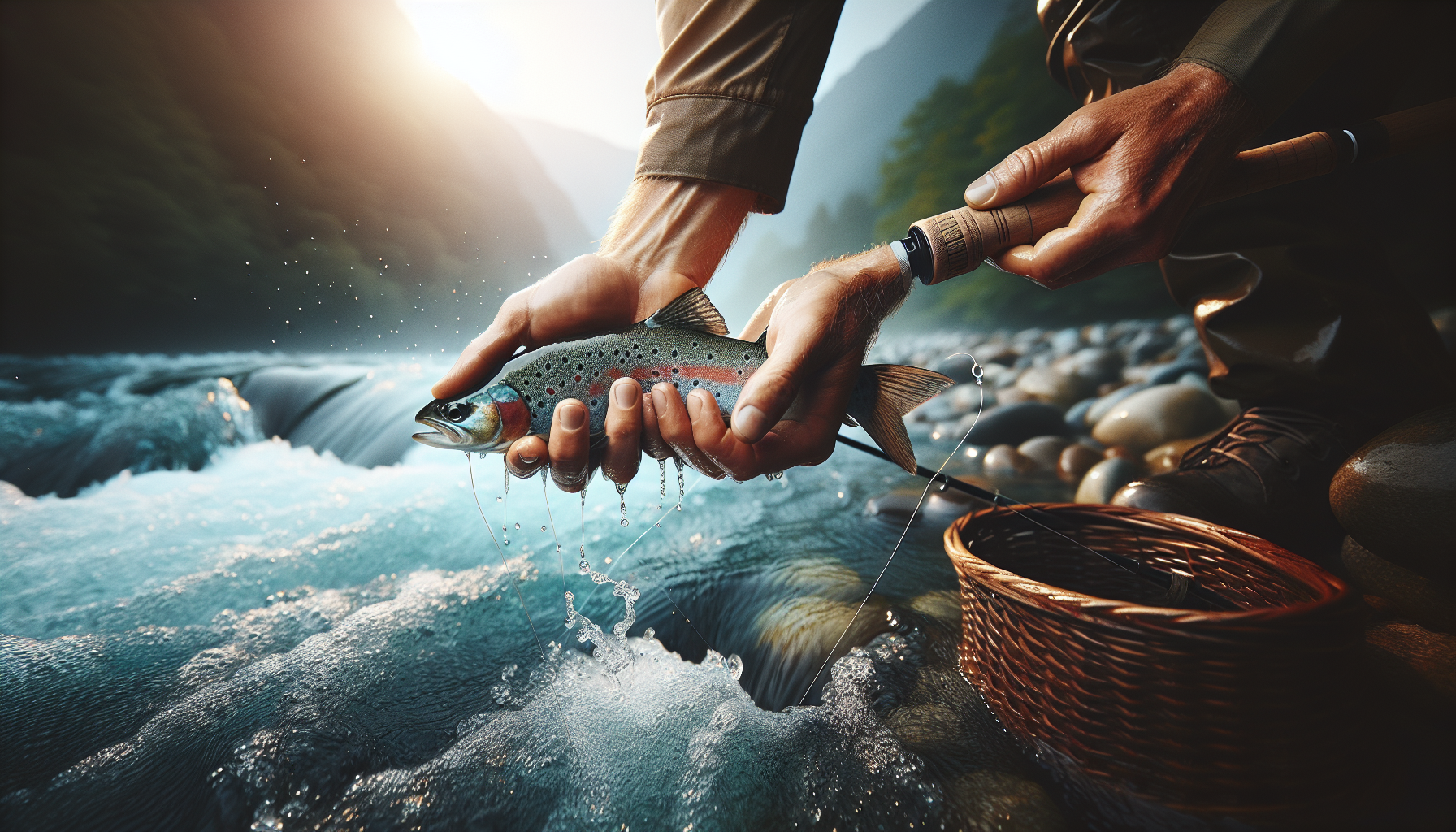
Handling rules should be simple and strict. Keep fish in the water while unhooking whenever possible. Wet your hands before touching them. Avoid squeezing the abdomen, especially on egg-bearing fish. Skip hero shots on hot days or with particularly fragile species such as grayling or large wild trout after a prolonged fight. Research commonly cited by fisheries agencies shows that air exposure beyond a few seconds materially increases mortality risk, particularly when fish are already physiologically stressed. If a photo matters, prepare the camera first, lift the fish briefly once, and return it immediately. Equally important, stop fishing locations where fish are stacked in thermal refuges near cold inflows. They may appear easy to catch, but they are using that habitat to survive, not to feed aggressively.
Prevent the Spread of Invasive Species and Pathogens
Aquatic invasive species are one of the clearest environmental impact risks linked to mobile recreation, including fly fishing. Didymo, New Zealand mudsnails, zebra and quagga mussels, whirling disease spores, and invasive plant fragments can all move on boots, nets, waders, boats, anchor lines, and trailers. Felt soles have been restricted in some places because they retain moisture and organisms so effectively, but any porous gear can transport life between waters. Once established, invasives can alter food webs, outcompete native species, foul infrastructure, and impose expensive long-term management costs. Prevention is dramatically cheaper and more effective than eradication, which is often impossible in open systems.
The standard protocol is clear: clean, drain, dry. Remove visible mud and plant matter on site. Drain boats, bilges, and live wells completely. Dry gear thoroughly between uses, following local guidance on how many hours are needed, because survival times vary by organism and climate. Where required, use approved disinfectants or hot-water decontamination stations. I keep a small brush, absorbent towel, and sealable container in my vehicle so I can deal with gear before driving away. If you travel across regions, dedicate equipment to certain watersheds when practical. Never release baitfish, aquarium species, or unused organic material into any waterbody. Even fly anglers who fish only with artificial flies can become vectors if they treat cleaning as optional.
Respect Seasonal Stress, Closures, and Wildlife Interactions
Environmental impact is often highest when fish and wildlife are already under pressure. Summer heat, winter anchor ice, low flows, post-fire sediment pulses, drought restrictions, and spawning migrations all reduce ecological margin for error. Ethical anglers plan around these conditions rather than insisting on access whenever they personally have free time. Hoot owl restrictions, full closures, sanctuary boundaries, and gear limitations are not bureaucratic inconveniences; they are tools to protect fish during vulnerable windows. In my experience, anglers who ignore these signals usually rationalize it by saying they will release everything. That misses the point. The issue is cumulative stress across thousands of encounters, not one individual’s intent.
Responsible behavior also extends beyond fish. Nesting birds, beavers, amphibians, and large mammals use the same corridors and shorelines. Giving wildlife space reduces disturbance and keeps anglers safer. On western rivers, for instance, stepping around side channels to avoid a waterfowl nest is just as much a conservation decision as using barbless hooks. On bear country streams, secure food and fishy waste properly and avoid conditioning animals to associate anglers with easy calories. Night fishing raises another set of tradeoffs because it may reduce heat stress on trout while increasing disturbance in habitats used by nocturnal wildlife. The right choice depends on the water, the species present, and local management guidance. Responsible fly fishing means evaluating those tradeoffs openly rather than assuming one rule fits every ecosystem.
Travel, Waste, and the Footprint Beyond the Water
Environmental impact does not start at the riverbank. It includes fuel burned to reach remote destinations, campsite practices, shuttle logistics, and what anglers buy and discard over time. A single long-distance road trip for famous water may produce more total environmental cost than a season of local fishing. That does not mean travel is inherently wrong, but it does mean choices matter. Carpooling, consolidating trips, supporting local guides who follow low-impact practices, and favoring durable gear over disposable accessories all reduce footprint. Wader repair kits, boot resoling, fly line cleaning, and rod maintenance extend product life and keep materials out of landfills. Many modern fly products rely on plastics, coatings, foams, and packaging, so buying less and using it longer is a direct conservation action.
On the water, leave-no-trace principles apply in practical terms. Human waste near small streams contaminates water and creates obvious conflict with other users. Camp at established sites where permitted, cook away from shorelines when wildlife is a concern, and avoid washing dishes or gear with soaps directly in the water even if labels claim biodegradability. Pick up not only your own trash but also the line, cans, and split shot others leave behind. Lead-free alternatives to traditional shot are worth using because lost lead persists in the environment and can be ingested by birds. The broader lesson is simple: conservation and ethics are not a separate part of fly fishing culture. They are the operating standard that determines whether our recreation remains compatible with healthy fisheries.
Build a Responsible Routine and Support Better Management
The best way to fish responsibly in sensitive ecosystems is to turn good intentions into repeatable habits. Check flows and temperatures before leaving home. Read seasonal regulations every trip, not once a year. Rig barbless, carry a thermometer, pack out all waste, disinfect gear, and decide in advance what conditions will make you stop fishing. I use personal thresholds for water temperature, crowding around spawning runs, and fish behavior that suggests stress rather than active feeding. This routine removes on-the-spot rationalization, which is where many poor decisions begin. It also makes responsible behavior visible to newer anglers, who often learn etiquette and conservation norms by watching what experienced people actually do.
Support for management matters too. Buy licenses willingly, respect creel surveys, report poaching or invasive species sightings, volunteer for river cleanups, and back habitat restoration led by credible local groups. Public agencies and nonprofits need data, funding, and community compliance to protect fisheries effectively. If a stream needs temporary closure, support it. If access is restricted to protect restoration plantings, honor it. Healthy fisheries are built as much by restraint as by participation. Fly fish responsibly by treating every cast as part of a larger relationship with the watershed. Learn the water, minimize disturbance, handle fish for survival, prevent invasive spread, and align your schedule with ecological reality. If you do that consistently, you protect the resource that keeps fly fishing worth doing. Start on your next trip by choosing one concrete change and making it permanent.
Frequently Asked Questions
What does it mean to fly fish responsibly in a sensitive ecosystem?
Fly fishing responsibly in a sensitive ecosystem means making decisions that reduce stress on fish, protect habitat, and minimize your footprint before, during, and after time on the water. In places like spring creeks, alpine lakes, estuaries, tailwaters, spawning tributaries, and small coldwater streams, ecological balance can be fragile. Water temperatures may rise quickly, dissolved oxygen can drop, banks can erode under repeated pressure, and fish may be especially vulnerable during spawning, migration, or low-flow periods. Responsible anglers recognize that success is not measured only by fish landed, but by whether the ecosystem is left as healthy as it was found.
In practice, that means following regulations closely, avoiding closed areas, respecting seasonal restrictions, and understanding why those protections exist. It also means choosing access points carefully, staying on established trails, avoiding trampling streamside vegetation, and keeping wading to a minimum in shallow or heavily used areas. Responsible anglers think beyond immediate convenience. They avoid walking through redds, disturbing nesting birds, crushing aquatic plants, or repeatedly casting to visibly stressed fish in warm water. The goal is to enjoy the fishery while preserving the insects, cover, water quality, and spawning habitat that sustain it.
How can anglers reduce harm to fish during catch and release?
Reducing harm during catch and release starts with shortening the fight and handling fish as little as possible. Use tackle strong enough to bring fish in efficiently rather than prolonging exhaustion. Extended fights increase lactic acid buildup and lower a fish’s chance of recovery, especially in warm water or low-oxygen conditions. Barbless hooks or pinched barbs can make release faster and cleaner, and many anglers in sensitive fisheries prefer single-hook setups for that reason. The less time a fish spends struggling, out of water, or being touched, the better its odds of survival.
Once the fish is close, keep it in the water whenever possible. Wet your hands before touching it, avoid squeezing the body, and never hold a fish by the gills or eyes. Rubber or knotless landing nets help protect slime coat and fins, while dry hands, rough mesh, and hot surfaces can strip away that protective layer and increase the risk of infection. If you want a photo, prepare everything in advance and lift the fish only briefly. A good rule is that if you are not ready for a quick shot, skip the picture. In especially sensitive ecosystems, the most responsible choice may be to release fish without removing them from the water at all.
It is also important to know when not to target fish. During periods of high water temperature, low flows, or visible spawning activity, even careful catch and release can carry significant risk. If fish are gulping at the surface, holding sluggishly in current, or concentrated in thermal refuges, conditions may already be stressful. In those moments, responsible angling may mean stopping altogether or moving to a more resilient fishery. Catch and release is only truly conservation-minded when fish have a realistic chance to recover.
Why is wading and bank access such a big issue in fragile waters?
Wading and bank access can cause more damage than many anglers realize because the most productive fishing water is often surrounded by the most vulnerable habitat. Repeated foot traffic compacts soil, breaks down streambanks, and destroys streamside vegetation that helps stabilize sediment, filter runoff, and shade the water. In small streams and spring creeks, where channels are narrow and banks are easily undercut, a few careless entry and exit points can quickly become long-term erosion problems. That sediment then enters the water, where it can smother insect habitat, reduce spawning success, and degrade water clarity.
Wading inside the stream can be equally damaging. Fish eggs buried in gravel can be crushed if anglers walk through redds, which often appear as lighter, cleaned patches in the streambed. Aquatic plants, juvenile fish, amphibians, and invertebrates are also vulnerable to boots in shallow margins and side channels. In alpine lakes and estuaries, delicate shoreline areas may host nesting birds, amphibian breeding habitat, or nursery zones for baitfish and juvenile gamefish. Stepping through these areas casually may seem minor in the moment, but cumulative pressure can alter habitat quality over an entire season.
The best approach is to use established access points, stay on durable surfaces, avoid cutting new paths, and wade only when necessary. If a fish can be reached from the bank or by repositioning thoughtfully, that is often the lower-impact choice. Move slowly, watch where you step, and learn to recognize spawning areas and fragile vegetation. Responsible anglers understand that where they walk matters just as much as where they cast.
What gear and preparation choices help minimize environmental impact?
Responsible fly fishing begins well before the first cast. Gear choices can affect fish survival, habitat protection, and even the spread of invasive species and pathogens. As noted earlier, barbless hooks, rubber landing nets, and appropriately balanced rods and tippet help reduce fight time and handling stress. Beyond that, anglers should inspect leaders, tippet clippings, split shot, and packaging carefully so nothing is left behind. Lost line and monofilament can entangle birds, fish, and small mammals, while improperly discarded materials can persist in the environment for years.
Cleaning and drying gear is another major part of preparation, especially when moving between watersheds. Waders, boots, nets, boats, and even fly boxes can transport invasive plants, algae, invertebrates, or fish diseases from one ecosystem to another. This is particularly important in sensitive fisheries where native species have limited tolerance for new competitors or pathogens. Following a clean, drain, and dry routine helps reduce that risk. In some regions, anglers also choose non-felt soles where regulations or local guidance recommend them to reduce organism transfer between streams.
Preparation also includes checking flows, temperatures, access rules, and conservation notices before heading out. If a river is under a hoot owl restriction, if a spawning tributary is closed, or if warm afternoon temperatures are pushing fish past safe stress thresholds, the responsible decision is to adapt your plan. Bring a thermometer, know the species-specific limits for the fish you target, and be willing to fish early, change locations, or cancel the outing. The anglers who have the lightest environmental impact are usually the ones who prepare the most carefully.
How do weather, water temperature, and seasonal fish behavior affect responsible fly fishing decisions?
Weather, temperature, and seasonal patterns should shape every responsible angling decision because they directly affect fish stress, habitat resilience, and the broader health of the ecosystem. In coldwater fisheries, rising water temperatures can reduce dissolved oxygen and make fish far more vulnerable to exhaustion and post-release mortality. A trout that appears strong enough to swim away may still die later if it was caught during a heat wave or low-flow period. In estuaries and tailwaters, changing salinity, current, or flow schedules can also influence how fish feed, migrate, and recover from handling.
Seasonal behavior matters just as much. During spawning periods, fish are already investing substantial energy in reproduction and are often concentrated in predictable areas. Targeting them aggressively can interrupt spawning, displace them from redds, or expose exhausted post-spawn fish to additional stress. Likewise, juvenile fish and newly emerged insects may be especially vulnerable during certain times of year, and streambanks can be more prone to damage during wet periods or after runoff. Responsible anglers pay attention to these cycles and avoid treating every day on the calendar as equally suitable for fishing.
A practical rule is to let conditions, not just personal availability, determine whether you fish. If water is too warm, fish elsewhere or not at all. If heavy runoff has made banks soft and vulnerable, avoid trampling them. If fish are spawning, give them space and steer clear of redds and staging areas. If wildlife is nesting near access points, choose another route or another stream. Responsible fly fishing is fundamentally adaptive. The most conservation-minded anglers are willing to change plans in response to what the ecosystem is signaling that day.