Fly fishing ethics begins with a simple idea: the fish, the water, and everyone who uses that water deserve respect. In practice, ethical fishing means making choices that reduce harm, protect habitat, follow the law, and preserve fair access for other anglers. That sounds straightforward, but anyone who has spent time on trout streams, warmwater rivers, alpine lakes, or tidal flats knows the decisions are rarely abstract. They happen at the boat ramp before sunrise, at the vise when you choose a pattern, while wading through spawning gravel, and in the seconds between hooking a fish and letting it go. Because fly fishing connects recreation directly to wild animals and public ecosystems, ethics is not a side topic. It is the framework that determines whether the sport supports conservation or slowly undermines it.
When anglers ask what ethical fishing practices actually include, I break the subject into six areas: legal compliance, fish welfare, habitat protection, social responsibility, honest representation, and stewardship. Legal compliance is the baseline, not the finish line. Fish welfare covers tackle choice, fight time, handling, and release methods. Habitat protection means understanding how boots, anchors, vehicles, and shoreline behavior affect streams, riparian zones, and spawning beds. Social responsibility includes etiquette, crowding, trespass, and the way anglers share limited space. Honest representation addresses topics like posting exact locations online, reporting catches accurately, and avoiding misleading claims. Stewardship is the active part of ethics: restoration work, advocacy, education, and support for organizations that protect fisheries.
This matters now because pressure on fisheries is rising. Better gear, easier travel, social media, detailed mapping apps, and year-round online reports can turn once-resilient waters into heavily pressured destinations almost overnight. At the same time, many fish populations face warmer water, lower summer flows, invasive species, pollution, and fragmented habitat. In that environment, small individual decisions scale quickly. A single angler stepping on redds may seem minor; hundreds doing it during a spawning run are not. One hero shot with a fish held high in freezing air may look harmless; repeated by thousands, it normalizes poor handling. Ethical fly fishing is how anglers close the gap between enjoying a resource and taking responsibility for its limits.
As a hub article for ethical fishing practices, this guide lays out the principles that shape good decisions across species and regions. The details differ between wild trout, bass, steelhead, carp, salmon, bonefish, pike, and panfish, but the core standards are consistent: know the regulations, prioritize the fish’s condition over the photo, protect the places that produce fish, and leave room for other people to enjoy the same water. If you build your habits around those standards, your fishing becomes more effective, more defensible, and more aligned with the conservation values that sustain the sport.
Legal compliance is the floor, not the ceiling
The first ethical obligation is to know and follow regulations exactly. That includes seasons, license requirements, tackle restrictions, harvest limits, special management zones, access boundaries, and species identification. Regulations are designed around biological goals such as protecting spawning fish, limiting mortality during stressful conditions, or distributing harvest sustainably. On trout rivers, for example, a delayed-harvest section may require single-hook artificial lures and mandatory release to maintain catch quality. In coastal fisheries, slot limits protect breeding-size fish by allowing harvest only within a narrow length range. Ignoring those details is not just unlawful; it defeats management built from survey data, creel counts, and population monitoring.
Still, legality alone does not answer every ethical question. In many places it is legal to fish during warm afternoons even when water temperatures are stressful for trout, legal to play a fish too long on light tippet, and legal to crowd another angler if you stay outside a vague distance. Experienced anglers know those actions can be technically lawful and still irresponsible. That is why ethical fishing practices start with regulations and then go further. I often tell new anglers to read the rulebook with a biologist’s mindset: ask what problem the rule is trying to solve, then avoid actions that recreate the same problem in loopholes the rule cannot practically cover.
Accurate species identification is especially important. Misidentifying a bull trout as a brook trout, a wild steelhead as a hatchery fish, or a protected native cutthroat as a stocked rainbow can lead to illegal retention or harmful handling. Field guides help, but so do agency identification pages, local shop advice, and paying attention before your trip. Ethical anglers prepare because uncertainty on the bank is often too late. If you cannot identify a fish confidently, the safest ethical response is to keep it in the water, minimize handling, and release it immediately.
Fish welfare should guide every catch-and-release decision
Catch and release is often presented as automatically ethical, but the reality is more nuanced. Releasing a fish alive is only part of the story; the relevant question is post-release survival and recovery. Research across salmonids, bass, and marine species shows that mortality rises with deep hooking, extended air exposure, high water temperature, excessive fight time, and rough handling. In plain terms, a fish that swims away is not always a fish that survives. Ethical catch and release therefore means using methods that reduce physiological stress and physical injury from the moment you make the cast.
Tackle choice matters. Barbless hooks or pinched barbs speed release and reduce tissue damage, especially when fish are hooked in delicate areas. Heavier tippet is often more ethical than ultralight presentations because it shortens the fight and lowers exhaustion. Rubber or knotless landing nets are better than abrasive mesh because they protect slime and fins. In my own fishing, changing from fine tippet to a slightly stronger setup in summer has consistently reduced fight times without meaningfully reducing eats, particularly on pocketwater trout and river smallmouth. The ethical gain is immediate: quicker releases, fewer fish rolling in shallow margins, and less fumbling with forceps.
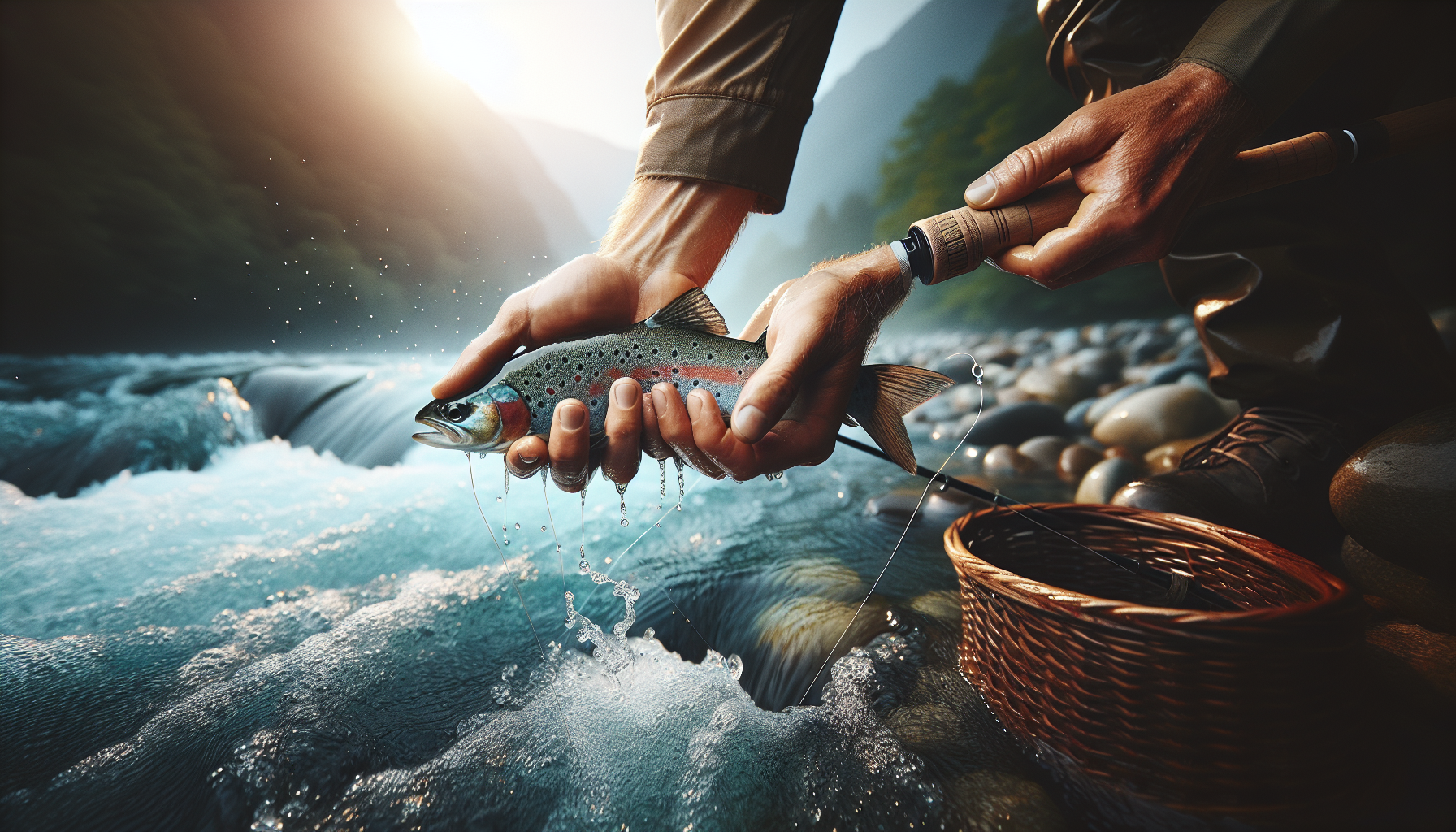
Handling technique is where many good intentions fail. The best default is simple: keep the fish in the water, wet your hands, avoid squeezing, support the body horizontally, and release quickly. Never put fingers in gills unless a specific fishery and species make that standard handling method appropriate, and avoid dragging fish onto rocks, hot sand, boat decks, or dry grass. Air exposure is one of the clearest preventable stressors. If you want a photo, have the camera ready first, lift the fish briefly, and return it immediately. A practical rule many guides use is that if preparation takes longer than the lift, the process was backward.
| Ethical practice | Why it matters | Better choice in the field |
|---|---|---|
| Pinch barbs | Speeds hook removal and reduces injury | Use forceps before fishing starts |
| Fight fish quickly | Lowers exhaustion and post-release stress | Use stronger tippet when conditions allow |
| Keep fish wet | Protects gills, slime coat, and recovery | Unhook fish in the net at water level |
| Avoid warm-water stress | High temperatures increase mortality | Fish early, carry a thermometer, stop when needed |
Temperature deserves special attention. Trout and salmon are coldwater fish with narrow thermal margins, and dissolved oxygen drops as water warms. Many responsible anglers use stream thermometers and set personal stop-fishing thresholds before they leave home. Agencies sometimes issue hoot-owl restrictions or full closures during heat events, but ethical anglers do not wait for emergency orders when conditions are obviously poor. The exact threshold varies by species and watershed, yet the principle does not: if fish are already physiologically stressed, adding a fight and release burden is hard to justify.
Habitat protection is part of fishing, not separate from it
Ethical fishing practices extend beyond the fish you touch to the habitat you walk through. Streams are not durable surfaces. Spawning redds, aquatic vegetation, undercut banks, side channels, and riparian vegetation can all be damaged by careless foot traffic, anchoring, or bank access. On salmon and trout rivers, redds often appear as clean, light-colored patches of gravel. Wading through them can crush eggs or displace developing embryos. The ethical response is to learn what redds look like, avoid them entirely, and reroute even if the best run is on the far side. The same logic applies in stillwaters where nesting bass guard beds in the shallows; repeatedly targeting visible spawners may be legal, but it can reduce reproductive success.
Boats create another layer of impact. Repeatedly beaching drift boats on vegetated banks, dragging rafts across fragile shorelines, or dropping anchors into eelgrass and river cobble can alter habitat over time. Ethical boat use means launching at designated sites, controlling where you stop, and understanding local no-wake or motor restrictions. In saltwater flats fisheries, prop scarring from running too shallow can damage seagrass for years. In river systems, cleaning boats, waders, and nets before moving between waters helps prevent spreading invasive species and pathogens. The long-running concern over felt-soled waders in some regions came from exactly this issue: gear can be a transport system for nuisance organisms if anglers do not disinfect and dry it properly.
Litter is the most visible ethical failure and the easiest one to fix. Tippet clippings, strike indicators, beverage cans, fly packaging, and cigarette butts persist in places that fish and wildlife rely on. Monofilament and fly line can entangle birds, turtles, and mammals. Responsible anglers carry a trash pocket, pick up what they see, and treat cleanup as standard, not exceptional. Stewardship starts with not making the place worse.
Etiquette, access, and community responsibility shape the angling experience
Many conflicts in fly fishing are social, not biological. Ethical anglers recognize that water is shared space governed by custom as much as regulation. Crowding another angler, low-holing on a steelhead run, running a boat through active wade anglers, or jumping into a rotation without asking can ruin a day even when no law is broken. Good etiquette begins with communication. Ask before entering a run, give more space than you think you need, and observe local rhythm. On some rivers anglers swing through pools in rotation. On spring creeks they may stalk slowly upstream with long visual spacing. Learning that rhythm is part of fishing well.
Access ethics matter just as much. Public water does not erase private property rights, and unclear access laws vary sharply by state and country. Crossing fences, parking across gates, or using informal paths through ranchland can jeopardize access for everyone when landowners respond by posting property or challenging easements. Ethical anglers verify access points, respect signage, close gates, avoid blocking roads, and thank landowners who allow passage. Fly shops, guide services, and state agency maps are often the best sources because they combine legal boundaries with local practice.
The digital version of etiquette now includes online behavior. Spot burning—publicizing precise locations of sensitive or small fisheries—can bring sudden pressure that a river or pond cannot absorb. A single viral post with a bridge name, run photo, and timing details may send dozens of anglers to fragile water by the weekend. Ethical sharing means being intentionally vague when publicity could harm the fishery, especially for small wild trout streams, urban carp ponds with limited bank access, surf zones with nesting birds, or juvenile migratory fish concentrations. Teaching techniques, seasonal principles, or regional patterns is useful; geotagging vulnerable spots often is not.
Stewardship turns ethical beliefs into measurable conservation outcomes
The strongest form of fly fishing ethics is active stewardship. That includes buying licenses and stamps that fund management, volunteering for river cleanups, supporting watershed groups, reporting poaching, contributing to habitat projects, and participating in citizen science. Agencies and nonprofits depend on angler involvement not only for money but also for eyes on the water. When anglers document fish kills, sediment pulses, barrier problems, invasive species sightings, or illegal harvest, they provide information managers may not catch quickly enough otherwise.
Organizations such as Trout Unlimited, Backcountry Hunters & Anglers, Bonefish & Tarpon Trust, Ducks Unlimited, local watershed councils, and state-level conservation groups show how recreational communities can translate passion into policy and restoration. Their work ranges from culvert replacement and dam removal to water quality monitoring and floodplain reconnection. I have seen small volunteer days produce outsized results: fencing a short riparian section to exclude livestock, planting willows to stabilize banks, or removing trash from an urban creek can improve habitat quality in ways anglers notice within seasons, not decades.
Education is part of stewardship too. Experienced anglers should teach beginners how to pinch barbs, identify redds, read regulations, and handle fish before the first big day out. That transfer of norms is how ethics persists. If you want better fisheries, model the behavior visibly: kneel at the waterline for photos, release fish quickly, and explain why you moved around a spawning area. People copy what respected anglers normalize.
Ethical fly fishing is not complicated because the principles are obscure; it is complicated because every trip presents tradeoffs between opportunity and restraint. The best anglers I know are not the ones who catch the most fish under any conditions. They are the ones who know when not to fish, when not to post, when not to step farther, and when to spend more time protecting a place than using it. That mindset keeps the sport honest. It also preserves what makes fly fishing valuable in the first place: wildness, challenge, access, and continuity between generations of anglers.
If you remember the core standards from this introduction to ethical fishing practices, you will make sound decisions almost everywhere. Follow regulations carefully. Treat fish welfare as the central test of your methods. Protect habitat with every step, launch, and wading choice. Respect access, local etiquette, and the limits of online sharing. Then go one step further by supporting conservation work directly. This hub is the starting point for deeper articles on catch and release, fish handling, stream etiquette, access rights, spawning-season decisions, and conservation advocacy. Use it as your baseline, apply it on your next outing, and help set a higher standard on the water.
Frequently Asked Questions
What does “ethical fly fishing” actually mean in practice?
Ethical fly fishing is the habit of making decisions that respect fish, habitat, regulations, and other people who share the water. At its core, it goes beyond simply asking what is legal and asks what is responsible. A choice can be technically allowed and still be poor stewardship if it causes unnecessary stress to fish, damages spawning areas, crowds other anglers, or degrades the experience for everyone else. Ethical fishing starts before the first cast, with decisions about where to fish, how to handle fish, what gear to use, and whether conditions are safe for catch-and-release.
In practice, this means learning local rules, understanding seasonal fish behavior, and adapting when conditions call for restraint. It may mean avoiding a stretch of river when water temperatures are dangerously high, skipping visible spawners even if they are easy targets, pinching barbs to reduce handling time, or deciding not to post a highly specific location online. It also includes respecting private property, giving other anglers space, and minimizing your impact at access points and along the bank. Ethical fly fishing is not about perfection or gatekeeping. It is about building a mindset of care, humility, and responsibility so the resource remains healthy and accessible long after a single day on the water is over.
How can anglers reduce harm to fish during catch-and-release?
Reducing harm during catch-and-release begins with shortening the fight and handling the fish as little as possible. Use tackle strong enough to bring fish in efficiently rather than exhausting them for sport. Barbless or de-barbed hooks make releases faster and cleaner, and they reduce tissue damage. Keep fish in the water whenever you can, especially while removing the hook. Wet your hands before touching a fish to protect its slime coating, avoid squeezing the body or gills, and support the fish gently if it needs to be steadied in current. Nets with rubber or knotless mesh are also helpful because they are easier on fins, scales, and protective mucus than traditional rough mesh.
Conditions matter just as much as technique. Fish released in very warm water, low flows, or after long fights may look fine but still die later from stress. That is why many experienced anglers stop fishing during heat waves or in rivers under thermal stress, even before mandatory closures are announced. Air exposure should be kept extremely brief, and photographs should never come at the expense of the fish’s recovery. If a fish is deeply hooked or clearly distressed, the most ethical choice may be to cut the tippet close rather than prolong the struggle. Good catch-and-release is not a performance. It is a quiet, efficient process focused on giving the fish the best chance of survival.
Why do habitat and access etiquette matter so much in fly fishing ethics?
Fish depend on healthy water, intact banks, clean gravel, and functioning aquatic ecosystems, so ethical fly fishing must include care for habitat. Wading through spawning beds can crush eggs, erode fragile areas, and disrupt reproduction even when no fish are visibly present. Trampling streamside vegetation weakens banks and increases sediment in the water, which can harm insects and fish habitat. On lakes and tidal flats, careless boat handling, prop scarring, shoreline disturbance, and improper anchoring can damage sensitive areas that take years to recover. Picking up trash, staying on established paths, and treating launch sites and access points responsibly are small actions, but they reflect a larger understanding that angling quality depends on ecosystem quality.
Access etiquette is equally important because many fisheries are shared, limited spaces with a mix of public access, private land, and local customs. Ethical anglers know where they are allowed to be and do not assume a riverbank, side channel, or crossing is open simply because others are present. They close gates, avoid blocking ramps and roads, keep noise down, and leave places cleaner than they found them. On the water, access etiquette also means not low-holing another angler, not jumping in below someone already working a run, and not turning a communal fishery into a competition for water. Respectful behavior helps protect public goodwill, reduces conflict, and preserves access over time, which is essential for the future of the sport.
Is it ethical to fish during spawning seasons or difficult environmental conditions?
That depends on the species, the fishery, and the specific conditions, but the ethical standard is usually stricter than the legal one. Spawning fish are especially vulnerable because they are focused on reproduction rather than feeding or recovery. Targeting fish on redds or obvious spawning beds may be legal in some areas, but many anglers avoid it because it can disrupt nesting, stress fish at a critical biological moment, and reduce recruitment. Even when fish are not actively spawning, staging fish concentrated in predictable areas may deserve added caution. Ethical anglers learn to identify spawning habitat and choose to leave those fish alone, particularly in small or pressured systems where population impacts can be significant.
Difficult environmental conditions raise similar concerns. Low water, extreme heat, poor dissolved oxygen levels, drought, and post-storm instability can make fish far less resilient. In those situations, even careful catch-and-release can cause delayed mortality. The most ethical response is often to change tactics, target more resilient species, fish cooler hours, move to healthier water, or stop fishing altogether. This can be frustrating, especially after planning a trip, but restraint is one of the clearest signs of ethical judgment. Responsible anglers recognize that preserving a fishery sometimes means not participating under conditions that stack the odds against fish survival.
How should fly anglers think about social media, spot sharing, and community responsibility?
Social media has made it easier than ever to celebrate catches, learn techniques, and connect with other anglers, but it has also created real ethical challenges around pressure, exposure, and fish handling. Sharing highly specific locations can overwhelm small fisheries, increase crowding, and strain access relationships with landowners and local communities. A photo of a distinctive bend, bridge, tributary mouth, or backcountry lake can reveal more than people realize. Ethical anglers think carefully about whether a post helps the broader community or simply draws attention to a fragile place. In many cases, it is better to keep locations general, highlight the experience rather than the exact spot, and avoid turning sensitive waters into viral destinations.
Community responsibility also includes modeling good behavior. If you post fish photos, show proper handling. If you teach newcomers, explain spacing, river etiquette, invasive species precautions, and local regulations alongside casting tips and fly selection. Clean boots, waders, boats, and gear between waters to prevent spreading aquatic invasives and fish pathogens. Support conservation groups, respect guides and local knowledge, and contribute to a culture that values stewardship over status. Fly fishing ethics are sustained through example as much as rules. The way anglers talk about water, use water, and influence others can either protect fisheries or put them under more pressure, so community-minded choices matter every bit as much as individual ones.