Fly fishing in national parks sits at the intersection of recreation, wildlife stewardship, and public land ethics, which is why environmental impact must be the center of every serious conversation about the sport. In practical terms, fly fishing means presenting lightweight artificial flies with specialized line and rods, while conservation and ethics refer to the decisions anglers make to protect fish populations, aquatic habitat, other visitors, and the long-term health of park ecosystems. I have spent enough days on park waters to know that the most important skills are not elegant casts or matching a hatch, but reading regulations, handling fish correctly, and recognizing when a stream is too warm, crowded, or fragile to fish responsibly. National parks matter because they protect headwaters, native trout strongholds, wetlands, coldwater refuges, and intact food webs that are increasingly rare outside protected landscapes. They also attract anglers who may assume that a park designation automatically means low impact, when the opposite can be true: concentrated visitation can magnify bank erosion, spread invasive species, stress wild fish, and create conflicts with restoration goals. A hub article on environmental impact should therefore answer the essential questions clearly. What harm can fly fishing cause? Which practices reduce that harm? How do park rules fit into broader fisheries science? The short answer is that responsible fly fishing can coexist with conservation, but only when anglers treat every cast, wade step, and fish encounter as part of a larger ecological system. Understanding that system is the foundation for ethical fishing in national parks.
How Fly Fishing Affects Park Ecosystems
Environmental impact begins before the first cast. Anglers drive to trailheads, walk social paths to stream access points, cross riparian vegetation, and often concentrate pressure on the same pools, runs, and cutbanks. In many national parks, those riparian zones are biologically dense strips that stabilize banks, shade water, filter sediment, and provide habitat for amphibians, songbirds, and aquatic insects. Repeated foot traffic destroys streamside plants and loosens soil, which increases sedimentation. Fine sediment fills spaces between gravel where trout and char deposit eggs, reducing oxygen flow to embryos and lowering survival. I have seen small unofficial access trails widen into bare, braided scars in a single busy season, especially near roadside pullouts and iconic meadow streams.
Wading also has direct ecological effects. Felt once dominated fly fishing boots because it grips slick rocks, but many agencies and parks restricted or discouraged it because porous materials can transport invasive organisms, including didymo, whirling disease spores, and New Zealand mudsnails. Even with rubber soles, anglers can crush redds, the clean gravel nests built by spawning fish. In spring creeks and tailwaters inside or adjacent to protected landscapes, the damage is often invisible from above, which is why maps, seasonal closures, and local knowledge matter. The stream may look empty while eggs incubate just below the surface.
Fish handling is another major factor. Catch and release is not impact free. Scientific studies across trout fisheries consistently show that mortality rises when fish are played too long, exposed to warm water, handled with dry hands, or held out of water for photographs. Air exposure is especially harmful because it compounds physiological stress after exercise. Barbless hooks, rubber nets, and quick releases reduce injury, but they do not eliminate it. In high elevation parks where native cutthroat, brook trout removal projects, or bull trout recovery programs are underway, a single fish may have management significance beyond its size.
Even fly choice matters. Lead split shot, though regulated differently by location, can contribute to wildlife poisoning if lost and ingested by birds. Synthetic materials shed microfibers. Poorly tied flies with oversized hooks increase tissue damage. The environmental footprint of fly fishing is therefore cumulative, not just dramatic. Most harm comes from routine habits repeated by many people over time.
Why Native Fish and Habitat Protection Shape Park Rules
Many anglers ask why national park regulations can seem stricter than rules on nearby state-managed water. The answer is that parks are not designed primarily to maximize harvest or even recreation. Their mandate is to conserve scenery, wildlife, and natural processes unimpaired for future generations. In fisheries terms, that often means prioritizing native species, genetic integrity, and habitat restoration over angler convenience.
Consider Yellowstone National Park, where native Yellowstone cutthroat trout support bears, otters, ospreys, eagles, and countless aquatic and terrestrial links in the food web. Non-native lake trout in Yellowstone Lake dramatically reduced cutthroat numbers by preying on them in deeper water, with cascading effects on predators that historically relied on spawning cutthroat in tributaries and shorelines. The park’s aggressive suppression program shows a central conservation principle: fish are not isolated sporting targets, but ecological connectors. Fly anglers entering that system are participating in a managed recovery landscape.
In Great Smoky Mountains National Park, brook trout restoration has required barriers, stream reclamation, and long-term monitoring to protect native southern Appalachian brook trout from non-native rainbow and brown trout. In Rocky Mountain National Park and Glacier National Park, managers also balance recreational fishing with native fish conservation, amphibian concerns, and climate-driven habitat changes. Rules such as gear restrictions, seasonal closures, bait bans, and mandatory kill regulations for certain invasive species are not arbitrary. They are tools tied to population dynamics, disease prevention, and watershed-level objectives.
Because this article serves as a hub for environmental impact, it is useful to understand a basic hierarchy. Habitat protection comes first, native species recovery comes second, and recreation is structured around both. Once anglers adopt that order, regulations make more sense and ethical choices become easier in the field.
Best Practices That Reduce Environmental Impact
The lowest-impact angler plans carefully, fishes selectively, and leaves a site better than it was found. That starts with checking park-specific regulations, flow conditions, and water temperature before arrival. Trout experience acute stress as water warms, and many biologists use 68 degrees Fahrenheit as a practical caution threshold, with conditions becoming increasingly risky above that point, especially during extended fights or low dissolved oxygen periods. On hot summer afternoons, the ethical decision may be to stop fishing entirely or target non-coldwater species where allowed.
Approach and movement matter just as much as tackle. Use established access points, durable surfaces, and existing trails. Avoid trampling sedges, willow edges, and undercut banks. If a bank is muddy and unstable, do not create a new launch point for a cast; move to gravel or a hardened path. When wading, shuffle slowly, avoid obvious spawning gravel, and stay out of side channels during spawning and emergence periods. If the stream is small enough to fish from the bank, that is often the better choice.
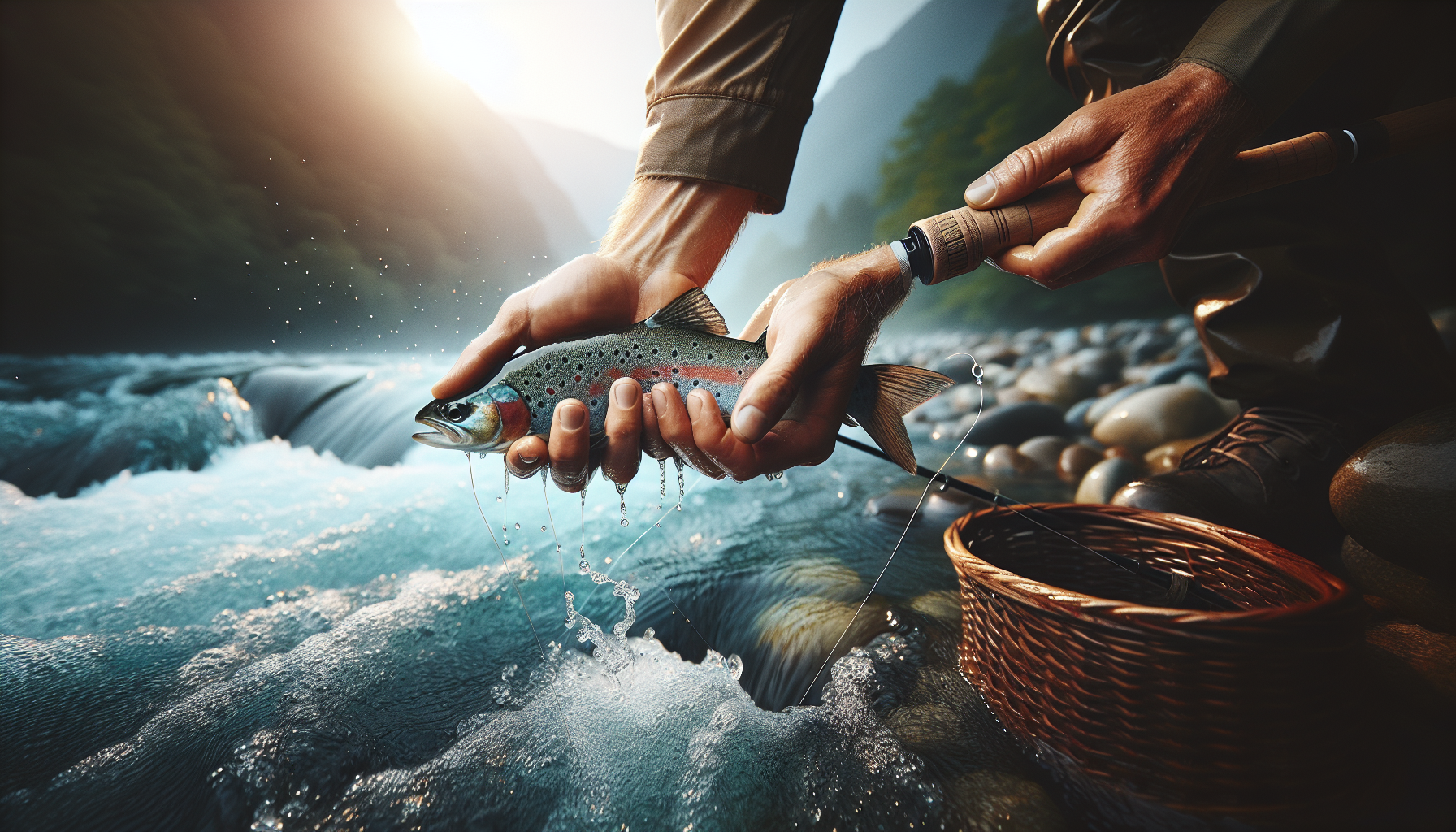
Fish handling should follow a strict sequence: set quickly, fight efficiently with appropriate tippet, keep the fish in water, wet hands before contact, use a knotless rubber net, remove the hook with hemostats, and release only when the fish is upright and swimming strongly. Photos should be brief and rare. I tell new anglers to think of every second out of water as borrowed from the fish’s recovery budget.
| Impact area | Common mistake | Lower-impact practice | Why it works |
|---|---|---|---|
| Access | Creating informal stream entries | Use established trails and hardened banks | Reduces erosion and vegetation loss |
| Wading | Crossing spawning gravel | Avoid redds and shallow tailouts during spawning seasons | Protects eggs and incubating embryos |
| Fish handling | Long photo sessions | Keep fish submerged and release quickly | Lowers stress and post-release mortality |
| Tackle | Using deep-hooking rigs or lead carelessly | Choose barbless hooks and legal non-toxic weights where possible | Limits injury and contamination risk |
| Biosecurity | Moving between waters without cleaning gear | Clean, drain, dry, and disinfect equipment | Prevents spread of invasive species and pathogens |
Gear hygiene deserves special emphasis because invasive spread is one of the most preventable impacts. After fishing, remove mud and plant matter, drain packs and nets, and dry gear thoroughly. When moving between watersheds, especially over multiple days, use disinfection methods recommended by agencies, such as hot water treatment or approved cleaning solutions for waders, boots, and nets. A single contaminated boot can transport organisms that alter an entire stream community.
Ethics Beyond Compliance: Wildlife, Crowding, and Respect for Place
Legal compliance is the floor, not the ceiling. Ethical fly fishing in national parks also includes how anglers behave around wildlife, other visitors, and culturally significant landscapes. Many streams pass through meadows used by elk, bear corridors, or nesting zones for sensitive birds. An angler focused on rising trout can accidentally crowd wildlife, block animal travel routes, or leave packs and food unsecured. In parks with bears, fish handling and food storage practices are part of conservation, not just personal safety. Odors from snacks, harvested fish where retention is legal, or unattended packs can create dangerous habituation patterns.
Crowding is another environmental issue because social pressure concentrates use. If ten anglers rotate through the same bend all day, impacts multiply even if each person believes they are acting lightly. Ethical anglers disperse when appropriate, avoid stepping into occupied water, and willingly abandon a spot that is being loved to death. That decision protects the experience of others and reduces repetitive disturbance to fish lying in limited holding water.
Respect for place also means understanding that national parks preserve human history as well as habitat. Some waters flow through tribal homelands, historic landscapes, or sacred areas. Anglers should learn local context, stay on designated routes, and follow closures that may protect archaeological resources or ceremonial access. Conservation is stronger when it recognizes that ecological integrity and cultural stewardship are linked.
I have found that the best anglers in parks are usually the least conspicuous. They pack out tippet clippings, pick up abandoned monofilament, answer beginners politely, and accept that some days the right choice is not to fish. That restraint is an ethical skill, and it often has more conservation value than technical expertise.
Climate Change, Visitation Pressure, and the Future of Fly Fishing in Parks
The long-term environmental impact of fly fishing in national parks cannot be separated from climate change and rising visitation. Warmer air temperatures reduce snowpack, shift runoff timing, increase summer water temperatures, and shrink the cold, connected habitats that trout and salmonids need. Drought intensifies low flows, which means fish have fewer thermal refuges and less protection from predators. Severe wildfire can add ash, sediment, and debris to headwater systems, while post-fire floods can reorganize channels entirely. These are not distant threats; they already shape seasonal closures, restoration priorities, and angling ethics across the American West and mountain parks nationwide.
At the same time, visitation to flagship parks has surged in many regions, pushing more anglers toward a limited number of accessible waters. Social media accelerates this concentration by turning specific pools and scenic reaches into destinations. The environmental result is predictable: more trampling, more fish pressure, more litter, and greater temptation to prioritize photos over fish welfare. Managers respond with permits, shuttle systems, access limits, gear restrictions, educational campaigns, and habitat restoration projects, but management alone cannot absorb unlimited demand.
The future of fly fishing in national parks depends on anglers embracing a conservation-first model. Support native fish recovery projects, volunteer with local watershed groups, report invasive sightings, respect temporary closures, and spend money with guides and shops that teach low-impact practices. If you are building a broader understanding of this topic, explore related pages on catch-and-release science, invasive species prevention, native trout restoration, responsible wading, and leave-no-trace angling. Environmental impact is the hub because every one of those subjects connects back to the same core truth: the privilege of fishing protected waters lasts only as long as the ecosystems remain healthy.
Fly fishing in national parks can be a powerful conservation ally when anglers understand environmental impact in full, not as an abstract idea but as a series of daily choices with measurable consequences. The key points are straightforward. Streams and lakes inside parks are sensitive systems where bank erosion, sedimentation, invasive species spread, fish handling stress, wildlife disturbance, and crowding can all undermine conservation goals. Park regulations exist to protect habitat first and native fish second, with recreation carefully fitted around those priorities. Ethical anglers go further than the rulebook by avoiding warm-water stress, using established access, protecting redds, cleaning gear, minimizing air exposure, and respecting wildlife and cultural landscapes. Climate change and heavy visitation raise the stakes, making restraint and education more important than ever. The main benefit of this approach is simple: you help preserve the quality of the fishery and the integrity of the broader ecosystem at the same time. That is the standard national parks require and wild fish deserve. Before your next trip, review the park’s current regulations, study the watershed you plan to fish, and commit to one new low-impact habit that will make your presence lighter on the water.
Frequently Asked Questions
Why does conservation matter so much when fly fishing in national parks?
Conservation matters because national parks are managed first and foremost to protect natural resources, not simply to provide recreation. Fly fishing in these settings takes place in ecosystems that often support native fish, amphibians, aquatic insects, birds, and mammals that all depend on clean water and healthy habitat. Even when angling pressure seems light, repeated disturbance can affect fish behavior, spawning success, streambank stability, and the overall condition of a watershed. In many parks, fisheries are especially sensitive because they exist in high-elevation streams, coldwater systems, or isolated waters where recovery from stress can be slow.
From an ethical standpoint, anglers are not just users of public lands; they are participants in a stewardship system. That means every decision matters, from where you step in the stream to how long you fight a fish. Responsible fly fishing helps reduce mortality in released fish, limits habitat damage, and supports the broader mission of preserving park ecosystems for future generations. In practical terms, conservation-minded anglers follow park-specific regulations, avoid trampling vegetation, minimize handling time, use appropriate gear, and stay informed about seasonal closures or sensitive spawning periods. The goal is not only to catch fish, but to do so in a way that leaves the resource as intact as possible.
What are the most important ethical practices for catch-and-release fly fishing in national parks?
Ethical catch-and-release begins with the understanding that releasing a fish does not automatically guarantee survival. The way a fish is hooked, played, landed, handled, and returned to the water has a direct effect on post-release stress and mortality. One of the most important practices is using tackle strong enough to land fish quickly. Playing a fish to exhaustion may seem harmless, but it can lead to serious physiological stress, especially in warmer water or low-flow conditions. Barbless hooks or hooks with pinched barbs are also widely recommended because they make release faster and reduce tissue damage.
Handling is where many avoidable mistakes happen. Fish should be kept in the water as much as possible, touched only with wet hands, and never squeezed around the body or gills. If a photo is taken, it should be quick and prepared in advance so the fish is out of the water for only a few seconds. Nets with rubber or knotless mesh are preferable because they reduce scale loss and fin damage. Anglers should also avoid fishing for visibly stressed fish during extreme heat, low water, or spawning periods, even if regulations technically allow it. Ethics often go beyond legal minimums. In national parks, the most responsible approach is to ask not just, “Is this allowed?” but also, “Is this wise for the fish and the ecosystem right now?”
How can fly anglers reduce their impact on fish habitat and stream ecosystems?
Reducing habitat impact starts with movement and awareness. Streambanks, riparian vegetation, shallow spawning areas, and submerged insect habitat are all vulnerable to foot traffic. Wading carelessly can crush redds, disturb eggs, increase sedimentation, and damage the very habitat fish depend on for reproduction and shelter. Anglers should enter and exit the water at durable access points whenever possible, avoid trampling grassy banks or fragile plants, and be especially cautious in shallow gravels where fish may spawn. If a park posts sensitive area closures, those boundaries should be treated as essential protections, not suggestions.
Gear and waste management also matter. Lost tippet, leaders, flies, and other monofilament materials can injure wildlife and persist in the environment. Every piece of fishing line should be packed out, and anglers should be disciplined about checking pockets, packs, and vest corners for small scraps. Cleaning boots, nets, and other equipment between waters is another important step, because invasive species, pathogens, and microscopic organisms can be transported unintentionally. In parks with aquatic invasive species concerns, decontamination guidance should be followed closely. More broadly, low-impact anglers respect trails, avoid creating unofficial access paths, keep noise down, and leave an area looking as natural as they found it. In a national park, protecting habitat is inseparable from protecting the full visitor experience and ecological integrity of the place.
Are there special regulations or considerations for fly fishing in national parks compared with other waters?
Yes, and anglers should never assume that rules are the same from one park to another. National parks often have regulations tailored to specific conservation goals, native species recovery efforts, seasonal conditions, or conflicts with invasive fish management. Depending on the park, rules may address permitted fishing methods, fly-only waters, catch-and-release requirements, bait restrictions, hook types, seasonal closures, creel limits, access limitations, or even complete protection of certain streams. Some parks align closely with state regulations, while others apply additional federal or park-specific rules that reflect local ecological priorities.
Beyond formal regulations, there are also practical considerations unique to park settings. Wildlife encounters, backcountry travel, rapidly changing weather, crowded scenic corridors, and limited emergency access can all shape how and where an angler fishes responsibly. In some parks, protecting native fish may mean targeting only certain species or avoiding waters where restoration is underway. In others, anglers may be encouraged to help remove nonnative species under tightly defined rules. The key is preparation. Before fishing, anglers should review the park’s official fishing regulations, current advisories, permit requirements, and resource updates rather than relying on general assumptions or secondhand information. In protected landscapes, compliance is not just about avoiding penalties; it is part of the larger obligation to support science-based management.
How should anglers balance personal recreation with respect for wildlife, other visitors, and the purpose of national parks?
Balancing recreation with respect begins with recognizing that anglers share national parks with many forms of life and many types of visitors. A stream may be fish habitat, a wildlife corridor, a research site, a sacred landscape, and a scenic destination all at once. Ethical fly fishing means understanding that the pursuit of fish should not override those other values. That includes giving wildlife ample space, never altering habitat to improve casting access, storing food properly in bear country, and avoiding behavior that causes animals to change feeding, nesting, or movement patterns. It also means acknowledging when conditions are telling you not to fish, such as during drought, extreme water temperatures, or visible fish congregation in vulnerable refuge areas.
Respect for other visitors is equally important. Not everyone comes to a national park for angling, and ethical anglers avoid monopolizing access points, blocking trails, crowding overlooks, or creating conflict on popular waters. Courtesy on the water includes giving others room, communicating clearly, and avoiding the assumption that remote-looking areas are unoccupied or unimportant. The broader ethic is humility. National parks are public trust landscapes, and fly fishing within them should reflect restraint, patience, and care. The most admired anglers are not the ones who simply catch the most fish, but the ones who leave the lightest footprint, model good judgment, and help preserve the experience and ecosystem for everyone who comes after them.