Fly fishing tourism can bring money, jobs, and renewed interest in rivers, but it also changes the ecosystems that attract anglers in the first place. In practical terms, fly fishing tourism means travel centered on catching fish with artificial flies, usually on rivers, spring creeks, alpine lakes, estuaries, or flats, often supported by guides, lodges, outfitters, transport providers, and destination marketing. Local ecosystems include not only trout, salmon, grayling, bonefish, or tarpon, but also aquatic insects, streamside vegetation, spawning gravels, water quality, birdlife, and the social systems that shape access and stewardship. I have worked around destination fisheries where a strong season supported conservation patrols and habitat restoration, and I have also seen crowded access points, eroded banks, and stressed fish during warm-water closures. That tension explains why environmental impact sits at the center of any serious discussion about fly fishing tourism. Well-managed visitation can fund river protection, strengthen catch-and-release culture, and create political support for healthy watersheds. Poorly managed tourism can compact soils, spread invasive species, disturb wildlife, and raise fish mortality even when anglers intend to be careful. Understanding both sides is essential for communities, guides, and traveling anglers who want fisheries to remain productive over decades, not just busy for one season.
How fly fishing tourism affects habitats, water, and species
The environmental impact of fly fishing tourism starts with concentration. A famous river may receive thousands of angler days across a short season, focusing foot traffic on boat launches, riparian trails, gravel bars, and shallow margins where fish hold or spawn. Repeated entry and exit points break down streambanks, especially where vegetation is sparse or soils are wet. Once roots are damaged, erosion accelerates, fine sediment enters the channel, and spawning gravels can clog. For salmonids, that sediment matters because eggs depend on oxygen moving through clean gravel. In New Zealand, Montana, Patagonia, Iceland, and Slovenia, heavily visited reaches often show the same pattern: the fishery remains attractive, but the physical access points bear clear signs of chronic trampling unless hardened with steps, fencing, or designated paths.
Wading pressure creates another layer of disturbance. Anglers often cross riffles and tails of pools that double as spawning or incubation habitat. Even outside closed spawning periods, repeated wading can crush eggs or newly emerged fry if timing and location overlap. On spring creeks, where weed beds and undercut margins support invertebrates and juvenile fish, careless movement can reduce cover and dislodge productive habitat. Boat-based tourism is not impact-free either. Frequent launching, anchoring, prop wash in shallow estuaries, and repeated beaching of drift boats or skiffs can damage aquatic vegetation and nearshore substrates. On tropical flats, guides now commonly push rather than pole in sensitive seagrass areas because prop scars can persist for years and reduce nursery habitat for juvenile fish, crustaceans, and other species.
Water quality is influenced indirectly through tourism infrastructure. Lodges, roads, septic systems, fuel storage, and riverside development increase runoff risk. The issue is not fly lines or feathers; it is the cumulative footprint needed to host visitors. Increased road access can raise sediment loads after storms. Poorly placed cabins or camps can strain riparian buffers that normally filter nutrients. In remote destinations, waste management can become the weakest link. I have seen well-run operations with strict spill containment and composting systems, and I have also seen informal camps where graywater and litter drift too close to the channel. The ecological result depends less on branding and more on siting, density, and enforcement.
Fish welfare, catch-and-release limits, and angling pressure
Many fly fishing destinations promote catch and release as proof of low impact. It is far better than high harvest on vulnerable populations, but it is not impact-free. Fish experience physiological stress during capture, handling, and release. Mortality rises when water temperatures climb, fights are prolonged on light tackle, fish are lifted into air for photos, or barbless hooks are not used properly. Research on trout and salmon has repeatedly shown that release survival can remain high under cool water and careful handling, yet decline sharply under thermal stress. That is why responsible fisheries impose hoot owl restrictions, seasonal closures, tackle rules, and refuge areas. Those policies are not anti-angler; they are direct responses to fish biology.
Tourism amplifies pressure because skilled guides help more clients hook more fish. From a business perspective, that is success. From an ecological perspective, repeated encounters can alter fish behavior, redistribute feeding, and increase sublethal stress. On small waters, a handful of boats working the same runs every day can keep fish in a near-constant cycle of disturbance. Some heavily pressured trout become difficult to fool, but behavioral wariness should not be mistaken for ecological resilience. Feeding time lost to repeated disturbance can affect condition, especially in rivers already stressed by low summer flows, warm temperatures, or reduced insect production. Anadromous fish such as steelhead and Atlantic salmon may be particularly sensitive where migration corridors overlap with angler concentration.
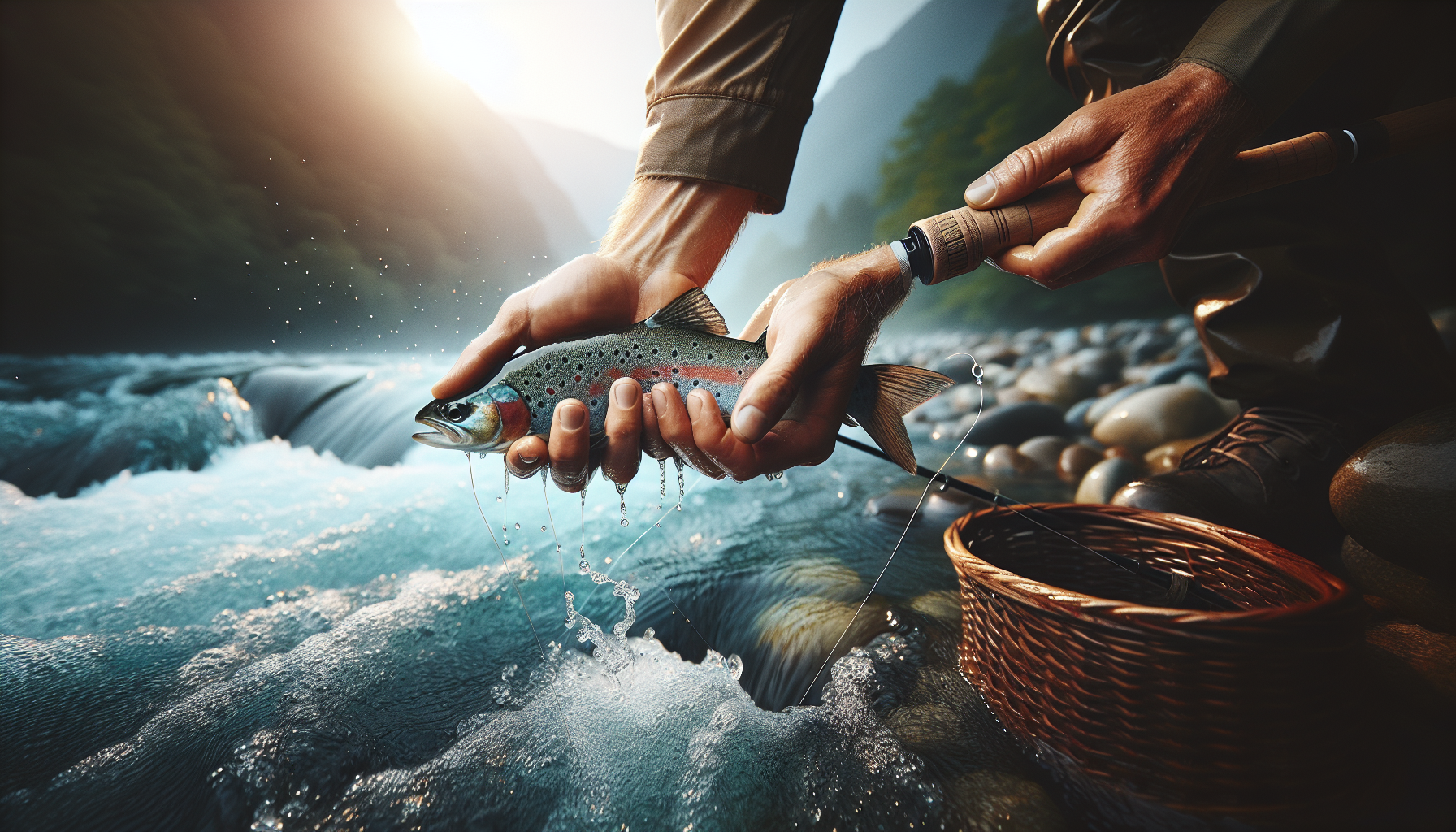
Fish welfare also includes hidden injury sources. Felt soles, once common for traction, were linked to transport of invasive organisms including didymo and New Zealand mudsnails, leading some jurisdictions to ban them. Rubber nets reduce scale loss and fin damage compared with abrasive alternatives. Knotless mesh, hemostats, thermometer use, and keeping fish submerged during unhooking are now basic best practices. These details matter because tourism normalizes behavior. If lodges, guide schools, and booking platforms teach strong fish handling standards, many visitors will follow them. If marketing rewards hero shots and oversized daily numbers, the fish absorb the cost.
Invasive species, wildlife disturbance, and the cumulative footprint of access
Some of the most serious environmental effects of fly fishing tourism come from what anglers unintentionally move between waters. Boats, trailers, wading boots, nets, and bilge areas can transport invasive plants, algae, mollusks, and pathogens. Whirling disease, didymo, zebra mussels, and mudsnails are not hypothetical risks; they have altered fisheries management across multiple regions. Once established, invasive species can be almost impossible to remove. Prevention therefore carries far more ecological value than late response. Mandatory clean, drain, dry protocols, gear inspection stations, and boot decontamination are among the most effective safeguards, especially on high-profile circuits where travelers fish several watersheds in one trip.
Wildlife disturbance extends beyond fish. Riverside nesting birds abandon vulnerable sites when foot traffic increases too close to banks or islands. In bear country, fish remains, food waste, and unsecured camps alter animal behavior and increase conflict risk. On tropical flats, repeated approaches to tailing fish can also disturb rays, turtles, and shorebirds using the same habitat mosaic. Night lighting at lodges may affect insect emergence and bat foraging. Vehicle traffic on primitive roads can fragment habitat and increase collision risk for amphibians and mammals. No single angler causes all of this, but tourism works through accumulation. Ten minor disturbances repeated daily across a season become a meaningful ecological load.
| Impact area | Typical tourism pressure | Ecological consequence | Effective mitigation |
|---|---|---|---|
| Streambanks | Repeated entry, trails, bank fishing | Erosion, sediment in spawning gravel | Boardwalks, hardened access, fenced restoration zones |
| Fish health | High catch rates, warm-water angling | Stress, delayed mortality, altered behavior | Temperature closures, barbless rules, handling standards |
| Biosecurity | Travel between watersheds with wet gear | Spread of didymo, mudsnails, mussels, pathogens | Clean-drain-dry protocols, inspections, gear bans |
| Wildlife | Boats, wading, camp traffic, lighting | Nesting disturbance, habitat displacement | Seasonal buffers, launch limits, dark-sky lighting |
| Infrastructure | Lodges, roads, septic, fuel storage | Runoff, nutrient loading, riparian degradation | Setbacks, wastewater controls, low-impact design |
When tourism improves ecosystems through funding, advocacy, and management
The strongest argument in favor of fly fishing tourism is that valuable fisheries are more likely to be defended. In many places, visiting anglers provide the economic rationale for keeping rivers clean, connected, and legally protected. Guide fees, license sales, bed taxes, concession payments, and conservation stamps can support habitat work, monitoring, and enforcement. In the western United States, angler-driven nonprofits have funded riparian fencing, culvert replacement, water leasing, and stream temperature monitoring. In Chile and Argentina, catch-and-release tourism has helped sustain large private and mixed-access landscapes where native forests and headwaters might otherwise face more intensive extraction pressure. On Belizean and Bahamian flats, the value of bonefish tourism has strengthened local arguments for mangrove protection and net restrictions because live fish generate recurring income.
Tourism also creates an audience for science-based rules. Visitors who invest time and money in a destination are often willing to accept limits if the rationale is clear. I have seen compliance rise dramatically when managers posted real-time water temperatures, explained thermal stress in plain language, and paired restrictions with visible enforcement. Good operations reinforce that message by limiting daily beats, rotating access, avoiding redds, and refusing trips during unsafe conditions. Some of the best lodges publish fish handling policies before booking, train every guide to the same standard, and collect catch, temperature, and effort data that can inform management. That is a much better model than treating conservation as a marketing slogan detached from operations.
Community benefits matter too. Where local residents gain stable income from guiding, hospitality, transport, fly tying, or food supply chains, ecosystems can become economic assets worth protecting from pollution, damming, or overharvest. This outcome is not automatic; it depends on fair distribution of revenue and genuine local participation. Still, there are clear examples where a living river outcompetes a degraded one. The environmental impact of fly fishing tourism is therefore not fixed. It depends on whether money is extracted from the resource or reinvested into the watershed that supports it.
Building a low-impact fly fishing tourism model
The most effective environmental strategies combine regulation, infrastructure, and culture. Regulation sets the floor: seasonal closures over spawning periods, daily beat rotations, permit caps, temperature-based restrictions, no-anchoring zones, invasive species inspections, and setbacks for riverside development. Infrastructure channels use: designated parking, composting toilets, boot-cleaning stations, marked trails, and stabilized launches reduce diffuse damage. Culture determines whether rules are embraced or treated as obstacles. Guides play the biggest role because they shape client behavior minute by minute. A guide who refuses to wade through redds, limits photo time to seconds, and carries a thermometer teaches conservation in practice.
Destination managers should think in carrying-capacity terms rather than simple visitor totals. A large freestone river may absorb dispersed effort that would overwhelm a small spring creek. Sensitive estuaries may need prop restrictions long before angler numbers look high on paper. Monitoring should track bank condition, water temperature, macroinvertebrate trends, spawning success, and angler effort by reach, not just license sales. Widely used tools such as creel surveys, remote counters, GIS access mapping, and repeat photo points make changes visible before they become crises. Climate change raises the stakes by shrinking cold-water refuge, intensifying drought, and increasing wildfire sediment pulses in many trout regions. A fishery that tolerated moderate tourism twenty years ago may now require stricter thresholds.
Traveling anglers also have direct responsibility. Choose operators with written conservation policies, ask how they handle invasive species prevention, respect closures, pinch barbs, minimize air exposure, and avoid fishing when temperatures are unsafe even if rules allow it. Support businesses that hire locally and contribute to watershed groups. If a destination appears overcrowded, look for shoulder seasons or lesser-known waters that can distribute pressure more evenly, provided managers have invited that use. Ethical fly fishing tourism is not passive. It requires informed choices at every step, from booking and gear cleaning to fish handling and advocacy after the trip.
Fly fishing tourism affects local ecosystems through habitat disturbance, fish stress, invasive species risk, infrastructure pressure, and wildlife disruption, yet it can also finance restoration, strengthen protection, and reward communities for keeping waters healthy. The difference lies in management quality, angler behavior, and whether ecological limits are treated as nonnegotiable. Healthy fisheries are not produced by catch-and-release labels alone. They depend on clean water, intact riparian zones, protected spawning habitat, strong biosecurity, and clear rules enforced consistently. From my experience, the best destinations are not simply the most scenic or productive; they are the ones where access, business models, and conservation standards clearly align. For anyone exploring environmental impact within conservation and ethics, this is the central lesson: tourism is neither inherently harmful nor inherently beneficial. It is a force that magnifies whatever governance and culture already exist. If local leaders, guides, and anglers invest in science-based limits and everyday stewardship, fly fishing tourism can help preserve the rivers and flats people travel to experience. Use this hub as your starting point, then evaluate every destination and every trip through one practical question: does this fishery leave the ecosystem better protected after visitors go home?
Frequently Asked Questions
How does fly fishing tourism affect local ecosystems beyond the fish themselves?
Fly fishing tourism influences far more than target species such as trout, salmon, grayling, bonefish, or tarpon. The local ecosystem also includes aquatic insects, spawning habitat, streambank vegetation, birds, amphibians, estuarine grasses, invertebrates, and the wider food web that supports healthy fisheries. When tourism grows, the increased human presence can change these systems in subtle and direct ways. Repeated wading may disturb gravel beds where fish spawn, compact streambanks, or damage aquatic plants and nursery habitat. Boat traffic in flats and estuaries can scar seagrass beds, stir sediment, and disrupt feeding patterns for fish and shorebirds.
At the same time, tourism can create a strong incentive to protect rivers, lakes, and coastlines that might otherwise face neglect or more destructive forms of development. Communities and businesses that depend on visiting anglers often support water quality protections, habitat restoration, erosion control, invasive species management, and catch-and-release practices. In that sense, fly fishing tourism is neither automatically harmful nor automatically beneficial. Its ecological impact depends on how many people visit, when they visit, how well the fishery is managed, how responsible operators are, and whether local conservation rules are enforced. The most important takeaway is that the ecosystem anglers come to enjoy is an interconnected living system, and tourism affects all of it, not just the fish at the end of the line.
Can fly fishing tourism actually help conservation, or does it mostly create environmental pressure?
It can do both, and the balance depends on management. Fly fishing tourism often brings real economic value to rural and coastal communities through guide services, lodging, transportation, equipment sales, food service, and permit systems. That economic value can translate into political support for conservation because healthy rivers and flats become recognized as productive natural assets. In many destinations, tourism revenue helps fund habitat restoration, fish population monitoring, anti-poaching efforts, river access improvements, and education programs for visitors and residents alike. Guides and outfitters can also act as year-round observers who notice pollution, illegal harvest, bank erosion, invasive species, or unusually low flows before those problems become crises.
However, the same tourism activity can create environmental pressure if growth is unmanaged. Too many anglers concentrated on sensitive waters can increase fish handling stress, disturb spawning runs, crowd wildlife, spread invasive organisms on boots or boats, and put pressure on infrastructure such as roads, boat ramps, trails, and waste systems. Conservation benefits are strongest when tourism operates within clear ecological limits. That means science-based permit caps, seasonal closures, ethical guiding standards, habitat protection rules, and local decision-making that prioritizes ecological resilience over short-term visitor numbers. In practice, fly fishing tourism helps conservation most when the industry understands that protecting habitat is not a side issue; it is the foundation of the entire visitor economy.
What are the biggest environmental risks associated with growing fly fishing destinations?
One of the biggest risks is overuse of fragile habitat. Popular rivers, spring creeks, and flats can experience repeated pressure from wading, anchoring, boat launches, shoreline access, and off-road travel. Even if individual anglers behave responsibly, cumulative impact matters. Bank trampling can lead to erosion and warmer water, while repeated disturbance in shallow water can affect spawning beds, insect life, and juvenile fish shelter. In marine and estuarine fisheries, heavy skiff traffic can degrade seagrass and disturb nursery areas that are essential to the productivity of the whole system.
Another major risk is stress on fish populations, especially where catch-and-release is poorly practiced or where water temperatures become dangerously high. Fish that are fought too long, handled with dry hands, exposed to air for photos, or released in warm, low-oxygen water may die later even if they swim away. Tourism can also increase the chance of introducing invasive species and aquatic pathogens through contaminated gear, boats, trailers, and felt soles if cleaning protocols are weak. Beyond direct angling impacts, there are broader development risks. As a destination becomes popular, demand may grow for lodges, roads, parking areas, airports, and waterfront construction. Those changes can alter floodplains, reduce riparian cover, increase runoff, and fragment habitat. In many places, the environmental footprint of the supporting tourism infrastructure can be as important as the fishing activity itself.
How can communities and operators reduce the ecological footprint of fly fishing tourism?
Reducing impact starts with accepting that healthy ecosystems have limits. Communities, fishery managers, lodges, and guides can lower ecological pressure by controlling angler numbers through permits, rotating access sites, and creating seasonal closures during spawning periods, low-flow conditions, or extreme heat. Education is equally important. Visitors should be taught proper catch-and-release techniques, including minimizing fight time, keeping fish in the water, using barbless hooks where appropriate, avoiding angling during thermal stress, and respecting closed areas. In saltwater destinations, poling instead of running motors across shallow flats, using designated channels, and protecting seagrass can greatly reduce habitat damage.
Operational choices also matter. Responsible businesses can install boot-cleaning and gear-disinfection stations, reduce single-use waste, manage wastewater carefully, use erosion control around access points, and support shuttle systems that limit vehicle pressure on sensitive areas. Communities can strengthen zoning rules to protect riparian corridors, wetlands, estuaries, and floodplains from poorly planned development tied to tourism growth. Monitoring is another key tool. Managers should track angler effort, fish health, water temperature, habitat condition, and wildlife disturbance over time so they can adjust rules before damage becomes severe. The most successful destinations are usually the ones that treat ecological stewardship as part of the visitor experience, not as an afterthought.
Is catch-and-release enough to make fly fishing tourism sustainable?
Catch-and-release is helpful, but by itself it is not enough to guarantee sustainability. Releasing fish instead of harvesting them can reduce direct removal from a population, which is especially important in fisheries that attract heavy angling pressure. It often supports larger, more stable sport fisheries and can align tourism with long-term resource protection. But released fish still experience stress, and survival rates vary depending on species, water temperature, fight duration, hook type, handling, and release conditions. In warm rivers, for example, even careful catch-and-release can result in significant delayed mortality. For some species and habitats, repeated capture may also alter behavior, feeding, and movement patterns.
True sustainability requires a broader ecosystem approach. That includes protecting cold-water inputs, maintaining streamflow, preserving wetlands and riparian vegetation, reducing sediment and pollution, limiting access in sensitive periods, and managing tourism intensity so habitat is not degraded. It also requires considering non-fishing impacts such as air travel emissions, shoreline development, road runoff, and waste disposal. Catch-and-release is best seen as one tool within a much larger conservation system. When paired with habitat protection, science-based regulations, responsible guiding, and strong local stewardship, it can support sustainable tourism. When used as a marketing slogan without broader safeguards, it can give a false sense that the fishery is being protected when underlying ecosystem pressures are still growing.