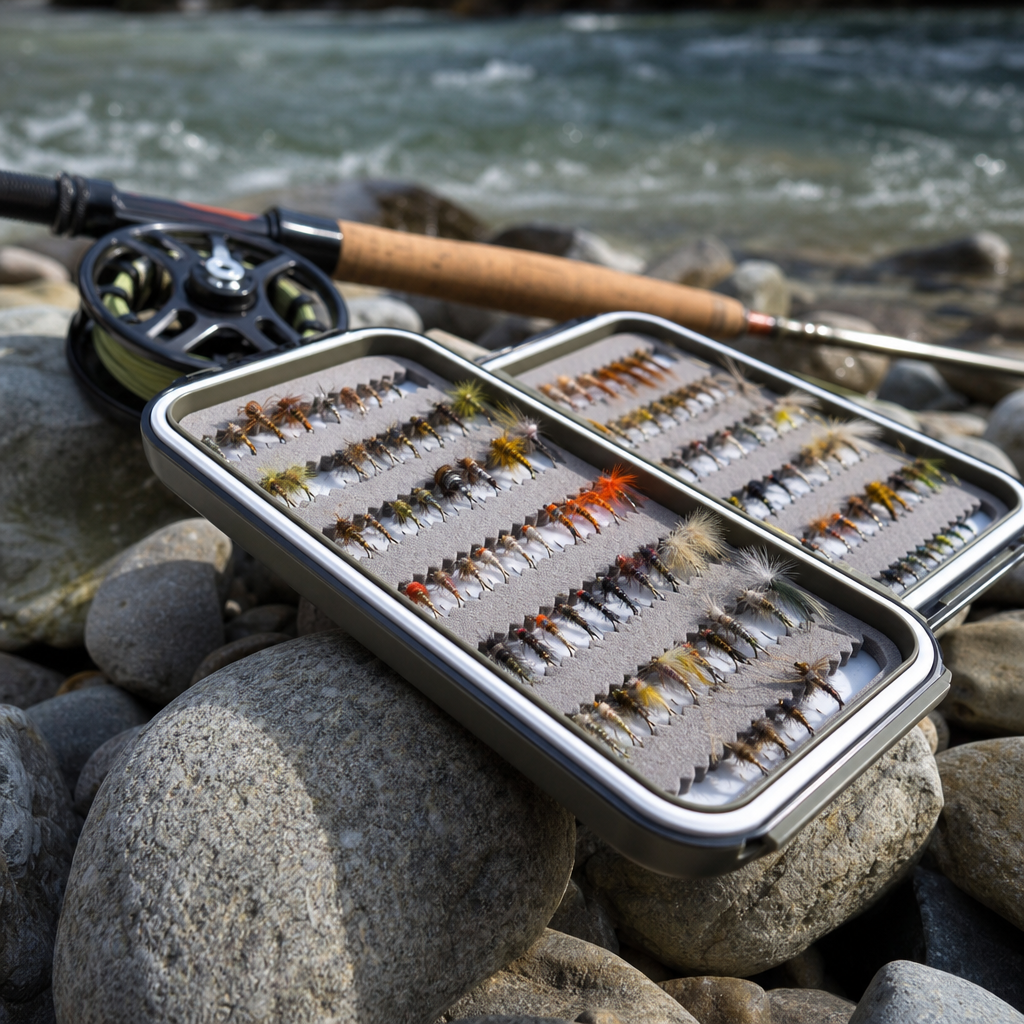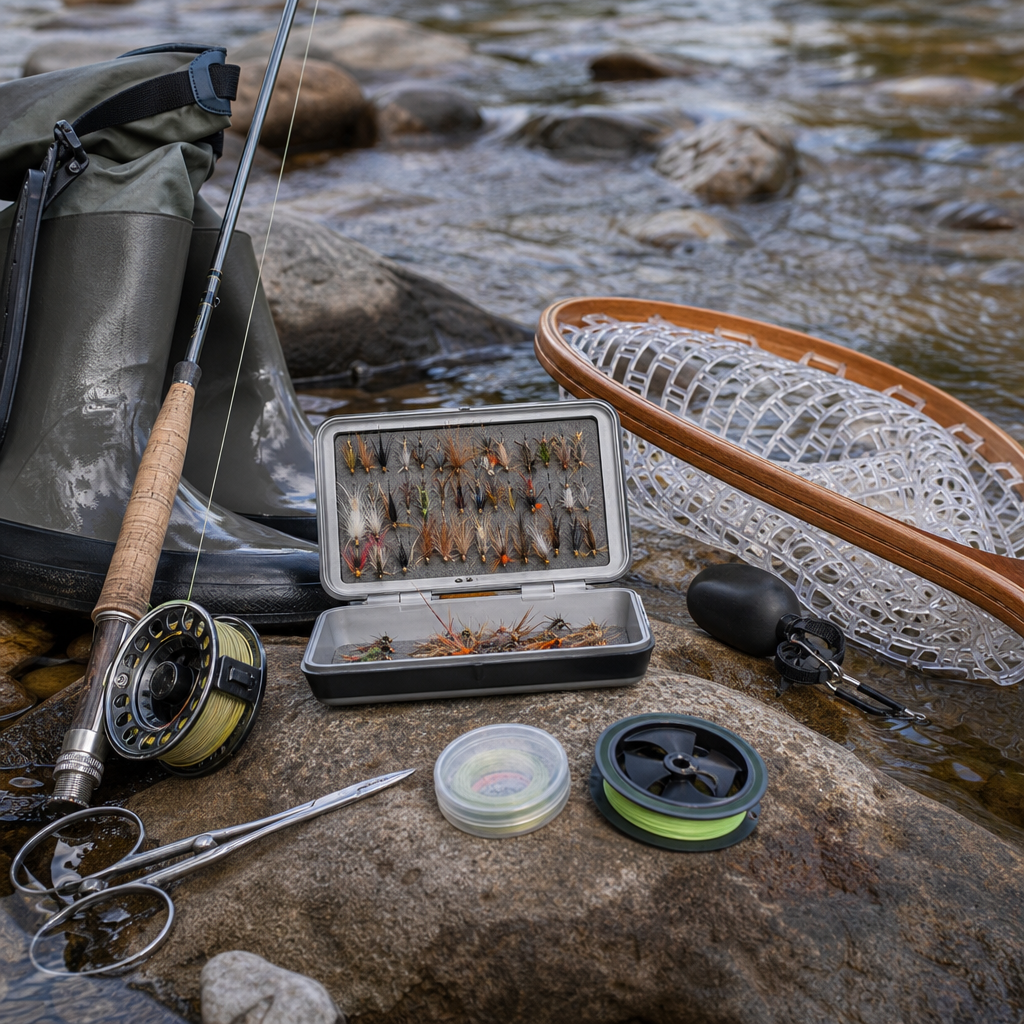
Reviewing the best pike flies starts with understanding what makes northern pike such a distinct fly-rod predator. Pike are ambush hunters built to explode from weeds, timber, and drop-offs, then crush large prey with speed and sideways power. That behavior changes what “best” means in a fly review. A great trout fly can be elegant, sparse, and technical. A great pike fly must push water, hold its profile, survive teeth, shed water on the cast, and trigger follows from fish that may inspect the fly for several feet before committing. In my own testing across shallow bays, river backwaters, and clear glacial lakes, the patterns that consistently produce are not always the biggest or flashiest. They are the ones that match season, depth, forage, and the angler’s ability to cast them well. This hub article reviews the best pike flies by function, not marketing category, so you can choose patterns that actually earn space in a fly box and connect naturally to deeper fly reviews across this topic.
For pike fishing, a “fly review” should answer a few practical questions directly. What prey does the pattern imitate? How easy is it to cast for a full day? Does it foul around the hook bend? Will it ride over weeds or sink into them? How durable is it after several fish? Those questions matter because pike flies are often bought on profile alone, yet profile is only one variable. Material selection, hook choice, tying method, and sink rate all affect real fishing performance. Modern pike flies use bucktail, flash blends, rabbit strips, synthetic fibers such as EP or SF materials, articulated shanks, lead or tungsten eyes, and weed guards in different combinations. Each choice creates a specific action in the water. If you are building a pike fly selection for the first time, this guide gives you the framework. If you already fish for pike, it will help you refine your box around proven categories rather than duplicates that solve the same problem.
What makes a pike fly effective
The best pike flies share five traits: visible profile, controlled movement, reliable hook placement, fishable weight, and durability. Profile matters because pike often key on shape before color. A broad baitfish silhouette can outproduce a slimmer pattern even in stained water. Movement matters because pike frequently follow and decide only when the fly pauses, kicks, or pulses. Hook placement matters because pike eat broadside, slash at prey, and can miss short-bodied hooks hidden in dense material. Fishable weight matters because a fly that looks impressive in the vise may become exhausting after two hours of casting. Durability matters because pike teeth quickly expose weak thread wraps, fragile glues, and soft coatings.
In practice, this means the highest-performing flies are usually tied on strong 2/0 to 6/0 hooks with wide gaps, sparse enough materials to cast, and just enough structure to avoid fouling. Patterns built around bucktail platforms, synthetic support fibers, or articulations tend to maintain profile better than overloaded flash patterns. Color is important, but not in the simplistic sense often advertised. In clear water, natural combinations like white, olive, perch, and roach tones are dependable. In tannic or dirty water, black, red-white, chartreuse, and firetiger variants create stronger contrast. The best pike fly is usually the one you can present repeatedly at the right depth with confidence.
Best pike fly categories by fishing situation
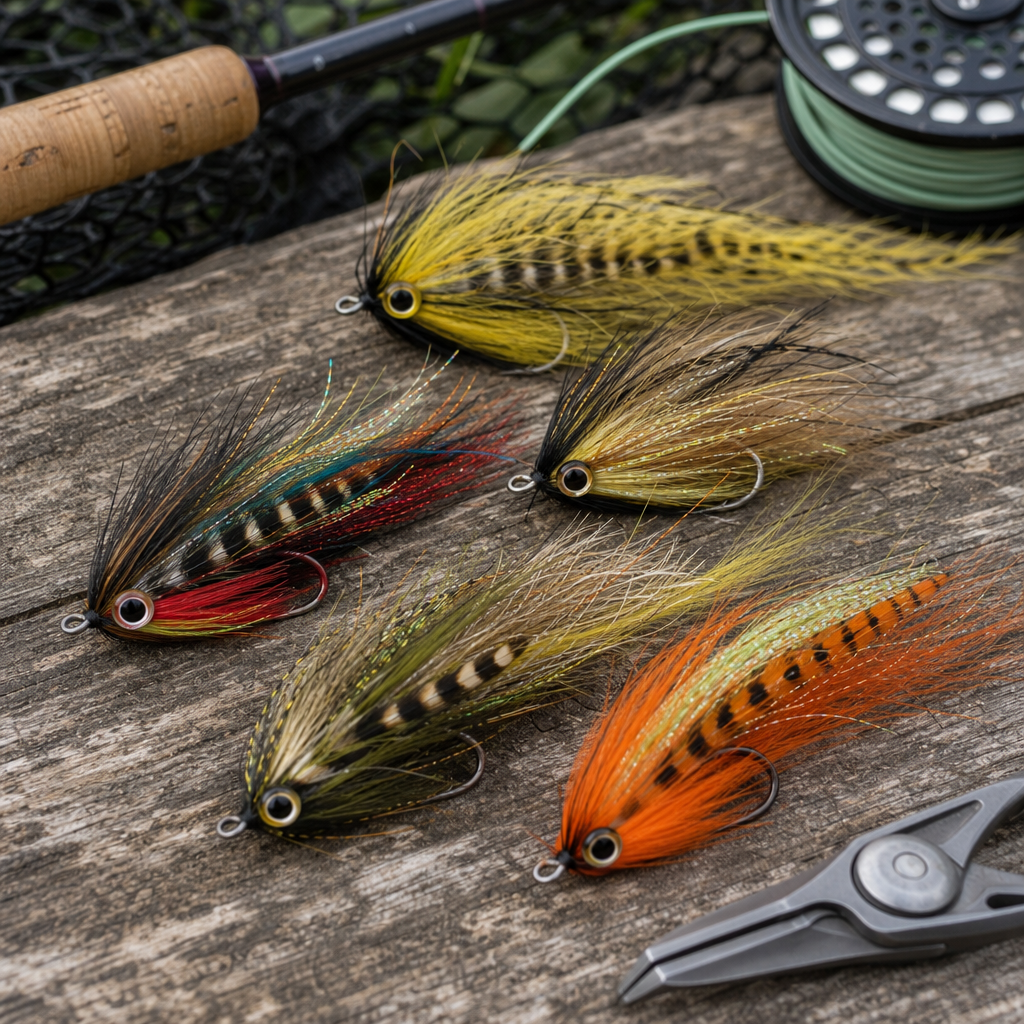
If you want a practical pike fly box, organize it by job. Hollow-tied baitfish patterns are among the best all-around searching flies because they push water, remain castable, and suspend well on pauses. Bucktail Deceivers and large synthetic baitfish variants excel over emerging weeds, along reed edges, and on intermediate lines. They imitate juvenile pike, perch, roach, shad, and cisco effectively depending on color and size.
For colder water or deeper structure, weighted streamers and jig-style flies become more important. Patterns with dumbbell eyes or keel-weighting drop faster and track point-up, which helps around rock and sparse timber. They are especially useful when fish hold near the first break or on outside weed edges after turnover periods. Rabbit-strip flies also belong here because their movement is unmatched at slow speed, though they cast heavier when wet and can foul more easily.
Topwater and near-surface flies deserve a dedicated place in any review of the best pike flies. Divers, sliders, and large gurglers draw violent strikes in warm water, low light, and over shallow vegetation. They are not only exciting; they are strategic. Surface flies let you fish above cabbage beds and wood where subsurface patterns snag. Finally, articulated big-profile flies are the specialty tools for trophy hunting. They imitate larger forage and trigger dominant fish, but they demand heavier rods, short aggressive leaders, and disciplined casting mechanics.
| Fly category | Best use | Main strengths | Main limitation |
|---|---|---|---|
| Hollow-tied baitfish | Shallow flats, edges, search fishing | Strong profile, good castability, versatile depth | Can ride too high without line adjustment |
| Weighted streamer | Break lines, deeper weeds, cold water | Fast sink, precise depth control, good hookup angle | More fatiguing to cast |
| Rabbit-strip pattern | Slow retrieves, neutral fish | Exceptional movement at low speed | Holds water and may foul |
| Surface diver or slider | Warm shallows, dawn, dusk, weed tops | Snag resistance, visual strikes, easy tracking | Lower conversion in cold conditions |
| Articulated big fly | Trophy-focused fishing | Large silhouette, strong triggering effect | Requires heavier tackle and clean casting |
Top patterns worth reviewing first
Several named patterns have earned their reputation because they solve real pike-fishing problems. The Lefty’s Deceiver remains a benchmark because it casts relatively well for its length, tracks straight, and imitates a wide range of baitfish. In larger pike sizes, it is often improved with stronger hooks, lateral flash, and support materials that prevent collapse. The Hollow Fleye-style baitfish, adapted from saltwater design, is one of the most effective modern pike flies because it creates bulk without excessive weight. That makes it ideal for long days covering water.
The Buford is another standout. Developed for predators that respond to push and contrast, it uses spun deer hair and a broad front section to move serious water. In stained systems and low light, few flies announce themselves better. For anglers fishing weedy lakes, large EP-style baitfish patterns are excellent because synthetic fibers resist waterlogging and can be trimmed for exact profile. When a slower, more alive action is needed, rabbit-strip patterns like the Bunny or zonker-based pike streamers shine, particularly during cold fronts when pike follow but do not chase hard.
For surface work, oversized gurglers, foam divers, and Dahlberg-inspired deer hair patterns remain highly effective. They are not interchangeable. Gurglers are easier to cast and walk subtly. Deer hair divers create louder disturbance and can call fish from thicker cover. If you are building a hub-level fly review list, these patterns deserve first priority because each represents a distinct presentation style rather than a minor variation.
How to judge hook quality, materials, and construction
Many pike fly reviews focus on color and action while overlooking construction, which is where poor products usually fail. Start with the hook. Reputable pike flies use chemically sharpened, corrosion-resistant hooks from makers such as Ahrex, Gamakatsu, Mustad, Owner, or Partridge. The wire must be heavy enough to resist opening under side pressure, especially when fish roll at boatside. Hook gap is critical. An oversized profile on a narrow-gap hook can reduce hookups noticeably.
Next, inspect tie durability. Look for clean thread foundations, well-anchored eyes, UV resin or epoxy applied with restraint, and articulation joints that do not pinch materials. On synthetic flies, support stations should be spaced to maintain shape instead of creating one dense clump. On rabbit or zonker patterns, the hide should be narrow and evenly cut; thick strips absorb too much water and destabilize the fly. Weed guards should spring back after pressure and protect the point without blocking it.
The best commercial pike flies also balance weight intelligently. Heavy eyes near the nose can create an appealing jigging motion, but too much front weight makes the fly dive into weeds or helicopter on the cast. A well-designed pattern lands with purpose, tracks consistently, and remains fishable after multiple fish. In my experience, durability is easiest to predict by the small details: thread wraps hidden but substantial, glued connection points, and materials chosen for function instead of shelf appeal.
Choosing pike flies by season, water clarity, and forage
Seasonal matching is one of the biggest separators between average and excellent pike results. In spring, after ice-out where legal seasons allow fishing, pike often hold shallow and feed around spawning areas or warming bays. Moderate-sized flies in white, yellow, perch, and roach patterns work well because fish are active but not always willing to chase the largest profile. As water warms into early summer, topwater and broad baitfish patterns become stronger around fresh weed growth.
Mid-summer usually requires more precision. In fertile lakes, pike may bury in cabbage by day and slide onto edges during low light. Here, weed-resistant flies and lines matched to exact depth become more important than simply sizing up. In autumn, larger flies often excel because pike feed heavily on bigger forage. Black, orange, white, and natural silver patterns are all reliable depending on light and water color, but retrieve tempo often matters more than color changes.
Water clarity shapes visibility. In clear lakes, I prefer natural backs with subtle flash and pauses long enough for follows to convert. In stained rivers, contrast and vibration become the priority, so darker silhouettes or bright two-tone patterns perform better. Forage should guide your final choice. Where perch dominate, barred olive and orange accents help. Where cisco, shad, or herring are common, long silver-white flies are more relevant. The best pike fly review always connects the pattern to the prey base, not just to generic predator behavior.
Building a complete fly box without redundancy
A useful pike box does not need dozens of similar streamers. It needs a controlled spread of sizes, sink behaviors, and visibility levels. For most anglers, a smart starting point is twelve to eighteen flies divided across three profiles: slim baitfish, medium push-water flies, and large meal patterns. Then cover three depth bands: surface, shallow subsurface, and fast-sinking. Finally, select three color groups: natural light, dark contrast, and bright attractor. That framework prevents buying six versions of the same white streamer while leaving major situations uncovered.
Within this hub, that is the central recommendation: judge pike flies by role. If a new fly does not fish a different depth, move differently, or imitate a different prey class, it is probably redundant. Keep one or two confidence patterns in multiple colors, but diversify function first. This also makes future fly reviews easier to interpret because you can compare a new pattern against a known job in your box.
Pair your flies with the right terminal system. A pike fly that tracks perfectly on a short wire or knotable titanium leader may spin on a poorly built bite tippet. Likewise, an intermediate line often makes an unweighted baitfish pattern more useful than adding extra lead to the fly itself. Review flies in the context of the whole setup, and your choices become clearer.
Common buying mistakes and the best next reviews to explore
The most common mistake is buying oversized flies before mastering castable ones. Big pike certainly eat big flies, but anglers fish effective medium-profile patterns better, longer, and more accurately. Another mistake is ignoring hook geometry and focusing only on length. A ten-inch fly on a compromised hook is worse than a seven-inch fly with excellent gap and penetration. Many anglers also overvalue flash. Flash helps in some conditions, yet too much can flatten the silhouette and reduce realism in clear water.
A final error is reviewing flies in isolation from retrieve style. Some patterns excel on long strips, others on short jerks and long pauses, and some come alive only when almost crawled. As you expand within fly reviews, the best next subtopics are surface pike flies, articulated trophy patterns, weedless pike flies, cold-water streamers, and comparisons between bucktail, rabbit, and synthetic materials. Those reviews build naturally from this hub because each answers a different purchasing question.
The best pike flies are the ones that match the day’s depth, forage, and mood while staying durable and castable enough to fish hard. Start with proven categories, buy by function, and inspect hooks and construction as closely as color. A balanced box built around hollow-tied baitfish, a few weighted streamers, one rabbit option, and at least one surface pattern will cover most situations well. From there, use more detailed fly reviews to refine specific models and materials. If you are updating your predator setup, audit your current box by role today and replace duplicates with flies that solve a new problem on the water.
Frequently Asked Questions
What makes a fly one of the best options for targeting northern pike?
The best pike flies are designed around how pike actually feed. Northern pike are not subtle, selective trout that sip insects in clear current. They are ambush predators that sit around weed edges, timber, reed lines, shallow bays, and drop-offs, then explode on larger prey with a burst of speed. That means a top-performing pike fly needs to do several things well at once: create a strong silhouette, move water, remain visible, hold its shape in the water, and survive repeated abuse from teeth and hard strikes.
Profile is usually one of the biggest factors. Pike often key on a substantial target, so flies that appear large without becoming too heavy to cast tend to stand out in reviews. Modern synthetic materials are especially valuable because they let tiers build big, baitfish-style patterns that maintain bulk in the water but do not become waterlogged. That matters because a fly that looks impressive in the vise but turns into a soaked sock after a few casts quickly becomes impractical.
Durability is another major separator. Pike are equipped with rows of sharp teeth, and weak materials get shredded fast. The best-reviewed flies use strong hooks, reinforced heads, durable flash, and tying methods that stand up to repeated fish. A fly that catches one pike and then falls apart is not a top fly in any meaningful sense.
Action also matters. Some excellent pike flies push water and pulse on a steady strip, while others dart, stall, and flare during pauses. Because pike frequently follow before committing, flies that keep their profile during the pause can be especially effective. In short, the best pike flies combine size, movement, castability, durability, and fish-triggering presence. A good review should judge all of those characteristics together rather than focusing only on color or raw fly length.
What fly sizes, colors, and profiles work best when reviewing pike flies?
For most pike situations, the most reliable flies are tied in larger baitfish sizes, often in the 4 to 8 inch range, though smaller or larger options can absolutely have a place depending on water temperature, forage, and fish pressure. A useful review looks beyond the listed hook size and asks what the fly actually represents in the water. Pike respond strongly to a broad profile, especially one that resembles perch, roach, suckers, juvenile trout, or wounded panfish. That is why two flies on the same hook can perform very differently if one has a fuller shoulder, stronger silhouette, or better movement at slow speed.
Color selection should be practical rather than dogmatic. White is a staple because it imitates many baitfish and stays visible in a range of conditions. Chartreuse remains a proven pike color because it is easy for fish to find and often excels in stained water. Black is underrated and can be outstanding in low light, overcast weather, or tannic water because it creates a strong outline. Natural patterns in olive, yellow, orange, and barred combinations are also excellent when matching perch, sunfish, or local forage species.
Contrast is often more important than exact imitation. A fly with a pale belly and darker back frequently looks more lifelike than a flat single-color pattern. Flash can help, but it should support the profile rather than overpower it. Too much flash can turn a good pike fly into something that looks unnatural, especially in clear water where fish may inspect the fly before eating.
In a serious review, profile should be discussed in terms of fishing conditions. Slim flies can be excellent when pike are pressured or feeding on narrow baitfish. Bulkier patterns shine when you need more push, more visibility, or more presence around heavy cover. The best pike fly collections usually include both sparse and full-bodied options so anglers can adjust without guessing.
Are bigger pike flies always better, or is there a point where size hurts performance?
Bigger is not automatically better, and that is one of the most important truths to keep in mind when reviewing pike flies. Large flies attract attention, displace water, and appeal to a predator known for eating substantial prey. However, the most effective fly is not simply the longest one in the box. There is a balance between size, mobility, castability, and how naturally the fly moves during the retrieve.
Oversized patterns can become difficult to cast accurately, especially in wind, which is a constant factor in many prime pike environments. A fly that is too heavy or too bulky may also land harder than desired, foul more often, or become tiring to fish over a full day. That can reduce practical effectiveness even if the fly looks impressive in the water. Reviews that only praise giant flies without discussing casting strain or line compatibility miss a key part of pike fly performance.
There are many days when a moderately sized fly outfishes the largest pattern available. Cold fronts, highly pressured water, or fish feeding on smaller bait can all favor a more restrained offering. On the other hand, warm-water aggression, murky water, and trophy-focused fishing often reward a larger silhouette. The best pike flies create the impression of a big meal without forcing the angler to throw an unmanageable pattern.
This is where modern design matters. Some of the strongest pike flies are tied with synthetic materials that maintain a big visual footprint while shedding water efficiently. These patterns let anglers fish “big” without the penalties that come from old-school, heavily saturated materials. So yes, size matters, but intelligent design matters more. A well-balanced 6-inch fly can easily outproduce a clumsy 10-inch one if it casts better, tracks straighter, and triggers more committed eats.
How important are materials and construction when comparing pike flies?
Materials and construction are absolutely central to any credible pike fly review. Northern pike are hard on flies in a way many freshwater species are not. Their teeth slash materials, their strikes are violent, and the environments they live in often involve weeds, wood, and repeated contact with cover. A pattern that looks good in packaging but collapses after a fish or two should not rank highly, no matter how attractive it appears at first glance.
One of the biggest advances in pike fly design has been the use of modern synthetics. High-quality synthetic fibers can create length and volume without absorbing much water, which makes them easier to cast and less exhausting to fish all day. They also tend to bounce back better after fish, whereas some natural materials may mat down or lose profile more quickly. That said, natural materials still have value. Bucktail, feathers, and certain blends can provide a unique pulse and breathing action that synthetic-only flies sometimes lack. The strongest patterns often use a smart combination of both.
Hook quality is equally important. Pike flies need stout, sharp hooks with good corrosion resistance and reliable penetration. Cheap hooks undermine everything else. The head and tie-in points should also be reinforced so flash, eyes, and body materials do not unravel after a few encounters. If a fly uses articulation, junctions and rear sections should be secure and designed to minimize fouling.
Construction also affects fishability. A well-built pike fly should track straight, avoid wrapping around the hook bend, and recover its shape after the strip. It should not just survive a fish; it should continue fishing correctly after that fish. In practical terms, the best-reviewed flies are the ones that combine durability with consistent in-water performance. A tough fly that stops swimming properly is no better than a fragile one.
What should anglers look for in a pike fly review before deciding which patterns to buy?
A strong pike fly review should tell you much more than whether the reviewer happened to catch fish on a given day. Pike are aggressive enough that many flies can work sometimes. The useful question is why a pattern works, under what conditions it excels, and what trade-offs come with it. Before buying, anglers should look for reviews that evaluate profile, material choice, water displacement, durability, castability, hook quality, and performance around cover.
It is especially helpful when a review explains where the fly fits in a system. For example, is it best as a shallow weed-line pattern, a suspending follow-up fly, a high-visibility option for stained water, or a large searching fly for trophy hunting? That context matters because there is no single “best” pike fly for every lake, season, or weather pattern. A fly that shines over emerging cabbage in spring may not be the best choice for deep edges or autumn bait pushes.
Good reviews also discuss how the fly behaves on different retrieves. Some patterns are excellent on long, steady strips. Others come alive on short pops and pauses. Since pike often follow and inspect before committing, the best reviews mention what happens during the pause, how the materials flare, and whether the fly maintains a convincing posture when motion stops.
Finally, trustworthy reviews acknowledge practical considerations. Does the fly cast cleanly on common pike setups? Does it hold up after multiple fish? Does it foul often? Is it worth the price relative to how long it lasts? Those details help anglers buy intelligently instead of chasing hype. In the end, the best pike fly review is one that treats the fly as a tool for a specific predator and environment, not just as a