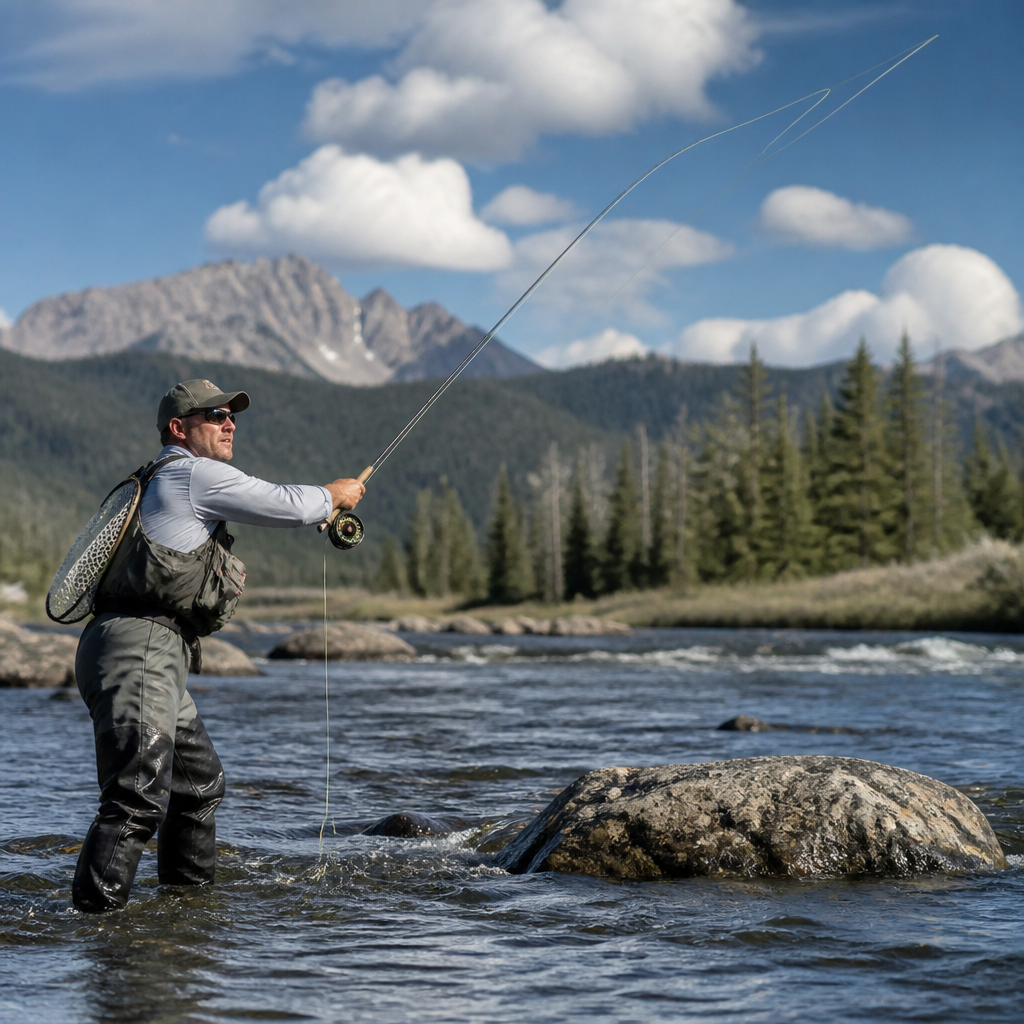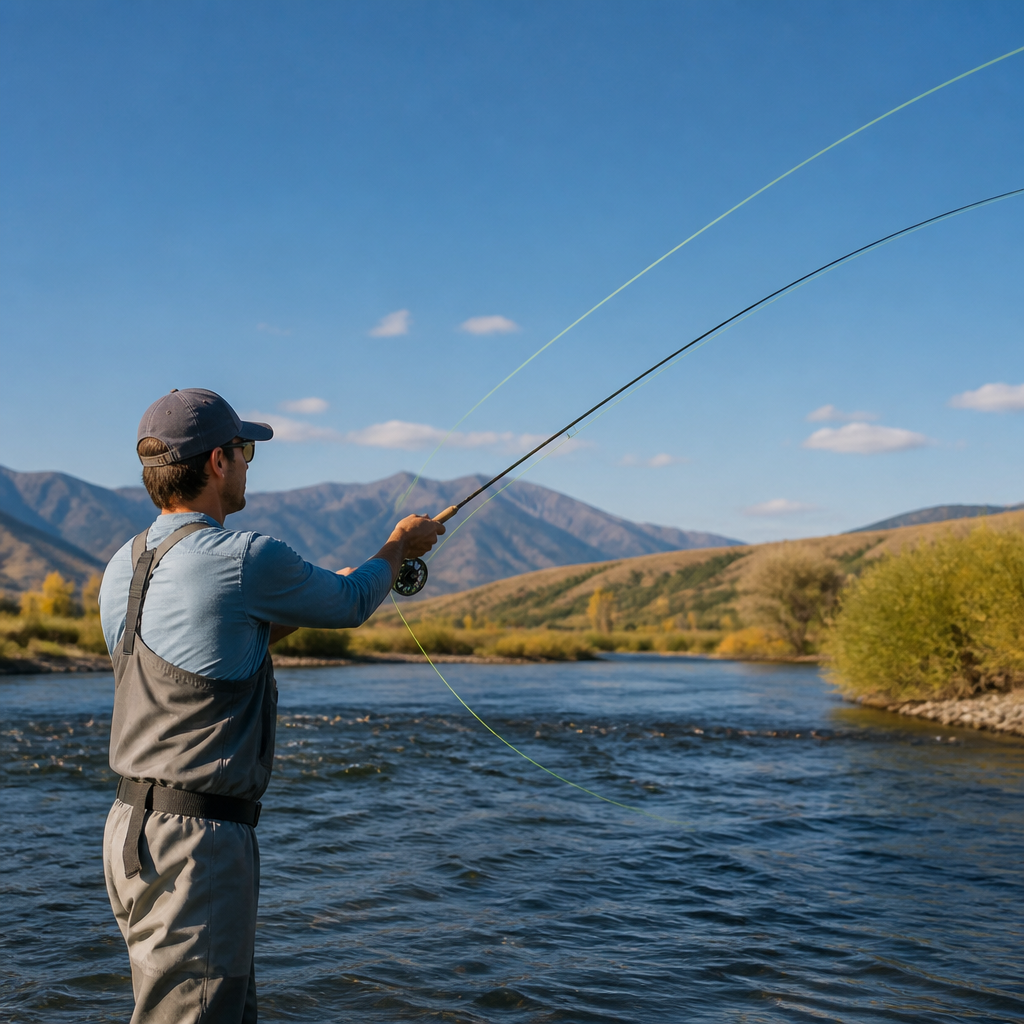
Essential nymph patterns for fly fishing form the foundation of productive subsurface angling because trout, grayling, and many warmwater species feed underwater far more often than they rise. In practical terms, a nymph is an artificial fly designed to imitate the immature aquatic insects that drift, swim, or crawl below the surface before hatching. Nymphing techniques are the methods anglers use to present those flies naturally at the depth and speed where fish expect to see real food. When I build a nymph box for a new river, I am not trying to match every insect perfectly. I am choosing patterns that cover the major food groups, sink rates, sizes, and silhouettes fish see every day.
This matters because most trout streams are nymph streams most of the time. Aquatic entomology studies and routine stream sampling consistently show that mayfly nymphs, caddis larvae, caddis pupae, midge larvae, midge pupae, stonefly nymphs, scuds, sowbugs, cranefly larvae, and aquatic worms make up a dependable share of a fish’s diet across seasons. Even during famous hatches, fish often continue feeding below the film, taking emerging insects before they reach the surface. Anglers who understand essential nymph patterns and the strategies behind them catch fish in cold water, bright sun, high flows, tailwaters, freestones, spring creeks, and pressured urban fisheries. That is why this topic sits at the center of effective fly fishing technique.
A strong nymphing hub should answer three questions clearly. First, which patterns belong in a practical fly box? Second, when should each pattern be used? Third, how should those flies be rigged and presented? The answers are connected. A slim Perdigon is not just a fly; it is a depth tool for fast runs. A Hare’s Ear is not just generic; it suggests many mayflies, caddis, and small stoneflies. A Zebra Midge is not just for winter; it is a year-round confidence pattern on rivers with stable flows and abundant midges. The best anglers think in categories, not in isolated flies, and they choose patterns that solve a feeding problem.
This article covers the essential nymph patterns every serious fly angler should know, then connects them to core nymphing techniques: indicator fishing, tight-line presentations, dropper systems, depth control, weight management, strike detection, and seasonal selection. Treat it as the hub page for nymphing techniques. If you understand the pattern families here and why they work, the more specialized topics within subsurface fishing become easier to master on any water you fish.
What makes a nymph pattern essential
An essential nymph pattern does one of four jobs reliably. It imitates a major insect group, acts as a searching pattern when exact identification is unnecessary, reaches a specific depth efficiently, or triggers strikes through movement or contrast when fish are opportunistic. In my experience guiding and fishing mixed freestone and tailwater systems, the flies that earn permanent space are not always the most artistic. They are the ones that cover common situations with minimal overlap. That is why proven standards remain standards.
Three characteristics separate useful nymphs from box clutter. First is profile. Trout recognize shape faster than tiny color differences, especially in current. Second is weight and sink behavior. Tungsten beads, slim bodies, and sparse materials get down fast; buggy dubbing, soft hackle, and bulk create lift and movement. Third is visibility. Hot spots, ribbing, flashback material, and bead color help fish find flies in stained water or broken current, but too much flash can hurt in low, clear water. Good nymph selection balances these factors instead of chasing trends.
Hook size also matters more than many anglers admit. Sizes 12 to 18 cover an enormous amount of trout nymphing, while 20 to 24 become important on technical spring creeks and tailwaters with heavy midge populations. Larger sizes 6 to 10 matter for stoneflies, cranefly larvae, and attractor nymphs in big water. If your box contains only one size of each pattern, you are not prepared. Fish often key less on the exact species than on the right size and drift level.
Core nymph categories every fly box needs
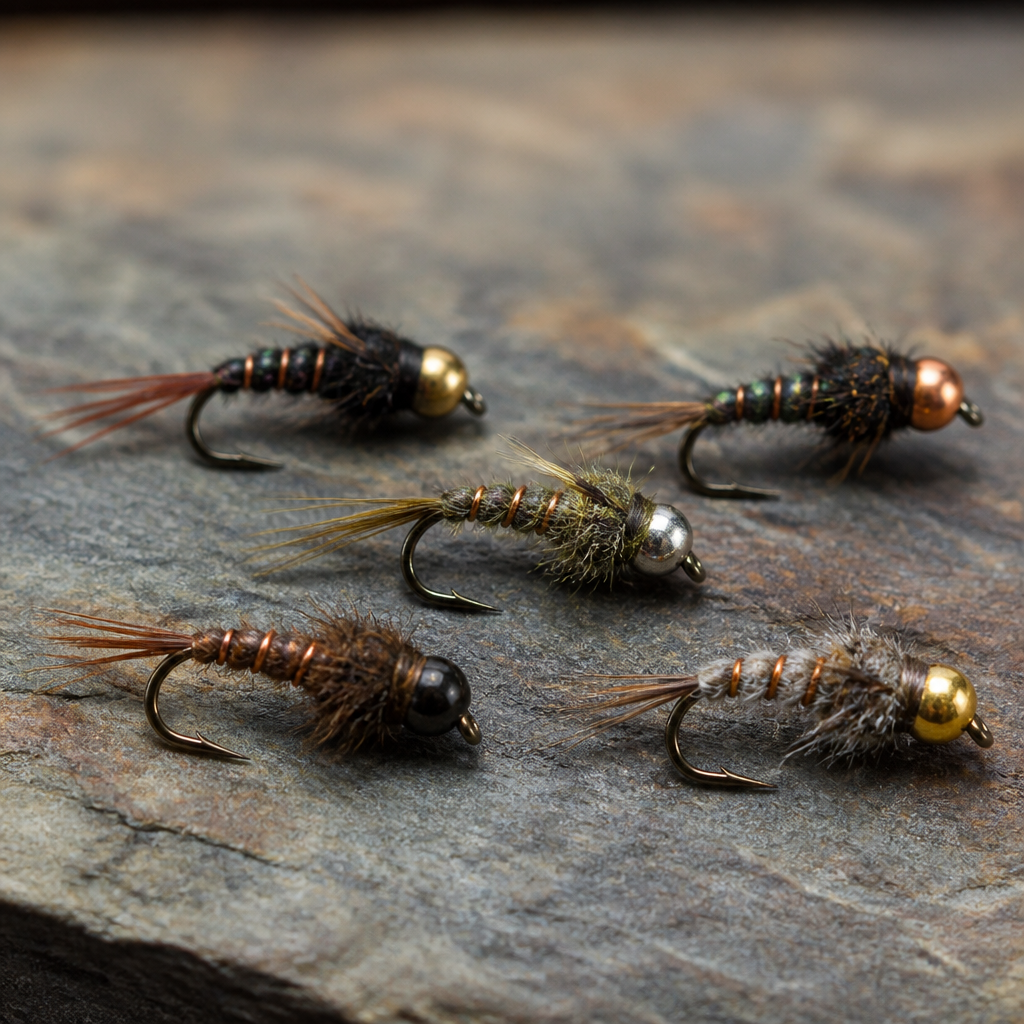
The easiest way to build a functional selection is by category rather than by brand-name fly. Mayfly nymphs should include a slim, natural option such as a Pheasant Tail and a more robust buggy option such as a Hare’s Ear. Caddis imitations should include both larval and pupal forms because caddis become especially vulnerable during ascent. Midge patterns are mandatory on tailwaters and useful almost everywhere. Stonefly nymphs matter in larger freestones, Western rivers, and any stream with rocky substrate. Finally, attractor and competition-style patterns, including Perdigons and jig nymphs, provide depth, visibility, and quick adaptation.
| Pattern family | Best uses | Common sizes | Key advantage |
|---|---|---|---|
| Pheasant Tail | Mayfly imitation, searching | 14–20 | Slim natural profile |
| Hare’s Ear | General searching, mayfly/caddis crossover | 12–18 | Buggy movement and versatility |
| Zebra Midge | Tailwaters, winter, clear water | 18–24 | Simple, sparse, consistent |
| Perdigon | Fast depth, euro nymphing | 12–18 | Rapid sink rate |
| Pat’s Rubber Legs | High water, stonefly presence | 6–12 | Large profile and motion |
| Scud or sowbug | Spring creeks, fertile tailwaters | 12–18 | Matches year-round food source |
Within those categories, color should stay disciplined. Black, olive, brown, tan, cream, and red handle most situations, with pink or orange reserved for hot spots and specific attractor roles. I have seen anglers overcomplicate this by carrying twelve shades of the same fly while ignoring weight variation. A smarter approach is to carry each confidence pattern in at least two bead weights and two or three sizes. That gives you depth control and match flexibility without creating confusion on the water.
Must-have mayfly, caddis, and midge nymph patterns
If I had to name the most universally useful nymph pattern in trout fishing, it would be the Pheasant Tail. Frank Sawyer’s original concept remains brilliant because it suggests so many mayfly nymphs with almost no excess. It works during Baetis activity, on general riffle feeders, and as part of a two-fly searching rig. Variations with tungsten beads, flashback wing cases, or jig hooks add depth and visibility without ruining the fundamental silhouette. On technical rivers, the plain version often outfishes flashy alternatives.
The Hare’s Ear belongs beside it because it is broader in suggestion. Its buggy dubbing and guard-hair legs imitate cased caddis, free-living caddis, immature mayflies, and even small stoneflies depending on size and color. That is why it remains one of the most productive searching nymphs ever created. A Gold Ribbed Hare’s Ear in size 14 or 16 is often the first fly I tie on when I have not yet sampled insects or seen obvious feeding clues. It simply looks edible.
For caddis specifically, the Walt’s Worm, caddis larva patterns in olive or tan, and soft-hackle caddis pupae deserve permanent space. Caddis are active insects, and their movement matters. During emergence, fish often intercept ascending pupae in the upper third of the water column, so a lightly weighted pupa or soft hackle can outperform a bottom-dredging rig. Anglers who only dead-drift heavy nymphs miss this. A slight lift at the end of the drift often mimics the natural ascent and draws aggressive takes.
Midge patterns are equally important, especially on tailwaters below dams where stable temperatures support year-round midge populations. The Zebra Midge is the standard because it is sparse, fast to tie, and effective in black, red, olive, and brown. A size 20 black Zebra Midge under a tiny indicator can save a winter day when fish refuse larger offerings. Blood midge patterns, thread midges, and midge pupae with silver ribbing also belong in the system. On pressured fisheries, small differences in bead finish and thread translucence can matter.
Stoneflies, scuds, sowbugs, and attractor nymphs
Stonefly nymphs deserve separate treatment because they are not niche flies on many rivers. Salmonflies, golden stones, and smaller species live for long periods underwater, making them steady food sources. Pat’s Rubber Legs became famous for good reason: the rubber appendages move in heavy current, and the chenille body pushes a large visible profile. It excels in runoff, stained water, and pocket water. More imitative options, including twenty-incher variants, biot stoneflies, and dark rubber-leg nymphs, work when fish see the real insects regularly and become selective.
Scuds and sowbugs are essential where aquatic vegetation, limestone influence, or nutrient-rich tailwater conditions support crustacean populations. On places like the Missouri, Bighorn, and many spring creeks, they are not backup flies; they are primary food forms twelve months a year. Scuds usually show a curved shape and translucent shellback in gray, tan, pink, or olive. Sowbugs tend to look flatter and more segmented. Dead-drift them near weeds, undercut banks, or soft seams, and expect subtle takes.
Attractor nymphs round out the box because fish do not always need exact imitation. Perdigons, Frenchies, and jig-style hot-spot flies were refined in competitive fly fishing where quick sink rates and efficient coverage matter. Their smooth bodies, tungsten beads, and hook-up orientation allow them to penetrate fast current and maintain contact. These patterns are not gimmicks. They are engineering solutions to a presentation problem. In deep runs where a soft dubbed fly takes too long to descend, a Perdigon reaches feeding depth before the drift ends.
Worm patterns also fit this section, even if purists resist them. San Juan Worms and more realistic annelid patterns produce after rain, during flow changes, and on rivers with fine sediment banks. Aquatic worms dislodged by current are real food. Ignoring them is an aesthetic choice, not a biological argument. Carry red, wine, pink, and tan versions in moderate sizes and fish them as part of a balanced system rather than as a blunt instrument.
Nymphing techniques that make these patterns work
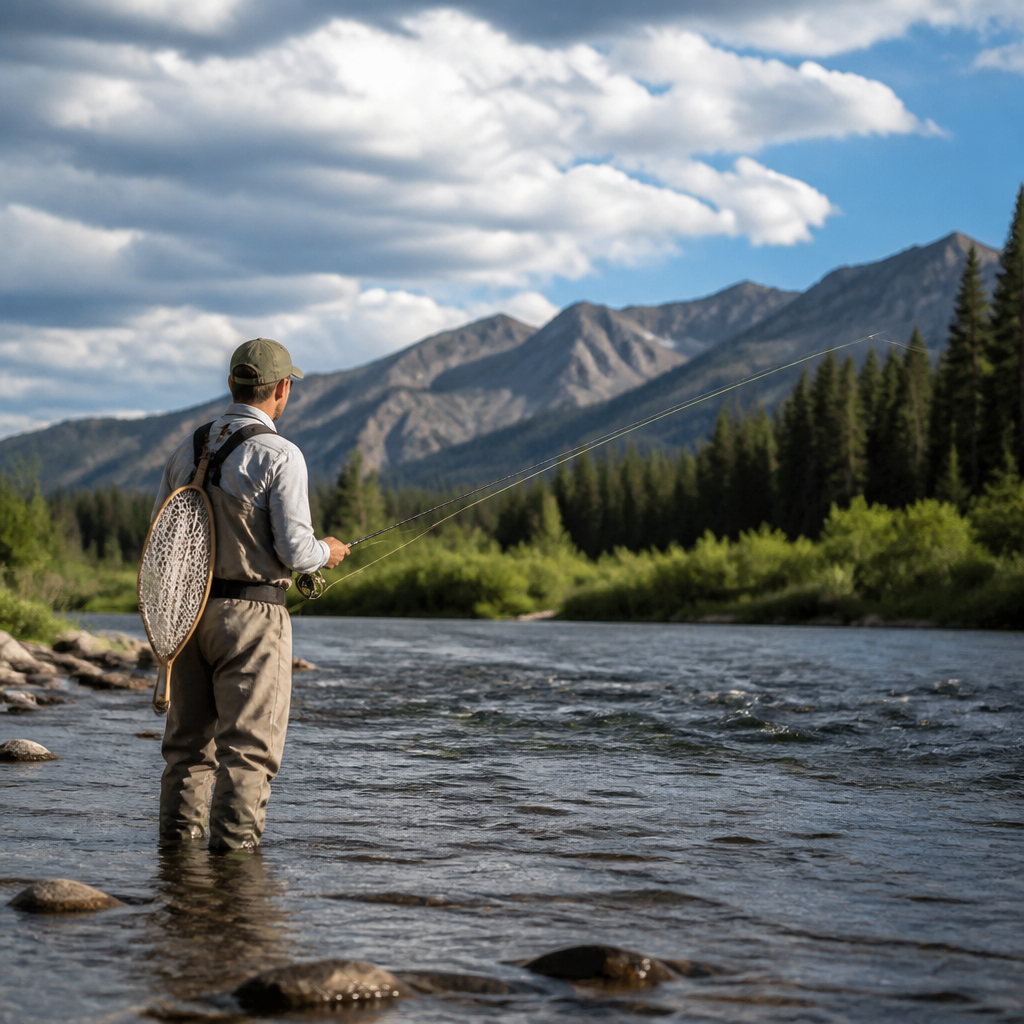
The best pattern fails with poor presentation, so nymphing techniques are inseparable from fly selection. The primary rule is simple: your flies must drift at the trout’s level and at the current’s natural speed. Indicator nymphing achieves this by suspending weighted flies beneath a buoyant marker, usually with split shot placed above the flies to control sink rate. It is effective on broad runs, deep pools, and water where long drifts are possible. Set the indicator roughly one and a half to two times the water depth from the bottom fly as a starting point, then adjust based on bottom contact and strike frequency.
Tight-line nymphing, including Czech, French, and modern contact styles, removes the indicator and relies on direct connection, a long leader, and controlled tension. This approach excels in pocket water, seams, short drifts, and complex currents because it reduces slack. A heavy point fly anchors the rig while a lighter dropper tracks slightly above it. Sighter material in high-visibility mono helps detect hesitation, twitches, or unnatural stops. When I want precision and immediate feedback, especially in knee- to waist-deep fast water, tight-line methods outperform almost everything else.
Depth control is the common denominator. Use tungsten beads, split shot, heavier anchor flies, longer drifts upstream, and thinner tippet to sink faster. Use unweighted flies, shorter drifts, or smaller shot when fish feed higher. Strike detection should be active, not passive. Any pause, straightening, or micro-dip can be a take. Set quickly with a short lift. Most missed fish on nymphs are not refusals; they are strikes the angler never recognized. Practice reading tiny signals and changing weight before changing flies too often.
How to choose patterns by season, water type, and conditions
Seasonal selection starts with insect availability and fish metabolism. In winter, midges, small mayflies, and scuds dominate many trout diets, so smaller flies and slower drifts matter. Spring brings pre-runoff mayfly activity, worms during rain events, and increasing stonefly movement. During runoff, larger dark nymphs, worms, and attractor patterns with strong silhouettes produce in reduced visibility. Summer broadens the menu: caddis larvae and pupae, PMD and Baetis nymphs, small attractors, and terrestrials as droppers all come into play. Fall often rewards Baetis nymphs, midges, and egg-adjacent setups where legal and appropriate.
Water type is just as important. Freestone rivers reward durable patterns that handle broken current and changing flows, such as Hare’s Ears, Pat’s Rubber Legs, and jig nymphs. Tailwaters often demand precise sizes, slim profiles, and clean drifts with Zebra Midges, Pheasant Tails, scuds, and sowbugs. Spring creeks magnify selectivity, making tippet diameter, fly sparsity, and drag-free movement critical. In stillwaters, many of the same nymphs work, but retrieves matter more than dead drifts because chironomids, damsel nymphs, and scuds move differently in lakes.
Conditions complete the picture. In clear low water, reduce flash, downsize, and lengthen leaders. In stained or turbulent water, increase profile, contrast, and weight. If fish are bumping but not sticking, consider hook size and point sharpness before changing colors. Build your nymph box around these essential patterns, fish them with deliberate depth control, and refine your technique on every outing. That approach catches more trout than chasing novelty. Start with the proven flies here, practice both indicator and tight-line methods, and let the river tell you which pattern family deserves the next drift.
Frequently Asked Questions
What are the most essential nymph patterns every fly angler should carry?
A strong nymph box does not need to be huge, but it should be versatile. The most essential nymph patterns are the ones that consistently imitate the broad categories of subsurface food fish see every day. For most anglers, that starts with Pheasant Tail Nymphs, Hare’s Ear Nymphs, Prince Nymphs, Zebra Midges, Copper Johns, and simple attractor patterns such as Perdigons or flashy hot-spot nymphs. Each of these fills a specific role. A Pheasant Tail closely suggests mayfly nymphs and works almost anywhere. A Hare’s Ear is a classic “searching” pattern because its buggy profile can resemble caddis larvae, mayfly nymphs, or other drifting food. A Prince Nymph offers a bolder silhouette and can be excellent in faster water or when fish are keyed on stoneflies or larger nymphs.
Zebra Midges are especially important in tailwaters, spring creeks, and colder conditions where midge larvae and pupae make up a large part of a fish’s diet. Copper Johns and other beadhead nymphs are valuable because they sink quickly, helping anglers reach the feeding zone efficiently. Perdigons have also become staples because their slim, dense bodies cut through current and get down fast, which is critical when fish are holding near the bottom. If you want a practical starting lineup, carry these patterns in a range of sizes from about 12 to 20, along with different bead colors and body tones. That combination covers a surprising amount of real-world fishing and gives you confidence that you have patterns suitable for mayflies, caddis, midges, and general attractor situations.
How do I choose the right nymph pattern for the water and the fish I am targeting?
Choosing the right nymph starts with understanding what fish are likely eating in that specific piece of water. In rivers and streams, trout and grayling often feed on mayfly nymphs, caddis larvae, stonefly nymphs, and midge larvae. In lakes or stillwaters, chironomids, damselfly nymphs, and other aquatic insects may be more important. The best approach is to match both the type of insect and the way it behaves underwater. If the water has lots of mayflies, a slim, natural-looking pattern such as a Pheasant Tail or a Frenchie often makes sense. If caddis are more common, a slightly bulkier, buggy fly like a Hare’s Ear or caddis larva imitation can be very effective. If fish are holding deep in strong current, a heavier pattern that sinks quickly is usually the better choice, even if the exact imitation is somewhat general.
Water clarity, depth, and flow also matter. In clear, pressured water, more natural colors and refined profiles often outperform bright, flashy flies. In off-color water or when fish are less selective, a nymph with a hot spot, flashback, or tungsten bead can help draw attention. Size is often more important than many anglers realize. Fish may reject a fly that is too large or too small even if the color looks close. That is why experienced anglers regularly adjust size before making drastic pattern changes. A good system is to begin with one natural imitation and one attractor or confidence fly in a two-nymph rig, then observe how fish respond. If you are getting drifts at the right depth but not getting takes, change one variable at a time: first size, then weight, then color or profile. That process is far more reliable than switching randomly through dozens of flies.
Why are nymph patterns so effective compared with dry flies in many fishing situations?
Nymph patterns are so effective because fish spend a great deal of their feeding time underwater. Aquatic insects live most of their life cycle below the surface, sometimes for months or even years, before they emerge. That means nymphs, larvae, and pupae are available to trout and other fish much more consistently than adult insects floating on top. While dry-fly fishing is exciting and visually memorable, surface feeding often happens during specific windows such as hatches, spinner falls, or periods of concentrated activity. Subsurface feeding, by contrast, is the everyday routine. Fish can hold in current seams, runs, pocket water, and deep pools and intercept drifting nymphs with far less effort than chasing food at the surface.
Another reason nymphs produce so well is that they can be presented where larger, more cautious fish often live. Bigger trout commonly hold deeper and feed selectively near the bottom, where current delivers a steady food supply. A properly weighted nymph drifted naturally through that zone is often the most efficient way to reach them. Nymph patterns also work across seasons. In cold weather, fish may be less willing to move far, but they still eat subsurface insects. During high water or turbulent conditions, nymphs remain visible and relevant when dry-fly opportunities are limited. In short, nymphs are effective because they imitate the food fish encounter most often and allow anglers to target the part of the water column where feeding actually happens most of the time.
What sizes, colors, and weights should I carry in essential nymph patterns?
A practical nymph selection should include variation in size, color, and weight because those three factors have a direct impact on whether your fly looks believable and reaches the fish. For sizes, many essential nymph patterns are most useful between hook sizes 12 and 20. Larger sizes, such as 8 to 12, can be important for stonefly nymphs or bigger attractor patterns, while smaller sizes, such as 18 to 22, are often necessary for midges and technical tailwater fishing. If you are building a simple but effective selection, focus first on sizes 14, 16, and 18. Those cover a wide range of mayfly and caddis imitations and are productive in many streams and rivers.
For colors, natural tones should form the core of your box. Brown, tan, olive, black, and dark red consistently produce because they reflect common aquatic insects. From there, add a few confidence colors and attractor elements such as copper, pearl, pink, orange, or chartreuse hot spots. These are especially helpful in stained water, during competition-style nymphing, or when fish respond to brighter triggers. Weight is equally critical. You should carry the same or similar patterns in unweighted, beadhead, and ideally tungsten-bead versions. The goal is not just to fish a favorite fly, but to fish that fly at the correct depth. A perfect imitation that never gets near the bottom is often less effective than a general pattern that drifts naturally in the feeding lane. By carrying multiple weights, you can adapt to shallow riffles, mid-depth runs, and deep fast slots without constantly overhauling your setup. A small, intelligently varied nymph assortment usually outperforms a large box full of redundant flies.
How should I fish essential nymph patterns to get the most natural presentation?
The most important principle in nymph fishing is achieving a natural drift at the right depth and speed. Fish expect subsurface food to move with the current, so drag, unnatural acceleration, or a fly riding too high in the water column will reduce success. Start by reading the water carefully. Focus on seams, riffles, runs, drop-offs, pocket water, and the softer edges of faster current, because these are the places where fish can hold efficiently while food drifts to them. Then choose enough weight to get your nymphs down near the bottom without snagging constantly. In many cases, occasional contact with the streambed is a good sign that you are fishing in the strike zone.
Presentation methods can vary, but the fundamentals remain the same. Under an indicator, you want a dead drift with enough leader depth to let the flies sink fully. In tighter water, high-stick or tight-line nymphing helps maintain direct contact and improves strike detection. In either case, leading the drift slightly with the rod tip can reduce slack while still allowing the flies to move naturally. Strike detection matters because many takes are subtle. Watch the indicator, leader, sighter, or even the slightest hesitation in your line and set the hook whenever something looks different. It is better to react quickly than to assume the drift simply touched a rock. Finally, adjust constantly. Change weight, depth, angle, and fly size until you find the level where fish are feeding. The anglers who catch the most fish on nymphs are usually the ones who fine-tune presentation the fastest, not necessarily the ones carrying the most elaborate patterns.