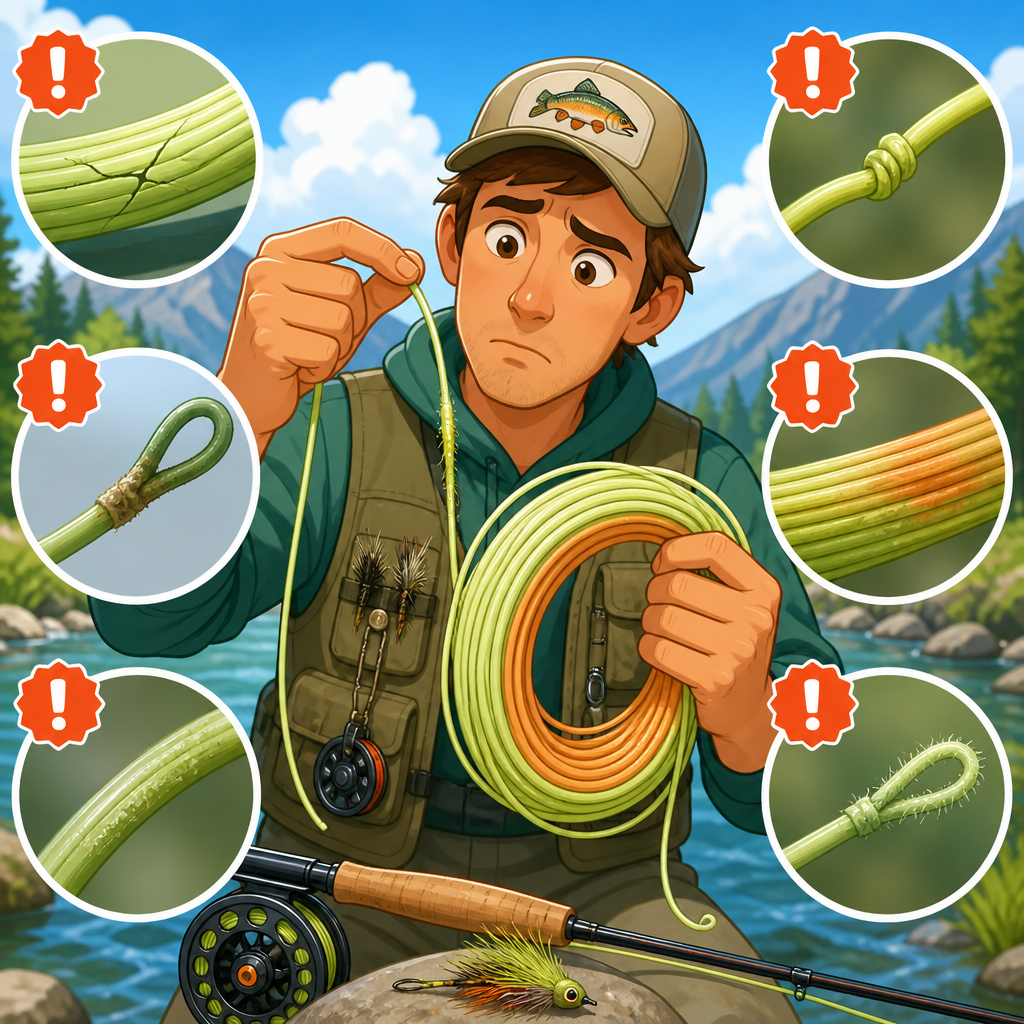
Fly line is the hardest-working component in a fly fishing outfit, yet it is often the last piece anglers think to replace. In practical terms, the line carries the cast, turns over the leader, floats or sinks at a designed rate, and connects every part of the system between rod and fly. When it deteriorates, even a premium rod and a perfectly matched reel cannot perform as intended. Knowing when to replace your fly line is therefore a basic gear and equipment skill, not a minor maintenance detail.
In this Fly Fishing Basics hub, the focus is broader than one simple purchase question. Replacing fly line sits at the center of good equipment management because line condition affects casting distance, accuracy, drag, presentation, hook-setting power, and fish-fighting control. I have seen anglers blame their timing, rod action, or even wind direction, when the real issue was an old line with cracked coating and a compacted front taper. A fresh line immediately solved what looked like a technique problem.
Three key terms matter here. The core is the braided or monofilament center that provides strength. The coating is the outer material, usually PVC or a specialized polymer, that gives the line diameter, slickness, buoyancy, and taper shape. The taper describes how mass is distributed from the head to the running line, which determines how energy transfers during the cast. Once coating texture changes, the taper becomes damaged, or the core starts to fail, the line no longer behaves the way the manufacturer designed it to behave.
Why does this matter so much? Because fly fishing is unusually dependent on line performance. In spin fishing, the lure has enough weight to cast itself. In fly fishing, the line is the casting weight. If the line sticks in the guides, sags unexpectedly, refuses to float high, or loses suppleness in cold water, presentation quality drops immediately. For beginners, bad line can slow learning dramatically. For experienced anglers, it can cost fish during technical dry-fly drifts, streamer strip sets, or long nymphing mends.
Why Fly Line Condition Is the Foundation of Gear and Equipment
Fly line is the hub of the entire tackle system because every other component depends on it. Rod manufacturers rate rods by line weight because the line loads the blank. Leaders are designed to turn over from the line’s front taper. Reels store, retrieve, and apply drag to the line under tension. Even accessories such as line dressings, cleaning pads, leader straighteners, and landing nets play a role in preserving or responding to line performance. If you are building out a practical fly fishing gear and equipment plan, line care and replacement should sit beside rod selection, reel balance, backing capacity, and leader choice.
As a rule, a heavily used trout fly line may need replacement every season or two, while lightly used freshwater lines can last several years with careful cleaning and storage. Saltwater lines often age faster because ultraviolet exposure, heat, and abrasive flats environments accelerate coating breakdown. Sinking lines may look fine at a glance yet become unreliable when the coating stiffens or the sink profile becomes inconsistent. There is no universal calendar date that fits every angler, which is why warning signs are more useful than age alone.
Warning Sign 1: Cracks, Nicks, and Rough Spots in the Coating
The clearest sign you should replace your fly line is visible damage to the coating. Small cracks, flattened sections, rough patches, and nicks usually begin in high-friction zones: the first thirty feet outside the tip, the area near the stripping guide, and the section handled repeatedly during false casting and fish fighting. Once the coating breaks, water can enter, dirt embeds more easily, and friction rises quickly. The line may still function for short casts, but performance is already compromised.
Run the line slowly through your fingers after cleaning it. Healthy coating feels smooth and consistent. Damaged coating feels raspy, sticky, pitted, or uneven. In warm conditions, old line can become tacky rather than slick; in cold conditions, those same areas may turn wiry and brittle. I replace lines at the first widespread cracking, not when they become completely uncastable, because damaged coating usually worsens fast. Waiting too long often means poor presentation during the best part of the season.
Coating damage also creates guide wear concerns. Deep abrasions can act like fine sandpaper over time, especially when grit is embedded in the surface. Modern ceramic stripping guides are durable, but line that is visibly split or rough should not stay in regular rotation. If only the final few feet are damaged, trimming can buy a short period for specific applications, yet it changes taper geometry. For a line relied on for everyday fishing, replacement is the correct fix.
Warning Sign 2: The Line No Longer Floats or Sinks as Designed
A floating line should float high enough to mend, pick up cleanly, and support the leader butt near the surface. A sinking line should descend at a predictable rate along its labeled density or sink class. When those behaviors change, replacement is often due. Floating lines commonly fail by riding low, absorbing water through damaged coating, or showing tip sink after repeated use. A line that once hovered on the surface film but now drags under during dry-fly drifts is no longer doing its job.
This matters beyond convenience. A compromised floater creates micro-drag because sunken sections pull against current seams. That can ruin dry-fly presentations to selective trout. It also makes roll casting harder because the line sticks to the surface rather than lifting crisply. On the sinking side, an aging integrated sink-tip or full-sinking line may develop hinge points or uneven sink behavior. Instead of tracking straight, it can bow, stall, or sink at different rates across damaged sections, which disrupts streamer depth control.
Before replacing, rule out simple contamination. Sunscreen, algae film, mud, and streambank grit can make a healthy floater sit lower. Clean the line with manufacturer-approved products, then test it again in still water. If buoyancy or sink performance remains inconsistent, the problem is structural rather than cosmetic.
Warning Sign 3: Casting Distance and Shootability Drop Noticeably
If your casting mechanics have not changed but the line suddenly stops shooting, the line deserves inspection. Good fly line minimizes friction through polished coating, consistent diameter, and stable taper design. As the surface ages, dirt embeds into microscopic pores and the slick factory finish wears down. The result is immediate: shorter casts, more false casting, weaker turnover, and greater effort needed to hit normal fishing distances.
I usually notice this first on water where I know my baseline. A trout line that used to carry forty-five feet with one back cast starts dying at thirty-five. A saltwater line that should fire quickly at moving fish begins to hang in the guides. Anglers often respond by overpowering the rod, which causes tailing loops and timing issues. The line, not the caster, is often the hidden bottleneck.
| Symptom | Likely Cause | What to Do |
|---|---|---|
| Shorter casts with same effort | Dirty or worn coating increasing friction | Clean line first; replace if no improvement |
| Poor turnover at normal range | Front taper damaged or compacted | Inspect head section; replace for accurate presentation |
| Line sticks in guides | Cracks, tackiness, or embedded grit | Replace to restore shootability and protect guides |
| Excess false casting needed | Loss of slickness and energy transfer | Compare against a newer line of same weight |
A quick comparison test is useful. If you have access to a similar rod with a newer line of the same weight, cast both. The difference is usually obvious. Recognized line makers such as Scientific Anglers, Rio, Cortland, Airflo, and Orvis engineer coatings to shoot in specific temperature ranges, and once that surface degrades, no amount of casting skill can fully restore the original behavior.
Warning Sign 4: Memory, Coiling, and Stiffness Persist After Stretching
Some memory is normal, especially when a line has been stored on a reel in cold weather. The issue becomes a replacement sign when coils remain tight after stretching or when the line feels unnaturally stiff for the conditions. Excessive memory reduces casting efficiency because coils slap guides, tangle around boots and stripping baskets, and interrupt clean shoots. It also affects strike detection and line management on the water.
The cause is usually age, heat exposure, or mismatch between line design and fishing temperature. Tropical lines are built with harder coatings to avoid limpness in heat; they become very stiff in cold trout water. Coldwater lines can turn gummy in hot conditions. But when a line that used to match your fishery becomes permanently wiry, the material has likely aged out. I see this often in lines stored in hot garages, truck dashboards, or direct sunlight. Polymer fatigue changes suppleness long before total failure appears.
Persistent coiling is especially damaging for beginners because it masks good technique. New anglers already struggle with line control, and old line multiplies frustration. If stretching only helps for a few minutes, replacement is usually more cost-effective than fighting the line all day.
Warning Sign 5: The Front Taper Loses Shape and Presentation Quality Suffers
Not all fly line failure is obvious to the eye. Sometimes the line still looks acceptable, but the front taper has become worn, compressed, or subtly deformed from repeated use. This usually shows up as poor turnover, splashy presentations, collapsed leaders, or difficulty carrying the line length the taper was built to support. On technical trout water, this can be the difference between a fly landing softly and a fish refusing immediately.
Weight-forward floating lines rely on precise mass distribution. The front taper dissipates energy so the leader straightens without crashing down. If the tip section becomes nicked, shortened, or waterlogged, turnover changes. Double-taper lines can hide wear longer because you can reverse them, but once both ends lose presentation quality, replacement becomes necessary. In practical guiding situations, I have watched anglers switch to a fresh dry-fly taper and instantly improve slack presentations, aerial mends, and reach casts.
This sign matters across gear and equipment decisions because anglers often attempt to solve it by changing leaders. Longer leaders, stiffer butt sections, or heavier tippet can tweak turnover, but they cannot restore a compromised taper. If your line no longer supports the presentation style it was purchased for, it has reached the end of its useful life for that job.
Warning Sign 6: Core Failure, Weak Loops, or Unexplained Breaks
The most serious warning sign is core failure. This may appear as stretch changes, soft spots, loop separation, cracked welded loops, or unexplained breakage under loads the line should easily handle. Coating damage is inconvenient; core damage is a reliability problem. Once the internal core starts to weaken, the line can fail during a hard strip set, a long run from a strong fish, or while pulling free from a snag.
Check factory loops and hand-tied nail-knot connections closely. Welded loops eventually fatigue, especially on saltwater lines and sink tips that are repeatedly cast with heavier flies. If the loop coating splits, the core may soon fray. Some anglers build braided or nail-knot sleeve repairs, and those can extend life temporarily, but they are stopgaps. If multiple connection points are suspect or the line has weak sections in the body, replacement is the responsible choice.
Unexplained breakage also deserves a system check. Make sure the problem is not old backing, a sharp guide edge, or damaged leader material. But if the line itself is flattening, separating, or failing under normal use, retire it. Losing a strong fish because of known line weakness is avoidable.
How to Make Fly Line Last Longer Before You Replace It
The best replacement strategy is preventive maintenance. Clean freshwater lines regularly with a soft cloth and products approved by the manufacturer. Rinse saltwater lines after every trip, especially when fishing warm flats where salt crystals and sunscreen residue build quickly. Store reels away from prolonged heat, loosen tightly wound coils when possible, and avoid stepping on line in gritty boat decks or muddy banks. Match line type to water temperature and fishing method, whether that means a supple coldwater trout taper, a warmwater bass taper, or a tropical saltwater line.
This gear and equipment hub principle applies broadly: every tackle choice works longer when used in the conditions it was built for. Pairing the right fly line with the right rod weight, leader formula, and fishery is not marketing trivia. It is the difference between dependable performance and premature wear.
Replace your fly line when damage, lost buoyancy, reduced shootability, persistent memory, taper failure, or core weakness show up consistently. Those six warning signs explain most performance problems anglers wrongly blame on skill or weather. As part of your Fly Fishing Basics approach to gear and equipment, inspect line often, clean it on schedule, and compare performance honestly. A fresh, well-matched line restores casting efficiency, improves presentation, and protects the rest of your setup. If your current line is showing two or more of these signs, make replacement your next tackle upgrade before your next trip.
Frequently Asked Questions
How often should you replace a fly line?
There is no single replacement schedule that fits every angler, because fly line lifespan depends on how often you fish, the environments you fish in, how well you clean and store the line, and whether you are using floating or sinking line. A dedicated angler who fishes weekly through a full season may need to replace a heavily used line much sooner than someone who fishes a handful of weekends each year. In general, the better question is not “How many months old is my line?” but “Is it still performing the way it was designed to perform?”
A healthy fly line should shoot smoothly, float or sink consistently at its intended rate, turn over leaders cleanly, and feel slick rather than rough and tired. Once you notice meaningful changes in casting distance, line control, flotation, sink performance, or surface condition, replacement should move to the top of your gear list. Many anglers wait too long because the line is still technically usable, but by that point it is already reducing rod performance and making casting harder than it should be. If your line shows clear wear such as cracks, stubborn memory coils, tip sinking on a floating line, or a rough, sticky finish that cleaning no longer fixes, it is usually time to replace it rather than keep fighting it on the water.
What are the clearest warning signs that a fly line needs to be replaced?
Several warning signs tend to show up before a fly line fully fails, and recognizing them early can save frustration on the water. One of the most obvious is visible cracking, especially in the first 20 to 30 feet of the line where most casting, mending, and stripping wear occurs. Small surface cracks may seem minor at first, but they usually indicate that the coating is breaking down. As those cracks spread, the line becomes less smooth, collects more dirt, and loses the slickness needed for efficient casting.
Another major sign is loss of performance. If your casts suddenly require more effort, the line no longer shoots through the guides the way it used to, or your loops and turnover have become inconsistent despite sound technique, the line may be the problem. Floating lines that begin to sink at the tip or along worn sections are also sending a clear message that the coating and flotation properties have deteriorated. Excessive memory is another warning sign, especially if the line keeps springing into coils even after stretching. Add in a rough, sticky, or chalky texture, persistent dirt buildup that returns immediately after cleaning, or hinging and uneven handling caused by worn sections, and you have a strong case for replacement. In short, when a fly line no longer behaves as a clean, balanced, predictable casting tool, it is no longer doing its job well.
Can cleaning and dressing fix a worn fly line, or does it need to be replaced?
Cleaning can absolutely improve a fly line that is dirty, dry, or temporarily underperforming, but it cannot restore a line whose coating has physically broken down. This distinction matters. Dirt, algae film, sunscreen residue, and general grime create friction and can make even a good line feel slow, sticky, and difficult to cast. In those cases, a proper cleaning with products approved for fly lines can noticeably improve slickness, flotation, and shootability. Dressing may also help some lines feel smoother and reduce friction for a while.
However, cleaning is maintenance, not repair. If the line has cracks, flat spots, severe abrasions, exposed core, or sections that no longer float or sink correctly, no cleaner is going to bring back the original structure of the coating. The same is true for line memory caused by age and material fatigue rather than temporary storage coils. A good rule is this: if cleaning improves the line for several trips, it probably just needed maintenance; if the improvement is minimal, very short-lived, or nonexistent, the line is likely worn out. Anglers sometimes keep trying to revive an old line because replacement feels less urgent than buying a rod or reel, but in real fishing terms, a fresh line often delivers one of the biggest performance upgrades you can make.
How does an old or damaged fly line affect casting and overall fishing performance?
Fly line is the engine of the cast, so when it starts to fail, the entire outfit feels off. An aging or damaged line creates more friction in the guides, which reduces line speed and makes it harder to load the rod efficiently. That often shows up as shorter casts, less accurate presentation, wider loops, and more effort required to achieve the same result. Anglers frequently blame themselves, their rod, or even the wind when the real problem is a line that has lost its original taper integrity and slick outer finish.
Performance problems go beyond casting distance. Leader turnover becomes less reliable, especially with larger flies, weighted rigs, or longer leaders. Mending can become less precise because the line no longer responds cleanly on the water. A floating line that sinks at the tip can drag dry flies unnaturally or ruin drift control. A sinking line that no longer sinks evenly may fish at inconsistent depths, which directly affects presentation and strike opportunities. Old line can also tangle more easily, especially if it has strong memory or a rough finish that grabs itself. Put simply, a worn fly line compromises everything from presentation and drift to hook-setting efficiency and overall confidence. Even the best rod-and-reel setup cannot perform properly if the line between them and the fly is failing.
Is it worth replacing a fly line even if the rod and reel are still in great shape?
Yes, absolutely. In fact, replacing a worn fly line is often one of the smartest and most cost-effective ways to restore performance without changing anything else in your setup. Rods and reels usually have much longer service lives than lines, especially when they are well cared for. Fly line, by contrast, is a consumable piece of gear. It takes constant abuse from sun exposure, dirt, water, stripping, hauling, boat decks, rocks, guides, and repeated flexing. It is normal for it to wear out sooner.
Many anglers invest heavily in premium rods and quality reels, then unknowingly handicap both by fishing a tired line past its useful life. That is like putting worn tires on a high-end truck and expecting perfect handling. A new fly line can make a familiar rod feel sharper, smoother, and easier to cast almost immediately. It can improve distance, control, line pickup, turnover, flotation, and presentation in ways that are noticeable on the first outing. If your current line is showing multiple warning signs, replacing it is not a cosmetic upgrade; it is basic gear management and a practical step toward getting your outfit back to the performance level it was designed to deliver.