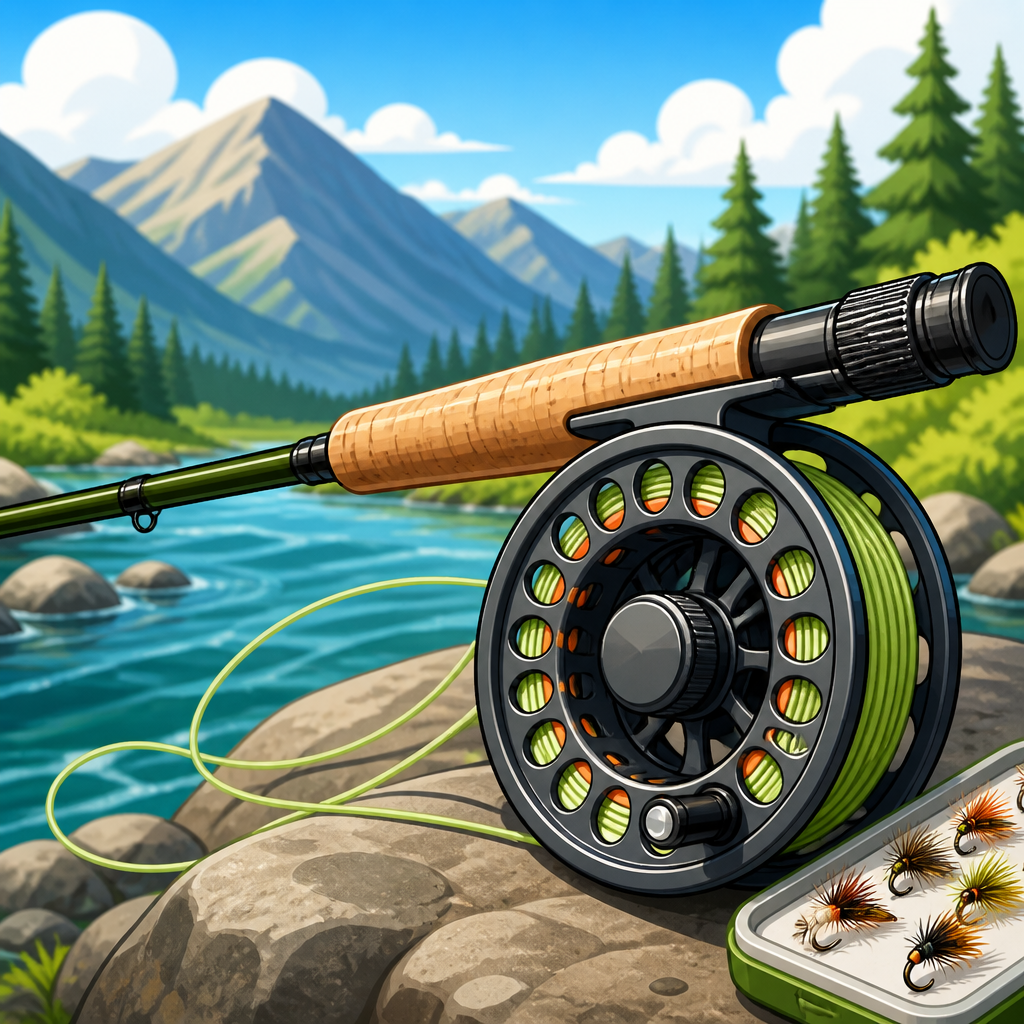
A 5-weight fly rod is the standard all-around tool in freshwater fly fishing, and the reel that matches it should usually be a size 4/5, 5/6, or manufacturer-rated reel built for a 5-weight line. That short answer is accurate, but it leaves out the reasons reel sizing varies across brands, line tapers, fishing styles, and species. In practice, choosing the right fly reel for a 5-weight rod means balancing line capacity, physical weight, drag performance, arbor design, and durability so the outfit casts cleanly and feels right in hand.
In fly fishing, “5-weight” refers to the line weight the rod is designed to cast most effectively, not the actual weight of the reel. Fly reel sizes are less standardized than spinning or baitcasting reels, so a reel labeled 5/6 by one brand may hold noticeably more backing or weigh more than another reel with the same label. I have rigged dozens of 5-weight outfits for trout, panfish, small bass, and light stillwater fishing, and the best setup is rarely about matching a number alone. It is about creating balance at the grip, holding the right line and backing, and giving yourself enough drag and retrieval speed for the fish you actually pursue.
This matters because the 5-weight category sits at the center of fly fishing basics. It is the first serious trout setup many anglers buy, and it often becomes the rod used for dry flies, nymph rigs, small streamers, indicator setups, and even light warmwater work. If the reel is too small, you may sacrifice backing capacity or make the rod tip-heavy. If it is too large, the outfit can feel sluggish, heavy, and awkward during long casting sessions. As a hub page for fly fishing gear and equipment, this guide explains not just what size fly reel matches a 5-weight rod, but how that decision fits into line selection, backing, drag systems, maintenance, and the larger tackle system every angler needs to understand.
The best reel size for a 5-weight rod
The most reliable choice for a 5-weight fly rod is a reel rated by the manufacturer for 5-weight line, often labeled 4/5 or 5/6. That range covers most trout applications because modern weight-forward floating lines vary in head length, coating thickness, and overall bulk. A true 5-weight reel should comfortably hold a WF5F line plus roughly 75 to 150 yards of 20-pound backing, depending on arbor design and spool dimensions. For standard trout fishing on rivers and small lakes, that capacity is more than enough.
For example, the Lamson Liquid in a 5+ size, the Orvis Battenkill Disc in size II or III depending on generation, the Redington Behemoth 5/6, and the Ross Animas sized for 4/5 all fit common 5-weight uses well. These are not interchangeable just because the labels look close. Some have larger arbors and wider spools, which increase retrieve rate and reduce line memory. Others are heavier and may counterbalance longer graphite rods better. The lesson is simple: start with the maker’s line-rating range, then verify actual line and backing capacity before buying.
How reel sizing actually works
Fly reel sizing is based on spool diameter, spool width, arbor depth, and frame design, not one universal industry measurement. Rod line weight follows the AFFTA standard for the first 30 feet of fly line, but reels do not have an equivalent single-number standard. That is why one company’s 5/6 reel may be nearly identical in capacity to another company’s 4/5. The size marking is a recommendation, not a guarantee.
When I compare reels for a 5-weight rod, I ignore the printed number at first and look at three specifications: reel weight in ounces, diameter, and stated capacity with a WF5F line plus backing. A reel around 3.5 to 5.5 ounces is common for modern freshwater 5-weight outfits, though click-and-pawl trout reels can be lighter and fully machined drag reels can be heavier. Diameter often falls around 3.2 to 3.6 inches. That range generally retrieves line efficiently without adding unnecessary mass.
The other factor is the fly line itself. A double taper 5 line usually occupies space differently than a weight-forward 5. Specialty lines for nymphing, aggressive streamer tapers, or textured coatings can be bulkier than classic trout tapers. If you fish cold water and swap spools between floating and sink-tip lines, a little extra capacity becomes valuable quickly.
Balance matters as much as capacity
A reel’s job is not just storing line. It also balances the rod. A well-balanced 5-weight outfit reduces wrist fatigue, improves tracking, and feels more controlled during mends, roll casts, and line pickups. This is especially noticeable on rods between 9 and 10 feet. A lightweight reel on a long fast-action rod can make the setup tip-heavy, forcing your hand to work harder all day.
Balance is easiest to judge with the reel mounted on the rod. Many anglers use a simple rule: the outfit should balance near the front of the cork grip or around the index-finger position when held in fishing posture. That is not a law, but it is a practical starting point. On a 9-foot graphite 5-weight trout rod, a mid-weight large-arbor reel usually feels right. On a 7-foot 6-inch fiberglass 5-weight, a smaller classic reel may be a better match because the rod itself carries mass differently.
Rod material changes the equation. Modern high-modulus graphite rods are light in the butt and can pair well with compact machined reels. Glass and bamboo rods often need a slightly heavier reel to avoid a forward-heavy feel. That is why experienced anglers talk about “matching the outfit” rather than simply matching the line number.
Arbor size, backing, and retrieve speed
Large-arbor reels dominate the current market for good reasons. They pick up line faster, reduce coil memory, and maintain more consistent drag as line leaves the spool because the effective spool diameter changes less dramatically. For a 5-weight rod used in trout fishing, a large-arbor or mid-arbor reel is usually the smartest choice.
Backing is the braided line under the fly line, typically Dacron in 20-pound test for 5-weight setups. Trout rarely take 100 yards of backing on ordinary rivers, but backing matters for capacity, line management, and occasional larger fish. Western rivers, stillwater fisheries, and tailwaters with strong current create more situations where a good fish can run far enough to test your reel. If you target carp, small steelhead, or bass with your 5-weight, backing becomes even more relevant.
| 5-Weight Use | Recommended Reel Size | Typical Backing | Best Reel Style |
|---|---|---|---|
| Small-stream trout | 4/5 | 50-75 yards | Light click or small disc drag |
| General river trout | 5-weight rated or 4/5 | 75-100 yards | Mid or large arbor disc drag |
| Stillwater trout | 5/6 | 100-150 yards | Large arbor disc drag |
| Bass and carp crossover | 5/6 | 100-150 yards | Strong sealed disc drag |
| Euro nymph secondary setup | 4/5 or specialized | Minimal with thin line | Balanced large arbor |
This is why the answer to what size fly reel matches a 5-weight rod is usually a range, not a single number. The reel must fit the line, the backing, and the fishing situation.
Drag systems for trout and beyond
For most trout fishing with a 5-weight, the drag system is helpful but not heavily stressed. A traditional click-and-pawl reel can work beautifully on small to medium trout because hand pressure and palming the spool often provide all the control needed. These reels are simple, light, and mechanically elegant. They are common on classic dry-fly setups.
Disc drag reels are more versatile and dominate the market for good reason. They deliver smoother startup inertia, more consistent pressure, and better fish control when current is strong or species are larger and faster. If your 5-weight might see stillwater trout, bass, carp, or occasional larger river fish, a sealed disc drag reel is the better long-term investment. Sealed drags keep out grit, fine silt, and moisture, reducing maintenance issues.
Named examples matter here. The Nautilus X-Series, Hatch Finatic, Ross Evolution LTX, and Sage Spectrum families all show how modern drag design has moved toward sealed systems with broad adjustment range and strong startup smoothness. You do not need premium pricing to benefit, though. Mid-priced reels from Lamson, Redington, Orvis, and TFO now offer disc drag performance that would have been considered high-end twenty years ago.
How the reel fits into your full gear and equipment system
A fly reel should never be chosen in isolation, especially on a 5-weight rod that may serve as your main outfit. The reel is part of a chain that includes the rod action, line taper, leader formula, tippet diameter, flies, net, waders, boots, pack, forceps, nippers, and storage system. This is why gear and equipment decisions should start with fishing scenarios, not catalogs.
If your 5-weight is mainly a dry-fly river rod, prioritize low startup inertia, clean line pickup, and balance over maximum drag strength. If it is a nymphing tool, think about rod length, line control, and whether a heavier reel would settle the tip. If it doubles for float-tube stillwater fishing, retrieve rate and spare spool options become more important because you may switch between floating, intermediate, and sink-tip lines.
This hub page connects naturally to every other basics topic in gear and equipment. Rod selection determines reel balance. Fly line choice determines capacity. Leader and tippet systems affect presentation more than the reel, but poor line management at the reel can still ruin drifts. Packs, vests, and boat bags matter because spare spools and line accessories need safe storage. Even maintenance tools matter, since a neglected reel foot, spindle, or drag housing can fail at the worst time.
Common mistakes when matching a 5-weight reel
The most common mistake is buying by label alone. A beginner sees “5/6” and assumes perfect compatibility, then finds the reel too heavy, too bulky, or short on capacity once a thicker fly line is installed. Always check manufacturer capacity charts and actual reel weight.
Another mistake is overvaluing drag for ordinary trout fishing while ignoring balance. A heavy saltwater-style reel on a standard 9-foot 5-weight may feel indestructible in the shop but unpleasant after six hours of casting. The opposite problem also appears often: choosing an ultralight reel that looks sleek online but leaves the rod tip-heavy and tiring.
Anglers also underestimate spare spool availability. A reel with inexpensive extra spools can be more useful than a fancier reel with limited interchangeability. Finally, many people ignore maintenance. Even anodized aluminum reels benefit from rinsing, drying, occasional spindle lubrication where recommended, and backing inspection. Fly reels are simple machines, but they live around sand, silt, UV exposure, and water.
What to buy at different budgets
At entry level, cast aluminum or pressure-cast reels from reputable brands are fully capable for trout fishing with a 5-weight rod. The Redington Crosswater, Piscifun Sword, and similar budget reels can fish effectively if capacity and balance are right. They may be less refined, with looser tolerances or less durable finishes, but they work.
In the mid-range, value improves sharply. Reels such as the Lamson Liquid, Orvis Clearwater, TFO NTR, and Redington Rise offer better drags, stronger frame design, improved machining quality, and better long-term parts support. This is the price tier I usually recommend for anglers building a primary 5-weight outfit.
At premium levels, you are paying for tighter machining tolerances, superior materials, stronger finishes, more refined drags, lower startup inertia, and long-term serviceability. Hatch, Abel, Ross, Nautilus, and Tibor have earned their reputations because these reels stay smooth, rigid, and repairable over years of real use. Premium reels are excellent tools, but they are not mandatory for effective trout fishing.
The right choice is the reel that fits your rod, line, and fishing style without compromising balance or capacity. If you are assembling or upgrading your fly fishing basics kit, compare three reels side by side, mount them on the rod, and check stated capacity with your exact line type before purchasing. That simple step prevents most mismatches and helps you build a 5-weight outfit that performs the way it should on the water.
Frequently Asked Questions
What size fly reel should I use with a 5-weight rod?
In most cases, a 5-weight fly rod pairs best with a reel labeled 4/5, 5/6, or specifically rated by the manufacturer for a 5-weight line. That is the most practical starting point because reel sizing is not perfectly standardized across brands. One company’s 5/6 reel may have nearly the same spool diameter and backing capacity as another company’s 4/5. For that reason, the label on the reel matters less than whether it comfortably holds a 5-weight fly line plus an appropriate amount of backing without overfilling or feeling undersized.
A properly matched reel should balance the rod well in hand, hold the line you plan to fish, and provide enough drag and durability for the species you target. For average trout fishing on rivers, streams, and stillwater, a mid-size trout reel in the 4/5 or 5/6 range is usually ideal. If you fish larger rivers, use long-belly lines, or regularly pursue stronger fish like big western trout, small bass, or light steelhead situations with a 5-weight, a slightly roomier 5/6 reel often makes more sense. The best match is not just about the number printed on the rod and reel; it is about how the entire outfit performs together.
Why do fly reel sizes vary so much between brands if they are all supposed to fit a 5-weight line?
Fly reel sizing varies because there is no universal industry standard that forces every manufacturer to define 4/5 or 5/6 exactly the same way. Brands use their own spool dimensions, arbor designs, frame tolerances, and capacity targets. One reel may be built around a large arbor with a wide spool, while another may be narrower and deeper. Both might be marketed for a 5-weight line, but they can carry line and backing very differently and feel noticeably different on the rod.
Line design also plays a major role. Modern fly lines differ in head length, taper shape, coating thickness, and overall diameter. A weight-forward floating 5-weight line from one brand may take up less space on the spool than a textured line, a specialty nymph line, or a more aggressively tapered bass taper. That means a reel that technically fits one 5-weight line may feel crowded with another. Backing choice matters too, since gel-spun backing and standard Dacron have different diameters and capacities.
That is why the smartest way to compare reels is to look beyond the model number and check the manufacturer’s stated capacity for a 5-weight line and backing. If possible, compare spool diameter, arbor style, and total loaded weight. Those details tell you far more than the simple 4/5 or 5/6 label. For a 5-weight setup, brand-to-brand variation is completely normal, so choosing by actual capacity and balance is more reliable than choosing by printed size alone.
Does the weight and balance of the reel matter as much as line capacity?
Yes, reel weight and overall balance matter a great deal, especially on a 5-weight rod, because this is the rod size many anglers use for all-day fishing. A reel that is too heavy can make the outfit feel sluggish and tip the balance too far back. A reel that is too light can leave the rod tip-heavy, which may lead to more wrist fatigue over a long day of casting, mending, and line control. The goal is not necessarily to make the combo perfectly neutral at a single balance point, but to create a setup that feels natural and comfortable during real fishing.
On fast-action graphite 5-weights, many anglers prefer a reel with enough mass to offset some of the rod’s forward weight. On lighter, more moderate rods, an ultra-heavy reel can make the outfit feel clunky and less responsive. This is why two reels that both hold a 5-weight line may not fish equally well on the same rod. One may simply complement the rod’s design better. Frame material contributes here too. Machined aluminum reels often offer a better strength-to-weight ratio and a more refined feel, while cast reels may be slightly less expensive and perfectly suitable for general trout use.
Capacity still matters, of course, because a reel that barely fits your line and backing is not a good match. But once basic capacity needs are met, balance becomes one of the most important deciding factors. If you can, mount the reel on the rod before buying. A 5-weight is meant to be versatile and pleasant to fish, so the right reel should make the outfit feel efficient, comfortable, and well matched rather than merely adequate on paper.
Do I need a strong drag system on a fly reel for a 5-weight rod?
For typical trout fishing with a 5-weight rod, you do not need an extremely powerful drag system, but you do want a smooth, dependable one. A 5-weight is most often used for trout, panfish, and smaller bass, where startup inertia and consistency matter more than brute stopping power. A smooth drag helps protect lighter tippets, prevents sudden break-offs, and gives you better control when a fish makes a quick run. For many freshwater situations, a quality click-and-pawl reel or a modest disc drag reel is entirely sufficient.
That said, your fishing style should influence the decision. If you often fish bigger rivers, lakes, or tailwaters where trout can run hard, a sealed or well-built disc drag is a worthwhile upgrade. The same is true if your 5-weight sometimes doubles for carp, larger smallmouth, or occasional light saltwater use in sheltered environments. In those cases, drag strength and heat management become more relevant, and a more robust reel makes better long-term sense. Durability also matters if your gear sees sand, mud, frequent travel, or rough treatment in drift boats and on rocky banks.
For the average angler, the ideal 5-weight reel drag is not the most powerful drag available, but one that engages smoothly, adjusts predictably, and remains reliable over time. If the reel balances the rod, holds the correct line and backing, and has a drag that protects tippet while controlling healthy fish, it is doing exactly what a good 5-weight reel should do.
Should I choose a large arbor reel for a 5-weight rod, and how much backing do I really need?
A large arbor reel is often an excellent choice for a 5-weight rod because it retrieves line faster, reduces line memory, and usually offers a more consistent drag radius as line leaves the spool. Faster retrieval is especially helpful when a fish suddenly changes direction or when you need to recover slack line quickly after a long cast or a downstream drift. For anglers who fish a 5-weight in varied conditions, from small rivers to lakes and float trips, a large arbor design is often the most user-friendly option.
However, large arbor is not automatically better in every reel. Some designs achieve the large arbor profile by sacrificing too much total capacity, while others become bulkier than necessary. A standard arbor or mid-arbor reel can still be an excellent match if it balances the rod better or offers more useful backing capacity with the line you fish. The key is to evaluate the actual spool dimensions and line capacity rather than assuming the arbor style alone determines performance.
As for backing, most trout anglers using a 5-weight rod do well with roughly 50 to 100 yards, depending on the reel, the diameter of the backing, and the fishery. In many trout situations, 50 yards of standard Dacron is more than enough because most fish will never take you deep into the backing. But if you fish lakes, western rivers, or waters with larger, stronger fish, having closer to 75 or 100 yards adds useful insurance. You also want enough backing on the spool so the fly line wraps around a larger effective diameter, which improves retrieve rate and reduces tight coiling. The best setup is one that gives you practical capacity without overstuffing the reel. When matched correctly, a 5-weight reel should hold the fly line cleanly, include sensible backing for your fishing, and still leave enough space for smooth line management.