How many flies should a beginner bring for a day of trout fishing? The practical answer is usually 24 to 36 flies, organized across a small range of proven patterns, sizes, and life stages, because trout feeding conditions can change several times between dawn and dusk. For someone new to fly fishing, that number feels surprisingly high at first, yet it makes sense once you understand what a fly is, why trout refuse one pattern and crush another, and how river conditions, insect activity, and presentation all interact. In my own beginner days, I made the classic mistake of carrying six favorite flies, losing three to trees before lunch, and then discovering an evening hatch I had no match for. A thoughtful fly selection solves that problem without turning your vest into a tackle warehouse.
This guide works as a practical hub for an introduction to fly fishing because the question about how many flies to bring touches nearly every foundational skill. To answer it well, you need to know the main fly categories, how trout feed, how water type influences selection, and why beginners should value versatility over sheer quantity. You also need a clear plan for building a first fly box, storing flies safely, and replacing what you lose during a normal day on the water. In other words, the number of flies you carry is not a random guess. It is the result of understanding the basics well enough to fish confidently rather than reactively.
Fly fishing differs from spin fishing in one key way: the line carries the lightweight imitation, not the weight of the lure itself. That design lets anglers present artificial flies that imitate aquatic insects, baitfish, eggs, worms, or terrestrial insects with subtlety. Trout are particularly responsive to these imitations because much of their diet comes from drifting or emerging insects such as mayflies, caddisflies, and midges. A “fly” can mean a dry fly that floats, a nymph that sinks and imitates an underwater insect stage, an emerger that represents transition to the surface, or a streamer that imitates minnows and larger prey. Once beginners understand those categories, packing flies becomes a strategic exercise rather than an emotional one.
Why does this matter so much for beginners? Because early success in trout fishing usually comes from reducing avoidable mistakes. New anglers already have enough variables to manage: casting mechanics, knot strength, leader length, depth control, drift, strike detection, and safe wading. If your fly box is too small, you cannot adapt. If it is overloaded with random patterns, you waste time second-guessing every choice. The sweet spot is a compact, balanced selection that covers common trout food sources, typical stream conditions, and the inevitable losses from snags, broken tippet, and fish with sharp teeth or bad attitudes. The right number of flies is really about buying yourself learning opportunities throughout the day.
Start with a simple number: 24 to 36 flies
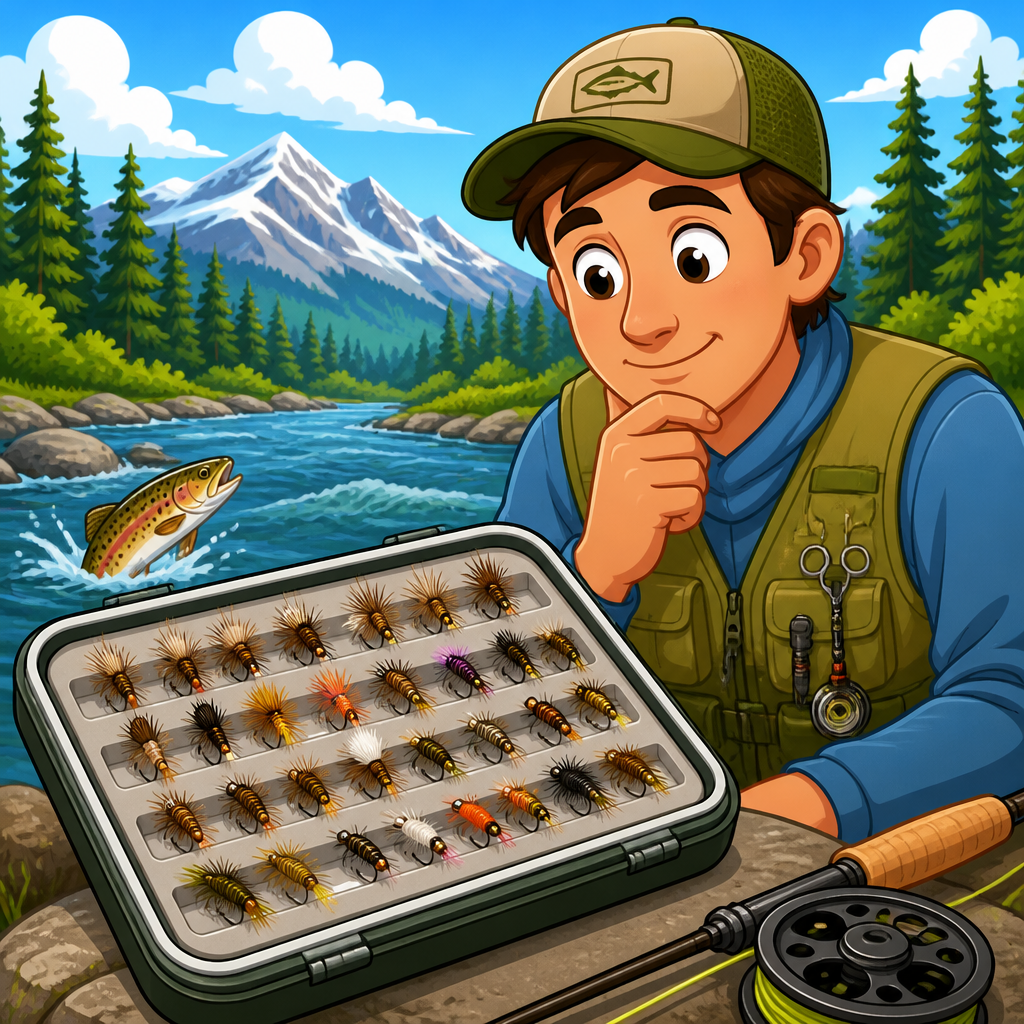
For a beginner trout angler spending a full day on a river, creek, or small stillwater, 24 to 36 flies is the best starting range. That is enough to cover dry flies, nymphs, and streamers while allowing duplicates of the patterns you are most likely to lose or fish repeatedly. In practical terms, a beginner can fish efficiently with about 8 to 12 nymphs, 8 to 12 dry flies, 2 to 4 emergers, and 4 to 8 streamers or attractor patterns, depending on the season and water. On heavily pressured tailwaters with selective trout, lean toward more sizes and finer variation. On freestone streams where fish are opportunistic, fewer patterns and more duplicates work better.
The reason duplicates matter is simple: trout fishing eats flies. Trees take them on backcasts. Rocks and logs trap nymphs. Wind knots weaken tippet and lead to break-offs. Trout bend hooks or leave teeth marks on soft hackles and streamers. If a fly starts producing, you do not want to stop using it because you only packed one. I advise beginners to carry at least two or three copies of their confidence patterns in the sizes they are most likely to fish. If you only have one elk hair caddis in size 16 and it gets chewed up during an evening hatch, your options narrow fast.
That recommended range also keeps decision fatigue low. One of the least discussed beginner problems in fly fishing is spending more time in the fly box than on the water. A disciplined selection forces better habits. You learn to read water, adjust drift, and change depth before blaming the pattern. Experienced anglers know that presentation usually matters more than exact imitation until trout become highly selective. A beginner who carries 200 flies often changes too often. A beginner who carries 30 well-chosen flies learns what each category is designed to do.
The fly categories every beginner should understand
A useful introduction to fly fishing starts with insect life stages and matching them to fly categories. Dry flies float and imitate adult insects on the surface. Nymphs sink and imitate immature aquatic insects below the surface, where trout feed most of the time. Emergers imitate insects rising through the water column or trapped in the surface film, a stage trout often key on during hatches. Streamers suggest minnows, sculpins, leeches, or larger prey and can trigger aggressive strikes, especially in bigger trout. Terrestrials such as foam ants, beetles, and hoppers imitate land insects that fall into the water during warm months.
If you ask what beginners should fish most often for trout, the answer is nymphs. In many rivers, trout take the majority of their food subsurface because drifting nymphs are abundant and require less energy to intercept than surface insects. That is why most starter boxes should be weighted toward beadhead pheasant tails, hare’s ears, zebra midges, caddis larvae, and perdigons or other slim attractor nymphs. Dry flies remain essential because they teach rise-form observation, drag-free drift, and visual strike timing, but they are only part of the picture. Beginners who understand this early progress faster.
The most important mindset is not “find the perfect fly.” It is “cover the common feeding lanes and food forms.” A parachute Adams can suggest many mayflies. An elk hair caddis covers caddis adults and can even pass as a searching dry. A beadhead pheasant tail represents numerous mayfly nymphs. A woolly bugger can imitate baitfish, leeches, crayfish, and simply function as a provoking attractor. These are foundation patterns because they solve multiple problems at once, which is exactly what a beginner needs.
A practical beginner fly box for trout
When I help new anglers build a first trout box, I keep the menu narrow and the coverage broad. Sizes matter, but the point is not to own every possible pattern. The point is to own a dependable set in common trout sizes, usually from 12 to 20 for dries and nymphs, plus a few larger streamers. The table below reflects a balanced one-day selection for a beginner on typical trout water in spring through early fall.
| Fly type | Recommended patterns | Suggested sizes | How many to bring | Why it belongs |
|---|---|---|---|---|
| Dry flies | Parachute Adams, Elk Hair Caddis, Purple Haze, foam ant | 14, 16, 18 | 8 to 12 | Covers mayflies, caddis, and general searching on the surface |
| Nymphs | Pheasant Tail, Hare’s Ear, Zebra Midge, caddis pupa, perdigon | 14, 16, 18, 20 | 10 to 14 | Matches the most common subsurface food trout eat all day |
| Emergers | RS2, soft hackle pheasant tail | 16, 18, 20 | 2 to 4 | Critical when trout refuse dries but feed just under the film |
| Streamers | Woolly Bugger, small sculpin, leech pattern | 6, 8, 10 | 4 to 6 | Finds aggressive fish and works in stained water or higher flows |
This is not a rigid list. A Rocky Mountain freestone stream and a limestone spring creek do not demand the same precision. However, a box built around these categories will handle an enormous percentage of beginner trout situations. If you want to simplify further, carry three confidence patterns in multiple sizes: a pheasant tail, an elk hair caddis, and a woolly bugger. That trio has introduced thousands of anglers to successful trout fishing because each pattern is durable, easy to fish, and broadly effective.
How conditions change the number of flies you need
The exact number of flies for a day of trout fishing depends on where you fish and when. On a small mountain stream with eager wild trout, you might fish all day with 18 flies in your box and never feel limited. Fish there often respond to attractor dries, beadhead nymphs, and a bugger stripped through plunge pools. On a technical tailwater below a dam, where flows are consistent and insect populations are dense, trout can become selective to size, profile, and even color shade. In that setting, 36 flies is more realistic because small differences matter. Midges in size 20 or 22, for example, may outproduce larger patterns by a wide margin in winter and early spring.
Weather also matters. Wind increases casting errors and tree donations, so bring extra dry flies and bushier patterns you can see. Higher water or slight stain makes streamers and larger nymphs more useful, while low, clear flows usually require slimmer flies, finer tippet, and more precise drift. Seasonal insect activity changes priorities too. Spring often rewards nymphing and larger searching patterns. Summer adds terrestrials like beetles and hoppers. Fall can bring excellent streamer fishing as brown trout turn aggressive. Winter often means fewer patterns overall, but more importance placed on tiny nymphs and clean presentations.
A day trip on unfamiliar water always justifies a few more options. Local fly shops are invaluable here. If the shop says blue-winged olives are active in the afternoon, or caddis hatches have been strong near dusk, adjust your box accordingly. New anglers sometimes treat fly choice as a mystery solved by intuition. In reality, good selection is usually built on observation, seasonality, and local information. Bring enough flies to respond to those clues, not enough to open a retail display case on the bank.
How beginners lose flies, and how to plan for it
Many new fly anglers underestimate how quickly flies disappear during a normal day. The first source of loss is poor casting timing, especially on brushy streams where late backcasts find overhanging branches. The second is bottom contact while nymphing. Getting flies down near trout means fishing close to rocks, and close to rocks means occasional snags. The third is weakened knots. Clinch knots tied in haste, tippet burned by friction, or repeated fly changes can all lead to break-offs. Hook points also dull after scraping gravel or stone, making some flies effectively unusable even if they remain attached.
Because of that, your fly count should include sacrificial margin. If you expect to nymph all morning with two-fly rigs, carrying only four nymphs is unrealistic. I tell beginners to assume they may lose six to ten flies over a full day, especially on small streams with bankside cover or on rivers where indicator nymphing requires regular bottom contact. That is normal, not failure. It means your rig is in the strike zone often enough to matter. Planning for losses also reduces the temptation to fish too cautiously, which is one reason some beginners stay above the fish and never get bites.
There are ways to reduce attrition. Pinch barbs for easier release and less fly damage. Check your knot after every fish and every hard snag. Use split shot thoughtfully so your flies drift near bottom without dredging constantly. Sharpen or replace flies with damaged points. Dry and store used flies after the trip to prevent rust, especially if your box lacks strong ventilation. Good fly management is part of fly fishing basics, not an advanced extra.
Building confidence without overpacking
Beginners improve faster when they know why each fly is in the box. That is why I recommend organizing by job, not by brand name or impulse purchase. Carry searching dries for prospecting, match-the-hatch dries for surface activity, confidence nymphs for general subsurface fishing, tiny backup nymphs for selective fish, and a few streamers for covering water or stained conditions. If your box has a purpose-based structure, you spend less time wondering and more time making useful changes.
Confidence also comes from repetition. If you fish a parachute Adams in several situations, you begin to see how trout respond to profile, size, and drift. If you switch to a new fly every ten minutes, you never build that understanding. This is one reason beginner fly selections should stay small enough to learn thoroughly. The best introduction to fly fishing is hands-on pattern familiarity combined with observation of trout behavior. After enough days on the water, you stop asking, “What is the magic fly?” and start asking, “Where are trout feeding, at what depth, and on what stage of food?”
A smart next step is to keep brief trip notes. Record water temperature if you have it, weather, visible insects, successful flies, and how many you lost. Over time, your ideal fly count becomes personal and evidence-based. You may learn that your home creek demands mostly dry-dropper setups in summer, or that your local tailwater requires a deeper midge box than generic beginner lists suggest. That kind of learning turns a new angler into a consistent one.
What to bring besides flies on a beginner trout day
The fly box is central, but it is only one part of a beginner trout setup. A solid introduction to fly fishing also includes the supporting items that make fly changes effective: leaders, tippet spools, floatant, split shot, strike indicators, forceps, nippers, and polarized glasses. If you carry the right fly but lack 5X or 6X tippet for a clean presentation, your choice may still fail. If you bring dries without floatant or desiccant, waterlogged patterns become hard to see and fish correctly. If you have nymphs but no indicator or weight when conditions call for them, you limit your own options.
As a simple system, match your fly count with a manageable rigging kit. For most beginner trout fishing, that means one or two tapered leaders, 4X through 6X tippet, a small assortment of split shot, a few indicators, and one compact fly box. Add hemostats, nippers, and a net if allowed and practical. Keep it light enough that you move freely and change rigs without frustration. The best day on the water is usually the one where your equipment fades into the background and your attention stays on current seams, insect activity, and fish behavior.
For a beginner, bringing 24 to 36 flies for a day of trout fishing is the right balance between readiness and simplicity. That number gives you enough range to cover the major food forms trout eat, enough duplicates to survive snags and break-offs, and enough structure to learn what each fly category really does. More important, it teaches a foundational lesson in fly fishing basics: success comes from matching a practical selection to conditions, then presenting those flies well. Start with proven patterns, carry them in sensible sizes, and resist the urge to overcomplicate your first seasons. If you are building your “Fly Fishing Basics” skills, use this article as your hub, then refine your box around the waters you fish most often. Pack smart, fish observantly, and let each trip teach you what deserves a permanent place in your fly box.
Frequently Asked Questions
How many flies should a beginner realistically bring for one day of trout fishing?
For most beginners, a smart target is 24 to 36 flies for a full day on trout water. That usually gives you enough variety to cover the most common situations without turning your fly box into a cluttered mess. At first, that number can sound excessive, especially if you assume one or two “good flies” should handle everything. In practice, trout behavior changes throughout the day, and so do water conditions, light levels, insect activity, and the depth where fish are feeding. A fly that works at first light may be ignored by midmorning, and a pattern that drifts perfectly in a slow seam may be useless in a fast riffle.
A good beginner selection is less about bringing dozens of random patterns and more about carrying a small, reliable mix. For example, you might bring a few nymphs, a few dry flies, a few attractor patterns, and a few streamers, with duplicates of your most likely producers. That matters because flies get lost. Beginners snag trees, brush, rocks, and the river bottom. Fish also damage flies, and some patterns simply stop floating, unravel, or become ineffective after repeated use. If you bring only one version of a productive fly, your best pattern can disappear early in the day.
Think of 24 to 36 flies as practical insurance. It is enough to adapt when trout are selective, enough to replace flies you lose, and enough to experiment without second-guessing every change. For a beginner, that range strikes the right balance between being prepared and staying simple.
Why do I need so many flies if I am only fishing for one day?
You need more flies than you expect because trout do not feed the same way all day, and fly fishing is often a game of adjustment rather than repetition. Even on a short outing, you may encounter multiple feeding windows and several different trout moods. Early in the day, fish may hold deep and respond best to nymphs. Later, an insect hatch might bring them to the surface for dries. If clouds roll in, water levels shift, or the sun gets high and bright, the same fish may move, suspend, or become more cautious. Having a range of flies lets you respond to those changes instead of stubbornly fishing one pattern long after it stops producing.
There is also the issue of presentation and profile. Two flies may look similar to a beginner, yet trout can react very differently based on size, silhouette, color tone, weight, and where the fly sits in the water column. A trout may ignore a larger mayfly imitation but eat a smaller one immediately. It may refuse a flashy nymph yet take a duller, more natural version. These are not always dramatic differences to the angler, but they can be decisive to the fish.
Another overlooked reason is simple wear and loss. New anglers tend to lose flies more often because they are still learning casting control, drift management, knot tying, and how to free a snag without breaking off. Flies also get chewed up, bent, waterlogged, or dulled. Bringing extras does not mean you expect disaster; it means you understand that a day on the river naturally uses up gear. A well-stocked but compact fly box keeps your day moving and helps you stay confident when conditions change.
What types of flies should a beginner include in that 24 to 36 fly range?
A beginner should focus on coverage, not complexity. The best one-day trout selection usually includes a small number of proven categories: nymphs, dry flies, streamers, and possibly a couple of attractor or searching patterns. Nymphs are especially important because trout often feed below the surface far more than beginners realize. Bringing several common nymph styles in a few sizes gives you the ability to fish deeper runs, riffles, pocket water, and slower seams where trout spend much of their time.
Dry flies matter because surface feeding is one of the clearest and most enjoyable ways to catch trout, and there are times when fish key strongly on adults drifting on top. A beginner does not need every hatch-specific dry fly in existence, but it helps to carry a few dependable patterns in modest size variations. If trout begin rising, those flies let you respond immediately instead of missing the window. Streamers round out the box by giving you something larger and more visible to fish when trout are aggressive, when water is stained, or when you want to target bigger fish that may chase baitfish or sculpin-like prey.
The key is duplication of essentials rather than endless variety. For example, it is usually better to carry several copies of a few productive flies than one copy each of twenty different patterns. If a fly works, you want backups. If a fish tears one up or you snap it off in a tree, you should be able to tie on the same thing again. For a beginner, a simple box built around confidence patterns in a few sizes is much more effective than a giant assortment chosen without a plan.
How should a beginner organize flies so they are easy to use on the water?
The easiest system is to organize flies by type first and size second. That means keeping nymphs together, dry flies together, and streamers together, with similar sizes placed near one another. This reduces wasted time on the river and helps a beginner make better decisions. Instead of staring at a box full of random hooks and feathers, you can quickly think, “The fish are rising, so I need a dry,” or “Nothing is happening on top, so I should switch to a nymph.” Good organization keeps your choices practical and prevents decision fatigue.
A small fly box is usually enough for a single day if it is packed thoughtfully. Many beginners make the mistake of carrying too much and then struggling to find anything quickly. A better approach is to use one compact box with a deliberately limited selection: your likely producers, arranged neatly, with duplicates of the patterns you expect to lose or use most often. You can also group flies by fishing role, such as “surface,” “subsurface,” and “larger searching flies,” if that makes more sense to you than strict entomological categories.
It also helps to keep damaged flies separate from ready-to-fish flies. A crushed dry fly, a rusting hook, or a nymph with a broken bead can create confusion when you are trying to change quickly. As the day goes on, return each fly to its proper section so your box does not turn into chaos. Good organization may sound minor, but for beginners it makes a real difference. It speeds up fly changes, lowers frustration, and helps you learn why certain types are working under certain conditions.
What if I want to keep things simple and avoid overpacking as a beginner?
Keeping things simple is actually the best approach, but simple does not mean underprepared. Instead of trying to cover every insect species and every possible hatch, narrow your fly selection to a handful of proven trout patterns and bring enough copies to last the day. That is the real lesson behind the 24 to 36 fly guideline. You are not carrying a huge, confusing collection. You are carrying a controlled selection with purpose: a few likely dry flies, a few effective nymphs, one or two streamer styles, and backups in practical sizes.
If you are overwhelmed, start by thinking in terms of function rather than names. Bring flies that float, flies that sink, and flies that suggest food trout commonly eat at different levels of the water column. Then include duplicates because beginners lose flies, and because a successful pattern often gets used more than once. This approach gives you flexibility while still keeping your setup manageable. It also teaches you more than carrying one “lucky fly,” because you begin to notice when fish want a smaller profile, a deeper presentation, or a surface drift.
The goal is confidence, not excess. A beginner who carries a disciplined selection of 24 to 36 flies is usually far better prepared than someone carrying six random patterns or a massive box stuffed with flies they do not understand. Keep your system lean, organized, and intentional. That way, when conditions change between dawn and dusk, you can adapt calmly and keep fishing effectively rather than wishing you had brought more options.