Fly fishing and spin fishing are both effective ways to catch fish, but they ask beginners to learn very different skills. If you are deciding where to start, the short answer is simple: spin fishing is usually easier to learn at first, while fly fishing has a steeper early learning curve but offers a deeper understanding of presentation, insect behavior, and water reading. That distinction matters because beginners often quit when the first setup feels too technical or when early trips produce more tangles than fish. I have taught new anglers with both systems, and the same pattern repeats: most people can make a serviceable spin cast within an hour, while a clean fly cast usually takes more focused practice.
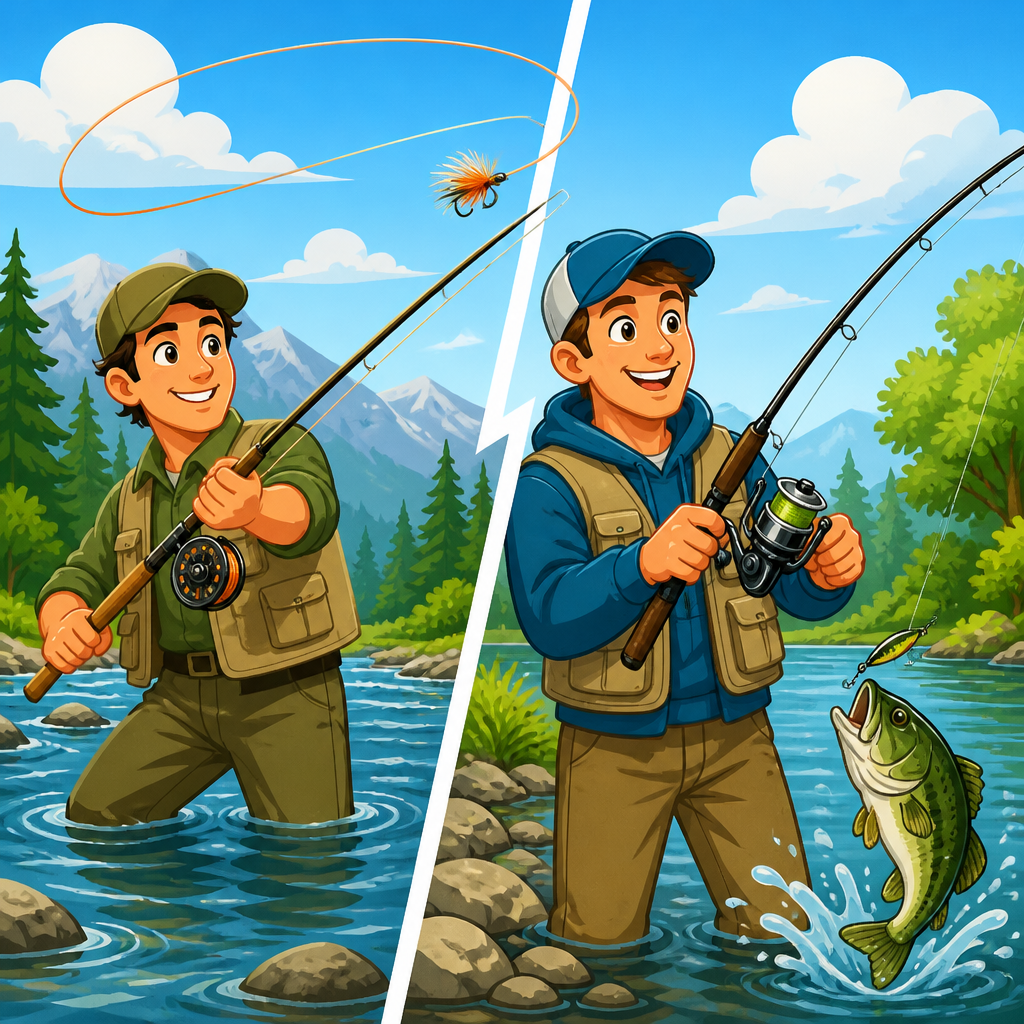
To understand why, it helps to define the core difference between the two methods. In spin fishing, the lure or bait has enough weight to pull line from the reel during the cast. In fly fishing, the fly itself is often nearly weightless, so the angler casts the weighted fly line instead. That single mechanical difference changes everything: rod design, reel function, casting motion, line management, and the kind of water each approach handles best. Spin fishing is built around efficiency and simplicity. Fly fishing is built around controlled presentation. Neither is inherently better for every situation, but they reward different kinds of learning.
This article serves as a hub for anyone entering fly fishing basics and comparing it with conventional tackle. Along the way, it covers the introduction to fly fishing that every beginner needs: what fly fishing is, what equipment matters most, why casting feels different, what fish behavior you must notice, and where new anglers struggle. If your goal is catching fish quickly with minimal setup, spin gear usually wins. If your goal is learning a method that emphasizes line control, drag-free drifts, and matching food sources, fly fishing becomes compelling very fast. The key is choosing the path that fits your time, patience, budget, and fishing goals.
Beginners also need an honest answer about difficulty. Fly fishing is not hard because fish are smarter or because the gear is mysterious. It is harder because it combines several skills at once: line casting, slack control, knot tying, fly selection, mending, and reading current seams. Spin fishing separates those tasks more cleanly. You can cast, retrieve, and catch fish before understanding much about aquatic insects or drift. With fly fishing, especially on trout water, presentation often matters more than distance. That means the first lessons are technical, but those lessons also make anglers more observant and precise on the water.
What fly fishing is and why the learning curve feels steeper
Fly fishing is a method of angling that uses a specialized rod, reel, weighted line, leader, tippet, and an artificial fly to imitate insects, baitfish, or other prey. In practice, the reel mainly stores line, while the fly line delivers the cast. That is why beginners who come from spin gear often struggle at first: they expect the reel to drive the cast, but in fly fishing the rod loads and unloads energy through timed back casts and forward casts. Good fly casting depends on tempo, stopping the rod crisply, and forming tight loops. Bad timing creates tailing loops, piles of slack, or snapped flies.
The learning curve also feels steeper because fly fishing asks you to manage line after the cast, not just during it. On moving water, a good drift may require mending line upstream, adjusting rod angle, and removing drag so the fly moves naturally. On stillwater, line hand control determines retrieve speed and strike detection. For trout, panfish, bass, carp, and even saltwater species, success often comes down to presenting the fly in a believable way. This is the heart of fly fishing basics. Once beginners understand that fly fishing is more about controlling line and drift than throwing far, the sport starts to make sense.
That said, the steeper start does not mean fly fishing is inaccessible. Modern medium-fast graphite rods, weight-forward fly lines, knotless tapered leaders, and instructional resources have made learning easier than it was twenty years ago. A balanced 5-weight outfit remains the standard recommendation because it can cast dry flies, nymph rigs, and small streamers across a wide range of trout and panfish situations. In lessons I have run on small rivers, students using a 9-foot 5-weight with a weight-forward floating line consistently progress faster than students using overly stiff rods or bargain lines that fail to load at short range.
Why spin fishing is usually easier for beginners
Spin fishing is easier to learn because the tackle does more of the work. A spinning rod and reel use the weight of a lure, sinker, jig, or bait rig to carry line outward on the cast. The motion is intuitive, the margin for error is wider, and the results are immediate. A beginner can make short casts, let the lure sink, retrieve steadily, and have a realistic chance of catching fish the same day. There is less dependence on exact timing, loop formation, or line mending. For many people, that early success is the difference between building confidence and losing interest.
Spin gear is also more forgiving in common beginner conditions. Wind, brushy banks, weighted rigs, and long casts all tend to favor spinning tackle. If you are fishing from a dock, a pond bank, or a riprap shoreline for bass, trout, walleye, or panfish, spin fishing lets you cover water quickly. Inline spinners, spoons, soft plastics, marabou jigs, and live bait rigs all produce fish without requiring specialized casting mechanics. That accessibility explains why many guides hand conventional tackle to children or first-time clients when the goal is action rather than technique instruction.
The reel itself contributes to the simpler learning path. With spinning gear, the drag system, line pickup, and casting process are straightforward. There are still skills to learn, especially avoiding line twist, choosing the right lure weight, and managing hooksets, but the average beginner reaches functional competence quickly. In practical terms, that means spin fishing has a lower barrier to entry in time, not just in money. You can become effective before you become refined. Fly fishing usually asks for both at once.
Fly fishing gear basics every new angler should understand
A clear introduction to fly fishing starts with the tackle system. The rod and line must match by weight rating, such as a 5-weight rod paired with a 5-weight line. That rating matters because the line is the casting mass. The reel should balance the rod and hold backing plus fly line, but on most trout setups it is less important than buying a good line. This is one of the first places beginners overspend or underspend. A premium line on a modest reel often performs better than a cheap line on an expensive reel.
The leader is the clear tapered section attached to the fly line, and the tippet is the level terminal section attached to the leader tip. Leaders turn over the cast; tippet provides the correct diameter and stealth for the fly size and fish. For example, a 9-foot 4X or 5X tapered leader works well for many trout dry fly situations, while bass bugs may use shorter, heavier leaders. Learning these terms early pays off because nearly every fly fishing article, class, or shop conversation assumes you know them. This is why a solid fly fishing basics page should function as a glossary as well as a comparison.
| Category | Fly Fishing | Spin Fishing |
|---|---|---|
| What powers the cast | Weighted fly line | Weighted lure or bait rig |
| Beginner casting difficulty | Moderate to high | Low to moderate |
| Best first setup | 9-foot 5-weight outfit | 6’6″ to 7′ medium-light spinning combo |
| Key beginner skill | Timing, loop control, drift management | Basic casting and retrieve control |
| Common early mistake | Rushing the cast | Using the wrong lure weight |
| Where it shines | Precise presentations in rivers and flats | Versatility in varied conditions |
Fly selection is another source of confusion that becomes manageable once grouped into categories. Dry flies float and imitate insects on the surface. Nymphs imitate subsurface aquatic insects. Streamers imitate baitfish, leeches, or larger prey. Beginners do not need hundreds of patterns. They need a few proven flies in appropriate sizes and a basic understanding of when fish feed on top versus below. On many trout rivers, nymphing produces more fish than dry fly fishing because trout feed subsurface most of the time. Knowing that simple fact prevents unrealistic expectations and helps newcomers fish more effectively from the start.
Real-world situations where each method has the advantage
If your primary goal is catching stocked trout, pond bass, bluegill, or river smallmouth with minimal technical overhead, spin fishing is generally the easier and more practical entry point. A beginner can throw a 1/8-ounce inline spinner across a current seam or retrieve a small paddle-tail swimbait along weed edges and understand the system almost immediately. This is especially useful on busy public water, where casting room is limited and fish locations change quickly. Spin tackle also handles heavier terminal tackle better, making it useful for slip bobbers, split shot rigs, or deeper presentations in current.
Fly fishing gains a clear advantage when fish are keyed on specific food and presentation matters more than hardware. Picture a spring creek with selective trout rising to midges, or a riffle where trout hold behind rocks taking drifting mayfly nymphs. In those settings, the ability to land a nearly weightless imitation softly and guide it naturally through a feeding lane can outperform conventional lures. On warmwater fisheries, fly fishing also excels for shallow bass with poppers, carp on flats, and panfish along reed lines. The visual nature of these takes is a major reason anglers stick with it through the learning phase.
There is also a middle ground many beginners overlook. Plenty of anglers start with spin fishing to learn water, fish behavior, and seasonal patterns, then transition to fly fishing once they already know where fish hold and feed. That progression works well because fly fishing becomes easier when you are not simultaneously trying to learn the river. I have seen beginners improve dramatically after first understanding current seams, undercut banks, foam lines, and feeding windows through simpler tackle. Knowledge of fish location transfers cleanly across both methods.
How to learn fly fishing faster without getting overwhelmed
The fastest way to learn fly fishing is to narrow the variables. Start with one rod, one floating line, one leader length, and a small group of flies. Practice casting on grass before going to the river, focusing on short casts between 25 and 35 feet. Most trout are caught inside that range. Learn the pickup and laydown cast, false casting only when needed, and stopping the rod high on the back cast and firm on the forward cast. Then move to water and practice line control: high sticking, simple upstream mends, and watching the leader for subtle strikes. Those are productive beginner skills, not decorative ones.
Instruction accelerates progress more than almost any gear upgrade. A one-hour lesson from a competent instructor or fly shop staff member can correct grip, stance, timing, and tracking errors that beginners may otherwise repeat for months. Organizations such as Fly Fishers International have long promoted casting instruction standards, and many local shops offer clinic nights or streamside classes. When I work with new anglers, the first breakthrough is usually understanding pause length on the back cast. Once that timing clicks, everything downstream from it improves: loop shape, accuracy, and turnover.
Beginners should also choose easier environments. Small ponds for bluegill, gently moving meadow streams, and open banks are better classrooms than brush-choked freestone rivers in heavy wind. Bluegill are ideal fly fishing teachers because they are abundant, aggressive, and willing to eat small poppers, nymphs, and woolly buggers. Catching panfish on a fly rod builds line handling skills quickly and removes the pressure that often surrounds trout. Confidence matters. The new angler who feels fish tugging on the line will practice more, and repetition is what makes fly casting feel natural.
Cost, frustration, and long-term payoff
Cost is part of the easier-versus-harder debate. Entry-level spin outfits are usually cheaper, and the terminal tackle is familiar to most outdoor retailers. Fly fishing can be affordable, but costs rise faster once you add quality fly line, leaders, tippet, flies, forceps, floatant, waders, and polarized glasses. The good news is that beginners do not need premium everything. They do need balanced equipment. If the budget is limited, prioritize rod-line pairing, then eye protection and a few versatile flies. A poor casting line creates frustration far beyond its price difference.
Frustration in fly fishing usually comes from three sources: trying to cast too far, changing flies too often, and fishing water that is too difficult. New anglers assume distance equals competence, but short accurate casts with controlled drift catch more fish than long sloppy ones. They also assume fly selection is the main puzzle, when in reality depth, speed, and drift are often more important. A pheasant tail nymph or woolly bugger presented correctly will outfish an exact hatch match dragged unnaturally across the current. Those lessons are why fly fishing feels demanding, but they are also why it remains rewarding for decades.
The long-term payoff is substantial. Fly fishing teaches precision, observation, and fish behavior in a way few methods do. Once the basics lock in, anglers gain access to highly visual dry fly eats, technical river strategies, and species-specific tactics from trout to tarpon. More importantly, they become better anglers overall. They notice current lanes, insect activity, light conditions, and how small changes in angle or depth alter results. That is why many people who begin by asking whether fly fishing is harder eventually stop caring. The learning itself becomes part of the attraction.
So which is easier to learn, fly fishing or spin fishing? For most beginners, spin fishing is easier because the cast is simpler, the gear is more forgiving, and success comes faster. Fly fishing takes more early practice because you are casting line rather than lure weight, managing drift after the cast, and learning a more technical system of leader, tippet, and fly choice. Yet easier does not always mean better for your goals. If you want the quickest route to catching fish, start with spin gear. If you want a method that builds precision, water reading, and a richer understanding of how fish feed, fly fishing is worth the extra effort.
As a hub within fly fishing basics, the most important takeaway is this: fly fishing becomes easier when you simplify the setup, practice short casts, learn a few core knots, and fish beginner-friendly water. Start with a 5-weight outfit, floating line, tapered leader, and a small box of dry flies, nymphs, and streamers. Focus on presentation over distance. Treat each trip as skill building, not just fish counting. That approach shortens the learning curve and turns confusion into progress.
If you are ready to begin, choose one path and commit to a few outings before judging it. Borrow gear, book a lesson, or visit a reputable fly shop and ask for a true beginner setup. The sooner you get on the water with a clear plan, the faster the comparison stops being theoretical and starts becoming personal experience.
Frequently Asked Questions
Is fly fishing harder to learn than spin fishing for most beginners?
Yes, for most people, fly fishing is harder to learn at the beginning than spin fishing. The biggest reason is that spin fishing is more intuitive on day one. With a spinning outfit, the weight of the lure helps load the rod and carry the cast, so a beginner can usually make a functional cast fairly quickly. That means less time thinking about mechanics and more time focusing on finding fish, choosing a simple lure, and learning basic retrieve speed. Early success matters, and spin fishing often delivers it faster.
Fly fishing asks you to learn a more technical casting system right away. Instead of casting the weight of the lure, you are casting the weight of the fly line, which requires timing, line control, and a feel for rod loading that does not come naturally to most first-time anglers. On top of that, beginners often need to understand leader setup, fly selection, drift, mending, and how current affects presentation. That is a lot to absorb at once, especially if the goal is simply to start catching fish.
That does not mean fly fishing is too difficult or only for experts. It just means the early learning curve is steeper. Once the basics click, many anglers find fly fishing deeply rewarding because it teaches precision, observation, and a better understanding of how fish feed. But if the question is strictly which one is easier to learn first, spin fishing usually wins because it gets beginners to a competent level faster and with less frustration.
Why is spin fishing usually easier to learn at first?
Spin fishing is usually easier to learn because the gear is simpler to operate and the core techniques are more forgiving. A spinning rod and reel setup lets beginners cast with relatively little practice, and common lures such as inline spinners, soft plastics, small crankbaits, or spoons are straightforward to use. In many cases, you can cast out, retrieve at a steady pace, and immediately have a chance to catch fish. That simplicity lowers the barrier to entry in a big way.
Another reason spin fishing feels easier is that it works well across many situations without requiring constant adjustment. You can fish ponds, lakes, rivers, docks, shorelines, and moving water with only minor changes in tackle. Beginners do not need to master specialized line handling or perfect presentation to get results. Fish will often strike a lure even if the cast is not perfect, the angle is not ideal, or the retrieve is slightly inconsistent. That margin for error makes the sport more beginner-friendly.
Spin fishing also tends to be easier mentally for someone just starting out. New anglers already have plenty to think about: where fish hold, what they eat, what the weather is doing, how deep to fish, and how to detect bites. If the casting method itself is simple, it frees up attention for those other important skills. That is why spin fishing often helps beginners build confidence quickly. Once confidence is there, it becomes much easier to branch out into more technical styles later, including fly fishing.
What makes fly fishing’s learning curve steeper for beginners?
Fly fishing has a steeper learning curve because it combines several separate skills that all matter at the same time. First, there is the cast itself. A new fly angler has to learn timing, loop control, line speed, and how to stop the rod correctly on both the back cast and forward cast. If any one of those elements is off, the cast can collapse, tangle, or fail to reach the target. That makes the first few outings feel technical in a way spin fishing usually does not.
Second, success in fly fishing often depends heavily on presentation. In spin fishing, fish may chase or react to a moving lure even if the delivery is average. In fly fishing, especially with trout, a natural drift can be the difference between getting ignored and getting eaten. That means beginners need to understand current seams, drag, line management, mending, and where fish position themselves in different water types. In other words, fly fishing often requires reading the water more carefully from the start.
Third, fly fishing introduces a different layer of biology and observation. Many anglers eventually learn to pay attention to insect hatches, life stages, water temperature, and feeding behavior. That is part of what makes fly fishing so rich and satisfying, but it can also overwhelm someone who just wants to get started. The early challenge is real, but so is the payoff. As your skills grow, fly fishing can teach you far more than how to cast—it teaches you how fish interact with their environment and why presentation matters so much.
If I want to catch fish sooner, which method should I start with?
If your main goal is to catch fish sooner and stay encouraged as a beginner, start with spin fishing. In most real-world situations, spin gear gives you the fastest path to early success. It is easier to cast, easier to troubleshoot, and easier to adapt to different species and bodies of water. You can use live bait or simple artificial lures, cover water efficiently, and fish effectively even if your technique is still developing. That makes it the better choice for someone who wants quick feedback and a shorter path from learning to catching.
Spin fishing is also a smart starting point because it allows you to develop universal fishing instincts without fighting complicated mechanics. You will begin learning where fish hold, how weather changes activity, how structure affects feeding, and how retrieve speed changes results. Those lessons apply across almost every style of angling. In that sense, spin fishing builds a strong foundation while keeping the beginner experience enjoyable.
That said, “easier” and “better” are not the same thing. If you are specifically drawn to trout streams, dry flies, delicate presentations, or the rhythm of casting a fly line, starting with fly fishing can still make sense. Passion can overcome a steeper learning curve. But for the average beginner who wants a smoother introduction and a better chance of catching fish on early trips, spin fishing is usually the most practical place to begin.
Can learning spin fishing first make fly fishing easier later on?
Yes, learning spin fishing first can absolutely make fly fishing easier later, even though the casting mechanics are different. Spin fishing helps beginners build a foundation in fish behavior, lure or bait presentation, knot tying, hook-setting, fighting fish, and reading basic water features. When you already understand where fish are likely to be and why they are feeding, you remove a huge layer of confusion before tackling fly-specific skills. That can make the transition feel much more manageable.
One of the biggest advantages is confidence. Anglers who begin with spin fishing often learn how to approach shorelines, currents, eddies, weed edges, drop-offs, and structure with purpose. They become comfortable handling gear, solving tangles, adjusting to conditions, and staying patient when the bite is slow. Those habits transfer well. When they later pick up a fly rod, they can focus more on casting and presentation because they are not also trying to learn what fish do from scratch.
At the same time, it is worth remembering that fly fishing is not just spin fishing with different equipment. The line system, casting rhythm, and emphasis on drift and finesse create a distinct experience. So while spin fishing can shorten the learning journey, it will not replace the need to practice fly casting and line control. Still, for many people, starting with spin gear is a very effective stepping stone. It helps them enjoy fishing immediately while building the practical knowledge that eventually makes fly fishing far less intimidating.