Fly fishing can cost less than many beginners expect, but the total depends on how far you want to go beyond the first cast. At its core, fly fishing uses a weighted line to deliver a nearly weightless fly, which is different from spin fishing, where the lure or sinker provides the casting mass. That difference affects every purchase, from the rod action you choose to the line taper you fish, and it explains why new anglers often feel unsure about starting. I have helped several first-time anglers build starter kits, and the biggest mistake is not buying cheap gear; it is buying the wrong combination of gear for the fish, water, and learning curve. A practical budget removes that confusion.
This guide explains how much it costs to start fly fishing, outlines three realistic budgets, and serves as a clear introduction to fly fishing for anyone entering the sport. You will see what equipment is essential, what can wait, and where spending more genuinely improves performance. You will also learn the terms beginners need to understand, including rod weight, reel drag, floating line, tapered leader, tippet, and waders. Because this article is a hub within Fly Fishing Basics, it also connects the major pieces of beginner knowledge: setup, casting, flies, safety, access, and maintenance. By the end, you should know exactly what to buy first, what a fair entry price looks like, and how to avoid paying twice for gear that does not match your goals.
What You Need to Start Fly Fishing
To start fly fishing, you need six core items: a rod, reel, fly line, backing, leader, and flies. In practice, most beginners also need nippers, forceps or pliers, a landing net, polarized sunglasses, and a small pack or vest. For many freshwater anglers, the most versatile first setup is a 9-foot 5-weight rod paired with a matching reel and a weight-forward floating line. That combination handles trout, panfish, and small bass in rivers, ponds, and many lakes. If you fish tiny mountain streams, a shorter 3-weight or 4-weight can be more fun. If you target bass or windy stillwaters, a 6-weight may be a better starting point. The point is not to buy the most expensive rod; it is to buy a balanced outfit suited to common local fishing.
One of the first questions beginners ask is whether a complete outfit is worth it. In many cases, yes. Starter combos from reputable brands such as Orvis, Redington, Echo, TFO, and Wild Water often include a rod, reel, backing, line, and leader already matched. That saves money and prevents common pairing errors. I usually recommend combos for first-time anglers because line matching matters more than many realize. A poor fly line can make a decent rod feel lifeless, while a good line often makes entry-level rods cast noticeably better. If your budget is limited, prioritize line quality over reel prestige. On most trout setups, the reel mainly stores line; the line does the casting work.
Three Realistic Starter Budgets
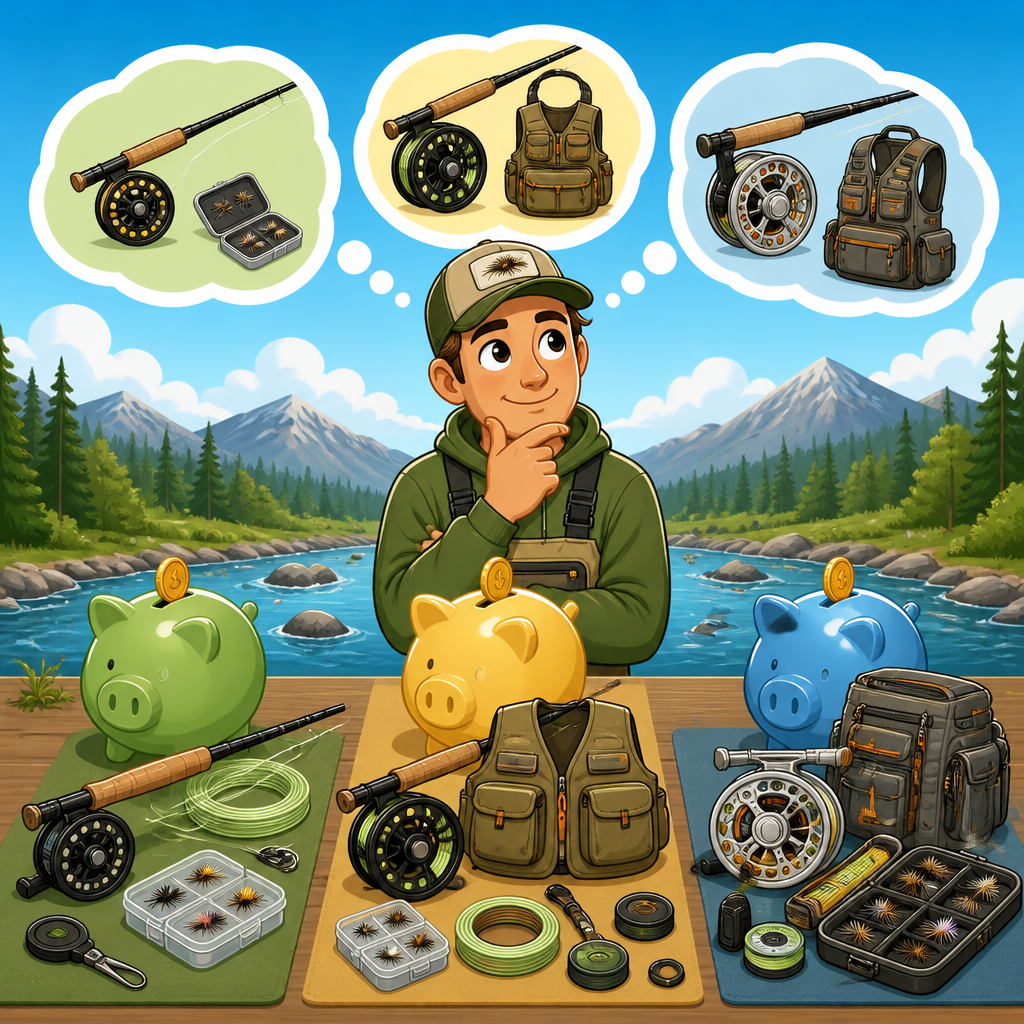
The cost to start fly fishing usually falls into one of three bands: lean entry, practical mid-range, and long-term value. The lean entry budget is enough to learn, catch fish, and discover whether you enjoy the sport. The practical mid-range budget gives you better durability, smoother casting, and fewer early frustrations. The long-term value budget does not mean luxury gear; it means buying equipment you can confidently fish for years without feeling compelled to upgrade next season. Where beginners waste money is often in accessories purchased too early, such as multiple spare spools, specialty sinking lines, or several boxes of highly specific patterns before they have learned local insect basics.
| Budget | Typical Cost | What It Includes | Best For |
|---|---|---|---|
| Lean Entry | $200 to $350 | Combo outfit, leaders, tippet, flies, basic tools, sunglasses | Trying fly fishing with minimal risk |
| Practical Mid-Range | $400 to $700 | Better rod and line, improved reel, net, pack, wading accessories | Frequent beginners who want easier learning |
| Long-Term Value | $800 to $1,500 | High-quality outfit, waders, boots, layers, net, tools, local instruction | Anglers committed to regular fishing |
A lean entry budget around $200 to $350 usually means buying a complete combo and a short list of essentials. For example, a starter outfit might cost $170 to $250, leaders and tippet another $20 to $30, a beginner fly assortment $25 to $40, and basic tools $20 to $40. Add polarized glasses, which are a safety item as much as a visual aid, and the total reaches the low end of a realistic first budget. At this level, you should focus on function. A 5-weight combo with a floating line, nine-foot 4X and 5X leaders, and a few proven flies like Woolly Buggers, Pheasant Tails, Zebra Midges, Elk Hair Caddis, and Parachute Adams will catch fish across much of North America.
The practical mid-range budget of $400 to $700 is where many anglers find the best balance. Here, the rod is usually lighter and more responsive, the cork and guides are better finished, and the fly line shoots and mends more cleanly on the water. That matters because line control is central to fly fishing. A good line helps roll casts, aerial mends, and drag-free drifts, all of which increase hookups. In this budget, you can often add a rubber-mesh net, a simple chest pack or sling, better rain layers, and perhaps a guided half-day lesson. In my experience, one quality lesson often improves results more than another $150 spent on gear. Better technique saves money because it reduces impulse buying driven by frustration.
The long-term value budget of roughly $800 to $1,500 is realistic for anglers who know they want to fish regularly through a season or more. This total often includes not only the rod outfit but also breathable waders, wading boots, layering systems for cold water safety, and a wider fly selection for local hatches. Many anglers underestimate the cost of safe wading. Felt or rubber-soled boots, gravel guards, wading staff options, and properly fitted waders matter on freestone rivers and tailwaters. If you fish from shore on warm ponds, you may not need them immediately. But for trout rivers, they are often the difference between fishing effectively and spending the day limited by unstable footing or dangerous exposure.
How to Choose Gear Without Overspending
If you are buying your first outfit, start with the species and water, not the catalog. For general beginner use, a medium-fast 9-foot 5-weight rod is the standard recommendation because it covers the broadest range of conditions. Medium-fast action gives enough power for distance and wind while still loading well at short range, where many beginners actually fish. Fast-action rods are popular, but very stiff rods can hide timing mistakes rather than teach feel. Reel selection is simpler: choose a corrosion-resistant reel with a smooth enough drag for the fish you target and enough arbor size to reduce line memory. For trout, drag quality matters less than balance, frame strength, and dependable construction.
Fly line is where selective spending pays off. A premium line from Scientific Anglers, Rio, Airflo, or Cortland can outperform a bargain line immediately, especially in cold weather or after repeated use. Good coatings float better, crack later, and maintain slickness longer when cleaned. If your budget allows one meaningful upgrade, make it the line. Leaders and tippet are consumables, so buy what fits your fly sizes instead of building a giant collection. A beginner trout setup usually needs 3X, 4X, and 5X tippet. For bass bugs or streamers, stronger 0X to 2X material is common. Keep your first system simple enough that you spend time fishing, not sorting packaging in the parking lot.
Used gear can lower the cost to start fly fishing, but only when purchased carefully. Secondhand rods from known brands can be excellent values if the ferrules fit correctly, guides are aligned, and there are no fractures near the tip or around the stripping guide. Used reels are often safe buys if they spin true and the frame is not bent. Used fly line is riskier. Even if it looks clean, older coatings may crack, sink at the tip, or cast poorly because of memory. I have seen beginners blame themselves for tailing loops when the real issue was tired line. When in doubt, buy the rod used and the line new. That approach often produces the strongest value per dollar.
Other Costs Beginners Often Miss
Many first-time anglers budget for tackle but forget access, travel, and learning costs. A fishing license is the obvious example. In many states, residents may pay under $40 for annual freshwater fishing, while nonresidents often pay significantly more for short-term licenses. Some waters also require stamps, parking permits, or walk-in access fees. Guided trips range widely by region, but even a half-day introductory float or wade trip can accelerate your progress. There is real value in learning knot systems, safe wading, fish handling, and local insect patterns from a qualified guide on day one rather than through a season of trial and error.
Clothing is another hidden category. You do not need to buy every technical garment immediately, but cotton is a poor choice in cold conditions because it holds moisture and loses insulation. Synthetic base layers, wool socks, a waterproof shell, and quick-drying pants are more important than many accessories sold near the fly bins. If you will fish cold tailwaters or shoulder seasons, hypothermia risk is not theoretical. Sun protection matters too. A brimmed hat, neck gaiter, and UPF shirt reduce fatigue and skin exposure during long days. These costs may not feel like fly fishing gear, yet they directly affect comfort, safety, and how often you actually use the equipment you bought.
Maintenance and replacement should also be part of any honest beginner budget. Leaders shorten as you change flies. Tippet spools run out. Flies are lost to trees, rocks, and fish. Wader seams eventually need patching. Fly line benefits from cleaning, and boots wear down. None of this makes fly fishing unusually expensive compared with golf, skiing, or boating, but it does mean your first-year cost is not just the purchase price of a rod combo. The good news is that a well-chosen setup can last many seasons. I still fish rods that are years old, and many anglers do the same, especially when they buy equipment from brands with reliable warranties and easy parts support.
What Beginners Should Learn First
Fly fishing beginners usually believe casting distance is the main skill, but line control and presentation matter more. Start by learning how to form a tight loop, stop the rod cleanly, and let the line straighten before changing direction. Then learn to manage slack, mend upstream, and set the hook with controlled tension instead of a hard bass-fishing swing. On moving water, a drag-free drift is often the difference between refusals and eats. On stillwater, strip cadence and depth control matter more. These basics are why an introduction to fly fishing should focus on mechanics and observation, not just shopping lists. Fish are responding to presentation, profile, and drift.
The fastest way to improve is to connect tackle choice with fishing situations. Dry flies imitate adult insects on the surface. Nymphs imitate subsurface life stages and often catch the most trout because that is where trout feed much of the time. Streamers suggest baitfish, leeches, or larger prey and can trigger aggressive strikes. Understanding those categories helps you buy smarter and fish more deliberately. A beginner who carries a small box with a few dries, nymphs, and streamers in local sizes is usually better prepared than someone carrying two hundred random flies. Confidence comes from pattern purpose. Once you understand what a fly represents and how it should move, selection becomes logical.
Ethics belong in every real introduction to fly fishing because skill without care damages fisheries. Learn local regulations, including barbless hook rules, seasonal closures, and species protections. Handle fish with wet hands, keep them in the water when possible, and avoid prolonged air exposure for photos. Water temperature matters, especially for trout. When streams warm into stressful ranges, responsible anglers shorten fights, fish early, or stay off the water. These habits are not advanced topics. They are part of becoming competent from the beginning, and they protect the resource that makes the sport worth entering in the first place.
Starting fly fishing does not require luxury gear, but it does require thoughtful spending. Most beginners can begin successfully with $200 to $350 if they buy a balanced combo, basic terminal tackle, a compact fly selection, and safety essentials. If you can spend $400 to $700, you will usually get better line performance, a more forgiving learning experience, and equipment that feels easier to grow with. At $800 to $1,500, you are not simply buying premium tackle; you are building a durable system that includes wading, clothing, and instruction, which often matters just as much as the rod itself.
The central lesson is simple: buy for your local water, prioritize fly line quality, and learn the fundamentals before expanding your gear closet. A 9-foot 5-weight outfit remains the best all-around answer for many newcomers, but the best setup is always the one that matches your species, conditions, and actual fishing frequency. As your Fly Fishing Basics hub, this guide gives you the framework to move into rigging, casting, fly selection, knots, and seasonal tactics with confidence. Choose the budget that fits your commitment, make a short list, and get on the water. Experience will teach you faster than any catalog ever will.
Frequently Asked Questions
How much does it realistically cost to start fly fishing as a beginner?
A realistic beginner budget usually falls into one of three ranges: bare-bones, balanced, and fully comfortable starter setup. On the low end, many new anglers can begin for roughly $150 to $300 if they buy a pre-matched rod-and-reel outfit, add a few flies, leaders, tippet, and basic tools, and fish close to home. A more balanced starting budget often lands around $300 to $600, which gives you more dependable performance, better line quality, improved accessories, and usually fewer frustrations while learning. If you want a more refined entry point with upgraded waders, boots, better line, and a setup that will serve you well for several seasons, it is easy to reach $600 to $1,200 or more.
The key reason fly fishing costs vary so much is that the sport is gear-sensitive in a way many beginners do not expect. In spin fishing, the lure or sinker provides the casting weight. In fly fishing, the weighted fly line carries the nearly weightless fly. That means your rod, reel balance, fly line taper, and leader setup all matter from the beginning. Some anglers can absolutely start with the essentials and have a great experience, especially if they fish ponds, small rivers, or stocked trout water. Others quickly add clothing, nets, packs, and specialty gear once they fish more often or in colder, moving water.
A smart way to think about cost is not just “What is the cheapest setup?” but “What gets me on the water without making learning harder than it needs to be?” Beginners who save too aggressively on the wrong items, especially fly line, often end up recasting that money later. In practical terms, the most affordable way to start is to buy a reliable all-around outfit, keep your initial fly selection simple, borrow or delay optional gear when possible, and spend more only after you know what kind of water and species you actually enjoy fishing.
What gear do I actually need to start fly fishing, and what can wait?
To truly begin fly fishing, you do not need a mountain of equipment. The core essentials are a fly rod, a fly reel, fly line, backing, a leader, tippet, flies, nippers or small line cutters, and some way to carry your tackle. If you are buying your first setup, a 9-foot 5-weight rod is often the most versatile choice for beginners because it handles common trout fishing situations well and teaches sound casting mechanics. A pre-spooled reel or starter outfit can simplify the process because it removes much of the confusion around matching rod weight, reel size, and line weight.
Beyond that, there are highly useful but not always immediate purchases. Waders and boots are valuable if you plan to fish rivers, cold water, or areas where wading gives you better access, but they are not mandatory for every beginner. Many people start from the bank of ponds, small streams, or easy-access shorelines. Forceps, floatant, split shot, strike indicators, a small landing net, and a sling or chest pack all improve convenience, but they can be added over time. Polarized sunglasses are one item I would treat as close to essential, not just for spotting fish but for eye protection when casting flies and hooks.
If your budget is limited, prioritize the gear that directly affects your ability to cast and fish effectively. That means rod, fly line, leader material, and a small box of proven patterns come first. Convenience gear can wait. This approach keeps costs realistic and helps you learn the fundamentals without feeling pressured to buy every accessory at once. Most experienced anglers did not acquire their full kit in one shopping trip, and beginners should not feel that they need to either.
Is it better to buy a cheap fly fishing combo or spend more on individual pieces?
For most beginners, a good-quality combo is the better value. A starter combo usually includes a rod, reel, and fly line already matched to one another, which removes one of the biggest early barriers in fly fishing: knowing what works together. Since fly casting depends on the line loading the rod properly, mismatched gear can make learning much harder. A decent combo from a reputable brand often performs better than a bargain-bin collection of separate items chosen without enough experience to evaluate them.
That said, not all combos are equal. The biggest difference between an acceptable starter outfit and a frustrating one often comes down to the fly line. Many entry-level packages include rods and reels that are serviceable, but the included line may cast poorly, crack sooner, or fail to load the rod smoothly. If you do buy a budget combo, one of the best upgrades you can make is replacing the stock fly line with a better one when your budget allows. That single change often makes the outfit feel dramatically more capable.
Buying individual components starts to make more sense when you already know your target species, water type, or casting preferences. For example, someone focusing on small streams may want a shorter, lighter rod, while an angler fishing bigger rivers or windy lakes may choose differently. But for a first-time angler who just wants a dependable, all-purpose setup, a thoughtfully selected combo is usually the most efficient path. It controls costs, reduces decision fatigue, and gets you fishing faster without sacrificing the core experience.
What hidden or overlooked costs should beginners include in their budget?
One of the biggest mistakes new fly anglers make is budgeting only for the rod and reel. In reality, the “small stuff” adds up quickly. Leaders and tippet need periodic replacement. Flies are consumable and easy to lose, especially while learning. Floatant, indicators, split shot, strike putty, and other terminal accessories are inexpensive one at a time but meaningful in total. If you fish moving water, you may eventually want waders, boots, and a landing net. If you fish different waters, a license, access fees, fuel, or travel costs can exceed your tackle costs surprisingly fast.
There is also the cost of learning. Some beginners save money and frustration by investing in a casting lesson, guided trip, or a session with a knowledgeable fly shop employee. While that may feel optional, it can actually be one of the best values in the sport. A short lesson can help you understand how weighted fly line delivers the cast, why timing matters, how leader length affects turnover, and how to avoid common problems like tailing loops and wind knots. In many cases, a bit of instruction prevents wasted spending on gear that does not solve the real issue.
Maintenance and replacement should be considered too. Boots wear down, lines age, leaders get shortened, and flies disappear into trees, rocks, and fish mouths. None of this means fly fishing is prohibitively expensive, but it does mean your first-year cost is usually higher than your “just enough to start” number. The good news is that many of these expenses stabilize after the initial build-out. Once you have your core setup, future spending becomes much more flexible and easier to control.
Can I start fly fishing on a tight budget without making the experience frustrating?
Yes, absolutely, but the secret is to be selective rather than simply cheap. A tight-budget beginner can have a very positive first season by focusing on a versatile setup and avoiding unnecessary specialization. A solid 5-weight combo, a few leaders, one spool of tippet, a basic fly box with proven patterns, nippers, and polarized glasses are enough for many first outings. If you have access to local ponds, stocked trout streams, or gentle rivers, you may not need waders or boots right away. That alone can keep startup costs far lower than many people expect.
Where tight budgets go wrong is when beginners buy the absolute cheapest option in every category, especially if that means poor casting performance. Fly fishing already feels different because the line, not the fly, carries the cast. Learning that system is much easier when your rod and line communicate well. A modest but reliable setup is far better than an ultra-cheap setup that makes timing difficult and masks what a proper cast should feel like. If you need to choose where to spend, put your money into the rod-and-line system first and trim costs elsewhere.
It also helps to begin with realistic goals. You do not need gear for every species, every river, and every weather condition. Start with the water you can fish often, the species most available to you, and a setup that covers those situations well. Borrow gear when possible, buy from a respected local fly shop, watch for reputable used equipment, and resist the urge to overbuy accessories. Fly fishing can become expensive if you let it, but it does not have to be expensive to begin. A careful first budget can get you on the water, teach you the fundamentals, and leave room to upgrade only after you know what matters to you most.