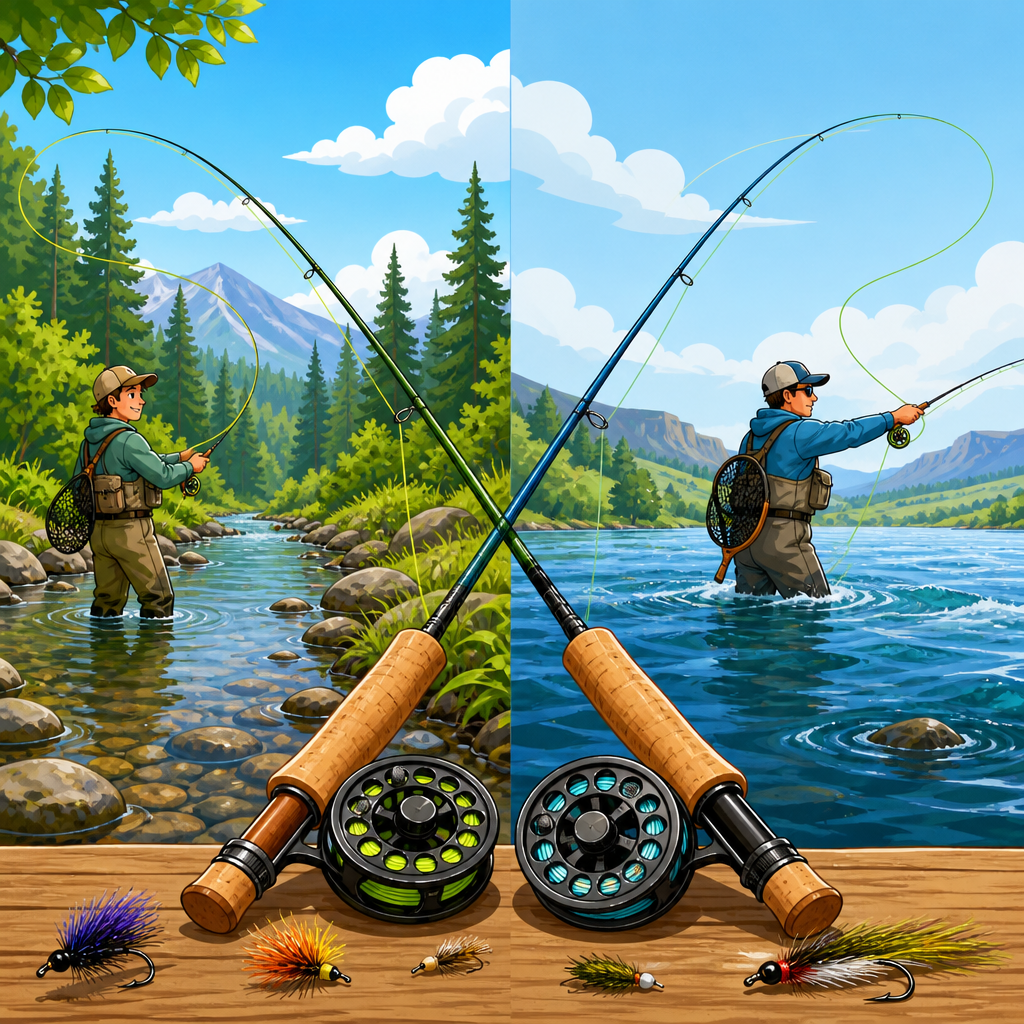
Choosing between a 3-weight and 5-weight fly rod shapes almost every part of your fishing day, from how delicately you land a dry fly to how confidently you turn over a weighted nymph rig in afternoon wind. In fly fishing, rod “weight” refers to the line size a rod is designed to cast, not the physical weight of the blank alone. A 3-weight rod is built for a 3-weight fly line and usually emphasizes finesse, light tippets, and smaller fish. A 5-weight rod pairs with a 5-weight line and is widely considered the all-around standard because it balances presentation, casting range, fish-fighting control, and versatility across many waters. For anglers building a practical setup under the broader Fly Fishing Basics category, understanding this difference is central to smarter gear and equipment decisions.
I have fished both classes extensively on Appalachian brook trout streams, broad Western freestones, spring creeks, and warmwater ponds, and the gap between them is more meaningful on the water than catalog descriptions suggest. A 3-weight can make eight-inch trout feel electric and deliver tiny dries with almost no disturbance, but it reaches its limit quickly when flies get larger, currents get pushier, or wind starts moving your leader. A 5-weight gives up some romance at close range, yet it covers far more situations competently, which is why guides, outfitters, and casting instructors recommend it so often to beginners and returning anglers.
This hub article explains how to choose the right rod for your water by breaking down casting performance, fly size, fish size, river type, weather, and complete outfit planning. It also serves as a roadmap for gear and equipment decisions that connect to your reel, fly line, leader, tippet, waders, packs, and fly selection. If you want one clear answer up front, here it is: pick a 3-weight when your fishing is mostly small-stream trout with dry flies and short casts; pick a 5-weight when you need one rod to handle the widest range of trout techniques and conditions.
What rod weight really changes on the water
Rod weight changes more than feel. It affects line mass, loading speed, casting tempo, leader turnover, mending ability, hook-setting power, and fish control. Because a 5-weight line is heavier than a 3-weight line, it carries more energy through the cast. That added energy helps straighten longer leaders, turn over bushier dry flies, and move indicator nymph rigs that a lighter setup may struggle to deliver cleanly. A 3-weight, by contrast, loads easily at short distance and protects fine tippets better, especially when fishing 6X and 7X to selective trout in clear water.
Action matters too. A fast-action 3-weight is not automatically more capable than a moderate 5-weight, because line weight and blank design work together. Many modern rod makers, including Orvis, Sage, Winston, Scott, Douglas, and Redington, build 3-weights that cast farther than older models, but physics remains physics. In practical use, the 5-weight still handles more variables with fewer compromises. That is why it anchors so many starter outfit recommendations in fly shops and appears constantly in buyer guides focused on trout gear and equipment.
Distance is often misunderstood. Most trout are caught within 30 to 40 feet, so absolute maximum casting range is less important than efficient performance in that band. In this zone, a 3-weight excels when your fly is small, your cast is compact, and stealth matters. A 5-weight excels when you need to pick up line, mend across currents, or redirect your cast quickly. On rivers with mixed pocket water, seams, and occasional longer drifts, that flexibility matters more than parking-lot casting heroics.
Best uses for a 3-weight fly rod
A 3-weight fly rod is the specialist’s tool for finesse trout fishing. Its ideal home is a small stream, tight overgrown creek, spring creek, or mountain brook trout run where fish average six to fourteen inches and casts are short. The lighter line lands gently, reducing surface shock when trout are feeding in flat water. If you fish size 18 to 24 dry flies, tiny parachutes, CDC emergers, or unweighted soft hackles, the 3-weight offers a level of touch that heavier rods cannot replicate as naturally.
The most common winning scenarios include high-gradient rhododendron tunnels, beaver meadow creeks, and technical tailouts where a long leader and tiny fly must touch down first. On these waters, I often fish a 7-foot to 8-foot 6-inch 3-weight with a double taper or true-to-weight floating line because it loads quickly at ten to twenty-five feet. The rod cushions sudden runs from wild trout and helps prevent break-offs on light tippet. For anglers who value the fight as much as the result, a good 3-weight makes ordinary trout memorable.
Its limitations are equally important. Split-shot nymphing, large foam terrestrials, tandem rigs, and streamer fishing expose the boundaries fast. Wind can collapse loops and ruin accuracy. Bigger fish in heavy current also prolong fights, which can be hard on trout during warm-water periods. If your water regularly presents twenty-inch fish, strong crosscurrents, or hopper-dropper rigs with indicators, a 3-weight becomes a niche choice rather than a primary tool.
Best uses for a 5-weight fly rod
The 5-weight is the default trout rod because it handles the broadest spread of presentations well enough to be dependable nearly everywhere. If I were setting up one outfit for a new angler who fishes rivers, creeks, and stillwaters without a rigid specialty, I would start with a 9-foot 5-weight, a quality large-arbor reel, and a weight-forward floating line. That combination can fish dry flies, nymphs, small streamers, hoppers, caddis, midges, and indicator rigs while remaining manageable for someone still refining timing and loop control.
On medium rivers, the 5-weight mends line more effectively because the heavier line resists micro-drag and is easier to reposition on the water. It also picks up and recasts better after a drift, a real advantage when covering rising fish or adjusting to changing seams. During windy afternoons, which are common on open Western rivers and many lakes, a 5-weight simply keeps you fishing with less frustration. For guides managing mixed client skill levels, this consistency is why the 5-weight fills so many boat racks and rental fleets.
The 5-weight also expands species options. Beyond trout, it can handle panfish, small bass, and light carp work in controlled situations. That cross-species utility makes it a stronger hub choice for anglers planning a broader gear and equipment system. It is not perfect: on tiny brushy creeks, a 9-foot 5-weight can feel excessive, and for highly technical spring creek fishing with tiny dries, it may land with slightly less grace. Even so, its range of competence remains unmatched for a single freshwater fly rod.
How water type should decide your choice
The clearest way to choose between a 3-weight and 5-weight fly rod is to match the rod to the water you actually fish most often, not the water you imagine fishing once a year. Narrow mountain streams, plunge pools, alder-lined tributaries, and small meadow creeks favor the 3-weight because short casts, soft presentations, and compact rod lengths matter more than power. Medium freestone rivers, tailwaters with varied rigs, drift-boat floats, and lakes favor the 5-weight because line control, wind management, and longer drifts become more important.
| Water type | 3-weight advantage | 5-weight advantage |
|---|---|---|
| Small mountain stream | Short-range loading, delicate dry-fly presentation, easier bow-and-arrow casts | Useful only if fish are larger or wind is common |
| Spring creek | Light tippet protection and subtle landings with tiny flies | Better for longer mends and multi-fly nymph setups |
| Medium freestone river | Fun with single dries in calm conditions | Best overall for mixed techniques, seams, and changing currents |
| Large river or tailwater | Limited to selective dry-fly windows | Superior reach, control, and fish-fighting authority |
| Lake or pond | Fine for small dries and chironomids in calm weather | Stronger for wind, longer casts, and small streamers |
Be honest about scale. A creek that is fifteen feet wide one month may still demand a 5-weight if afternoon wind funnels through a valley and terrestrials are the main food source. Likewise, a famous river does not automatically require a 5-weight if you only fish side channels during gentle evening hatches. Water type is a shorthand for the demands created by current, casting space, drift length, and weather. Evaluate those demands first, then choose the rod.
Flies, rigs, and fish size: the practical gear and equipment link
Fly size and rig complexity often settle the debate faster than brand comparisons do. A 3-weight shines with single dry flies, light nymphs, and sparse wet flies. Once you add a bobber-style indicator, two tungsten nymphs, split shot, or a foam hopper with a beadhead dropper, the casting equation changes. The 5-weight turns over these rigs more safely and accurately, reducing tailing loops and the ugly collisions that create wind knots. In real fishing, that means less time untangling and more time drifting effectively.
Fish size also matters, but not just because bigger fish are stronger. Larger trout usually live in larger rivers or stronger current, where side pressure and quick control are important. A 3-weight can land a twenty-inch trout, but doing so efficiently depends on open water, cool temperatures, and disciplined fish handling. A 5-weight shortens the fight and gives you more authority near logs, rocks, and heavy flow. That improves landing efficiency and can support better release outcomes when water temperatures rise above the low-sixties.
Other equipment should match the rod’s role. With a 3-weight, a lightweight reel mainly serves to balance the rod and hold line; drag quality matters less for average trout than smooth startup and overall weight. With a 5-weight, especially on larger rivers, reel drag and arbor design become more relevant. Leaders also change. A 3-weight often pairs best with 9- to 12-foot leaders tapering to 5X through 7X, while a 5-weight commonly uses 7.5- to 9-foot leaders in 3X through 5X, depending on flies and conditions.
If you can own only one rod, here is the right answer
If you can buy only one fly rod for trout fishing, choose a 9-foot 5-weight. That is the clearest recommendation I can give after years of watching beginners, occasional anglers, and experienced fishers adapt to changing water. It is the best one-rod answer because it handles the greatest variety of rivers, flies, and weather with the fewest frustrating weaknesses. It supports learning core skills too: roll casting, mending, line pickup, indicator nymphing, dry-fly presentation, and small streamer work.
A one-rod angler needs flexibility more than perfection. The 3-weight can be magical in its lane, but its lane is narrower. The 5-weight covers mayfly hatches on spring creeks, attractor dry-dropper fishing in freestones, balanced presentations on tailwaters, and evening pond sessions for bluegill. You can grow with it instead of growing out of it. When anglers later expand their quiver, they usually add specialization around the 5-weight, such as a 3-weight for small streams or a 6-weight for streamers and bass, rather than replacing the 5-weight entirely.
Budget also supports this choice. The largest selection of rods, lines, reels, and combo kits exists around the 5-weight category, which creates better value and easier replacement options. Most casting clinics and instructional videos also assume a 9-foot 5-weight baseline, making technique transfer simpler. In a sub-pillar hub on Fly Fishing Basics and gear and equipment, that standardization is not trivial; it means better compatibility with everything else you will buy and learn.
How to build the rest of your setup around each rod
For a 3-weight setup, keep the system light and intentional. Pair the rod with a true-to-line-size floating line rather than half-size-heavy line unless the manufacturer specifically recommends it. Use supple leaders, smaller strike indicators, and compact fly boxes built around dries, emergers, soft hackles, and small beadheads. A short-handled net, slim chest pack, and lightweight wading kit make sense because this style of fishing usually involves hiking, crouching, and fishing at close quarters.
For a 5-weight setup, build for versatility. Start with a dependable weight-forward floating line from a recognized series such as Scientific Anglers Mastery MPX, Rio Gold, or Airflo Universal Taper, then add leader material from 3X to 6X. Stock flies that span Adams patterns, Elk Hair Caddis, Pheasant Tails, Zebra Midges, Woolly Buggers, and hopper patterns. This rod class also pairs well with forceps, nippers, floatant, a net large enough for sixteen- to twenty-inch trout, and a sling or vest that can organize indicators, split shot, and spare spools.
Whichever rod you choose, practice with the exact line and leader system you plan to fish. Many disappointing rod purchases trace back to mismatched lines or unrealistic expectations set by lawn casting. Test on water, with flies, in wind, and at fishing distances. That process reveals the truth quickly.
The 3-weight versus 5-weight question is really a question about priorities: delicacy versus versatility, intimacy versus range, specialization versus coverage. A 3-weight is right for your water when your fishing centers on small streams, calm conditions, short casts, light tippet, and trout that reward subtle presentation. A 5-weight is right when your water changes from day to day, your methods vary, or you want one rod that can fish dries, nymphs, and small streamers without constant compromise.
As the hub page for gear and equipment within Fly Fishing Basics, this comparison points to a broader truth: every piece of tackle works best as part of a system matched to water, flies, fish, and skill level. Rod choice connects directly to reel balance, line taper, leader design, pack organization, wading approach, and fish handling. Get the rod class right first, and the rest of your setup becomes easier to build with confidence and logic.
If you are still unsure, default to the 5-weight for a first or only rod, then add a 3-weight later if small-stream trout fishing becomes a passion. That path is practical, cost-effective, and proven on real water. Use this guide as your starting point, assess the water you fish most, and choose the rod that helps you fish it better next trip.
Frequently Asked Questions
What is the real difference between a 3-weight and a 5-weight fly rod?
The most important difference is not the physical heft of the rod in your hand, but the line size the rod is designed to cast. A 3-weight rod is built to load properly with a 3-weight fly line, while a 5-weight rod is designed around a 5-weight line. That change in line weight affects almost everything on the water, including casting distance, presentation, wind resistance, fly size, leader setup, and the kind of fish the rod handles best.
In practical terms, a 3-weight is usually associated with finesse. It excels at light presentations, smaller dry flies, thin tippets, and modest fish in smaller or calmer water. It allows you to land a fly softly and protect fine leader material when a fish surges at close range. That makes it especially appealing on spring creeks, mountain streams, and small trout water where stealth and delicacy matter more than raw power.
A 5-weight, by contrast, is the classic all-around trout rod because it offers a much broader operating range. It can still present a dry fly well, but it also has enough backbone to cast larger flies, handle indicator nymph rigs, and stay effective when afternoon wind picks up. It generally gives anglers more control over line speed, mending, and fish-fighting authority. If a 3-weight is a specialist in subtle presentation, a 5-weight is the versatile tool that covers the widest range of trout situations.
When should I choose a 3-weight fly rod over a 5-weight?
A 3-weight is the right choice when your water and your tactics reward finesse more than power. If you spend most of your time on small streams, tight headwaters, gentle meadow creeks, or technical dry-fly fisheries, a 3-weight can feel like the perfect match. It shines when the flies are small, the casts are relatively short, and the fish are wary enough that a soft landing matters. In those situations, the lighter line and more delicate overall setup can help you avoid spooking fish and create a more natural drift from the start.
It is also a strong option when you commonly fish light tippets and smaller trout. A 3-weight bends deeply under modest pressure, which helps cushion sudden runs and head shakes. That can be a real advantage when fishing fine leader material because the rod helps absorb shock that might otherwise break off a fish. Many anglers also simply enjoy the more responsive, connected feel of a lighter rod when targeting average-size trout in intimate water.
That said, the choice should be guided by conditions, not just preference. A 3-weight becomes less ideal when you need to cast bigger nymph rigs, larger dry-dropper setups, streamers, or heavily weighted flies. It also becomes more demanding in windy conditions or on bigger rivers where longer casts and stronger line control are important. If your home water is small, clear, protected, and focused on dry flies or light nymphs, a 3-weight is often the better and more enjoyable tool. If those conditions only describe a small part of your season, the 3-weight may be better viewed as a specialty rod rather than your primary one.
Why is a 5-weight often considered the best all-around trout rod?
The 5-weight has earned its reputation because it covers more trout fishing scenarios competently than almost any other rod size. It is heavy enough to cast a broad range of flies and rigs, yet still light enough to feel sporting with average trout. That balance makes it a dependable choice for anglers who fish mixed water types, encounter changing weather, or want one rod that can do a little of everything without major compromise.
On the casting side, a 5-weight gives you more line mass to work with, which helps load the rod efficiently at typical trout distances and generate enough line speed to cut through wind. It can present dry flies, but it also handles common trout tactics that start to challenge lighter rods, such as hopper-dropper rigs, indicator nymph setups, tandem flies, and lightly weighted streamers. That extra versatility matters because a fishing day often changes as conditions shift. Calm morning dry-fly fishing can easily turn into windy afternoon nymphing, and a 5-weight transitions through those situations far more comfortably than a 3-weight.
Fish-fighting control is another big reason anglers rely on a 5-weight. It offers more lifting power and authority when you need to steer fish away from current seams, logs, undercut banks, or weed beds. It is still enjoyable with modest trout, but it also gives you enough reserve power for larger fish and larger rivers. For beginners, that wider margin for error can be especially valuable. For experienced anglers, it remains a practical default because it reduces tackle limitations on unfamiliar water. If you want one trout rod to cover the most water types and techniques with the fewest trade-offs, the 5-weight is usually the safest and smartest choice.
How do wind, fly size, and rig setup affect whether a 3-weight or 5-weight is better?
These factors often make the decision clearer than rod labels alone. Wind is one of the biggest separators. A 3-weight can be delightful in calm conditions, but as breeze builds, its lighter line has a harder time maintaining tight loops, consistent turnover, and accurate placement. A 5-weight handles wind more confidently because the heavier line carries more momentum and helps deliver the fly where you intend. If your local rivers regularly see afternoon gusts, the 5-weight usually becomes the more practical rod.
Fly size matters just as much. A 3-weight is most comfortable with smaller dries, light emergers, and modest unweighted or lightly weighted nymphs. Once you move into bushier terrestrials, beadhead nymph combinations, strike indicators, split shot, or small streamers, the limitations of a 3-weight become more noticeable. It may still cast those rigs in ideal conditions, but it generally does so with less ease, less accuracy, and less turnover authority. A 5-weight manages larger or more wind-resistant flies far better and with less effort over a full day.
Rig complexity is often the deciding factor for real-world trout anglers. A simple single dry fly on a long leader is very different from a two-fly indicator rig with weight, or a hopper with a nymph hanging below it. The more components you add, the more energy the rod and line must deliver. That is where a 5-weight clearly pulls ahead. It loads better with heavier rigs, mends line more effectively on larger currents, and allows more consistent casting when your setup is not especially delicate. If your fishing is mostly minimalist and technical, a 3-weight can be ideal. If your fishing regularly involves heavier, larger, or more complicated presentations, a 5-weight is almost always the better tool.
If I can only buy one fly rod, should I get a 3-weight or a 5-weight?
For most anglers, especially those building a first trout outfit, the 5-weight is the better single-rod choice. It gives you access to the broadest range of trout techniques and water types with the fewest limitations. You can fish dry flies, nymphs, dry-dropper rigs, and even light streamers. You can handle small creeks, medium rivers, and many stillwater situations. You also get better performance in wind and more fish-fighting control when conditions become less forgiving.
A 3-weight makes more sense as an only rod if your fishing is highly specific and consistently favors small water, small flies, modest fish, and relatively calm conditions. In other words, if you know your season revolves around close-range dry-fly fishing on intimate trout streams, then a 3-weight may genuinely be the right single rod for your style. But that is a narrower use case than many anglers first assume. Once you start traveling, fishing larger rivers, or experimenting with different presentations, the limits of a 3-weight become much more apparent.
A good rule of thumb is to choose based on the broadest conditions you realistically fish, not the most romantic ones. Many anglers imagine the perfect small-stream dry-fly day, but their actual season includes wind, mixed rigs, changing flows, and a wider range of trout water. In that real-world scenario, a 5-weight is usually the smarter investment. It may not match the ultra-delicate charm of a 3-weight on tiny water, but it will let you fish effectively far more often. If you eventually add a second rod, that is when a 3-weight becomes a fantastic complement to a 5-weight rather than a replacement for it.