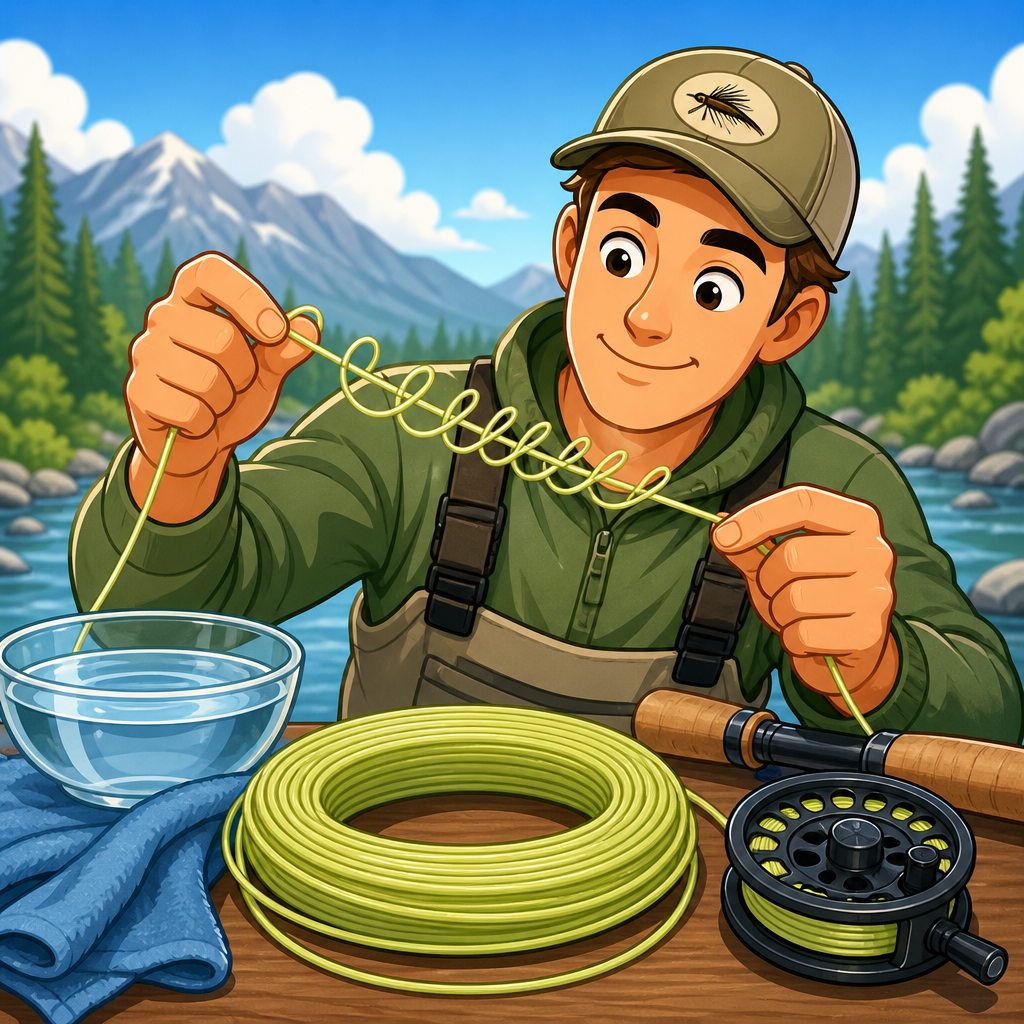
Memory coils in a fly fishing line create loose spirals that jump off the reel, reduce casting control, and make mending, line pickup, and drag-free drifts harder than they should be. If you have ever stripped line from a reel on a cold morning and watched it spring into tight loops at your feet, you have seen line memory in action. In practical terms, line memory is the tendency of the line’s polymer coating and core to retain the shape of the reel arbor or spool after storage. Learning how to remove memory coils from a fly fishing line is one of the most useful skills in fly fishing basics because it improves presentation, line management, and overall gear performance without requiring new equipment.
This gear and equipment hub explains what causes coils, how to straighten a fly line safely, what tools help, and when coiling signals wear rather than temporary stiffness. I have dealt with memory problems on trout lines, warmwater setups, and saltwater outfits, and the pattern is consistent: coils are worst when the line is stored too long on a small spool, exposed to temperature swings, or paired with the wrong line for the conditions. The good news is that most coils can be reduced quickly. The better news is that prevention is straightforward once you understand line materials, reel sizing, cleaning routines, and storage practices.
For anglers building a complete understanding of fly fishing gear and equipment, this topic connects directly to reel setup, fly line selection, backing, leaders and tippet, rod matching, and line care. A line that behaves well casts better, tangles less, and lets every other part of the system do its job. That is why memory control deserves its own place in any serious Fly Fishing Basics guide.
What causes memory coils in a fly fishing line
Memory coils form because a fly line is a composite product made from a core and an outer coating, usually PVC or a similar polymer blend with plasticizers and additives. When the line sits wrapped around a reel spool, especially a narrow arbor, the coating and core settle into that curved shape. Cold weather makes the coating less supple, so the coils become tighter and more visible. Tropical lines designed for hot climates are a common example. Use one on a cool trout stream and it often feels wiry because the formulation is intentionally stiffer to resist softening in heat.
Reel design matters too. Small-arbor reels bend line into a tighter radius than large-arbor reels, so lines stored on them generally show stronger memory. Age also matters. As fly lines accumulate UV exposure, dirt, sunscreen residue, and repeated flexing, coatings can harden. At that point, the line may not simply have temporary memory. It may be nearing the end of its service life. Manufacturers such as Rio, Scientific Anglers, and Airflo all distinguish between normal handling stiffness and material fatigue, and experienced anglers should too.
The key point is simple: some memory is normal, severe memory is fixable in many cases, and persistent coils after cleaning and stretching usually indicate either the wrong line for the temperature or a worn line that should be replaced.
How to remove memory coils from a fly fishing line safely
The fastest reliable method is controlled stretching. Strip twenty to thirty feet of line from the reel, hold one section firmly with a clean cloth or gloved hand, and apply steady tension along the length for a few seconds. Then move to the next section. The goal is not to yank. The goal is to warm the coating slightly through friction and encourage the line to relax straight. On the water, I usually straighten the first thirty feet before the first cast because that is the section doing most of the work in trout fishing.
A second method is warm-water treatment. Fill a tub or sink with lukewarm water, not hot water, and soak the fly line briefly. Lukewarm means comfortable to the touch, generally around the range used for hand washing, not near-boiling temperatures. Excessive heat can deform coatings or weaken loops. After soaking, strip the line out across clean grass or a towel, then perform a light stretch by hand. This works especially well on cold-stiff lines at the start of a season.
Line dressing and cleaning also help because dirt increases surface drag and makes coils cling to one another. Use a manufacturer-approved fly line cleaner or dressing pad. Wipe the line from reel to tip, remove grime, then stretch it. Many anglers skip this step and assume the coils are purely structural, but a dirty line often behaves worse than a clean line of the same age.
| Method | Best use case | How long it takes | Main caution |
|---|---|---|---|
| Hand stretching | Before fishing or mid-session coil control | 2 to 5 minutes | Avoid sharp jerks that can stress welded loops |
| Lukewarm water soak | Season-start stiffness or cold-weather lines | 10 to 20 minutes | Do not use hot water |
| Cleaning and dressing | Dirty lines with sticking coils and reduced shootability | 10 minutes | Use products approved for fly lines |
| Full lawn stretch | Severe memory after storage | 15 to 30 minutes | Keep line off abrasive surfaces |
For severe coils, pull the full fly line into a clean yard, onto a dock, or across a smooth floor. Work in sections, using moderate tension. Let the line rest straight for several minutes before winding it back onto the reel under even pressure. This reset often makes a dramatic difference.
When memory coils signal a bigger gear problem
Not every coiled fly line can be rescued. If the line still springs into tight curls immediately after stretching, inspect the coating. Look for cracks, flat spots, roughness, discoloration, and hinge points near the tip or belly. These defects mean the coating has lost flexibility or suffered abrasion. Once a line reaches that stage, attempts to remove memory become temporary at best. Replacing the line is more efficient than fighting poor performance every trip.
Core design can also be a factor. Braided multifilament cores tend to remain more supple in cool freshwater conditions, while monofilament cores are often used in hot-weather or saltwater lines because they resist limpness in heat. If you regularly fish spring creeks, tailwaters, or shoulder-season temperatures below about 50 degrees Fahrenheit, a coldwater taper on a supple core will behave better than a tropical line, even if both have the same weight rating.
Reel balance and arbor size matter more than beginners realize. A large-arbor reel does not eliminate memory, but it reduces the curvature imposed during storage. If your line constantly coils and your reel is undersized for the line class, upgrading the reel can improve handling. This is especially relevant on 5-weight and 6-weight trout outfits used in variable temperatures, where many anglers still fish older small-arbor designs.
Essential fly fishing gear and equipment that affect line memory
As the hub page for gear and equipment in Fly Fishing Basics, this topic links to the entire setup, because line behavior reflects system choices. Start with the rod and line match. A line that is overweighted by design, such as a half-size-heavy taper, can load modern fast rods efficiently, but if the coating is too stiff for the weather, the setup still feels unruly. Good casting begins with a line suited to the rod and the climate.
The reel is next. Arbor size, drag design, and spool width all influence storage and line retrieval. Large-arbor reels recover line faster and reduce coil memory. They also make it easier to dry backing and line after use. Backing itself matters because uneven backing lay creates high and low spots under the fly line, which can affect how evenly the line sits on the spool.
Leaders and tippet do not cause fly line memory, but they amplify its effects. A coiled fly line transmits slack and twist into the leader system, making turnover less predictable. This becomes obvious with long leaders for dry flies or light tippet for technical trout. Strike indicators, sink tips, and shooting heads can further complicate line control if the running line already wants to curl.
Other useful gear includes line cleaning pads, dressing, a stripping basket for boat or surf use, reel cases that prevent heat buildup in vehicles, and storage spools for off-season line rotation. These are not luxury items. They directly affect the lifespan and fishability of your line.
Step-by-step maintenance routine for better line performance
A simple maintenance routine prevents most coil problems. First, inspect the line after every few trips. Run it through your fingers and check for nicks, sticky spots, or cracks. Second, clean it regularly. In freshwater trout fishing, I usually clean often-used lines every several outings; in saltwater, I rinse after every trip and clean more aggressively because salt crystals and sand accelerate wear. Third, store reels away from direct sun, dashboard heat, and freezing garages when possible. Temperature extremes age coatings quickly.
Fourth, rewind the line under light tension after use. Loose, uneven wraps encourage tangles and make the next outing start badly. Fifth, stretch the working section before fishing, especially in cold weather. This takes less than three minutes and prevents many of the line management issues beginners blame on casting skill alone. Sixth, match line type to conditions. Coldwater trout lines, all-around freshwater tapers, and tropical saltwater lines are not interchangeable if you care about handling.
If you own several spools or outfits, rotate lines seasonally. I keep supple freshwater lines on trout reels for spring and fall and reserve stiffer warm-weather lines for summer bass or salt trips. That one decision reduces memory more than any accessory.
Common mistakes anglers make when trying to straighten a fly line
The biggest mistake is using too much heat. Boiling water, hair dryers, and heaters can permanently damage a fly line. Controlled warmth helps; concentrated heat harms. Another mistake is stretching too aggressively. Fly lines are durable, but welded loops, factory coatings, and delicate tip sections can be stressed by sudden force. Smooth tension is what works.
Anglers also make the mistake of diagnosing every coil as a cleaning issue. Sometimes the line is simply the wrong product for the temperature. A tropical line on a 45-degree river day will fight you all morning, no matter how carefully you dress it. The opposite problem happens in summer heat when an ultra-supple coldwater line becomes overly limp on warm stillwater, tangling around boots and boat hardware.
Storage errors are common. Leaving a reel in a hot car can soften and age the coating, while long storage on a cramped spare spool can set deep memory. Finally, many anglers wait too long to replace a line. If the line has visible cracks, persistent hinging, and poor flotation despite cleaning, it is worn out. Time spent trying to revive it is usually better spent installing a new line matched to your fishing.
How better line management improves casting and presentation
Removing memory coils is not just cosmetic. Straighter line shoots farther because it encounters less friction in the guides. It mends more cleanly because energy transfers predictably along the line. It also lands with less unintended slack, which matters for strike detection and drag control. On rivers, a coiled line can pull a dry fly off its lane or delay a hook set on a nymph eat. On stillwater, it can interfere with figure-eight retrieves and hand-twist strips.
Beginners often think their timing is the issue when the real problem is line handling. Once the line is straight, pickup becomes smoother, false casting stabilizes, and loops tighten naturally. That is why this subject belongs in every gear and equipment hub. A good rod cannot overcome a badly coiled line, and a premium reel cannot fix a worn coating. Straight, clean, climate-appropriate fly line is foundational tackle.
The main takeaway is clear: remove memory coils with gentle stretching, lukewarm water, and regular cleaning; prevent them with smart storage, proper reel sizing, and lines matched to temperature. Treat your fly line as a performance component, not an afterthought. If you are building confidence in Fly Fishing Basics, review the rest of your gear and equipment with the same standard, then maintain each piece before problems show up on the water. Start with your fly line today, and your next cast will tell you the difference.
Frequently Asked Questions
What causes memory coils in a fly fishing line?
Memory coils happen when a fly line keeps the curved shape of the reel spool after sitting wound up for a period of time. Most fly lines are built with a core and a polymer coating, and both materials respond to storage conditions, temperature, and age. When the line stays wrapped around a relatively small arbor, especially under tension, it can “remember” that circular shape. The result is the loose or tight spirals you see when you strip line off the reel.
Cold weather is one of the biggest reasons memory becomes more noticeable. In lower temperatures, the coating and core stiffen, which makes the line less willing to relax and straighten on its own. That is why coils often seem worst early in the morning, during winter fishing, or anytime you move from a warm indoor environment to cold water. A line that feels manageable in the garage can suddenly spring into loops once you get streamside.
Line design also matters. Some fly lines are naturally stiffer than others, and some budget or older lines tend to show more memory than newer premium models with more supple coatings. Storage habits make a difference as well. Leaving line tightly wound for long periods, storing tackle in hot vehicles, or using a line that has become dirty and dried out can all increase coil formation. In short, memory coils are usually caused by a mix of spool shape, material stiffness, temperature, and overall line condition.
How can I remove memory coils from a fly fishing line before I start fishing?
The most reliable way to remove memory coils before fishing is to stretch the line in controlled sections. Strip off a workable length of line, usually 20 to 30 feet at a time, and gently pull it between your hands until you feel the coils begin to relax. Hold steady tension for a few seconds rather than jerking sharply. Then move down the line and repeat. This helps the coating and core settle into a straighter shape without risking damage.
Another effective method is to run the line through a soft cloth while applying light pressure. This creates mild friction and warmth, which can help the line become more supple. Many anglers combine both methods by stretching the line first and then pulling it through a clean cloth or line-cleaning pad. That combination can make a noticeable difference in how the line shoots, mends, and lays on the water.
If conditions allow, letting the stripped line rest in the water for a short time can also help. Water temperature can soften the line enough to reduce some coil memory, especially if the line is designed for those conditions. Just remember that very cold water may not help much and can even keep the line stiff. The key is to straighten the line gradually and deliberately. Aggressive yanking is not necessary and can stress the core, so steady pressure is always the better approach.
Can memory coils be prevented, or do I have to fix them every time I fish?
You can reduce memory coils significantly with good maintenance and storage habits, although some degree of memory is normal with any fly line. One of the best preventive steps is choosing a line matched to your fishing conditions. Lines made for colder weather usually stay more supple in low temperatures, while warm-water lines are often intentionally stiffer and may coil badly if used in the cold. Using the right line for the season makes a major difference.
Storage is equally important. Avoid leaving your reel and line in places with extreme heat or repeated temperature swings, such as a car trunk or an unheated shed. Heat can prematurely age the coating, while long-term compression on the spool encourages shape retention. If you are storing gear for a while, keeping the line clean and dry helps preserve its flexibility. Some anglers also benefit from using large-arbor reels, since a larger spool creates broader loops and usually less pronounced memory.
Routine line care goes a long way too. Cleaning the fly line removes grime that can make it feel sticky or stiff, and applying an approved line dressing can improve slickness and suppleness. Even with excellent care, you may still need a quick stretch at the start of the day, especially in cold weather. The goal is not to eliminate all maintenance forever, but to keep memory manageable so it does not interfere with casting control, line pickup, or drag-free drifts.
Is it safe to stretch a fly line to remove coils, or can that damage it?
Yes, it is generally safe to stretch a fly line when done properly. In fact, controlled stretching is one of the most common and recommended ways to remove memory coils. Fly lines are designed to handle tension during casting, fighting fish, and normal use, so a firm, steady pull is not harmful. The important part is to avoid sudden, excessive force. You want to straighten the line, not shock it.
A good rule is to stretch the line in shorter sections and apply just enough pressure to take the coils out. If you brace one end and pull smoothly with your hands, you can usually feel when the line starts to relax. There is no need to pull as hard as possible. Overstretching, snapping the line tight, or using abrasive surfaces can potentially stress the coating or expose weak spots in an older line. If the line is cracked, brittle, or visibly worn, stretching may reveal damage that was already there.
It is also smart to pay attention to the leader and connections while stretching. Many anglers prefer to stretch only the fly line itself and avoid putting unnecessary strain on knots, welded loops, or delicate tippet sections. If you are using a cloth-assisted method, make sure the cloth is clean so you do not grind dirt into the coating. Done with reasonable care, stretching is not only safe, but one of the fastest ways to make your line behave better on the water.
When should I replace a fly line instead of trying to remove memory coils?
If your fly line develops occasional coils but straightens easily after stretching, cleaning, or warming up, it probably still has useful life left. However, if the memory is severe and persistent every trip, even after proper line care, that can be a sign the line is aging out. As fly lines wear, the coating can harden, the core can lose flexibility, and the line becomes much more likely to hold tight spirals that hurt performance.
Look for other warning signs besides coiling. Cracks in the coating, rough or sticky texture, color fading combined with stiffness, and poor shooting ability are all indicators that the line may be past its prime. If the line no longer floats properly, tangles constantly, or feels unusually wiry compared to when it was new, those are practical signs that replacement may be the smarter solution. A line that fights you all day can make even simple casts and mends harder than they should be.
Replacement also makes sense if the line is poorly matched to your fishing conditions. For example, a line built for warm climates may continue to coil badly on cold trout streams no matter how often you stretch it. In that case, the issue is not just wear, but suitability. A newer, condition-appropriate fly line can improve casting, reduce frustration, and help you get cleaner drifts with less effort. If maintenance stops producing meaningful results, replacing the line is usually the best long-term fix.