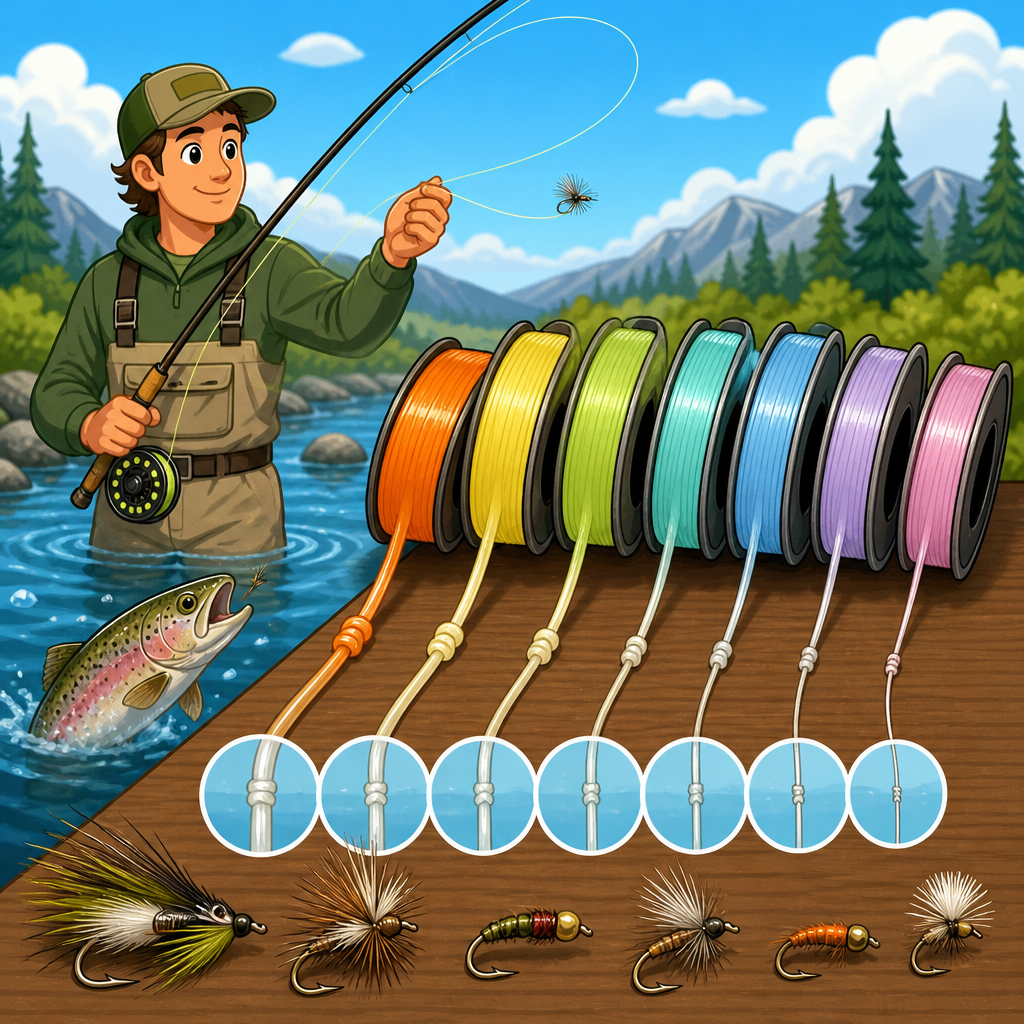
Fly fishing tippet sizes can look cryptic at first, but the 0X to 7X system is simply a way to describe diameter and strength at the business end of your leader. In practical terms, lower numbers like 0X and 1X mean thicker, stronger tippet, while higher numbers like 6X and 7X mean thinner, lighter tippet designed for small flies and selective fish. Understanding that scale matters because tippet affects presentation, sink rate, drag, hook-setting power, and the odds of landing a fish once it is hooked. I have seen more beginners struggle with tippet choice than with casting mechanics, because the wrong diameter can turn a good drift into a refusal or a solid eat into a snapped line.
Within fly fishing basics, tippet sits at the center of gear and equipment decisions. It connects your leader to the fly, but it also connects several bigger choices: rod weight, fly size, species, water clarity, current speed, and your preferred knots. When anglers ask what 0X to 7X means in fly fishing tippet sizes, they are usually also asking broader questions: what tippet size should I use, how strong is each size, what material works best, and how does tippet fit into the rest of a fly fishing setup. This hub article answers those questions directly and ties together the major gear topics every angler should understand before buying spools, building leaders, or heading to the river.
The X rating itself is not a straight pound-test system. Traditionally, it refers to diameter, with each increase in X indicating a thinner tippet. As a quick rule, 0X measures about 0.011 inches, 3X about 0.008 inches, 5X about 0.006 inches, and 7X about 0.004 inches, though exact breaking strength varies by brand and material. Companies such as Rio, Scientific Anglers, Orvis, Umpqua, and TroutHunter publish diameter and tensile ratings on each spool, and those printed specifications are more useful than relying on one universal pound-test chart. The key is that fly fishing tippet sizes are about controlling both stealth and turnover, not just choosing the strongest line you can get away with.
As the hub for gear and equipment within fly fishing basics, this article covers the full framework around tippet: how the size system works, how to match tippet to fly size, how nylon and fluorocarbon differ, how leaders and tippet interact, and what supporting tools belong in your kit. If you understand these relationships, every other tackle decision becomes easier. A balanced fly fishing setup is not built from isolated parts; it is built from components that work together, and tippet is one of the smallest pieces with the largest effect on success.
How the 0X to 7X tippet size system works
The fastest answer is this: 0X is thick and strong, 7X is very thin and delicate, and each step upward in X reduces diameter. In most trout fishing, anglers regularly use 3X, 4X, 5X, and 6X. Larger flies, bigger fish, faster water, or heavier rigs push you toward 0X through 3X. Smaller flies, low clear water, and wary trout push you toward 5X through 7X. That practical range covers most situations a beginner will encounter.
There is a historical formula often cited for approximating diameter: subtract the X number from 11 to estimate the diameter in thousandths of an inch. By that convention, 5X is roughly 0.006 inches and 2X is roughly 0.009 inches. This guideline is helpful, but it is not a substitute for reading the spool because modern copolymers and fluorocarbons are engineered differently. For example, one brand’s 5X fluorocarbon may break notably stronger than another brand’s 5X nylon while sharing the same diameter. In real fishing, diameter determines presentation and sink behavior, while material and manufacturing affect abrasion resistance, suppleness, and knot strength.
Anglers often confuse leader size with tippet size. The leader is the tapered section connecting fly line to the tippet. Tippet is the final level section attached to the end of the leader, or the level material used to extend or rebuild that end. If you trim flies off all day without adding fresh tippet, your leader gets shorter and thicker at the tip, eventually turning over poorly or landing too hard. That is why carrying separate tippet spools is standard practice, not optional gear clutter.
Common tippet sizes, diameters, and typical uses
Matching tippet to conditions is easier when you know the common use cases for each size. Think in terms of fly size, fish behavior, and current pressure rather than only fish size. A twenty-inch trout in heavy current may require stronger tippet than a larger fish feeding softly in a spring creek. Likewise, a bushy size 8 hopper turns over differently than a size 22 midge, even if the fish are the same species.
| Tippet Size | Approx. Diameter | Typical Breaking Strength | Common Uses |
|---|---|---|---|
| 0X | 0.011 in | 12 to 16 lb | Streamers, bass bugs, small steelhead flies, large trout in heavy water |
| 1X | 0.010 in | 10 to 13 lb | Large nymph rigs, bigger hoppers, light warmwater use |
| 2X | 0.009 in | 8 to 10 lb | Indicator nymphing, medium streamers, buoyant dry-dropper rigs |
| 3X | 0.008 in | 6 to 8 lb | General dry flies, nymphs, small streamers, versatile all-around trout fishing |
| 4X | 0.007 in | 5 to 6 lb | Standard trout dries, lighter droppers, moderate clear-water conditions |
| 5X | 0.006 in | 4 to 5 lb | Small dry flies, technical trout fishing, common default for many anglers |
| 6X | 0.005 in | 3 to 4 lb | Tiny dries, midges, pressured fish, low and clear water |
| 7X | 0.004 in | 2 to 3 lb | Very small flies, spring creeks, tailwaters, highly selective trout |
These values are approximations, not legal standards. A spool of 5X TroutHunter nylon and a spool of 5X Seaguar fluorocarbon may not break at the same strength, and some premium materials are intentionally built stronger for a given diameter. Still, the chart reflects the practical reality on the water. If a beginner asks me for one trout starting point, I usually recommend 4X and 5X in both leader and tippet, then adding 3X for larger flies and 6X for technical days.
How to choose the right tippet for fly size and fish behavior
A simple rule many anglers learn early is to divide the fly size by three or four to estimate a workable tippet size. For example, a size 12 fly often matches well with 3X or 4X, a size 16 with 4X or 5X, and a size 20 with 5X or 6X. This is not a law, but it is reliable because the tippet has to do two competing jobs at once: it must be fine enough to let the fly move naturally and strong enough to turn the fly over and land the fish.
Fish behavior often matters more than the fish’s actual length. Aggressive trout in pocket water will usually tolerate thicker tippet because the current distorts their view and gives them less time to inspect the fly. On a smooth spring creek, that same diameter can create visible drag or a micro-wake that spooks fish before they ever commit. I have watched trout refuse perfect casts because the tippet was too stiff for a tiny CDC dry to drift naturally in flat water. Dropping from 5X to 6X fixed the problem without changing the fly.
The opposite mistake is going too light. Many anglers fish 6X because they hear it is more subtle, but delicate tippet can reduce turnover with larger patterns, twist under indicators, and break on forceful hook sets. If you are fishing a size 8 stonefly with split shot and an indicator, 6X is not refined; it is inefficient. In that situation, 2X or 3X is usually the correct tool because it carries weight, resists abrasion on rocks, and gives you enough authority to steer fish out of current seams.
Nylon versus fluorocarbon tippet
Tippet material is as important as tippet size. The two main choices are nylon monofilament and fluorocarbon. Nylon is generally more supple, floats better, and costs less, which makes it ideal for dry fly fishing and as an all-around material for beginners. Fluorocarbon is denser, sinks faster, and usually offers better abrasion resistance, which makes it popular for nymphing, streamer fishing, and subsurface presentations where sink rate and durability matter.
There are tradeoffs. Nylon often has more stretch, which can protect light tippet during sudden runs but can slightly soften hook-setting power at long distance. Fluorocarbon has less visibility underwater due to its refractive properties, but the marketing around invisibility is often overstated; presentation still matters far more than line material. Fluorocarbon also tends to be stiffer in some formulations, which can be beneficial for turnover with certain rigs but less ideal for tiny dry flies in calm water. In cold conditions, knot quality becomes even more important because poorly seated fluorocarbon knots can slip or burn more easily than nylon.
My standard approach is straightforward: nylon for dries, fluorocarbon for nymphs and streamers, with exceptions based on specific brands and waters. Euro nymph anglers often use specialized sighter materials and long fluorocarbon leaders because contact and sink rate are critical. Small-stream dry fly anglers often favor supple nylon like Rio Powerflex, Trouthunter, or Orvis SuperStrong because dead-drift presentation is the priority.
How leaders, rods, reels, and flies interact with tippet choice
Tippet does not work in isolation. A balanced setup starts with rod weight and fly line, moves through the leader, and ends with the tippet. A 3-weight trout rod paired with 6X tippet and size 20 dries makes sense. A 7-weight streamer rod does not. Heavier rods generate more force during casting and hook sets, so they generally pair better with stronger tippet. That does not mean you cannot land trout on light tippet with a 5-weight, but your margin for error shrinks as rod power increases and tippet diameter decreases.
Leader design matters just as much. Tapered leaders are manufactured to transfer energy from thick butt section to fine tip. If you buy a 9-foot 5X leader and keep adding 3X tippet to the end, you disrupt the taper and often hurt presentation. If you need stronger tippet than the leader tip, start with a stronger leader. For example, use a 3X or 4X leader for hopper-dropper rigs, then add matching or slightly lighter tippet sections where needed. For dry flies on technical water, a 12-foot 6X leader with a short extension may land softer and drift better than a shorter, stouter setup.
Fly type drives many gear choices in this subtopic. Streamers create water resistance and often require short, stout leaders with 0X to 3X tippet. Dry flies usually benefit from longer leaders and finer tippet so the fly lands gently and drifts freely. Nymph rigs add weight and complexity, often requiring stronger diameters to turn over indicators, split shot, or tandem flies. This is why gear and equipment should be learned as a system, not as isolated product categories.
Essential tippet-related gear every beginner should carry
A functional tippet kit is simple and inexpensive compared with rods, reels, or waders. Start with a tippet holder or carabiner, nippers, forceps, and at least three tippet spools that match your most common fishing. For general trout fishing, 3X, 4X, and 5X cover a huge range. Add 6X if you fish small dries, tailwaters, or pressured trout. Add 0X to 2X if you throw streamers, hopper-dropper rigs, or weighted nymph systems.
Carry at least one backup tapered leader in each main size you use. Leaders kink, shorten, and eventually lose their intended taper. A floatant and desiccant support dry-fly presentations, while split shot and strike indicators influence whether stronger tippet is needed for turnover. Knot tools are optional, but knot literacy is not. The improved clinch, Davy knot, Orvis knot, blood knot, double surgeon’s knot, and tippet ring connection all belong in a beginner’s working knowledge.
Tippet rings deserve special mention because they extend leader life and make rigging more efficient. A tiny ring placed at the end of a leader lets you replace only the tippet section instead of cutting back into the taper every time you retie. They are especially useful for nymph rigs, hopper-dropper setups, and anglers who change flies frequently through the day.
Mistakes beginners make and how to avoid them
The most common mistake is treating tippet size as only a strength question. Beginners often fish too heavy in clear water because they are afraid of breaking off, then wonder why fish refuse the fly. Just as common is the opposite error: using ultralight tippet everywhere because it seems more advanced. Good tippet selection is situational, not macho and not delicate for its own sake.
Another frequent problem is ignoring abrasion and knot quality. Tippet weakens after rubbing on rocks, logs, fish teeth, or even repeated knotting. Test your connection with a firm pull after every retie. If it feels rough near the fly or indicator, replace it. Sunlight, heat, and age also degrade nylon and fluorocarbon. Old spools left in a hot vehicle for a season are not trustworthy, regardless of what the package once promised.
Finally, do not build your gear kit around one mythical universal setup. Fly fishing basics are easier when you own a small, sensible range of leaders and tippet sizes that support the flies and waters you actually fish. Review your current leader wallet, add the missing diameters, and practice matching tippet to fly size before your next trip.
The meaning of 0X to 7X in fly fishing tippet sizes is straightforward once you connect the labels to real use: lower X is thicker and stronger, higher X is thinner and finer. From there, the larger lesson is that tippet is not a minor accessory but a core part of gear and equipment strategy. It shapes presentation, controls turnover, protects against break-offs, and helps match your flies to the water and fish in front of you.
For most anglers building a practical kit, 3X through 6X will handle the majority of trout fishing, with 0X through 2X added for bigger flies and heavier rigs. Choose nylon when float and suppleness matter, fluorocarbon when sink rate and abrasion resistance matter, and always read the spool for actual diameter and breaking strength. Pair tippet with the right leader, fly size, and rod power, and your entire setup works better.
If you want to improve quickly, start by organizing your tackle around this system instead of guessing on the water. Stock the core sizes, learn a few dependable knots, and evaluate every rig as a connected system. That single change will make your fly fishing more efficient, more adaptable, and far more consistent.
Frequently Asked Questions
What does the 0X to 7X tippet sizing system actually mean?
The 0X to 7X system is a standardized way fly anglers describe tippet diameter and, by extension, general strength. The simplest way to think about it is this: the lower the X number, the thicker and stronger the tippet; the higher the X number, the thinner and lighter it becomes. So 0X is much heavier than 5X, and 7X is among the finest tippet sizes commonly used in trout fishing. That matters because diameter directly affects how a fly behaves in the water and how visible the terminal connection may be to fish.
Although anglers often associate X size with pound-test strength, X ratings are really tied more closely to diameter than breaking strength. Different manufacturers may rate the same X size with slightly different pound-test numbers depending on material, coating, and formulation. For example, one brand’s 5X nylon may break at a slightly different strength than another brand’s 5X fluorocarbon. Even so, the general progression stays the same: 0X, 1X, and 2X are stout choices for larger flies and stronger fish, while 5X, 6X, and 7X are more delicate choices for small flies, technical water, and selective trout.
Why does tippet size matter so much in fly fishing?
Tippet size matters because it influences nearly every part of your presentation and fish-fighting performance. A thicker tippet is stronger and more abrasion-resistant, but it can also be more visible to fish and less flexible in the drift. A thinner tippet is subtler and often allows small flies to move more naturally, but it gives up some pulling power and durability. That tradeoff is at the heart of tippet selection. You are always balancing stealth, fly action, sink rate, hook-setting power, and your ability to land the fish cleanly.
For dry flies and small nymphs, finer tippet often helps the fly land softly and drift naturally with less drag. For streamers, large nymph rigs, or fishing around structure, heavier tippet can turn over bigger flies more efficiently and give you the control needed to set the hook and pressure fish. Tippet also affects sink rate: thinner material generally offers less resistance in the water, which can help subsurface flies reach depth more quickly. In practical fishing terms, choosing the right tippet size can mean the difference between getting refusals and getting eats, or between landing a solid fish and breaking off at the worst moment.
How do I choose between thicker tippet like 0X to 3X and lighter tippet like 4X to 7X?
A useful rule of thumb is to match heavier tippet to larger flies, larger fish, faster water, and situations where visibility is less critical. Sizes like 0X, 1X, 2X, and 3X are commonly used for streamers, bass bugs, big terrestrial patterns, larger nymphs, and trout fishing where fish are aggressive and currents are strong. These sizes help turn over wind-resistant flies, improve hook-setting authority, and provide more leverage when you need to keep a fish out of logs, weeds, or heavy current.
Lighter tippet such as 4X, 5X, 6X, and 7X is generally chosen when finesse matters most. That often includes small dry flies, tiny midges, technical spring creeks, flat water, and highly pressured fish that inspect flies carefully. Finer tippet can improve drift and reduce micro-drag, which is especially important when fishing to selective trout in clear water. As a broad starting point, many anglers view 5X as a versatile all-around trout tippet, then move heavier toward 3X or 4X for bigger flies and move finer toward 6X or 7X for tiny patterns and spooky fish. The best choice always depends on fly size, water conditions, fish behavior, and how much pressure you expect to put on the fish after the hookup.
Is X size the same as pound test, and are nylon and fluorocarbon rated the same way?
No, X size and pound test are related but not identical. X size refers primarily to diameter, while pound test refers to how much force the material can handle before it breaks. Because brands use different materials and construction methods, two spools labeled 4X may not share the exact same breaking strength. One may be slightly stronger, stiffer, or more abrasion-resistant than another. That is why experienced anglers often look at both the X size and the manufacturer’s stated diameter and pound-test rating instead of relying on the X label alone.
The material also matters. Nylon tippet usually has more stretch and tends to float or suspend better, which can be helpful for dry fly fishing and forgiving when fish surge. Fluorocarbon is generally denser, more abrasion-resistant, and less visible underwater, making it popular for nymphing and streamer fishing. Even when both are labeled with the same X size, they may behave differently in turnover, sink rate, knot strength, and shock absorption. In other words, 5X is not just 5X in every situation. The X rating gives you a sizing framework, but the material and brand characteristics refine how that tippet performs on the water.
What happens if I use the wrong tippet size for my fly or fishing conditions?
If your tippet is too heavy, your fly may not behave naturally. Small dry flies can land awkwardly, drift with more drag, and look suspicious to wary fish in clear water. Tiny nymphs may sink less efficiently, and delicate presentations can suffer. You may still catch fish, especially in broken or off-color water, but in technical situations an oversized tippet can reduce takes and increase refusals. This is one reason anglers targeting selective trout often step down to finer sizes when fish are inspecting but not committing.
If your tippet is too light, the opposite problem shows up. Larger flies may not turn over well, hook sets can feel mushy, and fish are more likely to break you off during the fight. Fine tippet is also more vulnerable to abrasion from rocks, wood, weeds, and the fish’s mouth. In stronger current, a light tippet may not give you enough authority to control a fish effectively. The goal is not to fish the lightest tippet possible or the strongest tippet possible, but the lightest tippet that still turns over the fly properly, protects the presentation, and gives you a realistic chance of landing the fish. That balance is exactly why understanding the 0X to 7X scale is so valuable in fly fishing.