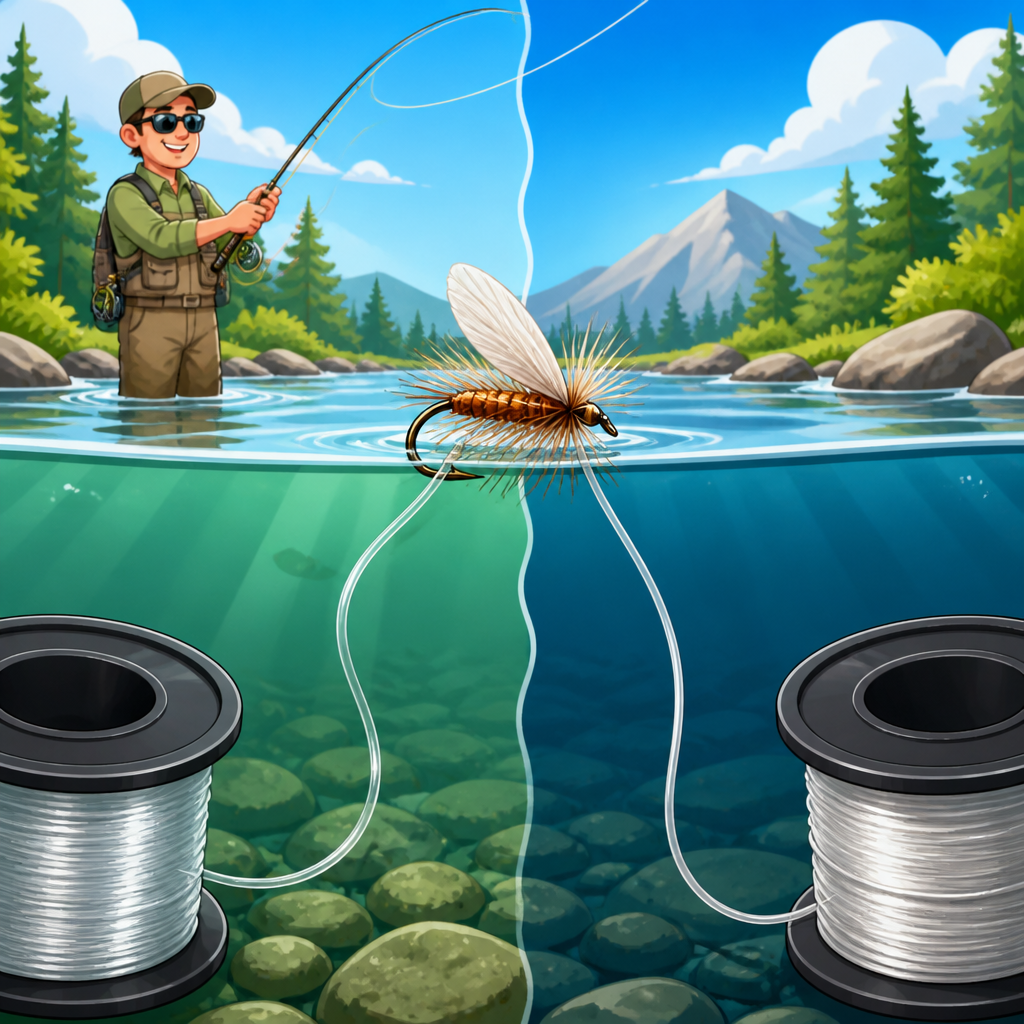
Choosing between monofilament and fluorocarbon tippet for dry flies affects far more than leader setup; it changes how a fly lands, drifts, floats, and ultimately fools selective trout. In fly fishing basics, “tippet” means the final, narrow section of material tied between the leader and the fly, while “dry flies” are surface patterns designed to imitate adult insects resting or skittering on the water. Anglers often treat tippet choice as a minor tackle decision, yet after years of fishing spring creeks, freestones, tailwaters, and stillwaters, I have found that it is one of the small variables that repeatedly decides hard days. The right material can improve presentation, turnover, knot strength, and confidence; the wrong one can create drag, glare, and missed fish.
This guide compares monofilament vs. fluorocarbon tippet for dry flies and places that decision inside the broader fly fishing basics category of gear and equipment. If you are building a complete dry fly setup, tippet sits downstream of your rod, reel, line, and leader, but upstream of every visible mistake a trout can inspect. A practical answer starts with the key difference: nylon monofilament generally floats better, is more supple, and costs less, while fluorocarbon generally sinks faster, resists abrasion better, and has a refractive index closer to water. Those broad truths matter, but they do not end the discussion because tippet diameter, stiffness, knot type, fly size, current speed, and water clarity can outweigh the label on the spool.
For most dry fly situations, monofilament is the default recommendation because it supports natural floatation and slack presentations. Fluorocarbon can still work, especially with larger dries, dry-dropper rigs, windy conditions, or technical situations where abrasion and visibility concern outweigh buoyancy. The smart angler does not ask which material is universally best; the better question is which material solves the presentation problem in front of you. This article explains exactly how to decide.
What tippet material actually changes on the water
Tippet material influences five performance factors that matter with dry flies: buoyancy, visibility, suppleness, abrasion resistance, and stretch. Monofilament usually wins on buoyancy because nylon tends to sit in or on the surface film more easily. That matters because a sunken tippet can pull the nose of a small dry under or create micro-drag near the fly. On gentle spring creeks, I have watched size 20 parachutes skate unnaturally simply because a dense terminal section cut through the film and tightened earlier than expected. When anglers say a fish “refused at the last second,” this is often part of the story.
Fluorocarbon’s main technical advantage is density. It sinks, which is why many anglers reserve it for nymphs and streamers. For dry flies, sinking is usually a drawback, but not always. If you are fishing a bushy hopper, a chubby-style attractor, or a larger caddis on broken water, the fly itself can support the tippet and the denser material may not compromise presentation. In those situations, fluorocarbon’s abrasion resistance becomes useful around rocks, woody undercut banks, and heavy fish. On rivers with sharp volcanic stone or zebra mussels, I have seen fluorocarbon survive contact that would cloud or nick soft nylon quickly.
Visibility is the most debated factor. Fluorocarbon is widely described as less visible underwater because its refractive index is closer to water than nylon. In clear water, that can help, but anglers often overstate its effect for dry flies because much of the tippet is in or near the surface film, where reflection, wake, and drag matter as much as optical properties. Trout refuse poor drifts more often than they refuse the mere presence of tippet. If I had to rank variables for dry fly success, diameter and drag control consistently matter more than buying the least visible material.
Suppleness also changes how a cast turns over and how the fly behaves after landing. Softer monofilament usually creates better slack and allows tiny flies to drift naturally. Stiffer material may turn over long leaders more cleanly in wind, but on calm technical water it can straighten too quickly and reduce the forgiving slack that keeps micro-currents from moving the fly. Stretch, finally, affects shock absorption and hook protection. Nylon generally stretches more than fluorocarbon, which can protect light tippets when a good trout surges at close range.
When monofilament is the better dry fly tippet
Monofilament is the better dry fly tippet in most classic dry fly scenarios: small patterns, slow to moderate current, selective trout, and situations where a natural drift matters more than cutting through current. It floats more willingly, especially after treatment with floatant or line paste, and it usually remains more manageable in cold conditions. If you fish mayfly hatches on spring creeks, technical tailwaters, or flat glides where trout inspect the fly for a full second, nylon monofilament should be your baseline. It helps preserve the exact quality dry fly anglers chase: a soft, delayed connection between fly and leader.
Diameter control is especially important here. Many anglers focus only on X-size, but not all 5X or 6X spools share the same measured diameter. Brands differ. For dry flies, thinner material generally improves stealth and drift, but going too thin can compromise turnover with larger flies or in wind. In practice, 4X often pairs well with hoppers, stimulators, and larger attractors; 5X is a versatile all-around dry fly size; 6X and 7X become important with tiny mayflies and flat-water trout. A supple mono in the right diameter usually lands softer than fluorocarbon in the same class.
Cost matters too, especially for a gear and equipment hub meant to guide beginners and budget-conscious anglers. Monofilament tippet is usually less expensive than fluorocarbon, allowing anglers to replace old material often. That is not trivial. Tippet degrades from UV exposure, heat, and storage time. A fresh spool of quality mono from makers like Rio, Scientific Anglers, Orvis, or Umpqua is more valuable than an old premium fluorocarbon spool that has lived in a hot vehicle for two summers. Reliable knots and fresh material catch more fish than marketing claims.
There is also a fish-fighting benefit. Nylon’s elasticity can protect fine tippet during close-range takes, especially with barbless hooks and faster rods. On small dries, trout often eat tight to the angler, and abrupt strikes with low-stretch systems break fish off. Mono adds a margin for imperfect timing. For beginners learning dry fly timing, that forgiveness is an asset.
When fluorocarbon makes sense for dry flies
Fluorocarbon makes sense for dry flies when the benefits of abrasion resistance, stiffness, or lower underwater visibility outweigh the penalty of reduced floatation. This happens more often than purists admit. On windy western rivers, a slightly stiffer fluorocarbon tippet can help turnover long leaders carrying larger dries. On pocket water, where trout have less time to inspect and the current is broken, the sinking tendency matters less. Around root wads, boulders, and rough structure, fluorocarbon’s durability can prevent mid-fight failures. If you are floating a foam terrestrial close to banks all afternoon, fluorocarbon is not automatically wrong.
It is also relevant for hybrid rigs. Many anglers fish dry-dropper setups as part of fly fishing basics because they cover surface and subsurface feeding lanes at once. In that configuration, the “dry fly tippet” is really a system material. A buoyant dry may support fluorocarbon well enough, while the same material improves sink rate and durability for the nymph hanging below. I often use nylon to the dry and fluorocarbon from the dry to the dropper, especially with buoyant foam patterns. That split approach resolves the strengths of both materials without forcing one spool to do every job poorly.
Another fluorocarbon use case is terrestrial fishing with bigger flies in flat light or on stillwaters. Beetles, ants, and hoppers tied in foam can support a denser connection, and the cleaner turnover of fluorocarbon may help at distance. In lakes, where wave action and longer leaders complicate control, I have seen fluorocarbon fish very well under high pressure. The crucial point is that fluorocarbon works best for dry flies when the fly is buoyant enough to overcome the tippet’s density and when drift quality remains intact.
How to choose by water type, fly size, and conditions
The fastest way to choose between monofilament and fluorocarbon tippet for dry flies is to match the material to three variables: water type, fly size, and environmental conditions. Spring creeks and smooth tailwater flats reward monofilament because surface tension, drag, and scrutiny dominate. Freestone riffles, pocket water, and bank-terrestrial fishing give fluorocarbon more room to succeed. Tiny dries from size 18 to 24 almost always fish better on fine, supple mono. Larger dries from size 8 to 14 can tolerate either material if leader design supports them.
| Situation | Best Tippet Choice | Why |
|---|---|---|
| Spring creek with size 20 mayflies | Monofilament 6X–7X | Better floatation, softer drift, lower chance of micro-drag |
| Freestone riffle with size 14 attractor | Monofilament 4X–5X | Strong turnover with good surface support |
| Windy hopper fishing near banks | Fluorocarbon 3X–4X or mono 4X | Durability and cleaner turnover can outweigh sinking tendency |
| Dry-dropper with foam dry | Mono to dry, fluorocarbon to dropper | Balances floatation on top with sink rate below |
| Stillwater beetles and ants | Either, often fluorocarbon | Long casts and surface chop can reduce floatation penalty |
Temperature and humidity matter too. In cold weather, some fluorocarbon formulations feel wirier, which can affect knot seating and slack generation. Wind pushes the decision back toward stiffness and turnover. Bright sun in ultra-clear water may justify fluorocarbon if fish are refusing despite correct drifts and fly choice, but that should come after you check diameter, leader length, and approach angle. I have solved many “leader shy” problems simply by stepping from 5X to 6X mono and lengthening the leader a foot, not by changing material.
One useful rule is simple: if your dry fly is struggling to stay up, choose monofilament; if your dry fly is large, buoyant, and being cast into rougher or more abrasive conditions, consider fluorocarbon. Material choice should serve presentation first, durability second, and theory last.
Knots, maintenance, and gear setup that matter more than brand debates
Anglers regularly overemphasize monofilament vs. fluorocarbon and underemphasize setup quality. In practice, knot choice, spool age, and leader construction often affect results more. For dry flies, a non-slip loop knot can improve movement for terrestrials and caddis, but many anglers prefer an improved clinch or Orvis knot for simplicity and compactness with small patterns. With fluorocarbon, knot lubrication and careful seating are essential because some formulas burn or weaken when cinched dry. A poorly tied premium tippet is still poor equipment.
Leader design should match the tippet. A standard 9-foot 5X leader is a useful starting point, but technical dry fly fishing often benefits from 10- to 12-foot leaders with longer tippet sections. More tippet allows cleaner replacement as flies change and can increase slack on landing. If your leader is too abrupt, switching material will not solve turnover problems. I frequently build dry fly leaders with a progressive taper ending in 18 to 30 inches of tippet, adjusting length by current complexity rather than habit.
Maintenance is straightforward but important. Store tippet away from sunlight and heat. Test several feet periodically by pulling steadily against your hands; if it breaks too easily or feels rough, replace it. Clean and treat monofilament used for dries with a paste floatant if needed, but avoid over-applying products near the knot eye where clumps can affect presentation. Fluorocarbon does not absorb water like nylon, which helps consistency over long sessions, yet that advantage rarely cancels its sinking tendency on tiny dries.
As a hub within gear and equipment, this page connects naturally to broader tackle decisions. Rod action influences how protective your system feels with light tippet. Fly line taper affects leader turnover. Reel drag matters less for small-stream dry flies than for large rivers, but smooth startup always helps on fine diameters. Polarized glasses help you read refusals and drag, which in turn tells you whether tippet material is the issue at all. Good dry fly fishing is a chain of gear decisions, and tippet is the final link, not the only one.
Best practical recommendation for most anglers
If you want one clear recommendation, use monofilament as your primary tippet for dry flies and carry fluorocarbon as a situational option. That advice fits most anglers, most rivers, and most learning stages. Start with quality mono in 4X, 5X, and 6X for dry fly fishing. Add fluorocarbon in matching sizes if you fish dry-dropper rigs, windy banks with foam terrestrials, or abrasive water where break-offs are common. This approach is efficient, cost-effective, and grounded in how dry flies actually perform.
The biggest mistake I see is treating fluorocarbon as an automatic upgrade because it sounds more technical. It is not better in absolute terms; it is better for certain jobs. Dry fly fishing rewards delicacy, drift, and control. Those priorities usually align with monofilament. Fluorocarbon becomes valuable when conditions reduce the penalty of sinking material or increase the value of toughness and turnover. Knowing that distinction makes your gear choices simpler and your fishing more consistent.
As you build out your fly fishing basics knowledge, keep this hierarchy in mind: choose the right fly, present it naturally, match tippet diameter to the situation, and then fine-tune material. Monofilament vs. fluorocarbon tippet for dry flies is an important question, but it is best answered in context, not in slogans. Pick the material that protects the drift your trout need to see. Then test it on the water, watch how the fly rides, and adjust with purpose. That habit will improve your dry fly results faster than any single spool ever will.
Frequently Asked Questions
Is monofilament or fluorocarbon better for dry fly fishing?
For most dry fly situations, monofilament is usually the better all-around choice. The biggest reason is simple: dry fly fishing is all about keeping the fly floating naturally and drifting drag-free, and monofilament generally supports that goal better than fluorocarbon. It is less dense, tends to float higher or sink more slowly, and is often more forgiving when you are fishing small dries, delicate presentations, and technical surface feeds. That slight buoyancy can help keep the tippet from pulling the fly under or creating a subtle surface disturbance that alert trout may notice in calm water.
Fluorocarbon still has a place, but it is often more specialized in a dry fly context. Because it is denser, it sinks more readily, which can work against a true surface presentation. A sinking tippet can tug the front of the drift, pull the fly unnaturally, or create micro-drag in flat water. However, fluorocarbon can be useful when fishing heavier dry-dropper rigs, larger attractor dries, or situations where abrasion resistance and stiffness matter more than flotation. In other words, if your goal is the purest classic dry fly drift with a visible, high-floating pattern and selective trout feeding on top, monofilament is usually the first material to reach for.
Why do many anglers prefer monofilament tippet for selective trout on dry flies?
Experienced dry fly anglers often prefer monofilament because it complements the subtle mechanics of surface fishing. Selective trout are rarely fooled by the fly alone; they are fooled by the entire presentation. That includes how softly the fly lands, whether it sits naturally in the surface film, and whether the leader and tippet allow a dead drift without tension. Monofilament is typically softer and more supple than fluorocarbon in comparable sizes, which helps the fly move naturally with the current rather than being dictated by a stiffer connection. That suppleness also improves slack presentations such as reach casts, parachute casts, and pile casts designed to buy extra drag-free drift.
Another reason is visibility at the surface. While fluorocarbon is often marketed as less visible underwater because its refractive index is closer to water, dry fly fishing happens in and above the film as much as below it. Trout looking upward see contrast, drag, shine, and unnatural movement more than they analyze line chemistry. A mono tippet that lands softly and lets the fly behave correctly often matters more than any theoretical invisibility advantage. In practical terms, many anglers catch more trout on mono with dry flies because the fly simply floats and drifts better, which is usually the deciding factor when fish are inspecting every insect.
Does fluorocarbon sink enough to hurt a dry fly presentation?
Yes, it can. Fluorocarbon is denser than water, so unlike monofilament, it tends to sink. In some forms of fly fishing that is an advantage, but with dry flies it can create problems. When the tippet sinks beneath the surface while the fly remains on top, the connection between the two can introduce unwanted tension. That tension may pull the fly slightly off course, drown a smaller pattern, or create a tiny V-wake that looks unnatural to wary trout in smooth currents. On heavily pressured rivers, those little mistakes are often the difference between a clean take and a refusal.
That said, the effect is not always dramatic in every situation. If you are fishing rough pocket water, larger buoyant dries, or faster currents where trout have less time to inspect the offering, fluorocarbon may still work acceptably. The trouble becomes more obvious in spring creeks, tailwaters, slick glides, and any scenario involving long drifts to fussy fish. In those technical settings, even small changes in how the tippet interacts with the surface film matter a great deal. So while fluorocarbon does not automatically ruin a dry fly presentation, it definitely introduces a tendency that works against ideal float and drift, which is why many anglers reserve it for subsurface use rather than dedicated dry fly fishing.
When should you still use fluorocarbon tippet with dry flies?
Fluorocarbon can make sense with dry flies when conditions or rigging shift the balance away from pure surface finesse. One common example is a dry-dropper setup, especially if the dropper nymph has enough weight to pull part of the rig down anyway. In that case, the sinking nature of fluorocarbon is less of a disadvantage, and its abrasion resistance can be helpful around rocks, woody structure, or fish with sharp mouths. It can also be a practical option when fishing larger foam dries, terrestrials, or attractor patterns that have enough buoyancy to offset the tippet’s tendency to sink.
Some anglers also choose fluorocarbon in windy conditions or when they want a slightly stiffer material to help turn over bigger flies. If you are fishing hoppers, beetles, large caddis, or bushy patterns where turnover matters and exact film-level delicacy matters a little less, fluorocarbon may perform just fine. The key is understanding the tradeoff. You are generally giving up some natural float and drift behavior in exchange for durability, stiffness, or subsurface performance in mixed rigs. That trade can be worthwhile, but it should be intentional. For traditional dry fly fishing with small mayflies, midges, and selective risers, mono usually remains the better tool.
How do you choose the right tippet material and size for dry flies?
Start by matching the tippet to the fly size, water type, and trout behavior. For classic dry fly fishing, monofilament in finer diameters is usually preferred because it offers better float characteristics and a gentler presentation. Smaller flies and more selective fish generally call for thinner tippet, such as 5X, 6X, or even 7X, depending on the pattern and conditions. Larger dries, faster water, or less pressured trout may allow you to move up to 4X or 5X. The goal is to use a tippet fine enough to let the fly drift naturally but strong enough to land fish efficiently and avoid needless break-offs.
Material choice should follow presentation needs more than marketing claims. If you are fishing tiny dries on calm water to trout that inspect every insect, choose a supple monofilament that helps create slack and keeps the fly riding correctly. If you are fishing bushier patterns, mixed dry-dropper rigs, or terrain where abrasion is a concern, fluorocarbon may deserve consideration, especially in the terminal sections connected to subsurface flies. Also pay attention to stiffness and brand-specific characteristics, because not all mono or fluorocarbon behaves the same. In the end, the best dry fly tippet is the one that helps your fly land softly, float naturally, and drift without drag long enough to convince the trout that what it sees is real.