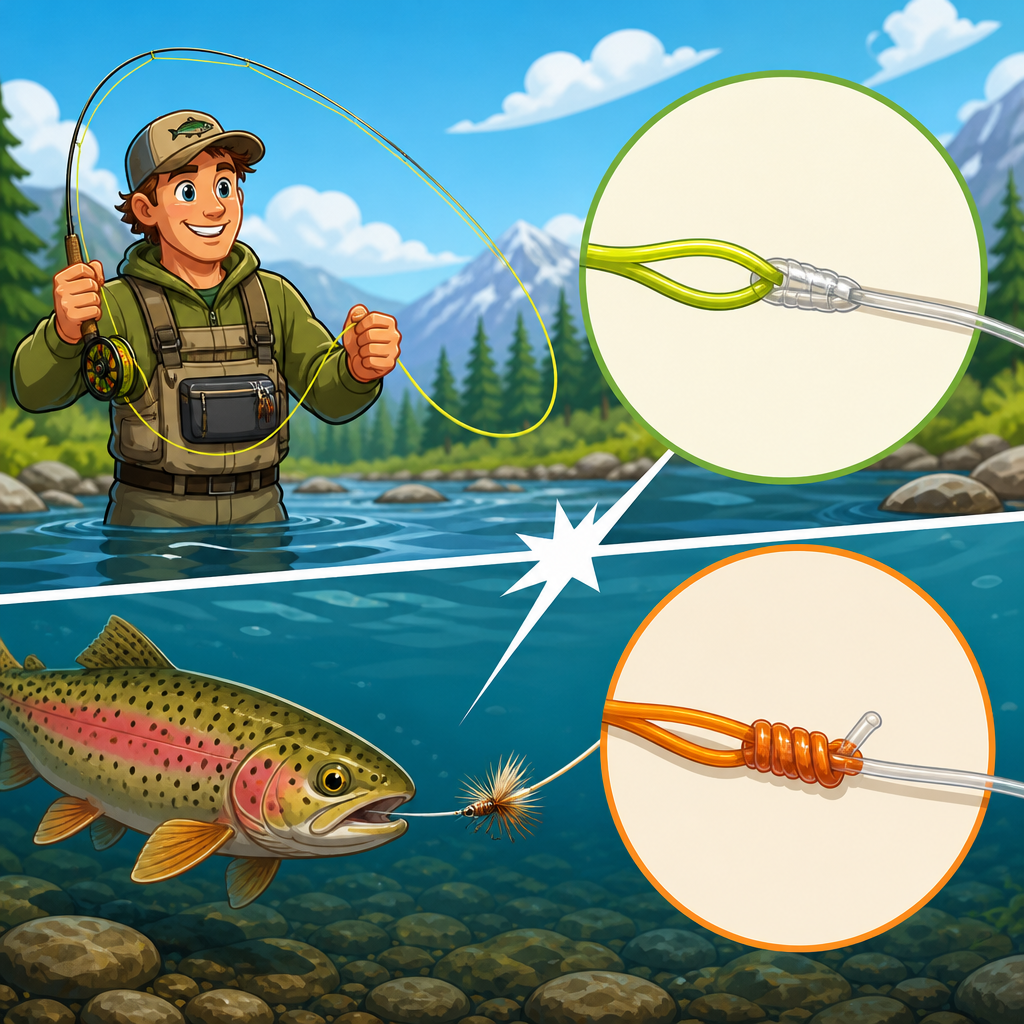
Choosing between a welded loop and a nail knot is one of the first technical decisions every fly angler makes, because the connection between fly line and leader affects turnover, durability, guide clearance, and how easily you can adapt on the water. In fly fishing basics, “gear and equipment” is not only rods, reels, and waders; it also includes the small connection points that determine whether your setup fishes cleanly or fails at the worst time. A welded loop is a factory-formed loop at the front of a fly line that accepts a loop-to-loop leader connection. A nail knot is a slim, direct knot used to fasten butt material or leader material to the fly line, usually finished with a small perfection loop or a permanent butt section. Both methods work, both have strengths, and both are still used by experienced anglers.
I have rigged thousands of leaders for trout, bass, steelhead, and saltwater trips, and the pattern is consistent: anglers who understand this one junction spend less time fighting tangles, cracked coatings, and failed leaders. The choice matters because modern fly fishing depends on controlled energy transfer. The fly line carries the cast, the leader dissipates energy, and the fly lands with the amount of delicacy or force the situation demands. If the line-to-leader connection is bulky, weak, or poorly matched, turnover suffers. If it catches in the guides, landing fish becomes awkward. If it is hard to replace, valuable fishing time disappears. That is why this comparison belongs at the center of any serious guide to fly fishing gear and equipment.
This article explains how welded loops and nail knots differ, when each option is best, and how they fit into a broader system that includes fly lines, leaders, tippet, knots, tools, and maintenance. It also serves as a hub for the gear and equipment side of fly fishing basics. When you evaluate line-to-leader connections correctly, you naturally begin asking the right equipment questions: What fly line taper are you using? Is your leader butt stiff enough for that line? Are your nippers, knot tool, and floatant organized? Does your reel and drag match the fish and water? Good gear decisions are connected, and this is one of the places where that becomes obvious fast.
The short answer is simple. Use a welded loop when you want speed, convenience, and easy leader changes. Use a nail knot when you want the slimmest, cleanest, most permanent connection possible. The longer answer is more useful, because fishing situations, line design, leader formulas, and angler preferences all influence what “best” means. Understanding those tradeoffs will make every part of your fly fishing setup more effective.
What a Welded Loop Does Well
A welded loop is built into many modern floating and sinking fly lines. The manufacturer folds the line back and heat-fuses the coating to create a loop at the tip. You attach a leader with a loop-to-loop connection by passing the leader loop through the line loop and then feeding the leader butt or entire leader through its own loop. The result is quick to rig, easy to inspect, and ideal for anglers who change leaders often. On trout streams, that can mean switching from a 9-foot 5X dry-fly leader to a longer 12-foot presentation leader in minutes. On stillwaters, it can mean moving from a long fluorocarbon leader for chironomids to a shorter, stiffer leader for streamers without rebuilding the whole front end.
The biggest advantage of a welded loop is efficiency. New anglers benefit because they can buy tapered leaders with factory loops and get fishing quickly. Guides benefit because clients can replace a damaged leader with minimal instruction. Travel anglers benefit because spare leaders take little room and can be changed in poor light, wind, or cold weather. In practical terms, loop-to-loop systems reduce downtime. They also encourage experimentation. Anglers are more likely to use the right leader for the job when changing it is painless.
There are limits. Factory welded loops are convenient, but not all are equally durable. Some crack with age, especially on heavily used tropical lines, older lines exposed to heat, or budget lines with softer coatings. Hinging can also occur because the doubled line and loop junction create a slightly bulkier connection than a direct knot. That bulk rarely matters for average trout fishing, but it can matter when repeatedly stripping the connection through small guides or when casting very long leaders on technical water. Some welded loops are also stronger in tension than they are in repeated flexing, so regular inspection matters.
What a Nail Knot Does Well
A nail knot secures leader butt material directly to the fly line by wrapping the material around the line and a small tube or tool, then tightening the wraps into a compact, gripping knot. It has been a standard connection for decades because it is slim, dependable, and casts smoothly. Before welded loops became common, this was the normal way to build a clean line-to-leader junction, and many skilled anglers still prefer it. If I am setting up a dedicated trout line for a season, especially one used with longer leaders and frequent guide-to-guide retrieval, I often choose a nail knot because it creates less bump and less spray on pickup.
The main performance benefit is profile. A properly tied nail knot lies nearly flush against the fly line, especially when tied with appropriately sized butt material such as 20-pound or 30-pound Maxima Chameleon, Mason Hard Mono, or similar stiff nylon. Because the connection is direct, energy transfer is very smooth. The setup is durable when tied correctly and coated lightly with UV resin, Pliobond, Aquaseal, or knot sense style adhesives. Many anglers then add a short permanent butt section ending in a perfection loop, combining the slimness of the nail knot at the line with the convenience of loop-to-loop leader changes beyond that point.
The tradeoff is speed and complexity. Nail knots take more practice, more dexterity, and usually a tool. They are not difficult once learned, but they are less forgiving for beginners on the riverbank. They also shorten the fly line fractionally each time you replace the connection. In addition, if you tie directly with a tapered leader butt and replace it often, you will be rebuilding the whole front end repeatedly. For anglers who change leaders many times per outing, that inconvenience is real.
Welded Loop vs. Nail Knot: Which Is Better for Different Fishing Styles?
The better connection depends on how you fish, not on internet loyalty to one method. For general trout fishing with modern floating lines, a welded loop is usually the practical choice. It is fast, standardized, and works well with commercially tapered leaders from Rio, Scientific Anglers, Orvis, and Umpqua. If you fish dries one hour, indicator nymphs the next, and streamers before dark, the ability to swap leaders quickly is more valuable than the marginal smoothness gained by a direct knot.
For technical trout presentations, especially with long leaders, fine tippets, and repeated guide retrieval, a nail knot often performs better. It creates a cleaner hinge point and passes through the tip-top more smoothly. Euronymphing is its own case; many dedicated tight-line anglers use specialized level or competition lines with custom butt sections and sighter material, and slim permanent connections are common because the whole system is custom built rather than leader-package driven.
For bass, pike, and warmwater fishing, welded loops are usually excellent because leader changes are frequent and absolute delicacy is less critical. For steelhead and salmon, both methods are common, though many anglers appreciate the durability of a nail-knotted butt section on lines that see hard use. In saltwater, the answer depends on line design and climate. Tropical fly lines often have strong factory loops, but intense heat and heavy fish expose weaknesses quickly, so inspection is nonnegotiable. Bluewater and flats anglers who demand maximum reliability sometimes remove factory loops and install whipped or nail-knotted custom connections.
| Fishing situation | Best connection | Why |
|---|---|---|
| General trout fishing | Welded loop | Fast leader changes, easy rigging, widely compatible with store-bought leaders |
| Technical dry-fly fishing | Nail knot | Slim profile, smoother guide passage, cleaner turnover with long leaders |
| Indicator nymphing | Welded loop | Quick changes between leader formulas and indicator setups |
| Streamers for trout or bass | Welded loop | Convenience matters more than marginal bulk differences |
| Custom trout systems | Nail knot | Permanent butt sections create a refined, durable front end |
| Saltwater heavy use | Nail knot or reinforced loop | Higher stress rewards lower-profile, closely inspected connections |
How This Choice Fits Into Fly Fishing Gear and Equipment
This connection question opens the door to the full gear and equipment system behind fly fishing basics. Start with the fly line. Weight-forward floating lines dominate beginner and all-around trout setups because they cast a broad range of flies and work with both welded loop and nail knot systems. Double taper lines, still favored by some dry-fly anglers, pair especially well with refined nail-knotted butt sections because line control and delicacy matter more than convenience. Sink-tip and full-sinking lines often include welded loops, but anglers targeting aggressive fish may reinforce or replace those loops after heavy use.
Next comes the leader. A leader is not just a disposable connector; it is a tapered energy-management device. Standard tapered leaders usually begin with a butt diameter designed to match common fly lines, often around .019 to .023 inches for trout leaders. If the butt is too limp relative to the line, turnover suffers. If it is too stiff for delicate work, presentation can become abrupt. Understanding butt stiffness is one reason experienced anglers tie custom leaders from materials such as Maxima, Amnesia, or fluorocarbon sections. The line-to-leader connection matters because it is the start of that taper.
Tippet also belongs in this conversation. If you preserve your tapered leader by replacing only tippet, a permanent nail-knotted butt can last a long time. If you burn through complete leaders due to abrasion, wind knots, or frequent setup changes, a welded loop saves time and money. Tools matter too: nippers, hemostats, knot-tying tools, hook hones, tippet rings, line dressing, and floatant all support efficient rigging. So do storage systems. A simple leader wallet, tippet spool holder, and small pack organization plan reduce rushed mistakes at the exact moment most connection failures are created.
Finally, the rod and reel influence how much this junction matters. Fast-action rods generate higher line speed and can expose hinging more clearly. Small tip-tops make bulky loop junctions more noticeable when landing fish. Reel drag becomes relevant when fish run to the backing and then surge back close, forcing the connection through the guides under pressure. Gear decisions are linked, and this small junction proves it.
Best Practices for Strength, Maintenance, and On-Water Reliability
Whichever method you choose, execution matters more than brand loyalty. Inspect welded loops for cracks, exposed core, discoloration, or softness at the weld. If the loop is suspect, replace it before fishing. Braided loop connectors exist, but I rarely recommend them for modern trout setups because they can collect water, create spray, and fail if neglected. A better fix is often a custom whipped loop with braided mono sleeve and adhesive, or a nail-knotted butt section if you want permanence.
For nail knots, use the correct number of wraps for the material and line diameter, usually five to seven. Lubricate before tightening, seat the wraps neatly, and test with firm pulls. Trim tags cleanly. If you add adhesive, use a thin protective coat rather than a large blob that defeats the point of a slim knot. Some anglers add a short section of 30-pound mono with a perfection loop, creating a durable transition piece they can leave in place for months. That hybrid system is one of the most reliable setups in fly fishing.
Maintenance is straightforward and often ignored. Clean your fly line regularly with manufacturer-approved dressing or mild soap and water, because dirt increases friction and stresses every connection. Store lines away from heat, especially in cars. Replace leaders that show memory, abrasion, or milky stress marks. When a fish is lost near the line-to-leader junction, do not assume bad luck; inspect the system and identify the exact failure point. Reliable anglers treat knots and loops like critical gear, not afterthoughts.
Conclusion
Welded loop vs. nail knot is not a contest with one universal winner. It is a practical equipment choice shaped by the way you fish. If you want fast changes, simplicity, and excellent all-around performance, a welded loop is the right answer for most anglers and most modern fly lines. If you want the slimmest, smoothest, most permanent connection, a nail knot remains the benchmark. Many experienced anglers end up using both: welded loops on versatile everyday setups and nail-knotted butt sections on specialized lines.
The larger lesson is that fly fishing gear and equipment works as a system. Fly line taper, leader design, tippet choice, tools, rod action, and maintenance habits all influence whether this tiny junction helps or hurts your fishing. Learn to evaluate connections based on turnover, durability, guide clearance, and ease of replacement, and your decisions across the rest of your setup will improve as well. That is why this topic belongs in the center of fly fishing basics rather than at the margins.
Start by checking the lines you already own. If the factory loop is sound, fish it confidently and carry looped spare leaders. If you want a cleaner permanent setup, practice nail knots at home with a tool and stiff butt material until you can tie one quickly and neatly. Then build the rest of your gear and equipment knowledge from there: leaders, tippet systems, fly line types, reels, and rigging tools. Master this connection, and the rest of your fly fishing setup becomes easier to understand and easier to trust on the water.
Frequently Asked Questions
What is the difference between a welded loop and a nail knot when connecting fly line to leader?
A welded loop is a factory-formed loop built into the front end of many modern fly lines. It is designed to let you attach a leader quickly using a loop-to-loop connection, which makes leader changes fast and simple. A nail knot, by contrast, is a direct knot connection that secures the butt section of the leader or a short butt material section tightly to the fly line itself. Instead of using two interlocking loops, the nail knot creates a more streamlined, permanent-style connection.
In practical terms, the biggest differences come down to convenience, profile, and feel on the water. A welded loop is easier for beginners because it requires almost no knot tying once the loop is already on the line. If you want to swap from a 9-foot tapered leader to a different length or strength, you can do it in seconds. That flexibility is a major advantage for anglers who fish different flies, changing water types, or varying wind conditions throughout the day.
A nail knot is usually favored when anglers want the slimmest possible connection. Because it lies tight to the fly line, it tends to pass through rod guides more smoothly than a loop-to-loop setup. Many anglers also believe it gives slightly better energy transfer during casting, especially with delicate presentations or technical trout fishing. In short, a welded loop emphasizes speed and adaptability, while a nail knot emphasizes a neat, low-profile connection and long-term security when tied correctly.
Which connection is better for beginners: a welded loop or a nail knot?
For most beginners, a welded loop is the better starting point. The reason is simple: it removes one of the more technical parts of rigging and lets new anglers focus on casting, line control, and reading the water instead of struggling with connection knots. A loop-to-loop leader attachment is easy to learn, easy to inspect, and easy to replace if something gets twisted, abraded, or mismatched for the fishing situation.
Another reason welded loops are beginner-friendly is that they make experimenting much easier. A new fly angler may not yet know whether a longer leader, shorter leader, heavier tippet, or specialty setup is best for a given day. With a welded loop, changing leaders takes very little time, so the angler is more likely to adapt instead of fishing the wrong setup out of frustration. That matters because versatility is one of the biggest parts of learning fly fishing basics.
That said, beginners should still understand how a nail knot works, even if they do not use it right away. A welded loop can crack, wear, or fail over time, and some fly lines do not come with one at all. Learning to tie a nail knot eventually gives an angler more independence and confidence. But as a day-to-day starting point, the welded loop is usually the more forgiving and practical choice for someone building foundational skills.
Is a nail knot stronger or more durable than a welded loop?
In many situations, a well-tied nail knot is considered more durable over the long term, especially when durability is measured by how streamlined and secure the connection remains after repeated casting and guide travel. Because the knot grips the fly line directly and does not rely on a formed loop section, it avoids one of the common weak points in some factory loop systems: cracking or splitting at the welded end. If a welded loop begins to separate, it can fail suddenly, particularly after heavy use, UV exposure, or repeated stress from aggressive casting and fish fights.
However, strength is not just about the connection style itself; it is also about condition, quality, and execution. A premium fly line with a well-made factory loop can be extremely reliable. Likewise, a poorly tied nail knot can slip, cut unevenly into material, or create problems if it is not seated correctly. In other words, the “best” connection is often the one that is properly made, properly maintained, and suited to how you fish.
For anglers who fish often, inspect gear closely, and prefer a sleeker setup, the nail knot often wins on durability and guide clearance. For anglers who value simplicity and replace leaders frequently, a welded loop can hold up very well if checked often for cracking, hinging, or rough edges. The smartest approach is not to assume either option is indestructible. Inspect the connection regularly, especially after hard use, and replace or rebuild it at the first sign of wear.
How do welded loops and nail knots affect casting, turnover, and guide clearance?
Both connections can cast well, but they influence performance in slightly different ways. A welded loop with a loop-to-loop leader connection creates a somewhat bulkier transition point between the fly line and leader. In many everyday fishing situations, especially for beginners and general freshwater use, that difference is minor and does not noticeably hurt casting. Turnover is usually still very good if the leader matches the line and fly size appropriately.
Where the difference becomes more noticeable is in refined presentation and repeated movement through the rod guides. A nail knot creates a smoother, narrower connection, which can help the line travel more cleanly through the guides when landing fish, making long casts, or retrieving line close to the rod tip. Some anglers also feel that the direct connection offers slightly cleaner energy transfer from fly line into leader, which can improve turnover consistency, especially with longer leaders or more technical dry fly setups.
That said, not every angler will feel a dramatic real-world difference. If you are fishing small streams, short casts, indicators, streamers, or general-purpose trout setups, a welded loop often performs perfectly well. If you are focused on maximum smoothness, long leader turnover, or minimizing any bump at the connection, a nail knot has the edge. The key is to match the connection to your priorities: convenience and quick changes with a welded loop, or a tidier, more guide-friendly profile with a nail knot.
When should you choose a welded loop, and when should you choose a nail knot?
Choose a welded loop when convenience, speed, and adaptability matter most. It is ideal for anglers who change leaders often, fish a variety of techniques, or simply want a clean and simple system that gets them on the water faster. It is especially useful for newer anglers, travel setups, guided trips, or days when conditions shift and you may move between dry flies, nymphs, and streamers. The ability to replace a leader in seconds is a genuine advantage, not just a minor convenience.
Choose a nail knot when you want a more permanent, low-profile connection and are comfortable with a little more rigging work. It is a strong choice for anglers who prefer a streamlined setup, care about smooth guide passage, or fish technical situations where every small detail in turnover and presentation matters. It is also a good solution when your fly line does not have a factory loop or when that loop has worn out and you want a dependable replacement connection.
Many experienced fly anglers use both methods depending on the rod, line, and fishing situation. There is no universal winner for every setup. If your priority is ease of use and fast leader swaps, the welded loop is hard to beat. If your priority is a sleek, durable connection with minimal bulk, the nail knot is often the better answer. The most practical perspective is to treat both as important tools in your fly fishing system rather than as strictly competing choices.