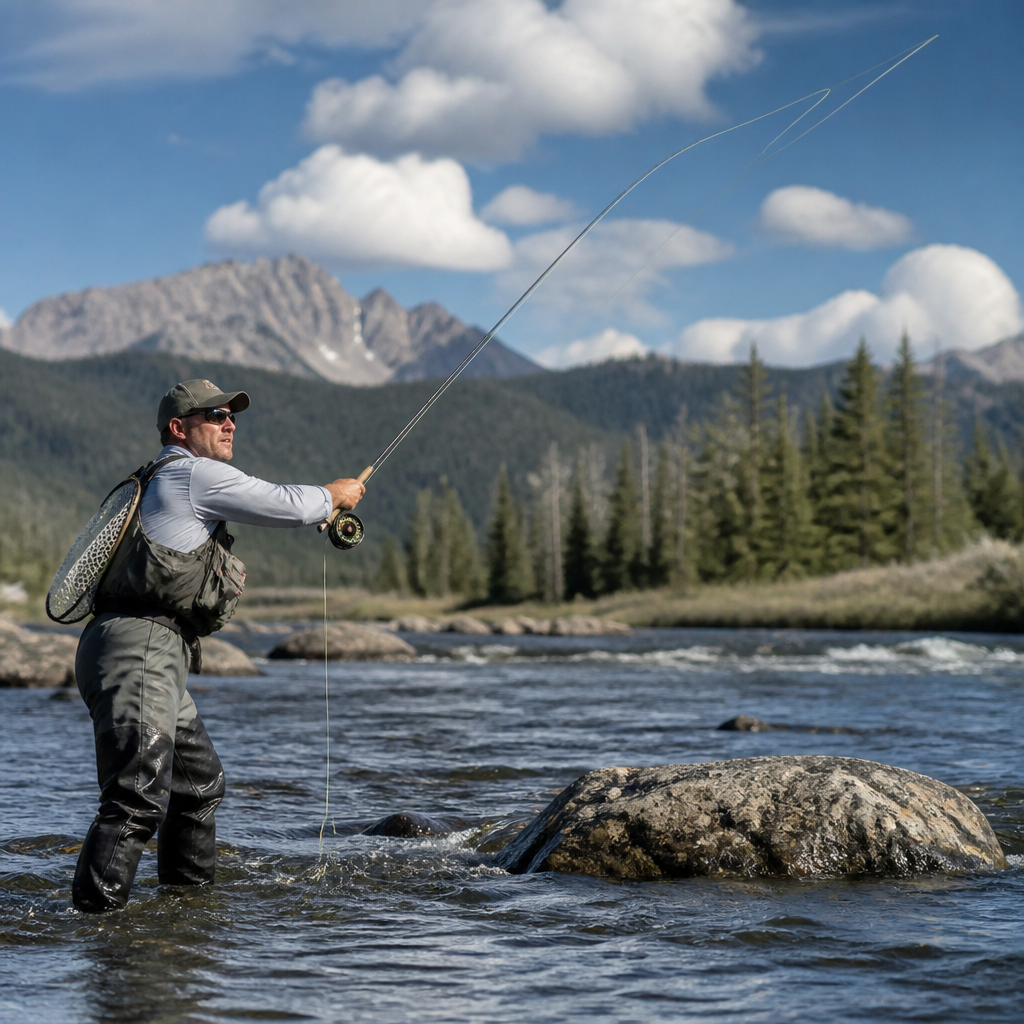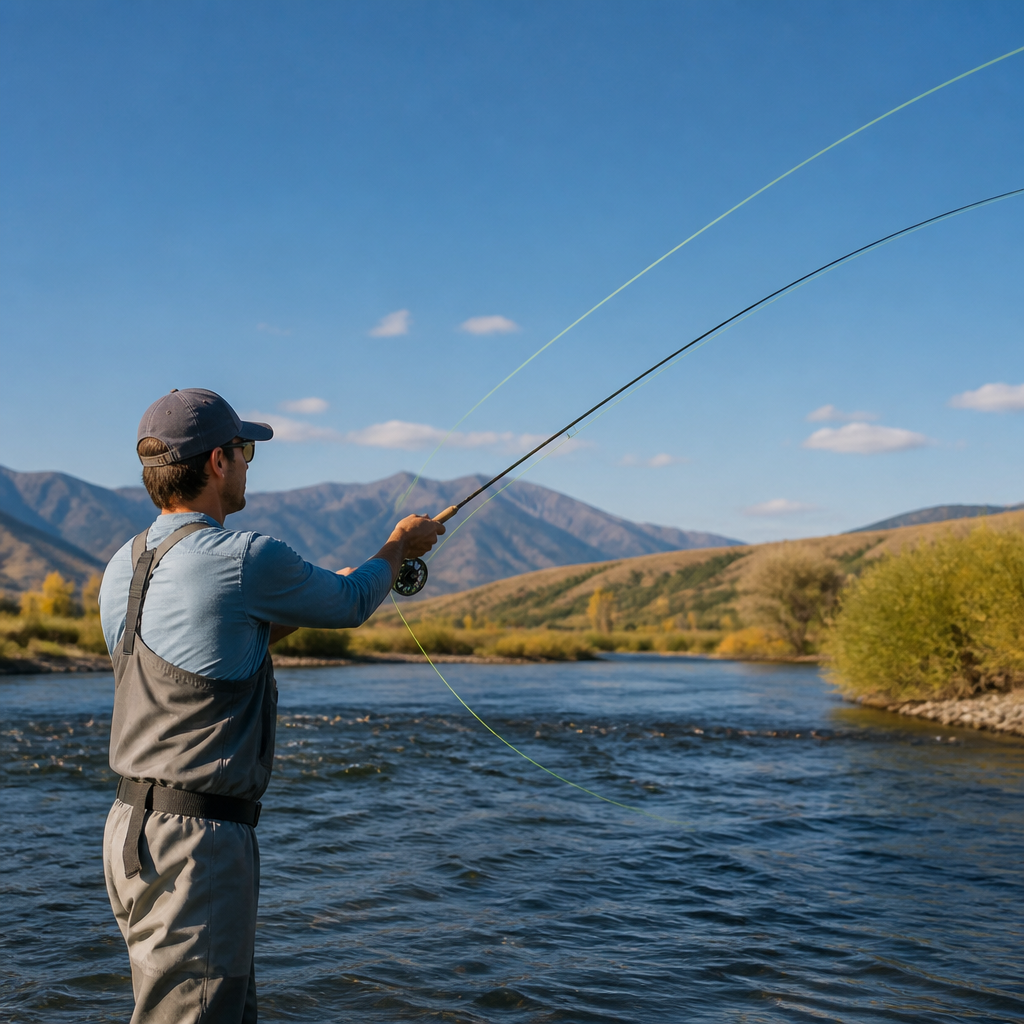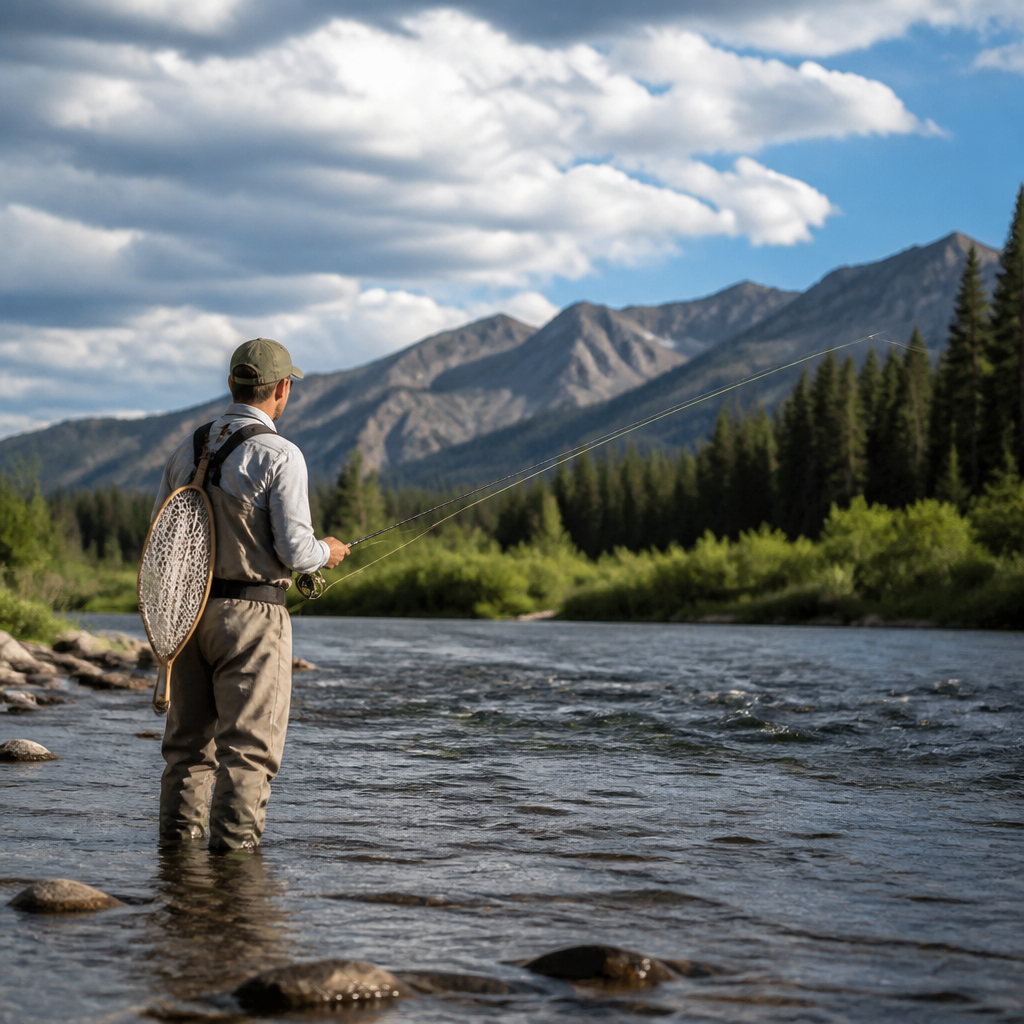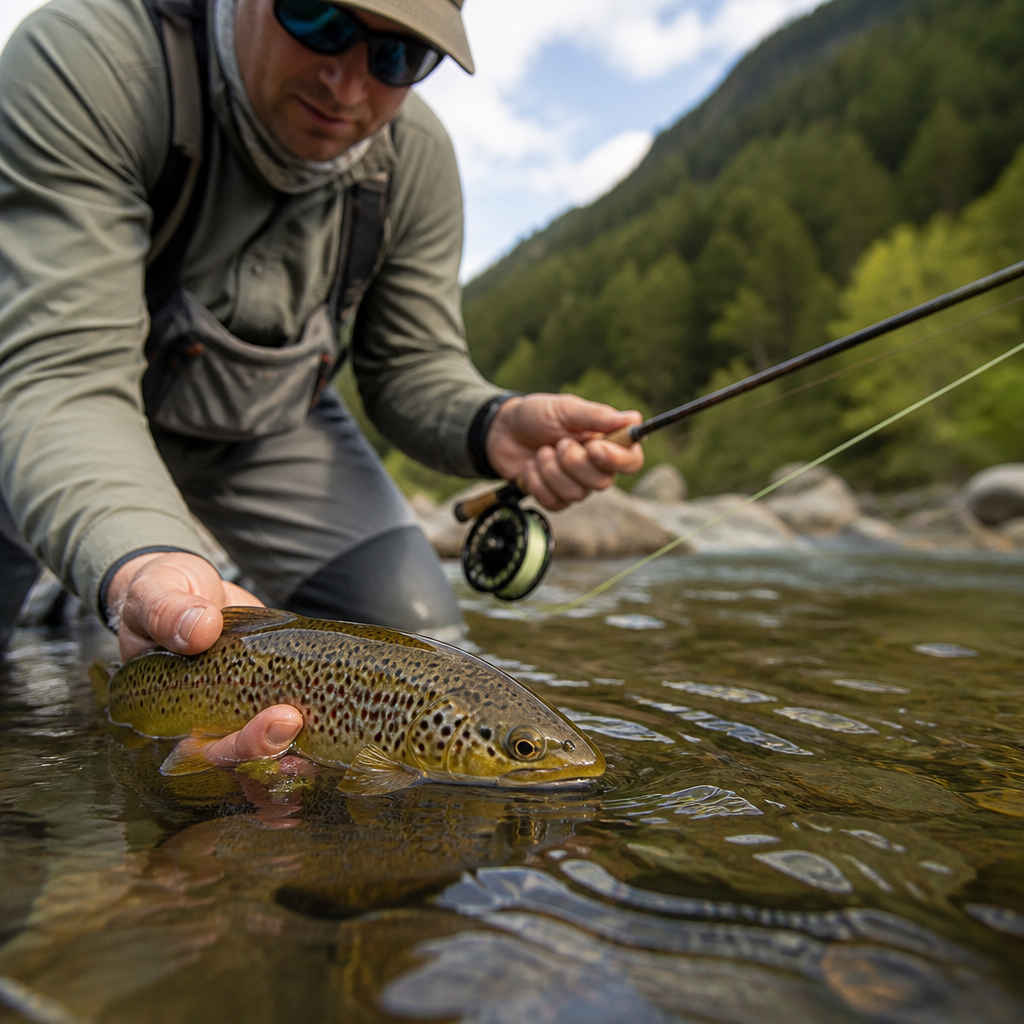
Euro nymphing is a tight-line nymphing method built around direct contact, controlled drifts, and highly sensitive strike detection, and it has become one of the most effective ways to catch trout in rivers of every size. In practice, the term covers several competition-influenced approaches, including Czech, French, Polish, and Spanish styles, but most anglers now use it as a broad label for fishing weighted nymphs on a long leader with little or no fly line beyond the rod tip. The goal is simple: keep as much slack off the water as possible so the flies sink quickly, drift naturally near the bottom, and telegraph subtle takes immediately.
That combination of efficiency and feel is why Euro nymphing matters. Trout feed subsurface for most of the year, often taking immature aquatic insects close to the riverbed where currents are slower and food is concentrated. Traditional indicator rigs can be excellent, especially in deeper or slower water, but they introduce surface drag, reduce direct contact, and can delay strike registration. By contrast, Euro nymphing lets an angler lead the flies through seams, pockets, runs, and slots with precision. I have watched anglers new to the method double their effective drifts in a single afternoon once they understood contact, angle, and weight.
For a techniques-and-strategies hub, Euro nymphing deserves a central place because it connects directly to core nymphing concepts: reading current speed, choosing fly weight, controlling depth, tracking drift, setting the hook quickly, and adjusting for water type. It also bridges gear and strategy. Rod length, leader design, sighter color, tippet diameter, fly shape, split shot rules, and wading position all affect performance. If you want a practical framework for nymphing techniques, start here: understand the system, learn how to build contact without dragging the flies, and make measured adjustments until the drift is both deep enough and natural enough to match how trout feed.
Core Euro Nymphing Setup and Why It Works
The standard Euro nymphing setup begins with a long, light, sensitive rod, most commonly a 10- to 11-foot rod in 2- to 4-weight. That extra length is not a gimmick. It extends reach, improves line control, and allows you to hold more leader off conflicting currents. Most dedicated anglers pair the rod with a large-arbor reel and either a thin level line or a standard fly line, then build a specialized leader that transitions to a highly visible sighter and fine tippet. A common formula includes a butt section of monofilament, a two-tone sighter, and 4X to 6X tippet, often ending in a tag system for two flies.
The reason this works is mechanical. Less line on the water means less drag. Less drag means the flies sink faster and drift at a speed closer to the current near the bottom, which is where trout usually intercept nymphs. The sighter acts like an above-water strike indicator without the buoyancy or resistance of foam or yarn. If it hesitates, twitches, straightens, or accelerates unnaturally, set the hook. In my experience, many fish on a tight-line rig never feel like a hard take at all; they simply appear as a tiny interruption in drift behavior.
Fly selection within this system typically emphasizes dense, compact patterns. Tungsten bead nymphs, jig hooks, slim perdigons, and anchor flies with larger beads dominate because they penetrate the water column quickly. The exact style matters less than profile, weight, and sink rate. On technical tailwaters, I often use a heavier point fly to establish depth and a lighter tag fly to cover a slightly higher feeding lane. On freestone rivers with broken current, that same pairing helps me probe both the bottom slot and the cushion just above it during one pass.
Leader Design, Sighter Control, and Fly Weight
Leader design is where many anglers either unlock Euro nymphing or fight it all day. A good leader must cast reasonably well, turn over weighted flies, remain visible enough to track, and still land lightly. There is no single perfect formula, but the principles are consistent. The butt must be long enough to create separation from the fly line. The sighter must be easy to see in changing light. The tippet must be fine enough to cut current but strong enough for the fish and structure. Competition anglers often fine-tune diameters to hundredths of a millimeter because thickness materially affects sink rate and drag.
Weight is the first adjustment, not the last. If the flies are not reaching the strike zone quickly, nothing else matters. A practical rule is that your flies should occasionally tick bottom without hanging every drift. Too little contact means the rig is riding high. Constant snagging means either the flies are too heavy, the angle is too downstream, or the presentation is too slow. I teach anglers to change weight before changing patterns when trout are clearly feeding subsurface but drifts are unproductive. Depth and drift quality usually outrank exact imitation.
Sighter control is equally important. The sighter should remain under slight tension, not tight enough to pull the flies and not loose enough to create a belly. Think of it as guided contact. Your rod leads the drift just fast enough to stay connected while the flies travel naturally. If the sighter bows downstream, there is too much slack. If it points rigidly at the flies and skips, you are dragging. The best drifts feel balanced, with the rod tip high, the elbow relaxed, and micro-mends created by repositioning the rod rather than flipping line on the surface.
| River condition | Recommended adjustment | Why it helps |
|---|---|---|
| Fast, deep run | Heavier point fly, longer rod reach | Gets to bottom faster and reduces surface drag |
| Shallow pocket water | Lighter flies, shorter drifts, higher rod angle | Avoids constant snagging and keeps contact in broken seams |
| Clear, pressured tailwater | Finer tippet, smaller tag fly, longer leader | Improves natural drift and reduces visual disturbance |
| Cold water, slow feeding fish | Slower lead, frequent depth checks | Keeps flies in the feeding lane longer |
| High, off-color flows | More weight, larger profile, closer approach | Improves visibility and maintains control in pushy current |
Presentation: The Drift, the Lead, and the Hook Set
The presentation sequence starts before the cast. Stand close enough to maintain contact but far enough away to avoid lining fish or sending pressure waves through the run. Most effective Euro nymphing happens within one to two rod lengths, especially on freestones. Cast slightly upstream or up-and-across, depending on current speed and depth. As the flies enter the water, immediately raise the rod tip and follow them downstream, leading with the rod but not pulling. The flies should sink early, settle near the bottom, and then drift at the pace of the lower current.
The lead is the heart of the method. Too aggressive, and the flies skate. Too passive, and slack masks takes. Good anglers constantly adjust lead angle through the drift. Early in the drift, the rod tip may track almost vertically above the entry line to promote depth. Mid-drift, it usually moves laterally to stay in line with the flies as they pass. Near the end, many takes occur during the lift, when the flies rise and accelerate slightly like emerging insects. I intentionally fish that hang-down on many rivers because trout often react to the change in direction.
Hook sets should be compact, quick, and nearly automatic. Set on any unnatural signal: hesitation, stop, slight draw, tiny kick, or simply the loss of expected bottom contact. Because the rig is already under light tension, a short upward or sideways lift is enough. Long, dramatic strikes tend to break fine tippet or move the flies out of the zone on the next drift. I tell anglers that if they are wondering whether to set, they should set. The cost of a missed hook set is one drift; the cost of ignoring subtle contact is a fish never registered.
Reading Water for Different Nymphing Techniques
Euro nymphing excels in water where direct contact can be maintained: seams, pocket water, riffle corners, plunge pools, mid-depth runs, and current tongues entering deeper slots. These places concentrate drifting nymphs and often hold trout close to structure or depth transitions. The key is to break a run into lanes rather than fish it as one uniform piece of water. Start with the nearest seam, then cover the middle bucket, then the far edge, changing angle and weight only when the drift no longer matches the lane. Systematic coverage consistently outperforms random casting.
In shallow pocket water, short-line drifts are especially powerful. Fish can sit in soft cushions just inches from heavy current, and a compact weighted rig can drop into these windows without the disturbance of an indicator. In longer runs, the method becomes more about angle management. You may need to reposition several times down the bank to maintain a favorable contact angle rather than trying to fish the entire run from one place. On broad tailwaters, a hybrid approach often makes sense, using Euro nymphing at closer range and switching to an indicator when fish are beyond direct-contact distance.
This is where Euro nymphing fits within the wider family of nymphing techniques. It is not the answer to every situation. Very deep slow pools, far-bank shelves, and complex crosscurrents sometimes favor suspension systems because they extend drift length better at distance. Wind also makes light leaders difficult to control. But when trout are within reach and currents are varied, tight-line methods offer unmatched feedback. For hub-level understanding, that distinction matters: choose the technique that best controls depth and drift for the specific water in front of you.
Fly Patterns, Seasonal Adjustments, and Common Mistakes
Effective Euro nymphing flies are usually impressionistic rather than ornate. Perdigons, pheasant tail variations, hare’s ear nymphs, Walt’s Worm styles, jigged stoneflies, and simple caddis pupa patterns all produce when sized and weighted correctly. Tungsten beads are the standard because they provide density without excessive bulk. In winter, I lean toward smaller profiles in #16 to #20 with enough mass to stay deep in slower currents. In spring runoff or summer freestones, larger anchor flies in #10 to #14 can be necessary to get through pushy water quickly.
Seasonal strategy changes with insect activity and trout metabolism. During cold periods, fish often conserve energy near softer bottom currents, so slower leads and repeated drifts through the same lane pay off. During mayfly or caddis movements, a lighter tag fly above a heavy point fly can intercept fish feeding slightly off bottom. In late summer low water, stealth becomes central: longer leaders, finer tippet, lower wading profile, and shorter false casting. I have seen anglers blame fly choice when the real issue was entering the run too high and sending every fish under the bank before the first cast.
The most common mistakes are predictable. First, anglers fish too far away, which defeats contact. Second, they underweight the rig because bottom ticks feel uncomfortable. Third, they watch only the fly line or rod tip instead of the sighter. Fourth, they lock into one drift speed instead of matching changing currents within the run. Fifth, they fail to adapt after five empty drifts. Good Euro nymphing is iterative. Change weight, angle, distance, lane, or fly order one variable at a time. When you solve the depth-control puzzle, the method becomes remarkably consistent.
Building a Complete Nymphing Strategy Around Euro Techniques
As a hub for nymphing techniques, Euro nymphing is most useful when treated as part of a complete river strategy rather than an isolated trend. It teaches the fundamentals that carry into every subsurface approach: contact management, current reading, depth control, strike detection, and efficient coverage. Those same principles improve indicator nymphing, dry-dropper fishing, and streamer presentations. Anglers who learn to feel how weight, tippet diameter, and lead angle change a drift become better at diagnosing why fish are not eating, instead of changing flies blindly.
A practical progression is straightforward. Start with a simple two-fly rig, one heavy point fly and one lighter tag fly. Fish short, visible drifts in knee- to waist-deep current where you can clearly see and feel the system work. Focus first on occasional bottom contact and immediate hook sets. Then learn to adjust weight for different lanes, reposition for better angles, and identify where fish sit within a seam rather than just in a general run. Over time, add specialized leaders, micro-thin tippet options, and more nuanced fly pairings only after the core mechanics are automatic.
The main benefit of Euro nymphing is not that it replaces every other method; it is that it gives you precise control over the most important variables in subsurface trout fishing. When your flies are at the right depth, moving at the right speed, and connected closely enough to reveal subtle takes, catch rates improve for clear reasons, not luck. Use this article as your starting point, then apply the method on real water, take notes on weight and angle, and build your own dependable nymphing system one drift at a time.
Frequently Asked Questions
What is Euro nymphing, and how is it different from traditional indicator nymphing?
Euro nymphing is a tight-line nymphing approach that emphasizes direct contact with the flies, controlled drifts, and immediate strike detection. Instead of suspending flies under a bobber-style strike indicator and managing larger amounts of fly line on the water, the angler typically fishes weighted nymphs on a long leader with little or no fly line beyond the rod tip. That setup creates a more direct connection between the rod hand and the flies, which helps reduce slack, improve depth control, and make subtle takes easier to detect.
The biggest difference from traditional indicator nymphing is how the drift is managed. With indicator systems, anglers often cast farther, mend line to reduce drag, and watch the indicator for a pause, twitch, or dip. In Euro nymphing, the angler usually fishes closer and follows the drift with the rod tip, leading the flies downstream while maintaining light tension. Because the flies stay in contact with the leader system rather than being tethered beneath a floating indicator, they often sink faster and drift more naturally through short, targeted feeding lanes.
Another important distinction is sensitivity. Euro nymphing excels at detecting soft takes that might never move a conventional indicator. Sometimes the only signal is a slight hesitation in the sighter, a tiny change in leader angle, or a subtle feeling of added weight. That level of contact is one reason the method has become so effective on pressured trout and in technical water. While it has roots in competition styles such as Czech, French, Polish, and Spanish nymphing, most anglers use the term today as a broad label for any long-leader, tight-line system designed to keep weighted nymphs in the strike zone with maximum control.
What gear do I need to get started with Euro nymphing?
A dedicated Euro nymphing outfit makes learning easier, but you do not need the most expensive setup to be effective. The ideal rod is usually longer and lighter than a standard all-purpose trout rod, often around 10 to 11 feet in a 2- to 4-weight. That extra length improves reach, line control, and drift management, especially when you want to keep as much line off the water as possible. A softer, sensitive tip also helps protect fine tippets and register light takes, while the longer blank makes it easier to lead flies through multiple current seams.
Reel choice matters less than rod choice, but a balanced reel is still helpful because Euro nymphing rods are longer and can feel tip-heavy. A smooth drag is useful for larger trout, though many fish are controlled more with the rod hand than with the reel during close-range drifts. Line systems vary, but many anglers use a very thin specialized Euro nymphing line or even a mono-style setup where the long leader does most of the work. The goal is not distance casting but efficient presentation and contact.
The leader is one of the defining parts of the setup. A typical Euro nymphing leader includes a butt section, a long tapered or level section, a highly visible sighter, and a tippet ring or direct tippet connection leading to the flies. The sighter is crucial because it acts as a visual strike detector. Bright bi-color materials are common because they make subtle pauses and direction changes easier to see. Tippet size depends on water clarity, fly weight, and fish size, but thin-diameter tippet helps flies sink quickly and drift naturally.
For flies, start with a small selection of weighted nymphs in different sizes and sink rates. Jig-style flies with tungsten beads are especially popular because they get down fast and tend to snag less when paired with slotted beads and jig hooks. It is smart to carry anchor flies for deeper or faster runs, lighter dropper flies for a more natural second offering, and a range of patterns that imitate common subsurface food sources. You will also want split shot only if local regulations allow and if your specific setup calls for it, though many Euro nymphing systems rely mainly on fly weight rather than added external weight.
How do you actually present the flies and maintain a good drift when Euro nymphing?
The core presentation is simple in concept but technical in execution: get the flies to the trout’s feeding depth quickly, maintain light contact without dragging them unnaturally, and guide them through the seam at the speed of the current near the bottom. Most drifts begin with a short cast or lob upstream or slightly upstream and across. Once the flies enter the water, the rod tip follows them downstream while the angler keeps only enough tension to stay connected. That connection is critical, but it should be controlled and minimal, not so tight that the flies swing or skate above the strike zone.
Good Euro nymphing anglers pay close attention to rod angle, leader angle, and current speed. The rod is usually held high enough to keep unnecessary line off conflicting currents, yet low enough to preserve a natural drift. If the rod tip gets too far ahead of the flies, you may pull them out of the zone. If it lags behind, slack develops and strike detection suffers. The ideal position changes constantly based on depth, speed, and the shape of the run, which is why this method rewards active line control rather than passive watching.
Depth control is often the deciding factor. If your flies are not ticking bottom occasionally in likely holding water, they may be too light or your drift may be too short. If you are hanging up constantly, you may be too deep or leading too slowly. Many anglers adjust by changing fly weight before making bigger changes to the rest of the rig. Short drifts are often more productive than long ones because they let you stay in direct contact and thoroughly cover high-percentage pockets, seams, ledges, and transitions where trout feed.
At the end of the drift, some anglers let the flies continue below them and rise in the water column before recasting. This lift can trigger strikes, especially from trout following the flies. In many situations, the approach is systematic: cover near water first, then mid-range seams, then slightly farther lanes, making repeated drifts at different angles and depths. Euro nymphing is less about repeatedly bombing long casts and more about dissecting water with precision and efficient contact.
How do you detect strikes and know when to set the hook?
Strike detection in Euro nymphing is one of the method’s greatest strengths, but it depends on concentration and fast reactions. Because you are maintaining direct contact with the flies, a strike may show up in several ways: a stall in the sighter, a twitch, a tiny upstream jump, a sudden straightening, a slight hesitation, or simply an unexpected feeling of weight. Some takes are obvious, especially from aggressive fish, but many are so subtle that experienced anglers follow a basic rule: if anything looks or feels different, set the hook.
The hook set itself is usually compact and quick rather than dramatic. A short, firm lift with the rod is often all that is needed. Big trout-set motions can create slack, move the flies out of the zone on future drifts, or break fine tippet. Since many drifts happen at relatively close range, the fish is already near the rod tip, and an efficient lift connects quickly. This is another reason Euro nymphing can be so deadly: there is very little delay between take detection and hook set.
Reading the sighter correctly takes practice. You are not always watching for a hard dunk like you would with a floating indicator. Instead, you are observing the behavior of a taut but controlled leader system under changing currents. It helps to fish water where you can occasionally feel bottom contact, because that gives you a reference for what normal drift resistance feels like. Over time, you begin to distinguish between the rhythmic tapping of rocks, the smooth pressure of current, and the more alive, irregular sensation of a fish eating the fly.
Beginners often wait too long because they are looking for certainty. In reality, successful Euro nymphing involves setting on many suspicious signals that turn out to be nothing. That is completely normal. Missing a few bottom ticks is better than ignoring half your takes. As your timing improves, you will become more efficient at recognizing meaningful changes in the drift and converting those subtle contacts into hooked trout.
What are the most important tips for beginners who want to become more effective at Euro nymphing?
The first priority is learning to control depth. Many newcomers focus on leader design or fly patterns before mastering sink rate and drift angle, but trout cannot eat flies that are drifting above them. Use enough weight to get down quickly, especially in faster water, and do not be afraid to adjust often. A small fly change can make a major difference. If you are not occasionally touching bottom in promising runs, your setup is probably too light, your tippet may be too thick, or your drift may be ending before the flies settle into the strike zone.
Second, fish closer than you think you need to. Euro nymphing is usually most effective at short to moderate range, where direct contact is easier to maintain and strike detection is strongest. Cover water methodically instead of chasing distance. Work the closest seam first, then step through adjacent lanes and microcurrents. Trout in rivers of every size often hold in surprisingly small feeding