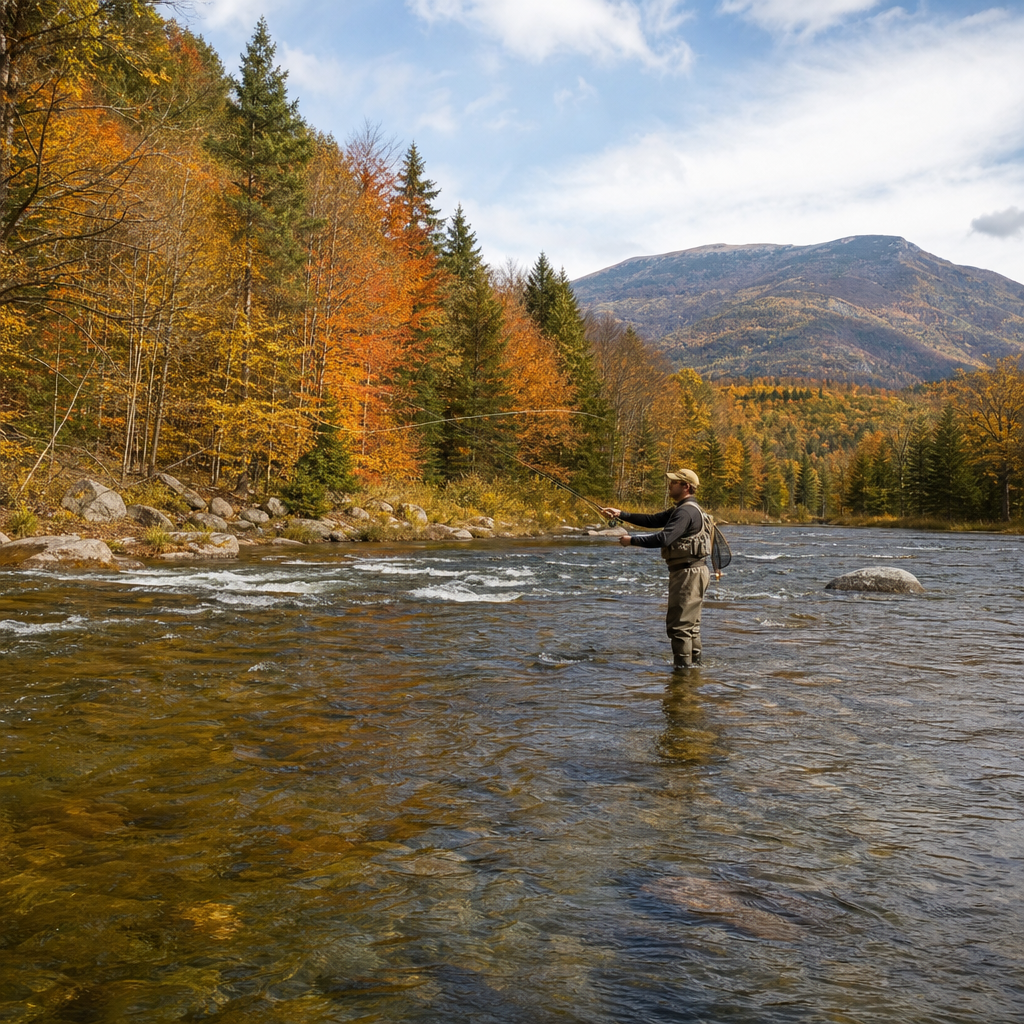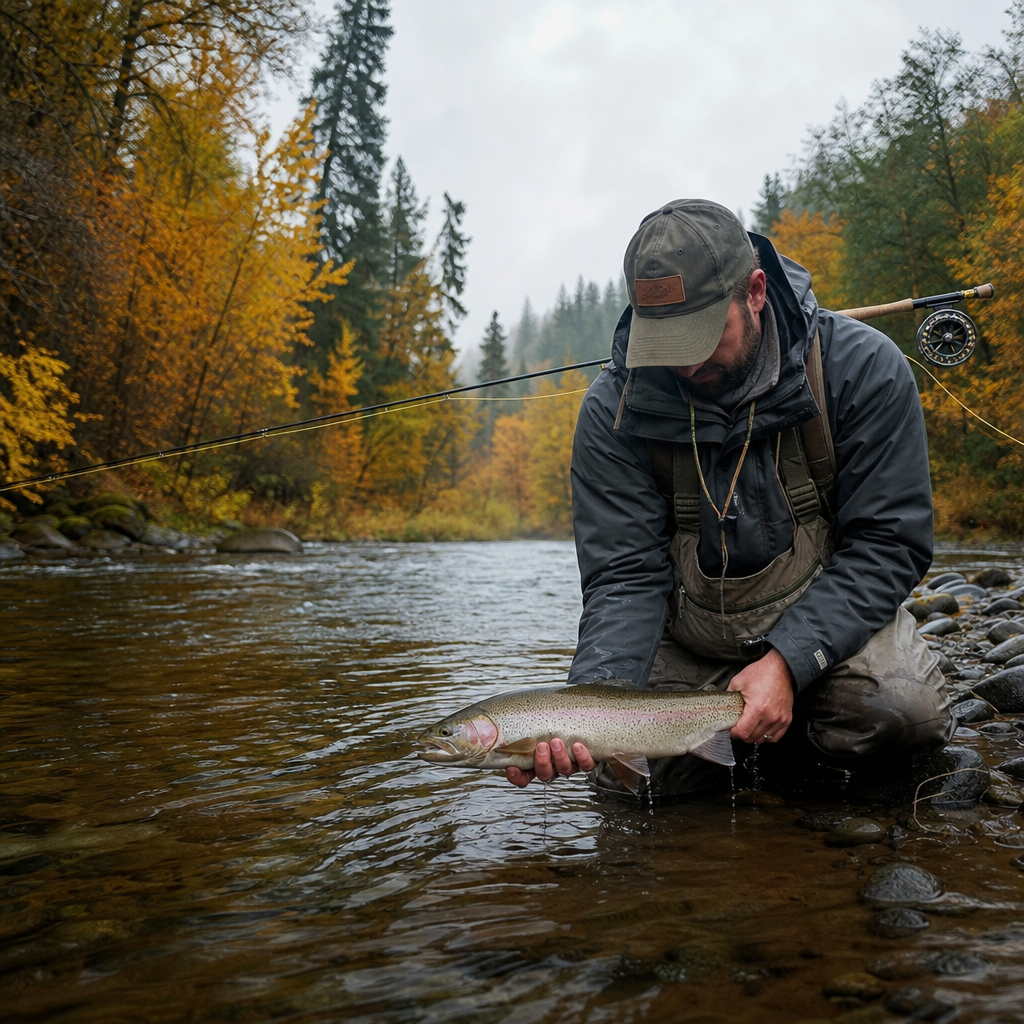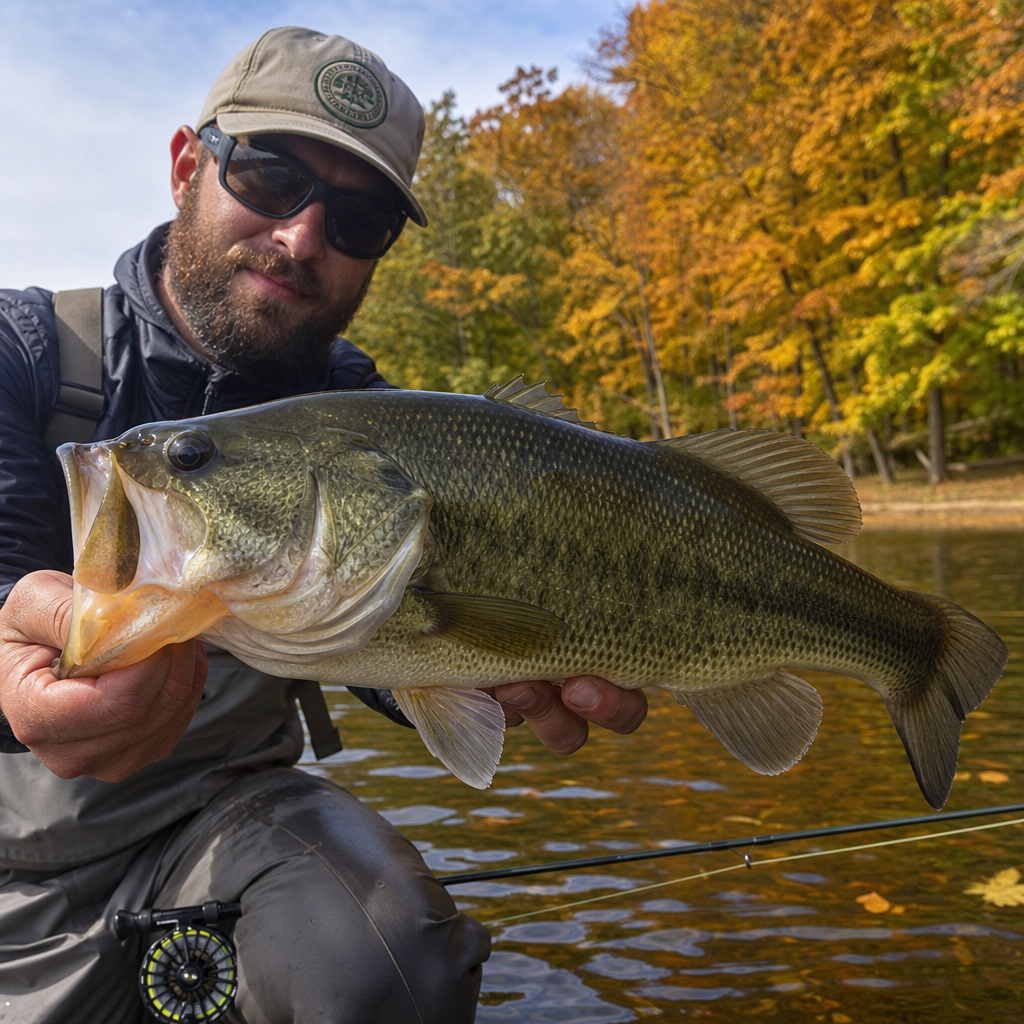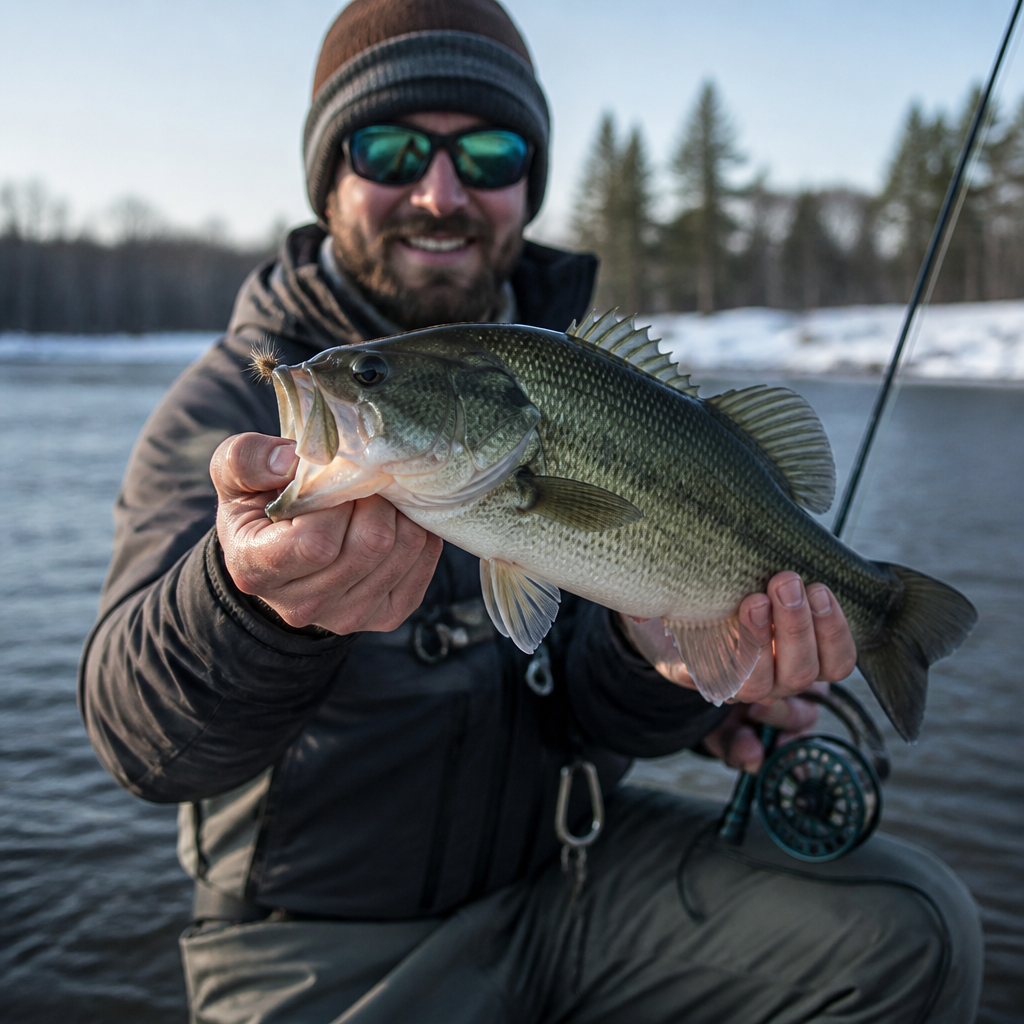
Fly fishing for bass in winter rewards anglers who understand how cold water changes fish behavior, fly selection, and presentation. Winter fly fishing is the practice of targeting fish during the coldest part of the year, when water temperatures drop, metabolism slows, and feeding windows shrink. For bass, that means fewer reckless chases and far more selective responses to a fly that stays in the strike zone. Many anglers pack away the fly rod after fall, but I have found winter to be one of the most revealing seasons on the water because bass position predictably, conserve energy, and often gather near structure that can be read with care. This article serves as a complete hub for winter fly fishing with a focus on bass, covering where fish hold, what flies work, how to adjust tackle, and how to fish safely and effectively in cold conditions.
Winter matters because largemouth and smallmouth bass do not stop feeding; they simply feed differently. In most waters, bass activity begins to change noticeably once temperatures fall below about 50 degrees Fahrenheit, and it becomes especially deliberate in the low 40s and upper 30s. Their digestion slows, dissolved oxygen patterns shift, aquatic vegetation dies back, and baitfish behavior changes. Those environmental shifts reduce the value of covering water quickly and increase the value of precision. A successful winter bass angler learns to think in terms of depth, current breaks, solar warming, forage density, and retrieve speed. If you can identify a channel edge, a rock transition, a deep weedline remnant, or a sunny bank that warms a degree or two by afternoon, you can often identify winter bass.
The key terms are straightforward but important. Strike zone refers to the three-dimensional area where a bass can intercept a fly without burning unnecessary energy. Presentation is the combination of cast angle, sink rate, depth control, and retrieve cadence that keeps the fly in that zone. Structure includes hard features such as ledges, timber, riprap, bridge pilings, and creek channels, while cover refers to vegetation, docks, brush, and objects that provide concealment. Winter fly fishing for bass is not about constant action. It is about reading water carefully, making repeated accurate casts, and trusting subtle takes that may feel like nothing more than added weight. Anglers who accept that rhythm often find that winter offers less competition, clearer water, and surprisingly large bass willing to eat a well-presented fly.
As a hub for the broader winter fly fishing topic, this guide also lays the foundation for related areas anglers often explore next: winter streamer tactics, cold-water line selection, fishing tailwaters, handling fish in freezing air, and reading seasonal weather windows. Bass are the focus here, but the principles of winter fly fishing carry across species. Cold water punishes rushed decisions and rewards systems. The anglers who do best are usually the ones who prepare leaders before launching, monitor water temperature, shorten the list of likely holding water, and make disciplined adjustments instead of random changes. If you want a reliable framework for winter bass on the fly, start with fish location, then refine fly choice, then tune presentation until the fish tell you the final answer.
How winter changes bass behavior
Bass are cold-blooded, so water temperature directly affects movement, feeding frequency, and preferred holding areas. In winter, they seek places where they can conserve energy while staying close to forage. On natural lakes, I consistently find largemouth near the first significant drop from shallow flats, around remaining green weeds, beside standing timber, and along creek channels entering the basin. On reservoirs, channel swings, bluff ends, and submerged points often concentrate fish. Smallmouth commonly favor rock, current seams, and deeper pools, especially in rivers where moderate winter flow offers stability. The common thread is efficiency: bass want access to food without long pursuits.
Weather stability often matters more than dramatic warming. A bright fifty-degree day after a hard front can look inviting to an angler but still fish poorly if barometric pressure and overnight lows suppress activity. By contrast, two or three consecutive modest days can create a better bite, particularly from late morning through early afternoon when shallow dark-bottom areas absorb heat. Even a one-degree increase can matter. In clear water, bass may suspend off steep breaks; in stained water, they often hold tighter to wood or rock. Baitfish schools are another major clue. If electronics show balls of shad near a creek channel edge, bass are usually somewhere beneath or beside them.
Where to find winter bass on lakes, ponds, and rivers
Location is the central winter skill. On small ponds, start with the deepest section, then inspect adjacent sunlit banks with dark bottoms, inflow trickles, and any surviving vegetation. Bass in ponds often slide only a short distance between resting and feeding positions, so the best water is usually near depth. In natural lakes, focus on inside turns of weedlines, marl-to-muck transitions, docks over deeper water, and shoreline wood near basin access. Reservoir bass commonly use vertical structure because it allows them to adjust depth with minimal effort. Bluff walls, riprap causeways, and secondary points near creek channels are dependable winter features.
Rivers require a slightly different lens. Winter current can be both friend and obstacle. Bass avoid wasting energy in fast flow, so look for soft seams behind boulders, eddies below islands, marinas, bridge abutments, and slow tailouts beneath deeper runs. Smallmouth in particular favor rock that absorbs and radiates solar warmth, though the effect is subtle and most meaningful in low, clear water. Tailwaters can be excellent when dam releases create stable temperatures. In every system, ask the same question: where can a bass sit with minimal energy use and easy access to forage? The answer usually narrows the water dramatically.
| Water Type | Best Winter Holding Areas | Why Bass Use Them |
|---|---|---|
| Pond | Deep basin edge, sunny dark-bottom bank, inflow, sparse weeds | Quick access to depth and slightly warmer water |
| Natural lake | Weedline turns, timber, channel edge, deep docks | Cover plus stable temperature and forage |
| Reservoir | Bluffs, secondary points, creek channels, riprap | Vertical movement and bait concentration |
| River | Deep pools, eddies, current seams, bridge structure | Reduced current with nearby feeding lanes |
Best fly patterns for winter bass
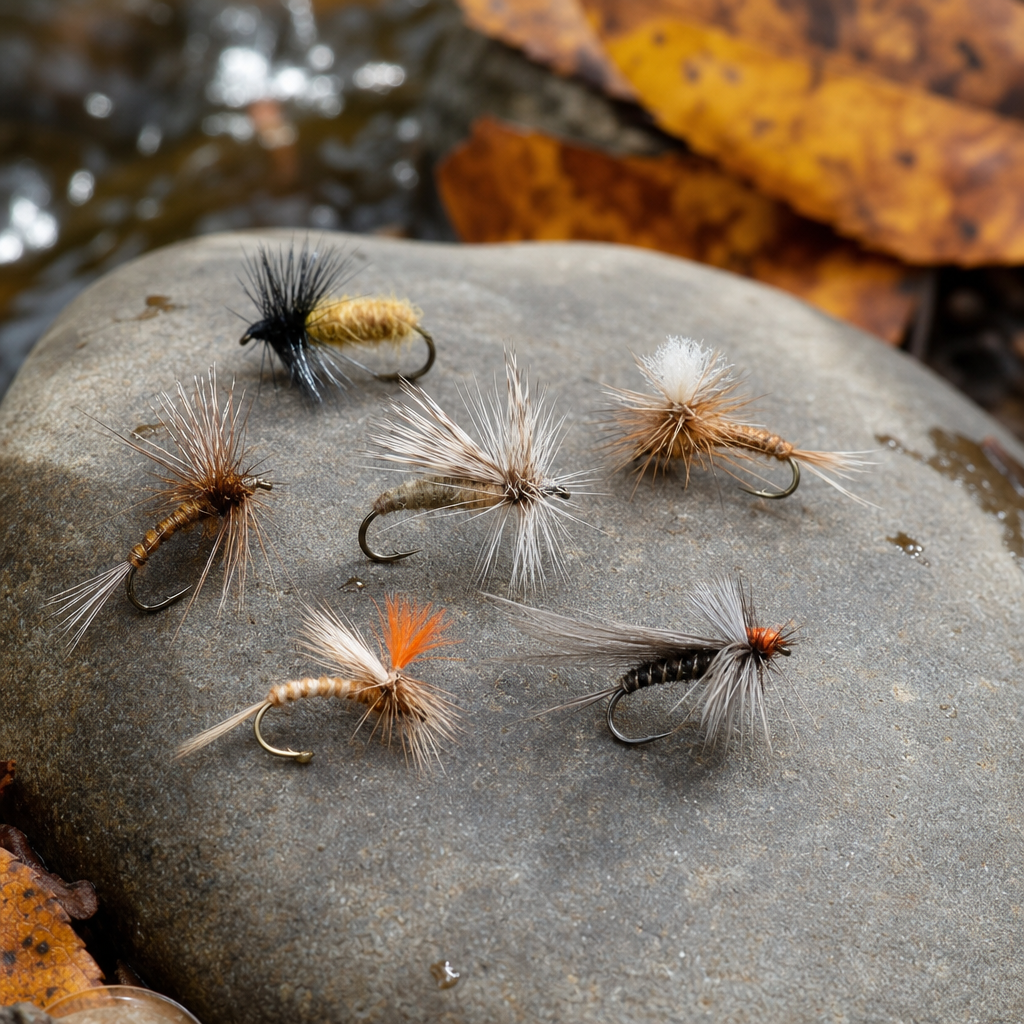
Winter flies should match available forage while staying easy for a slow fish to catch. My core box is smaller than many anglers expect: baitfish streamers, leech patterns, crayfish imitations, and a few finesse-style flies with subtle motion. For baitfish, Clouser Minnows remain foundational because dumbbell eyes help them drop quickly and jig on the pause. In cold, clear water, I favor sparse versions in white, olive, gray, and tan, usually size 2 to 6. Craft-fur minnows, bucktail deceivers, and Game Changer-style patterns also produce, but bulk should be controlled. Oversized flies can work for trophy fish, yet average winter bass often prefer compact silhouettes.
Leeches are deadly when fish are pinned to the bottom or relating to soft sediment, wood, and remaining weeds. Balanced leeches, rabbit-strip leeches, and marabou patterns breathe at rest, which matters because winter takes frequently happen on pauses. Crayfish are especially effective for smallmouth in rocky rivers and reservoirs, but choose subdued colors such as rust, olive-brown, black, and muted orange rather than aggressive summer tones. If local forage includes dying shad, pale baitfish patterns with a hint of flash can outperform darker flies. If bluegill are the dominant prey in a pond, olive and chartreuse combinations may still work, but fish them smaller and slower than you would in warm water.
Tackle, lines, and leaders that improve cold-water control
You do not need highly specialized gear, but winter exposes weaknesses in line control and depth management. A 6-weight handles most pond and river bass situations, while a 7- or 8-weight is better for larger flies, sink tips, wind, and deeper reservoir fishing. Fast-action rods help cast weighted flies and mend sinking systems, but a rod you can cast accurately at short to medium range matters more than raw power. Reels are less about drag than about managing coiled line and protecting it from grit and freezing spray.
Lines deserve more thought. Floating lines paired with long leaders and weighted flies work in shallow ponds, slow rivers, and sunny bank situations. Sink-tip lines are the most versatile winter choice because they let you maintain contact while getting down along breaks and structure. Full-sinking lines excel on deep reservoirs, especially when bass suspend or hold on steep ledges. I often carry intermediate, type 3, and type 5 options. Leaders are usually shorter than in summer because turnover and depth matter more than delicacy. A 4- to 7-foot leader tapered to 0X through 2X is practical for most streamer work. Fluorocarbon helps abrasion resistance around rock and wood and sinks faster, though stiff mono can be useful in very cold conditions when knots and handling become cumbersome.
Presentation and retrieves that trigger cold bass
The best winter retrieve is usually slower than you think and deeper than you first fish. Start by counting the fly down so you know its approximate depth, then retrieve with short strips and deliberate pauses. Many days, the pause is the trigger. Bass track a fly, then commit when it stalls or gently rises. On rivers, a swing-and-stall presentation can be excellent for smallmouth holding on seam edges. On lakes, a hand-twist retrieve with occasional one-inch strips keeps leeches and marabou flies alive without pushing them out of the strike zone. If fish are suspended, use a countdown system and repeat the exact sink time once you contact one bass.
Contact is critical because winter eats are subtle. Instead of the jolt common in warm water, the line may simply stop, tick, or feel heavy. Strip-set first, then raise the rod only after the fish is connected. Cast angles also matter. A ninety-degree presentation to a drop-off may keep the fly in productive depth longer than a straight cast down the break. Around wood, bring the fly past the thickest part slowly, then let it hang. Around riprap, fish parallel whenever possible. Precision beats coverage in winter, and five accurate casts to a likely edge are usually better than twenty random casts across dead water.
Timing, conditions, and winter safety on the water
The most productive time is often from late morning through the warmest part of the afternoon, especially after a cold night. Water temperature trends are more useful than air temperature alone, so a simple thermometer is one of the best tools you can carry. Cloud cover can help in some reservoirs by keeping bait suspended, while sun can improve shallow bites on small waters. Wind can stack slightly warmer surface water into a protected bank, but excessive wind makes depth control difficult and chills anglers quickly. If a warming trend coincides with stable pressure and manageable wind, fish those hours hard.
Safety is not optional in winter fly fishing. Cold shock can become life-threatening within minutes, particularly from a boat, kayak, or while wading deep rivers. Wear layered synthetic or wool insulation, avoid cotton, and use a wading belt. Studded boots improve traction on icy rocks, and fingerless gloves preserve dexterity. Keep a dry bag with spare gloves and socks, and tell someone where you are fishing. Fish handling also changes in winter. Wet your hands, keep bass in the water as much as possible, and avoid prolonged air exposure when temperatures are below freezing because gills and eyes are vulnerable. Winter can be outstanding, but only if your plan accounts for the season’s risks.
Fly fishing for bass in winter comes down to a disciplined sequence: find stable water near depth, choose a compact fly that matches local forage, and present it slowly enough for cold fish to commit. Bass still eat throughout winter, but they reward anglers who think in terms of energy conservation, strike-zone control, and small environmental advantages such as a rock seam, a channel edge, or an afternoon temperature bump. The practical lesson is simple. Do not fish winter water like summer water. Fish slower, fish deeper, and fish more precisely.
As the central winter fly fishing resource within a broader seasons-and-conditions library, this guide should help you approach every related cold-weather topic with the right framework. Whether you fish ponds for largemouth, rivers for smallmouth, or reservoirs with shad-driven patterns, the same fundamentals apply: locate forage, manage depth, watch conditions, and expect subtle takes. Build your winter system now by organizing a compact fly box, carrying a thermometer, and identifying a handful of reliable cold-season spots. Then pick the next stable weather window and put these winter bass fly fishing tips and techniques to work.
Frequently Asked Questions
What happens to bass behavior in winter, and how should that change the way you fly fish for them?
In winter, bass become far less willing to chase a fast-moving meal because cold water slows their metabolism and reduces how often they need to feed. Instead of roaming aggressively, they usually hold in areas that offer easy access to stable water and minimal energy expenditure. That often means deeper pools, channel edges, steep drop-offs, bluff banks, submerged timber, and slower current seams where they can sit comfortably and ambush prey without burning calories. For fly anglers, this changes everything. Winter is not usually the time to cover water quickly with constant false casts and fast retrieves. It is the season for precision, patience, and keeping the fly in front of fish longer.
A more effective winter approach is to slow down your entire system. Make shorter, more deliberate casts, target high-percentage holding water, and work each zone thoroughly before moving on. Bass are also more likely to feed during smaller windows, often tied to the warmest part of the day, a slight warming trend, stable weather, or periods when baitfish become active. That means timing matters almost as much as presentation. If you understand that winter bass are conserving energy first and feeding second, you can begin making better decisions about where to fish, how deep to present the fly, and how slowly to retrieve it. In practical terms, winter success comes from fishing deeper, moving slower, and expecting subtle takes rather than explosive strikes.
What are the best flies for winter bass, and how should you choose between them?
The best winter bass flies are usually those that match the available forage, sink efficiently, and move with a restrained, natural action. In most waters, that means baitfish imitations, smaller streamers, craw patterns, leech-style flies, and occasionally compact jig-style flies with materials that breathe in place. Winter is rarely a situation where oversized, highly aggressive flies outperform everything else. Bass will still eat a substantial meal, but in cold water they tend to prefer presentations that look easy to catch. Flies tied with rabbit strips, marabou, craft fur, schlappen, or sparse synthetic fibers are especially useful because they create life-like movement even when barely stripped.
Color selection should be guided by water clarity, light conditions, and local forage. In clear water, natural tones such as olive, white, gray, black, brown, and muted baitfish blends are reliable. In stained water, darker profiles and simple high-contrast combinations like black and blue, olive and white, or black and purple can help bass locate the fly. Fly size often matters more than many anglers think in winter. When fish are inactive, downsizing from large, flashy streamers to compact baitfish or craw patterns can trigger more takes. The key is not just choosing a “winter fly,” but choosing one that can stay in the strike zone with minimal effort and still appear alive. If a fly sinks well, hovers naturally, and gives bass an easy target, it has real winter value.
How should you present a fly to bass in cold water to get more strikes?
Presentation is the defining factor in winter bass fly fishing because even the right fly can be ignored if it moves too quickly or spends too little time near the fish. In cold water, the most productive presentations are generally slow, controlled, and depth-oriented. You want the fly to get down and remain there, whether you are fishing a sinking line, sink-tip, weighted fly, or heavily weighted leader setup. Once the fly reaches the level where bass are holding, use short strips, long pauses, and subtle movements that suggest a wounded baitfish, drifting craw, or vulnerable prey item. Many winter takes happen on the pause or immediately after a slight twitch, not during a fast retrieve.
It helps to think in terms of “hang time” rather than action. Your goal is to maximize the amount of time the fly spends in the strike zone on each cast. That may mean counting the fly down longer, fishing slower banks more methodically, or making repeated casts to the same piece of structure from slightly different angles. Line control also becomes more important in winter because strikes are often soft. Instead of a hard jolt, you may only feel weight, a slight tick, or a subtle tightening. Staying connected to the fly and stripping with intention will help you recognize those faint eats. If the fish are especially lethargic, almost dead-drifting or barely crawling the fly along bottom can outperform any traditional strip pattern. Winter rewards restraint, and often the most convincing presentation is the least dramatic one.
Where should you look for bass in winter when fly fishing lakes, ponds, and rivers?
Winter bass typically seek water that is more stable in temperature, lower in current stress, and close to food. In lakes and ponds, that often means deeper basins, outside weed edges that remain green, submerged creek channels, points that drop into deeper water, marinas, docks, rock transitions, and timber near depth. Bass do not always stay glued to the absolute deepest part of a lake, but they usually position where depth and structure give them security and efficient feeding opportunities. Sunny afternoons can also pull fish slightly shallower, especially around dark-bottom areas, rock, or protected coves that warm faster than the surrounding water.
In rivers, the search shifts toward wintering water with reduced current and nearby depth. Deep bends, eddies, tailouts with softer flow, current breaks behind wood or boulders, and slower inside seams can all hold bass during the coldest stretch of the year. Smallmouth in particular often gather in predictable wintering areas where they can hold with minimal effort. Access to deeper water matters, but so does proximity to feeding lanes. Bass want a holding spot that conserves energy while still allowing them to intercept baitfish, crayfish, or drifting forage when conditions line up. A smart strategy is to stop trying to fish every piece of attractive water and instead focus on winter-specific structure. If the water is shallow, fast, and exposed, it is often low-percentage in winter. If it is deep, protected, and stable, it deserves close attention.
What tackle, lines, and timing adjustments help most when fly fishing for bass in winter?
A practical winter bass setup usually starts with a rod that can cast weighted flies and sinking lines comfortably, often in the 6- to 8-weight range depending on the size of the water and flies. A quality reel matters less for drag in most bass situations than for balance and line management, but a dependable system always helps in cold conditions. Line choice is one of the most important adjustments you can make. Floating lines still have niche uses with indicator rigs, very shallow fish, or slow-suspending flies, but winter bass are commonly more consistent on sink-tip or full-sinking lines because those lines keep the fly where the fish actually are. Leaders are generally shorter and more direct than many trout anglers expect, especially when fishing sinking systems. Fluorocarbon is often preferred for its abrasion resistance and sink rate.
Timing is equally critical. The first hour after sunrise is not always the best winter bass window, especially after a cold night. Midday through early afternoon often produces better activity because the water has had time to warm slightly and baitfish may become more active. Stable weather can be more important than dramatic conditions, and several mild days in a row frequently fish better than a sudden warm front after a deep freeze. Wind can reposition forage and make certain banks productive, but it also complicates fly presentation, so choose locations where you can still maintain depth and control. Finally, winter success depends on comfort and discipline. Dress warm, protect your hands, and commit to fishing slowly enough to match the season. Many anglers fail in winter not because bass are impossible to catch, but because they fish with autumn speed in winter water.