Top fly patterns for panfish deserve more attention than they usually get, because bluegill, crappie, pumpkinseed, redear sunfish, and yellow perch will all reward thoughtful fly selection with fast action and surprisingly technical fishing. In my own warmwater boxes, panfish flies are not afterthoughts tucked behind trout staples; they are purpose-built tools designed around small mouths, opportunistic feeding, shallow cover, and seasonal movement. When anglers search for the best panfish flies, they usually want a simple answer: what works consistently, when should each pattern be used, and which commercially available flies are actually worth buying. This hub answers those questions directly while also serving as a central guide to fly reviews, selection criteria, and practical recommendations for building an efficient panfish assortment.
Panfish is a broad term, but in most North American fishing contexts it refers to species that stay relatively compact, feed heavily on insects and small baitfish, and are commonly pursued with light tackle. Bluegill and other sunfish often key on damselflies, dragonflies, midges, beetles, ants, small crustaceans, and tiny minnows. Crappie lean more strongly toward baitfish, especially around submerged timber and brush. That feeding diversity explains why the top fly patterns for panfish span three functional categories: surface bugs, subsurface nymphs and larvae, and miniature streamers. A strong panfish box does not need dozens of random patterns. It needs a handful of proven shapes in the right sizes, colors, sink rates, and materials.
This matters for both catch rates and buying decisions. Many anglers waste money on oversized bass bugs, generic trout flies in unsuitable hook styles, or novelty patterns with poor durability. Through repeated testing on ponds, small lakes, farm reservoirs, and slow river backwaters, I have found that effective fly reviews for panfish should focus on profile first, movement second, and color third. Hook gap, material softness, and how a fly behaves on a pause matter more than flashy packaging. The sections below break down the most reliable fly types, explain when each shines, and connect those choices to a smarter gear and review strategy for anyone building a panfish-focused fly selection.
What makes a panfish fly pattern effective
The best panfish flies share a few technical traits. First, they are usually tied on small hooks, commonly sizes 8 through 14 for bluegill and pumpkinseed, and sizes 6 through 10 for crappie streamers. Panfish inhale compact prey, but they often reject long, stiff materials that interfere with hookups. That is why marabou, soft hackle, rubber legs, chenille, mop fibers, sparse craft fur, and small foam bodies outperform heavily dressed patterns in many situations. A fly that compresses easily gets eaten more confidently.
Second, panfish flies need controlled movement. Bluegill often strike during the pause rather than on a hard strip. Marabou breathes when motion stops, rubber legs quiver after landing, and soft hackle pulses on a slow hand-twist retrieve. Those triggers are not cosmetic details; they are the reasons certain flies become consistent producers. Third, panfish patterns must match common forage without becoming too specific. You rarely need an exact entomological imitation. You do need the right silhouette: a bug, a nymph, or a minnow.
When reviewing flies, I look at four factors that quickly separate useful products from disappointing ones: hook quality, balance in the water, durability after multiple fish, and consistency across sizes. Reputable brands such as Umpqua, Orvis, Fulling Mill, Hareline-tied offerings from specialty shops, and local warmwater tiers often deliver better hook strength and cleaner proportions than bargain multipacks. Cheap panfish assortments frequently use brittle hackle, oversized heads, and hooks that straighten on larger crappie or incidental bass. For a hub page under product reviews and recommendations, that point is essential: a productive pattern can still be a poor purchase if it falls apart after ten fish.
Top surface fly patterns for panfish
Surface flies are the most fun place to start because they produce visible takes and cover shallow water efficiently. The top category leader is the small foam spider, often sold as a panfish spider or rubber-leg foam bug. In size 10 or 12, usually in black, chartreuse, yellow, or white, this pattern lands softly, floats well, and continues to pulse even when sitting still. Black is especially reliable in low light and against a bright sky, while chartreuse excels in stained farm ponds. I have watched bluegill ignore larger poppers and immediately eat a tiny black foam spider twitched once beside a dock post.
Poppers still belong in every box, but for panfish they should be scaled down. A size 8 or 10 balsa or hard-foam popper with a narrow face often outperforms broad bass-style models. Small cupped faces spit just enough water without overwhelming fish in calm conditions. White, chartreuse, and frog patterns all work, yet black remains the best dusk option. A common mistake in fly reviews is praising paint quality while ignoring hook orientation and buoyancy after repeated fish. The better poppers keep floating even after teeth marks and still track upright after several catches.
Deer hair bugs can be excellent around lily pads and weed edges, but they are less beginner-friendly as commercial purchases because trimming quality varies widely. If the hair is packed poorly, the fly absorbs water, twists leaders, and loses its crisp profile. For buyers choosing ready-made panfish flies, foam spiders and compact poppers are safer recommendations than bargain deer hair bugs.
Terrestrial patterns also deserve a place among top fly patterns for panfish. Simple black ant flies, small beetles with foam backs, and cricket imitations catch bluegill all summer, especially on shaded banks. These patterns work because panfish cruise edges looking up for easy calories. In heavily fished neighborhood ponds, a small ant can outproduce louder topwater bugs simply because it shows fish something subtle. If you want one topwater assortment that covers most situations, start with foam spiders, micro poppers, ants, and beetles.
Best subsurface nymphs, larvae, and buggy flies
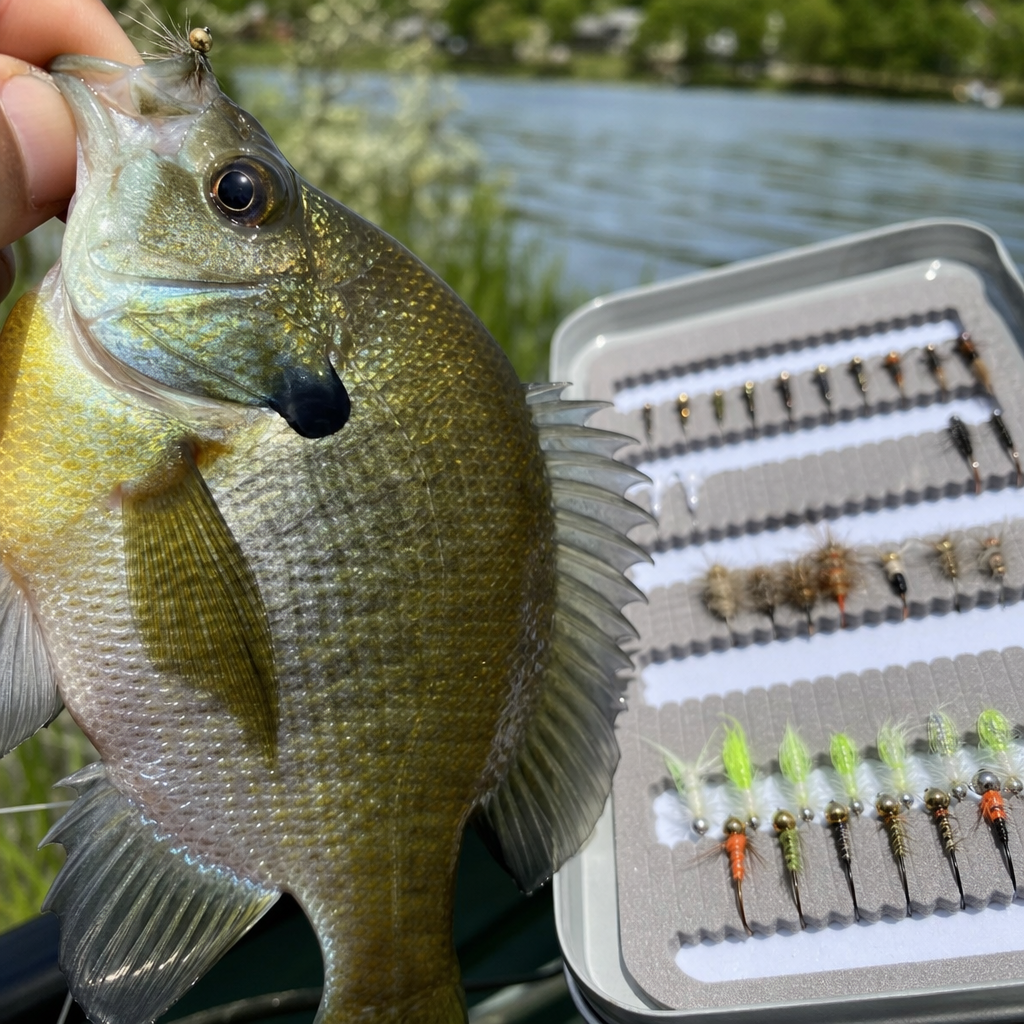
Subsurface patterns are the backbone of serious panfish fishing, particularly during midday, cold fronts, pre-spawn staging, and post-spawn recovery. The undisputed workhorse is the woolly bugger, but for panfish it should usually be downsized. Size 10 and 12 buggers in black, olive, brown, and chartreuse catch nearly every species labeled panfish. Black suggests leeches, dragonfly nymphs, and general aquatic life. Olive covers damselfly nymphs and immature baitfish. Chartreuse adds visibility in stained water and can be excellent for crappie. A lightly weighted bugger is often more useful than a heavily weighted one because it hovers longer in the strike zone.
The hare’s ear nymph remains one of the best generic searching patterns. Its rough body and guard hairs imitate many immature aquatic insects without forcing exact matching. In ponds rich with dragonflies and damselflies, a beadhead hare’s ear in size 12 can be deadly under a strike indicator or retrieved slowly. Pheasant tail nymphs also work, especially in clearer water where a slimmer profile helps. However, many commercial pheasant tails are tied too sparse or too delicate for warmwater abuse. In product reviews, durability matters: panfish often peck repeatedly before fully taking a fly, and fragile tails disappear quickly.
Soft hackles are underused in panfish circles. A partridge-and-orange, peacock soft hackle, or small hare’s ear soft hackle can fish like an emerger, drowned insect, or tiny nymph depending on retrieve. I rely on them in spring when bluegill suspend just off weed lines. The take often feels like pressure rather than a sharp hit, but the pattern consistently fools educated fish. Mop flies and chenille grubs are controversial among purists, yet panfish do not care about debate. In off-color ponds, a short cream or chartreuse mop on a size 10 hook can be outstanding, especially beneath a small indicator.
| Pattern | Best For | Typical Size | Top Colors | Best Use Case |
|---|---|---|---|---|
| Foam spider | Bluegill, pumpkinseed | 10-12 | Black, chartreuse, yellow | Shallow banks, docks, evening surface takes |
| Micro popper | Bluegill, redear | 8-10 | Black, white, frog | Calm water, beds, weed edges |
| Woolly bugger | All panfish, especially crappie | 10-12 | Black, olive, chartreuse | Searching deeper water, brush, post-spawn fish |
| Hare’s ear nymph | Bluegill, redear | 12-14 | Natural, olive | Suspended fish, insect-focused feeding |
| Marabou minnow | Crappie, perch | 6-10 | White, black, olive | Brush piles, cold water, baitfish bite |
Top streamer and baitfish patterns for crappie and larger panfish
If bluegill are the gateway species, crappie are often what push anglers toward more deliberate fly selection. Crappie feed heavily on minnows, especially in cooler water and around structure. That makes small streamers a core part of any panfish fly review hub. The most dependable option is a marabou minnow, sometimes sold as a crappie candy style fly or simply a mini streamer. White over chartreuse, black, olive, and white are perennial producers. Marabou creates life at slow speeds, which is critical because crappie frequently prefer a nearly stationary presentation.
Clouser Minnows also work, but many standard versions are too large or too heavy for shallow panfish situations. A scaled-down Clouser in size 8 with small bead chain eyes is far more useful than a saltwater-style model with oversized dumbbell eyes. It gets down without plunging past suspended fish. In reservoirs with threadfin shad or small shiners, a white-and-silver or chartreuse-and-white micro Clouser is often the best fly in the box.
Zonker strips, craft fur minnows, and mini leech patterns deserve mention too. Rabbit strip flies move beautifully, but they can be too bulky for average bluegill and tend to foul on very short casts. Craft fur is easier to cast and often more durable in small sizes. When reviewing commercially tied streamers, I generally prefer sparse craft fur or marabou over dense synthetic flash blends. Flash helps, but too much of it can make a tiny fly look rigid and unnatural.
One overlooked point is hook wire. Ultralight hook wire penetrates easily with delicate panfish takes, yet it can bend on bonus bass. Medium-wire hooks offer a better compromise if you fish mixed waters. That is another reason to buy from trusted warmwater-oriented fly brands or experienced local tiers instead of anonymous bulk listings.
How to choose, review, and buy panfish flies intelligently
For buyers, the smartest approach is to evaluate flies as systems rather than singles. Ask three practical questions. What depth range does this fly cover? What forage category does it represent? How durable is it relative to price? A good starter lineup includes two topwater bugs, two nymph or buggy patterns, and two baitfish patterns in confidence colors. That compact setup handles nearly all common pond and lake conditions better than a twenty-fly assortment full of duplicates.
Price matters, but value matters more. A hand-tied foam spider that costs a little extra and lands upright fish after fish is a better recommendation than a cheaper alternative with weak leg placement and dull hooks. The same applies to woolly buggers: clean palmered hackle, a straight tail, and a proportional head are worth paying for. If you are comparing fly reviews, ignore vague praise like “great action” unless the reviewer explains why. Useful reviews mention sink rate, hook gap, material resilience, and how the fly performs after multiple fish.
This hub page should also point readers toward deeper evaluations within the broader fly reviews subtopic. The natural next steps are detailed reviews of panfish poppers, woolly bugger variants, crappie streamers, budget fly assortments, and the best hooks and materials in commercially tied warmwater flies. Those supporting articles help readers move from general recommendations to model-specific decisions.
Seasonality should guide purchases as well. Spring calls for nymphs, spiders, and small streamers around emerging vegetation and bedding areas. Summer favors foam bugs, ants, beetles, and lightly weighted buggers around shade and oxygen-rich cover. Fall often rewards baitfish flies as crappie school and bluegill feed heavily before water temperatures drop. In winter, where legal and practical, slow-fished marabou patterns and tiny jigs under indicators can still produce. Buying around seasonal use prevents overloading your box with flies that rarely leave the patch.
The top fly patterns for panfish are not mysterious, and they do not require a giant collection. Start with small foam spiders, compact poppers, downsized woolly buggers, hare’s ear nymphs, and marabou minnows. Those patterns cover the main feeding zones, match the broad forage panfish actually eat, and give anglers a dependable framework for both fishing and buying. The biggest advantage of a focused panfish fly lineup is efficiency: fewer patterns, better presentations, and more confidence on the water.
As a hub within product reviews and recommendations, this page should help you sort durable, fishable flies from disposable gimmicks. Look for appropriate hook sizes, soft mobile materials, balanced proportions, and proven colors before you worry about novelty finishes or marketing claims. Then build outward by reading deeper fly reviews on specific poppers, nymphs, streamers, and budget assortments that fit your local waters. If you are refreshing your panfish box this season, begin with these core patterns, fish them with intention, and let your next purchases be driven by how each fly actually performs on the water.
Frequently Asked Questions
What are the best all-around fly patterns for panfish?
The best all-around fly patterns for panfish are usually the ones that match three priorities at once: a small profile, lively movement, and an easy meal look. For most bluegill, crappie, pumpkinseed, redear sunfish, and yellow perch situations, a compact popping bug, a small foam spider, a beadhead nymph, a Woolly Bugger in a reduced size, and a simple marabou or chenille streamer will cover the majority of conditions. These patterns consistently produce because panfish are opportunistic feeders. They eat insects, small minnows, larvae, tiny crayfish, and anything that looks vulnerable around weeds, docks, timber, and shoreline cover.
For surface fishing, small poppers and foam spiders are hard to beat, especially during warm mornings, evenings, and the spawning period when panfish are shallow and aggressive. For subsurface fishing, size matters more than many anglers realize. Panfish often prefer flies in the size 8 to 12 range, and sometimes even smaller, because their mouths are limited and their feeding is often precise. A size 10 black or olive Woolly Bugger, a small rubber-leg nymph, or a soft hackle can outfish bigger, flashier flies simply because fish can inhale them more easily. If you want a practical starting lineup, carry black, olive, chartreuse, white, and brown in a few proven shapes. That gives you a strong balance of bug imitations and baitfish impressions without overcomplicating your box.
How should I choose fly patterns for different panfish species like bluegill, crappie, redear, and yellow perch?
Different panfish species often share water, but they do not always feed the same way, and that is where smart fly selection makes a real difference. Bluegill and pumpkinseed are usually the most willing to come up for surface patterns and often respond aggressively to small poppers, foam ants, spiders, and rubber-leg flies twitched near cover. They are built to feed on insects and are especially fond of flies that suggest beetles, drowned terrestrials, emerging bugs, and small swimming prey. When they are guarding beds or cruising weed edges, they can be remarkably aggressive if the fly stays in the strike zone.
Crappie typically lean more toward baitfish and small suspended prey. They often hold deeper than bluegill and frequently feed around brush piles, bridge pilings, and submerged structure. For them, small streamers, marabou jigs tied on a fly hook, minnow patterns, and lightly weighted flies are excellent choices. White, chartreuse, black, and combinations of those colors are especially reliable. Redear sunfish are often more bottom-oriented and have a reputation for feeding heavily on snails, larvae, and small invertebrates. That makes nymphs, scuds, small hare’s ear variations, and subtly weighted bug patterns especially effective. Yellow perch also respond very well to small streamers and nymphs, especially in cooler water or when they are schooling over deeper edges. In mixed-species waters, the most effective approach is to start with a versatile searching fly, then fine-tune by depth, retrieve speed, and profile once you see which species is responding.
What fly sizes and colors work best for panfish throughout the year?
For panfish, small to medium fly sizes are generally the most productive, with size 8, 10, and 12 being the core range for many patterns. During aggressive periods, such as late spring and early summer, fish may readily attack a slightly larger size 6 popper or bugger, particularly if they are defending beds or feeding heavily in shallow water. But when fishing gets tougher, downsizing is often the quickest fix. A size 12 soft hackle or a slim little nymph can be exactly what cautious fish want. Panfish have small mouths, and while they can be bold, they still feed most efficiently on prey they can engulf without much effort.
Color choice matters, but not in the random way many anglers assume. Dark colors like black, olive, brown, and dark purple are excellent because they create a clear silhouette and imitate a broad range of natural prey. Black is especially dependable in stained water, low light, and around heavy cover. Olive and brown suggest nymphs, leeches, and immature aquatic life. Chartreuse, white, yellow, and combinations with flash can be outstanding when fish are keying on minnows or when you need visibility in murky water. Seasonal shifts also affect preference. In spring, brighter or more visible flies often help fish locate your offering in warming, sometimes cloudy water. In summer, surface bugs and natural insect tones shine. In fall, streamers and baitfish colors become increasingly important as panfish feed heavily before colder conditions arrive. In winter or very cold water, subtle patterns in small sizes usually outperform bulky flies worked too quickly.
When should I fish topwater flies for panfish, and when are subsurface patterns better?
Topwater flies are at their best when panfish are actively using shallow water and looking up. That usually means early morning, evening, overcast days, warm calm periods, and especially the spring and early summer spawn. Bluegill and related sunfish become very surface-oriented when insects are active and when fish are holding around shoreline cover, reed lines, lily pads, or bedding colonies. A small popper, foam spider, or cork bug can be deadly when presented with patience. One of the most common mistakes is moving the fly too much. Panfish often prefer a soft landing followed by tiny twitches and pauses long enough for the rings to disappear. Many strikes happen after the fly sits nearly motionless.
Subsurface patterns are better whenever fish are deeper, less aggressive, or not visibly feeding on top. Crappie in particular are often more consistent on sinking or suspended presentations, and redear sunfish are frequently better taken near bottom with nymphs or other subsurface flies. Windy conditions, bright midday sun, post-front weather, cold water, and heavily pressured ponds often push fish away from surface feeding. In those situations, a slow-sinking nymph, a lightly weighted streamer, or a small bugger fished under an indicator or on a hand-twist retrieve can dramatically outproduce topwater. The key is not to treat topwater as the default “fun” option and subsurface as a backup. Serious panfish anglers know the most productive method is the one that puts the right fly at the right depth for the fish’s current mood and position.
How can I fish panfish flies more effectively around cover, beds, and seasonal movement?
Fishing panfish flies effectively is as much about placement and control as it is about pattern selection. Around cover, accuracy matters. Panfish commonly hold tight to weed edges, dock posts, brush, fallen trees, cattail pockets, and shade lines because those areas provide protection and feeding opportunities. The best fly in the world will underperform if it lands too far from the structure. Make short, controlled casts and target edges, openings, and transitions rather than blindly covering open water. If fish are tight to wood or vegetation, a weed-resistant or lightly dressed fly can save frustration and keep you in productive water longer.
During the spawn, many panfish move shallow and concentrate in colonies, often on firm bottom near cover or protected coves. This is when small topwater bugs, nymphs, and compact streamers can all be effective, but presentation becomes very specific. Fish guarding beds often react best to a fly that enters the nest area and stays there briefly. Short strips, slight lifts, or a gentle hover under an indicator can provoke repeated strikes. Outside the spawn, seasonal movement becomes more important. In early spring, fish often stage near emerging weeds and warming banks. In summer, they may slide deeper during bright periods and return shallow during low light. In fall, baitfish-oriented patterns become stronger as schools roam and feed more heavily. To stay on fish, think in terms of location shifts first and fly selection second. Once you understand where each panfish species is likely to be during a given season, choosing the right pattern becomes much easier and your catch rate becomes far more consistent.