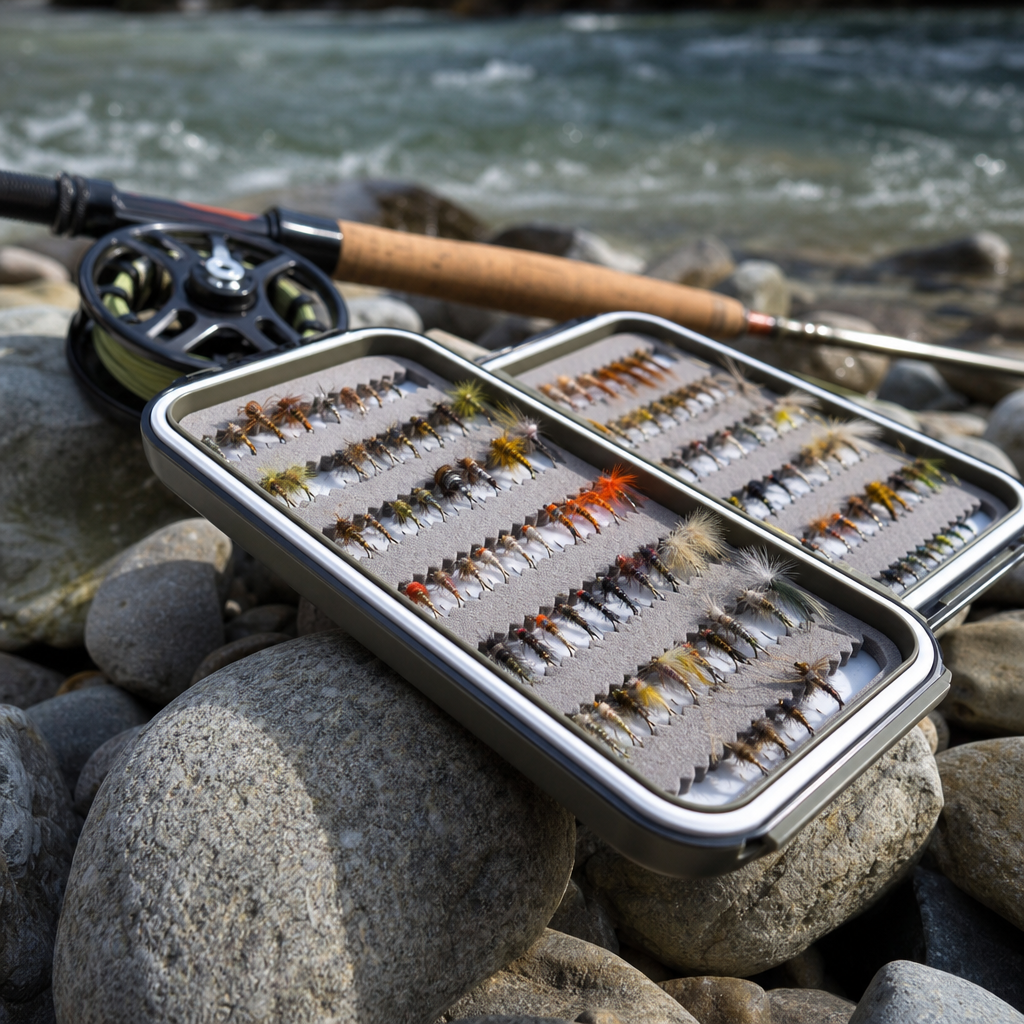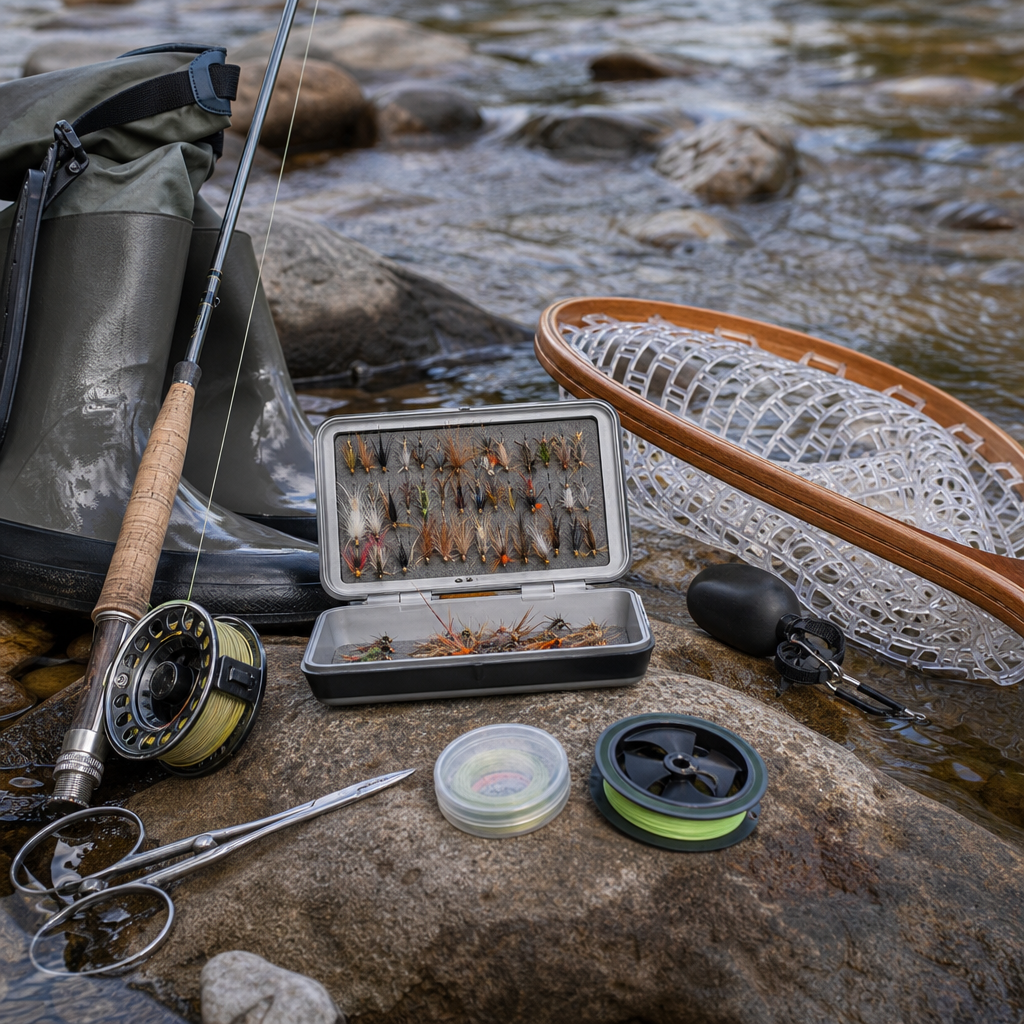
Winter fly fishing rewards anglers who understand how cold water changes trout behavior and who choose patterns that match slower metabolisms, reduced insect activity, and often exceptionally clear conditions. The best fly patterns for winter fishing are not simply smaller versions of summer favorites. They are deliberate tools built around three realities: fish hold in slower, deeper lies to conserve energy; food sources narrow to a handful of dependable options; and strikes are usually subtle, demanding flies that look natural at slow drift speeds. In my own winter fishing, from tailwaters with steady midge hatches to freestone rivers running low and cold, the patterns that consistently produce are compact nymphs, sparse streamers, and a few dependable attractors tied with restraint.
For anglers researching fly reviews, winter is where honest pattern evaluation matters most. A flashy fly that gets attention in June may fail completely in January, while a plain size 20 midge pupa can save the day for hours. This hub article explains which winter fly patterns belong in a serious cold-season box, why they work, how to fish them, and what to look for when comparing commercial ties. It also serves as a central guide to fly reviews within a broader product recommendations category, helping anglers judge durability, hook quality, bead choice, profile, sink rate, and practical fish-catching value rather than marketing claims alone.
Winter fishing matters because it often delivers the year’s least pressured trout, the clearest technical water, and some of the most educational days an angler can have. It also exposes weak gear and weak fly design immediately. If a hook bends, dubbing unravels, or a pattern rides incorrectly in soft seams, cold-water trout usually refuse it. The flies below are the ones I trust when water temperatures drop, insect life contracts to midges and winter mayflies, and every drift has to count.
What Trout Eat in Winter and Why Fly Selection Changes
The foundation of good winter fly selection is food availability. In most rivers, trout continue feeding, but they feed more selectively and often on smaller prey. Midges become the most reliable year-round insect, especially on tailwaters and spring creeks. Blue-winged olives, particularly small baetis species, can hatch on overcast afternoons even in very cold weather. Eggs become important behind spawning fish in late fall and early winter. In many systems, scuds and sowbugs provide a steady calorie source, while small baitfish and juvenile trout remain relevant for larger browns willing to move for a streamer.
Cold water slows digestion, so trout rarely want to sprint across current lanes for food. They prefer offerings delivered close to their holding lie, often near the bottom, along soft current edges, or in buckets below riffles. That is why successful winter flies tend to be compact, dense, and sparse. Oversized legs, bulky hackle, or heavy flash can work on aggressive days, but most winter conditions reward subtle silhouettes, slim taper, and natural colors like black, olive, cream, gray, and brown. If a fly review ignores profile and sink efficiency, it misses the central winter performance criteria.
Presentation and pattern design are linked. A tungsten-bead midge on a jig hook with a slim thread body sinks fast and drifts naturally under an indicator or euro setup. A fluffy dubbing-heavy tie may trap air and ride unnaturally high. Likewise, a winter streamer with a narrow baitfish shape and moderate movement often outfishes a broad, articulated pattern that pushes too much water in clear, cold flows. The point is not that flashy or large flies never work; it is that winter success usually starts with precision, not excess.
Best Nymph and Larva Patterns for Consistent Winter Trout
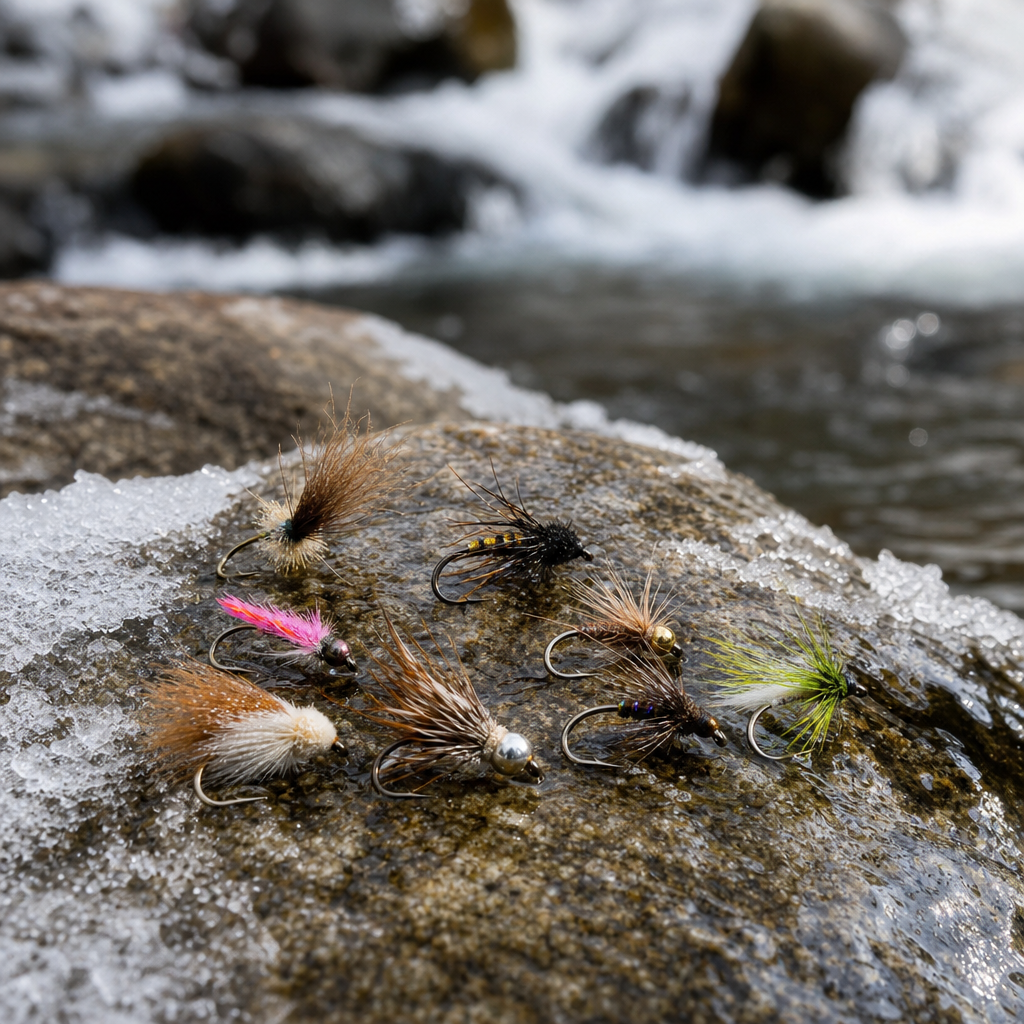
If I had to reduce winter fly fishing to one category, it would be midge and small nymph patterns. Zebra Midges remain the standard for a reason. A black, red, olive, or purple Zebra Midge in sizes 18 to 22 matches a huge range of midge larva and pupa stages. The best commercial versions use fine wire ribbing, a truly slim body, and hooks with sharp, durable points. Overbuilt Zebra Midges are common in fly bins; they look neat to anglers but often lose the translucence and narrow profile that make the pattern effective.
Perdigons are another winter essential, especially on rivers where getting down fast matters more than imitating one exact insect. A small olive, black, or red Perdigon with a tungsten bead and smooth UV-coated body cuts through current efficiently and holds depth in short drifts. On pressured trout, I often pair a drab anchor fly with a smaller natural dropper. Commercial Perdigons vary widely in hook quality, and that matters. Cheap hooks on hard-fished winter patterns dull quickly against rock and cost fish on light tippet.
Pheasant Tail nymphs still belong in every winter box, but the best winter versions are slim and small. A size 18 or 20 Flashback Pheasant Tail can imitate baetis nymphs and general mayfly forms when fish are not locked on midges. RS2 patterns, WD-40s, and Barr’s Emergers also excel in technical winter water because they suggest emerging mayflies and midges without looking too literal. They are especially useful below dams and on spring creeks where trout inspect flies for long seconds before deciding.
| Pattern | Best Sizes | Primary Use | What to Look for in Reviews |
|---|---|---|---|
| Zebra Midge | 18–22 | Midge larva and pupa imitation | Slim body, neat rib, strong fine-wire hook |
| Perdigon | 14–20 | Fast-sinking anchor nymph | Tungsten bead, smooth finish, durable hook point |
| Pheasant Tail | 16–20 | Baetis and general mayfly nymph | Thin abdomen, balanced flash, natural tail length |
| RS2 or WD-40 | 18–24 | Emerger in selective water | Sparse wingcase, fine thread work, clean proportions |
| Scud or Sowbug | 14–18 | Tailwater and spring creek staple | Translucent shellback, buggy dubbing, curved profile |
Scuds and sowbugs deserve special attention in any winter fly reviews hub because they are not niche patterns on many productive tailwaters. On rivers like the Missouri, Bighorn, and Fryingpan, these crustacean imitations can outfish insect patterns for long stretches. Good scud patterns show translucence, a curved shape, and muted coloration rather than bright cartoon shells. When I test commercial scuds, I check whether the dubbing breathes in the water and whether the shellback remains intact after several fish. Durability is not glamorous, but in winter it is practical value.
Winter Dry Flies and Emergers That Actually Earn Box Space
Many anglers think winter means pure subsurface fishing, yet selective dry-fly opportunities happen regularly, especially during mild afternoons or on tailwaters with dependable midge clusters and baetis emergences. The key is carrying a disciplined selection instead of a summer spread. Griffith’s Gnats in sizes 18 to 24 remain one of the best winter dry flies ever created because they suggest midge clusters, adults, and even tiny mixed bugs in low light. The pattern works because it sits low, offers a buggy outline, and is visible enough to fish without grossly oversizing the imitation.
Parachute Adams in sizes 18 to 22 can cover winter mayflies when trout are feeding broadly, but on more technical water I prefer dedicated baetis dries with slimmer bodies and cleaner tails. CDC midges and CDC comparaduns are excellent when fish are taking emergers in the film rather than crisp adults on top. Comparatively few commercial winter dries get the proportions right. Too much hackle can hold the fly too high; too much wing material makes a size 22 pattern look absurd. A solid fly review should assess footprint and posture, not just whether the tie looks pretty in a shop light.
Emergers often outperform both dries and nymphs because winter trout feed opportunistically in the surface film where insects are trapped and vulnerable. RS2 emergers, soft hackle baetis, and sparse shuttlecock-style midges bridge that zone perfectly. I often grease the leader but not the fly, or fish the emerger behind a small dry, allowing it to hang just under the surface during the end of the drift. That slight rise triggers some of the most delicate but rewarding winter takes. If you only carry one winter topwater category, make it emergers that can double as drowned adults.
Streamers, Eggs, and Attractor Patterns for Bigger Winter Opportunities
Winter streamer fishing is less about stripping huge flies aggressively and more about presenting an easy meal. Smaller streamers in olive, black, white, and natural baitfish shades consistently move fish when drifted slowly or swung through deep buckets. Patterns like the Woolly Bugger, Sculpzilla, Thin Mint, Mini Dungeon, and balanced leech all have winter value, but scale matters. In clear low water, a three-inch streamer with moderate motion usually outfishes a six-inch articulated fly. Heavy dumbbell eyes can be useful, though in softer seams I often prefer a conehead or lightly weighted pattern that hovers longer in the strike zone.
Egg patterns are controversial only until they work, which is often in winter where trout key on loose eggs behind late spawners or resident fish. Peach, pale orange, and cream tend to look more natural than fluorescent shades in clear water. The best egg flies avoid oversized yarn globs and instead suggest a realistic, translucent orb. I typically fish eggs as part of a two-fly nymph rig with a midge or sowbug below, letting the egg attract attention and the trailing fly close the deal. Reviews of egg flies should mention size consistency and whether the material stays compact after fish slime and repeated casts.
Attractor nymphs also have a place in winter, especially in off-color water or on days when trout need a trigger. A small Rainbow Warrior, Frenchie, or firebead sowbug can produce when drab naturals go unnoticed. The tradeoff is obvious: attractors may draw more attention, but they can also overdo flash in crystal-clear conditions. That is why a balanced winter box includes both exacting natural patterns and a few confidence flies with a hotspot collar, fluorescent bead, or subtle UV element. Effective fly reviews should state when a pattern is best used, not pretend one style covers every river and weather condition.
How to Evaluate Fly Reviews and Build a Reliable Winter Box
Because this page serves as a hub for fly reviews, the most useful question is not “What is the best winter fly?” but “What makes a winter fly worth buying?” Start with hook quality. Winter fishing often means light tippet, careful pressure, and trout hooked in slow deep water where a sharp point matters enormously. Brands tied on Hanák, Fulling Mill, Tiemco, Firehole, Daiichi, and Ahrex hooks generally inspire more confidence than bargain-bin no-name hooks, though the tie itself still matters.
Next, evaluate proportion and material economy. Winter flies should rarely look bulky. A good midge has a thread-thin body. A good baetis nymph shows taper without fat thoraxes. A good scud has translucence rather than a bright opaque shell. Bead choice matters as well. Tungsten is usually worth the premium for anchor flies because it achieves depth faster and reduces the need for split shot in technical presentations. Slotted beads on jig hooks improve snag resistance and are particularly useful in rocky winter runs.
Durability is another major review category. Cold fingers make fly changes slower, and productive winter patterns often catch many fish in a short feeding window. If a fly unravels after two trout, the low price was not a bargain. I look for secure thread wraps, clean whip finishes, reinforced tails on mayfly patterns, and shellbacks on scuds that will not split after one fish. Finally, stock your winter box by river type: tailwaters need more midges, scuds, and sowbugs; freestones need more stonefly anchors, eggs, and general attractor nymphs; spring creeks demand tiny emergers and exact dry-fly profiles. Building by water type beats chasing internet hype.
The best fly patterns for winter fishing are the ones that solve cold-water problems with precision: they get down quickly, match limited food sources, and look alive without excess. For most anglers, that means a core box built around Zebra Midges, Perdigons, slim Pheasant Tails, RS2s, scuds, sowbugs, Griffith’s Gnats, a few baetis dries, modest streamers, and realistic egg patterns. These flies consistently produce because they align with how trout actually feed in winter rather than how anglers wish they would feed.
As a hub for fly reviews under product reviews and recommendations, this guide should help you judge patterns beyond branding. Focus on hook integrity, profile, sink rate, material quality, and how a fly performs in specific winter conditions. A sparse, durable, correctly proportioned pattern usually outperforms a flashy fly tied to sell from a display bin. If you are refining your cold-season setup, start by upgrading the flies you trust most, test them on your home water, and build your winter box around patterns that earn repeat drifts and repeat fish.
Frequently Asked Questions
What are the best fly patterns for winter fishing?
The best fly patterns for winter fishing usually fall into a small group of highly reliable categories rather than a wide seasonal menu. In most winter conditions, anglers do best with midge larvae and pupae, small mayfly nymphs such as Blue-Winged Olive imitations, scuds, sowbugs, egg patterns where appropriate, and selective attractor nymphs like perdigons or lightly flashy pheasant tail variations. On some rivers, small streamers can also be effective, especially when targeting larger trout willing to eat a bigger meal without expending much energy. What makes these patterns so dependable is that they reflect the way trout feed in cold water. Fish are less likely to move far, less willing to chase aggressively, and more focused on food sources that are consistently available in winter. That means the “best” flies are often simple, natural-looking, and compact, with enough weight to get down quickly into deeper, slower holding water.
Size and profile matter as much as pattern choice. Winter trout often inspect flies closely because water clarity is high and current speeds in productive lies are moderate to slow. Many successful winter patterns are tied in sizes 18 to 24 for midges and 16 to 20 for small mayfly nymphs, though scuds, sowbugs, eggs, and streamers may run larger depending on the river. Dark-bodied midges in black, olive, red, and brown are staples, while mayfly nymphs in olive, chocolate, and natural pheasant-tail shades cover a lot of situations. If you want a practical winter fly box, stock zebra midges, RS2s, slim pheasant tail nymphs, BWO nymphs, scuds, sowbugs, egg flies, and a few small woolly buggers or leech patterns. That mix gives you confidence across tailwaters, spring creeks, and freestone systems where winter feeding windows can be short but very consistent.
Why do smaller and more natural fly patterns work better in winter?
Smaller and more natural fly patterns work better in winter because they align with both the biology of the river and the behavior of trout in cold water. As water temperatures drop, insect activity narrows. Instead of seeing the broad buffet available in warmer months, trout often feed on a more limited range of food items, especially midges, small mayflies, and crustaceans like scuds or sowbugs in certain systems. At the same time, trout metabolism slows. Fish still need to feed, but they become more efficient and selective, preferring food that drifts directly to them rather than prey they have to chase. A small, realistic fly presented naturally in the right lane is often far more convincing than a larger, louder pattern that might produce in spring or summer.
Water clarity amplifies that selectivity. Winter flows are frequently low and clear, giving trout extra time to inspect your imitation. Overly bulky dubbing, unnatural flash, and flies that drift too high in the column can all reduce takes. This does not mean every winter fly must be tiny or ultra-technical, but it does mean restraint generally pays off. Slim silhouettes, muted colors, sparse tying styles, and accurate depth control matter. In many cases, anglers assume trout are not feeding when the real issue is that the fly is too large, too gaudy, or drifting above the fish. Winter success often comes from reducing profile, matching the dominant food source, and making your presentation look effortless.
Should I fish nymphs, streamers, or dry flies in winter?
Nymphs are usually the most productive choice in winter, but that does not mean streamers and dry flies should be ignored. If you are looking for the highest-percentage approach, start with nymphs. Most winter trout feed below the surface because the majority of available food is subsurface, and fish hold near the bottom in slower, deeper water where they can conserve energy. A two-fly nymph rig with a heavier point fly and a smaller trailing pattern is a classic setup because it helps you cover both depth and food preference. For example, an attractor-style nymph or scud paired with a tiny midge or BWO emerger can be very effective. In winter, subtle takes are common, so a sensitive indicator or tight-line approach is important.
Dry-fly fishing is less common in winter, but when conditions line up, it can be excellent. Midge hatches and Blue-Winged Olive emergences can bring trout to the surface, especially during the warmest part of overcast days. The key is not to dismiss surface activity just because it is cold. If you see noses, dimples, or gentle rise forms in soft seams and tailouts, switch to a dry or dry-dropper setup and fish carefully. Streamers are more specialized in winter but can produce quality fish. The best approach is generally slower and deeper than in warmer months. Rather than fast, erratic strips, think about dead-drifting a streamer through deep slots, swinging it slowly, or using short, deliberate strips that keep the fly in the strike zone longer. In short, nymphs are the winter foundation, dries become valuable during hatch windows, and streamers can be an excellent change-up for larger trout.
How should I present winter fly patterns to get more strikes?
Presentation is often more important than the exact pattern in winter because cold-water trout rarely move far to eat. The goal is to put the fly at the fish’s level, in the correct current seam, at a speed that matches the natural drift. In practical terms, that means getting deep quickly and maintaining as drag-free a drift as possible. Add enough weight to reach the lower part of the water column, especially in deeper runs, buckets, and soft edges where trout commonly hold in winter. Many anglers underweight their rigs and spend the day drifting above inactive-looking fish that simply never see the fly in a realistic feeding lane. If you are not occasionally ticking bottom, you may not be deep enough.
Equally important is where you fish. Winter trout often stack in slower water adjacent to deeper channels, inside seams, tailouts below riffles, and soft pockets that offer shelter from heavy current. Long casts are usually less important than precise drifts through these high-percentage lies. Approach carefully, use longer leaders when conditions demand stealth, and focus on repeated clean presentations. Because strikes are subtle, watch the indicator or leader closely for any hesitation, stall, twitch, or unnatural movement. Set the hook on anything suspicious. In winter, the difference between a slow day and a memorable one often comes down to depth control, drift quality, and your willingness to fish patiently through likely holding water instead of covering water too quickly.
What colors and sizes are most effective for winter trout flies?
The most effective winter trout fly colors are usually natural, subdued, and closely tied to the dominant food source in the river. Black, olive, brown, cream, gray, red, and natural tan are all proven winter tones. For midges, black and red are classic producers, with olive and brown also very useful depending on local insect coloration. For mayfly nymphs and emergers, olive and darker natural shades are hard to beat, especially during Blue-Winged Olive activity. In spring creeks and tailwaters with abundant crustaceans, tan, pinkish, gray, and olive scuds or sowbugs can be essential. Egg patterns in peach, apricot, pale orange, or washed-out pink are effective in fisheries where eggs are naturally present, but they should still be fished thoughtfully and in moderation relative to local conditions and regulations.
As for size, winter often rewards anglers who go smaller than they first expect. Sizes 18 to 22 are common starting points for midge pupa and larva, while size 16 to 20 covers many winter mayfly nymphs and emergers. Scuds and sowbugs may range from 12 to 18, and egg flies are often tied to match local spawn size rather than a fixed standard. Streamers can vary more, but in winter many anglers do well with smaller, leaner patterns instead of oversized offerings. The key is not simply “small equals better,” but “appropriate equals better.” Match the food source, the clarity, and the pressure level on the fishery. If fish are refusing, shorten the profile, reduce flash, or drop one fly size before changing everything else. In winter, small refinements in color and size often make a bigger difference than dramatic changes in pattern style.