Volunteers are the working backbone of fly fishing conservation, turning concern for rivers, trout, salmon, and aquatic insects into measurable habitat recovery, stronger fisheries data, and better stewardship on the water. In fly fishing, conservation means protecting the ecological systems that support fish and fishing opportunity: cold, clean water, connected habitat, healthy streamflows, intact spawning gravel, resilient riparian zones, and ethical human use. Conservation efforts include stream restoration, water-quality monitoring, invasive species control, public access maintenance, education, advocacy, and scientific data collection. A hub article on conservation efforts must explain not only what gets done, but who does the work, why that work matters, and how local volunteer action connects to regional fisheries outcomes.
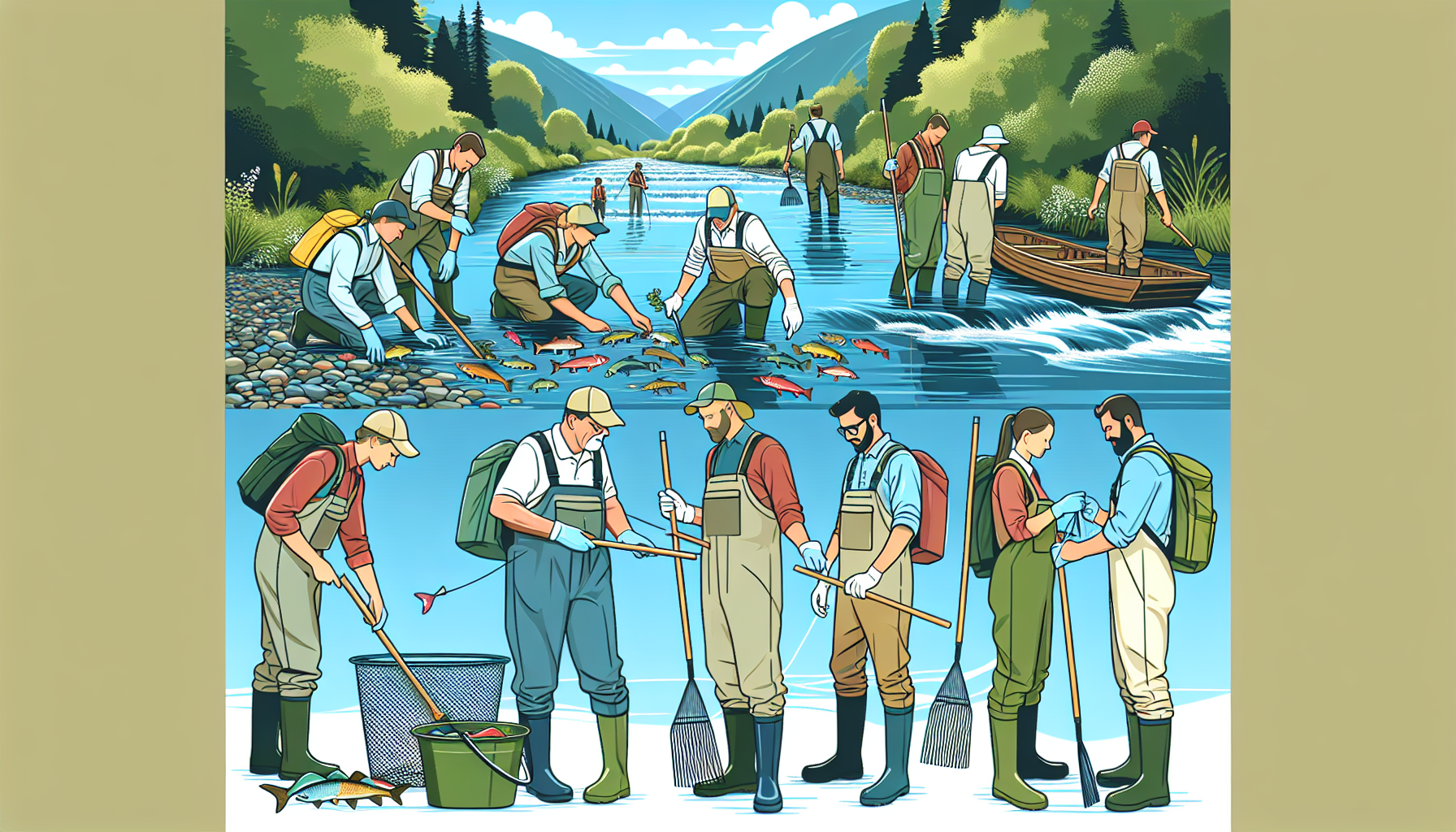
I have worked alongside river-cleanup crews, chapter conservation committees, and stream-monitoring teams, and the pattern is consistent across watersheds: agencies and nonprofits set priorities, but volunteers supply the labor, local knowledge, and continuity that keep projects moving between grant cycles and field seasons. Their contribution matters because freshwater systems are under pressure from warming temperatures, altered flows, sedimentation, development, barrier fragmentation, and poor land-use practices. Professional biologists and watershed managers cannot be everywhere at once. Skilled volunteers fill critical gaps by planting willows, counting redds, restoring trails, collecting macroinvertebrate samples, logging temperatures, staffing youth clinics, and showing up repeatedly enough to create long-term community ownership.
For fly fishers, this work is not separate from the sport. Healthy fisheries depend on healthy watersheds, and ethical angling requires more than catch-and-release. It requires active participation in conservation efforts that sustain wild fish populations and the places they inhabit. The role of volunteers in fly fishing conservation is therefore practical, scientific, social, and cultural at the same time. They extend the reach of conservation organizations, provide credible field observations, reduce project costs, build public support, and help translate ecological science into visible local action. Understanding that role gives anglers a clear path from appreciation to responsibility.
Why Volunteers Matter in Conservation Efforts
Volunteer involvement matters because freshwater conservation is labor-intensive, seasonal, and deeply place-based. A streambank stabilization project may require site preparation, native planting, protective caging, follow-up watering, and years of maintenance before root systems fully hold soil and shade the channel. A spawning survey may require dawn starts, repeated site visits, and careful observation across many miles of river. Budget constraints often limit how much government agencies, land trusts, Trout Unlimited chapters, watershed councils, and local fishing clubs can accomplish with paid staff alone. Volunteers expand capacity immediately.
They also improve conservation quality through local familiarity. The angler who fishes a tailwater every week notices warmwater refuge use in August, sediment plumes after storms, new access damage, and changes in insect hatches that can signal ecological stress. When that knowledge is directed through organized reporting and trained monitoring, it becomes useful management intelligence rather than anecdote. In practice, the best conservation programs combine agency protocols with volunteer eyes on the water. State fish and wildlife departments, the U.S. Fish and Wildlife Service, and nonprofit watershed groups routinely rely on public participation to monitor conditions at a scale professionals alone could not afford.
Another reason volunteers matter is social legitimacy. Conservation succeeds faster when local communities view it as shared stewardship rather than outside regulation. A volunteer planting day, culvert replacement fundraiser, or youth stream event creates visible public investment. Landowners are often more receptive when they see neighbors and anglers contributing time, not just asking for access or new rules. That trust can determine whether fencing goes in, riparian buffers are maintained, or passage projects advance from plan to construction.
Core Volunteer Roles on the Water and Along the Bank
The most visible volunteer role is habitat restoration. Fly fishing conservation groups regularly organize stream cleanups, bank stabilization projects, side-channel reconnection, woody-debris placement support, riparian planting, and trail rehabilitation. Native vegetation work is especially important because riparian plants lower water temperature through shade, filter runoff, stabilize banks, and supply terrestrial insects to trout streams. On degraded reaches, volunteers often help install coir logs, erosion matting, browse protection, and plantings of willow, alder, dogwood, cottonwood, and sedges under professional project supervision.
Monitoring and citizen science are equally important. Volunteers gather temperature data with loggers, test dissolved oxygen and pH, conduct turbidity checks, document macroinvertebrates, and assist with redd counts or snorkel surveys where permitted. Properly trained volunteers can produce reliable trend data, especially when programs use standardized protocols such as EPA volunteer monitoring guidance, state biomonitoring methods, or calibrated handheld meters from brands like YSI and Hanna Instruments. Data quality matters; unstructured observations have limits, but structured sampling can influence restoration priorities and trigger further investigation.
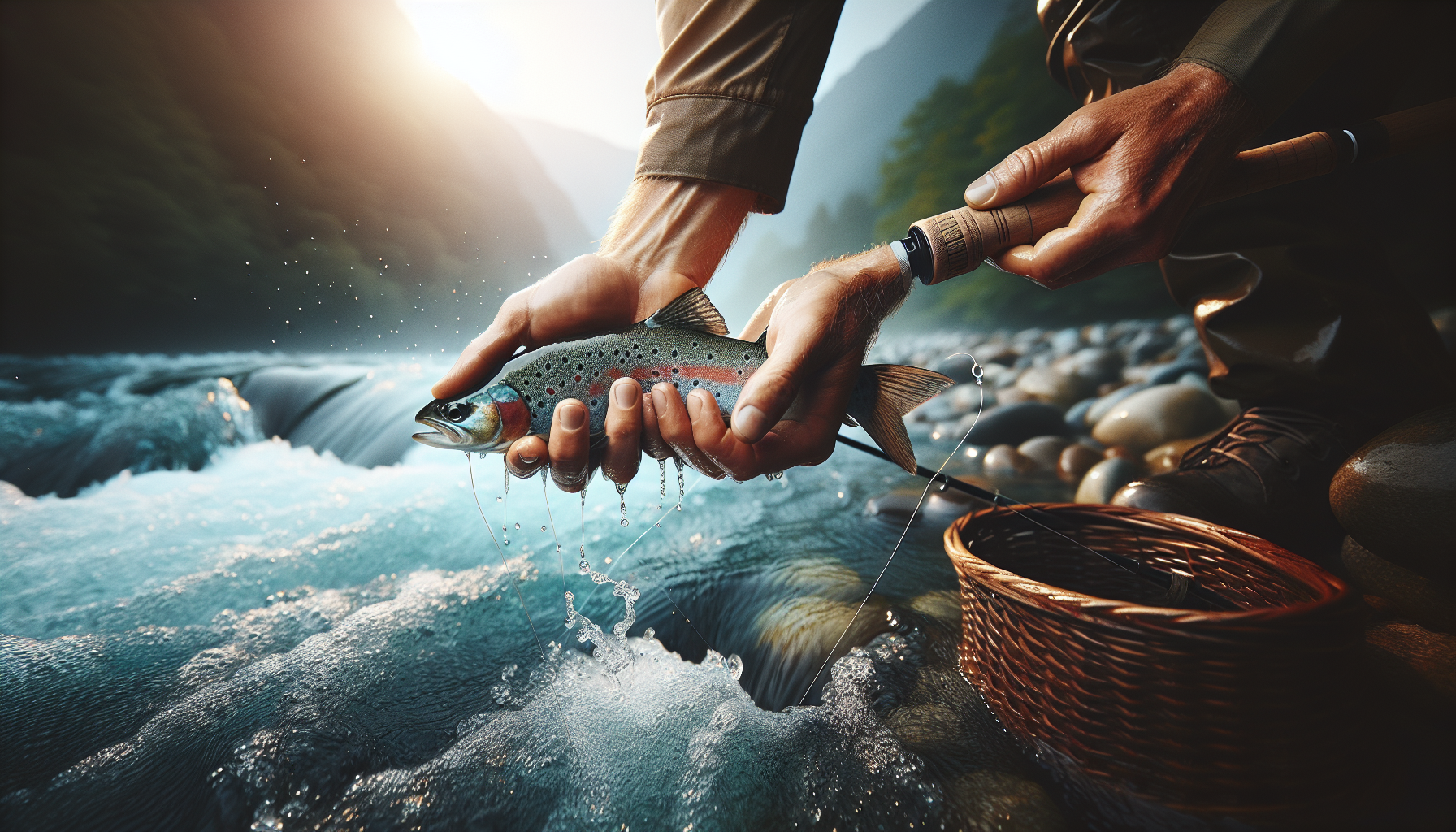
Education is another major role. Volunteers teach fly casting, knot tying, fish handling, invasive species prevention, and river etiquette at chapter events and youth camps. Those programs are conservation work because they shape behavior. Teaching anglers to keep fish wet, minimize air exposure, avoid targeting trout during thermal stress, clean waders and boots, and respect redds reduces mortality and habitat damage immediately. Many fisheries suffer less from lack of rules than from lack of awareness. Volunteer educators close that gap person to person.
| Volunteer activity | What it involves | Conservation value | Example outcome |
|---|---|---|---|
| Riparian planting | Installing native trees, shrubs, sedges, and protective cages | Reduces erosion, improves shade, filters runoff | Lower summer temperatures and stronger banks over time |
| Water monitoring | Logging temperature, dissolved oxygen, turbidity, and pH | Builds baseline data and identifies stress events | Managers detect warming trends or pollution spikes |
| Spawning surveys | Counting redds and observing fish use of gravel | Tracks reproductive activity and habitat use | Supports timing of closures or habitat protection |
| Cleanups and access repair | Removing trash, fixing trails, fencing sensitive areas | Protects habitat and reduces user impact | Safer public access with less bank trampling |
| Education and outreach | Teaching ethics, handling, invasive prevention, youth skills | Changes angler behavior at scale | Lower incidental mortality and less species spread |
How Volunteers Support Science, Policy, and Fisheries Management
Volunteer conservation is often misunderstood as simple manual labor, but effective programs support science and policy as much as field work. Long-term datasets gathered with consistent protocols can reveal warming trends, seasonal dewatering, fine sediment increases, or biological impairment. I have seen volunteer temperature records become the first evidence that a beloved trout reach was regularly exceeding stress thresholds in late summer. That kind of information helps managers justify fishing advisories, habitat grants, flow negotiations, or deeper technical studies.
Volunteers also strengthen policy campaigns by grounding them in observed conditions. When anglers attend watershed meetings with years of cleanup records, photo points, temperature logs, and participation numbers, they speak with more credibility than if they arrive only with opinions. This is especially important in debates over dam operations, minimum flows, culvert replacement, mine runoff, stormwater controls, or public land access. Conservation efforts gain traction when decision-makers can connect ecological need with documented public commitment.
That said, volunteers are most effective when they operate within clear boundaries. Electrofishing, formal population estimation, engineering design, pesticide decisions, and permit compliance belong to qualified professionals. The strongest conservation programs respect that division while still treating volunteers as serious partners. Training, safety briefings, data sheets, chain-of-custody rules, GPS standards, and supervision are not bureaucratic extras; they are what make volunteer contribution credible and usable.
Organizations, Partnerships, and Local Chapter Power
Most successful fly fishing conservation efforts are built through partnerships rather than isolated action. Local fly clubs, Trout Unlimited chapters, Native Fish Society groups, watershed councils, land trusts, state agencies, and federal programs each bring something different. Nonprofits may provide project coordination and fundraising. Agencies provide biological expertise, permits, and management authority. Conservation districts and watershed councils connect work to landowners and basin plans. Volunteers provide turnout, local relationships, and continuity.
Chapter-based organization is especially effective because it turns broad conservation goals into repeatable local action. A chapter can adopt a home river, maintain annual cleanups, recruit schools, host film-night fundraisers, and support priority projects year after year. That continuity matters more than one-off enthusiasm. In many places, volunteer leadership pipelines keep projects alive through leadership changes because the work is embedded in community culture rather than dependent on one charismatic organizer.
This hub page also sits within a wider conservation and ethics framework. Conservation efforts connect directly to habitat restoration, fish handling, invasive species prevention, water stewardship, public access ethics, youth education, and advocacy. Readers exploring this subtopic should think of volunteerism as the thread tying those articles together. The same person who plants willows in spring may teach safe fish handling in summer, log water temperatures in August, and speak at a county meeting about culvert replacement in fall. Conservation is cumulative, and volunteers often become the consistent presence linking separate efforts into one coherent stewardship strategy.
Training, Safety, and Standards That Make Volunteer Work Effective
Good intentions are not enough on a river project. Volunteers are most valuable when programs invest in training, task design, and follow-through. For restoration days, that means clear site objectives, tool talks, wader safety, biosecurity steps, and realistic assignments matched to skill level. For monitoring, it means written protocols, calibration checks, location consistency, weather notes, and secure data submission. For outreach, it means current guidance grounded in fish physiology and local regulation, not outdated folklore.
Safety deserves emphasis because conservation projects often happen in cold water, unstable banks, remote areas, and changing weather. Every organized workday should address slips, immersion risk, lifting technique, hydration, sun exposure, and emergency communication. Volunteers should know when not to enter a channel, when to stop handling large woody material, and how to disinfect gear to avoid transporting whirling disease, didymo, or other aquatic threats. Responsible programs protect both participants and ecosystems.
Standards also determine whether effort produces lasting benefit. Plantings fail without species selection matched to hydrology. Monitoring fails without repeatability. Cleanups underperform if litter is removed but chronic sources remain unaddressed. The best groups evaluate results: survival rates of plantings, miles restored, temperature change, volunteer retention, and public behavior change. Measuring outcomes is not corporate busywork. It is how conservation efforts improve over time and how volunteers see that their labor matters.
Challenges, Tradeoffs, and the Future of Volunteer Conservation
Volunteer-based conservation has limits, and acknowledging them makes programs stronger. Volunteers cannot replace public funding for fisheries science, enforcement, hatchery evaluation, barrier removal, or watershed-scale infrastructure. They also cannot solve every problem with weekend labor. Severe flow alteration, basin-wide warming, legacy mining impacts, and urban stormwater require policy, engineering, and sustained institutional commitment. Presenting volunteerism as the full answer would be inaccurate.
There are also practical challenges: burnout, uneven turnout, skill gaps, landowner access issues, and the temptation to favor visible projects over the most ecologically important ones. I have seen groups spend energy on easy streamside cleanups while a less glamorous but more significant culvert campaign struggled for support. Strong leadership addresses this by aligning volunteer enthusiasm with basin priorities and by celebrating maintenance work, data entry, meeting attendance, and fundraising alongside field labor.
Even with those limits, the future of fly fishing conservation depends heavily on volunteers. Climate pressure on coldwater fisheries will increase the need for thermal refuge mapping, riparian recovery, flow advocacy, and rapid reporting of fish kills, obstructions, and pollution events. New tools make participation easier: shared GIS maps, mobile survey apps, low-cost temperature sensors, eDNA sampling support, and chapter communication platforms. Yet the essential element remains unchanged. Rivers improve when people return to them consistently, learn what they need, and commit to doing unglamorous work well.
The role of volunteers in fly fishing conservation is therefore decisive, not symbolic. Volunteers expand the reach of biologists and nonprofits, anchor local stewardship, generate useful field data, teach ethical angling, and keep restoration projects alive long enough to matter. Conservation efforts succeed when they connect labor, science, education, and advocacy, and volunteers sit at the intersection of all four. For anglers, this is the clearest path from enjoying a fishery to sustaining it. Join a local chapter, sign up for a monitoring or restoration day, and turn time on the water into protection for the waters you value.
Frequently Asked Questions
Why are volunteers so important in fly fishing conservation?
Volunteers are essential because they supply the time, labor, local knowledge, and long-term commitment that make many conservation projects possible in the first place. In fly fishing, conservation is not just about protecting fish; it is about protecting the entire ecological system that supports fish populations and sustainable angling. That means maintaining cold, clean water, restoring stream habitat, protecting riparian vegetation, improving fish passage, preserving spawning gravel, monitoring aquatic insect life, and encouraging ethical use of rivers and lakes. Agencies, nonprofits, and watershed groups often operate with limited budgets and small staffs, so volunteers become the force that expands what these organizations can actually accomplish on the ground.
In practical terms, volunteers help turn concern into measurable results. They plant streamside vegetation, stabilize eroding banks, remove trash, assist with water quality monitoring, document stream conditions, collect fisheries data, and support educational outreach. They also serve as community ambassadors who help build a broader culture of stewardship among anglers and local residents. Because many volunteers are fly fishers themselves, they often bring firsthand understanding of seasonal flows, insect hatches, fish behavior, access issues, and changes in habitat over time. That perspective can be incredibly valuable when identifying problems early and supporting effective restoration work.
Just as important, volunteer involvement creates lasting public investment in conservation outcomes. When people physically work on a river, they tend to care more deeply about its future. That strengthens support for responsible management decisions, habitat protection, and science-based policy. In that sense, volunteers are not simply helping conservation happen; they are helping create the social foundation that allows conservation to endure.
What kinds of conservation work do fly fishing volunteers typically do?
Fly fishing volunteers contribute to a wide range of projects, and the exact work depends on the needs of a watershed, the goals of a conservation organization, and the season. One of the most common areas is habitat restoration. Volunteers may plant native trees and shrubs along streambanks to improve shade, reduce water temperature, and strengthen riparian zones. They may also help install erosion-control materials, remove invasive plants, fence sensitive areas, or assist with in-stream habitat enhancement projects designed to improve cover, spawning conditions, or channel complexity.
Another major category is monitoring and data collection. Trained volunteers often assist with stream temperature logging, macroinvertebrate sampling, redd counts, spawning surveys, fish counts, water clarity observations, and photographic documentation of habitat conditions. These efforts can provide organizations and fisheries managers with valuable long-term information, especially across large landscapes where professional staff alone cannot monitor every stream reach consistently. Good volunteer-collected data can help identify declining conditions early, track whether restoration is working, and guide future management decisions.
Volunteers also support stewardship and education. That can include leading river cleanups, helping with youth programs, teaching ethical angling practices, promoting proper fish handling, improving public awareness of aquatic insects and watershed health, and encouraging anglers to prevent the spread of invasive species and fish diseases. Some volunteers help with advocacy campaigns, event logistics, fundraising, or citizen science programs. Others contribute specialized skills such as mapping, communications, photography, grant support, or project coordination. The common thread is that volunteer work extends conservation capacity well beyond what paid staff can do alone, while also connecting the angling community directly to the health of the resource.
How does volunteer work directly benefit trout, salmon, and other aquatic species?
Volunteer conservation work benefits fish and aquatic life by improving the conditions they need to survive, reproduce, and remain resilient under pressure. Trout and salmon, in particular, depend on connected habitat, adequate streamflows, clean spawning gravel, cool water temperatures, and healthy food webs supported by aquatic insects. When volunteers help restore riparian vegetation, they improve shade and reduce thermal stress in streams. When they stabilize banks and reduce sediment runoff, they protect spawning habitat from being smothered by fine sediments. When they assist with trash removal, invasive species control, or fish passage efforts, they help make waterways safer and more functional for fish throughout their life cycles.
Many volunteer efforts also support the base of the food chain, not just the fish themselves. Healthy populations of mayflies, caddisflies, stoneflies, and other aquatic insects depend on clean, oxygen-rich water and intact habitat. Monitoring these organisms can reveal a great deal about stream health, and restoration work that improves water quality or habitat complexity often benefits them as well. In turn, stronger insect communities support stronger fish growth, better survival, and more balanced aquatic ecosystems. That makes volunteer conservation valuable from both an ecological and a fisheries perspective.
There is also a long-term resilience benefit. Rivers and streams face increasing pressure from warming temperatures, altered flows, development, pollution, and fragmentation. Volunteer-supported conservation can help create more resilient systems by restoring floodplain function, protecting cold-water refuges, improving habitat diversity, and building better local awareness around watershed protection. These improvements may not always produce overnight changes, but over time they can contribute to healthier fish populations, better natural reproduction, and more sustainable fishing opportunities.
Do volunteers need scientific or fly fishing experience to make a meaningful difference?
No, prior scientific training or advanced fly fishing experience is not required to make a meaningful contribution. Many conservation organizations are structured specifically to welcome volunteers with different backgrounds, skill levels, and amounts of available time. Some tasks, such as planting native vegetation, assisting with cleanup events, helping at educational programs, or supporting outreach efforts, are accessible to nearly anyone with a willingness to learn and work carefully. For more technical roles, such as water sampling, insect monitoring, habitat assessment, or fisheries surveys, organizations typically provide training, protocols, and supervision so that volunteers can contribute effectively and safely.
That said, experienced anglers often bring useful observational knowledge that complements formal science. People who spend a great deal of time on rivers may notice changes in flow timing, hatch strength, water clarity, fish distribution, access pressure, or streambank condition. When that local knowledge is paired with sound scientific methods, it can help organizations focus attention where it is most needed. At the same time, volunteers who are not anglers can still be just as valuable, because conservation depends on diverse skills. Restoration projects, logistics, communications, event planning, fundraising, photography, data management, and community engagement all matter.
The most important qualities are reliability, curiosity, and a stewardship mindset. Good volunteers follow protocols, respect private and public land rules, understand that conservation outcomes take time, and recognize that healthy fisheries depend on healthy ecosystems. Organizations often value consistency even more than expertise, because long-term volunteer involvement helps create strong datasets, durable partnerships, and continuity in watershed projects. In short, someone does not need to be a biologist or expert fly fisher to help protect rivers and fisheries; they simply need to show up ready to contribute.
How can someone get involved in fly fishing conservation as a volunteer?
The best way to get involved is to start locally and look for organizations already working in watersheds you care about. Trout-focused nonprofits, salmon and steelhead groups, watershed councils, riverkeeper organizations, land trusts, local fly fishing clubs, conservation districts, and state or provincial fisheries agencies often run volunteer programs. Many host stream restoration days, tree plantings, monitoring events, river cleanups, educational workshops, and community science projects throughout the year. Joining an existing effort is usually the fastest and most effective way to contribute, because these groups already have identified priorities, permits, partnerships, and project plans in place.
Before volunteering, it helps to think about what kind of contribution fits you best. Some people prefer hands-on fieldwork, while others are better suited to outreach, administration, advocacy, or technical support. If you have specialized abilities in mapping, writing, communications, photography, web support, fundraising, or data analysis, those skills can be extremely valuable to conservation organizations. If you are new to the topic, ask about beginner-friendly projects and training opportunities. Many organizations are happy to help new volunteers build confidence and knowledge over time.
It is also wise to approach volunteering with a long-term stewardship attitude rather than a one-time event mindset. Single workdays matter, but repeated involvement often creates the greatest impact. Long-term volunteers become familiar with specific streams, learn how restoration and monitoring fit together, and help maintain momentum across seasons and years. They are also more likely to become effective advocates for ethical fishing practices, habitat protection, and science-based management. For anyone who values healthy rivers, wild fish, and the future of fly fishing, volunteering is one of the most direct and meaningful ways to protect the resource that makes the sport possible.