Fly fishing conservation efforts matter because healthy rivers, resilient fish populations, and public access do not persist on goodwill alone. They depend on people who understand how watersheds function, how angling pressure affects fish, and how policy, habitat work, and ethical fishing practices connect on the ground. In practical terms, conservation efforts include stream restoration, water-quality monitoring, barrier removal, invasive species control, hatchery policy debates, public-land advocacy, and education that helps anglers reduce harm. For anyone who loves fly fishing, getting involved is not a side activity. It is part of protecting the future of the sport.
Conservation in fly fishing is broader than catch-and-release. Catch-and-release can reduce harvest, but it does not fix dewatered streams, warming water temperatures, eroding banks, blocked migration routes, or poor spawning habitat. I have seen rivers with strict regulations still struggle because summer flows dropped too low or fine sediment buried redds. Conversely, I have worked on modest volunteer projects that produced visible benefits within a season, such as fencing a riparian corridor to reduce trampling and improve bank stability. The key point is simple: fish respond to habitat, hydrology, and management, not just angler intention.
This article is a hub for understanding conservation efforts in fly fishing and for choosing your first meaningful step. It explains where anglers can contribute, which organizations and agencies shape outcomes, how to volunteer effectively, and how to support conservation with money, data, and advocacy. It also addresses a common question: where should a beginner start if they care about fish but lack scientific training? The answer is encouraging. You do not need to be a biologist to help. You need a clear view of the problems, respect for local expertise, and a willingness to show up consistently.
Why this matters now is not abstract. Native trout in many western watersheds face pressure from drought, wildfire, warm-water events, and fragmented habitat. Salmon and steelhead continue to confront dams, culverts, altered flows, and marine survival challenges. Eastern brook trout persist in strongholds but are vulnerable to warming headwaters and land-use change. Even where fish numbers appear stable, pressure can rise sharply through social media exposure and easier access. Conservation efforts create the conditions that let fisheries endure beyond one good season or one strong year class. Anglers who participate become better stewards and usually better anglers because they learn to read rivers as living systems.
Understand the Main Conservation Challenges in Fly Fishing
If you want to get involved effectively, start by identifying the major conservation problems affecting your local fishery. Habitat degradation is the most common issue. That includes channelization, bank erosion, removal of woody debris, loss of floodplain connection, and sedimentation from roads, grazing, logging, or poorly managed construction. Fish need clean gravel for spawning, overhead cover for protection, cool water, and access to seasonal habitat. When those conditions deteriorate, population declines often follow even if fishing regulations are conservative.
Water quantity and temperature are equally important. Low summer flows can concentrate fish, reduce oxygen, and increase handling mortality. Warm water pushes coldwater species like trout toward physiological limits. Many agencies use temperature thresholds and hoot-owl restrictions to reduce afternoon angling pressure during stressful periods. Learning to read streamflow data from the USGS and local temperature dashboards is one of the fastest ways an angler can become conservation-minded. These tools turn concern into informed decisions about when not to fish, which can matter as much as where to fish.
Connectivity is another central issue. Culverts, diversion structures, small dams, and perched road crossings can block fish movement to spawning and refuge habitat. Removing or redesigning barriers often delivers outsized benefits because it reconnects miles of stream. Invasive species and disease also complicate management. New Zealand mudsnails, didymo, whirling disease, and aquatic hitchhikers transported on wet gear can change ecosystems quickly. This is why cleaning, draining, and drying gear is a conservation action, not just housekeeping.
Policy matters as much as fieldwork. Water rights, land-use rules, hatchery strategy, stocking decisions, instream-flow protections, and public-access policy shape fisheries for decades. Many anglers prefer hands-on workdays because they feel tangible, but a written comment on a management plan or testimony at a commission meeting can influence outcomes at larger scale. The strongest conservation efforts combine science, local knowledge, volunteer labor, and public engagement rather than treating them as separate worlds.
Choose the Best Entry Point for Your Time, Skills, and Location
The most effective way to get involved in fly fishing conservation efforts is to match your contribution to what your watershed actually needs. Some anglers are strongest in physical volunteer work. Others are better at fundraising, organizing events, speaking with legislators, or helping with data collection. A retired engineer, a college student, and a guide can all contribute meaningfully, but their best roles may differ. When I help new volunteers find a place to start, I ask three questions: What water do you care about most, how much time can you give each month, and are you more comfortable working outdoors, with people, or with information?
Use this framework to choose a starting path:
| Entry point | Best for | Typical tasks | Impact timeline |
|---|---|---|---|
| Stream restoration volunteer days | Hands-on learners | Planting willows, fencing riparian zones, adding woody material, trash removal | Visible immediately, ecological gains over seasons to years |
| Citizen science and monitoring | Detail-oriented anglers | Temperature logging, macroinvertebrate sampling, redd counts, photo points | Builds value over repeated surveys |
| Advocacy and policy engagement | Strong communicators | Public comments, meetings, outreach to elected officials, access advocacy | Slow but often high leverage |
| Fundraising and donor support | Busy professionals | Memberships, auctions, recurring gifts, business sponsorships | Immediate support for ongoing projects |
Location should guide your choice. If you live near a trout tailwater, flow management and access may dominate. In coastal steelhead country, culvert replacement and watershed-scale habitat connectivity may matter more. In agricultural valleys, irrigation efficiency, screening diversions, and riparian buffers can be central. A good conservation plan is local. The same slogan can mean very different actions in Montana, Pennsylvania, Oregon, or North Carolina.
Work with the Right Organizations and Agencies
Most successful fly fishing conservation efforts run through partnerships. National and regional nonprofits, local watershed councils, tribal fisheries departments, state fish and wildlife agencies, land trusts, and federal agencies each play different roles. Trout Unlimited is one of the best-known organizations in coldwater fisheries conservation, with local chapters that often coordinate volunteer days, policy advocacy, youth education, and restoration funding. Backcountry Hunters & Anglers is influential on public-land and access issues. Theodore Roosevelt Conservation Partnership frequently works on policy coalitions involving habitat and sporting access. Native Fish Society, Wild Steelheaders United, Bonefish & Tarpon Trust, and regional salmon or brook-trout groups can be more targeted depending on species and geography.
Agencies matter because they set regulations, collect formal survey data, issue permits, and manage public waters. State fish and wildlife departments are usually the first place to find basin plans, creel surveys, stocking policies, and seasonal restrictions. The U.S. Fish and Wildlife Service, NOAA Fisheries, Bureau of Land Management, National Park Service, and Forest Service may all influence habitat, access, endangered species recovery, and restoration approvals. Tribal governments are essential partners in many watersheds, bringing treaty rights, long-term ecological knowledge, and fisheries-management expertise that anglers should respect and learn from.
Before you volunteer, study the mission and current projects of the group you plan to join. Effective organizations publish annual reports, restoration priorities, and measurable outcomes. Look for specifics: miles of stream reconnected, acres of floodplain restored, number of culverts replaced, temperature reductions achieved, or volunteer hours mobilized. Serious groups can explain why a project matters biologically, not just aesthetically. A rebuilt bank that looks neat but ignores channel processes can fail quickly. The best organizations design around watershed function, geomorphology, and fish life history.
Volunteer in Ways That Produce Measurable Conservation Results
Volunteer labor is valuable when it supports a clear ecological objective. Common projects include riparian planting, invasive-plant removal, fish-passage improvement, side-channel reopening, in-stream habitat complexity work, spawning-gravel enhancement, and post-fire stabilization. On some streams, volunteers help install exclusion fencing to keep cattle out of sensitive banks. On others, they assist with large woody material placement under professional supervision to create cover, pool depth, and flow diversity. These projects work best when they follow a site assessment and include monitoring. Without baseline data and follow-up, it is hard to know whether a project improved fish survival or simply looked productive for a day.
Citizen science can be especially useful for anglers because it builds observation skills. Water temperature logging, turbidity checks, insect surveys, and photo monitoring all help track change over time. Programs using standardized protocols, such as state volunteer monitoring networks and watershed council training, produce data that agencies can trust. If you participate, be meticulous. Record dates, locations, methods, and weather. Sloppy field notes make good intentions unusable. Good data, by contrast, can support grant applications, identify problem reaches, and justify restoration priorities.
You can also volunteer by helping with education. Fly shops, clubs, and guide services often host river cleanups, ethics nights, knot-tying classes for youth, and fish-handling demonstrations. I have found that a ten-minute conversation at a boat ramp about water temperature, rubber nets, and barbless hooks can prevent more harm than a long online argument. Conservation culture spreads through repeated, ordinary interactions.
Support Conservation Through Ethical Angling and Informed Advocacy
Your everyday fishing decisions are part of conservation efforts. Handle fish quickly, keep them in the water, pinch barbs when appropriate, use tackle strong enough to shorten fights, and stop fishing when water temperatures become dangerous for coldwater species. Avoid targeting spawning fish on redds and give migratory fish space in low-water conditions. Decontaminate boots, nets, and boats between waters. These actions are basic, but they are not trivial. On heavily pressured rivers, cumulative stress from poor handling and warm-water angling can become a real management concern.
Advocacy turns concern into structural change. Read draft management plans. Submit concise public comments tied to evidence, not anger. Show up at state commission meetings when flow rules, stocking policies, or access issues are on the agenda. Support bond measures, conservation easements, and funding for habitat programs when they are sound. Ask local officials specific questions: How will this project affect stream temperature, fish passage, or public access? What monitoring will follow? Which species benefit, and what tradeoffs exist? Specific questions get better answers and signal that anglers are paying attention.
Money also matters. Membership dues, recurring donations, and auction purchases fund legal work, hydrology studies, culvert design, staff biologists, and grant matches. If you own a business in the fly fishing space, even a modest annual commitment tied to a local river can help sustain projects that no one volunteer day could complete.
Build Long-Term Impact by Staying Local and Consistent
The biggest mistake new conservation volunteers make is treating involvement like a single event instead of a long-term relationship. Rivers improve through continuity. A planting day matters more when someone returns to water young trees, replace browse protection, photograph survival, and report what changed after spring runoff. A comment letter matters more when it is part of years of participation in the same basin. If you want your efforts to count, pick one home water or one watershed organization and stay engaged long enough to learn names, history, and recurring pressure points.
Consistency also helps you avoid simplistic narratives. Not every hatchery is purely harmful, not every harvest regulation fits every river, and not every restoration technique belongs in every channel type. Good conservation involves tradeoffs. Wild fish protection may conflict with short-term stocking expectations. Floodplain reconnection may require negotiation with landowners. Access improvements can increase crowding if use is unmanaged. People who stay involved long enough to understand these tensions become more useful advocates because they can support practical solutions instead of slogans.
Fly fishing conservation efforts succeed when anglers move from appreciation to responsibility. Learn your watershed’s main threats, choose a realistic entry point, work with credible partners, and support both field projects and policy decisions. Start small if needed, but start specifically: join a local chapter, attend one restoration day, subscribe to agency updates, track summer water temperatures, or donate to a project with measurable goals. Healthy fisheries are built by people who keep showing up. Pick your river, find the group doing the work, and become part of the reason that water fishes well for the next generation.
Frequently Asked Questions
How can beginners get involved in fly fishing conservation efforts without a scientific or policy background?
You do not need a biology degree, policy job, or years of angling experience to make a meaningful contribution to fly fishing conservation. The most practical place to start is at the local level, where conservation work becomes visible and actionable. Many watershed groups, trout-focused nonprofit organizations, land trusts, state wildlife agencies, and local fly fishing clubs need volunteers for stream cleanups, riparian planting days, in-stream habitat projects, fish passage initiatives, and educational outreach. These entry points are valuable because they help you understand how rivers function as systems, not just as fishing destinations.
Another effective step is to learn the basics of your home watershed. Find out where your river’s water comes from, what land uses affect it, whether there are migration barriers, how water temperatures change seasonally, and which agencies or nonprofit groups are actively working in the basin. Once you understand the local issues, your efforts become more targeted. You may discover that one river needs bank stabilization and native vegetation, while another is primarily threatened by low summer flows, sedimentation, invasive species, or development pressure.
Beginners can also contribute by supporting citizen science programs. Many conservation groups train volunteers to collect water temperature data, observe macroinvertebrates, report invasive species, document spawning activity, or monitor stream conditions over time. These projects are important because long-term local data often helps organizations prioritize restoration work, strengthen grant applications, and advocate for better management decisions. In short, conservation does not start with expertise. It starts with showing up, asking informed questions, listening to experienced practitioners, and consistently helping where real work is being done.
What kinds of conservation activities are most important for protecting rivers and wild fish populations?
The most important conservation activities are the ones that address root causes rather than just symptoms. In fly fishing conservation, that usually means focusing on habitat quality, water quantity, water temperature, fish passage, and long-term ecological resilience. Stream restoration is one major category of work. That can include stabilizing eroding banks, reconnecting floodplains, adding large woody material, improving spawning habitat, restoring side channels, and replanting streamside vegetation to create shade and reduce heat stress. Healthy habitat gives fish better spawning areas, juvenile refuge, cooler water, and more reliable food sources.
Water-quality monitoring and protection are equally important. Fish populations depend on more than clean-looking water. Nutrient loading, sedimentation, thermal pollution, and chemical contamination can all degrade a river’s ability to support aquatic life. Monitoring programs help identify stressors early and create a factual basis for restoration priorities, regulatory action, or public education. In many systems, water quantity is just as critical as water quality. Low flows caused by drought, withdrawals, or altered watershed conditions can concentrate pollutants, raise temperatures, and reduce habitat availability at the exact times fish are most vulnerable.
Barrier removal and fish passage projects can have an outsized impact as well. Culverts, outdated dams, and poorly designed crossings often block access to historical spawning and rearing habitat. Restoring connectivity allows fish to move where they need to go throughout seasonal life cycles. Invasive species control, hatchery policy discussions, and public-land access advocacy also matter because conservation is not limited to the stream channel itself. It includes the broader management choices that shape fish populations and angling pressure over time. The most effective conservation work connects habitat science, land-use awareness, and practical stewardship rather than treating any one issue in isolation.
How can anglers make sure their own fishing practices support conservation rather than undermine it?
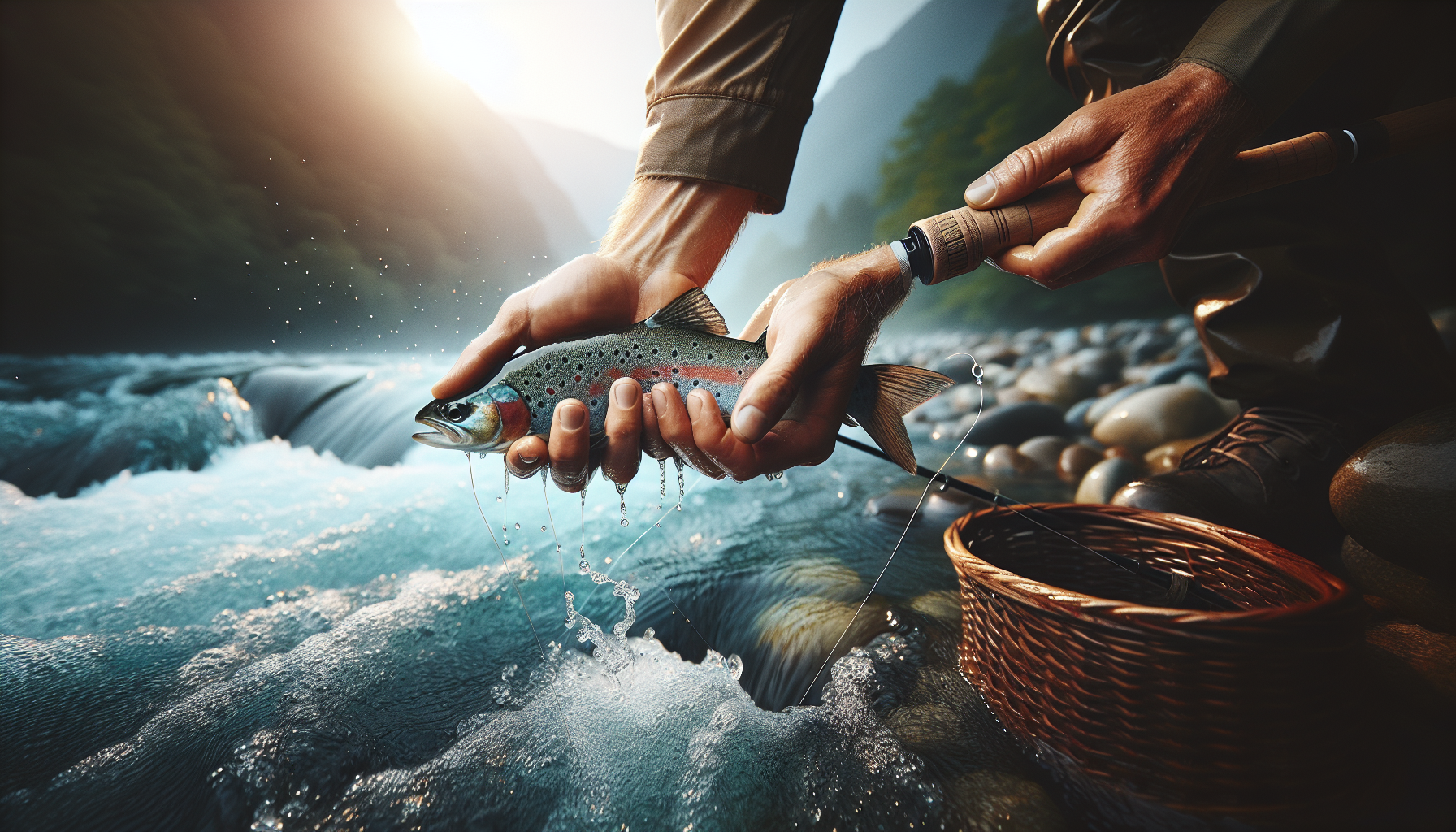
Ethical fishing practices are one of the most immediate ways anglers can contribute to conservation, and they matter more than many people realize. Even on healthy rivers, fish are affected by repeated handling, elevated water temperatures, spawning disruption, and concentrated fishing pressure. Practicing true catch-and-release stewardship means minimizing fight time, keeping fish in the water as much as possible, wetting hands before handling, avoiding photos that require extended air exposure, and using gear that allows for efficient landing and release. On warm days, that may mean choosing not to fish at all during the hottest hours or avoiding temperature-stressed waters altogether.
Responsible anglers also pay close attention to seasonal closures, spawning areas, and local regulations. Those rules are not just bureaucratic details; they are often built around fish biology and population recovery needs. Wading through redds, targeting fish stacked under thermal stress, or crowding migration bottlenecks can create harm even when legal limits are followed. Conservation-minded anglers go a step further by learning why regulations exist and adapting their behavior accordingly. That mindset helps protect fish during vulnerable life stages and reinforces a culture of restraint within the angling community.
Beyond fish handling, anglers can reduce their footprint by packing out trash, avoiding damage to streambanks and riparian vegetation, cleaning gear to prevent the spread of invasive species, and respecting access rules on both public and private land. Just as important, they can influence others. Conservation is often strengthened through peer norms: how guides talk to clients, how club members mentor new anglers, and how social media posts frame success. When anglers emphasize river health, ethical decision-making, and respect for fish over numbers and trophy images, they help build a more durable conservation culture that supports fisheries over the long term.
What role do advocacy and public policy play in fly fishing conservation efforts?
Advocacy and public policy play a central role because many of the forces that shape fisheries operate far beyond individual fishing behavior. River health is influenced by land-use planning, water allocation, dam management, mining proposals, road design, logging practices, hatchery strategies, public access decisions, and state or federal habitat protections. Volunteers can plant trees and remove trash, but durable conservation often requires policy decisions that protect flows, limit damage, fund restoration, and keep critical habitat connected. This is why many successful fly fishing conservation efforts combine boots-on-the-ground work with public engagement and policy literacy.
For individual anglers, policy involvement can be surprisingly practical. It may mean attending public meetings, submitting comments on management plans, learning the difference between local, state, and federal jurisdiction, or supporting organizations that have the expertise to engage effectively on technical issues. It can also involve speaking up on topics such as fish passage funding, stream-access protections, conservation easements, hatchery reform, watershed-scale restoration, or science-based harvest regulations. These issues may seem abstract at first, but they directly affect whether rivers remain fishable and ecologically functional in the future.
The key is to approach advocacy with humility and a fact-based mindset. Not every conservation question has a simple answer, especially when it involves tradeoffs among wild fish recovery, recreational access, agricultural demand, hydropower, or local economies. Productive advocacy begins with understanding the science, the stakeholders, and the likely consequences of different policy options. Anglers who stay informed and participate constructively can become credible voices for watershed health. In many cases, the most lasting conservation wins happen because ordinary people consistently show up in the public process, not just on cleanup day.
How do I choose the right conservation organization or project to support with my time or money?
The best organization or project to support is usually the one that matches both your values and the actual needs of the watershed you care about. Start by asking a few practical questions. Is the group working locally or nationally? Does it focus on habitat restoration, policy advocacy, scientific monitoring, public access, youth education, or a combination of these? Does it partner with agencies, tribes, landowners, and local communities? Is it transparent about goals, methods, funding, and outcomes? Strong conservation organizations can usually explain not only what they are doing, but why that work matters ecologically and how success is being measured.
It is also worth looking for groups that understand conservation as a long game. One-off volunteer events can be useful, but the most effective organizations tend to work within a larger strategy that includes assessment, implementation, monitoring, and follow-through. For example, a riparian planting project is more meaningful when it is part of a broader effort to reduce stream temperatures, stabilize banks, improve habitat complexity, and track biological response over time. Similarly, a policy group should be able to show how its advocacy connects to watershed protection, fish population health, or public access outcomes rather than relying on vague messaging alone.
If you are deciding where to give money, prioritize credibility, local relevance, and measurable impact over branding. If you are deciding where to volunteer, choose opportunities that build your understanding as well as your labor contribution. The right fit may be a local watershed council doing hands-on restoration, a regional nonprofit leading fish passage and water policy work, or a national organization defending broad conservation safeguards that affect many fisheries. In most cases, a balanced approach works best: support one or two trusted groups consistently, stay engaged long enough to understand the issues, and remember that effective conservation is built through sustained participation rather than occasional enthusiasm.