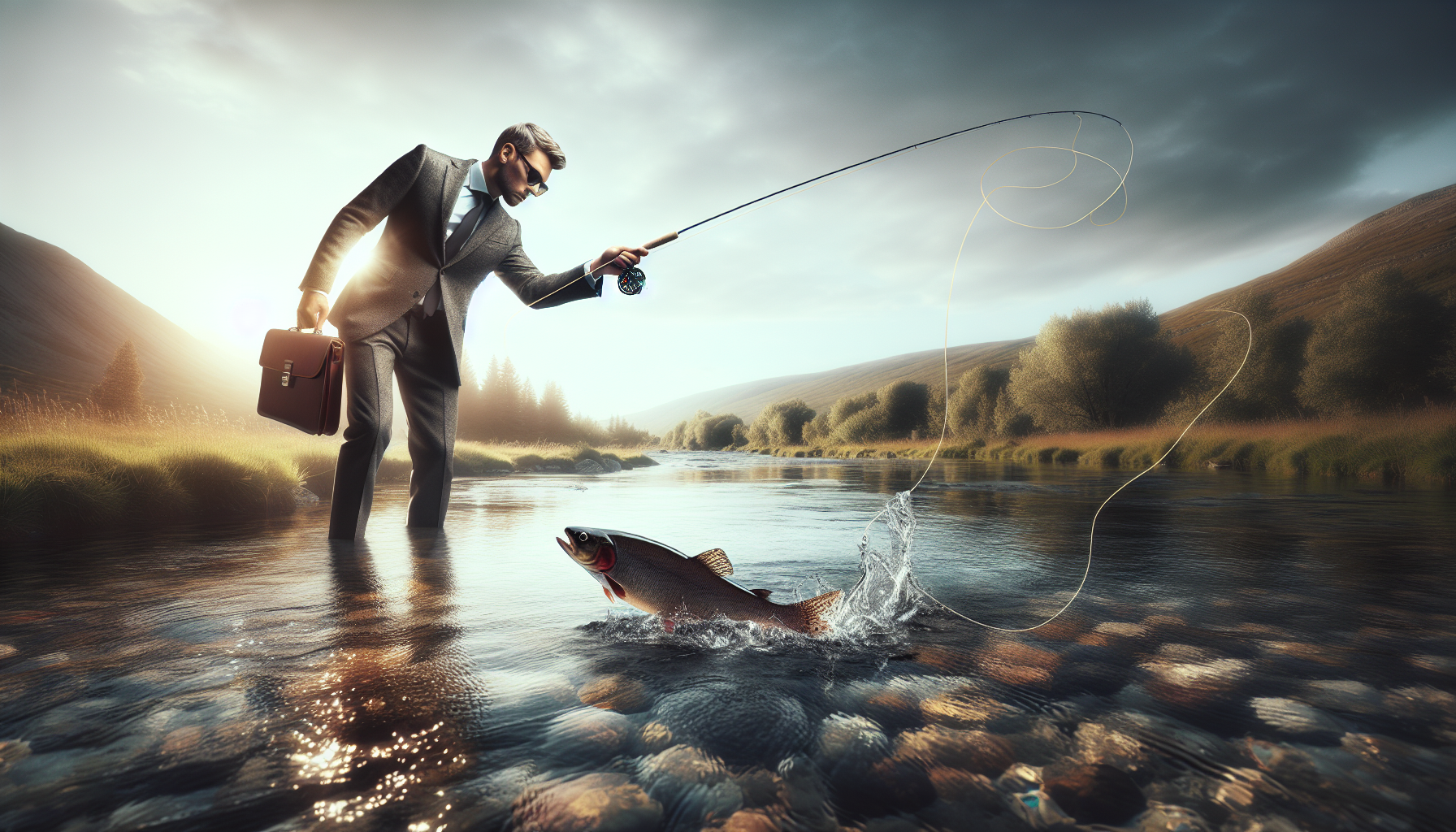
Ethical considerations for fly fishing photography shape how anglers document memorable days on the water without compromising fish welfare, habitat integrity, or the values that sustain the sport. In practice, ethical fishing practices are the standards that guide how we approach trout, salmon, char, bass, and other species before, during, and after the camera comes out. They include catch-and-release handling, respect for regulations, honest storytelling, privacy around fragile fisheries, and a commitment to leaving rivers better than we found them. This matters because a photograph can influence behavior far beyond a single trip: it can normalize poor fish handling, spotlight sensitive spawning areas, or encourage a culture of status over stewardship. I have spent enough seasons guiding, fishing, and reviewing clients’ photos to know that the strongest image is rarely the one with the biggest grin or highest hold. It is the one that records the moment while protecting the fish, the place, and the future of the fishery. As a hub for ethical fishing practices, this article connects the visual side of angling to conservation principles every fly fisher should treat as nonnegotiable.
Fly fishing photography sits at the intersection of recreation, wildlife interaction, and public communication. That intersection creates responsibility. A fish lifted too long for multiple angles may swim off apparently strong and still die later from lactic acid buildup, warm-water stress, or gill damage. A geotagged post from a small spring creek can turn quiet water into crowded, degraded habitat within a season. Even the framing of a shot matters; images that celebrate fish dragged onto dry rocks, gripped through the gills, or suspended vertically by the jaw teach newcomers the wrong lesson. Ethical photography therefore starts before the cast. It includes choosing tackle that shortens fight time, carrying release tools, understanding water temperature thresholds, recognizing redds, and deciding in advance that if conditions are poor, the camera stays away. Good ethics are not anti-photography. They make photography consistent with conservation. When anglers internalize these standards, they preserve fish populations, protect access, reduce conflict, and create images that actually honor the species and waters they admire.
Why fish welfare must come first
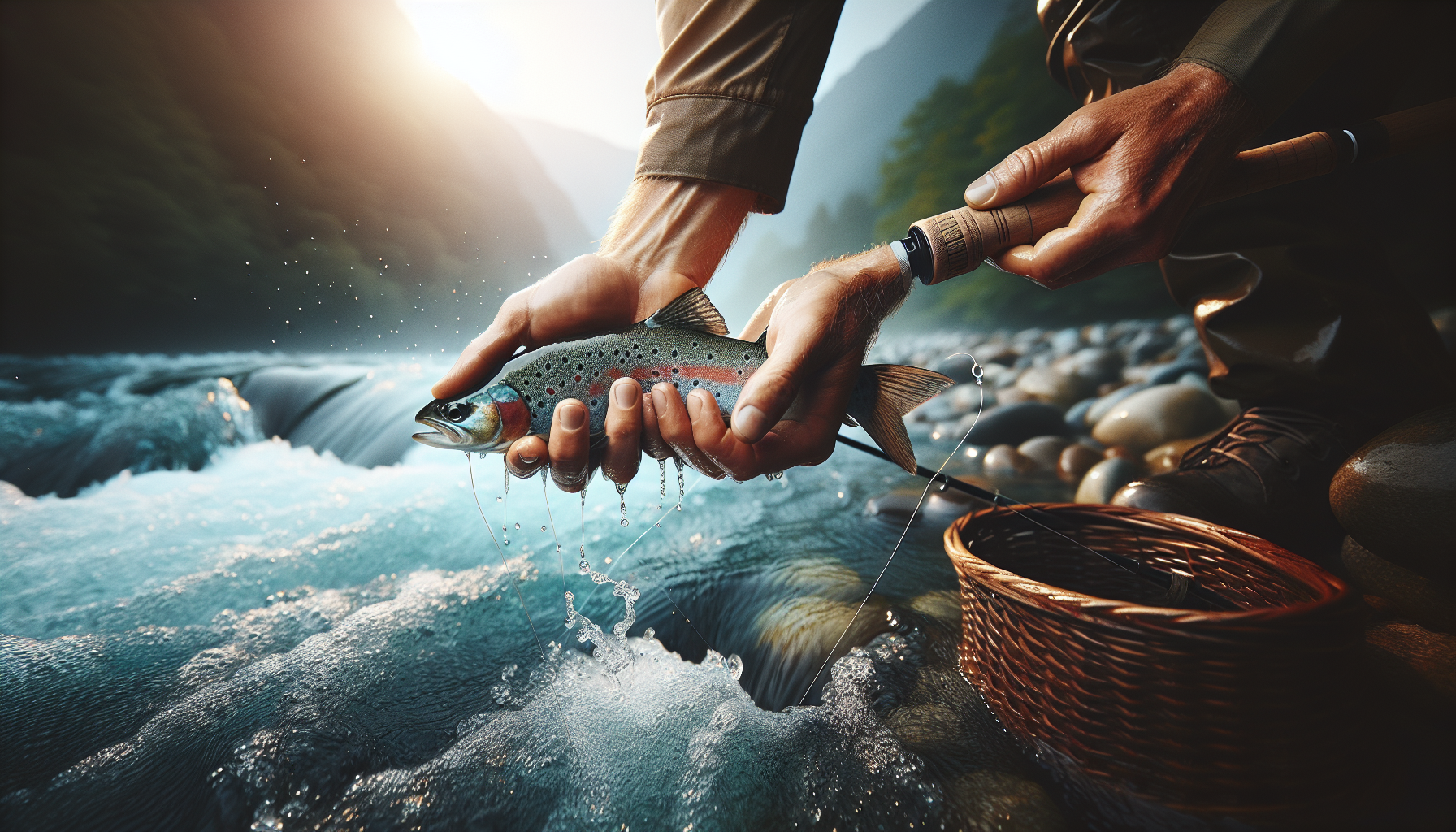
The first principle of ethical fly fishing photography is simple: the fish is not a prop. Every decision should reduce air exposure, handling time, and physical trauma. Research and agency guidance consistently support the same basic practices. Keep the fish in the water as much as possible. Wet your hands before touching it. Avoid squeezing the body. Never put fingers into the gills. Support larger fish horizontally rather than hanging them vertically, which can strain the jaw, vertebrae, and internal organs. If a hero shot requires repeated lifts, repositioning, or a long search for better light, skip it. In my own fishing, the best routine is preplanned and quick: net the fish in a rubber basket, remove the barbless hook with forceps, compose while the fish is submerged, lift for one or two seconds only if necessary, then release immediately.
Water temperature changes the ethical threshold. Trout and salmonids become significantly more vulnerable as temperatures rise, and many experienced anglers use 68 degrees Fahrenheit as a hard stop for targeting trout, with even more caution above 65. Warm water reduces dissolved oxygen while increasing metabolic stress. A fish that looks fine in the current after a long fight and photo may still die later. Ethical photography means adjusting ambitions to conditions. On hot afternoons, I often recommend no fish-out-of-water images at all, especially on small freestone streams or tailwaters during low flow. Use in-water shots, net shots, or no shot. The image quality tradeoff is minor; the survival benefit is real. Fish welfare also includes using tackle suited to the species and current. An under-gunned rod turns one fish into a prolonged exhaustion event, and no photograph is worth that.
Handling techniques that support responsible catch and release
Ethical fishing practices become visible most clearly in fish handling. Catch-and-release is only as responsible as the release itself. Use barbless hooks or pinch the barb for faster extraction and less tissue damage. Carry hemostats or forceps where you can reach them without rummaging through a pack. Choose knotless rubber nets, which reduce scale loss and fin abrasion compared with old nylon bags. If a fish is deeply hooked, cutting the tippet may be better than digging with forceps and causing further injury. Once landed, keep the fish facing into slow current while you prepare. If a companion is taking the photo, agree on the shot before the fish leaves the water: one frame, chest-high at most, fish supported with both hands, then immediate release. This discipline prevents the common drift into “just one more.”
Different species require different caution. Trout have delicate protective slime layers, steelhead are powerful and easy to mishandle if overplayed, and warmwater species like bass often tolerate handling better but still suffer from jaw stress when held vertically. Anadromous fish on redds or staging near spawning areas deserve even stricter restraint. In many fisheries, the most ethical choice is not to target visibly spawning fish at all. Photography should never reward behavior that risks reproduction. The same applies to beaching fish on gravel bars for aesthetic composition. Stones, sand, and dry vegetation remove slime and damage fins. If you want dramatic composition, use water-level angles, the frame of the net, or the reflected light on the river surface. Those approaches create stronger storytelling while aligning with the core rule: document the catch without increasing harm.
Photography choices that minimize impact
Responsible fly fishing photography is as much about preparation as it is about camera skill. Before the first cast, set your camera or phone for speed. Use burst mode if your device has it. Preselect a moderate shutter speed, and avoid complicated lens changes that keep the fish waiting in a net. If you fish alone, a net-mounted camera clip, small tripod on shore away from the water’s edge, or waterproof action camera can help you create a fast in-water self-portrait. I have found that anglers lose time not because the shot is difficult, but because they begin making decisions after the fish is landed. Ethical practice reverses that order. Decide now whether conditions support a photo, what type of photo is acceptable, and who will take it.
Composition can reinforce ethics. Tight shots of the fish partly submerged in a rubber net communicate care and species detail without requiring a prolonged hold. Wider environmental frames can tell a richer story than a close-up grip-and-grin because they show current, weather, and habitat. They also reduce pressure to manipulate the fish for scale. Avoid images that exaggerate size by thrusting fish toward the lens; besides being misleading, that pose often leaves the fish unsupported. Flash deserves caution, particularly at night or around concentrated fish. The evidence on flash stress varies by species and context, but minimizing unnecessary disturbance is the conservative choice. A headlamp used briefly for safe hook removal is different from repeated bright exposures for social content. The ethical standard is necessity over vanity.
| Situation | Best ethical photo choice | Why it works |
|---|---|---|
| Cold water, fish landed quickly | One brief supported lift or in-water net shot | Low air exposure and clear documentation |
| Warm water above 65°F | In-water photo only, or no photo | Reduces stress during vulnerable conditions |
| Solo angler | Prepositioned camera and fish kept submerged | Avoids fumbling while the fish waits |
| Large fish | Horizontal support with both hands near water | Prevents jaw and spine strain |
| Spawning area or redds nearby | No target shot; habitat photo instead | Protects reproduction and discourages pressure |
Location privacy, social media, and pressure on fisheries
One of the most overlooked ethical considerations for fly fishing photography is what the photo reveals about place. Social platforms reward specificity, but vulnerable fisheries often suffer when exact access points, landmarks, or geotags spread quickly. Small spring creeks, brook trout headwaters, and urban wild trout streams can experience crowding, bank erosion, illegal parking, trespass disputes, and harvest pressure after a few viral posts. I have watched formerly quiet reaches become weekend bottlenecks because a recognizable bridge or bend appeared repeatedly online. Ethical fishing practices therefore include discretion. Turn off location services for sensitive waters. Crop out identifying landmarks when necessary. Share the watershed or region rather than the exact run. If a local guide, tribe, club, or landowner asks anglers not to publicize a stretch, respect that request fully.
Privacy is not secrecy for its own sake. It is a management tool anglers can apply when official protection is limited. The same logic extends to timing. Posting fish from a small system during a migration pulse, a low-water bottleneck, or a spawning event can intensify pressure at precisely the worst moment. Ethical storytelling asks whether your post serves the fishery or merely your feed. There is also an honesty component. Do not present private-water catches as universally accessible public opportunities. Do not imply a wild fish came from a place where regulations prohibit targeting at that time. Clear, truthful captions build trust and reduce harmful copycat behavior. When in doubt, highlight methods and ethics rather than coordinates. The river does not need more exposure; it needs more advocates.
Regulations, habitat respect, and the broader ethics hub
Photography ethics cannot be separated from the rest of ethical fishing practices. Regulations are the minimum standard, not the full moral test. Know season dates, fly-only restrictions, bait bans, tackle rules, and species-specific handling requirements before you fish. Some jurisdictions prohibit removing certain fish from the water, require immediate release, or close reaches during spawning periods or high temperatures. Follow those rules exactly, then apply stricter personal standards when conditions justify them. Habitat awareness matters just as much. Never step on redds, which appear as cleaned, lighter patches of gravel where trout and salmon lay eggs. Avoid trampling bankside vegetation for a better angle. Clean boots, nets, and waders to prevent spreading invasive species and fish pathogens such as whirling disease vectors or didymo between waters.
As the central guide within conservation and ethics, this article points to the wider topics every responsible angler should study next: proper fish handling, low-impact wading, warm-water trout protocols, invasive species prevention, respectful sharing of locations, and compliance with local regulations. These are not separate concerns. They form one system. Better handling improves release survival. Better habitat awareness protects spawning success. Better posting habits reduce pressure on fragile fisheries. Better regulatory knowledge protects access and legitimacy for the entire fly fishing community. In practical terms, the camera can either undermine or reinforce all of those goals. Used well, it becomes a conservation tool that models correct behavior to newer anglers and reminds experienced ones that stewardship should be visible, not assumed.
Building a personal code for ethical fly fishing photography
The most reliable way to act ethically under pressure is to decide your standards before excitement takes over. Build a personal code and share it with the people you fish with. Mine is straightforward: no photo if water temperatures are unsafe, no fish on dry surfaces, no repeated lifts, no exact locations for vulnerable waters, no shots of fish on redds, and no image worth extending fight or handling time. I encourage anglers to keep a thermometer, forceps, rubber net, and camera settings ready as standard kit, not optional extras. If you guide, photograph clients, or run a club outing, make the expectations explicit at the start of the day. People usually do the right thing when the right thing is clear, specific, and easy to follow.
Ethical considerations for fly fishing photography come down to respect: for fish as living animals, for habitats as limited resources, and for fellow anglers and communities who share them. The core takeaway is practical. Prepare before the catch, minimize handling, adapt to conditions, protect sensitive locations, and treat regulations as the floor rather than the ceiling. When you do that, your photos still preserve memory and beauty, but they also communicate competence and care. That is the real benefit of ethical fishing practices: they let you participate in the sport without taking more than the fishery can afford to give. On your next trip, review your gear, set your standards, and commit to making every image proof of stewardship.
Frequently Asked Questions
Why do ethical considerations matter so much in fly fishing photography?
Ethical considerations matter because the photo should never become more important than the fish, the fishery, or the long-term health of the sport. A great image can preserve a meaningful memory, but if getting that image requires prolonged air exposure, rough handling, trampling spawning habitat, or pressuring already stressed fish, the cost is too high. Ethical fly fishing photography is about making sure documentation does not undermine conservation. That means treating fish welfare as the first priority, minimizing stress during landing and release, and making choices that protect the resource for the next angler and the next season.
It also matters because photography shapes culture. The images anglers share influence what others believe is normal, admirable, and acceptable. When people consistently see fish dragged onto dry rocks, held awkwardly for long periods, or displayed in ways that exaggerate size at the fish’s expense, those habits can become normalized. On the other hand, photographs that show quick handling, fish kept in the water, wet hands, appropriate gear, and respect for the surrounding habitat reinforce better standards. Ethical imagery does more than document a catch; it teaches values and signals stewardship.
There is also a trust component. Many anglers care deeply about conservation, regulations, and honest representation of their experiences. Ethical photography reflects that responsibility. It shows respect for landowners, guides, fellow anglers, and local communities, especially on fragile or crowded waters. In short, ethical considerations matter because photography is not separate from fishing ethics. It is part of them.
How can anglers photograph fish while minimizing stress and protecting fish welfare?
The most important rule is to plan the photo before the fish is ever lifted or positioned. If a camera is buried in a pack, settings are not ready, and everyone is debating angles while the fish is out of the water, the process is already going wrong. Ethical fish photography starts with preparation: have the camera or phone accessible, communicate with your fishing partner, and know whether you want an in-water shot, a quick grip-and-grin, or a release photo. The less confusion there is, the less time the fish spends being handled.
Landing practices matter just as much as camera practices. Use tackle appropriate for the species and conditions so fish can be brought in efficiently rather than played to exhaustion. Keep the fish in the water as much as possible, ideally in a soft, rubberized net that supports the body and reduces slime loss. Wet your hands before touching the fish, avoid squeezing the midsection or gills, and never insert fingers into the gill plates unless there is a species-specific handling reason supported by best practices and regulations. In most cases, a fish should be cradled gently and horizontally if it must be lifted at all.
Air exposure should be kept to an absolute minimum. Many anglers follow a practical standard: if the fish comes out of the water, the camera should already be ready and the shot should happen in a second or two, not after multiple retakes. Better yet, take in-water photographs where the fish remains partially submerged. These images can be just as beautiful and often more authentic. If the fish is tired, skip the photo entirely and focus on revival and release. During periods of high water temperature, low flows, or known stress events, even normal handling can become more risky, so ethical anglers become more conservative about photo opportunities.
Finally, release is part of the photograph’s ethics. If the fish needs support, hold it upright in current until it can maintain balance and swim off under its own power. Do not force it back and forth aggressively. The goal is not simply to get a photo and let go; it is to ensure the fish has the best realistic chance of survival after the encounter.
What should anglers consider before sharing fishing photos online, especially from sensitive locations?
Before posting, anglers should think beyond the image itself and consider the impact of location exposure. A single photo can reveal a surprising amount: recognizable access points, bridges, mountain profiles, boat ramps, tributary mouths, or even metadata attached to the file. On fragile fisheries, small streams, lightly managed native fish waters, and places already experiencing crowding, that information can lead to increased pressure, habitat damage, user conflict, and stress on fish populations. Ethical sharing means asking whether publicizing the exact spot helps the resource or harms it.
In many cases, the best choice is to keep location details broad. Naming a region, watershed, or state is often enough. Turning off geotagging, avoiding conspicuous landmarks, and resisting pressure to “spot burn” a fishery in captions or comments are practical ways to protect vulnerable water. This is especially important for wild trout streams, spawning areas, seasonal runs, or fisheries with limited holding capacity. Just because a place is legally accessible does not mean it benefits from viral exposure.
There is also a human dimension. Guides, local anglers, and nearby communities often invest years in understanding and caring for a fishery. Broadcasting exact information can disregard those relationships and the informal stewardship culture that helps keep a place healthy. Ethical posting respects both the fish and the people connected to them. If you are unsure whether a location is sensitive, caution is usually the better choice. A memorable fishing story does not become less meaningful just because the caption is less specific.
How do honesty and authenticity factor into ethical fly fishing photography?
Honesty is central to ethical fishing photography because images strongly influence how people understand success, skill, and the reality of time on the water. Authentic photography should reflect what actually happened, not create a misleading version of the catch or the conditions. That means avoiding forced perspective tricks intended solely to make fish appear much larger than they are, not presenting harvested fish as catch-and-release accomplishments, and not staging scenes in ways that distort the nature of the encounter. There is nothing wrong with making a photograph visually compelling, but it should still be truthful.
Authenticity also applies to storytelling. If a fish was caught with help from a guide, a rowing partner, or a friend who put you in position, crediting that support is part of ethical representation. If conditions were difficult and only one fish came to hand, that can still be an excellent story. Fly fishing does not need inflated narratives to be meaningful. In fact, many of the most respected anglers are the ones who document the sport with humility and realism rather than performance-driven exaggeration.
Editing is another area where judgment matters. Basic corrections for color, exposure, and composition are normal, but edits should not materially misrepresent the fish, the location, or the event. The broader principle is simple: your audience should come away with a fair understanding of what occurred. Ethical photography builds credibility, supports conservation-minded culture, and reminds people that the value of fly fishing lies in the experience and the relationship to wild places, not just in curated proof.
Are there times when the most ethical choice is to skip the photo entirely?
Absolutely. One of the clearest signs of ethical maturity in fly fishing is recognizing when a photograph is not worth the added risk. If a fish is deeply exhausted, bleeding, poorly hooked, or struggling to recover, your attention should go entirely to release and survival. The same is true during periods of elevated water temperatures, low dissolved oxygen, drought, seasonal closures, or other stressful environmental conditions. In these moments, even a short delay for a photo can have outsized consequences.
There are also habitat-based reasons to skip the camera. If getting the shot requires stepping into redds, crushing streamside vegetation, climbing unstable banks, or disturbing spawning or staging fish, the ethical answer is no photo. Likewise, if a crowd is forming, if the scene could escalate pressure on a sensitive run, or if taking a picture would interfere with another angler’s experience, restraint is appropriate. Good judgment is often less visible than a dramatic image, but it is far more important.
Choosing not to take a photo does not mean the moment is lost. Many memorable catches are best preserved mentally, or with a quick scenic shot after the fish is safely released. Ethical anglers understand that the real goal is not content creation; it is participation in a fishery in a way that leaves as little negative trace as possible. When in doubt, protect the fish, protect the habitat, and let the memory stand on its own.