Ethical fly fishing protects fish populations, preserves habitat, and strengthens the social license that lets anglers enjoy healthy waters year after year. In practical terms, ethical fishing practices are the standards anglers follow to reduce unnecessary harm, respect regulations, and leave rivers, lakes, and access points better than they found them. In my work with local clubs, river cleanups, and youth casting clinics, I have seen a clear pattern: communities that talk openly about ethics catch more informed anglers before bad habits become normal. That matters because fly fishing is growing, pressure on accessible water is increasing, and poor handling, crowding, and careless online sharing can damage fisheries faster than many people realize.
Promoting ethical fly fishing in your community means going beyond telling people to “do the right thing.” It requires shared definitions, visible examples, and systems that make ethical choices easier. Ethical fly fishing includes legal compliance, but it is not limited to regulations. A fishery may allow harvest, yet conditions such as high water temperature or low flows can make catch-and-release unsafe. A public access area may be open, yet trampling banks, blocking driveways, or cutting fences still harms landowner relationships. Good community ethics align angler behavior with conservation outcomes.
This hub article explains how to build that culture. It covers the core principles of ethical fishing practices, ways to educate new and experienced anglers, methods for reducing fish stress, responsible social media norms, and partnerships that help community efforts last. If your goal is to improve stewardship without alienating people, the most effective approach is simple: make ethics specific, local, and repeatable. When anglers understand why certain practices matter and see respected peers modeling them, ethical fly fishing stops being a slogan and becomes the accepted standard.
Define clear ethical standards for local waters
The first step is to define what ethical fly fishing means in your area, in plain language that matches local conditions. Start with the basics: know and follow state regulations, understand seasonal closures, respect private property, pack out trash, and minimize harm to fish. Then add water-specific guidance. Tailwaters with heavy pressure may need stronger messaging about rotating through runs and limiting repeated catches on the same pod of trout. Warmwater rivers may need a summer policy that discourages targeting trout when temperatures exceed roughly 68 degrees Fahrenheit, since dissolved oxygen drops and post-release mortality rises.
I have found that communities do better when they publish a short ethics statement tied to actual places, not generic ideals. For example, “On the South Fork, avoid fishing after 11 a.m. during July heat waves,” is more actionable than “protect fish in summer.” Include barbless hook recommendations, fish handling standards, and rules for wading around redds during spawning periods. Trout Unlimited chapters, state fish and wildlife agencies, and Keep Fish Wet provide strong reference points for building local guidance grounded in recognized science.
A written standard also reduces conflict. Instead of arguing from personal preference, club leaders, guides, and shop staff can point to agreed expectations. That consistency is especially useful for beginners, who often copy whatever behavior they see first. If the first lesson includes net choice, wet hands, quick releases, and safe spacing at access points, those habits stick.
Teach fish handling and catch-and-release the right way
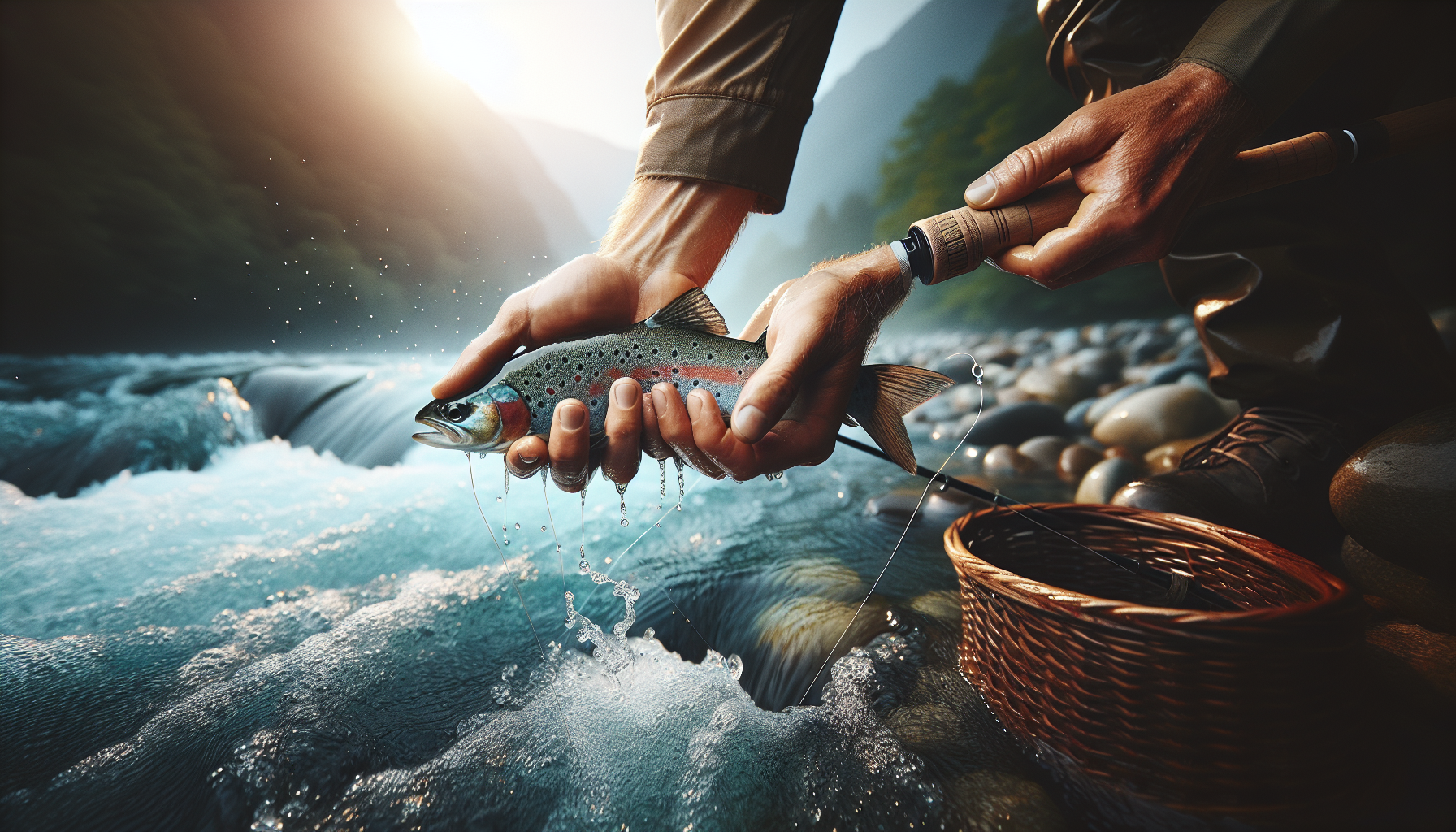
Catch-and-release is only ethical when it is done in a way that keeps mortality low. The most important instruction your community can provide is fish handling education. Fish should stay in the water as much as possible. Hands should be wet before contact to protect the mucous layer that helps resist infection. Knotted nylon nets can abrade fins and slime, so rubberized landing nets are the better standard. Fight fish firmly on appropriate tackle instead of prolonging exhaustion with gear that is too light for the species and current.
Air exposure is one of the clearest points to teach because it is measurable and easy to remember. Research shared by Keep Fish Wet has emphasized that every second out of water matters; communities should encourage anglers to unhook fish without lifting them clear of the surface whenever possible. Photos are fine only if they are quick, prepared in advance, and secondary to fish condition. If someone needs ten attempts for a hero shot, the ethical answer is to skip the picture.
Hook selection matters too. Barbless hooks speed releases and reduce tissue damage. Circle hooks are more common in bait fishing than fly fishing, but the principle is similar: choose tackle that reduces deep hooking risk. For species such as pike, bass, steelhead, and carp, proper tools are part of ethical practice. Hemostats, hook cutters, and long-nose pliers prevent long struggles at the net.
| Practice | Why it matters | Community standard to promote |
|---|---|---|
| Use a rubberized net | Reduces fin wear and slime loss | Recommend in clinics, shops, and club gear lists |
| Keep fish in water | Lowers stress and limits air exposure | Teach in-stream unhooking as the default |
| Fish barbless | Speeds release and lowers injury | Encourage pinch-down demonstrations at events |
| Match tackle to fish | Shorter fights improve survival | Advise stronger tippet and species-appropriate rods |
Real-world instruction works best. At community events, demonstrate netting, hook removal, and release positioning in shallow water. Show what not to do as well: gripping gills, squeezing the belly, dragging fish onto dry rocks, and overplaying fish for sport. Ethical fishing practices become far more credible when anglers can see the difference between a careful twenty-second release and a harmful two-minute photo session.
Reduce pressure through etiquette, access stewardship, and timing
Many ethical problems in fly fishing are social before they are biological. Crowding, low-holeing, loud bank behavior, and competition for visible fish can turn a healthy community toxic. Promote stream etiquette as explicitly as you promote knot tying or entomology. On rivers, that means giving other anglers room, asking before stepping in above or below someone, moving at a compatible pace through runs, and avoiding repeated casts over water another angler is working. On stillwaters, it means not cutting off drift lines or anchoring directly on top of structure someone else is fishing.
Access stewardship is equally important. A single season of blocked gates, litter, trespass, or careless parking can close access that took decades to secure. Ethical fly fishing in a community should include a standard checklist at every outing: close gates, stay on marked paths, do not camp where prohibited, and respect agricultural operations. If your area depends on informal landowner permission, personal courtesy is not optional; it is the foundation of continued access.
Timing is another underused ethical tool. Communities often focus on where to fish and overlook when not to fish. Water temperature, spawning periods, low flows, and post-stocking concentration points can all make legal fishing ethically questionable. Encourage anglers to carry a thermometer, check river gauges, and understand thermal refuges. If trout are stacked at a cold tributary mouth during hot weather, catching them repeatedly can impose severe stress even if the technique is delicate. The ethical choice may be to target warmwater species instead.
Use local education channels to normalize good behavior
Ethics spreads through repetition and social proof. To promote ethical fly fishing effectively, use every local channel anglers already trust: fly shops, guide services, clubs, conservation nonprofits, park districts, and municipal recreation departments. A short printed ethics card at the register can reach more people than a long policy document hidden on a website. So can signage at launches and trailheads if it is concise and specific. “Keep fish wet. Fish barbless. Respect redd closures. Pack out tippet,” is stronger than abstract wording about stewardship.
Youth programs are especially important because they shape expectations before habits harden. In beginner classes, make ethics part of the first hour, not the final five minutes. When I teach clinics, I present fish handling immediately after basic casting because students assume the first topics are the most important. Pair every skill lesson with an ethical counterpart: casting accuracy with avoiding bank nesting birds, knot selection with landing fish quickly, hatch matching with avoiding repeated harassment of spawning fish.
Experienced anglers need education too. Some of the most influential people on the water are not beginners but veterans with strong opinions. Invite biologists, wardens, and respected guides to speak about post-release mortality, invasive species transfer, felt sole restrictions, and seasonal stressors. Specific local data changes minds. If a regional biologist explains why whirling disease risk or didymo spread requires careful boot cleaning, anglers listen differently than they do to vague warnings.
Set responsible social media norms
Social media can build conservation support, but it can also intensify pressure on fragile fisheries. Ethical fly fishing today includes digital behavior. Communities should discuss spot sharing, fish handling in photos, and the incentives created by public posting. Naming a small tributary, bridge access, or urban carp flat to a large audience can overwhelm a place that cannot absorb sudden attention. A better norm is to describe a region, watershed, or general type of water unless a fishery is already designed for heavy public use.
Images matter as much as captions. If prominent local anglers post photos of trout laid on dry grass, held by the jaw, or suspended for long periods, newer anglers absorb that as normal. The opposite is also true. A feed full of in-water releases, wet hands, and quick captions about conditions builds a healthier standard. Encourage clubs and shops to adopt a simple media policy for events and ambassador programs.
There is also an honesty component. Avoid exaggerated claims, misidentified species, and pressure-inducing “epic bite” language during vulnerable periods. Ethical communication informs without exploiting. If a river is suffering from drought, the responsible post may be a reminder to target bass at dawn on a reservoir instead of rallying people to chase stressed trout. Community norms online should protect the resource, not just the reputation of the poster.
Build partnerships that make ethics durable
Lasting change comes from partnerships, not isolated reminders. The strongest communities align anglers, businesses, agencies, and conservation groups around shared goals. A fly shop can teach barbless rigging, a chapter volunteer team can run river cleanups, a state biologist can provide temperature guidance, and guides can model best practices daily with clients. When those messages match, anglers hear one standard from every direction.
Start with achievable projects. Install monofilament recycling tubes at access points. Organize preseason ethics nights with fish handling demos. Create a local warm-water-temperature alert on social channels. Support habitat restoration days so ethics is connected to visible conservation work. Volunteer monitoring, invasive species awareness, and public comment on fishery management proposals all help turn ethical fishing practices into a broader stewardship culture.
Measure progress where you can. Track cleanup participation, distribution of ethics cards, guide adoption of fish-friendly photo rules, or reductions in discarded tippet at major accesses. Not every ethical gain is easy to quantify, but visible metrics keep momentum alive. More important, they show that promoting ethical fly fishing is not about gatekeeping. It is about keeping fisheries productive, access open, and community trust strong.
Promoting ethical fly fishing in your community starts with one commitment: make good behavior clear, practical, and visible. Define local standards, teach low-impact fish handling, address crowding and access issues, use trusted education channels, and set careful social media norms. These steps work because they translate broad conservation values into daily decisions anglers actually face on the water.
The main benefit is long-term resilience. Ethical fishing practices reduce avoidable fish mortality, protect fragile habitat, preserve access relationships, and create a more welcoming culture for beginners who want to learn the right way. They also prepare communities to respond to real pressures such as heat, drought, invasive species, and growing angling demand without waiting for regulation alone to solve the problem.
If you want this subtopic hub to drive action, begin locally. Ask your club, shop, or guide network to adopt three shared standards this season, publish them publicly, and model them every trip. Ethical fly fishing becomes real when a community repeats it often enough that respect for fish, water, and people is simply how things are done.
Frequently Asked Questions
What does ethical fly fishing actually mean in a community setting?
Ethical fly fishing goes beyond simply following the law. In a community setting, it means creating a shared culture of responsibility around how people fish, how they treat fish and habitat, and how they interact with one another on the water. Regulations establish the minimum standard, but ethics address the choices anglers make when no one is watching. That includes handling fish carefully, using appropriate tackle to reduce exhaustion, respecting spawning areas, avoiding overcrowding sensitive water, packing out trash, and being considerate toward landowners, paddlers, guides, and other anglers.
When a community embraces ethical fly fishing, the benefits extend well beyond individual catch rates. Fish populations experience less stress and mortality, streambanks and riparian areas remain healthier, and public access is less likely to be restricted due to poor behavior. Just as important, ethical norms help preserve the social license of angling. Communities that are known for stewardship and respect are better positioned to support conservation projects, youth education, habitat restoration, and public access initiatives. In other words, ethical fly fishing is not just about personal conduct; it is about protecting the long-term future of the fishery and the relationships that make local angling possible.
How can I encourage other anglers in my area to adopt ethical fly fishing practices without sounding judgmental?
The most effective way to encourage ethical behavior is to lead with example, clarity, and respect. People are far more receptive to positive modeling than public criticism. If you fish barbless hooks, keep fish wet during release, avoid redds, pick up litter, and treat crowded access points courteously, others notice. Small actions repeated consistently help establish a visible standard. In many communities, anglers begin to mirror what they see from respected peers, club members, guides, and volunteers.
Conversations also matter, but tone is everything. Instead of framing ethics as a lecture, frame it as shared care for the resource. Phrases like “We try to keep fish in the water here because it improves survival,” or “This stretch gets pressure during spawning season, so a lot of us avoid wading through that gravel,” sound helpful rather than confrontational. Local clubs, fly shops, guide services, and conservation groups can reinforce those messages through events, signage, newsletters, social media, and beginner clinics. The goal is to normalize ethical practices as part of what responsible anglers simply do. Over time, a community-wide ethic becomes stronger when anglers feel invited into a stewardship culture rather than pushed into compliance through shame.
What are the most important ethical fly fishing practices to teach beginners?
Beginners should first learn that ethical fly fishing starts with fish welfare, habitat protection, and respect for access. A few foundational practices make the biggest difference. One is using tackle that matches the target species and conditions so fish can be landed efficiently rather than fought to exhaustion. Another is minimizing handling time by preparing tools in advance, keeping fish in the water whenever possible, wetting hands before contact, and avoiding unnecessary photos. Teaching new anglers to recognize stressors such as warm water temperatures, low flows, and spawning activity is also essential, because sometimes the ethical decision is not how to fish, but whether to fish at all.
Habitat awareness should be introduced early as well. Beginners often do not realize how easily streambanks, redds, aquatic vegetation, and shallow nursery areas can be damaged by careless foot traffic. They also need guidance on access etiquette, including closing gates, staying on legal routes, respecting private property boundaries, and leaving parking and launch areas cleaner than they found them. Finally, social ethics deserve attention. Giving other anglers space, communicating politely, avoiding crowding, and sharing water fairly are basic skills that shape the tone of a fishery. When beginners learn these standards from day one, ethical behavior becomes part of their identity as anglers instead of an afterthought added later.
How can local clubs, fly shops, and community groups promote ethical fly fishing more effectively?
Local organizations are often the most influential voices in shaping fishing culture because they reach people where habits are formed. Fly shops interact with newcomers at the point of purchase, clubs create recurring social norms, and community groups connect anglers to conservation work. The most effective promotion combines education, visibility, and hands-on participation. That can include hosting fish handling demonstrations, catch-and-release workshops, entomology classes linked to seasonal fish behavior, and river etiquette sessions for new members. Shops can also recommend gear that supports ethical angling, such as rubber nets, barbless hook options, and thermometers for monitoring unsafe water temperatures.
Community involvement makes these messages more credible. River cleanups, access maintenance days, habitat restoration projects, youth casting clinics, and volunteer monitoring programs help anglers see ethics as active stewardship rather than abstract rules. Clear communication is equally important. Clubs and shops can share seasonal reminders about low-water stress, spawning closures, invasive species prevention, and local access concerns through newsletters, social posts, in-store signage, and event announcements. Perhaps most importantly, trusted local leaders should speak consistently about why these practices matter. When ethics are tied to healthier fisheries, better community relationships, and long-term access, people are more likely to understand that responsible fly fishing protects the future of the sport itself.
Why is promoting ethical fly fishing important for conservation and long-term access?
Promoting ethical fly fishing is important because conservation success depends not only on regulations and habitat projects, but also on everyday angler behavior. Even in well-managed fisheries, cumulative impacts from poor handling, excessive pressure during stressful conditions, trampling habitat, littering, and conflicts with landowners can erode fish populations and damage public trust. Ethical fishing practices reduce unnecessary harm and help maintain the ecological resilience of rivers, lakes, and surrounding habitat. They also support the broader goals of fisheries managers and conservation groups by aligning recreation with resource protection.
Long-term access is tied closely to that same ethic. Public agencies, private landowners, and non-angling community members are more likely to support fishing opportunities when anglers demonstrate respect, restraint, and stewardship. Access is often lost not because people dislike fishing, but because they have seen repeated problems such as trespassing, trash, bank erosion, unsafe crowding, or disregard for sensitive seasonal conditions. Communities that promote ethical fly fishing send a different message: anglers are invested in clean water, healthy fish, safe public spaces, and responsible recreation. That reputation strengthens the social license that allows fishing to continue and grow. In practical terms, if a community wants healthy fisheries and secure access for future generations, building a strong culture of ethical fly fishing is one of the smartest and most durable steps it can take.