Organizing a fly fishing conservation event is one of the most effective ways to turn angler passion into measurable habitat improvement, public education, and long-term stewardship. In practice, these events bring together anglers, guides, watershed groups, landowners, agencies, and local businesses around a shared goal: healthier rivers and more resilient fisheries. A fly fishing conservation event can be a river cleanup, a habitat restoration day, a streambank planting project, a youth education clinic, a fundraising banquet, or a multi-part weekend that combines several of those elements. The common thread is that the event does more than celebrate fishing. It creates direct conservation outcomes.
This matters because coldwater fisheries face pressure from sedimentation, warming water, altered flows, invasive species, barriers to fish passage, and simple lack of public awareness. Trout Unlimited chapters, state fish and wildlife agencies, watershed councils, and local fly clubs have shown for decades that well-run community events can produce real gains, from tons of trash removed to miles of stream reopened or restored. I have worked on these events with clubs and nonprofit partners, and the pattern is consistent: the best events start with a specific ecological objective, not a vague desire to “help the river.” That objective then shapes permits, volunteers, fundraising, safety planning, and post-event reporting.
As a hub for conservation efforts, this guide explains how to organize a fly fishing conservation event from start to finish while connecting the major themes that define ethical, effective conservation work. Those themes include habitat restoration, water quality, native fish protection, community partnerships, volunteer management, education, fundraising, and follow-through. If you want a conservation and ethics program that anglers trust and partners support, each of those pieces must be planned intentionally. A successful event leaves a river corridor in better condition, gives participants useful knowledge, and builds momentum for future conservation projects rather than ending when the last volunteer goes home.
Start with a clear conservation goal and measurable outcome
The first step is defining exactly what the event will accomplish. “Support conservation” is too broad to guide operations or attract serious partners. Better goals are specific and measurable: remove 2,000 pounds of litter from a tailwater access corridor, plant 500 native riparian shrubs along an eroding reach, map culverts that block fish passage, raise $15,000 for a stream temperature monitoring program, or teach 40 new volunteers how to identify redds and avoid spawning habitat. A clear objective helps agencies approve the work, sponsors understand the benefit, and volunteers see that their time matters.
Choose a project that fits the season and the river’s biological calendar. Streambank work during spawning periods can do more harm than good. In many trout systems, fall and spring require extra care because fish are spawning or emerging from winter stress. Warmwater periods may trigger voluntary fishing closures or low-flow restrictions, making restoration and education a better fit than catch-focused activities. Check state regulations, local watershed plans, and any management guidance from the landowner or fishery agency before setting a date.
It also helps to define what kind of conservation effort your event represents. Direct action projects, such as cleanups and planting days, produce visible results quickly. Monitoring events, such as macroinvertebrate sampling or temperature logger deployment, support longer-term management. Education and advocacy events can influence policy, recruit volunteers, and raise money for future field work. Most strong hub programs combine all three over time, so one event feeds the next instead of operating in isolation.
Build the right partnerships before you announce the event
Conservation events succeed when the organizer acts as a coordinator, not a lone hero. Start by identifying the stakeholders who have authority, expertise, or resources connected to the water. That usually includes the state fish and wildlife agency, local parks department, watershed association, Trout Unlimited chapter, land trust, conservation district, and any private landowners whose property might be accessed. If the event involves in-stream work, consult the agency biologist and permitting office early. If it involves public fishing access, speak with site managers about parking, sanitation, signage, and insurance requirements.
Local fly shops, guides, breweries, outdoor brands, and civic groups are valuable partners when their role is defined clearly. A fly shop may recruit volunteers and donate raffle items. A guide service may provide safety briefings on wading hazards and fish handling. A brewery may sponsor lunch, but it should not dominate the conservation message. The event must remain about habitat, fisheries, and stewardship rather than becoming a generic marketing activation. The best partnerships are operationally useful and mission-aligned.
When I build these partnerships, I ask each group for one concrete contribution: permits, tools, data, funding, volunteers, insurance, communications reach, or technical oversight. That prevents confusion and reduces the common problem of having many logos on a flyer but too little field capacity on event day. Put these commitments in writing, even if only in a simple planning memo. Clear roles are especially important if media are attending or if the event produces funds that must be tracked and reported.
Choose the right event format for the conservation problem
Different conservation issues require different event models. A trash-choked urban stream benefits from a cleanup and public awareness day. An eroding agricultural tributary may need native vegetation planting, exclusion fencing support, and follow-up maintenance. A watershed with declining summer flows may call for a fundraising event tied to drought resilience, water monitoring, and policy education. If your audience includes new anglers, adding a casting clinic or entomology session can increase turnout, but the educational component should support the conservation mission instead of distracting from it.
Use the format that matches the ecological need, your volunteer capacity, and the level of technical supervision required. In-stream wood placement, bank stabilization, and barrier assessment often need trained crews and agency oversight. Litter removal, invasive plant pulling, storm drain marking, and native seed collection can accommodate broader community participation. A hub article on conservation efforts should reflect that all of these activities belong under the same umbrella when they contribute to healthier fish habitat and more ethical angling communities.
| Event type | Best use case | Key partners | Main metric |
|---|---|---|---|
| River cleanup | High-traffic access sites, urban corridors, post-flood debris | Parks department, watershed group, waste hauler | Pounds of trash removed |
| Riparian planting | Bank erosion, shade loss, habitat simplification | Agency biologist, conservation district, landowner | Plants installed and survival rate |
| Monitoring day | Data gaps on temperature, insects, flows, barriers | Watershed scientists, students, nonprofits | Samples collected or sites surveyed |
| Fundraising banquet | Large future restoration project needs capital | Sponsors, donors, guides, local businesses | Net funds raised |
| Youth education clinic | Long-term stewardship and ethical angler recruitment | Fly club, school, educators, guides | Participants trained and retention |
Handle permits, risk management, and fish-friendly operations
Permits and safety planning are where many well-intentioned events become fragile. If your project touches the streambed, banks, vegetation, or public access infrastructure, assume some form of approval is required. Depending on location, that may involve local park authorization, state environmental permits, landowner agreements, volunteer waivers, event insurance, and coordination with emergency services. Work that seems minor to volunteers may still trigger legal and ecological concerns. For example, moving large woody debris without technical review can destabilize flow, damage habitat, or create liability at recreation sites.
Risk management should include site hazards, weather thresholds, communication plans, first aid coverage, and equipment protocols. Create a check-in station, assign crew leaders, and use written briefings. If wading is involved, define where volunteers may and may not enter the water. If hooks, boats, or casting demonstrations are part of the program, build separation between restoration zones and recreation zones. Have a heat plan, lightning policy, and drinking water supply. These details sound basic, but they determine whether a conservation event feels credible and professional.
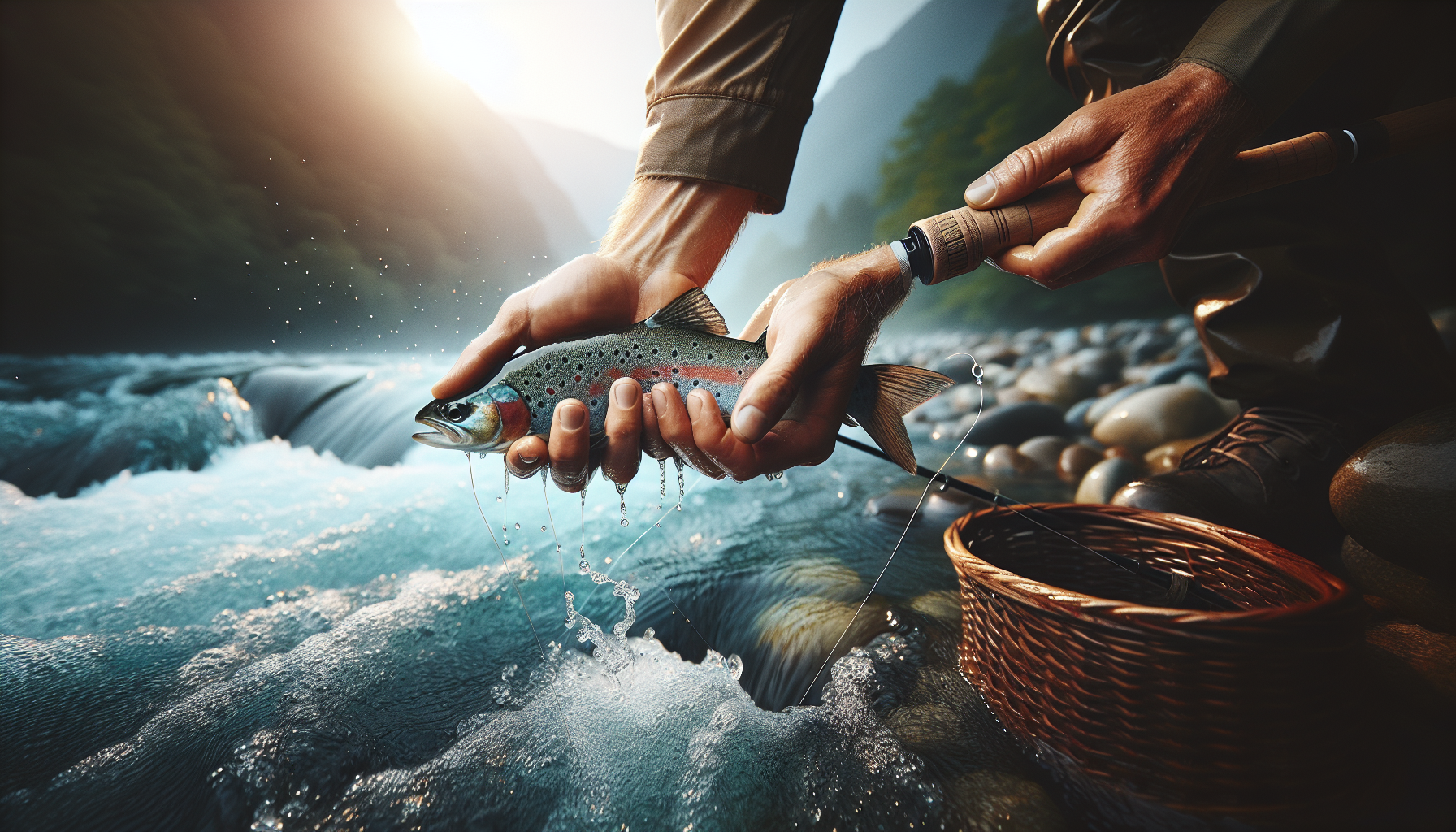
Fish-friendly operations matter just as much. Avoid trampling redds, minimize bank disturbance, disinfect gear where invasive species or fish pathogens are a concern, and use best practices for any demonstration fishing. If fish handling is part of education, model barbless hooks, rubber nets, wet hands, and short air exposure. Ethics are most persuasive when they are visible. Participants remember what organizers do in the field more than what they say on a poster.
Recruit volunteers, sponsors, and donors with a specific message
People support conservation events when they understand the problem, the action, and the result. Your outreach should answer three questions immediately: What issue is harming this fishery, what will participants do about it, and what outcome should they expect? “Join us to improve native brook trout habitat by planting 400 shrubs along Mill Creek” is stronger than “Come help conserve our waters.” Specificity improves registrations, sponsorship responses, and media coverage because it gives everyone a tangible story.
For volunteers, describe skill level, physical demands, gear needs, and schedule. For sponsors, explain audience profile, conservation outcome, brand visibility limits, and reporting after the event. For donors, connect money to deliverables such as trees, erosion-control materials, youth scholarships, or monitoring equipment. Named tools and budgets build confidence. A donor is more likely to fund handheld dissolved oxygen meters, HOBO temperature loggers, native live stakes, or a rented chipper than a generic “conservation fund.”
Use multiple channels: email lists, fly shop bulletin boards, chapter newsletters, local newspapers, guide networks, watershed calendars, and social media. Include a registration form that captures waivers, dietary needs, emergency contacts, and volunteer skills. If this article sits within a larger conservation and ethics content cluster, it should also direct readers toward related topics such as fish handling, invasive species prevention, access etiquette, habitat restoration basics, and watershed advocacy. That internal structure helps readers move from broad interest to practical action.
Run the event like a field project, not a casual meetup
On event day, operations should be structured enough that volunteers feel useful within minutes. Start with sign-in, waivers, name tags, and assignment by crew. Then give a concise briefing covering the ecological purpose, the work plan, site map, safety rules, and what success looks like by the end of the day. Crew leaders should carry the task lists, tools, and contact numbers. Keep tasks visible and finite. Volunteers stay motivated when they can see a pile of tires leaving a riverbank, a length of bank mulched and planted, or a data sheet completed correctly.
Documentation is essential. Take before-and-after photos from fixed points. Weigh or estimate trash removed using standardized methods. Record plant species, counts, and planting zones. Log volunteer hours accurately. These records support grant reporting, future fundraising, and adaptive management. If survival rates for plantings drop below expectations or trash returns quickly to the same access site, your documentation will show whether the next event should focus on maintenance, infrastructure, or public education.
Do not overlook participant experience. Provide water, gloves, clear signage, and a realistic timeline. Recognize skilled volunteers without making newcomers feel peripheral. End with a short debrief that ties the day’s work back to fish habitat, water quality, and ethical angling. A conservation event should leave people tired, informed, and eager to return.
Measure results, report honestly, and build a year-round conservation program
The strongest conservation events do not end with a thank-you post and a few photos. They produce a transparent report that states what was achieved, what fell short, and what comes next. Report hard numbers: volunteers, hours, miles covered, pounds of trash, plants installed, money raised, or monitoring sites completed. If possible, connect outputs to ecological outcomes, such as improved shade potential, reduced erosion risk, expanded spawning access, or better baseline data for management decisions. Be careful not to overclaim. A single cleanup does not restore a fishery by itself, and donors appreciate honesty.
Follow-up is where a hub for conservation efforts becomes truly useful. Schedule maintenance days for plantings, publish educational summaries from monitoring data, and invite attendees to advocacy meetings, chapter nights, or future restoration projects. Build a calendar that balances direct habitat work, public education, policy engagement, and fundraising. Over time, that cadence creates a conservation culture rather than a one-off event brand.
Every successful fly fishing conservation event shares the same core principles: start with a real ecological need, partner with people who know the water, match the event format to the problem, protect volunteers and fish, and measure the outcome honestly. When you organize with that level of discipline, conservation and ethics stop being abstract values and become visible practice on the ground. Pick one watershed issue, gather the right partners, and put a date on the calendar. Then do the work, report the results, and use the momentum to plan the next step for the fishery.
Frequently Asked Questions
What is the first step in organizing a fly fishing conservation event?
The first step is to define a clear conservation goal before you choose a date, location, or format. A successful fly fishing conservation event is not just a gathering of anglers; it is a project built around a measurable outcome such as removing trash from a river corridor, planting native vegetation along a streambank, improving in-stream habitat, educating youth about watershed stewardship, or raising funds for fisheries restoration. When you identify the primary purpose early, every other decision becomes easier, including which partners to invite, what permits may be required, how many volunteers you need, what equipment to gather, and how success will be evaluated.
Once the goal is established, assess the needs of the site and the community. Talk with local watershed groups, fisheries biologists, landowners, fly shops, guides, and conservation nonprofits to confirm that the event addresses a real need rather than duplicating existing efforts. This early collaboration also helps build credibility and often opens the door to resources such as tools, insurance coverage, volunteer networks, or technical expertise. If the event will take place on public land or near regulated waterways, this is also the stage to identify any permissions, safety protocols, or agency approvals that may be necessary.
From there, create a simple event plan that outlines the objective, target audience, timeline, responsibilities, budget, and desired results. Even a one-day cleanup or planting project benefits from a written framework. A strong plan keeps the event focused, helps sponsors and partners understand the value of participating, and gives volunteers confidence that their time will make a meaningful difference for the river and the fishery.
Who should be involved in a fly fishing conservation event?
The strongest events bring together a wide mix of stakeholders because conservation works best when it is shared. Anglers are often the core audience, but a well-organized event should also include local guides, fly shops, watershed associations, Trout Unlimited chapters or similar conservation groups, landowners, state or provincial fisheries agencies, parks departments, schools, youth groups, local businesses, and community volunteers. Each group brings something valuable. Anglers provide enthusiasm and hands-on labor, guides and shop owners help with outreach and local credibility, agencies contribute technical guidance and regulatory insight, and businesses can provide food, donations, raffle prizes, or financial sponsorship.
Landowners and local residents are especially important if the event affects access points, streambanks, or private property near the water. Their support can determine whether a project runs smoothly and whether conservation gains last beyond the event day. If you are planning habitat work such as bank stabilization, invasive species removal, or tree planting, experienced restoration professionals or biologists should be involved in the planning process to ensure the work is ecologically appropriate and legally compliant. Good intentions are not enough in conservation; projects need to be technically sound.
You should also think about participation in terms of inclusion and future stewardship. Consider inviting families, beginners, youth programs, and people who may be curious about fly fishing but have not yet found a place in the community. Events that blend hands-on work with education, casting instruction, entomology demonstrations, or short talks about watershed health can broaden support and create new advocates for the resource. In other words, the best team is not just the one that shows up for one day, but the one that helps build long-term care for the fishery.
How do you choose the right type of conservation event for your area?
The right event depends on local ecological needs, seasonal timing, available expertise, volunteer capacity, and community interest. Start by asking a practical question: what would most benefit this river, stream, or watershed right now? In some places, that may be a litter cleanup at access points and along riparian corridors. In others, the highest value might come from native tree planting, erosion control, fence repair to protect banks from livestock pressure, invasive plant removal, culvert assessment, water quality education, or a fundraiser that supports a larger restoration project. The most effective event is the one that matches real on-the-ground needs with the resources you actually have.
Seasonality matters a great deal. Planting projects usually require appropriate weather and soil conditions. In-stream work may be restricted to protect spawning periods or aquatic life. A youth education day may work best during warmer months or school breaks. Cleanup events often fit well in spring before runoff peaks or in fall after heavy recreation seasons. By aligning the event with biological timing and local regulations, you protect the resource while increasing the chances of visible, lasting results.
It also helps to balance ambition with manageability. If this is your first conservation event, a well-run river cleanup or educational stewardship day may be more effective than a technically complex habitat restoration project. Smaller, successful events build trust, strengthen partnerships, and make it easier to organize larger efforts later. A smart organizer chooses a project that is meaningful, safe, and achievable, then executes it exceptionally well. That approach creates momentum for future conservation work and keeps volunteers excited to return.
What are the most important logistics to plan for a successful event?
Logistics are what turn a good idea into a well-run conservation event. Start with the fundamentals: secure the location, confirm land access and permissions, set the date and schedule, define volunteer roles, and prepare a detailed list of materials. Depending on the event type, you may need trash bags, gloves, buckets, waders, hand tools, planting supplies, first aid kits, signage, registration forms, waiver documents, water, food, and restroom access. If the event involves working near moving water, steep banks, sharp debris, or weather exposure, a written safety plan is essential. Volunteers should receive a clear briefing on hazards, proper tool use, emergency procedures, and who to contact if problems arise.
Communication is equally important. People are much more likely to show up prepared if they know exactly where to go, when to arrive, what to wear, what to bring, and what the day will involve. Send reminders in advance and make check-in simple. Assign team leaders so volunteers are never standing around unsure of what to do. If you are working with multiple partners, designate one point person for operations, one for volunteer coordination, and one for outreach or sponsor relations. Clear roles reduce confusion and keep the day running smoothly.
Do not overlook the value of a welcoming experience. Conservation events should feel purposeful, but they should also feel communal. A short opening talk about the river, the fishery, and the goals of the day helps connect tasks to mission. Providing coffee, lunch, thank-you gifts, or a post-event gathering at a local fly shop, brewery, or community space can strengthen relationships and make volunteers feel appreciated. Finally, document the event with photos, attendance numbers, work completed, and before-and-after results. That information is invaluable for reporting impact, thanking sponsors, promoting future events, and showing the community that conservation efforts produce real outcomes.
How can you measure success and keep conservation momentum going after the event?
Success should be measured by more than turnout alone. A large crowd is helpful, but the real question is what changed because of the event. Depending on the project, useful metrics might include pounds of trash removed, miles of stream cleaned, number of native plants installed, invasive species cleared, volunteers engaged, youth participants educated, funds raised, sponsor contributions secured, or habitat structures completed. If the event has an educational component, you can also measure success through participant feedback, follow-up interest, or the number of people who sign up for future stewardship activities. Specific metrics make it easier to demonstrate value to partners, donors, and the broader fly fishing community.
Long-term momentum comes from follow-through. After the event, send thank-you messages to volunteers, partners, landowners, and sponsors promptly. Share photos and outcomes on social media, in email newsletters, and with local media outlets to highlight both the conservation impact and the community effort behind it. If possible, explain the bigger picture: how a cleanup improves access and aesthetics, how planting supports cooler water and healthier banks, or how education builds future river stewards. People are more likely to stay engaged when they understand that their contribution was part of a broader conservation strategy.
The best organizers also use one event as a launch point rather than a finish line. Invite participants to a follow-up workday, a habitat monitoring project, a river etiquette workshop, a fundraising evening, or a chapter meeting with a conservation partner. Keep a contact list, ask for feedback, and identify volunteers who may be ready to lead future projects. Conservation is most powerful when it becomes a habit within the fly fishing community. If your event creates measurable impact, strengthens partnerships, and inspires people to keep showing up for the resource, it has done exactly what a great fly fishing conservation event should do.