Fly fishing depends on more than skill with a rod, line, and drift. It depends on shared ethics that protect fish, respect access, and keep rivers healthy for the next season and the next generation. When anglers ask how to address unethical behavior in the fly fishing community, they are really asking how to defend the culture of ethical fishing practices without turning every conflict at the boat ramp into a shouting match. That matters because poor handling, trespass, crowding, litter, illegal harvest, and social media spot burning can damage fisheries as surely as drought or pollution. Ethical fishing practices are the habits and decisions that minimize harm to fish, habitat, landowners, guides, and fellow anglers while following regulations and local norms. In my experience on trout streams, warmwater rivers, and coastal flats, the hardest part is not spotting bad behavior. The hard part is responding in a way that protects the resource, reduces conflict, and actually changes outcomes.
A strong response starts with a clear definition of unethical behavior. Some actions are plainly illegal, such as fishing closed water, exceeding bag limits, snagging, poaching, or crossing private property without permission. Others fall into a gray area but still undermine the community, including low-holing another angler, overstressing fish during warm water conditions, dragging fish onto rocks for photos, anchoring on redds, or broadcasting fragile locations to large audiences online. Fly fishing ethics therefore extend beyond law. Regulations set the minimum standard; responsible anglers usually need to go further. That distinction is important because many fisheries decline from cumulative pressure caused by legal but careless decisions. A trout released after an extended fight in seventy degree water may swim away and still die later. A spawning bed stepped on by one angler may seem trivial, but repeated disturbance can reduce recruitment across an entire reach.
Addressing unethical behavior matters for practical reasons as much as moral ones. Fisheries agencies have limited staff, land access often depends on trust, and public perception shapes future regulation. If anglers do not police their own culture, access shrinks and restrictions tighten. Guides lose bookings when rivers are crowded and conflict ridden. New anglers learn the wrong lessons by imitation. The most effective community standards are visible, consistent, and calm. They teach people what ethical fishing practices look like in real situations: when to stop fishing because water is too warm, how to land fish quickly, where to stand around active redds, when to report poaching, and how to speak up without escalating risk. This hub article explains the main forms of unethical behavior, how to address them in the moment, when to involve authorities, and how to build a healthier fly fishing community over time.
What unethical behavior looks like on the water
Unethical behavior in the fly fishing community usually falls into five categories: harm to fish, harm to habitat, disrespect toward people, disregard for access rules, and dishonesty about outcomes. Harm to fish includes fishing during thermal stress, using overly light tackle that prolongs fights, squeezing fish, holding them out of water too long, or targeting species on spawning beds. Harm to habitat includes trampling streambanks, damaging vegetation, running boats through shallow spawning areas, and leaving monofilament, tippet, or split shot behind. Disrespect toward people includes crowding, cutting in below another angler, monopolizing a run, or harassing beginners. Access violations include trespass, gate abuse, parking in ways that block farm lanes, or ignoring seasonal closures. Dishonesty shows up when anglers keep silent about unethical guiding, post misleading hero shots from sensitive fisheries, or excuse harmful practices as tradition.
These patterns are easier to recognize when you know the biological stakes. Trout, salmon, and steelhead are vulnerable to elevated water temperatures because dissolved oxygen drops as water warms. Many anglers use sixty eight degrees Fahrenheit as a caution point and seventy as a practical stop-fishing threshold for trout, though exact risk varies by species, elevation, and flow. Native char often require even more caution. Spawning fish are similarly sensitive. Redds, the cleaned gravel nests built by trout and salmon, can be crushed by boots or anchors, and egg mortality can be high when sediment is disturbed. On stillwaters, prolonged air exposure increases mortality for species like bass and pike as well, especially after intense fights. Ethical fishing practices begin with understanding these biological limits, not just memorizing etiquette.
How to respond in the moment without escalating conflict
The best first response is usually calm, specific, and nonaccusatory. In practice, that means describing what you see and offering a constructive alternative. If an angler is beaching trout on dry rocks for photos, say, “Those fish do better if they stay in the water. If you want, I can take a quick net shot for you.” If someone is stepping near redds, try, “Those lighter patches are spawning beds. The fish usually need us to walk around them.” This works better than opening with “You’re doing it wrong,” because most people become defensive before they become teachable. I have found that short sentences, a neutral tone, and a practical suggestion reduce tension far more effectively than a lecture delivered mid-cast.
There are limits to direct intervention. If the behavior is aggressive, clearly criminal, or tied to intoxication, prioritize safety. Do not physically block people, seize gear, or escalate a confrontation over harvest, trespass, or access disputes. Create distance, document details, and contact the proper authority. For lower-stakes situations, read the room. A teenager mishandling a fish may simply need guidance. A guide repeatedly rowing through occupied water while clients cast into your lane is a different issue; address the guide privately and directly, then document repeated problems with the outfitter, shop, or permitting authority if needed. Effective intervention protects both the resource and your personal safety.
| Situation | Best immediate response | When to report |
|---|---|---|
| Fish handled poorly for photos | Offer a quick in-water landing and photo tip | Report only if repeated abuse or protected species are involved |
| Angler fishing a closure or keeping illegal fish | Avoid confrontation if tense; note details discreetly | Report immediately to game wardens or conservation officers |
| Crowding or low-holing | State your position and propose spacing | Report only if harassment or threats occur |
| Trespass across private land | Do not mediate on behalf of landowners unless asked | Report if property damage, threats, or repeat violations occur |
| Anchoring or wading on redds | Point out redds and suggest a different line of travel | Report if on closed spawning habitat or repeated commercial use |
When regulations matter more than etiquette
Many anglers confuse social norms with enforceable rules. Knowing the difference helps you act correctly. Etiquette governs spacing, rotation, voice volume, and how long someone should occupy a run. Regulations govern licenses, seasons, methods, gear restrictions, transport, and harvest. If someone cuts below you in a run, that is usually a community issue. If someone keeps wild steelhead in a release-only reach, that is an enforcement issue. Every angler should know the current regulations for the state, province, or watershed they fish, because rule details change frequently and can differ by tributary, species, and date. Agencies such as state fish and wildlife departments, provincial ministries, and the U.S. National Park Service publish updates on closures, emergency restrictions, and invasive species protocols.
In my own fishing, I treat regulation literacy as part of basic tackle prep. Before a trip, I check seasonal closures, bait restrictions, hook rules, and invasive species cleaning requirements. This is especially important on destination waters where assumptions cause harm. A barbless-only section is not a suggestion. A hoot owl restriction that closes fishing in the afternoon during warm conditions is designed to reduce cumulative stress. Felt sole bans in some regions were adopted to limit the spread of invasive organisms, even though they remain controversial among anglers who value traction. Ethical fishing practices require following the rule in place, then going beyond it when conditions warrant. A legal decision is not automatically the right decision.
Building a culture of ethical fishing practices
Community standards become durable when they are taught early, repeated often, and reinforced by respected anglers. Fly shops, guides, clubs, and conservation groups play an outsized role because they shape beginner behavior before bad habits set. A shop that explains river etiquette, fish handling, access boundaries, and current water temperatures at the counter prevents problems before they occur. A guide who refuses hero shots in hot weather and rotates clients through water respectfully teaches by example. Clubs that pair river cleanups with education on redd identification, knotless net use, and local access law create anglers who see stewardship as part of the sport, not an optional add-on.
Digital culture matters too. Social platforms can spread ethics quickly, but they can also normalize bad behavior. Photos of fish laid on snow, dry grass, or boat carpet invite imitation. Exact geotags can overwhelm small fisheries with pressure they cannot absorb. The better approach is to share principles, not just trophies: mention water temperature, note that the fish stayed wet, avoid revealing fragile locations, and explain why a fish was released quickly. If you run a guide business, shop account, or club page, write simple posting rules and enforce them consistently. Ethical fishing practices become visible when influential anglers model restraint in public, especially when restraint costs them likes, follows, or short-term attention.
One of the most effective tools I have seen is the pre-trip ethics briefing. It takes two minutes. Cover local regulations, target species limits, fish handling expectations, spacing, private property lines, and when the day ends because conditions become unsafe for fish. This is standard risk management in many professional guide operations, and it should be standard among friends as well. People rarely resent clear expectations when they are explained at the start.
Reporting serious violations and documenting responsibly
Some behavior should not be debated streamside. Poaching, intentional snagging, wanton waste, repeated trespass, vandalism, and harassment belong with authorities. Most states and provinces have tip lines for conservation officers, and many allow text or app-based reporting. Useful documentation includes time, location, vehicle description, plate number if safely visible, names on drift boats or guide trailers, species involved, and photos or video captured without trespassing or provoking a confrontation. Accuracy matters. Report what you observed, not what you assume. Saying “I saw two unclipped salmon placed in a cooler in a marked release-only reach at 6:20 p.m.” is more useful than “These guys are always poaching.”
Responsible reporting also means respecting due process. Public callouts on social media can backfire, especially when identification is uncertain or the full context is missing. False accusations damage reputations, polarize communities, and may expose you to legal risk. Start with official channels for serious violations. Use public discussion for education, pattern recognition, and broad reminders about ethical fishing practices, not vigilante enforcement. The goal is deterrence and resource protection, not online punishment.
Teaching beginners, correcting peers, and leading by example
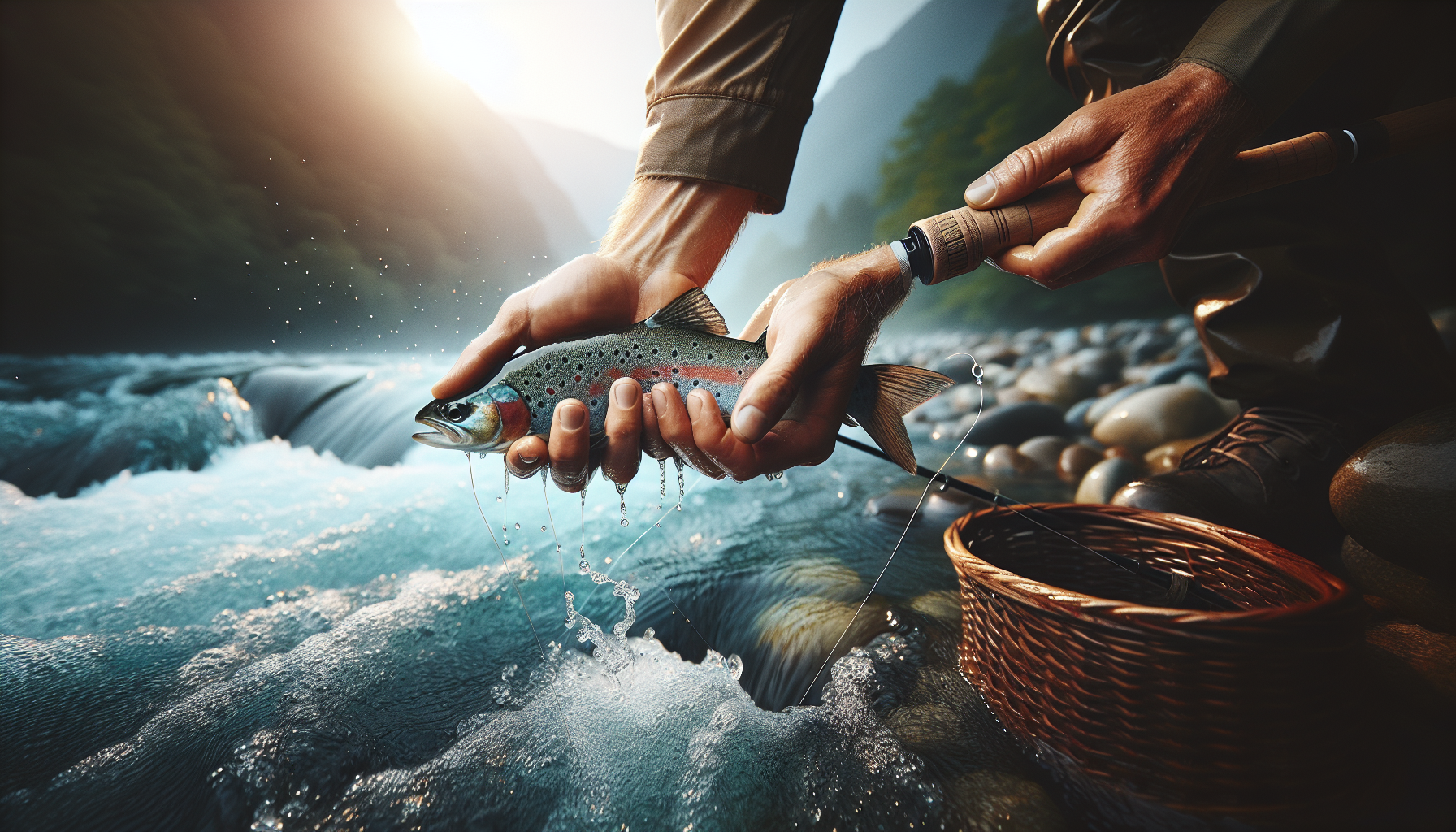
Most long-term change comes from coaching, not confrontation. Beginners often mishandle fish because nobody showed them how to prepare before the hook-up. Keep the net ready. Use forceps on a lanyard. Crimp barbs when appropriate. Fight fish firmly with tackle matched to species and current. Leave the fish submerged while removing the fly. If a photo is necessary, lift briefly, support the body, and return the fish immediately. Explain that “keep em wet” is not a slogan; it is a survival practice supported by fish physiology and post-release mortality research. Anglers retain what they can visualize, so demonstrations work better than abstract instructions.
Peer correction requires humility. Even experienced anglers get things wrong when conditions change. I have stopped fishing rivers I drove hours to reach because afternoon temperatures climbed beyond safe levels. I have also changed wading lines after spotting redds I initially missed in flat light. Saying that out loud helps normalize adaptation. It tells newer anglers that ethical fishing practices are not about perfection or status. They are about paying attention, adjusting behavior, and choosing the resource over ego. If you want better conduct in the fly fishing community, make your own standards visible every trip, every post, and every conversation. Start where you fish next, and make the ethical choice the obvious one.
Frequently Asked Questions
What counts as unethical behavior in the fly fishing community?
Unethical behavior in fly fishing usually includes any action that harms fish, damages habitat, disrespects other anglers, or ignores access rules and local regulations. Common examples include poor fish handling, such as keeping trout out of the water too long for photos, squeezing fish, or fighting them to exhaustion with overly light tackle. It also includes fishing closed water, targeting spawning fish in sensitive areas, exceeding legal limits, using prohibited methods, trespassing across private land, leaving behind tippet and trash, and crowding another angler’s water without permission. On busy rivers, unethical conduct can also show up as cutting in front of someone’s drift, low-holing a run, blasting music at access points, or treating public access as if it were private water.
The reason these behaviors matter is that fly fishing is built on a shared code, not just on written law. Regulations establish minimum standards, but community ethics often go further. An action can be legal and still be irresponsible if it stresses fish during warm water conditions, pressures vulnerable spawning zones, or creates conflict that discourages respectful use of the resource. In practical terms, unethical behavior is anything that puts personal convenience, ego, or social media attention ahead of fish welfare, river health, and mutual respect. When anglers understand that ethics are about stewardship as much as sport, it becomes easier to recognize problems early and respond in a way that protects both the fishery and the culture around it.
What is the best way to address someone who is acting unethically on the water?
The most effective approach is calm, specific, and non-confrontational. Start by assessing whether the situation is safe to address at all. If someone appears aggressive, intoxicated, or openly hostile, it is usually better to avoid a direct confrontation and contact the appropriate authority instead. If the situation feels safe, keep your tone respectful and focus on the behavior rather than attacking the person. A simple, direct statement often works best: “Hey, just so you know, this stretch is private beyond that fence,” or “Water temps are pretty high today, so landing fish quickly and keeping them wet really helps.” Framing the message as helpful information rather than a public correction lowers defensiveness and gives the person room to adjust without feeling humiliated.
It also helps to avoid escalating language like “You’re ruining the river” or “You have no idea what you’re doing.” Those phrases may feel justified in the moment, but they usually shut down any chance of a productive outcome. Instead, use observable facts, local norms, or regulations when possible. If the issue involves crowding, for example, you might say, “I’m working down through this run and would appreciate a little room.” If the issue is fish handling, try, “These fish do better if they stay in the water while unhooking.” Many anglers, especially newer ones, respond well when they realize the concern is about protecting the fishery rather than winning an argument. The goal is not to dominate the interaction. The goal is to improve the behavior, reduce harm, and keep the situation from turning into a conflict that makes things worse for everyone nearby.
When should unethical behavior be reported to a game warden, guide service, shop, or landowner?
You should report behavior when it involves clear legal violations, repeated harmful conduct, threats to people or wildlife, or situations where a private conversation is unlikely to help. Examples include poaching, fishing closed areas, intentional snagging, keeping illegal fish, trespassing, harassing wildlife, damaging habitat, or dumping trash. Serious fish-handling abuse, especially during closures or stressful environmental conditions, may also warrant reporting if it is repeated or clearly intentional. If the issue involves access, such as crossing private land without permission or damaging fences and gates, the relevant landowner, ranch manager, or access manager may need to know. If the person is a client on a guided trip and the guide is encouraging irresponsible conduct, the outfitter, guide service owner, or local regulatory body may be an appropriate point of contact.
When reporting, be factual and organized. Note the location, time, description of the person or vehicle, and exactly what you observed. If it can be done safely and legally, details like license plate numbers, boat registration numbers, or photos of the scene can be helpful, but never put yourself at risk to gather evidence. Avoid exaggeration. A clear report with specific information is more useful than a heated complaint full of assumptions. Reporting matters because enforcement agencies and local businesses can only address patterns they know about. Responsible reporting also protects the larger community by separating honest mistakes from deliberate abuse. It sends the message that ethical fishing practices are not optional and that serious violations have consequences beyond disapproval at the boat ramp.
How can anglers promote ethical fishing practices without creating constant conflict?
The strongest long-term strategy is to build a culture where good behavior is visible, normal, and easy to learn. That starts with modeling the standards you want to see: handling fish gently, crushing barbs when appropriate, respecting spacing, asking before stepping into a run, packing out more trash than you brought in, and honoring closures and private property boundaries. New anglers often learn more from what they observe than from what they are told, so everyday example matters. Fly shops, guides, clubs, and conservation groups also play a major role by teaching river etiquette, fish handling, access rules, and seasonal conservation concerns before problems start. Short conversations at the counter, pre-trip briefings, social media posts, and club outings can all reinforce the idea that ethics are part of fly fishing skill, not an optional add-on.
It also helps to create correction points that feel educational rather than combative. Friendly signage at access areas, shop handouts about local etiquette, and guide reminders about spawning seasons or warm-water stress can reduce ignorance before it turns into harm. Online communities can help too, as long as they focus on constructive education instead of public shaming. Calling out broad patterns without naming and humiliating individuals usually leads to better results. In many cases, conflict grows when people feel they are being judged instead of taught. A community that rewards stewardship, praises respectful behavior, and treats conservation knowledge as part of angling competence will have fewer ugly confrontations because expectations are already clear. The goal is not silence in the face of bad behavior. It is creating enough shared understanding that correction becomes simpler, rarer, and more effective.
What should you do if unethical behavior is common in a local fly fishing area?
If unethical behavior is becoming routine in a particular river, lake, or access point, it usually requires a community-level response rather than a series of isolated confrontations. Start by identifying the patterns. Is the main issue litter, trespass, fish mishandling, crowding, illegal harvest, or social media-driven spot pressure? Once the pattern is clear, the response can be more targeted. Local fly shops, guide networks, conservation nonprofits, TU chapters, access site managers, and wildlife agencies are often the best partners for coordinated action. They can help share accurate information, improve signage, organize cleanups, increase educational outreach, and in some cases request stronger enforcement presence during problem periods. A recurring problem at one access point may reflect poor communication, unclear boundaries, or lack of visible consequences more than bad intentions alone.
At the same time, anglers should resist the temptation to normalize the decline. Saying “that’s just how it is now” gives unethical behavior room to become the accepted standard. If you care about the water, speak up consistently and productively. That may mean documenting recurring issues, attending public meetings, supporting habitat and access groups, volunteering for stewardship events, or encouraging shops and guides to lead by example. It may also mean helping newer anglers understand why certain actions are harmful before they copy what they see others doing. Lasting change usually comes from steady pressure in the right places: education where ignorance is the problem, enforcement where abuse is deliberate, and leadership from respected local voices who can remind people that fly fishing is not only about catching fish. It is about maintaining a culture of respect for the resource, for property, and for each other.