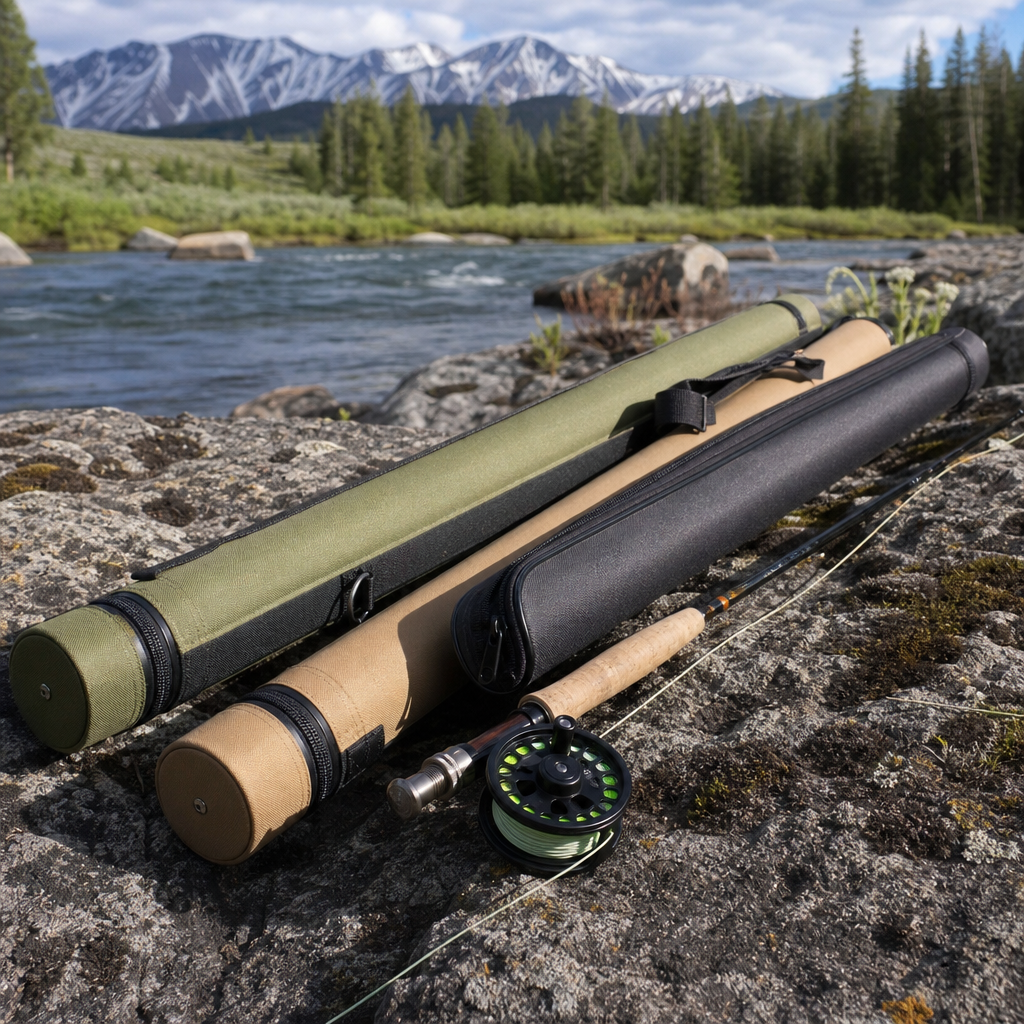
Choosing the right fly fishing rod tube or case is not a minor accessory decision; it is the difference between arriving streamside ready to fish or discovering a cracked guide, crushed ferrule, or broken tip section before the first cast. In fly fishing, rod protection matters because modern rods are light, precise, and expensive, and even a durable blank can be damaged by baggage handlers, truck beds, drift boat decks, or a careless step in the garage. A rod tube is typically a rigid cylindrical container designed for transport and storage, while a rod case may be soft, semi-rigid, or structured with compartments for reels, extra spools, and travel gear. The best fly fishing rod tubes and cases balance impact protection, weight, weather resistance, carry convenience, and fit for the rod length and number of pieces you actually use.
I have used hard aluminum tubes, molded polymer cases, cordura-covered carriers, and integrated rod-and-reel systems over years of road trips, airline travel, and local fishing. The differences become obvious in real conditions. A lightweight cloth sleeve inside a truck is fine for a short drive to a local river, but it is not enough when gear is stacked under coolers and waders. A bombproof travel tube protects against crushing, yet it can be cumbersome on a hike or awkward in overhead storage. That tradeoff is the heart of this review category: no single fly fishing rod tube or case is perfect for every angler, but several stand out depending on how you fish.
This hub article reviews the top fly fishing rod tubes and cases, explains which features matter, and helps you compare accessory reviews across this category. If you are shopping for a fly rod case for airline travel, a compact rod tube for backcountry packing, or a rod-and-reel case for fast rigging at the water, this guide is designed to answer those questions directly. It also serves as the central resource for accessory reviews within product reviews and recommendations, so the goal is not just to name products, but to explain what makes each style worth buying, when it is not, and how to choose confidently.
What makes a fly fishing rod tube or case worth buying
A good fly fishing rod tube does three jobs well: it prevents crushing, limits internal movement, and resists moisture long enough to keep the rod and bag from becoming a mildew trap. Construction matters more than branding. The strongest hard tubes usually use aluminum or thick-wall PVC-style polymer with reinforced end caps. Better soft cases use dense foam panels, structured sidewalls, heavy-duty zippers, and internal straps that stop sections from shifting. If a case allows the rod to slide freely from end to end, impact energy transfers directly into the tip and ferrules, which is exactly what you want to avoid.
Fit is equally important. A case designed for a four-piece 9-foot rod should accommodate the rod sock comfortably without forcing sections into a tight bend. Some cases are universal and work across several rod lengths, but universal fit often means wasted space. Too much empty space is not harmless; it lets gear move during transport. For dedicated travel, I prefer cases built around exact rod lengths or at least adjustable internal retention points. For everyday use, slightly more tolerance is acceptable if the rod remains in its cloth bag and the end caps are secure.
Weather resistance is often misunderstood. Very few rod cases are truly waterproof, and many that look rugged will still absorb moisture around seams or zippers. If you pack a wet rod in a sealed hard tube and leave it in a warm vehicle, condensation and corrosion can build quickly. That is why ventilation, quick-drying liners, and the habit of airing gear out matter as much as shell material. Good protection is not only about surviving impact; it is also about protecting cork, guides, reel seats, and ferrule finishes over months of storage.
Top hard rod tubes for travel and maximum protection
For anglers who fly, check rods as luggage, or store multiple setups in vehicles, hard rod tubes remain the most dependable choice. Fishpond’s Jackalope Rod Tube Case is one of the best-known premium options because it combines rigid protection with thoughtful carry design. Rather than a bare metal tube, it uses a structured cylindrical build with a rugged fabric exterior, shoulder strap, and room for several rods. In practice, that makes it easier to haul through airports or lodge parking lots than traditional screw-cap tubes. It is expensive, but the convenience is real for destination anglers carrying more than one setup.
Sage’s Ballistic Rod Tube is another benchmark in this category. It uses a divided liner with a highly durable outer shell and strong zipper closure, giving better internal organization than older single-chamber tubes. I have found divided storage especially useful for fast-action graphite rods, where preventing section-on-section abrasion matters during long drives. The Ballistic Tube is not the lightest option, but it feels purpose-built for protecting premium rods from brands such as Sage, Scott, Winston, and Orvis. If you own a high-end rod and want matched protection, this style is hard to criticize.
Traditional aluminum tubes still deserve mention, especially those supplied by rod manufacturers like Orvis, Redington, and Thomas & Thomas. Aluminum offers excellent crush resistance and generally ages well, but classic cap-and-tube designs can rattle, dent, and add weight. They also carry poorly compared with shoulder-sling systems. Still, for storage in closets, raft frames, drift boat lockers, or truck cabs, an aluminum rod tube remains one of the most proven protective solutions in fly fishing. It is not glamorous, but it works.
| Product type | Best use | Main strengths | Main limitations |
|---|---|---|---|
| Fishpond Jackalope Rod Tube Case | Air travel, destination trips, multiple rods | High protection, carry strap, premium build, multi-rod capacity | High price, bulkier than single-rod tubes |
| Sage Ballistic Rod Tube | Protecting premium rods in transit | Divided interior, durable shell, excellent impact resistance | Heavier than minimalist options |
| Classic aluminum rod tube | Vehicle storage, home storage, simple travel | Strong crush resistance, proven design, widely available | Less comfortable to carry, can dent, limited organization |
Best soft and semi-rigid fly rod cases for everyday fishing
Not every angler needs airport-grade protection. For local trips, guided days, and frequent rod changes, soft or semi-rigid fly rod cases are often the smarter choice because they are faster to use and easier to stash. Simms, Fishpond, and Orvis have all produced structured cases that blend foam padding with rugged fabric shells. These cases usually shine when you are driving to the river, carrying gear from a cabin to the bank, or storing a rod and reel fully rigged between outings. The value is access: less time assembling and more time fishing.
A strong example is the integrated rod-and-reel case style sold by brands such as Orvis and Redington. These cases allow a multi-piece rod to remain assembled in paired sections with the reel attached, then fold into a padded enclosure. For trout anglers who fish before or after work, that format is genuinely useful. You can slide the case behind a truck seat or into a SUV cargo area and be ready quickly at the water. The compromise is length. These cases are awkward in small vehicles and usually unsuitable for air travel because the semi-rigid shell protects against bumps, not major crush loads.
Plano and Flambeau-style hard-shell utility cases also cross over well for anglers who want affordable rod protection. They are not always marketed specifically for fly fishing, but some longer models fit four-piece rods nicely and cost less than premium fishing-branded options. When I recommend budget choices, this is often the lane I point to first: buy proven protective storage, then verify the internal dimensions carefully. Spending less is fine if the fit and closure system are sound. Cheap cases fail when hinges, latches, or zipper tracks give way under repeated use.
How to choose the right case for airline travel, road trips, and backcountry use
The best fly fishing rod case depends less on the rod itself than on the travel pattern. For airline travel, prioritize crush resistance, reliable closures, visible identification, and dimensions that align with luggage rules. Most four-piece 9-foot fly rods pack into tubes around 30 inches long, which usually fit inside checked duffels or roller bags if the tube diameter is modest. Many anglers assume they can carry rod tubes on board without issue, but policies vary by airline, airport, and crew. A tube that must be gate-checked unexpectedly should be hard enough to survive that decision.
For road trips, the key question is whether the rod will travel assembled, partially assembled, or fully broken down. If you move between spots often, a rod-and-reel case is practical because it reduces setup time and protects guides from tangles with nets, boots, and wader buckles. If gear will be stacked under heavy items in a pickup or raft trailer, choose a true hard tube. In my experience, many broken rods happen on land, not on the water. The common causes are tailgates, doors, coolers, and other gear, which all argue for rigid protection during vehicle transport.
Backcountry use changes the equation again. Weight and packability become more important than maximum impact resistance. A slim carbon-fiber or lightweight polymer tube can make sense for hikers packing small streams or alpine lakes, especially with three-weight and four-weight rods where every ounce matters. However, ultralight cases should still have secure caps and enough wall strength to resist side compression in a backpack. If a bear canister, stove, or camera gear shares that pack, minimal protection is a false economy.
Material quality, closure design, and fit details that separate great cases from average ones
When I assess accessory reviews in this category, I focus on a handful of details that predict long-term satisfaction better than marketing copy. First is closure design. Threaded metal caps can be secure, but they are slow and sometimes seize with grit or corrosion. Friction caps are convenient but less trustworthy under hard use. Heavy-duty zippers on structured cases are often the best everyday solution if the zipper track is protected and the pulls are substantial. Cheap zippers are a deal breaker because once they fail, the case stops being protective in any meaningful sense.
Second is internal organization. Dividers, sleeves, and retention straps are not luxuries; they reduce impact transfer and abrasion. This matters most with premium rods that use high-modulus graphite, where light weight and sensitivity come with a little less abuse tolerance than older, heavier constructions. Third is carry ergonomics. A shoulder strap, grab handle, or attachment points for luggage can be the difference between a case you use and one you leave in the closet. Accessory design succeeds when protection and convenience support each other.
Finally, inspect hardware and stitching. Bar-tacked handle anchors, corrosion-resistant metal components, reinforced end panels, and dense ballistic nylon all signal a case built for years of use. Weak end caps, thin seams, and flexible sidewalls indicate cost cutting. Brand reputation helps, but specifics matter more. Fishpond, Simms, Orvis, Sage, and Patagonia generally understand fishing abuse patterns, yet even within strong brands, some cases are better executed than others. Always compare dimensions, closure systems, and internal structure before buying.
Hub recommendations and who should buy each style
As the hub page for accessory reviews under product reviews and recommendations, this guide points anglers toward the right subcategory rather than forcing one universal winner. If you are a destination angler carrying several premium rods, start with structured hard travel cases such as the Fishpond Jackalope or Sage Ballistic Tube category. If you mostly drive to local water and value quick setup, look at padded rod-and-reel cases from Orvis, Redington, and similar brands. If you want simple, dependable, low-drama storage, classic aluminum tubes still earn a place because they remain durable, affordable, and easy to replace.
Budget buyers should not ignore non-fishing storage brands, but they should measure carefully and avoid flimsy bargain products. Premium buyers should not assume the highest price guarantees the best fit for their use case. The strongest purchase decisions come from matching the case to the transport environment: airport baggage systems, truck interiors, drift boat decks, or backpack miles. That is the recurring lesson from years of handling these products in real life. Protection only works when the design matches the risk.
The best fly fishing rod tubes and cases protect expensive gear, reduce setup friction, and give you confidence when traveling. Start with how and where you fish, then choose the level of protection that matches that reality. Explore the related accessory reviews in this hub, compare specific models by travel style, and upgrade the weak point in your gear system before it costs you a rod.
Frequently Asked Questions
What is the difference between a fly fishing rod tube and a rod case?
A fly fishing rod tube is usually a rigid, cylindrical container designed to protect a broken-down fly rod from impact, crushing, and rough handling during storage or transport. Most rod tubes are made from aluminum, molded plastic, PVC, or reinforced composite materials, and they are built to shield the rod from the kinds of accidents that commonly happen in vehicles, boats, garages, and airports. A rod case, on the other hand, is a broader term that can include rigid tubes, padded sleeves, soft-sided travel cases, and multi-rod carriers. In practical terms, anglers often use “tube” when they mean a hard-shell protective container and “case” when they mean something with more storage, padding, compartments, or travel-oriented features.
For most fly anglers, the choice comes down to how and where the rod will be used. If maximum crush resistance is the priority, a rigid tube is usually the safest option. If you want organization for reels, multiple rods, and accessories, a larger rod case may be more convenient. Some of the best products combine both ideas by using a tough outer shell with interior dividers, padded liners, and adjustable compartments. That makes them especially useful for destination trips, guided float trips, or anyone transporting premium rods that need more than basic protection.
How do I choose the right size rod tube or case for my fly rod?
The most important measurement is the packed length of your fly rod when it is broken down into sections, not the full assembled rod length. For example, a standard 9-foot, 4-piece fly rod typically packs down to around 29 inches, though the exact number varies by manufacturer and ferrule design. You should always measure the longest rod section inside its cloth sock and compare that to the interior length of the tube or case. A good fit allows a little extra room so the rod slides in easily, but not so much space that the sections rattle around during transport.
Beyond length, consider interior diameter and overall capacity. Some tubes are sized for a single rod sock, while others are wide enough for multiple rods, extra tips, or even a rod-and-reel setup. If you travel with several rods, look for cases with interior dividers or separate sleeves to prevent blanks and guides from knocking together. Also think about future use. If you may upgrade to a different rod configuration, carry a spare tip, or pack more than one outfit on trips, slightly more capacity can be worthwhile. The best rod tube or case is one that fits your current rod securely while still matching how you actually fish and travel.
Are hard rod tubes better than soft fly rod cases for travel and storage?
For impact protection, hard rod tubes are generally better. They are specifically designed to prevent damage from crushing, bending, and direct blows, which are the main threats to fly rods during travel and storage. If a rod is going into checked luggage, the back of a truck, a drift boat compartment, or a crowded gear pile, a rigid tube provides a much higher margin of safety than a soft case. Hard tubes are especially valuable for expensive graphite rods, delicate tip sections, and travel situations where you cannot control how your gear will be handled.
That said, soft cases still have a place. A well-padded soft case can be excellent for organized vehicle transport, home storage, or short walks to the water when the risk of crushing is low. Some anglers prefer them because they are lighter, easier to pack, and often have more accessory storage. The right answer depends on the abuse your gear is likely to face. If protection is the top priority, choose a rigid tube. If convenience and storage matter more and the rod will stay under your control, a soft case may be enough. Many experienced anglers use both: a hard tube for serious travel and a soft case or sleeve for day-to-day transport.
What features should I look for in the best fly fishing rod tubes and cases?
The best fly fishing rod tubes and cases do more than simply hold a rod. Start with structural protection. Look for durable materials, solid end caps, dependable closures, and a design that resists crushing and impact. Interior protection matters too. A quality liner, smooth interior surfaces, and secure fit help prevent rod sections from shifting, rubbing, or putting stress on ferrules and guides. If you carry multiple rods, internal dividers or separate compartments are a major advantage because they reduce contact between rod sections.
Convenience features can make a big difference in real-world use. Adjustable shoulder straps, carry handles, luggage-friendly dimensions, and water-resistant construction all improve usability. Some premium cases include room for reels, extra spools, leaders, and travel documents, which is helpful for destination anglers who want one organized system. Weight is another factor. A bombproof tube is great, but if it is excessively heavy or awkward, it may be less practical for flights and long carry distances. Ultimately, the best rod tube or case balances protection, fit, portability, and organization in a way that matches your style of fishing, whether that means local day trips, multi-day road travel, or airline travel with high-end gear.
Is it worth buying a premium fly rod tube or case, or will a basic model do the job?
It depends on the value of your rod, how often you travel, and how much risk your gear is exposed to. If you fish occasionally, mainly store your rod at home, and drive to nearby water with the rod under your supervision, a basic but properly sized tube may be all you need. Many simple rod tubes do a perfectly acceptable job of keeping dust, minor bumps, and casual transport hazards from turning into expensive repairs. In those situations, paying for high-end materials and extra travel features may not provide much real benefit.
However, premium rod tubes and cases are often worth it for anglers with expensive rods, frequent travel plans, or demanding conditions. Better construction, tighter tolerances, improved padding, stronger closures, and more thoughtful storage layouts can make a real difference over time. If your rod might be checked on a flight, tossed in a truck bed, packed with other heavy gear, or carried on remote trips where a broken rod could ruin the experience, the added protection of a premium case is easy to justify. A fly rod is a precision tool, and compared with the cost of replacing a damaged blank or missing valuable fishing time, investing in a high-quality rod tube or case is often a smart and economical decision.