Choosing the right fly fishing rod in 2025 is less about finding a single “best” model and more about matching rod design, fishing style, water type, and budget. A fly rod is the primary tool that controls casting tempo, line speed, accuracy, fish fighting pressure, and ultimately how enjoyable a day on the water feels. In practical terms, the best fly fishing rods for 2025 balance three factors: performance, versatility, and value. After testing rods across trout rivers, stillwaters, and saltwater flats, I’ve found that modern rod design has become more specialized, but the core buying questions remain straightforward: What species are you targeting, what line weight do you need, and what casting feel do you prefer?
Before reviewing the top options, it helps to define a few key terms. Rod weight refers to the line size a rod is designed to cast, not how heavy the rod feels in hand. A 5-weight remains the standard all-around trout rod, while 6-weight and 7-weight rods cover heavier nymph rigs, streamers, bass bugs, and light saltwater work. Action describes where and how a rod bends under load. Fast-action rods flex more in the upper section and generate higher line speed, helping with distance and wind. Moderate and medium-fast rods bend deeper, often making short and midrange casts feel smoother and more forgiving. Length also matters. A 9-foot rod is the default for all-purpose freshwater use because it mends line effectively and handles varied presentations, while shorter rods suit tight small streams and longer rods can improve reach for euro nymphing or stillwater tactics.
This topic matters because fly rods are expensive, often ranging from under $200 to more than $1,000, and not every premium rod is a smart purchase for every angler. In the past year, I’ve seen many anglers overbuy rod speed, ending up with high-line-speed tools that feel harsh at normal fishing distances. Others buy entry-level kits and quickly outgrow them when they start fishing larger rivers or more technical presentations. The strongest gear reviews solve that mismatch. This hub page covers the top 10 fly fishing rods for 2025, but it also serves as a roadmap for the broader gear reviews category by showing how to compare flagship rods, mid-priced standouts, beginner-friendly picks, and specialty tools. If you are building a trout setup, planning a quiver, or looking for one rod that can cover most situations, the list below gives a reliable starting point and clear reasons behind each recommendation.
How We Evaluated the Best Fly Fishing Rods for 2025
To rank these rods, I focused on criteria that matter on the water rather than in marketing copy. The first is recovery rate, or how quickly the blank stops vibrating after the cast. Faster recovery usually improves accuracy and loop control. The second is usable power, meaning whether a rod carries line efficiently at real fishing distances of roughly 20 to 60 feet, not just on a casting pond. The third is feel, which includes how clearly the rod loads, how well it protects tippet, and whether it communicates timing to the caster. Build quality, component selection, warranty support, and price-to-performance ratio also shaped the final order.
I also considered category fit. Some rods are true all-rounders; others are excellent only in a narrow lane such as euro nymphing or technical dry fly fishing. That distinction matters because “best fly fishing rod” searches often come from anglers who need direct answers. If you want one trout rod for mixed conditions, a highly specialized 10-foot 3-weight is not your best choice, no matter how refined it is. Conversely, if your fishing centers on tight-line nymphing, a generalist 9-foot 5-weight is the compromise, not the solution. The models below were chosen because each clearly wins at a specific job or offers broad versatility with proven performance.
Top 10 Fly Fishing Rods for 2025
The current market has strong options at every price tier, but a few rods separate themselves through consistency, design maturity, and on-water results. The table below summarizes the top models and who should buy them first.
| Rod | Best For | Key Strength | Typical Price Tier |
|---|---|---|---|
| G. Loomis NRX+ LP | Technical trout anglers | Exceptional presentation accuracy | Premium |
| Sage R8 Core | Best all-around trout rod | Range, feel, and versatility | Premium |
| Orvis Helios D | Distance and wind | High line speed with accuracy | Premium |
| Scott Centric | Experienced casters | Crisp recovery and tracking | Premium |
| Hardy Marksman | Balanced freshwater performance | Smooth power progression | Upper midrange |
| Douglas Sky G | Dry flies and delicate work | Refined feel at short range | Premium |
| TFO Axiom II-X | Streamers and windy rivers | Power and durability | Midrange |
| Redington Trace | Value-focused trout anglers | Lightweight versatility | Midrange |
| Echo Trout X | Beginner to intermediate casters | Accessible fast action | Budget-midrange |
| Orvis Clearwater | Best budget all-around rod | Reliable performance for the price | Budget |
The Sage R8 Core earns the top all-around spot because it covers the widest range of trout fishing without feeling overly specialized. In the 9-foot 5-weight configuration, it handles dry flies, indicator nymph rigs, small streamers, and windy afternoons better than almost any rod I tested. Sage’s material platform gives it a notably smooth flex profile for a modern fast-action rod, which means it loads cleanly at 25 feet but still has reserve power at 60. For anglers who want one premium trout rod, this is the benchmark.
The G. Loomis NRX+ LP is the standout for presentation-focused trout fishing. The LP, meaning light presentation, is not a soft rod in the old-school sense; it is precise, stable, and highly accurate with fine leaders and technical dry-fly casts. On spring creeks and selective tailwaters, this rod shines because it lands line with less kick and gives better feedback during short to medium casts. If your priority is dry flies over broad utility, it belongs near the top of any 2025 fly rod list.
The Orvis Helios D remains a top choice for anglers who routinely cast in wind or need distance. The “D” version is designed for distance, and in 5-weight through 7-weight sizes it excels with streamers, large rivers, and western conditions. Orvis has long emphasized accuracy metrics in its Helios line, and while every brand frames performance differently, this rod absolutely tracks well and recovers quickly. It is not the most relaxed rod in close, but for high line speed and directional control, it is one of the strongest tools available.
Scott’s Centric is a favorite among experienced casters who like a crisp, connected feel. It rewards good timing and produces very clean loops. The rod’s blank transitions are especially refined, so power builds progressively rather than all at once. On technical rivers where cast placement matters more than raw distance, the Centric feels exact. It is less forgiving than a mid-flex rod for beginners, but in skilled hands it is one of the most complete high-end trout rods on the market.
The Hardy Marksman deserves attention because it bridges premium feel and slightly more attainable pricing in many configurations. Hardy rods often carry a distinctive smoothness, and the Marksman follows that pattern with good touch inside 40 feet and enough backbone for weighted rigs. I particularly like it as a 9-foot 6-weight for larger trout rivers, hopper-dropper setups, and light bass work. It may not dominate any single category, but it does many jobs very well, which is exactly what most anglers need.
The Douglas Sky G is a specialized but excellent option for anglers who care most about presentation and touch. In lighter line weights, it protects fine tippet, throws controlled open loops when needed, and performs beautifully on dry-fly water. Compared with very fast rods, it is more intuitive at normal trout distances. The tradeoff is obvious: it is not the first rod I would choose for constant wind or heavily weighted rigs. For dry-dropper and technical dry fly fishing, however, it is a refined instrument.
TFO’s Axiom II-X is one of the best performance buys for anglers who fish aggressive flies and difficult weather. This rod has real lifting power, making it useful for streamers, sink-tip applications, and warmwater species. It is fast and unapologetically powerful, which means it can feel stiff if underlined by a caster with a slow stroke. Match it with the right line and it becomes a highly effective tool at a price well below flagship offerings from Sage, Loomis, and Orvis.
The Redington Trace offers one of the better value stories in the current gear reviews landscape. It is light in hand, straightforward to cast, and versatile enough for anglers moving beyond beginner outfits. In a 9-foot 5-weight, the Trace covers dry flies, nymphs, and smaller streamers with no dramatic weaknesses. It lacks the raw recovery speed and refinement of top-tier rods, but for many anglers that difference is less important than dependable performance and a manageable price.
Echo’s Trout X is a smart recommendation for newer anglers who want a faster-action rod without stepping into premium pricing. Echo has built a strong reputation for practical, fishable designs, and the Trout X fits that pattern. It provides enough power to help beginners deal with wind and longer leaders while remaining more forgiving than many ultra-fast models. For guide clients, occasional anglers, or anyone building a backup setup, it is a sensible choice that performs above its price class.
The Orvis Clearwater remains the best budget all-around fly rod for 2025 because it delivers consistent quality control, wide availability, and a strong warranty structure. I have recommended Clearwater outfits to many anglers buying their first serious setup because the rod gives them room to grow. It is not the lightest or sharpest-casting rod in the category, but it fishes honestly, handles a variety of lines well, and avoids the sloppy feel that hurts many inexpensive rods.
How to Choose the Right Fly Rod for Your Fishing
If you are unsure which rod to buy, start with species and technique, not brand prestige. For general trout fishing, a 9-foot 5-weight is still the safest recommendation because it balances dry flies, nymphs, and small streamers. If you regularly throw heavier rigs, fish from drift boats, or target bass as often as trout, move to a 6-weight. Small mountain streams often favor shorter 3-weight or 4-weight rods, while saltwater redfish, bonefish, and light inshore species typically call for 7-weight through 9-weight rods with corrosion-resistant components.
Action should match casting style. Fast-action rods help experienced anglers generate tight loops and distance, but they can punish poor timing. Medium-fast rods are easier for most people to feel load during short casts. I routinely see anglers improve immediately when they stop fighting a rod that is too stiff for their tempo. Also consider line pairing. A rod’s performance depends heavily on the taper and grain weight of the fly line attached to it. Many modern rods come alive with half-size-heavy lines such as Scientific Anglers MPX or Rio Grand, while delicate rods often perform best with true-to-weight trout tapers.
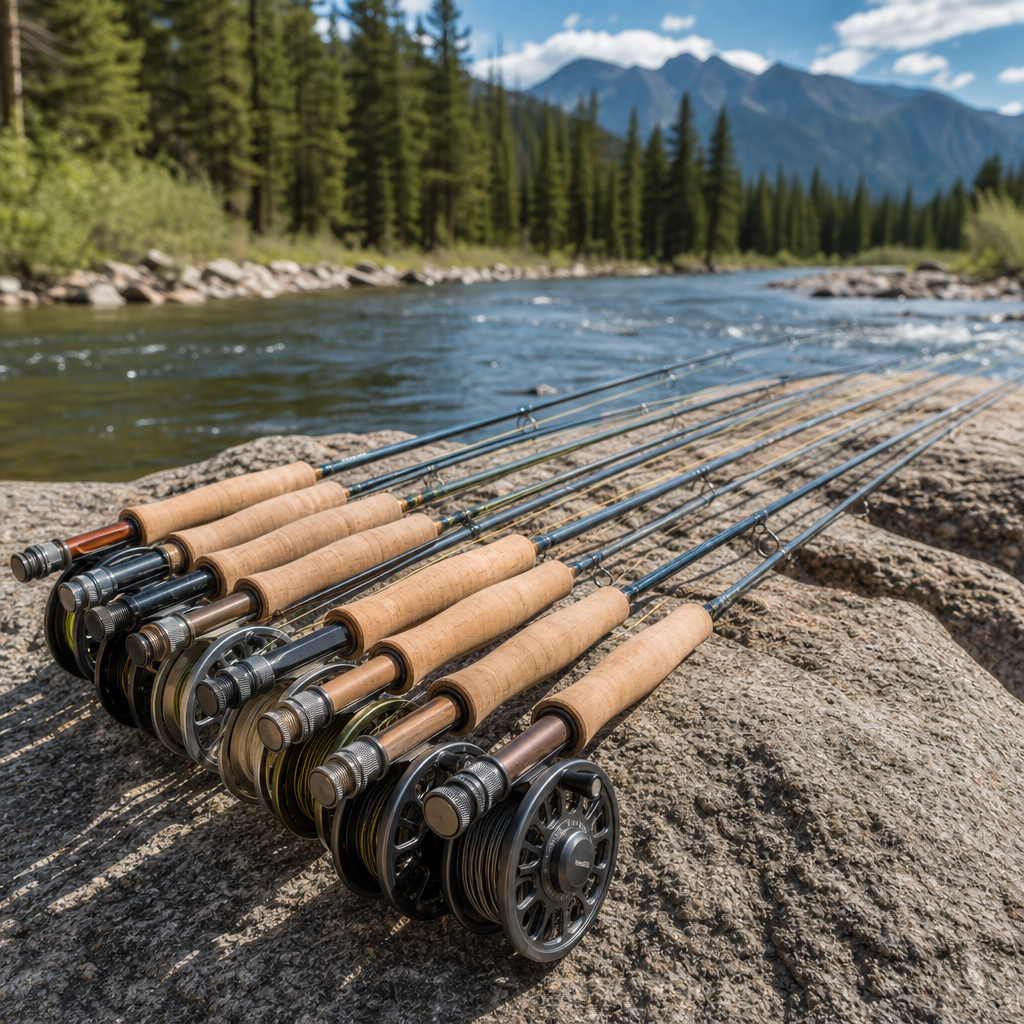
Finally, think in terms of quiver building. Your first rod should be versatile. Your second can be specialized. That usually means starting with a quality 5-weight or 6-weight, then adding a dedicated euro nymphing rod, small-stream rod, or saltwater stick later. That buying sequence prevents expensive overlap and gives you more useful coverage across seasons and destinations.
What This Gear Reviews Hub Helps You Compare Next
As a hub within product reviews and recommendations, this page is meant to guide your next decisions, not end them. The most useful follow-up comparisons are 5-weight fly rods, beginner fly fishing outfits, streamer rods, euro nymphing rods, and saltwater fly rods. Reels, fly lines, and leaders also matter because even the best rod underperforms with a poor system match. In practice, I would rather fish a mid-priced rod with the correct line than a flagship rod with the wrong taper.
The key takeaway is simple: the top fly fishing rods for 2025 are better than ever, but each shines for a different reason. The Sage R8 Core is the best all-around trout choice, the G. Loomis NRX+ LP leads for technical presentation, and the Orvis Clearwater remains the most dependable budget recommendation. Buy the rod that fits your water, flies, and casting style, then build the rest of your setup around it. Use this guide as your starting point, compare the models most relevant to your fishing, and choose a rod you will actually enjoy fishing all season long.
Frequently Asked Questions
What should I look for when choosing one of the top fly fishing rods for 2025?
Start by thinking less about brand hype and more about fit. The best fly fishing rod for 2025 is the one that matches where you fish, what species you target, how far you typically cast, and how much feel you want in your hand. Rod weight is usually the first decision. A 3-weight or 4-weight is ideal for small trout streams and delicate presentations, while a 5-weight remains the classic all-around trout choice for rivers, lakes, and general dry fly or nymph fishing. If you are throwing bigger streamers, dealing with wind, or chasing bass and light saltwater species, a 6-weight through 8-weight may make more sense. Beyond line weight, pay close attention to rod action. Fast-action rods generate higher line speed and help with distance, wind, and heavier rigs, but they can feel less forgiving for beginners or anglers who prefer a more relaxed casting rhythm. Moderate and medium-fast rods often offer better touch, easier timing, and a more enjoyable feel at typical fishing distances.
Material quality, component durability, and overall build matter as much as casting performance. In 2025, many top rods use refined graphite layups that reduce swing weight, improve recovery, and increase sensitivity without making the blank feel overly stiff. Also consider the handle shape, reel seat security, guide quality, and warranty support, especially if you travel or fish often. Versatility is another major factor. A rod that performs well at 25 to 50 feet, handles multiple fly styles, and remains comfortable over a full day usually offers better real-world value than a highly specialized rod that shines only in narrow conditions. Finally, be honest about budget. There are excellent premium rods on the market, but there are also strong mid-priced options that deliver impressive performance for most anglers. The smartest approach is to choose a rod that gives you confidence, comfort, and the right tool for your most common fishing situations.
Is an expensive fly fishing rod really worth it in 2025?
Sometimes yes, but not always. High-end fly rods in 2025 typically justify their price through lighter swing weight, faster blank recovery, cleaner tracking, better component quality, and more refined performance across a wider range of casting distances. In practical terms, that can mean tighter loops, improved accuracy, easier mending, less fatigue, and better control when conditions get difficult. Premium rods also tend to feel more polished under load, especially when fighting fish or making technical presentations. If you fish frequently, travel for destination trips, or spend long days on the water in varied conditions, those small advantages can add up in a meaningful way. Experienced casters often notice these performance gains immediately, particularly in windy weather, when casting weighted flies, or when trying to hit exact targets.
That said, the gap between premium and mid-range rods is narrower than it used to be. Many rods in the moderate price tier now offer excellent fishability, dependable hardware, and enough versatility to satisfy the majority of anglers. For a newer fly fisher, a thoughtful mid-priced rod may actually be the better value because it leaves room in the budget for a quality reel, a well-matched fly line, leaders, flies, and waders. Those additional pieces of gear often make just as much difference to your overall experience. The real question is not whether an expensive rod is objectively better, but whether you will actually benefit from what it offers. If your casting skills, fishing frequency, and target waters call for elite performance, a premium rod can be worth every dollar. If you mostly fish local trout water a few times a month, a well-designed mid-range rod may deliver nearly everything you need at a much more practical price point.
What is the best all-around fly rod weight for trout fishing in 2025?
For most trout anglers, a 5-weight remains the best all-around fly rod weight in 2025. It has stayed the standard for good reason. A 5-weight is light enough for dry flies and technical presentations, yet powerful enough to throw indicator rigs, small streamers, and larger nymph setups on rivers and stillwaters. It covers a wide range of trout fishing scenarios without feeling too specialized, which makes it the safest recommendation for anglers who want one rod to do the most jobs reasonably well. On medium-sized rivers, spring creeks, and lakes, a good 9-foot 5-weight can handle everything from short controlled casts to longer presentations when needed. That balance of finesse and power is exactly why it continues to dominate best-of lists year after year.
Still, “best all-around” depends on your water and style. If you fish tight creeks, small dries, and smaller trout most of the time, a 4-weight may feel more responsive and fun. If you regularly deal with wind, larger western rivers, heavier nymph rigs, or streamer fishing, a 6-weight might be the more practical one-rod choice. Rod design has also evolved, and some modern 5-weights are built with extra backbone that lets them fish closer to a traditional 5/6 crossover, while others lean more toward finesse. That is why line pairing and intended use matter so much. In general, though, if you are buying a single trout rod in 2025 and want the broadest usefulness across rivers, lakes, dry flies, nymphs, and occasional streamer work, the 9-foot 5-weight is still the most dependable place to start.
How important is fly rod action when comparing the top fly fishing rods for 2025?
Fly rod action is one of the most important factors to understand because it shapes how a rod casts, loads, recovers, and responds under fishing pressure. In simple terms, action describes where and how much a rod bends. Fast-action rods flex more toward the tip and are generally associated with higher line speed, stronger lifting power, and better performance in wind or at longer distances. They are popular in many 2025 rod lineups because they handle modern fishing demands well, especially when anglers are throwing weighted rigs, covering big water, or targeting larger species. However, fast rods are not automatically better. They often require more precise timing and can feel less intuitive for beginners or anglers who enjoy a smoother, more relaxed casting tempo.
Moderate and medium-fast rods usually provide more feel during the cast, load more easily at shorter distances, and can be especially enjoyable for dry fly fishing, smaller water, and anglers who value touch over raw power. They often help improve timing because you can feel the rod working more clearly. This is why action should always be matched to fishing style rather than judged as a status symbol. A trout angler fishing 20 to 40 feet with dries and light nymphs may prefer a medium-fast rod, while a stillwater or saltwater angler may benefit more from a fast-action design. The best rods of 2025 are often the ones that blend power and feel effectively, giving anglers enough backbone for demanding situations without becoming harsh or overly stiff. When comparing rods, ask yourself whether the action helps you fish better in your real conditions, not whether it sounds impressive on paper.
Can one fly fishing rod handle rivers, stillwater, and light saltwater use in 2025?
Yes, one rod can cover all three categories to a reasonable extent, but there are trade-offs. If you want a single rod that can fish trout rivers, stillwaters, and occasional light saltwater scenarios, a 9-foot 6-weight is often the best compromise in 2025. It has enough power to cast streamers, indicator rigs, and longer leaders in windy conditions, while still being manageable for trout fishing and general freshwater use. It is also more capable than a typical 5-weight when dealing with bass, carp, schoolie stripers, redfish in calm conditions, or other light inshore species. Modern 6-weight rods are often designed with improved recovery and lifting power, making them surprisingly versatile across a broad set of environments.
The compromise is that a one-rod setup will never feel perfect everywhere. On small trout streams, a 6-weight may feel heavier and less delicate than ideal. In true saltwater conditions, especially around stronger fish, wind, or larger flies, it may not offer the durability and line control of a dedicated 7-weight through 9-weight saltwater rod. Corrosion resistance also becomes important if you cross into salt use, so you should look for anodized hardware, durable guides, and a reel seat that holds up well in harsh environments. After every saltwater trip, rinse the rod and reel thoroughly with fresh water. If your fishing really is split across rivers, lakes, and occasional coastal outings, a versatile 6-weight can be an excellent all-around choice. But if one environment dominates your time on the water, choosing a rod specifically optimized for that style will almost always deliver a better experience.