High-end fly fishing reels sit at the intersection of performance, craftsmanship, and personal preference, which is why anglers argue about them more than almost any other piece of gear. In simple terms, a fly reel stores line, balances the rod, and controls fish through its drag system. A premium reel usually adds tighter machining tolerances, stronger drag materials, better sealing, lighter weight, and a higher standard of finish than budget models. Prices commonly range from about $500 to well over $1,200, with flagship saltwater reels climbing higher. The central question is straightforward: are expensive fly reels genuinely better, or are buyers paying mainly for prestige and polish?
After years of fishing mountain trout streams, steelhead rivers, and windy saltwater flats, I have learned that the answer depends less on sticker price alone and more on where, how, and how often you fish. A reel that feels extravagant on a spring creek can be a smart insurance policy when a bonefish dumps you into the backing or a salmon makes a blistering downstream run. For readers exploring gear reviews and recommendations, this topic matters because reels are long-term purchases. Unlike leaders, fly lines, or even waders, a good reel can stay in service for decades if maintained properly.
Understanding value starts with understanding what you are buying. High-end fly fishing reels are typically machined from bar-stock aluminum rather than cast. They often use large-arbor designs for faster line pickup, sealed carbon or composite drag systems for smoother resistance, and anodized finishes that resist corrosion. Brands such as Abel, Hatch, Nautilus, Ross, Bauer, Hardy, Tibor, and Lamson have built reputations around these features. The practical benefit is not that every premium reel catches more fish every day; it is that a top reel usually performs more consistently under stress, especially when water, grit, heat, and repeated hard runs expose weaknesses in cheaper designs.
This hub article covers gear reviews from that practical angle. It explains what separates premium reels from mid-priced options, where expensive reels deliver measurable advantages, and where they offer only marginal gains. It also addresses common buyer questions directly: Do trout anglers need a sealed drag? Does machining quality matter? Is resale value part of the equation? By the end, you should know whether a high-end fly fishing reel fits your fishing, your budget, and your long-term gear strategy.
What makes a fly reel high end
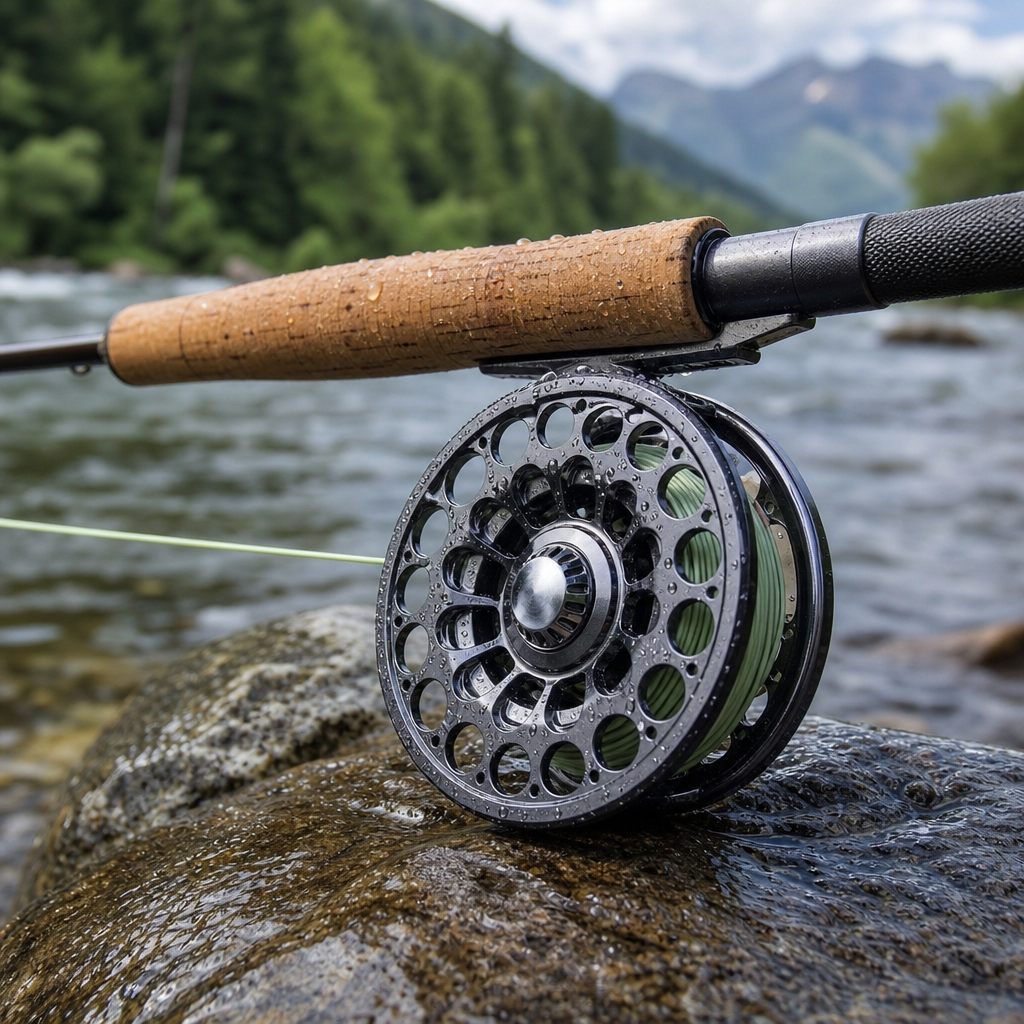
A high-end fly reel is defined by engineering quality more than by branding. The first marker is construction. Premium reels are usually CNC machined from 6061-T6 or similar aerospace-grade aluminum bar stock. Machining from a solid block creates better structural integrity, tighter tolerances, and a more precise frame-to-spool fit than cast construction. That matters because excess play can create wobble, uneven startup inertia, and line trapping between spool and frame. On the water, those small manufacturing details show up when a fish runs hard and the reel stays smooth instead of chattering or binding.
The second marker is drag design. Better reels use disc drags with carbon fiber, cork, stainless steel, or proprietary composite stacks. In saltwater models, a fully sealed drag is often the dividing line between serious and casual performance. Sealed does not mean waterproof forever, but it greatly reduces contamination from salt crystals, sand, and silt. Startup inertia is the key metric many anglers overlook. A drag can have strong max pressure, but if it starts jerky, it can pop fine tippets. The best reels engage smoothly from zero to pressure, which is especially important for trout on 5X and 6X, or for permit and bonefish that accelerate instantly.
Weight and balance also matter. Premium reels often remove unnecessary material without sacrificing rigidity, producing a strong frame at lower weight. That can reduce wrist fatigue on long casting days and help balance modern fast-action rods. Arbor size affects retrieve speed and line memory. Large-arbor reels recover line faster and reduce coiling compared with older standard-arbor designs. None of these features alone justify the price, but together they define what anglers are actually paying for: controlled performance, durability, corrosion resistance, serviceability, and confidence.
Where expensive reels earn their price on the water
High-end fly fishing reels justify their cost most clearly in demanding fisheries. Saltwater is the obvious example. Bonefish, redfish, striped bass, false albacore, and tarpon expose weaknesses in drag consistency and corrosion resistance fast. I have seen inexpensive reels fish fine for a season, then develop sticky startup, pitted hardware, or frame corrosion after repeated spray and imperfect rinsing. A well-built sealed reel from Hatch, Nautilus, Tibor, or Abel tends to tolerate abuse better, and that reliability is not theoretical when a fast fish is fifty yards into backing.
Big freshwater fish create a second use case. Steelhead, Chinook salmon, Atlantic salmon, large carp, pike, musky, and trophy lake trout can all put sustained pressure on a reel. Here, frame rigidity matters because a bent frame or flexing spool can cause line rub at exactly the wrong moment. A stronger drag also helps when fish surge near the boat and you need repeatable adjustment instead of guesswork. Even in trout fishing, premium reels become more useful when nymphing with long leaders in current, fishing streamers for big browns, or chasing large western fish that use heavy flow to their advantage.
The advantage also appears over time. Better anodizing, stainless internals, and replaceable wear parts mean premium reels usually age better. Many manufacturers still service reels that are ten, twenty, or even thirty years old. That matters because a $900 reel that performs reliably for fifteen years and retains meaningful resale value can be cheaper in total ownership than two or three lower-priced reels replaced along the way. This is one of the least glamorous but most convincing arguments in serious gear reviews: longevity is performance, not just accounting.
When a premium reel is not necessary
Not every angler needs a top-tier reel. For small-stream trout fishing, especially on 3-weight to 5-weight setups, the reel often serves mainly as line storage and counterbalance. If you are casting dry flies on brook trout creeks where fish rarely take line from the reel, a smooth click-and-pawl or a simple mid-priced disc-drag reel may do everything required. In these settings, money usually buys more practical improvement when spent on fly line, waders, lessons, or travel to better water.
This is where expectations should stay realistic. A $900 reel will not make a poor cast straighter or a weak mend cleaner. It will not help you see subtle eats, choose better flies, or position the boat correctly on a seam. Premium tackle can elevate an already solid system, but it rarely fixes foundational skill gaps. I often advise new anglers to invest first in a quality rod matched to an excellent line, because those two elements influence casting and presentation more directly than a premium reel in most trout situations.
There is also a middle market that performs very well. Reels from Lamson, Redington, Orvis, Sage, Galvan, and Ross often deliver strong drag performance, useful tolerances, and reliable anodizing at lower price points than boutique flagships. Some lack the refinement, finish depth, or long-term parts support of the most expensive models, but many are objectively capable fishing tools. For anglers who fish a few weekends a month in freshwater and maintain their gear carefully, the performance gap may be noticeable only under side-by-side comparison, not during everyday fishing.
How premium reels compare by use case
The best way to judge value is by matching reel features to fishing conditions. A trout angler on moderate rivers needs different strengths than a permit angler wading coral flats. The table below shows where spending more typically produces the clearest return.
| Use case | Most important reel features | Is high end worth it? | Why |
|---|---|---|---|
| Small-stream trout | Low weight, balance, basic smooth drag or clicker | Usually no | Fish rarely test drag; funds often work better elsewhere |
| Large-river trout | Smooth startup, rigidity, fast retrieve | Sometimes | Helpful for streamers, heavy current, and larger fish |
| Steelhead and salmon | Strong drag, frame strength, durability | Often yes | Long runs and heavy pressure expose weak reels quickly |
| Bonefish and flats species | Fully sealed drag, corrosion resistance, large arbor | Yes | Salt, sand, and speed demand dependable components |
| Tarpon and big game | High drag pressure, heat management, service support | Yes | Failure is expensive when travel and guide days are involved |
This comparison shows a consistent pattern. The harsher the environment and the stronger the fish, the more a high-end reel moves from luxury to rational purchase. The lighter the species and the simpler the fishing, the more the reel becomes a preference item rather than a necessity.
How to evaluate drag, machining, and long-term durability
When reading gear reviews, anglers often focus too much on brand reputation and too little on testable features. Start with drag quality. Ask whether the reel has low startup inertia, useful max drag, and repeatable adjustment. A drag knob should produce predictable changes without being too sensitive or too coarse. Listen for chatter under load. If possible, pull line off by hand with steady pressure and then with short bursts. A premium drag should remain smooth in both cases.
Next, inspect machining and frame design. Check spool fit, side-to-side play, and whether backing could slip between frame and spool. Look at reel foot integration, handle attachment, and edge finishing. On lower-quality reels, corners may feel rough, tolerances may be loose, and spool changes may be inconsistent. On premium reels, the fit should feel exact, with no accidental looseness masquerading as free-spinning efficiency. Tight tolerances are not just aesthetic; they help prevent vibration and wear.
Durability depends on materials, finish, and service. Type II and Type III anodizing are common terms worth knowing, with harder coatings generally offering better abrasion and corrosion resistance. Stainless steel drag plates, quality bearings, and easy access to consumable parts all matter. Service reputation matters just as much. Hatch, Abel, Tibor, Ross, and Hardy, among others, have built loyal followings partly because they continue to support reels after the sale. That is an essential point for any product recommendations hub: after-sales support is part of product value, especially for gear expected to last decades.
Brand reputation, resale value, and the emotional side of ownership
It is impossible to discuss high-end fly fishing reels honestly without addressing brand identity and emotional value. Some premium reels are expensive because they are genuinely expensive to machine, assemble, finish, and support in lower production volumes. Others also command higher prices because they carry heritage, distinctive sound, domestic manufacturing, custom finishes, and collector appeal. Abel is a clear example. Many anglers buy Abel reels for excellent performance, but also for finish work, anodized artwork, and a recognizable outgoing sound. Those qualities do not improve drag pressure, yet they still contribute to ownership value.
Resale value is another factor that practical buyers should not ignore. Well-kept reels from top brands often hold value far better than mid-market models. A premium reel bought used can be especially smart because the first owner absorbs the steepest depreciation while the second owner still gets premium engineering. I have seen carefully maintained Nautilus, Hardy, and Hatch reels resell quickly because buyers trust the underlying build and know parts and service remain available.
Then there is confidence, which is real even if it is not easily measurable. When your reel has already survived dunkings, airline travel, skiff decks, freezing guides, and years of hard seasons, you stop thinking about failure and focus on fishing. That peace of mind has value. It should not be confused with necessity, but it should not be dismissed either. Good gear reviews separate functional value from emotional value without pretending the emotional side does not exist.
Best buying advice for this gear reviews hub
If you are deciding whether to buy a high-end fly fishing reel, start by classifying your fishing into three buckets: light freshwater, heavy freshwater, or saltwater. Light freshwater anglers should prioritize balance, simplicity, and budget discipline. Heavy freshwater anglers should look for stronger drags, excellent frame rigidity, and known service support. Saltwater anglers should insist on a sealed drag, proven corrosion resistance, and a manufacturer with a strong service record. Buy for the hardest conditions you will actually fish, not the aspirational trip you might take once.
Second, think in systems, not single products. A reel works with a rod, fly line, backing, leader, and intended species. A premium reel paired with poor line is a mismatched purchase. If your overall budget is fixed, allocate enough toward line and travel before overspending on machining. Third, consider used gear from top brands. It is one of the smartest paths into premium tackle because the mechanical lifespan of a quality reel often exceeds its cosmetic lifespan by years.
High-end fly fishing reels are worth the price when your fishing regularly demands top drag performance, corrosion resistance, structural strength, and long-term serviceability. They are less worth it when the reel acts mostly as line storage on small trout water. That is the honest conclusion across serious gear reviews. Match the reel to the fishery, buy once when the demands are real, and skip the prestige tax when they are not. If you are building out your product reviews and recommendations shortlist, use this hub as your starting point, then compare models by species, environment, and service reputation before you buy.
Frequently Asked Questions
Are high-end fly fishing reels actually worth the price?
For some anglers, absolutely; for others, not necessarily. A high-end fly fishing reel is usually worth the price when you fish often, target strong or fast-running species, spend time in saltwater, or simply place a high value on refined gear that performs consistently over many seasons. What you are paying for is not just the ability to hold fly line. Premium reels typically offer better machining tolerances, smoother startup inertia, stronger and more consistent drag systems, improved sealing against water and grit, lighter overall weight, and a higher level of fit and finish. Those things may sound subtle on paper, but on the water they can translate into a reel that balances the rod better, protects lighter tippets more effectively, and stands up to repeated abuse with less maintenance.
That said, “worth it” depends on how you fish. If most of your time is spent on small trout streams where the reel mainly stores line and fish are controlled by hand stripping, a budget or mid-range reel can do the job extremely well. In that scenario, putting more money into a better rod, line, or travel budget may improve your fishing experience more than upgrading the reel. But if you are chasing big trout, steelhead, salmon, bonefish, redfish, or other species that regularly test your drag, a premium reel becomes much easier to justify. In short, expensive reels are not automatically necessary, but they are often genuinely better tools, and for serious anglers the long-term performance, durability, and confidence can make the cost feel reasonable.
What makes a premium fly reel better than a budget reel?
The biggest differences usually come down to engineering, materials, and consistency. High-end reels are often machined from top-grade bar-stock aluminum with very tight tolerances, which helps produce a stronger, more precise frame and spool. That precision matters because it reduces wobble, improves alignment, minimizes flex under load, and creates a reel that feels solid and dependable. Premium models also tend to use better drag materials such as carbon fiber, sealed disc drag systems, and corrosion-resistant internal components. The result is usually a drag that starts more smoothly, stays more consistent during long runs, and performs better after exposure to water, sand, cold, or salt.
Another major advantage is durability over time. Less expensive reels can fish well when new, but premium reels are often built to maintain that performance after years of use. Better anodizing resists scratches and corrosion, stronger hardware holds up under repeated spool changes and travel, and more careful design often reduces maintenance headaches. There is also the matter of weight and balance. High-end reels are frequently engineered to remove excess mass while keeping strength where it matters, which can make a rod feel more lively and less fatiguing to fish all day. Finally, premium reels tend to offer better customer support, easier access to replacement parts, and stronger resale value. So while the fish may not always know the difference, the angler often will, especially over the long haul.
Does a more expensive drag system really matter for trout fishing?
Sometimes yes, sometimes no. For many trout anglers, especially those fishing smaller rivers and creeks, the reel’s drag is not the center of the fight. Fish are often controlled with line handling, rod pressure, and quick adjustments by hand. In that kind of fishing, even a simple click-and-pawl reel or a modest disc-drag model can be perfectly effective. If your trout fishing rarely involves long runs into backing, heavy currents, large fish, or fine tippets at close margins, a premium drag may be more of a luxury than a necessity.
Where a better drag starts to matter is in technical situations. Large trout in tailwaters, stillwaters, or big western rivers can run hard and expose weaknesses in a jerky or inconsistent drag. A premium drag with low startup inertia is especially valuable because it helps protect light tippets when a fish surges suddenly. It also allows finer adjustment, which can be important when switching between fish of different sizes or fishing conditions that demand precision. If you regularly hook powerful trout, fish from a drift boat, chase anadromous species on trout tackle, or want the most polished fish-fighting performance possible, then a more expensive reel may provide real benefits. But for average trout fishing, it is fair to say that the reel is often the place where spending more produces diminishing returns compared with investing in casting instruction, better fly line, or time on the water.
Are high-end fly reels mainly about performance, or are you also paying for craftsmanship and brand reputation?
You are usually paying for both. Performance is a real part of the equation, especially in the drag system, frame rigidity, corrosion resistance, weight reduction, and overall reliability. But premium fly reels also occupy a space where craftsmanship matters. Many anglers appreciate the tactile feel of a reel with flawless machining, a crisp drag knob, a smooth spool release, and a finish that holds up beautifully over time. There is an undeniable satisfaction in fishing gear that has been carefully designed and executed to a very high standard. That appreciation is not frivolous; for many people, fly fishing is a passion where the experience of using the equipment matters almost as much as the raw utility.
Brand reputation also plays a role, and that is not always a bad thing. Well-established reel makers often earn their pricing through years of proven reliability, warranty support, domestic manufacturing, or a track record in demanding fisheries. At the same time, there can be a premium attached to name recognition, aesthetics, exclusivity, and even collectibility. Some anglers are happy to pay for that, while others would rather focus strictly on function per dollar. The practical takeaway is this: not every expensive reel is overpriced, and not every budget reel is a compromise, but once you move into the upper tier, emotional value and mechanical value often overlap. For many buyers, that combination is exactly the point.
Who should buy a high-end fly reel, and who can confidently skip it?
A high-end fly reel makes the most sense for anglers who fish frequently, travel for destination trips, target strong fish, or need dependable performance in harsh environments. Saltwater anglers are a prime example because sealed drags, corrosion resistance, and rugged construction are not just nice extras; they can be essential. The same goes for people chasing steelhead, salmon, large trout, carp, pike, bonefish, permit, or redfish, where smooth drag pressure and frame strength become much more important. Dedicated anglers who spend a lot of days on the water also tend to benefit more because they are spreading the cost over years of real use, and they are more likely to notice the improvements in balance, handling, and long-term durability.
On the other hand, plenty of anglers can skip the premium category without giving up much. Beginners, occasional anglers, and people who mostly fish small streams for modest trout often do not need a reel costing hundreds of dollars to have a great experience. In many cases, a reliable mid-priced reel will deliver excellent value and more than enough performance. If your budget is limited, it is often smarter to prioritize a good rod, a quality fly line, proper waders, or guided instruction before stepping into the high-end reel market. The best buying decision is not about impressing anyone; it is about matching the reel to your actual fishing. If your fishing regularly stresses a reel, premium models can be worth every dollar. If it does not, you can save money confidently and still fish very effectively.